Technical Knowledge
What is the working principle of concrete laser leveling machine?
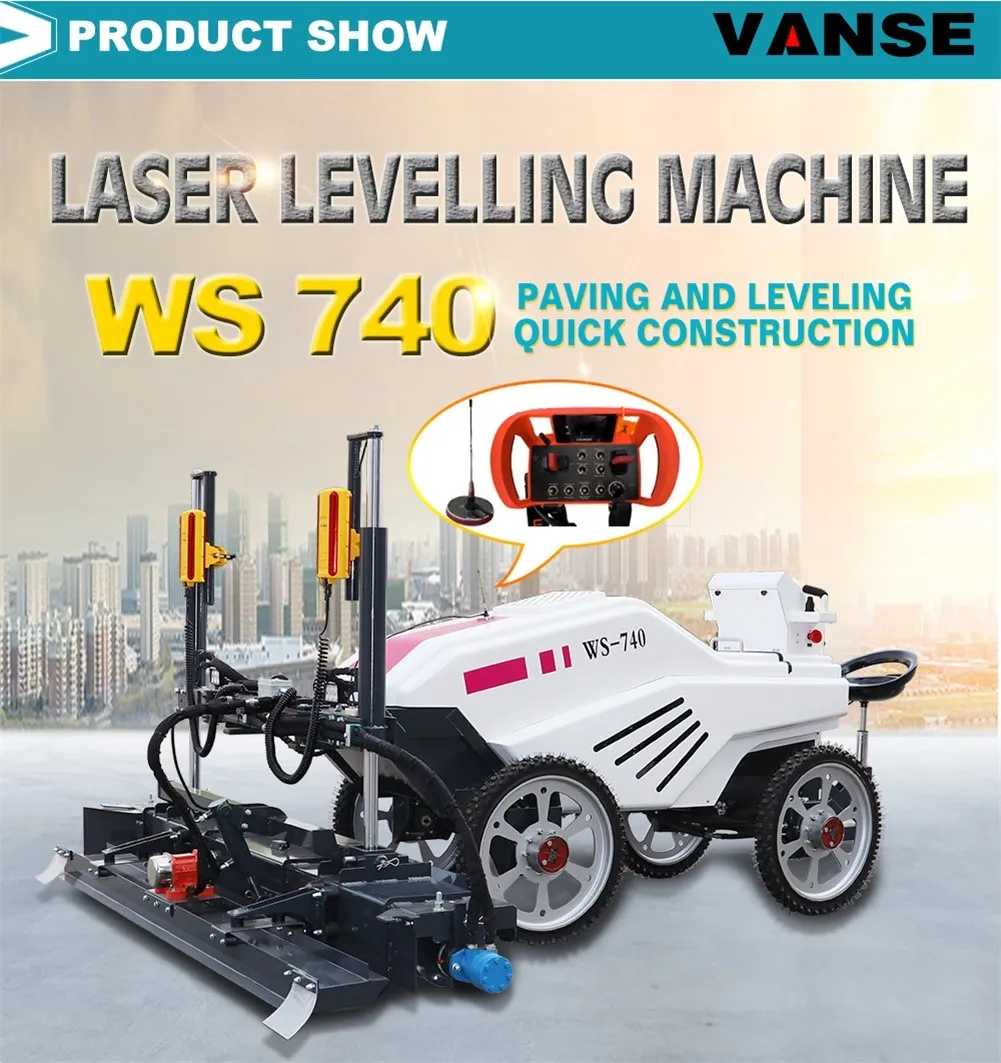
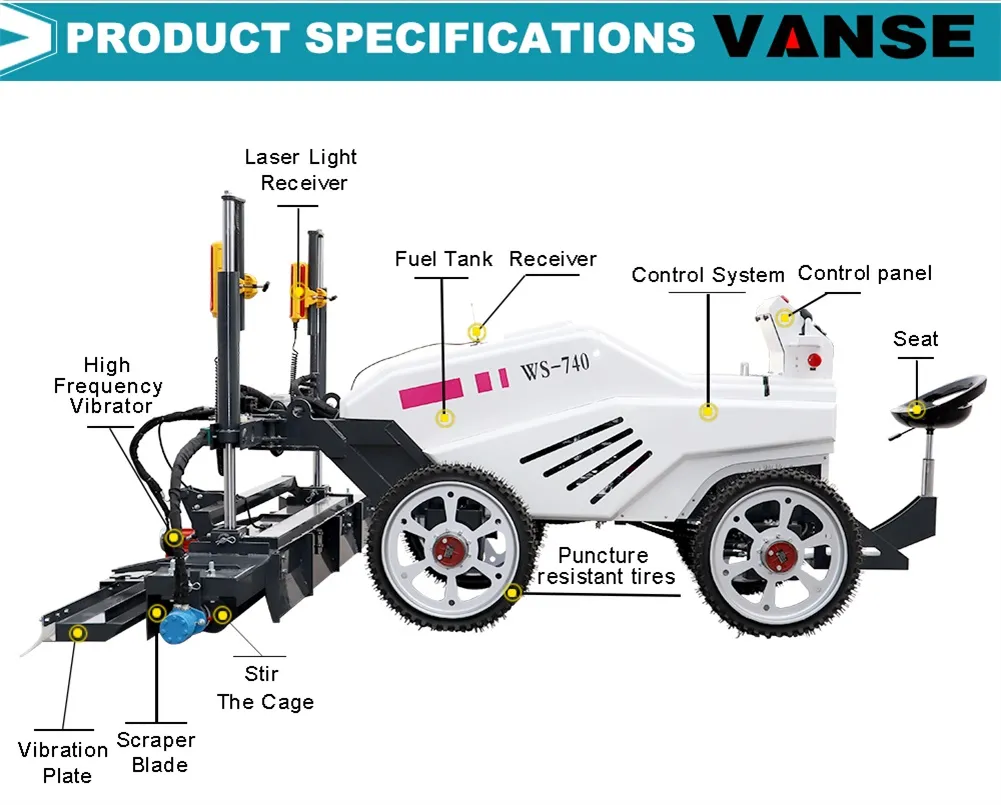
Concrete laser leveling machine is a kind of equipment used for concrete construction. Its working principle mainly involves laser technology and automatic control technology. The following is the working principle of concrete laser leveling machine
1. The laser transmitter emits a laser beam, which is projected onto the concrete surface.
2. The laser receiver receives the laser beam and detects the distance between the concrete surface and the laser beam.
3. After receiving the signal, the controller adjusts the horizontal movement mechanism and height adjustment mechanism of the leveler according to the received signal, so that the concrete surface and the laser beam are kept at a certain distance.
4. By constantly adjusting the position and height of the leveler, the concrete surface reaches the preset flatness requirements. Through this working principle, the concrete laser leveler can quickly and accurately complete the leveling work of the concrete surface, improving construction efficiency and quality.
Thanks to All the Friends Who Support and Trust Shandong Vanse Machinery Technology Co., Ltd.
If you want to know more about Shandong Vanse Machinery Technology Co., Ltd. or have any questions, please feel free to contact us:
Our Factory
Shandong Vanse Machinery Technology Co., Ltd.








Share this article

About the Author: Shandong Vanse Machinery Technology Co., Ltd.
Shandong Vanse Machinery Technology Co., Ltd. is a high-tech manufacturer specializing in concrete construction machinery, including laser screeds and related equipment. The company integrates R&D, production, and global sales, with products exported to over 60 countries and widely used in infrastructure projects worldwide.
Previous Post
Next Post
Related Articles
You Might Also Like
Is it normal for the laser level to have heavy lines? How to solve it?
It may be abnormal for the laser level to have heavy lines. The working principle of the laser level is to introduce the laser beam emitted by the laser device into the telescope tube of the level, and make it emit along the direction of the collimation axis. The precision of the laser beam to the level is used, and then the precise data of the horizontal line is calculated by the microcomputer. If there are heavy lines on the laser level, it may be that the laser is aging or the solder joints have burned the glass. The laser level may have heavy lines due to the following reasons: The lenses are dirty. Just wipe gently with a clean, soft cloth. Problems with the device itself. Equipment needs to be repaired or replaced. The solution to the light ghosting of the level is as follows: Check to see if there is a problem with the glass. If so, replace the glass. Wipe the laser head with a dry cloth, do not use a lint-free cloth. Adjust the laser, turn on the power switch of the machine, connect the power, place the machine on the table or the ground, slowly tilt it to the alarm state, and observe the alarm sensitivity. Restart the laser level. If none of the above methods can solve the problem, you need to replace the laser head or adjust the position of the laser. If the above methods cannot solve the problem, it is recommended to seek help from professional maintenance personnel. When using a laser level, be sure to protect the laser head and laser to avoid damage or aging. At the same time, the laser level must be maintained and inspected regularly to ensure that it can work properly.What benefits does concrete laser leveling machine construction offer in comparison to traditional construction methods?
Concrete laser leveling machine is a kind of equipment that uses laser technology to achieve high-precision leveling of concrete surface. Compared with traditional manual or mechanical leveling (such as vibrating rods, scraping bars, etc.), its construction method shows significant advantages in multiple dimensions. The following is a detailed comparative analysis from the aspects of construction efficiency, flatness accuracy, construction quality, labor cost, and applicable scenarios: Traditional construction: relying on manual cooperation with tools such as vibrating rods and scraping bars, requiring multi-person collaboration (such as paving, vibrating, leveling, finishing, etc.), and each process has a long interval. Due to the limitation of manual operation speed, the construction area per day is usually not more than 500㎡ (taking large-area floor as an example). Integrating paving, vibrating, and leveling, the elevation is automatically controlled by the laser system, and the machine operates at a uniform speed. The construction area per day can reach 1500-3000㎡, and the efficiency is 3-6 times that of traditional methods. It reduces the time of connecting processes and eliminates the need for repeated leveling adjustments. It is especially suitable for large-area floor construction such as large industrial plants, warehouses, and parking lots, and can significantly shorten the construction period. Traditional construction: Relying on manual experience to judge flatness, the error is large, the surface flatness is usually ±5-10mm, and it is easy to have local height difference, hollowing, sanding and other problems, which may require secondary grinding and repair later. The reference elevation is set by the laser transmitter, and the receiver on the leveling machine senses the laser signal in real time and automatically adjusts the scraper height. The flatness error can be controlled within ±2-3mm, which is much higher than the national standard (such as the "Concrete Structure Engineering Construction Quality Acceptance Code" The surface flatness allowable deviation is 8mm). The elevation control is precise to avoid the "wavy" surface caused by manual operation, especially suitable for scenes with high flatness requirements (such as precision instrument workshops, logistics storage floors, epoxy floor bases, etc.). Traditional construction: Vibration relies on manual handheld vibrators, which are prone to missed vibration, over-vibration or uneven vibration, resulting in insufficient internal density of concrete, easy to produce honeycombs and rough surfaces, and affect structural strength. Equipped with a high-frequency vibration system (vibration frequency can reach 3000-5000 times/minute), which can evenly transmit vibration force, make concrete aggregate distribution more even, and exhaust bubbles more thoroughly, and increase density by 15%-20%, thereby improving the compressive strength and durability of concrete. Reduce surface seepage and reduce the probability of sanding and cracking in the later stage. Traditional construction: requires a large number of workers to work together (such as 6-8 people/team), and the labor intensity of manual leveling and finishing is high, which is significantly affected by the workers' skill level and physical condition, and the labor cost accounts for a high proportion (especially at the moment when labor costs are rising). Concrete laser leveling machine construction: Only 2-3 people are needed (1 person operates the machine, 1-2 people assist in paving and cleaning the edges) to complete large-scale construction, and labor costs are reduced by more than 60%. Automated mechanical operation reduces manual physical exertion and reduces fatigue errors caused by long-term work. Traditional construction: In sloped floors, large-span areas or special-shaped structures, manual leveling is extremely difficult and the accuracy is difficult to guarantee. The slope (0-5%) can be preset through the laser system to achieve precise slope floor construction (such as parking lot drainage slope, roof slope, etc.). With different types of leveling machines (such as hand-held and driving), it can adapt to narrow spaces (such as workshop passages), large open spaces and other scenarios, with greater flexibility. Due to poor flatness and insufficient density, traditional construction may cause problems such as sanding, cracking, and subsidence in the later stage, requiring frequent repairs or renovations, and high maintenance costs. The floor quality constructed by the laser leveling machine is stable, and the flatness and strength meet the standards, which can reduce the number of later maintenance, extend the service life of the floor, and indirectly reduce long-term costs. Comparison dimensions Traditional construction method Concrete Laser leveling machine construction Construction efficiency Low (≤500㎡/day) High (1500-3000㎡/day) Flatness accuracy ±5-10mm ±2-3mm Concrete quality Low density and hollowing are likely to occur High density, 15%-20% strength improvement Labor cost High (6-8 people/team) Low (2-3 people/team) Applicable scenarios Small area, low precision requirements Large area, high precision, complex slope scenes Post-maintenance Frequent repairs, high cost Low maintenance, long life In summary, concrete laser leveling machine construction is superior to traditional methods in terms of efficiency, precision, quality and economy. It is especially suitable for modern industry, warehousing, municipal engineering and other projects with high requirements on floor quality. It is an important direction for upgrading concrete construction technology. Click the below to jump immediately!!! ARMOUR JOINT CONCRETE LEVELING MACHINE LIGHT TOWER POWER TROWEL SLIPFORM MACHINE STEEL FIBER TOPPING SPREADER TRACKED MINI DUMPERWant to extend the life of laser leveling machine parts? Understanding the structure and frequent maintenance are very important
As a new floor construction equipment, laser leveling machine has attracted wide attention from the industry due to its excellent construction efficiency and construction accuracy as soon as it entered the market, and has been increasingly used in large-scale concrete floor construction in warehouses, basements, parking lots, industrial plants, etc. Like other construction machinery, laser leveling machine is also a whole composed of many parts, and the construction environment is relatively complex, so it is easier to wear than general mechanical parts during long-term work. In order to extend the effective service life of the laser leveling machine, the following is a brief introduction to the main components of its parts and the tips for use and maintenance. —-Core components and functions of laser leveling machine—- ➤Transmission system: mainly composed of transmission, universal joint, transmission shaft and drive axle; ➤Travel system: composed of frame/axle/suspension/wheels, etc. The function is to support the quality of the whole vehicle and ensure the driving of the laser leveler; ➤ Steering system: It is composed of steering wheel, steering gear, steering knuckle, steering knuckle arm, tie rod, straight tie rod, etc., and its function is steering; ➤ Hydraulic brake: The hydraulic brake device is composed of brake pedal, master brake cylinder, slave cylinder, drum brake and oil pipe and other parts; ➤ Transmission: It is composed of transmission case, transmission cover, first shaft, second shaft, intermediate shaft, reverse shaft, gear, bearing, operating mechanism and other parts, which are used for laser leveler speed change and output torque change; ➤ Leaf spring and shock absorber: The function of leaf spring is to maintain elastic connection between frame and body and wheels or axles. The function of shock absorber is to ease vibration when laser leveler is subjected to vibration shock; ➤ Starter: Its function is to convert electrical energy into mechanical energy, drive crankshaft rotation, and start engine. If the continuous starting time is too long, the battery will be discharged in large quantities and the starter coil will overheat and smoke, which will easily damage the laser leveling machine parts; ➤Battery: The function of the battery is to supply electricity to the starter, and to supply power to the engine ignition system and other electrical equipment when the engine is started or running at low speed. When the engine is running at high speed, the generator generates sufficient electricity, and the battery can store excess electricity; ➤Motor: The motor is the power device of the laser leveling machine. Its main function is to generate driving torque as a power source for electrical appliances or various machines. Its main function is to convert mechanical energy into electrical energy. At present, it is more commonly used to use heat energy, water energy, etc. to drive the generator rotor to generate electricity. —-Use and maintenance of core parts of laser leveling machine—- ➤Regularly replace lubricating oil to ensure that all parts of the machine are well lubricated and reduce the wear of parts; ➤Keep the whole machine and parts clean regularly, and tighten loose parts in time to prevent loose parts from aggravating the wear of parts or causing the loss of parts; ➤Pay attention to the workload of each part during the running-in period. The workload during the running-in period should generally not exceed 80% of the rated workload, and deploy appropriate workload to prevent overheating caused by long-term continuous operation of the laser leveling machine; ➤Start the leveling machine engine once every half a month to charge the battery and run all hydraulic actuators, such as rotating hydraulic motors, telescopic cylinders, etc. Do not remove the battery from the machine to prevent the failure of the controller's internal software program being lost due to long-term parking of the equipment; ➤Start the leveling machine regularly and turn on all hydraulic functions on the machine to allow the hydraulic drive components to work regularly to prevent the relevant seals from being damaged due to long-term parking, and metal components such as cylinder rods from rusting. Try to retract all cylinder rods into the hydraulic cylinder oil chamber as much as possible to better protect the surface of the cylinder rod. Reasonable use and regular maintenance of various components are effective ways to extend the service life of the laser leveling machine and improve the economic benefits of the operation. It is recommended that before using the leveling machine, you should be fully familiar with the composition and functions of each component of the machine, master the correct operation method, and strengthen daily maintenance.