Technical Knowledge
The future application prospects and development trends of concrete laser levelings include considerations of new materials, new processes, new technologies, etc. And prospects for application prospects.
The application prospects and development trends of concrete laser leveling machines in the future are very broad. The following are some considerations and application prospects regarding new materials, new processes, new technologies, etc.:
1. Application of new materials:
With the continuous development of science and technology, new concrete materials continue to emerge. For example, new concrete materials such as high-strength concrete, self-healing concrete, and conductive concrete will bring new opportunities and challenges to the application of concrete laser levelings. High-strength concrete has the characteristics of high density, high strength and durability, and can be used in high-rise buildings, bridges and other structures, which puts forward higher requirements for the accuracy and stability of laser leveling machines. Self-healing concrete has the ability to repair itself, which can reduce problems such as concrete cracks and damage to a certain extent. It will also have a positive impact on the construction quality and efficiency of laser leveling machines. Conductive concrete is a concrete material that can conduct electricity. Conductive components can be added to the concrete or carbon fiber reinforced plastics can be used to enhance the conductive properties. The intelligent and automated control of laser leveling machines will bring new application prospects.
2. Application of new technologies:
With the continuous development of the construction industry, new concrete construction technologies are also emerging. For example, 3D printing concrete technology is a new concrete construction technology that can use three-dimensional model data to print concrete components with various shapes and structures. This technology will bring new challenges and opportunities to the application of laser leveling machines, and can be combined with 3D printing technology to achieve more efficient, precise and personalized construction. In addition, concrete laser leveling machines can also be combined with other new technologies, such as 3D scanning technology, ultrasonic detection technology, etc., to achieve more efficient, precise and reliable construction.
3. Application of new technologies:
With the continuous development of science and technology, new laser technologies are also emerging. For example, new lasers such as ultrafast lasers, solid-state lasers, and fiber lasers have the advantages of higher precision, wider wavelength range, and higher pulse energy, and can provide better, more efficient, and more reliable light sources for concrete laser levelings. . In addition, with the continuous development of artificial intelligence, Internet of Things, cloud computing and other technologies, concrete laser levelings can also combine these new technologies to achieve more intelligent, automated and networked control and management.
In summary, the future application prospects and development trends of concrete laser leveling machines are very broad. In the future, with the continuous emergence and application of new materials, new processes, and new technologies, concrete laser levelings will become more efficient, precise, reliable, and intelligent, providing more reliable construction guarantees for the development of the construction industry. . At the same time, it is also necessary to strengthen investment in technology research and development and talent training to improve the overall level and competitiveness of domestic concrete laser leveling machines to meet the needs of future development of the construction industry.
Thanks to All the Friends Who Support and Trust Shandong Vanse Machinery Technology Co., Ltd.
If you want to know more about Shandong Vanse Machinery Technology Co., Ltd. or have any questions, please feel free to contact us:
Our Factory
Shandong Vanse Machinery Technology Co., Ltd.








Share this article

About the Author: Shandong Vanse Machinery Technology Co., Ltd.
Shandong Vanse Machinery Technology Co., Ltd. is a high-tech manufacturer specializing in concrete construction machinery, including laser screeds and related equipment. The company integrates R&D, production, and global sales, with products exported to over 60 countries and widely used in infrastructure projects worldwide.
Previous Post
Next Post
Related Articles
You Might Also Like
Safety & environmental protection measures for fine stone concrete floor construction
Construction of fine aggregate concrete floor: Safety protection and environmental protection measures To ensure the smooth progress of the fine aggregate concrete floor construction process, safeguard the safety and health of the workers, and minimize the negative impact on the environment, the following measures are specially formulated. Safe construction should follow the principle of "safety first, prevention foremost, and comprehensive governance". Head protection: All personnel entering the construction site must wear qualified safety helmets correctly. Foot protection: Construction workers should wear safety shoes that are resistant to impact, puncture and slip. Concrete operators are advised to wear rubber boots to prevent cement slurry corrosion. Respiratory protection: When handling, mixing and dry spreading cement and sand and gravel, especially in poorly ventilated environments, dust masks must be worn to prevent inhalation of cement dust. Hand protection: Operators should wear rubber or plastic gloves to prevent skin burns from cement and alkaline substances. Eye protection : When mixing, pumping or using power tools for cutting and grinding, protective glasses should be worn to prevent concrete slurry or debris from splashing into the eyes. High-altitude work protection: When working near edges or openings, safety belts must be fastened. Before use, check the electrical circuits, insulation conditions and whether the protective covers are in good condition. When in operation, it is strictly forbidden to insert hands or tools into the mixing drum. When cleaning or conducting maintenance, the power supply must be cut off, and a dedicated person should be assigned for supervision. A warning sign reading "Do Not Close the Switch" should be hung. Before operation, check whether the cable, switch, blade/grinding disc are in good condition and securely fastened. Operators need to be familiar with the equipment operation procedures, hold the control lever tightly with both hands to prevent the machine from getting out of control. The cable should be suspended to prevent it from being caught or dragged by the machine. The support of the pump pipe must be firm, especially at the elbows and joints. When pumping, it is strictly prohibited for anyone to stand at the outlet of the pump pipe. When cleaning the pipeline, there must be no personnel in front of the outlet. All electric tools must be powered by a power supply equipped with a leakage protection device. Cables must not be dragged on the ground, rolled over or immersed in water. They should be installed overhead or buried underground. Non-professional electricians are strictly prohibited from privately connecting wires or repairing electrical equipment. Openings and edge protection: The reserved openings on the floor, staircase entrances, and elevator shaft openings must be covered with solid covers or guardrails, and safety warning signs must be hung. Material stacking safety: Materials such as cement and sand and gravel should be stacked neatly, and the height should not be too high to prevent collapse. The stacking area should be kept away from slopes and pits. Safety of cross-operation: Arrange the construction sequence reasonably and reduce vertical cross-operation. When it is unavoidable, a safety isolation layer should be set up, and a dedicated person should be assigned to direct and communicate between the upper and lower floors. Fire prevention measures: Smoking is strictly prohibited at the construction site, and sufficient fire-fighting equipment (such as fire extinguishers) should be provided as required. When conducting thermal construction (such as using a furnace for heating in winter construction), there must be a dedicated person to supervise and keep away from flammable materials. Lighting and ventilation: When conducting construction in the basement or at night, there must be sufficient lighting. When working in a closed space, good ventilation should be ensured. Environmental protection should follow the principle of "source control, process management and end-of-pipe treatment". Cement and sand: Cement should be stored in a dedicated warehouse or tightly covered with tarpaulin. Sand and gravel storage sites should be appropriately watered to reduce dust or covered. Mixing operation: Pre-mixed commercial fine aggregate concrete is preferred. If on-site stirring is carried out, it should be set up in a closed or semi-closed stirring shed and equipped with dust suppression devices. Transportation and paving: Transport vehicles should be protected from spillage. When laying manually, avoid raising dust. Cutting and grinding: When performing ground cutting and grinding, it is necessary to use dedicated equipment with dust collection devices or carry out wet water spraying operations to effectively suppress dust. Equipment selection: Give priority to using construction machinery with low noise and high efficiency. Work time: Reasonably arrange the time for high-noise operations (such as cutting and grinding), and try to avoid construction at night or during lunch breaks. If continuous operation is required, it should be reported to the environmental protection department in advance and the surrounding residents should be informed. Sound insulation measures: For fixed high-noise equipment (such as fixed mixers), sound insulation sheds can be set up. Mobile device operators should wear earplugs. Classified collection: Separate construction waste from household waste. Discarded concrete blocks, mortar, packaging bags, etc. should be sorted and stacked. Recycling: Discarded concrete blocks, bricks, etc. can be crushed and used as backfill materials or roadbed materials. Timely removal: Assign dedicated personnel to be responsible for transporting the waste to the designated construction waste storage area in a centralized manner. It is strictly prohibited to dump or landfill it at will. Cleaning of mixing equipment: The wastewater from cleaning mixers and transport vehicles should be discharged into a dedicated sedimentation tank. After sedimentation treatment, the supernatant can be recycled for water spraying and dust suppression. It is strictly prohibited to directly discharge it into the municipal water network or natural water bodies. Curing wastewater: The wastewater generated during the curing stage (such as watering and covering with a wet cloth) is basically clean water, but the flow rate should be controlled to avoid surface runoff, which could lead to water resource waste and site mud. Material conservation: Accurately calculate the amount of concrete used, adopt advanced construction techniques, and reduce unnecessary waste and loss. Water conservation: It is recommended to use spray moisture retention during maintenance and avoid flooding with water. Promote the use of water-saving curing agents (film curing liquid) to replace traditional watering curing. Energy conservation: Select construction equipment with high energy efficiency, rationally arrange the process, and reduce the idling time of equipment. The safety and environmental protection management of fine aggregate concrete floor and ground construction is a dynamic and full-process management. All construction personnel must receive detailed safety and technical briefings before taking up their posts, clearly defining all risks and response measures. Only through strict on-site management and continuous education can safety accidents be effectively prevented and the goal of green and civilized construction be achieved. Note: The parameters provided in this document are for reference only and are not mandatory. Due to differences in technical characteristics between different brands and models of laser levelers, please consult the manufacturer for a suitable solution before actual operation. This reference document assumes no responsibility for any issues arising from failure to follow the manufacturer's instructions.Vanse Concrete Laser Leveling Machine Technical Solution
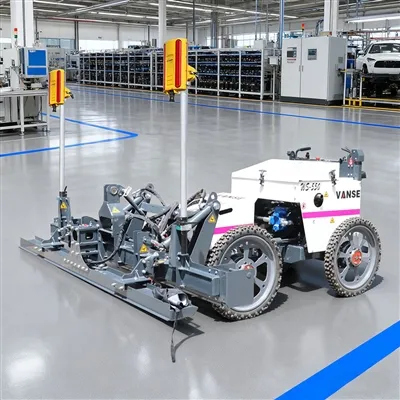
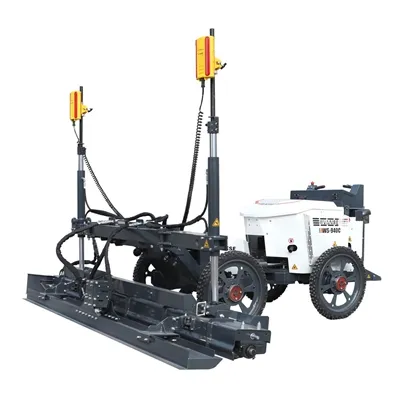
In the field of modern floor construction, efficient and precise construction technology is the key to ensuring the quality and progress of the project. As an industry-leading concrete leveling solution, Vanse Concrete Laser Leveling Machine is designed for various floor construction scenarios, such as industrial plants, warehouses, parking lots, etc., providing unprecedented construction advantages. Its core lies in the use of advanced laser technology to achieve precise control of the flatness of the concrete surface and create a perfect floor project for users. (I) Laser emission and reception The laser transmitter equipped with Vanse laser leveling machine can be installed on a stable reference point to emit a horizontal laser beam to the construction area to form an accurate plane reference. Whether it is a rotating or fixed laser transmitter, it can be flexibly selected according to the size and shape of the construction site to ensure that the horizontal accuracy can reach ±0.5mm/10m. It uses 635nm or 650nm visible red light wavelengths that are safe for human eyes, which is convenient for construction personnel to observe and calibrate. The power range is 5mW-10mW, which meets the signal strength requirements within the construction range. At the same time, the laser receiver on the leveler can receive laser signals in real time, providing accurate data for subsequent automatic control. (II) Automatic control and feedback When the laser receiver detects that there is a deviation between the position of the leveler scraper and the laser plane, the advanced control system of the Vanse laser leveler begins to play a role. The system adopts PLC (programmable logic controller) or microcomputer control system, with automatic control, manual adjustment and fault diagnosis functions, and uses advanced PID (proportional-integral-differential) control algorithm to automatically adjust the height of the scraper according to the deviation signal. The scraper is driven up or down by the hydraulic system to keep the scraper on the laser plane at all times, thereby ensuring that the flatness error of the concrete surface is controlled within a very small range. (I) Laser transmitter 1. Type: Two options are available: rotary and fixed to meet the needs of different construction sites. 2. Accuracy: The horizontal accuracy is as high as ±0.5mm/10m, ensuring that the emitted laser plane is highly accurate. 3. Laser wavelength: 635nm or 650nm visible red light is used, which is safe for human eyes and convenient for construction operation. 4. Power: 5mW – 10mW, to ensure the signal strength within the construction range. (II) Laser leveling machine 1. Scraper system – Scraper material: The use of high-strength wear-resistant alloy materials, such as high-chromium alloy, greatly guarantees the wear resistance and service life of the scraper, reduces the replacement frequency, and reduces the cost of use. – Scraper length and width: Length 2 – 5m, width 0.5 – 2m, can cover a larger area of concrete surface, improve construction efficiency. – Scraper adjustment range: The vertical adjustment range is 0 – 30cm, which is suitable for concrete construction of different thicknesses. 2. Walking system – Walking mode: Two walking modes are provided: crawler and wheeled. The crawler is suitable for complex terrain and soft ground, and the wheeled walking speed is faster. Users can freely choose according to the conditions of the construction site. – Travel speed: It can be adjusted within the range of 0 – 1.5m/s, and the operator can flexibly adjust it according to the slump of concrete and construction requirements. – Drive motor power: According to the weight of the whole machine and the travel resistance, the motor power is 5 – 20kW to ensure that the leveling machine can walk stably on the concrete. 3. Hydraulic system – Hydraulic pump type: A variable piston pump is selected, which can automatically adjust the output according to the system pressure and flow requirements, improve the efficiency of the hydraulic system, and reduce energy consumption. – Hydraulic cylinder parameters: The stroke and thrust of the scraper lifting cylinder meet the scraper adjustment requirements, and the working pressure is 10 – 20MPa. – Hydraulic oil cooling method: Air-cooled or water-cooled cooler to ensure that the hydraulic oil temperature is within the normal working range and prevent the oil temperature from being too high to affect the system performance. 4. Laser receiver and control system – Laser receiver accuracy: It can accurately detect the laser plane deviation of ±1mm, providing guarantee for high-precision leveling. – Control system type: It adopts advanced PLC or microcomputer control system with powerful functions. – Control algorithm: Equipped with advanced PID control algorithm, it can quickly and accurately adjust the scraper height to ensure leveling accuracy. (I) Construction preparation 1. Site cleaning: Clear the debris, dust and obstacles in the construction site, check and repair the base layer, ensure that the base layer flatness error is within ±10mm, and lay a good foundation for subsequent construction. 2. Laser transmitter installation and calibration: According to the size and shape of the construction site, select a suitable installation location, use tools such as a level to accurately calibrate the Vanse laser transmitter to ensure that the laser plane meets the design requirements. 3. Material preparation: Prepare concrete raw materials that meet the design requirements, and check their quality and slump (generally controlled at 12-18cm). (II) Concrete pouring and leveling 1. Concrete pouring: Pour the concrete evenly in the construction area. The pouring method can be divided into compartments. The area of each compartment should not exceed 500 square meters. Use a vibrator to vibrate the concrete while pouring. The vibration interval should not exceed 50cm. 2. Leveling machine start: After the concrete is initially vibrated, start the Vanse laser leveling machine (concrete leveling machine) and drive it to the poured concrete area. 3. Leveling operation: The operator controls the travel speed and scraper height of the leveling machine according to the signal of the laser receiver, so that the scraper moves along the laser plane to level the concrete. During the leveling process, pay attention to the flatness of the concrete surface and the working status of the scraper, and adjust the travel speed and scraper height in time. (III) Quality inspection and subsequent treatment 1. Flatness inspection: Use tools such as a level and a 2m ruler to check the flatness of the leveled concrete surface. The flatness error within every 2 square meters should not exceed ±2mm. If uneven areas are found, local repairs should be made in time. 2. Surface treatment: According to construction requirements, surface finishing and roughening can be performed in the initial setting stage of concrete to improve the quality and aesthetics of the concrete surface. 3. Maintenance: After leveling, the concrete should be maintained in time. Plastic film can be covered, curing agent can be sprayed, etc., and the maintenance time should not be less than 7 days. (I) High precision Compared with traditional leveling methods, Vanse concrete laser leveling machine can achieve higher flatness. Its advanced laser technology and precise control system can meet the construction needs of industrial plants, precision instrument workshops and other places with strict requirements on ground flatness, ensure that the ground flatness error is extremely small, and provide a high-quality foundation for subsequent production and use. (II) High efficiency The automated leveling process reduces the time and error of manual operation and greatly improves construction efficiency. The large area coverage and adjustable walking speed of the scraper greatly shorten the construction period, reduce labor costs and time costs, and bring higher economic benefits to users. (III) Strong adaptability Vanse laser leveling machine can adapt to different types of concrete and construction site conditions. Whether it is a large or small area, flat or with a certain slope, it can guarantee a good leveling effect. The choice of crawler and wheeled walking methods, as well as the flexible adjustment of the scraper system, enable it to cope with various complex construction environments. (IV) Reliable quality The equipment adopts high-quality materials and advanced manufacturing processes, and the performance of each component is stable and reliable. The high precision of the laser transmitter and receiver, as well as the intelligent control system, ensure the stability and consistency during the construction process, and provide a solid guarantee for the quality of the flooring project. (I) Quality Control 1. Equipment Calibration: Regularly calibrate the laser transmitter and the laser receiver and control system of the leveling machine to ensure that the equipment accuracy is always maintained at a high standard, providing a guarantee for the construction quality. 2. Construction Process Monitoring: During the construction process, arrange a dedicated person to be responsible for quality inspection, monitor the slump of concrete, the working parameters of the leveling machine and the flatness of the ground after leveling in real time, and deal with problems in a timely manner to ensure that the construction quality meets the requirements. (II) Equipment Maintenance 1. Daily Maintenance: After the construction is completed, clean up the concrete residue on the leveling machine in time, check the wear of the scraper, walking system, hydraulic system and other components, lubricate the equipment and tighten the bolts and other maintenance work to extend the service life of the equipment. 2. Regular maintenance: According to the use time and working intensity of the equipment, the Vanse laser leveling machine should be regularly overhauled, the severely worn parts should be replaced, and the hydraulic oil and lubricating oil should be replaced to ensure the stable performance of the equipment and always maintain good working condition. If you are looking for a high-quality concrete laser leveling machine for sale, the Vanse concrete laser leveling machine is undoubtedly your best choice. We offer reasonable prices and meet your construction needs with excellent performance and high-quality services. At the same time, our equipment is also equipped with an efficient concrete leveling vibrator to further improve the construction effect. Choosing Vanse means choosing an efficient, accurate and reliable floor construction solution.How to choose the power trowel with appropriate power according to the construction scenario?
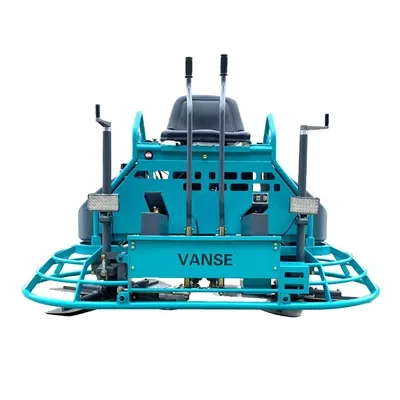
– The construction area of this type of scene is usually small, generally between tens of square meters and hundreds of square meters. For example, the floor area of the living room and bedroom of an ordinary residence may be around 20-50 square meters. The space is relatively narrow and there are many corners. – For this situation, a hand-held trowel with lower power is more suitable, with a power range of about 1-3kW. Because the low-power trowel has a small body and flexible operation, it can be easily moved in a limited space to perform trowel operations on narrow areas such as corners and walls. – Common indoor floor materials include cement mortar floors, fine stone concrete floors, etc. The thickness of these floor materials is relatively thin, generally within a few centimeters. – The precision requirements are high, and the trowel machine needs to be able to finely process the floor to achieve a high degree of flatness and glossiness. The speed and trowel force of the low-power trowel machine are relatively moderate, which can just meet this demand and avoid damaging the surface structure of the floor material due to excessive power. – The construction area is between a few hundred square meters and thousands of square meters, and the space is relatively open. For example, the area of a medium-sized warehouse may be 500-2000 square meters. – You can choose a moderately powered walk-behind or ride-on trowel. The power of a walk-behind trowel is generally 3-5kW, and the power of a ride-on trowel is 4-7kW. Ride-on trowels are more efficient when constructing large areas, and can quickly smooth the ground, saving time. Walk-behind trowels can be used in some corners that are difficult for ride-on trowels to reach. – The ground material may be thick concrete, about 10-20 cm thick. In this case, the trowel needs to have enough power to compact and smooth the ground. – Although the precision requirements are not as high as those for small indoor scenes, it is still necessary to ensure that the ground has a certain degree of flatness and smoothness to meet the needs of cargo storage or equipment installation. Medium-power trowels can complete the troweling task well while ensuring efficiency. – The construction area is very large, often exceeding thousands of square meters, or even tens of thousands of square meters. For example, a large city square may be 10,000 to 50,000 square meters in area, and an airport runway is even larger. – For this scenario, a high-power driving trowel should be selected, with a power of usually 7 to 15kW. Because large outdoor projects require a large amount of ground troweling work to be completed in a short period of time, a high-power trowel can provide sufficient power and high work efficiency to quickly cover a large area of the ground. – The ground material is generally a thick layer of high-strength concrete, which may be about 20 to 50 cm thick. The trowel needs to have strong power to handle this thick and hard ground material. – For precision requirements, large squares require good flatness and drainage slope of the ground, while airport runways have strict specifications for indicators such as flatness and roughness of the ground. High-power trowel machines can precisely control the trowel effect by adjusting components such as the trowel blade to meet these high standards.