Technical Knowledge
Precautions for safe use of concrete laser leveling machine
1. Construction industry
1} Operators must undergo professional training, be familiar with machine performance, and master operating essentials.
2} During operation, protective equipment such as safety helmets and gloves should be worn to ensure personal safety.
3} Before use, check whether all parts of the machine are intact. If there are any abnormalities, they should be repaired or replaced in time.
4} Maintain stability during operation and avoid rapid acceleration or deceleration to prevent the machine from losing control.
5} During operation, pay attention to the surrounding environment and avoid collision with other construction machinery.
6} The machine should be stored in a dry, well-ventilated place to prevent moisture and corrosion.
7} Perform regular maintenance on the machine to ensure its normal operation.
2. Internet industry
1} When using the concrete laser leveling machine, ensure a stable network connection to avoid data transmission errors or equipment control failure due to network problems.
2} Avoid using unauthorized software or cracking tools during operation to avoid causing equipment damage or security issues.
3} When transmitting data, data encryption and security protection should be ensured to prevent data leakage or computer alteration.
4} When using the concrete laser leveling machine, attention should be paid to software version updates and upgrades to ensure the compatibility and safety of the equipment.
5} Virus scans and security checks should be performed regularly on the device to prevent viruses or malicious attacks.
6} When using the concrete laser leveling machine, you should pay attention to protecting personal privacy and information security.
3. Other industries
1} When using a concrete laser leveling, you should understand the relevant industry standards and specifications to ensure that the equipment meets the requirements.
2} When installing and debugging equipment, relevant safety operating procedures should be followed to ensure the safety of personnel and equipment.
3} During use, the operating status of the equipment should be checked regularly, and any abnormalities found should be dealt with promptly.
4} A sound safety management system should be established and equipment maintenance and service records should be improved to ensure the normal operation and service life of the equipment.

Thanks to All the Friends Who Support and Trust Shandong Vanse Machinery Technology Co., Ltd.
If you want to know more about Shandong Vanse Machinery Technology Co., Ltd. or have any questions, please feel free to contact us:
Our Factory
Shandong Vanse Machinery Technology Co., Ltd.








Share this article

About the Author: Shandong Vanse Machinery Technology Co., Ltd.
Shandong Vanse Machinery Technology Co., Ltd. is a high-tech manufacturer specializing in concrete construction machinery, including laser screeds and related equipment. The company integrates R&D, production, and global sales, with products exported to over 60 countries and widely used in infrastructure projects worldwide.
Previous Post
Next Post
Related Articles
You Might Also Like
Life cycle management & replacement records of vulnerable parts (such as scrapers and hydraulic oil filters) of Concrete Laser Levelings
Scientific life cycle management and detailed replacement records of the vulnerable parts of the Concrete Laser Leveling are the keys to ensuring construction quality, reducing the total cost of equipment and avoiding unplanned shutdowns. The following provides you with a complete life cycle management and replacement record system for vulnerable parts, including management methods, record templates and practical operation suggestions. Life cycle management is not merely about "replacing when broken", but rather a comprehensive strategy that encompasses both preventive replacement and condition-based replacement. Name of vulnerable parts Life cycle (Reference Management strategy Key influencing factors Scraper 50,000-150,000 square meters Condition-based replacement Concrete corrosiveness, aggregate hardness, ground flatness requirements, and operating habits Hydraulic oil filter element 500 hours or one year Preventive replacement The cleanliness of the working environment, the quality of hydraulic oil, and the working time of the system Walking tires/track plates 1,000 to 2,000 hours Condition-based replacement Ground roughness, presence of sharp objects, and load conditions Laser receiver Depending on usage State check Collision, vibration, aging Engine filter element According to the engine manual Preventive replacement Environmental dust concentration, fuel/engine oil quality (Air filter, mechanical filter, diesel filter (Usually 250 to 500 hours Hydraulic oil 2,000 hours or 2 years Preventive replacement Working hours, oil temperature, and contamination conditions Strategy explanation Preventive replacement: Replace components based on running time or calendar time, regardless of whether they are damaged or not. It is applicable to hydraulic oil filter elements, engine filter elements, etc. Its failure will trigger a chain reaction (such as filter element blockage causing pump damage). Condition-based replacement: Whether to replace a component is determined based on its actual wear or performance condition. It is applicable to scrapers, tires, etc. The wear and tear is obvious. Replacing them too early will cause waste. ① Establish files: Create an independent "Wear Parts Life Cycle Management Card" for each piece of equipment. ② Data Recording: Strictly record the replacement time, square meters, reasons for replacement, etc. in the table below. ③ Regular inspection Daily inspection: Before starting work each day, the operator should check the wear of the scraper, the tire pressure and the wear condition. Weekly/Monthly inspection: The equipment administrator checks the appearance of the filter element and records the cumulative working time of the equipment. ④ Data analysis Regularly (such as every quarter) review the records and analyze the average lifespan of each vulnerable part. If the lifespan of a certain component is much lower than expected, the cause needs to be investigated (such as operational issues, material problems, environmental issues). ⑤ Optimization strategy: Based on the analysis results, adjust the preventive replacement cycle or increase the frequency of status checks to achieve the optimal balance between cost and efficiency. It is recommended to use paper forms for on-site record-keeping and summarize them into electronic forms for long-term analysis later. Equipment Number: ______ Equipment Model: ______ Person in Charge of Management: ______ Serial number Change date Name of vulnerable parts Specification and model Replacement reasons (wear/damage/prevention) Current device hours (h) Current leveled area (㎡) Supplier/Brand Replace the person Remarks 1 2023/10/26 Main scraper ABC-100 The edge wear exceeds 5mm 1250 58,500 XX brand A The area to be leveled this time starts from the previous 50,000 square meters 2 2023/11/15 Hydraulic oil filter element XYZ-01 Preventive replacement 1500 75,000 Original factory B Change the hydraulic oil at the same time 3 2024/3/10 Walking tire 8.5-24 The tread pattern is smoothed out 2100 110,000 YY brand C … … … … … … … … … … Instructions for Use Current equipment hours/leveled area: This is the most crucial indicator for measuring the life cycle and must be accurately recorded. Replacement reason: Clear record for easy distinction between normal wear and tear and accidental damage. Note: Record any abnormal conditions, related maintenance activities (such as whether the oil was changed when replacing the filter element), etc. Name of vulnerable parts Specification and model Applicable equipment Current inventory Safety stock Supplier Information Procurement Warning Main scraper ABC-100 Concrete Laser Leveling machine #01, #02 2 3 Contact person:… Telephone:… Triggered when inventory is less than or equal to safety stock Hydraulic oil filter element XYZ-01 Concrete Laser Leveling machine #01 5 4 Contact person:… Telephone:… Walking tire 8.5-24 Concrete Laser Leveling machine #01, #02 1 2 Contact person:… Telephone:… Warning … … … … … … … Inspection standard: When the blade of the scraper wears more than 3-5mm or irregular wear occurs that affects the scraping effect, it should be replaced immediately or flipped over for use (if the design permits). Best Practice Keep the scraper clean and remove the adhered concrete after each use. Prepare spare parts before the wear reaches the limit to avoid work stoppages due to lack of materials. Record the square meters completed by each scraper to calculate its true lifespan Replacement standard: Preventive replacement must be carried out strictly in accordance with the time or hours specified in the equipment manual. Under harsh working conditions, the replacement cycle should be shortened. Best Practice When replacing the filter element, change the hydraulic oil at the same time to ensure the cleanliness of the system. Before and after replacement, pay attention to cleaning the area around the filter element seat to prevent contaminants from entering the system. Use genuine or high-quality compatible filter elements. Inferior filter elements are the "killers" of hydraulic systems. For companies with multiple devices, it is advisable to consider upgrading to digital management Use equipment management software (such as CMMS) : Input the information of each device, maintenance plans, and replacement records into the system. Set up automatic reminders: The system can automatically send reminders to the administrator for preventive maintenance tasks such as filter element replacement and hydraulic oil replacement based on the operating hours or calendar time. Data analysis and Reporting: Easily generate equipment maintenance cost reports, wear and tear consumption analysis, etc., providing data support for management decisions. The core value of conducting meticulous life cycle management and record-keeping for the vulnerable parts of Concrete Laser Leveling machines lies in: Ensure construction quality: Worn scrapers will directly affect the flatness of the floor. Control maintenance costs: Avoid high repair fees caused by excessive maintenance and catastrophic damage. Enhance equipment availability: Minimize unexpected downtime through planned maintenance. Form a knowledge base: Long-term recorded data is a valuable asset for the company, which helps optimize procurement, training and equipment selection. Establishing and strictly implementing this system will shift your equipment management from "passive maintenance" to "active prevention", ultimately achieving cost reduction and efficiency improvement. Note: The parameters provided in this document are for reference only and are not mandatory. Due to differences in technical characteristics between different brands and models of laser levelers, please consult the manufacturer for a suitable solution before actual operation. This reference document assumes no responsibility for any issues arising from failure to follow the manufacturer's instructions.Advantages of concrete laser leveling vs paver
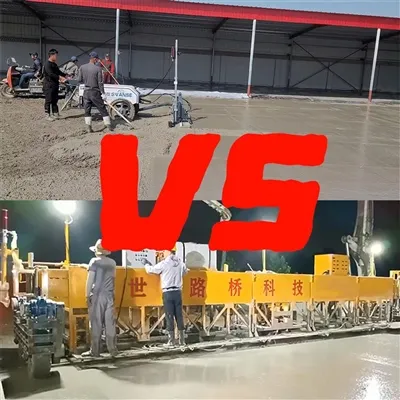
There are certain differences in functions and applicable scenarios between concrete laser levelings and pavers, so each has its own advantages. 1. Flatness: The laser leveling machine achieves high-precision control through laser technology, which can ensure a higher flatness of the ground. It is especially suitable for places that require high-precision floors. 2. Construction efficiency: Due to the easy operation and high degree of automation of laser leveling machines, the construction efficiency is usually higher than that of paver. Especially in large-area floor construction, the advantages of laser leveling machines are even more obvious. 3. Material waste: Laser leveling machines can accurately control the amount and laying of concrete, thereby reducing material waste and costs. 4. Applicability: The paver is suitable for laying ordinary concrete pavement, especially for long-distance and large-area construction projects such as roads. The laser leveling machine is more suitable for places that require high-precision and high-strength floors, such as large-scale Dingye factories, logistics centers, etc. 5. Maintenance cost: The structure of the paver is relatively simple and the maintenance cost is relatively low. The complex structure of the laser leveling machine requires regular maintenance and upkeep, but its high efficiency and high-quality construction results may offset this cost after long-term use. 6. Operation difficulty: Paver requires operators to have a high level of skills and experience, while laser leveling machines are relatively simple to operate and require lower skills from workers. 7. Flexibility: The paver is suitable for a variety of different terrains and construction environments and has high flexibility. The laser leveler is more suitable for flat and regular terrain, and has limited adaptability to complex terrain. To sum up, concrete laser levelings and pavers each have their own applicable scenarios, advantages and disadvantages. In places where high-precision and high-efficiency floor construction is required, such as large industrial plants, logistics centers, etc., laser levelings have significant advantages; and in the construction of large-area ordinary concrete pavements such as roads, the application of paver may More extensive. The choice of which equipment to use also needs to be comprehensively considered based on specific construction needs and conditions.How to deal with common technical problems during the construction process of concrete laser leveling?
Solution to common technical problems during the construction process of concrete laser leveling machine ▶●●●★●●●◀ Laser positioning error During the construction process of concrete laser leveling machine, the accuracy of laser positioning is crucial. Laser positioning errors may lead to substandard ground flatness and affect the overall project quality. Solution: 1. Regularly check and calibrate the laser rangefinder to ensure that its accuracy meets construction requirements. 2. Set up multiple control points at the construction site to conduct laser positioning verification to detect and correct errors in a timely manner. 3. Strengthen the training of operators and improve their proficiency in using the laser positioning system. ▶●●●★●●●◀ Concrete fluidity control The flowing parts of concrete directly affect the leveling effect. Insufficient fluidity may cause the concrete to be difficult to distribute evenly, and excessive fluidity may cause problems such as flowing and settling of the concrete. Solution: 1. Select the appropriate concrete mix ratio according to Stinging requirements to ensure that the concrete has good fluidity. 2. During the construction process, the water-cement ratio of concrete should be adjusted in time according to weather, temperature and other factors to keep its fluidity stable. 3. Use a concrete vibrator to vibrate to improve the density and uniformity of concrete. ▶●●●★●●●◀ Ground flatness adjustment Ground flatness is an important indicator to measure the leveling effect. If the ground flatness is not up to standard, it will affect subsequent decoration and use. Solution: 1. Treat the foundation floor before construction to ensure that the foundation is smooth, free of oil stains, and free of debris. 2. Use a laser leveling machine for multiple levels. After each leveling, check the flatness of the ground promptly and deal with any unevenness in a timely manner. 3. During the leveling process, adjust the speed and height of the leveling machine according to the data displayed by the laser control system to ensure that the ground flatness meets the requirements. ▶●●●★●●●◀ Construction speed optimization Increasing the construction speed can effectively reduce project costs, but too fast a construction speed may result in poor concrete leveling results. Solution: 1. Arrange the construction schedule reasonably according to the solidification time of the concrete and the performance of the leveler to avoid too fast or too slow construction speed. 2. Strengthen on-site coordination to ensure close cooperation among all links and reduce unnecessary waiting and delays. 3. Improve the proficiency and work efficiency of operators and shorten the construction cycle. ▶●●●★●●●◀ Equipment maintenance and debugging The normal operation of equipment is crucial to ensuring construction quality. Equipment maintenance and debugging are a part of the construction process that cannot be ignored. Solution: 1. Carry out regular maintenance and maintenance on the laser leveling machine, and check whether the performance indicators of the equipment are normal. 2. Conduct periodic debugging of the laser leveling machine to ensure its optimal working condition. 3. Establish equipment maintenance files to record equipment repair and maintenance status to provide reference for future equipment management and maintenance. ▶●●●★●●●◀ Construction safety measures Safety regulations and operating procedures must be strictly observed during the construction process to ensure the safety and health of construction workers. Solution: 1. Set up obvious safety warning signs and protective measures at the construction site to ensure the safety of construction workers. 2. Provide safety education and training to construction personnel to improve their safety awareness and self-protection capabilities. 3. Develop emergency plans to ensure that measures can be taken quickly in emergencies to ensure the safety of construction workers. In short, during the construction process of concrete laser leveling machine, it is necessary to formulate corresponding treatment plans for various common technical problems to ensure construction quality and safety. At the same time, measures such as strengthening on-site management, improving the quality of operators, and optimizing the construction process are also An effective way to improve construction efficiency and quality.