Technical Knowledge
What is the working efficiency of concrete laser leveling machine?

The working efficiency of concrete laser leveling machines varies depending on the specific model and operation method, but in general, its efficiency has been significantly improved compared to traditional manual levelinging methods.
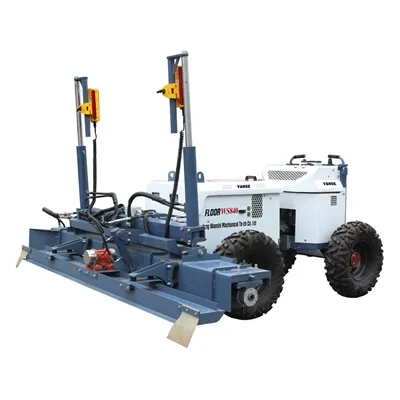
Specifically, an ordinary concrete laser leveling machine can construct 600 to 1,050 square meters per hour at a normal driving speed of 4 to 7 meters per minute. Based on eight hours per shift, one piece of equipment can construct 4,800 to 8,400 square meters in one shift. Depending on the actual working conditions, this value will decrease. However, compared with the efficiency of manual construction within 800 square meters per shift, mechanical construction can undoubtedly greatly shorten the construction period and save construction costs.
Therefore, it can be seen that the concrete laser leveling machine has high working efficiency. For more information, you can ask us for answers.


Thanks to All the Friends Who Support and Trust Shandong Vanse Machinery Technology Co., Ltd.
If you want to know more about Shandong Vanse Machinery Technology Co., Ltd. or have any questions, please feel free to contact us:
Our Factory
Shandong Vanse Machinery Technology Co., Ltd.








Share this article

About the Author: Shandong Vanse Machinery Technology Co., Ltd.
Shandong Vanse Machinery Technology Co., Ltd. is a high-tech manufacturer specializing in concrete construction machinery, including laser screeds and related equipment. The company integrates R&D, production, and global sales, with products exported to over 60 countries and widely used in infrastructure projects worldwide.
Previous Post
Next Post
Related Articles
You Might Also Like
Determining the initial setting time of concrete and mastering the optimal timing for power trowel operation
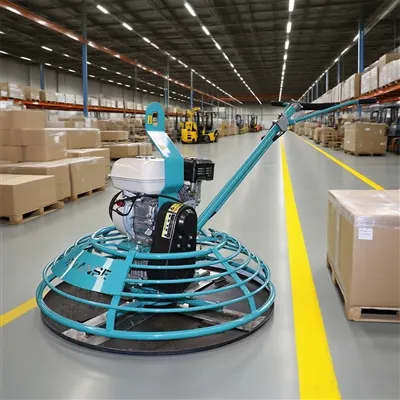
The determination of the initial setting time of concrete and the timing of the entry of the power trowel machine are the keys to ensuring that the floor is flat, solid and free of cracks. Below, I will elaborate in detail in two parts: one is how to determine the initial setting time of concrete, and the other is how to grasp the best time for the power trowel to enter the site for operation. Initial setting refers to a "critical point" at which concrete begins to transform from a plastic state to a solid state. At this point, the concrete loses its fluidity but has not yet acquired strength. According to the national standard "Standard Test Methods for Performance of Ordinary Concrete Mixtures", the initial setting time is scientifically determined by a penetration resistance meter. Method: Sift out the mortar from the concrete mixture and load it into a specific container. From the start of pouring, test with a penetration resistance meter at regular intervals (such as 30 minutes). The determination criterion: When the penetration resistance reaches 3.5 MPa, the corresponding time is the initial setting time. Applicable scenarios: Laboratories or major project sites, where precise data is required to guide construction. In actual construction, workers rely on simple and effective empirical methods: Acupressure method (the most classic) : Operation: Press the concrete surface firmly with your fingers (or feet). Judgment Too early: If the fingers can easily press down very deep and cement slurry overflows, it indicates that it is far from beginning to set. Close to initial setting: When pressed hard, only a clear fingerprint of 3-5 millimeters is left on the surface, but no cement slurry overflows. This is a very important signal. Initial condensation: It requires a great deal of force to leave a very shallow mark. Footprint method Operation: Construction workers stand on the concrete surface and observe the sinking of the footprints. Judgment Too early: Deep footprints, obvious subsidence, and cement slurry being squeezed out around. Close to initial setting: The depth of the footprints is relatively shallow (about 5mm), and the edges of the footprints are clear, with no obvious precipitation of slurry water. At this point, people can walk on it, but there is a slight sense of sinking. Scratch method Operation: Use a nail, screwdriver or power trowel to make a mark on the concrete surface. JudgmentToo early: The scratch will close quickly and be filled with cement slurry. Near initial setting: The scratch can maintain its shape, with the edge slightly raised and no longer closed. This is a strong indication that the first power trowel operation can begin. The entry and operation of the power trowel machine are not completed in one go, but are carried out in stages. Mistiming can lead to serious consequences: Entering the site too early: The concrete is too soft, and the machine will sink and stick to the slurry, damaging the concrete structure and causing the surface to peel and the strength to decrease. Entering the site too late: The concrete is already too hard, and the power trowel machine cannot effectively lift the slurry and smooth it out, which is time-consuming and laborious, and is prone to surface cracking. The best time and process for work The operation of a power trowel machine is usually divided into two key stages: Phase One: Initial smoothing (lifting the slurry and finishing the surface) Timing: The concrete is at or slightly above its initial setting point. Specific status When a person stands on it, the depth of the footprints is about 3 to 5 millimeters. By using the scratch method, the scratch can remain clear. When the power trowel blade is placed on it, it will not sink obviously. Assignment purpose: Press the aggregates (stones) slightly into the lower layer. Lift the surface cement slurry up. Carry out large-scale preliminary leveling. Key points of operation The operation is carried out using a disc (rubbing disc). The machine should not run too fast. It should move smoothly and slowly. Pay attention to overlapping areas that have been worked on to ensure no omissions. Phase Two: Fine grinding and polishing Timing: After the initial smoothing, when the moisture and luster on the concrete surface disappear and almost no footprints are left when stepped on (approximately 1-3 hours after the initial setting, depending on the environment). Specific status The color of the concrete surface begins to darken and become darker. There is a rough feeling when touched, but no hard or brittle sensation. At this point, the concrete has already possessed an initial load-bearing capacity. Assignment purpose: Eliminate the tiny scratches left by the disc operation. Further compact and smooth the surface to achieve the required flatness and smoothness. Seal the surface capillary pores to enhance wear resistance and impermeability. Key points of operation Remove the disc and use a blade (spatula) to carry out the operation. The rotational speed and moving speed of the machine can be appropriately increased. Cross-operation, multiple times of polishing, each time more meticulous than the previous one. Stage Description of concrete state Test method Operation of the power trowel machine Purpose Waiting period Soft, deep footprints, with bleeding Finger pressure/footprint method No entry allowed Let the concrete settle naturally and bleed water to evaporate Initial freezing point The footprints are 3 to 5mm deep, the scratches are clear, and there is no bleeding Finger pressure/scratch method Prepare to enter Determine the timing of the first operation First assignment Reach or slightly exceed the initial freezing point The same as above Install the disc and smooth it out at low speed Slurry extraction and initial leveling Fine grinding operation The surface water luster disappears, and the footprints are extremely shallow or non-existent Observe the color and footprints Replace the blade and polish at medium to high speed Compact, smooth surface, and seal Environmental factors influencing timing Temperature and wind speed: When the temperature is high and the wind is strong, water evaporation is fast, the initial setting time will be shortened, and all processes need to be advanced. Humidity: When the humidity is high, water evaporation is slow, and the initial setting time will be prolonged. Patience is required. The concrete mix ratio: The type of cement, water-cement ratio, and admixtures (such as retarders) all significantly affect the initial setting time. Final suggestion For important floor construction, "better late than early" is a safer principle. A little later, at most it will take more effort. However, entering the site too early will cause irreversible damage to the concrete structure. Skilled construction workers will dynamically adjust the entry and operation time of the power trowel machine through continuous observation and simple tests. Note: The parameters provided in this document are for reference only and are not mandatory. Due to differences in technical characteristics between different brands and models of laser levelers, please consult the manufacturer for a suitable solution before actual operation. This reference document assumes no responsibility for any issues arising from failure to follow the manufacturer's instructions.What engineering scenarios are thr small concrete trowels suitable for?
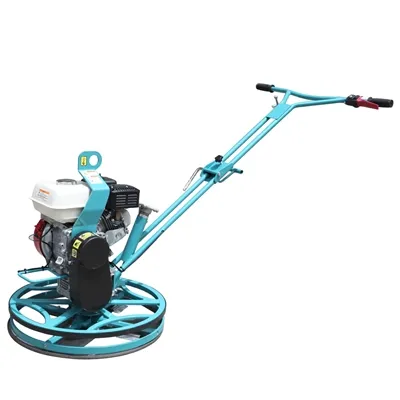
-Residential floor construction: During the construction or decoration of family houses, small concrete trowels can be used for concrete troweling of floors such as living rooms, bedrooms, kitchens and bathrooms. The floor area of these areas is relatively small, and small trowels are easy to operate, which can make the floor flat and smooth, providing a good foundation for the subsequent laying of floor tiles, wooden floors and other decorative materials. -Indoor floor of small commercial buildings: Small concrete trowels are also suitable for indoor floor construction in commercial places such as small shops and offices. It can ensure that the flatness of the floor meets the requirements and create suitable conditions for installing various floor coverings or directly using the floor. – For some small warehouses, small concrete trowels can efficiently polish the floor. It can make the warehouse floor more solid and flat, which is convenient for the stacking of goods and the driving of handling equipment. In addition, the floor after polishing is more wear-resistant and can effectively resist the friction of goods and vehicles in the warehouse. -Sidewalk construction: In the construction of urban sidewalks, small concrete trowels can be used to smooth the concrete pavement of sidewalks. Since the width of the sidewalk is relatively narrow, the small trowel can flexibly operate along the edge and middle part of the road to make the sidewalk surface smooth, improve the comfort of pedestrians, and also facilitate drainage. -Small squares: For places such as leisure squares and small commercial squares in residential areas where the ground area is not particularly large, small concrete trowels can well complete the polishing of the concrete surface. It can create a smooth and beautiful ground to meet people's daily leisure and activity needs. – After repairing some small concrete structures, such as the local repair of the bridge deck of a small bridge, and the local damage repair of the concrete wall or ground of a building, the small concrete trowel can be used to smooth the repair area. It can make the repaired surface smooth and consistent with the original structure surface, ensuring the appearance and performance of the structure.Price And Cost-Effectiveness Evaluation Of Concrete Laser Leveling Machines
Price and cost-effectiveness evaluation of concrete laser leveling machine As an advanced floor construction equipment, concrete laser leveling machine has been widely used in construction, roads, bridges and other fields in recent years. For construction units, choosing a suitable concrete laser leveling is not only related to construction quality, but also to economic benefits. Therefore, this article will conduct an in-depth discussion on the price and cost performance of concrete laser leveling machines, with a view to providing valuable reference for construction units. ▷▪▪▪ Price structure of concrete laser leveling machine The price of concrete laser leveling machine is affected by many factors, including the following aspects: ☆ Equipment specifications and models: The prices of concrete laser leveling machines of different specifications and models vary greatly. Generally speaking, factors such as the working width, power, and degree of automation of the equipment will affect the price. For example, large, high-power, highly automated equipment tends to be more expensive. ☆ Brand and quality: Factors such as brand awareness, the technical level of the production company, the manufacturing process and quality of the equipment will also have an impact on the price. Equipment with well-known brands, leading technology, and reliable quality usually has higher prices. ☆ Market supply and demand relationship: Market supply and demand relationship is an important factor affecting the price of equipment. When market demand is greater than supply, equipment prices may rise; conversely, when market supply is greater than demand, equipment prices may fall. ▷▪▪▪ Cost-effectiveness evaluation of concrete laser leveling machine Cost-effectiveness is an important indicator for evaluating the value of a concrete laser leveling, which mainly includes the following aspects: ☆ Construction efficiency: The construction efficiency of the concrete laser leveling machine is much higher than the traditional manual leveling method. One piece of equipment can complete hundreds or even thousands of square meters of floor leveling work per hour, greatly shortening the construction period and saving labor costs. Therefore, the equipment price is relatively cost-effective relative to construction efficiency. ☆ Construction quality: The concrete laser leveling machine adopts a laser control system, which can accurately control the ground elevation and flatness to ensure construction quality. Compared with traditional manual leveling methods, concrete laser leveling machines can reduce construction errors and improve the integrity and aesthetics of the ground. Therefore, from the perspective of construction quality, the concrete laser leveling has a high cost performance. ☆ Comprehensive cost: In addition to the purchase cost of the equipment itself, subsequent costs such as equipment maintenance, maintenance, and consumables also need to be considered. Although the initial investment of a concrete laser leveling is high, in the long run, its overall cost is relatively low. Because the equipment can improve construction efficiency, reduce labor costs, reduce construction error rates, etc., thereby saving a lot of comprehensive costs, therefore, from the perspective of comprehensive costs, concrete laser levelings have a high cost performance. ▷▪▪▪ Actual case analysis Take a municipal road construction project as an example. The project uses a concrete laser leveling machine to perform ground leveling work. At the beginning of the project, the construction unit purchased a concrete laser leveling machine at a price of about 1 million yuan. During the project construction process, the equipment can complete approximately 2,000 square meters of floor leveling work every day, greatly improving construction efficiency. At the same time, because the equipment adopts a laser control system, the construction quality has been significantly improved and the construction error rate has been reduced. After comprehensive evaluation, the construction unit believes that the equipment has a high cost performance and is worthy of continued use in subsequent projects. ▷▪▪▪ Conclusion and outlook Through an in-depth discussion of the price and cost performance of concrete laser leveling machines, we can draw the following conclusions: Although the initial investment of concrete laser leveling machines is relatively high, it has relatively high performance in terms of construction efficiency, construction quality, comprehensive cost, etc. High cost performance. For construction units, choosing a suitable concrete laser leveling can significantly improve construction efficiency and quality, reduce overall costs, and achieve better economic benefits. Looking to the future, with the continuous advancement of technology and the growing market demand, concrete laser leveling machines will be used in more fields. At the same time, equipment manufacturers should also continue to improve product quality and technical level and reduce production costs to promote the rationalization of concrete laser leveling machine prices and improvement of cost performance. In addition, construction units should also fully consider their own needs and actual conditions when selecting equipment, and choose equipment models and brands that suit them to achieve the best economic and social benefits.