Technical Knowledge
Large area floor laser leveling machine leveling construction method
Large area floor laser leveling machine leveling construction method
1. Laser transmitter
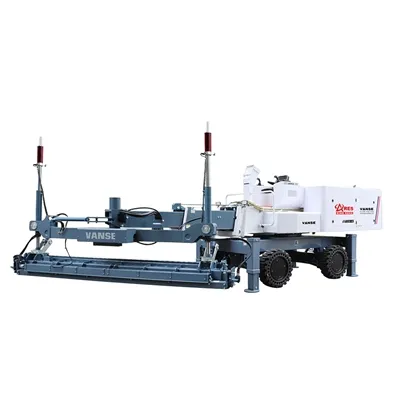
The laser transmitter is one of the important components of the large-area floor laser leveling machine. It is responsible for emitting laser beams and providing positioning and navigation benchmarks for the leveling machine. The laser transmitter should have the characteristics of high precision, high stability and long life to ensure the accuracy and reliability of leveling construction. When selecting a laser transmitter, factors such as its power, wavelength, and beam quality should be considered to meet different construction needs.
2. Work head
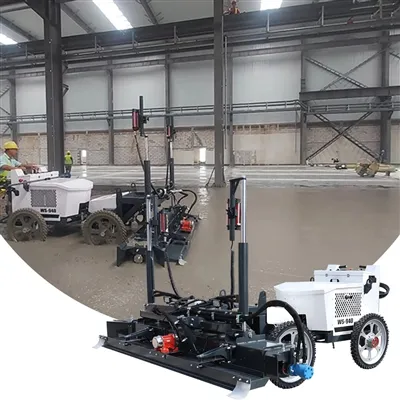
The leveling head is the core component of the large-area floor laser leveling machine. It is responsible for leveling and compacting concrete materials to form a smooth and flat floor. The design and manufacturing quality of the smoothing head directly affects the quality and appearance of the floor. The smoothing head is generally composed of a scraper, a pressing plate, a motor, etc. It has a variety of working modes and adjustment functions, and can be selected and adjusted according to different concrete materials and construction requirements.
3. Engine
The engine is the power source of the large-area floor laser leveling machine and provides power for the operation of the leveling machine. The choice of engine should be based on the specifications and construction needs of the leveling machine. Generally, a diesel engine or an electric motor is used. Engine performance parameters such as power, fuel consumption, noise, etc. are also important factors in selection.
4. Control Panel
The control panel is the control center of the large-area floor laser leveling machine. The operator can control the operation of the leveling machine and switch between various working modes through the control panel. The control panel generally has multiple functions, such as start, stop, speed adjustment, direction control, etc. It can also display the working status and fault information of the machine. The design of the control panel should be concise and clear, making it easy for operators to quickly grasp and operate.
5. Auxiliary equipment
Large-area floor laser levelings also require some auxiliary equipment such as concrete mixers, transport trucks, water pumps, etc. to complete the entire construction process. The selection and use of these auxiliary equipment should be based on actual conditions to ensure the smooth progress of construction and improve construction efficiency.

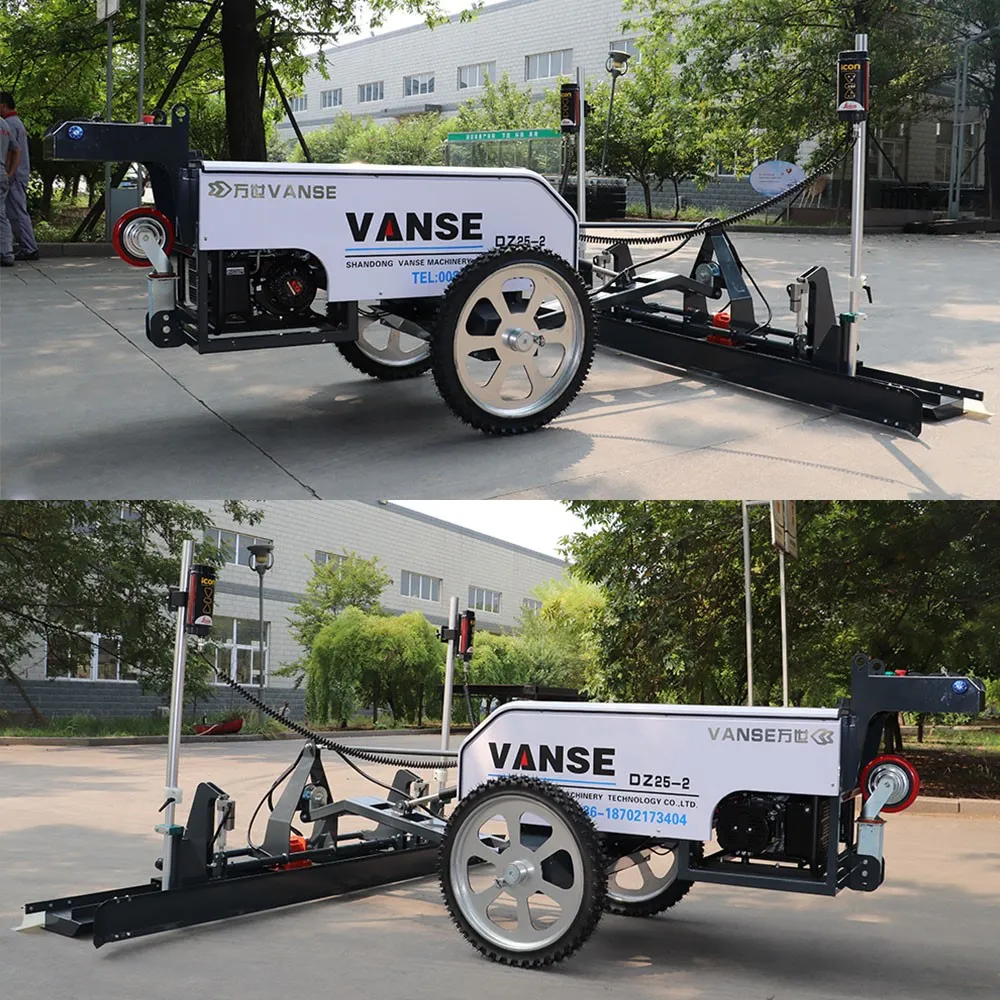


Thanks to All the Friends Who Support and Trust Shandong Vanse Machinery Technology Co., Ltd.
If you want to know more about Shandong Vanse Machinery Technology Co., Ltd. or have any questions, please feel free to contact us:
Our Factory
Shandong Vanse Machinery Technology Co., Ltd.








Share this article

About the Author: Shandong Vanse Machinery Technology Co., Ltd.
Shandong Vanse Machinery Technology Co., Ltd. is a high-tech manufacturer specializing in concrete construction machinery, including laser screeds and related equipment. The company integrates R&D, production, and global sales, with products exported to over 60 countries and widely used in infrastructure projects worldwide.
Previous Post
Next Post
Related Articles
You Might Also Like
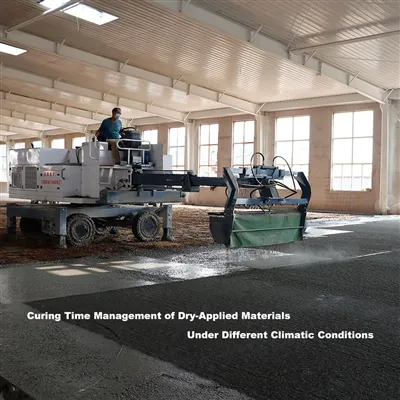
Curing Time Management of Dry-Applied Materials Under Different Climatic Conditions
Under different climatic conditions, managing the curing of dry-applied materials (such as wear-resistant floor hardeners) is crucial for ensuring floor strength. Environmental temperature, humidity, and wind speed directly determine the rate of water evaporation and the efficiency of cement hydration reactions. The following are curing time management strategies for different climatic conditions: In this environment, water loss is extremely rapid, easily leading to cracking or delamination of the dry-applied material. Curing time management: Shorten the "water absorption waiting period" after dry application. Begin troweling immediately after the material darkens (indicating absorption of moisture from the base layer) to prevent the material from failing to bond with the base layer due to rapid water loss. Core operation: Increase spraying or use film curing to ensure stable dissipation of hydration heat. Low temperatures significantly slow down the hydration reaction of cement, leading to a substantial increase in curing time. Curing Time Management: Extend the monitoring period for initial and final setting times. When the temperature approaches 0°C, heating or insulation measures must be taken; otherwise, the dry-mix material may freeze and fail before complete curing. Key Operation: Strictly control the amount of dry-mix material to prevent premature cessation of bleeding from the base layer, which would prevent the material from being properly wetted. In high-humidity environments, water evaporation is extremely slow, and the surface tends to remain wet or even accumulate water for extended periods. Curing Time Management: Appropriately extend the time before using the power trowel to prevent premature finishing, which can lead to bubbles or peeling on the surface. Core Operation: Enhance ventilation to aid in water evaporation. If working outdoors, strictly monitor rainfall forecasts, as uncured material will be washed away by rain. Climate Types Water evaporation rate Curing speed Key Management Points Hot and dry Very high Very fast Prevent cracking, expedite construction, and ensure proper wet curing. Cold winters Very low Slow Strengthen insulation and prevent frost damage. Humid and rainy Low Slower Control the timing of finishing work and enhance ventilation. Note: The parameters provided in this document are for reference only and are not mandatory. Due to differences in technical characteristics between different brands and models of laser levelers, please consult the manufacturer for a suitable solution before actual operation. This reference document assumes no responsibility for any issues arising from failure to follow the manufacturer's instructions.How to maintain and maintain concrete laser leveling machine?
How to maintain and maintain the concrete laser leveling machine? How to maintain and maintain the concrete laser leveling machine? The concrete laser leveling machine is a precision mechanical equipment that requires regular maintenance and upkeep to ensure its normal operation and extend its service life. The following will introduce the maintenance and upkeep points of the concrete laser leveling, including the following aspects: 1. Cleaning machine Keeping your concrete laser leveling clean is the first step in maintenance. Regularly use dry compressed air to clean the dust and debris on the surface and inside of the machine. Pay special attention to cleaning the surface of the laser transmitter and receiver to avoid affecting the normal operation of the machine. In addition, the machine should be cleaned of oil and debris regularly to maintain good working condition. 2. Check the cables and plugs The integrity of the cables and plugs is key to the proper functioning of the concrete laser leveling. Regularly check whether the cables are damaged and whether the plugs are loose or detached, and replace damaged cables and plugs promptly to avoid machine failure. 3. Check the lubricant The concrete laser leveling needs to add lubricant regularly to ensure the normal operation of the machine. Regularly check whether the lubricant level is normal. If the level is too low, add lubricant in time to avoid wear and damage to the machine. 4. Check the sensor The sensor of the concrete laser leveling machine is an important component that affects the leveling accuracy of the machine. It is necessary to regularly check whether the sensor is sensitive. If the sensor fails or malfunctions, it must be replaced or repaired in time to avoid affecting the smoothing accuracy. 5. Check battery/engine Some concrete laser levelings require batteries as a power source. Regularly check whether the battery power is sufficient. If the battery power is insufficient, charge or replace the battery in time to prevent the machine from not working properly due to insufficient power. For other concrete laser levelings that use diesel or gasoline, the engine must be maintained regularly to avoid long-term disrepair of the engine. 6. Check the fuel tank Before each use of the concrete laser leveling machine, the fuel tank must be inspected to ensure that the oil in the tank can complete the construction. Once the concrete is mixed, the construction must be completed as soon as possible to avoid insufficient oil in the concrete laser leveling machine causing concrete solidification zones. economic losses 7. Maintain the machine The maintenance of concrete laser leveling machine is very important maintenance work. The machine must be maintained regularly, including cleaning the debris inside the machine, checking the wear and tear of parts, replacing worn parts, etc., to maintain the normal operation of the machine and extend its service life. 8. Precautions When using the concrete laser leveling machine, avoid hitting hard objects or obstacles to avoid damaging the machine or affecting the leveling accuracy. During use, adjust the height of the machine's flattening head to keep the flattening head parallel to the ground to ensure flattening accuracy. During use, avoid contamination of the flattening head with dust, debris or other substances, so as not to affect the flattening effect and the service life of the machine. During use, keep the machine dry and ventilated to avoid damage to the machine caused by moisture and high temperature. During use, the working status and accuracy of the machine should be checked regularly, and problems should be discovered and solved in time to maintain the normal operation of the machine and improve work efficiency. During use, pay attention to safe operating procedures to avoid injuries to hands or other parts. During use, the machine must be maintained and maintained regularly to extend the service life of the machine and improve work efficiency. To sum up, the maintenance and upkeep of concrete laser levelinging machines requires many aspects, including cleaning the machine, checking cables and plugs, checking lubricants, checking sensors, checking batteries/engines, maintaining the machine, etc. Only regular maintenance and upkeep can ensure the normal operation and improve the service life of the concrete laser leveling.How to optimize the use environment of concrete laser leveling machine in the project?
In the field of construction, concrete laser levelers (concrete laser leveling machines or concrete laser levelers) have become key equipment for improving the efficiency and quality of concrete construction. With the continuous advancement of global infrastructure construction and the growing demand for high-precision construction in the construction industry, the market size of concrete laser levelers continues to expand. According to market research reports, the global market size of concrete laser levelers is expected to reach US$1.76 billion in 2025, with an annual growth rate of approximately 11.4%. In order to give full play to the effectiveness of concrete laser levelers and extend their service life, it is crucial to optimize the use environment. Before the operation of the concrete laser leveler, it is crucial to ensure that the construction site is clean and free of debris. Stones, wood, metal scraps and other debris in the site will not only hinder the normal operation of the equipment, but may also damage key components of the equipment, such as the leveling work head and walking tires. For example, if sharp stones remaining in the site are drawn into the walking mechanism of the laser leveler, it may cause the tires to be scratched and deviate, affecting the stability and walking accuracy of the equipment. At the same time, the construction site should be initially leveled so that the ground slope and undulation are within the range that the equipment can adapt to. Generally speaking, the concrete laser leveling machine is suitable for slopes within a certain range. If the site slope exceeds the specified range, it may cause the center of gravity of the equipment to be unstable, affect the leveling accuracy, and even cause safety accidents. In order to ensure the safety of construction personnel and equipment, a clear safety warning area should be set up around the concrete laser leveling machine operation area. Set up warning signs, such as "Construction site, no entry for idle people" and "Pay attention to equipment operation", and set up warning tapes to clearly divide the equipment operation range. Especially in construction sites where multiple types of work are cross-operated, prevent other personnel or equipment from mistakenly entering the operation path of the laser leveling machine to avoid collision accidents. For example, in the construction of basement floors in large commercial complexes, due to the complex construction space and frequent exchanges between personnel and equipment, a clear safety warning area can effectively reduce the probability of accidents. At the same time, arrange special personnel to be responsible for safety inspections to ensure the effectiveness of the warning area and promptly dissuade personnel and equipment from entering illegally. Response to high temperature environment: In high temperature environment, the engine of the concrete laser leveler is prone to overheating, resulting in power reduction and increased wear of parts. When the ambient temperature exceeds 35℃, the load of the engine cooling system increases significantly. At this time, the maintenance of the engine cooling system should be strengthened, and the coolant level should be checked before daily operation. If it is insufficient, add coolant that meets the specifications in time. Clean the dust and debris on the surface of the radiator regularly to ensure that the heat dissipation air duct is unobstructed. Compressed air or high-pressure water gun (pay attention to moderate water pressure to avoid damage to the radiator fins) can be used for cleaning. For example, when constructing in an open-air parking lot with high temperature in summer, if the engine temperature is found to be too high, the equipment should be immediately moved to a cool place to shut down and cool down, and never force operation under high temperature. At the same time, consider installing a sunshade for the equipment to reduce the impact of direct sunlight on the equipment and reduce heat accumulation in the engine compartment. Response to low temperature environment: In a low temperature environment (such as an ambient temperature below 5℃), the viscosity of the lubricating oil of the concrete laser leveler increases and the fluidity becomes poor, which will make it difficult to start the equipment and increase the wear of various moving parts. Therefore, before construction in a low-temperature environment, lubricating oil and hydraulic oil suitable for low-temperature working conditions should be replaced, such as using low-freezing point engine oil and hydraulic oil. Before starting the equipment, a preheating device can be used to preheat the engine, such as an electric heating water jacket, a fuel heater, etc., to improve the starting performance of the engine. At the same time, the battery of the equipment should be kept warm and protected, and a battery warming sleeve can be installed to prevent the battery from degrading due to low temperature and affecting the start of the equipment. For example, in the construction of industrial plant floors in the northern winter, taking good low-temperature protection measures for the equipment can ensure the normal operation of the concrete laser leveling machine and improve construction efficiency. High humidity environment protection: High humidity environment can easily cause the metal parts of the concrete laser leveling machine to rust and corrode, especially when constructing in coastal areas or rainy seasons. In order to cope with high humidity environments, the equipment should be parked in a dry place, and try to choose indoors or in a place with a rain shelter. If it is unavoidable to work in a humid environment, anti-rust oil can be applied to the surface of the equipment, especially parts that are prone to rust, such as the frame, chassis, and walking mechanism. Check the electrical circuits regularly to prevent short circuits caused by moisture. Use an insulation resistance tester to detect the insulation performance of the electrical circuits and deal with problems in a timely manner. For the battery of the equipment, keep it clean and dry, check the electrolyte level and density regularly, and add distilled water in time to ensure good battery performance. For example, if the laser leveling machine used for a long time in a high humidity environment does not pay attention to rust prevention, the frame may rust and reduce strength in a short time, affecting the safety and service life of the equipment. Moisture-proof measures: When the concrete laser leveling machine is idle, effective moisture-proof measures should be taken. Desiccant, such as quicklime, silica gel desiccant, etc., can be placed at the equipment parking place to absorb moisture in the surrounding air and reduce humidity. For key components of the equipment, such as laser transmitting and receiving devices, electrical control cabinets, etc., moisture-proof covers can be used for protection to prevent moisture intrusion. During construction in the rainy season, if the equipment is exposed to rain for a long time, the moisture on the surface of the equipment should be wiped dry with a dry cloth in time after the operation, and the equipment should be fully inspected to ensure that no moisture enters the equipment. For example, in the construction site in the rainy season in the south, doing a good job of moisture-proofing the equipment can effectively reduce equipment failures caused by moisture. Concrete laser leveling machines usually operate at construction sites with a lot of dust, and a large amount of dust can damage the key components of the equipment. To reduce the impact of dust, a high-efficiency air filter can be installed at the air inlet of the equipment to filter dust particles in the air and ensure that the air entering the engine and hydraulic system is clean. Clean the air filter regularly. Depending on the dust concentration at the construction site, generally clean or replace the filter element every 50-100 hours of work. At the same time, protect the laser transmitting and receiving devices of the equipment to prevent dust from adhering to the lens and affecting the transmission of the laser signal. A dust cover can be installed or the lens can be wiped regularly with a clean soft cloth. In addition, when the equipment is operating, try to avoid staying in areas with severe dust for a long time to reduce the erosion of dust on the equipment. For example, in the floor construction of a cement plant, the dust concentration is extremely high. Strengthening dust protection measures can effectively extend the service life of the concrete laser leveling machine. For electric concrete laser levelers, stable power supply is the key to the normal operation of the equipment. Before connecting to the power supply, check whether the power supply voltage meets the equipment requirements. The rated voltage fluctuation range of general equipment should be controlled within ±10%. If the voltage is too high or too low, it will affect the performance of the equipment motor and even burn the motor. You can use a voltmeter to regularly check the power supply voltage to ensure that the voltage is stable. At the same time, ensure that the capacity of the power supply line is sufficient to avoid safety accidents caused by voltage drop or line heating due to line overload. For temporary electricity use at the construction site, wiring should be carried out in accordance with relevant specifications, using a three-phase five-wire system and equipped with a leakage protector to ensure safe electricity use. For example, in the indoor floor construction of large shopping malls, if the power supply is unstable, the motor speed of the laser leveler may be uneven, affecting the leveling accuracy. Fuel-fired concrete laser levelers need to use high-quality fuel to ensure the normal operation of the engine. You should choose fuel that meets the equipment's required grades. For example, diesel engines generally use 0 or -10 diesel, and lower grades of diesel should be used in low temperature environments. Poor-quality fuel may contain impurities and moisture, which can cause the engine's fuel injectors to become clogged, combustion to be incomplete, reduce engine power, increase fuel consumption, and even damage the engine. Purchase fuel from regular gas stations and clean the fuel tank regularly to prevent impurities precipitated at the bottom of the tank from entering the fuel system. At the same time, before adding fuel to the equipment, you can use a fuel filter for secondary filtration to ensure fuel cleanliness. For example, in highway construction in remote areas, if non-standard fuel is used, the engine of the concrete laser leveler may frequently malfunction, affecting the construction progress. If conditions permit, the concrete laser leveler should be stored indoors as much as possible. Indoor storage can effectively prevent the equipment from being eroded by natural factors such as wind, sun, and rain, and reduce the risk of paint damage on the surface of the equipment and rust on metal parts. The indoor storage environment should be kept dry, well ventilated, and at a suitable temperature. The general temperature should be controlled between 5℃ – 35℃, and the relative humidity should be controlled between 40% – 70%. When storing indoors, the equipment can be parked on a dedicated bracket to avoid direct contact between the equipment and the ground, and to prevent the bottom parts from getting damp and rusting. At the same time, the equipment should be inspected and maintained regularly, such as checking the lubrication of the equipment, the connection of the electrical circuits, etc., to ensure that the equipment is in good standby condition. If the concrete laser leveling machine can only be stored outdoors, strict protective measures must be taken. First, build a rain shelter to ensure that the equipment is not directly exposed to rain. The material of the rain shelter should have good waterproof and sun-proof properties, such as color steel plates, canvas, etc. Cover the surface of the equipment with sun-proof and waterproof tarpaulin, and fix it firmly with ropes to prevent the tarpaulin from being blown away by the wind. At the same time, additional protection should be provided for key parts of the equipment, such as the engine, electrical control cabinet, laser transmitting and receiving devices, etc., which can be wrapped with a dedicated protective cover. During outdoor storage, the equipment should be inspected regularly, dust and debris on the surface of the equipment should be cleaned, and problems should be dealt with promptly. For example, in long-term outdoor construction sites, good storage protection of the equipment can effectively extend the service life of the equipment and reduce the occurrence of equipment failures. Click the below to jump immediately!!! ARMOUR JOINT CONCRETE LEVELING MACHINE LIGHT TOWER POWER TROWEL SLIPFORM MACHINE STEEL FIBER TOPPING SPREADER TRACKED MINI DUMPER