Technical Knowledge
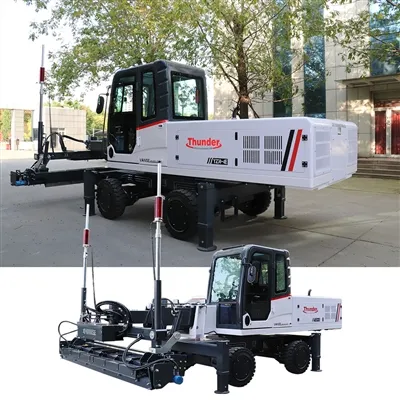
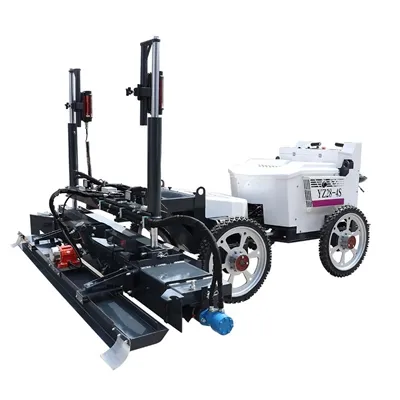
What are the advantages of concrete laser leveling machine in construction?
The advantages of concrete laser leveling machines in construction are mainly reflected in the following aspects:
1. High precision:
The concrete laser leveling machine uses advanced laser technology to achieve high-precision ground leveling. Compared with traditional manual leveling or scraping machines, laser leveling machines can greatly improve the flatness of the ground and reduce the unevenness of the ground, thereby greatly improving the construction quality.
2. High efficiency:
Concrete laser leveling machines can usually work continuously, greatly improving construction efficiency. In addition, laser leveling machines are usually equipped with automated control systems, which can realize automated operations, reduce manual intervention, and further improve construction efficiency.
3. Reduce construction joints:
Using a concrete laser leveling can reduce the number of construction joints, thereby improving the integrity of the ground. This can avoid quality problems caused by improper handling of construction joints and also improve the aesthetics of the ground.
4. Reduce the waste of concrete materials:
The concrete laser leveling can accurately control the thickness and amount of concrete, avoiding material waste caused by uneven thickness or excessive filling in traditional construction methods. This not only saves costs but is also beneficial to the environment.
5. High degree of automation:
Concrete laser leveling machines are usually equipped with automated control systems that can achieve automated operations. This reduces manual intervention, reduces the impact of human factors on construction quality, and improves the consistency and stability of construction.
6. Wide scope of application:
Concrete laser leveling machine is suitable for various types of concrete construction, such as cement, asphalt, etc. This makes it have broad application prospects in different engineering projects.
7. Reduce later maintenance costs:
Because the concrete laser leveling can improve the flatness of the ground and reduce ground cracking, sanding and other problems, it reduces later maintenance costs. This saves long-term maintenance costs for owners and construction companies.
8. Improve safety:
The concrete laser leveling can reduce manual operations at the construction site, thereby reducing the risk of manual accidents. At the same time, due to the reduction of manual intervention, the impact of human factors on construction quality is also reduced.
9. Improve the construction quality acceptance pass rate:
Because the concrete laser leveling machine can achieve high-precision ground leveling and improve the construction quality, it can improve the construction quality acceptance pass rate. This is of great significance to ensure the smooth progress of engineering projects.
10. Improve economic benefits:
The use of concrete laser leveling machines can improve construction efficiency, reduce material waste, reduce later maintenance costs, etc., thereby improving economic benefits. In addition, due to the improved construction quality acceptance rate, it may also bring more business opportunities and economic benefits.
To sum up, the concrete laser leveling machine has the advantages of high precision, high efficiency, reduction of construction joints, material saving, and high degree of automation in construction. These advantages make it an indispensable construction equipment in modern construction projects, with broad application prospects and promotion value.
The above content is for reference only. If you need more information, you can contact our business manager.
Thanks to All the Friends Who Support and Trust Shandong Vanse Machinery Technology Co., Ltd.
If you want to know more about Shandong Vanse Machinery Technology Co., Ltd. or have any questions, please feel free to contact us:
Our Factory
Shandong Vanse Machinery Technology Co., Ltd.








Share this article

About the Author: Shandong Vanse Machinery Technology Co., Ltd.
Shandong Vanse Machinery Technology Co., Ltd. is a high-tech manufacturer specializing in concrete construction machinery, including laser screeds and related equipment. The company integrates R&D, production, and global sales, with products exported to over 60 countries and widely used in infrastructure projects worldwide.
Previous Post
Next Post
Related Articles
You Might Also Like
Causes and treatment of ground cracks
Causes and treatment of concrete floor cracks 1. Introduction As an indispensable part of building structures, concrete floors are widely used in various construction sites. However, in actual use, cracks often occur in concrete floors, which not only affects the aesthetics of the floor, but also poses a potential threat to the integrity and safety of the structure. Therefore, it is particularly important to deeply study the causes of concrete floor cracks and take corresponding treatment measures. The formation of concrete floor cracks is a complex process involving many factors such as materials, design, construction, and environment. This paper aims to analyze the specific causes of concrete floor cracks, explore effective treatment methods and preventive measures, and provide theoretical support and practical guidance for crack control in actual projects. 2. Analysis of causes of concrete floor cracks ✔ Material factors The material selection of concrete floors is directly related to the generation of cracks. If the quality of raw materials such as cement, aggregates, and admixtures used is unqualified, or the mix ratio is improperly designed, it may lead to insufficient concrete strength and large shrinkage, thereby causing cracks. In addition, impurities, bubbles, and other defects added to concrete may also become the starting point of cracks. ✔ Design factors Improper design is also an important cause of concrete floor cracks. If the design load calculation is inaccurate, the structural layout is unreasonable, the ground thickness is insufficient or too thick, etc., the concrete floor may produce excessive stress concentration when subjected to force, resulting in cracks. ✔ Construction factors Improper operation during construction is also a common cause of cracks. For example, uneven vibration during concrete pouring leads to voids and stratification inside the concrete; failure to maintain in time after pouring causes shrinkage cracks due to excessive water loss during the hardening process; improper construction joint treatment forms weak links, etc. ✔ Environmental factors Environmental factors also have an important impact on the generation of cracks in concrete floors. For example, thermal expansion and contraction caused by temperature changes cause stress changes inside the concrete; humidity changes cause concrete to shrink or expand; foundation settlement, earthquakes and other natural disasters may also cause damage to the concrete floor and cause cracks. 3. Treatment measures for concrete floor cracks According to the different causes of concrete floor cracks, corresponding treatment measures need to be taken. The following are some common treatment methods: ✔ Surface repair method For cracks with smaller width and shallower depth, surface repair method can be used for treatment. Specific operations include cleaning the crack surface, applying repair materials such as ring gold resin to seal the cracks and restore the flatness and aesthetics of the ground. ✔ Filling method For cracks with larger width and deeper depth, the filling method can be used for treatment. First, clean the inside of the crack, and then use high-strength repair materials (such as epoxy mortar, polymer cement, etc.) to fill it to ensure that the filling is dense and tightly combined with the surrounding concrete. ✔ Pressure grouting method For cracks with larger width and deeper depth, the pressure grouting method can be used for treatment. The repair material is injected into the crack with a certain pressure through the grouting equipment, so that the material can be fully diffused and fill the crack space, thereby achieving the purpose of repair and reinforcement. ✔ Replacement method For cracks that are serious and affect structural safety, the replacement method may be required. That is, the damaged concrete part is excavated and new concrete is poured again to restore the integrity and structural safety of the ground. ✔ Structural reinforcement method While dealing with cracks, the overall structural performance of the concrete floor should also be considered. The crack resistance of the ground can be enhanced by adding steel mesh, increasing the thickness of the ground, and setting expansion joints. 4. Preventive measures In order to reduce the probability of cracks in concrete floors, preventive measures should also be taken from the aspects of design, materials, and construction: ✔ Rationally design the floor structure and thickness to ensure that the use requirements and load conditions are met. ✔ Select high-quality raw materials and strictly control the mix ratio to ensure the quality of concrete. ✔ Strengthen the management of the construction process to ensure the pouring, vibration, maintenance and other process operations are standardized. ✔ Fully consider the impact of environmental factors on the concrete floor and take corresponding measures to prevent it. 5. Case analysis In order to better illustrate the causes and treatment measures of cracks in concrete floors, this paper selects a real engineering case for analysis. During the construction process of this project, cracks appeared on the ground due to uneven vibration and untimely maintenance. After on-site investigation and cause analysis, the construction unit adopted the filling method and strengthened maintenance measures to deal with the cracks, and strengthened the management of the subsequent construction process, effectively preventing similar problems from happening again. 6. Technology development trend With the advancement of science and technology and the continuous accumulation of engineering practice, the technology for handling cracks in concrete floors is also developing. In the future, we can expect the emergence of more efficient, environmentally friendly and intelligent crack handling technologies. For example, using nondestructive testing technology to accurately identify and locate cracks; using new repair materials to improve the repair effect and durability; using intelligent monitoring systems to monitor and warn concrete floors in real time, etc. The application of these technologies will further improve the efficiency and accuracy of concrete floor crack treatment, and provide strong support for ensuring project safety and performance. 7. Conclusion The problem of concrete floor cracks is a complex and important engineering problem that requires us to analyze and deal with it from multiple angles. By deeply analyzing the causes of cracks, we can take targeted treatment measures and preventive measures to ensure the quality and safety of concrete floors. At the same time, we should also pay attention to the development trend of technology, continuously introduce and apply new technologies, new materials and new methods, and improve the level and effect of concrete floor crack treatment. In summary, the causes and treatment of concrete floor cracks are a highly comprehensive topic, involving both technical aspects and management and maintenance elements. In-depth research and discussion on the problem of concrete floor cracks will not only help improve the quality of the project, but also provide valuable experience and reference for future building design and construction. First of all, from the perspective of technology and materials, with the advancement of science and technology, new concrete materials and additives are constantly emerging, which have better strength, durability and crack resistance. At the same time, new construction processes and equipment have also improved the accuracy and efficiency of concrete construction and reduced the possibility of cracks. Therefore, we should actively pay attention to and apply these new technologies and new materials to improve the quality of concrete floors. Secondly, from the perspective of management and maintenance, establishing a sound construction management system and quality control system is an important means to prevent cracks in concrete floors. This includes training and supervision of construction personnel to ensure that they operate in accordance with specifications; strictly control the quality of raw materials to prevent unqualified materials from entering the construction site; monitor the construction process throughout the process, and promptly identify and deal with problems. At the same time, strengthening the post-maintenance and maintenance of concrete floors, and conducting regular inspections and repairs are also important measures to prevent the generation and expansion of cracks. In addition, we should also pay attention to the impact of environmental factors on cracks in concrete floors. By improving the construction environment, controlling temperature changes, and reducing humidity changes, the adverse effects of environmental factors on concrete floors can be reduced, thereby reducing the generation of cracks. Finally, we should also pay attention to the innovation and development of concrete floor crack treatment technology, and by introducing and developing new treatment technologies and equipment, improve the efficiency and effect of crack treatment and reduce damage to concrete floors during treatment. At the same time, strengthening the research and application of crack treatment technology and improving the professional level and skills of technicians are also important ways to promote the development of concrete floor crack treatment technology. In summary, the causes and treatment of concrete floor cracks are a complex and important issue. We need to take comprehensive measures from multiple perspectives to prevent and deal with crack problems. Through technological innovation, material upgrades, management optimization and environmental improvement, we can continuously improve the quality and durability of concrete floors and make greater contributions to the development of the construction industry. Of course, we should also realize that although we have achieved certain results, there are still many unknowns and challenges waiting for us to explore and solve the problem of concrete floor cracks. In the future, we need to continue to increase research efforts, deeply explore the mechanism and laws of crack generation, and find more effective treatment methods and preventive measures. At the same time, we should also strengthen international cooperation and exchanges, learn from and absorb international advanced experience and technology, and jointly promote the research and solution of concrete floor crack problems. In short, the problem of concrete floor cracks is an issue that requires long-term attention and continuous efforts. Through continuous exploration and practice, we believe that we will be able to find more effective solutions and make greater contributions to the sustainable development of the construction industry. Before concluding this article, I would like to emphasize that the prevention and treatment of concrete floor cracks cannot be achieved overnight, but requires us to constantly explore and improve in practice. We should always maintain our sensitivity to technology and pursuit of quality, and constantly improve our professional quality and practical ability to better cope with the challenges brought by the problem of concrete floor cracks. At the same time, we should also actively advocate and promote advanced concrete technology and concepts to promote the progress and development of the entire industry. In summary, the causes and treatment of concrete floor cracks is a topic that is both challenging and full of opportunities. Through in-depth research, technological innovation and practical exploration, we will definitely be able to find more effective solutions and make positive contributions to the prosperity and development of the construction industry.What construction scenarios are suitable for trowel blades of different designs?
– Features: The circular trowel blade is the most common design, which usually has multiple blades distributed in a circle around the central axis. This design enables the trowel blade to provide uniform pressure when rotating, and can effectively cover a large area during the troweling process. – Applicable scenarios: – Large area concrete plane: Such as large areas of concrete pouring ground such as industrial plants, large warehouses, and parking lots. In these scenarios, the circular trowel blade can quickly rough grind and level the ground and improve construction efficiency. For example, when building a large logistics warehouse, the ground area may reach thousands of square meters, and the circular trowel blade can perform preliminary troweling on the entire ground well. – Grounds with general flatness requirements: For some indoor and outdoor floors that do not require extremely high ground flatness, such as ordinary residential roads, simple outdoor activity venues, etc., the circular trowel blade can meet the basic troweling needs, making the ground surface smooth without obvious bumps or depressions. – Features: The four corners of the square trowel can better fit the corners, edges and some irregularly shaped areas. Compared with the round trowel, it has a better trowel effect at the corners. – Applicable scenarios: – Floors with corners and edges: In places with many corners and edges such as the floor of the room and corridor inside the building, the square trowel can fit these areas more closely to ensure that the floor of the corners and edges can also get a good trowel effect. For example, when decorating hotel rooms, the square trowel can smooth the four corners of the room and the floor near the wall to avoid "dead corners" that are difficult to reach with the round trowel. – Irregularly shaped floors: If the shape of the floor is not a regular rectangle or circle, but a complex shape such as a polygon or curve, the square trowel can flexibly adjust the angle according to the shape of the floor to effectively smooth these irregular areas. – Features: The perforated trowel is designed with many small holes, which are mainly used to discharge air and excess moisture from the concrete surface during the troweling process. It can make the floor more compact after troweling and reduce the generation of surface pores and bubbles. – Applicable scenarios: – Concrete surface with high quality requirements: In some scenarios with high requirements for concrete surface quality, such as high-precision laboratory floors, clean workshop floors in electronic factories, etc., the perforated trowel can effectively discharge air and moisture, so that the floor can achieve higher flatness and finish, meeting the strict requirements of these special places for floor quality. – Concrete construction in humid environments: When concrete construction is carried out in humid weather or in areas with high groundwater levels, water accumulation and bubbles are prone to occur on the concrete surface. The perforated trowel can discharge these excess moisture and air in time to ensure the quality of floor troweling. – Features: Double-layer trowels are composed of two layers of trowels of different sizes or shapes. The upper and lower trowels can cooperate with each other when rotating to achieve different degrees of trowel effects. Generally speaking, the diameter of the upper trowel will be slightly larger than that of the lower layer, or the blade angle of the upper trowel will be different from that of the lower layer. – Applicable scenarios: – Floors that require fine troweling: In scenes with extremely high requirements for floor finish, such as high-end shopping mall floors, high-end hotel lobby floors, etc., double-layer trowels can first use the lower trowel to perform preliminary large-area troweling and leveling, and then use the upper trowel to perform fine grinding to achieve a mirror-like smooth effect. – Concrete surfaces constructed in layers: For some concrete structures that are cast in layers, such as the concrete deck of a bridge, the concrete surface of a large hydraulic structure, etc., double-layer trowels can be used for different casting layers. First, the lower layer is coarse-grinded, and then the upper layer is finely ground to ensure the quality of the entire concrete surface.The laser leveling machine needs to be temperature controlled to avoid high temperature ‘burns’
Whether it is winter or summer, the use of laser leveling machines is indispensable for road construction. In the summer, the use of leveling machines may cause some parts inside the machine to overheat due to the increase in temperature, thus affecting the leveling effect of the laser leveling machine. In order to improve the use value of the equipment and improve work efficiency, we need to do a good job of temperature control during the operation of the laser leveling machine. First of all, controlling the temperature of the laser leveling machine is one of the keys to ensure the quality of leveling. When leveling, the equipment should meet the requirements of relevant standards according to the asphalt type, grade, consistency, ambient temperature, leveling thickness, etc. Secondly, when the construction temperature of highways and roads is lower than 10℃ and the construction temperature of other grades of roads is lower than 5℃, it is not suitable for leveling. If leveling work is required, the temperature of the road leveling machine should be increased, and there should be low-temperature leveling requirements that meet the regulations. The material transporter should have insulation measures, and high-precision leveling machines should be used as much as possible to start paving, and the trade plate should be heated and leveled immediately after the pressure is applied to shorten the length of the pressure. Remember that leveling should meet the requirements of relevant standards based on asphalt type, grade, consistency, ambient temperature, leveling thickness, etc., so that it is relatively simple and easy to control the temperature. Mastering the performance characteristics of the laser leveling machine will help us do a good job of temperature control. (1) The leveling principle of the laser leveling machine is to use advanced laser technology, closed-loop control technology and high hydraulic system, and realize it under the automatic control of the computer. This is its outstanding feature different from other floor construction processes. (2) The leveling principle of the leveling machine is to rely on the hydraulically driven leveling head, cooperate with the laser system and computer control system to complete the leveling work while automatically leveling. The leveling head is equipped with an integrated scraper, vibrator and leveling plate, which integrates all leveling, leveling, vibration and compaction work into one, and completes it at one time. The computer control system automatically adjusts the elevation in real time 10 times per second, and the vibration frequency of the balanced vibrator reaches 3000 times/minute. (3) The laser transmitter used to control the ground elevation is arranged independently, so that the floor elevation is not controlled by the template and no cumulative error will be generated. (4) The laser leveling machine can also automatically control the longitudinal and transverse slopes, which is also completed by the laser system, computer system, hydraulic system, and mechanical system. For complex-shaped ground with high requirements such as drainage, a three-dimensional special-shaped ground processing system can also be selected to achieve it. The above is the relevant knowledge told by the manufacturer. We hope that through our narration, you can understand the temperature control method of the laser leveling machine during the construction process, and hope that your equipment can run smoothly and correctly. If you have any questions, please contact us in time. We look forward to cooperating with you.