Technical Knowledge
Large area concrete floor laser leveling machine one-time forming construction method
••▶•• Project Overview ••◀••
With the rapid development of the modern construction industry, the requirements for the flatness, levelness and aesthetics of large-area concrete floors are getting higher and higher. Traditional floor and floor construction methods often have problems such as long construction period and unstable quality. Therefore, the use of laser leveling machines for one-time construction of large-area concrete floors has become an efficient and high-quality choice.
••▶•• Construction preparation ••◀••
1. Construction personnel training:
Ensure that the operators are familiar with the operating principles and safety procedures of the laser leveler and have certain construction experience.
2. Equipment inspection:
Conduct a comprehensive inspection of the laser leveling machine used in construction to ensure that it is in good working condition.
3. Preparation of construction materials:
Select concrete materials that meet the requirements to ensure construction quality.
4. On-site survey:
Conduct a detailed survey of the construction site to understand the terrain, climate and other conditions, and formulate corresponding construction plans.
••▶•• Construction process ••◀••
1. Foundation treatment:
Clean the construction site to ensure that the foundation is smooth and free of debris. If necessary, perform foundation leveling
2. Formwork support:
According to the design requirements, support the formwork to ensure it is flat and stable.
3. Concrete pouring:
Pour concrete evenly on the formwork according to the mix ratio required by the design.
4. Laser leveling:
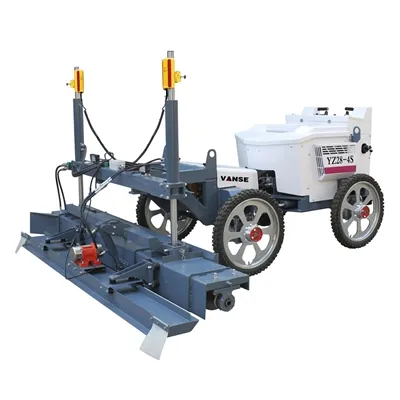
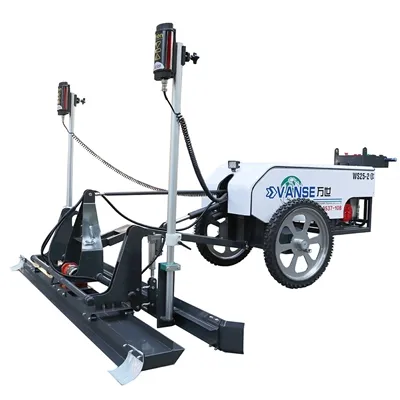
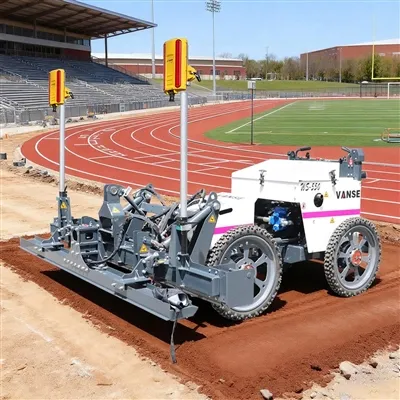
Immediately after the concrete is poured, use a laser leveling machine for leveling. Through the laser control system, it is ensured that the flatness and levelness of the ground meet the design requirements.
5. Surface treatment:
Before the initial setting of concrete, use professional tools for surface treatment to eliminate defects such as bubbles and blisters on the surface.
6. Maintenance:
After the concrete is finally set, perform timely maintenance to ensure the strength and beauty of the concrete. few,
••▶•• Construction Key Points ••◀••
1.
Ensure the flatness and stability of the formwork to avoid deformation or displacement during construction.
2.
Control the pouring speed and amount of concrete to ensure that the concrete can be evenly distributed on the formwork.
3.
When using the laser leveling machine, ensure the accuracy of the laser control system and adjust the equipment parameters in a timely manner to ensure the leveling effect.
4.
During surface treatment, pay attention to the operating strength and speed to avoid damage to the concrete.
5.
D
uring the curing process, the moisture of the concrete surface should be maintained to prevent the concrete from drying out or cracking.
••▶•• Quality acceptance ••◀••
After the construction is completed, the quality inspection of the floor of the building will be carried out. Check whether the ground flatness, levelness, aesthetics and other indicators meet the design requirements. If problems are found, deal with them promptly.
••▶•• Conclusion ••◀••
The one-time construction method of laser levelinging for large-area concrete floors has the advantages of short construction period, stable quality, and high aesthetics. Through strict construction preparation and process control, it can be ensured that the construction quality meets the requirements. At the same time, it is necessary to pay attention to the key points of construction and quality acceptance links to ensure the smooth progress of the construction process and the final quality standards.
Thanks to All the Friends Who Support and Trust Shandong Vanse Machinery Technology Co., Ltd.
If you want to know more about Shandong Vanse Machinery Technology Co., Ltd. or have any questions, please feel free to contact us:
Our Factory
Shandong Vanse Machinery Technology Co., Ltd.








Share this article

About the Author: Shandong Vanse Machinery Technology Co., Ltd.
Shandong Vanse Machinery Technology Co., Ltd. is a high-tech manufacturer specializing in concrete construction machinery, including laser screeds and related equipment. The company integrates R&D, production, and global sales, with products exported to over 60 countries and widely used in infrastructure projects worldwide.
Previous Post
Next Post
Related Articles
You Might Also Like
What are the advantages of concrete laser leveling machine in terms of material consumption?
Shandong Vanse Machinery Technology Co., Ltd. 1. Introduction In the current construction industry, concrete laser leveling machine has become an indispensable and important equipment for ground construction with its high precision and high efficiency. This paper aims to explore the advantages of concrete laser leveling machine in material consumption, in order to provide valuable reference for improving the efficiency and reducing costs of the construction industry. 2. Principle and application field of concrete laser leveling machine The concrete laser leveling machine uses advanced laser technology to achieve efficient and precise leveling of concrete floors by precisely controlling elevation and flatness. Its application fields are wide, including large industrial plant warehouses, logistics centers, exhibition centers, airport runways, squares, municipal pavements, etc. 3. Analysis of advantages of material consumption 1. Reduce material waste: The high-precision control capability of the laser leveling machine makes ground construction more precise, effectively avoiding material waste caused by human factors in traditional construction. By precisely controlling the thickness and flatness of concrete laying, the laser leveling machine can minimize the use of excess concrete. 2. Improve use efficiency: The efficient operation capability of the laser leveling machine means a shorter construction cycle and faster construction progress. Under the same construction area, the use of laser leveling machines can significantly reduce the use of concrete, thereby reducing material costs. Taking a large logistics center as an example, after using a concrete laser leveling machine for ground construction, the material waste rate was reduced by nearly 20%, and the construction period was shortened by one third, saving a lot of costs for the project. 4. Cost saving and environmental protection significance The application of concrete laser leveling machines not only reduces material costs, but also brings significant environmental benefits. By reducing material waste, the generation of waste concrete is reduced, and the pressure on the environment is reduced. At the same time, a shorter construction period also means less energy consumption and emissions, contributing to the green development of the construction industry. 5. Analysis of adaptability to different construction stages and scenarios In different construction stages and scenarios, the concrete laser leveling machine can play its advantages of saving materials and improving efficiency. In the foundation construction stage, the laser leveling machine can ensure the flatness and strength of the ground foundation; in the surface construction stage, the laser leveling machine can achieve high-precision surface leveling to meet various ground use needs. In addition, for different application scenarios, the laser leveling machine can also be customized according to actual needs to better adapt to different construction requirements. 6. Industry status and challenges At present, concrete laser leveling machines have been widely used in the construction industry, but they still face some challenges. First, some construction workers do not have enough skills in the operation and maintenance of laser leveling machines, which affects the use of the equipment; second, there are many brands and models of laser leveling machines on the market, and the quality is uneven, which brings certain difficulties to the purchase and use. In order to promote and improve this technology, it is recommended to strengthen training and technical guidance to improve the operation level of construction personnel; at the same time, strengthen market supervision, standardize market order, and ensure product quality and after-sales service. 7. Forecast of future development trends With the continuous advancement of science and technology and the improvement of the construction industry's requirements for green, environmentally friendly and efficient construction, concrete laser leveling machines will be more widely used in the future. It is expected that in the next few years, laser leveling machines will develop in the direction of intelligence and automation, and more efficient and accurate ground construction will be achieved by introducing more advanced technologies such as machine learning and artificial intelligence. At the same time, with the continuous improvement of environmental awareness and the support and guidance of policies, concrete laser leveling machines will play a greater role in environmental protection. 8. Conclusion Concrete laser leveling machines have significant advantages in terms of material consumption, can significantly reduce material waste, improve utilization efficiency, and bring environmental benefits. Through the promotion and improvement of measures such as strengthening training and technical guidance and regulating market order, the role of concrete laser leveling machines in the construction industry will be further exerted. Looking to the future, concrete laser leveling machines will achieve greater development in the direction of intelligence and automation, providing strong support for green and efficient construction in the construction industry.How to repair the cracking problem of emery floor caused by long-term wear?
How to repair the cracking problem of emery floor caused by long-term wear? Emery floor is widely used in industrial plants, warehouses, parking lots and other places because of its wear resistance, pressure resistance and anti-slip properties. However, as time goes by, the surface of the floor will inevitably be worn, especially in high-traffic areas, where cracking problems often occur. This not only affects the aesthetics of the floor, but may also cause safety hazards and affect the use effect. Therefore, it is very important to repair the cracking problem of emery floor. ★ Problem Analysis and Causes ★ There are many reasons for the cracking of emery floor, among which long-term wear is one of the main factors. During the use of the floor, due to the frequent exchanges of vehicles, personnel, goods, etc., the surface of the floor is constantly rubbed and hit, causing the surface material to gradually wear and thin. When the wear reaches a certain extent, the structural strength and stability of the floor will be affected, resulting in cracking. In addition, factors such as floor construction quality, material quality, and use environment may also affect the wear resistance and cracking of the floor. For example, poor construction quality may lead to uneven floor surface, prone to wear and cracking; harsh use environment, such as frequent contact with chemicals or high temperature, will also accelerate the damage and aging of the floor. ★ Preparation before repair ★ Before repairing the cracking problem of diamond sand floor, you need to make adequate preparations. This includes the following aspects: 1. On-site investigation and evaluation: Conduct a comprehensive investigation and evaluation of the cracking of the floor to determine the scope, degree and cause of the cracking. At the same time, understand the use and environment of the floor to provide a basis for subsequent repair work. 2. Material preparation: According to the results of the on-site investigation and the repair plan, prepare the required repair materials, such as repair agents, curing agents, coatings, etc. Ensure that the quality of the materials meets the requirements and has good wear resistance and pressure resistance. 3. Tool and equipment preparation: Prepare the tools and equipment required during the repair process, such as grinders, vacuum cleaners, roller brushes, etc. Ensure that these tools and equipment can be used normally to improve the efficiency of repair. ★ Crack Repair Plan ★ For the cracking problem of diamond sand floor, the following repair plan can be adopted: 1. Cleaning and grinding: First, use a vacuum cleaner to clean the debris and dust in the cracked area to ensure that the surface is clean. Then, use a grinder to grind the cracked area to remove the loose layer and uneven parts of the surface to improve the adhesion of the repair material. 2. Filling the profile joint: For larger profile joints, special repair agents can be used to fill them. The choice of repair agent should be determined according to the material and use environment of the floor to ensure that it has good adhesion and good abrasiveness. When filling, apply the repair agent evenly in the crack to ensure that the filling is complete and flat. 3. Overall coating reinforcement: In order to enhance the overall strength and flatness of the floor, a layer of reinforcement coating can be applied to the entire floor surface. The choice of reinforcement coating should be determined according to the material and use requirements of the floor. You can choose a coating with wear-resistant, anti-slip and other functions. When applying, ensure that the coating is uniform and without omissions, and pay attention to avoid bubbling, cracking and other phenomena. ★ Curing and strengthening treatment ★ In order to improve the wear resistance and stability of the repaired floor, the floor can be cured and strengthened. Curing agent is a substance that can react chemically with the floor material to improve the hardness and wear resistance of the floor. After the repair work is completed, a layer of curing agent can be applied to form a hard and wear-resistant protective layer on the floor surface. Curing and strengthening treatment can further enhance the bearing capacity and service life of the floor. ★ Subsequent care and maintenance ★ After the repair work is completed, subsequent care and maintenance are equally important. Here are some suggestions: 1. Regular cleaning: Regularly use a vacuum cleaner or mop to clean the floor surface to avoid the accumulation of debris and dust. For stains that are difficult to clean, such as oil stains, professional cleaning agents can be used for treatment 2. Avoid heavy impact: When using the floor, avoid heavy objects directly hitting or scratching the floor surface to avoid damage to the floor. For high-traffic areas, protective pads can be set up or protective facilities can be installed to reduce wear. 3. Regular inspection and repair: Regularly check the cracking and wear of the floor, and deal with problems in a timely manner once they are found. For minor wear and cracking, you can use repair materials to repair; for larger problems, you can contact a professional team for repair. ★ Preventive measures ★ In order to avoid the problem of cracking of diamond sand floor again, the following are some preventive measures: 1. Improve the construction quality: During the construction process, strictly follow the construction specifications to ensure the flatness and construction quality of the floor. Pay special attention to the control of key links such as base treatment, material mixing ratio, and construction thickness) 2. Select high-quality materials: When selecting floor materials, you should pay attention to its performance in terms of wear resistance, pressure resistance, and stability. Give priority to brand products with reliable quality and stable performance, and avoid using inferior materials. 3. Reasonably plan the use environment: Reasonably plan the use environment according to the use needs and environmental characteristics of the floor. For example, set up a buffer zone in a high-traffic area or take other measures to reduce wear; take protective measures in areas susceptible to chemical invasion, etc. 4. Strengthen daily maintenance: Clean and maintain the floor regularly, and deal with minor wear and cracking problems in a timely manner. At the same time, strengthen daily inspections and maintenance work to ensure that the floor is in good use. In summary, repairing the cracking problem of diamond sand floor caused by long-term wear needs to start from multiple aspects. First, analyze and evaluate the problem to find out the cause and scope of the cracking; then, make preparations before repair, including the preparation of materials, tools and equipment; then, use appropriate repair solutions to treat the cracked area; finally, perform curing and strengthening treatment to improve the wear resistance and stability of the floor. After the repair is completed, it is also necessary to pay attention to subsequent maintenance and maintenance work, as well as take preventive measures to avoid similar problems from happening again. In the process of repairing the cracking problem of diamond sand floor, we also need to pay attention to the following points: First, safety is always the primary consideration. Before the repair work begins, ensure that the safety warning signs in the work area are in place to prevent unrelated personnel from entering the construction area. At the same time, construction personnel should wear appropriate safety protection equipment, such as gloves, masks, safety shoes, etc., to ensure safety during the construction process. Secondly, pay attention to the control of the construction environment. During the repair work, the construction area should be kept dry and clean as much as possible to avoid the influence of moisture and debris on the repair effect. At the same time, it is also crucial to control the construction temperature and humidity. Appropriate construction conditions should be selected according to the requirements of the floor material and curing agent. In addition, after the repair work is completed, a comprehensive inspection should be carried out to ensure that the repair area is consistent with the flatness and color of the surrounding floor. For the slight differences that exist, appropriate grinding and adjustment can be carried out to achieve an overall beautiful effect. Finally, the implementation of preventive measures is also crucial. In addition to improving the construction quality and selecting high-quality materials, the daily maintenance and management of the floor should be strengthened. Clean and maintain the floor regularly, and deal with the wear and cracking problems that occur in a timely manner. At the same time, for high-traffic areas or areas susceptible to chemical erosion, enhanced measures can be taken to improve the wear resistance and stability of the floor. In short, repairing the cracking problem of the diamond floor caused by long-term wear is a complex and meticulous task. Only by starting from multiple aspects such as problem analysis, pre-repair preparation, repair plan, curing and strengthening treatment, subsequent care and maintenance, and preventive measures can the quality and effect of the repair work be ensured. At the same time, paying attention to safe construction and environmental protection are also important aspects that cannot be ignored. Through scientific repair methods and effective preventive measures, we can extend the service life of emery floors, improve the use effect, and provide strong protection for the safety and beauty of various places. However, for non-professionals, it may be difficult and risky to repair emery floors. Therefore, in actual operation, it is recommended to seek the help of a professional floor repair service team. They have rich experience and professional skills, can formulate appropriate repair plans according to specific circumstances, and ensure the quality and safety of construction. At the same time, they can also provide follow-up maintenance and maintenance suggestions to help users better manage and maintain the floor. In summary, the repair of emery floors requires comprehensive consideration of multiple aspects, from problem analysis to the implementation of preventive measures. Through scientific methods and professional team support, we can effectively solve the problem of cracking of emery floors and improve the performance and life of the floor. At the same time, strengthening daily maintenance and maintenance work is also the key to ensure the long-term and stable operation of the floor. Through continuous efforts and attention, we can let the emery floor continue to play its important role in various places and provide a safe and comfortable environment for people's life and work. The above is a comprehensive analysis and solution on how to repair the cracking problem of emery floors caused by long-term wear. I hope that these contents can provide you with useful references and inspirations, helping you to better solve the problem of floor cracking and improve the use effect and service life of the floor. At the same time, it is also recommended that you pay attention to safety, environmental protection and efficiency in actual operation to ensure the smooth progress of the repair work and achieve good results.Analysis of the correlation between the causes of common surface defects (such as color difference, scratches, and peeling) during construction and the operation of concrete laser leveling machine
Concrete laser leveling machines are powerful tools for achieving high-precision floors, but if not operated properly, they can also directly cause or exacerbate various surface defects. The following will conduct a detailed analysis of the causes of three common defects: color difference, scratches, and peeling, and will focus on elaborating their correlation with the operation of laser leveling machines. The laser leveling machine itself is a neutral tool, but parameters such as its operation timing, traveling speed, knife plate Angle, and vibration frequency will directly affect the bleeding, slurry distribution, and density of the concrete surface, thus becoming the "cause" or "inducement" of surface defects. Defect description: After the floor was completed, there were uneven colors, with some areas being darker and others lighter. The essence of color difference lies in the uneven composition of the surface slurry and the distribution of moisture. Specifically, it is manifested as Uneven water-cement ratio: Excessive or insufficient moisture in some areas. Bleeding phenomenon: Water is overly vibrated or squeezed onto the surface. After evaporation, it leaves cement slurry, which is bluish and dark in color. Slurry deficiency: Insufficient surface mortar, exposed aggregates, light and grayish color. Operational issues The mechanism causing color difference Intensity of correlation 1. The timing of the leveling was inappropriate • Premature leveling: When the concrete is still bleeding in large quantities, the knife plate of the leveling machine will stir and mix the water and slurry, disrupting the natural bleeding process and causing local water spots. Extremely high • Late leveling: The concrete has already begun to set, and the trowel cannot bring sufficient slurry to the surface, resulting in slurry loss, exposed aggregates, and the formation of light-colored patches. 2. Uneven walking speed • Excessive speed: The knife plate fails to bring sufficient mortar to the surface in time, resulting in uneven coverage of the mortar. High • Speed fluctuates: In the slow zone, the equipment will rub the concrete excessively, causing concentrated bleeding and darkening of the color. In the rapid area, the slurry is insufficient and the color becomes lighter. 3. Improper vibration frequency • Excessive vibration frequency: Especially when the slump of concrete is large, excessive vibration will intensify bleeding, causing a large amount of water and fine particles to float up, forming dark water marks or slurry spots. High 4. The Angle and height of the knife plate were set incorrectly • Too flat Angle (too small attack Angle) : The blade mainly serves to level rather than lift the slurry, which may result in insufficient surface slurry. Medium • Too steep Angle: Excessive compression of concrete can also promote bleeding. • The height setting is too low: The knife plate overly compresses the concrete surface, forcing the slurry and water to float up. Summary: Improper operation of the laser leveling machine is one of the direct causes of color difference. By controlling the "waiting time" (allowing the concrete to have a stable bleeding process), maintaining a uniform speed, and adjusting the vibration frequency according to the state of the concrete, color differences can be greatly avoided. Defect description: Obvious knife plate scratches or "serpentine" trajectories appear on the surface. The direct cause of the scratches is that the knife plate of the leveling machine left marks on the initially formed surface, and these marks cannot heal by themselves before the concrete solidifies. Operational issues The mechanism that causes scratches Intensity of correlation 1. The knife plate is not clean The initially set concrete blocks bonded on the knife plate will create deep grooves on the new surface. This is the most common reason. Extremely high 2. The timing for leveling was too late The concrete has entered the initial setting period and lost its fluidity. At this moment, the blade was not leveling but plowing the land, and the marks left could not be smoothed and healed. Extremely high 3. Walking too fast The blade quickly cuts across the surface, and the concrete has no time to level and merge behind the blade, forming waves and marks. High 4. The equipment jolts up and down The base layer is uneven or the equipment's tracks/tires are moving on the soft concrete, causing the leveling head to rise and fall accordingly. The knife plate cuts into the surface too deeply, forming periodic dents. High The laser signal receiver is subject to vibration and constantly corrects the height of the machine head, which can also cause slight jolts. 5. The material or type of the knife plate is inappropriate For fast-setting concrete, using hard plastic knife plates can reduce scratches more effectively than using metal knife plates. Medium Summary: Scratches are almost 100% related to the operation of the leveling. Keeping the knife board clean, mastering the correct construction window period, and maintaining a uniform and stable operation on a flat base layer are the keys to eliminating scratches. Defect description: A layer of slurry or mortar on the surface separates from the lower layer of concrete, with extremely low strength. It can be easily scraped off by hand or with a hard object. The mechanism of peeling is that a weak layer with an excessively high water-cement ratio and low strength is formed on the surface, which fails to combine well with the main structure. This weak layer mainly comes from: Excessive bleeding: A large amount of water rises to the surface, forming a layer of cement slurry with an extremely high water-cement ratio. Secondary surface finishing damage: When there is bleeding on the surface, troweling is carried out to press the cement slurry back to the surface layer. Surface loss of mortar: The operation of the leveling machine "takes away" or "destroys" the valuable mortar on the surface. Operational issues The mechanism causing peeling Intensity of correlation 1. Excessive vibration frequency/premature timing Excessive vibration during the bleeding period of concrete is the primary cause of excessive bleeding. A large amount of water and fine particles are forcibly discharged to the surface, forming a weak layer. This layer of slurry has a large shrinkage and low strength, and is very prone to peeling. Extremely high 2. The height of the knife plate is set too low The knife plate penetrates deep into the concrete like a "plough", not only squeezing and bleeding water, but also destroying the already compacted aggregate structure, causing segregation between the slurry and the aggregates, and forming a rich slurry layer without aggregates on the surface, which is prone to peeling. High 3. Too many leveling operations Repeatedly leveling the same area back and forth is equivalent to repeatedly disturbing and rubbing the surface, which aggravates bleeding and damage to the surface structure. Medium 4. Indirect impact: Creating adverse conditions Improper operation of the leveling machine can cause severe bleeding or color difference. When workers operate on it later, improper finishing timing (working when there is standing water) will increase the risk of peeling. Indirect Summary: The laser leveling machine is the key cause of peeling. Excessive vibration and improper pressure on the knife plate are the main culprits for the formation of a weak surface layer. Controlling vibration and avoiding excessive leveling are at the core. Defect Key control points of the laser leveling machine Supporting management measures Color difference Seize the opportunity: Wait until the bleeding stabilizes before starting to level it. Ensure the stability of the concrete mix ratio and the consistency of the slump. 2. Walk at a constant speed: Maintain a stable and appropriate speed. Ensure uniform unloading and avoid uneven local dryness and wetness. 3. Adjust the vibration properly: Dynamically adjust the frequency according to the slump of the concrete. Scratch 1. Keep clean: Clean the adhesive material on the knife plate at all times. • Ensure proper equipment maintenance to guarantee the stability of the hydraulic and control systems. 2. Seize the time: Complete all leveling work before the initial setting. Train the operators to be familiar with the setting characteristics of concrete. 3. Smooth operation: Ensure the base is flat and the equipment moves smoothly. Peeling 1. Avoid over-vibration: It's better to have less than more, especially during the bleeding period. Optimize the concrete mix proportion to reduce bleeding. 2. Set the height: The height of the knife plate should be set just to level it. Do not press it down. The education light collection team must carry out the light collection when there is no bleeding. 3. Reduce the frequency: Plan the path well to avoid repetitive work. Conclusion: The operator of a laser leveling machine is not only the equipment driver but also the "sculptor" of the concrete surface. He must have a profound understanding of the rheological properties of concrete (bleeding and setting), and through precise control of the parameters of the equipment in his hand, guide the concrete to form a uniform, dense and smooth surface. Any mechanized operation that is detached from the state of the concrete (" acting on the material ") is highly likely to cause surface defects. Note: The parameters provided in this document are for reference only and are not mandatory. Due to differences in technical characteristics between different brands and models of laser levelers, please consult the manufacturer for a suitable solution before actual operation. This reference document assumes no responsibility for any issues arising from failure to follow the manufacturer's instructions.