Technical Knowledge
In what fields does concrete laser leveling have broad application prospects?
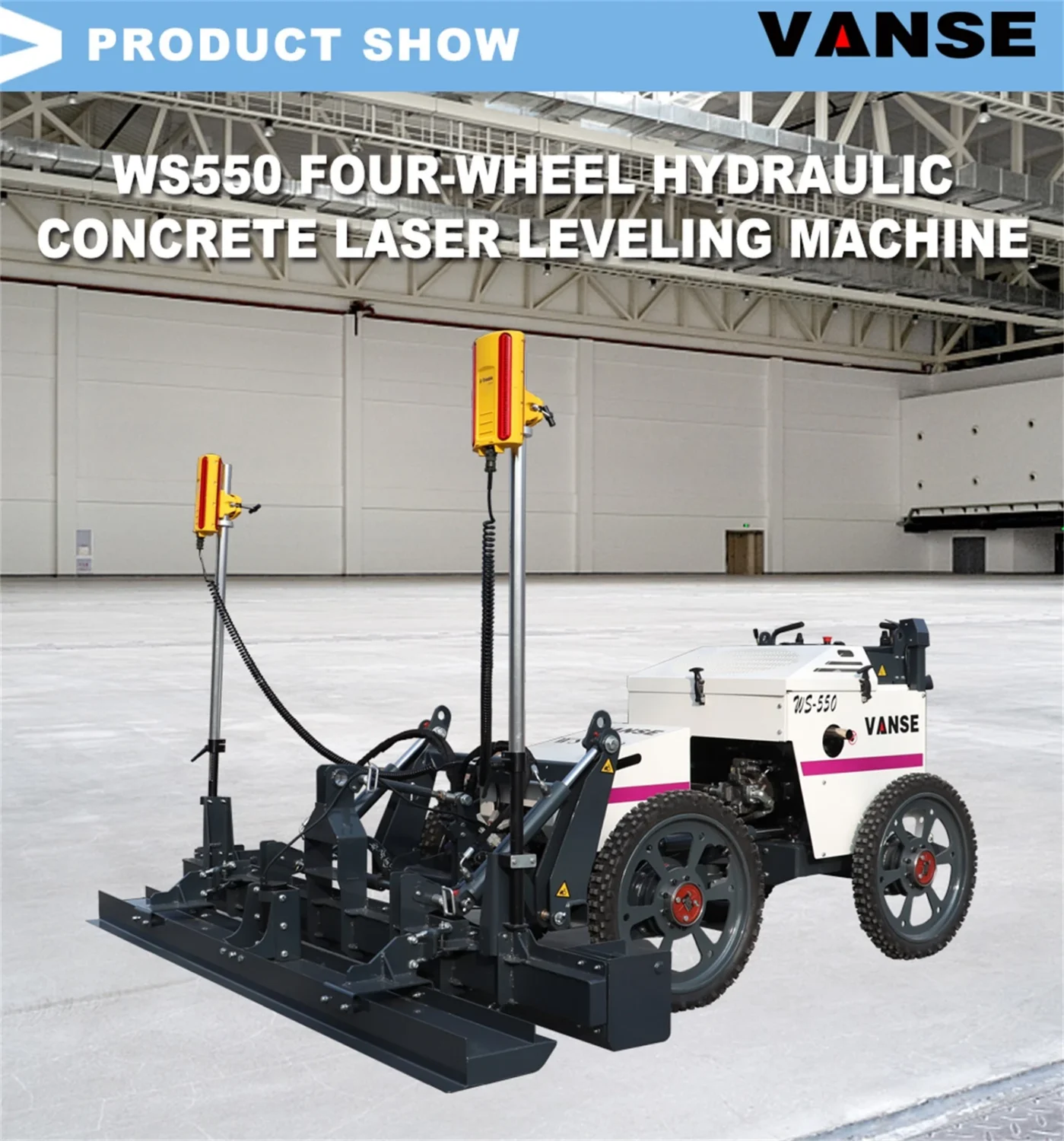
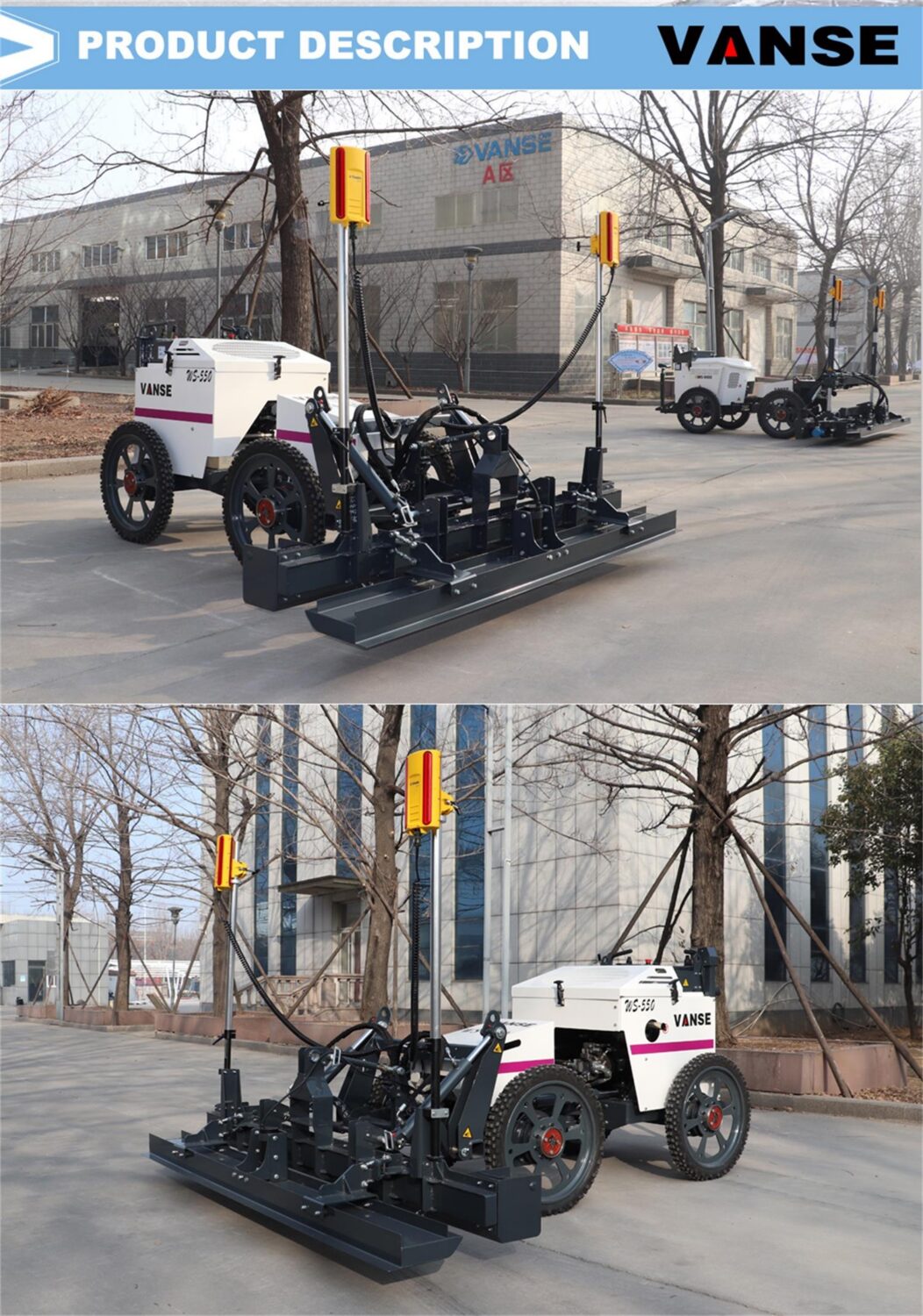
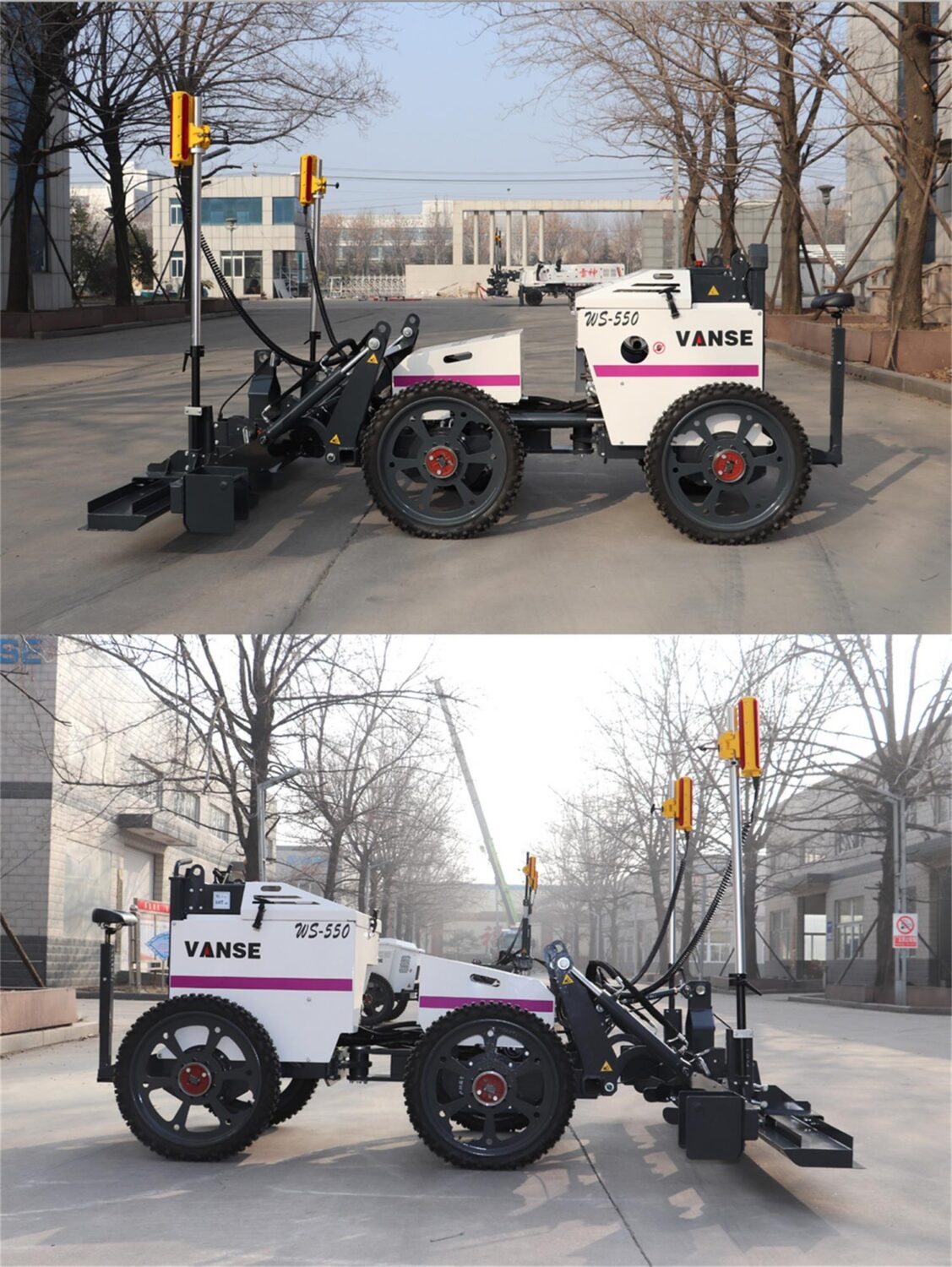
As an advanced construction machinery and equipment, concrete laser leveling machine has shown broad application prospects in many fields. The following are some possible application areas:
1. Road and bridge construction:
In road and bridge construction, concrete laser leveling machines can provide high-precision and efficient ground leveling solutions. The demand for this equipment will continue to grow as requirements for infrastructure quality increase.
2. Airport runway and apron construction:
Airport runways and aprons have extremely high requirements for flatness. Concrete laser leveling machines can ensure that the flatness of these areas reaches the highest standards, thereby improving the safety and operational efficiency of the airport.
3. Warehousing facilities and logistics centers:
With the rapid development of e-commerce and logistics industries, the demand for the construction of warehousing facilities and logistics centers is also increasing. Concrete laser leveling machines can provide efficient and accurate ground leveling solutions for these facilities to ensure smooth storage and transportation of goods.
4. Sports venues and convention and exhibition centers:
Large-scale stadiums and convention and exhibition centers usually require large areas of flat ground. Concrete laser levelings can meet the needs of these projects and provide high-quality levelinging results.
5. Green buildings and energy-saving buildings:
With the advancement of the concepts of green buildings and energy-saving buildings, the requirements for building materials and construction techniques are also constantly increasing. As an efficient and energy-saving construction technology equipment, the concrete laser leveling will play an important role in these fields.
6. Municipal infrastructure:
In the construction of municipal infrastructure, such as squares, sidewalks, parks and other areas, concrete laser leveling machines can also provide high-quality leveling solutions to enhance the city's image and improve citizens' living environment.
To sum up, concrete laser leveling machines have broad application prospects in many fields such as roads, bridges, airports, storage facilities, sports venues, convention and exhibition centers, green buildings, energy-saving buildings, and municipal infrastructure. With the advancement of technology and the growth of market demand, the application scope of this equipment will continue to expand.
Thanks to All the Friends Who Support and Trust Shandong Vanse Machinery Technology Co., Ltd.
If you want to know more about Shandong Vanse Machinery Technology Co., Ltd. or have any questions, please feel free to contact us:
Our Factory
Shandong Vanse Machinery Technology Co., Ltd.








Share this article

About the Author: Shandong Vanse Machinery Technology Co., Ltd.
Shandong Vanse Machinery Technology Co., Ltd. is a high-tech manufacturer specializing in concrete construction machinery, including laser screeds and related equipment. The company integrates R&D, production, and global sales, with products exported to over 60 countries and widely used in infrastructure projects worldwide.
Previous Post
Next Post
Related Articles
You Might Also Like
The influence of the blade configuration of the power trowel machine on the final surface effect of concrete
The configuration of power trowel blades (commonly known as power trowel blades or power trowel discs) directly determines the final flatness, smoothness, strength and wear resistance of the concrete surface. Improper selection and use can lead to various surface defects. The following elaborates in detail on how the configuration of the power trowel machine blades affects the final surface effect of concrete. Shape: Usually wide and thick, with a relatively small number of blades (commonly 3 or 4), and the blades have a large inclination Angle (negative Angle) with the rotating plane. Main functions: Lifting slurry and leveling. Working mode Scraping effect: The larger negative Angle causes the front edge of the blade to "shovel" the concrete surface. It can effectively level the height difference between aggregates (stones), bring the wetter mortar from the lower layer to the surface, and form a "cement slurry layer". Compaction: Through rolling, the surface aggregates are pressed into the interior of the concrete, making the structure more compact. Influence on surface effect: The front side: It provides a relatively smooth base layer rich in cement slurry for subsequent fine plastering. If this step is not taken, direct fine power troweling may bring out the aggregates, resulting in a rough and uneven surface. Negative: If it is used too late (the concrete is too hard), it will loosen the surface, causing cracks or wavy patterns. If used for too long, it will carry out excessive moisture and slurry, resulting in a fragile surface. Shape: Usually thin and narrow, with a large number of blades (commonly 8 to 12), and the Angle between the blades and the rotating plane is small, even close to horizontal (positive Angle or zero Angle). Main functions: Compaction, sealing and polishing. Working mode Patting and smoothing: Numerous and narrow blades pat and smooth the surface of the cement slurry at high speed and frequency to eliminate the marks left by rough smoothing. Sealing the surface: Compact the fine particles in the cement slurry, force the air out, seal the surface capillary pores, and form a dense, pore-free hardened layer. Generating luster: When the concrete is close to final setting, the high-speed rotating precision power trowel rubbing against the surface generates heat, causing the surface of the slurry to "melt" and present a luster. Influence on surface effect: Front: Achieve a dense, smooth, wear-resistant and dust-free surface. The level of glossiness is also determined at this stage. Negative: If used too early, the blade may get stuck in the concrete, creating wavy patterns or even damaging the surface. If used too late, the surface cannot be effectively sealed, which will cause powdering and sanding on the surface. Configuration factors The influence on the surface effect of concrete Applicable scenarios and suggestions Blade Angle This is the most crucial configuration parameter. Rough scraping stage: Use a negative Angle (with the front edge of the blade facing down) to achieve the effect of scraping and lifting the slurry. Fine smoothing stage: Use a small positive Angle or zero Angle (the blade is nearly horizontal) to achieve the effect of patting and smoothing. The larger the Angle, the stronger the cutting force, but the lower the surface finish. The smaller the Angle, the better the polishing effect. Number of blades The more the quantity, the more times each rotation is tapped, and the smoother the smoothing effect will be. Coarse power trowel (3-4 pieces) : Focuses on efficiency and slurry lifting. Fine power trowel (8-12 pieces or more) : Focuses on achieving extremely high flatness and smoothness. The more pieces there are, the finer the final surface will be. Blade material Wear resistance and toughness directly affect lifespan and performance. Spring steel: The most commonly used, it has good toughness, is not easy to break, and offers high cost performance. Tungsten carbide/hard alloy: Extremely wear-resistant, used for treating super-hard concrete or renovating old floors, with an extremely long service life, but expensive. The newness or oldness of the blade Blades that are severely worn cannot function effectively. Old/worn blades: Low efficiency in slurry lifting and polishing can lead to uneven surfaces and poor smoothness. Regular inspection and replacement are necessary. New blade: It can provide the best design Angle and cutting force to ensure the polishing effect. No matter how good the blade is, if it is used wrongly, the opportunity will be wasted. The blade and operation must be switched according to the setting condition of the concrete (the person standing on it should not sink more than 3mm). Phase One: Rough power troweling (Slurry lifting and leveling Timing: After the concrete has initially set, when it sinks by about 5 to 10mm when stepped on. Configuration: Install a coarse power trowel (negative Angle). Operation: The machine runs at a relatively slow speed and mainly focuses on leveling and large-angle scraping. Press the aggregates down and lift the cement slurry up to eliminate the obvious unevenness. Phase Two: Fine Smoothing (Pressing and smoothing) Timing: After the rough plastering is completed, when the concrete further hardens and sinks by about 1-3mm when stepped on. Configuration: Replace with a fine spatula (zero degree or small positive Angle). Operation: The machine speed can be increased and the smoothing can be carried out in a cross direction. At this point, it should be clearly visible that the surface gradually becomes fine and dense, and the rough knife marks are eliminated. Phase Three: Polishing (achieving a bright finish) Timing: When the concrete is close to final setting and there is almost no subsidence when stepped on. Configuration: Continue to use the fine spatula, but you can increase the Angle to a smaller positive Angle (if the blade head is adjustable). Operation: Run at high speed and "drift light" at a small Angle to the ground. The heat generated by friction will slightly liquefy the surface slurry, creating a mirror-like luster. Surface powdering and sanding Reason: The fine power troweling was done too late, and the surface could no longer be effectively compacted and sealed. Or the number of fine power trowel blades is insufficient or the Angle is inappropriate, resulting in poor polishing effect. The surface has wavy patterns and is uneven. Reason: The rough application was done too late, and it was caused by hard scraping and pulling. Or the blade angles are inconsistent (with different degrees of wear); The machine's walking speed is uneven. Exposed aggregates, rough surface The reason is that the coarse coating was skipped or not done thoroughly, and the fine coating was started before a thick enough layer of cement slurry was formed, which brought out the aggregates. Cracks on the surface: Reason: Using a coarse power trowel when the concrete was still too soft (bleeding period) damaged the surface structure. Or the polishing was done too early, causing the blade to sink and the material to be pushed and cracked. The configuration of a power trowel blade is a systematic project that involves using the "right tool" at the "right time" in the "right way". The rough power trowel is the foundation, responsible for creating a smooth and cement-rich working surface. The fine power trowel is the key, responsible for creating a dense, smooth and wear-resistant final surface. The Angle of the blade is the soul, directly determining whether the machine is a "scraper" or a "polishing machine". The timing of construction is the lifeblood. No matter how perfect the configuration is, it cannot play its role if the window period is missed. Only by mastering the relationship among the three proficiently can consistently produce high-quality concrete surfaces. Note: The parameters provided in this document are for reference only and are not mandatory. Due to differences in technical characteristics between different brands and models of laser levelers, please consult the manufacturer for a suitable solution before actual operation. This reference document assumes no responsibility for any issues arising from failure to follow the manufacturer's instructions.How to choose a concrete laser leveling machine?
When choosing a concrete laser leveling, you need to consider the following aspects: ✈Machine performance First, you need to understand the performance and specifications of the machine, including power, speed, accuracy, adjustability, etc. Different models of machines have different performances, and the appropriate model needs to be selected according to construction needs and site conditions. ✈Construction requirements Laser leveling machines with different powers and speeds need to be selected according to specific construction needs. For example, pouring concrete over a large area requires the use of high-power, high-speed machines, while smaller areas or delicate jobs require the use of low-power, low-speed machines. ✈Site conditions It is necessary to consider the conditions of the site, such as ground flatness, humidity, concrete thickness, etc. For uneven floors or occasions where thicker concrete needs to be laid, a laser leveling machine with automatic leveling function is required. ✈Operator proficiency The proficiency of operators has a direct impact on construction quality and efficiency. Therefore, it is necessary to consider the technical level and training of the operator and select a machine that is easy to operate and maintain. ✈Price and after-sales service The price and after-sales service of the machine need to be considered, including warranty period, maintenance, spare parts supply, etc. It is necessary to conduct full comparison and evaluation before purchasing, and choose products with high cost performance. ✈Brand and reputation Choosing a well-known brand and a manufacturer with a good reputation can guarantee the quality of the machine and the level of service. You can refer to the reviews and suggestions of other users to understand the advantages and disadvantages of different products and market feedback. To sum up, there are many factors to consider when selecting a concrete laser leveling, including performance, construction requirements, site conditions, operator proficiency, price and after-sales service, as well as brand and reputation. Before purchasing, you need to make a full comparison and evaluation to choose the best product that meets your needs.Domestic concrete laser levelling machine manufacturers
At present, the domestic production of laser levelling machine R & D, production has been sales of enterprises, Shandong Vanse machinery is a domestic R & D, manufacturing, sales, technical service comprehensive enterprises, specializing in concrete laser levelling machine high-tech enterprises, the company has R & D scientists, production engineers and service experts more than 30 people, Form an experienced and highly innovative professional technical team. With strong professional knowledge and years of research and development experience, independent research and development of new products, new technology, a number of innovative construction technology, with dozens of patents, is the domestic independent research and development of laser positioning leveling machine high-tech enterprises. Combined with the German international advanced technology design, the product parts are manufactured in Europe, the United States and Japan international well-known brands, accurate and durable to ensure practical effect, system products have been widely used in the country's large enterprises workshop, floor engineering and other industries, has been highly recognized by the majority of users and partners. Shandong Vanse has developed and launched a number of high-tech new products such as "" brand concrete laser levelling machine, floor machine, four-drive concrete laser levelling machine, six-wheel laser concrete levelling machine, 360-degree steering large automatic laser levelling machine, paver and site-type polishing machine for many years, and created a unique set of new concrete (floor) ground construction process. The laser concrete leveling machine lays the cement concrete floor, which is much better than the ground laid by conventional methods – the ground flatness and levelness are increased by more than 3 times, and the density and strength are increased by 20 percent. At the same time, it can improve efficiency by more than 50 percent and save about 35 percent of labor. In addition, it can easily lay high-strength concrete, low-slump concrete and steel fiber mud condensate. The laser system is equipped with a variety of automatic control elements to monitor the elevation of the straightening head in real time at a frequency of 10 times per second to ensure that the surface flatness and levelness of the paving are effectively controlled. At the same time, its strong vibrator vibration frequency of 4000 times/minute, to ensure that the concrete vibration compaction, so that the entire concrete matrix is homogeneous and dense. In the 21st century of economic globalization, with the development and rapid popularization of China's floor industry, the floor industry is increasingly prosperous. The traditional intensive labor operation mode has no longer adapted to the needs of development, and the integration, intelligence and automation of machinery and equipment will become the mainstream of The Times.