Technical Knowledge
How does the concrete laser leveling machine ensure smoothness during the construction of airport runways and aprons?
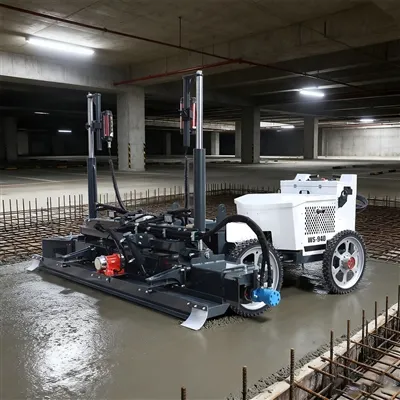
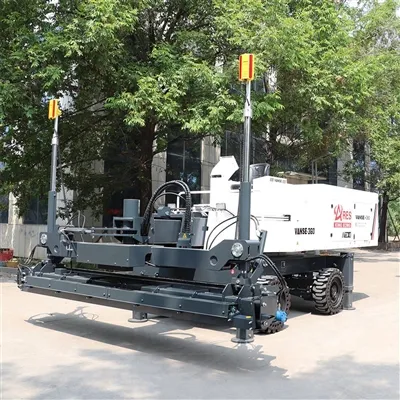
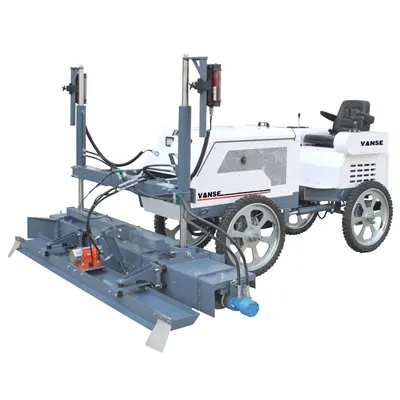
The key to ensuring the flatness of concrete laser leveling machines in the construction of airport runways and aprons lies in the application of its laser measurement and control system. Here are the main steps to ensure flatness:
1. Laser positioning and real-time control:
The concrete laser leveling machine is equipped with a laser measurement and control system, which can control the elevation of the concrete in real time. In the construction of airport runways and aprons, high-precision ground flatness is crucial. Through laser positioning, the leveling machine can accurately work according to the design elevation to ensure the accuracy of ground flatness.
2. No need for traditional control lines:
Compared with traditional construction methods, the concrete laser leveling does not require the establishment of control lines. This means that elevation errors caused by inaccurately set or disturbed control lines during construction can be avoided. This greatly improves construction efficiency and accuracy.
3. Reduce errors caused by vibration of formwork:
In traditional construction methods, vibration of formwork (such as channel steel) may cause elevation errors. However, the Wensu laser leveling machine does not require the use of side formwork during the construction process, thereby avoiding errors caused by vibration of the formwork.
4. Precise control of each layer:
In the construction of multi-layer structures, the concrete laser leveling machine ensures the accuracy of each layer by controlling the baseline of the laser level. For multi-layer structures such as airport runways and aprons, the leveling machine can maintain high-precision leveling during construction of each layer, thereby ensuring that the overall flatness is up to standard.
5. Inspection and adjustment:
During the construction process, regular flatness inspection of the completed ground is necessary. If any unevenness is found, the parameters or operating methods of the leveler can be adjusted in time to ensure that the final flatness meets the requirements.
In short, the concrete laser leveling machine can ensure high-precision ground flatness in the construction of airport runways and aprons through the high-precision positioning and real-time control functions of its laser measurement and control system, as well as the construction method without traditional control lines and side formwork.


Thanks to All the Friends Who Support and Trust Shandong Vanse Machinery Technology Co., Ltd.
If you want to know more about Shandong Vanse Machinery Technology Co., Ltd. or have any questions, please feel free to contact us:
Our Factory
Shandong Vanse Machinery Technology Co., Ltd.








Share this article

About the Author: Shandong Vanse Machinery Technology Co., Ltd.
Shandong Vanse Machinery Technology Co., Ltd. is a high-tech manufacturer specializing in concrete construction machinery, including laser screeds and related equipment. The company integrates R&D, production, and global sales, with products exported to over 60 countries and widely used in infrastructure projects worldwide.
Previous Post
Next Post
Related Articles
You Might Also Like
Application cases and performance requirements of concrete laser leveling in smart city construction (such as municipal roads and airport runways)
Concrete laser leveling machines have evolved from simple industrial floor construction equipment to indispensable high-precision and high-efficiency key equipment in the construction of smart city infrastructure. The following will elaborate in detail on its specific application cases and performance requirements in the construction of smart cities. The value of the concrete laser leveling lies in its ability to achieve extremely high flatness and levelness in one go and over a wide range, which is crucial for the infrastructure that relies on seamless connection and reliability in smart cities. Application scenarios: Mainly used for the paving and leveling of the base layer (water-stabilized layer) and surface layer of roads. In the "white-to-black" (asphalt overlay on cement pavement) project, an extremely smooth cement concrete base is provided for the asphalt surface layer. The value of smart cities Laying the foundation for intelligent transportation systems: Extremely smooth roads are ideal environments for vehicle-road coordination (V2X) and autonomous driving. It can reduce vehicle jolts, ensure the stability and accuracy of data from on-board sensors (lidar, cameras), and enhance driving safety and comfort. Enhancing road durability: High flatness avoids stress concentration, reduces rutting, pushing and cracking on the road surface, lowers maintenance costs throughout the entire life cycle, and aligns with the concept of "long-term management" in smart cities. Integrated intelligent construction: It can be combined with a 3D digital paving system to directly utilize the BIM model data of the road for construction, without relying on traditional physical pile foundations. This achieves pile-free construction, which is more precise, faster, and reduces human errors. Application scenario: This is one of the fields with the most stringent requirements for flatness. It is used for the new construction and major repair of runways, taxiways and aprons. The value of smart cities Flight safety and comfort: The flatness of the runway directly affects the safety of aircraft takeoff and landing as well as the comfort of passengers. The laser leveling can achieve an extremely high precision of less than 3 millimeters per 4-meter drop, meeting the strict standards of institutions such as the FAA (Federal Aviation Administration of the United States). Ensuring airport operational efficiency: A flat apron can guarantee smooth parking of aircraft, precise connection of jet Bridges, and efficient loading and unloading of goods. At the same time, it reduces the vibration damage to the aircraft on the runway and lowers the maintenance costs for airlines. Supporting the construction of smart airports: It provides an ideal foundation plane for the installation of sensors on airport runways (such as aircraft tracking sensors) and the installation of Internet of Things devices. Application scenarios: railway stations, subway station squares, bus hub stations, port and wharf storage yards, etc. The value of smart cities Seamless connection and accessibility: The flat ground facilitates the rapid gathering and distribution of people, vehicles and goods, especially providing an unobstructed passage environment for the disabled and the elderly. Supporting smart logistics: In ports and logistics parks, a flat storage yard is the foundation for the efficient and safe operation of intelligent equipment such as automated guided vehicles (AGVs) and automated gantry cranes. Even a slight deviation in the slope can cause the equipment to stop working or position wrongly. Enhancing the city's image: Large areas of high-precision flooring are a manifestation of the beauty and practicality of modern urban public Spaces. Application scenarios: It is used for the construction of the bottom cushion layer of pipe galleries and road surfaces. The value of smart cities Provide a platform for inspection robots: A flat bottom surface of the pipe gallery is the prerequisite for the stable operation of automatic inspection robots and the precise collection of data (such as temperature, humidity, and equipment status). Convenient for pipeline installation and maintenance: The flat foundation ensures the accuracy of subsequent pipeline support installation, facilitating standardized construction and rapid maintenance. To be competent for the above-mentioned high-standard application scenarios, the concrete laser leveling machine needs to have the following performance: Flatness and levelness: These are the core indicators. The equipment must be capable of stably achieving values of FF (flatness) ≥ 50, FL (levelness) ≥ 40, or even higher values (such as FF/FL > 100). For special projects such as runways, specific standards must be met (for example, the gap under a 3-meter straight ruler should be ≤3mm). System stability: The laser emission system, control system and hydraulic actuator must possess extremely high anti-interference capabilities and long-term operational stability to prevent drift or malfunction during prolonged and large-scale construction. 3D control system integration: This is an inevitable requirement for the construction of smart construction sites. The leveling machine should be capable of seamless integration with the 3D control system composed of GNSS (Global Navigation Satellite System), total stations, etc. By importing BIM or 3D design models, "form-based construction" can be achieved, completely getting rid of the reliance on traditional layout. Data collection and output: The equipment should be capable of real-time recording of data such as elevation, position, and workload during the construction process, and can transmit the data to the project management platform via the network to achieve digital traceability and quality monitoring of the construction process. High power and high efficiency: To deal with the large-scale concrete pouring in municipal engineering, high-power engines and efficient vibration systems are needed to ensure that the daily construction area can reach several thousand square meters. Complex working condition handling capacity: Capable of adapting to concrete of different grades and slump degrees; Have the ability to handle single and double slope ground. The equipment should be sturdy and durable, capable of adapting to the harsh environment on the construction site. Flexible sizes and models: We offer flat heads of various specifications to meet the needs of projects of different scales, ranging from narrow pipe galleries to wide runways. Core component quality: Core components such as the hydraulic system, laser sensor, and control computer should come from internationally renowned brands to ensure their reliability and lifespan. Structural design: The machine body structure is sturdy and can withstand long-term high-intensity construction operations. Key parts are designed to prevent wear and tear. Simple operation interface: Operators can quickly set parameters and monitor the status of the equipment through an intuitive graphical interface.Excessive bleeding: A large amount of water rises to the surface, forming a layer of cement slurry with an extremely high water-cement ratio. Convenient maintenance and upkeep: The equipment should be designed with channels that facilitate daily inspection, maintenance, and replacement of vulnerable parts, reducing downtime and enhancing equipment utilization. In the construction of smart cities, the concrete laser leveling has evolved from "a tool" to "a data-driven construction node". Through its inherent high-precision characteristics, it provides a precise reference surface of the physical world for the "nerve endings" (sensors, smart devices) and "arteries" (roads, runways) of smart cities. Selecting and applying laser leveling that meet the above performance requirements and integrating them into the BIM-based digital construction process is a key technical path for building high-quality, long-life, perceptible and interconnected smart city infrastructure. This is not only an upgrade in construction technology, but also a manifestation of the transformation of the construction management model towards intelligence and refinement Note: The parameters provided in this document are for reference only and are not mandatory. Due to differences in technical characteristics between different brands and models of laser levelers, please consult the manufacturer for a suitable solution before actual operation. This reference document assumes no responsibility for any issues arising from failure to follow the manufacturer's instructions.How to construct concrete laser leveling machine in complex environment
Concrete laser leveling operate in complex environments, requiring specialized plans tailored to specific environmental characteristics (such as confined spaces, areas with varying heights, inclement weather, and numerous obstacles), ensuring a balanced balance of efficiency, precision, and safety. The following details construction strategies and key technical points based on common complex environments: The core challenges of confined spaces are limited equipment maneuverability and the susceptibility of laser signals to obstruction. These limitations must be overcome through equipment selection and operational optimization. Select a compact machine: Prefer a small laser leveling (such as a walk-behind or mini-ride model) with a wheelbase ≤ 2.5m and a width ≤ 1.2m. Keep the minimum turning radius within 1.5m to allow for operation in narrow passages (widths ≥ 1.5m). Laser System Adaptation: Utilize multi-transmitter networking technology, placing 2-3 laser transmitters at different locations within the space (e.g., corners, near pillars) to prevent a single transmitter from being blocked by walls or pillars. Use anti-interference laser receivers (operating at 635nm red light or 532nm green light) to reduce signal interference from obstacles. Zoned and Miniaturized Operations: Divide a narrow space into multiple micro-blocks, such as 3m x 3m units, based on the equipment's operating radius (usually 2-3m). Work progresses zone by zone, avoiding frequent equipment maneuvers. Manually Assisted Spreading and Finishing: Due to space constraints, large-scale spreading equipment cannot be used. Manually spread the concrete in advance to a height 3-5cm above the design elevation (to reduce the burden on the equipment). Corners that cannot be reached by the equipment (e.g., walls and pillar bases) are manually leveled using aluminum alloy scrapers and vibrators to ensure a smooth transition with the machine work area. Real-time Signal Monitoring: Assign a dedicated person to monitor the laser receiver indicator light (green indicates normal operation, red indicates signal loss). Immediately stop the machine and adjust the transmitter position if a signal interruption is detected to avoid elevation errors caused by signal deviation. Precise control of elevation gradients is required in areas with complex level differences to avoid step-like errors. The key lies in the flexible adaptability and reference setting of the laser system. Slope Construction: Slope Sensor Interaction: Install a slope sensor (accuracy ±0.1%) on the leveling machine. Interact with the laser system to preset the laser plane inclination angle based on the designed slope (e.g., 2% or 5%). During operation, the machine automatically adjusts the scraper blade height according to the slope, ensuring that the elevation difference per meter meets the designed value (e.g., a 2% slope means a 2cm elevation difference per meter). Step/Platform Construction: Layered Reference Stakes: Set layered reference stakes (spacing ≤3m) at the intersection of height differences. Use a total station to calibrate the top elevation of the stakes. Mount the laser transmitter on the stakes to create a "stepped laser plane." Complete the lower elevation area first, then adjust the laser system parameters to accommodate the higher elevation area. Overlap the work at the intersection by 5-10cm. Preventing Segregation on Slopes: Control the concrete slump to 80-100mm (slightly lower than when working on flat ground) to prevent aggregate sinking due to the slope. Lay the concrete from the bottom of the slope toward the top, with each layer ≤20cm thick to prevent concrete from sliding down. Edge Height Adjustment: Set temporary barriers (height equal to the designed height difference) at the edge of the height difference (e.g., where the platform meets the ramp). After the equipment is in place, manually remove the barriers and trim the edges to ensure a height difference error of ≤3mm. Obstacles (e.g., rebar, pipelines, embedded components, walls) can hinder equipment movement and laser signals, requiring path planning and protective measures. Locate obstacles using 3D modeling: Utilize BIM technology or on-site surveying to mark the location, height, and spacing of obstacles (e.g., pipeline depth, rebar mesh elevation). Generate a feasible equipment route map, avoiding areas with dense obstacles (manual handling is preferred for areas with spacing ≤1m). "Obstacle Avoidance + Compensation" Combined Process: The equipment operates by circumventing obstacles 10-15cm from the edge. Pre-defined obstruction areas are manually compensated using a small vibrator (≤1m in length). After compensation, a 2m ruler is used to level the area with the machine work area to ensure a smooth connection. Signal Blind Spot Solutions: For areas blocked by walls or large structures, use wired references (e.g., installing aluminum alloy guide beams next to the obstacles, attaching the laser receiver to the guide beams, and using the guide beams to transmit the elevation reference). Alternatively, use a handheld laser leveler for real-time calibration of manually adjusted areas. Equipment Collision Protection: Install rubber anti-collision strips on the front of the equipment and wear-resistant alloy plates on the bottom of the scraper to prevent scratching rebar. During operation, a supervisor should be assigned to provide real-time distance between the equipment and obstacles, ensuring a safe distance of ≥5cm. Weather factors can affect concrete performance and equipment stability, requiring targeted adjustments to construction parameters and schedules. Concrete Temperature and Initial Setting Control: Use cooling aggregates (such as ice water mixing) to keep the concrete temperature at ≤ 30°C upon entering the mold. Add a retarding water reducer to extend the initial setting time (from 2-3 hours to 4-5 hours) to prevent initial setting before the equipment is fully operational. Protecting the Laser System from Sun Exposure: Install a sunshade for the laser transmitter to prevent direct sunlight from overheating and freezing the device. Regularly water the receiver to cool it down (keep the surface clean to prevent high temperatures from affecting signal reception sensitivity). Staggered Operation: Choose construction hours between 6:00 AM and 4:00 PM to avoid the midday heat, and shorten the interval between work steps (complete finishing within 30 minutes after leveling). Concrete Insulation and Freeze Protection: Use hot water mixing or add antifreeze to ensure the concrete temperature at ≥ 10°C upon entering the mold. Immediately cover the unused area with a blanket after paving to prevent low temperatures from reducing fluidity. Equipment Preheating and Lubrication: Preheat the engine for 10-15 minutes before starting. Run the hydraulic system at no load for 3-5 minutes until the oil temperature reaches ≥15°C to prevent component wear caused by low temperatures. Install the laser transmitter away from drafts and, if necessary, wrap it in an insulation cover to prevent frost. In high winds (wind speed ≥ Level 5): The laser transmitter must be mounted on a weighted base (weighing ≥50kg) or a windproof transmitter (wind resistance rating ≥ Level 8) must be used. During operation, reduce the laser reception range (adjust the receiver sensitivity to "high") to minimize wind-induced signal fluctuations. In Rain and Snow: In light rain, a temporary awning can be constructed (e.g., covering the work area with tarpaulin). Waterproofing can be added to the concrete. In moderate rain or snow, work should be suspended immediately. Cover the paved concrete with tarpaulin and drain the water. Before resuming work, check the moisture content of the base layer (≤10%). Unstable terrain can cause base settlement or equipment tilt, requiring enhanced base treatment and equipment support. Soft Base Treatment: Use a replacement method (replace with 30-50cm of graded sand and gravel) or reinforce with cement-soil mixing piles to ensure a base bearing capacity ≥150kPa to prevent equipment sinking during operation (settlement ≤2mm/h). Leveling Mountainous Terrain: First, use a bulldozer to roughly level the terrain (slope ≤10%). Then, lay a 10-15cm thick crushed stone cushion and compact it. This serves as the base for the laser leveling machine, reducing the need for frequent adjustments to the equipment due to uneven terrain. Track/Tire Grounding Treatment: Lay steel plates (thickness ≥ 10mm) or roadbed boxes on soft subgrade to increase the equipment's ground contact area (ground pressure ≤ 50kPa) and prevent the equipment from sinking. Tracked equipment can be tightened to improve its climbing ability (maximum climbing angle ≤ 15°). Real-Time Tilt Monitoring: The equipment is equipped with a horizontal tilt sensor that automatically alarms when the tilt angle exceeds 3°, prompting the operator to immediately adjust the equipment's position to avoid leveling errors caused by machine tilt. Emergency Plan Preparation: Develop contingency plans for equipment failure, signal interruption, and abnormal concrete supply, including backup laser transmitters, small generators (for power outages), and manual leveling tool kits (vibrator, scraper, trowel), etc. Real-Time Quality Inspection: After completing every 50 square meters, use a laser leveler (accuracy ±0.5mm) to check levelness. Areas with errors exceeding 5mm require immediate re-leveling to avoid further losses from rework. Specialized team training: Operators undergo complex environment simulation training, focusing on skills such as obstacle avoidance, signal calibration, and emergency shutdown, ensuring that each operator masters at least two emergency response methods. Through these strategies, the concrete laser leveling machine can achieve the goal of "maintaining accuracy and minimizing efficiency loss" in complex environments. The flatness pass rate remains above 90%, and operating efficiency only decreases by 10%-20% compared to conventional environments (400-500 square meters/day in conventional environments, 300-400 square meters/day in complex environments). The core principles are: proactively adapting to the environment, flexibly adjusting parameters, strengthening human-machine collaboration, and strictly controlling quality milestones. ARMOUR JOINT CONCRETE LASER LEVELING MACHINE POWER TROWEL TOPPING SPREADERIn low temperature conditions, besides using heating equipment, what other methods can be used to speed up the setting of concrete?
In low temperature conditions, in addition to using heating equipment, the following are some methods that can speed up the setting of concrete: 1. **Adjust the mix ratio**: Choose an appropriate type of cement, such as early-strength silicate cement, which has a large hydration heat and releases the highest strength at an early stage. Try to reduce the water-cement ratio and slightly increase the amount of cement to increase the hydration heat and shorten the time to reach the age strength. 2. **Use air-entraining agent**: While keeping the concrete mix ratio unchanged, the bubbles generated after adding the air-entraining agent will increase the volume of the cement slurry accordingly, improve the fluidity of the mixture, improve its cohesion and water retention, buffer the water pressure generated by the freezing of water in the concrete, and improve the frost resistance of the concrete. 3. **Add early-strengthening admixture**: Shorten the setting time of concrete and improve the early strength. Commonly used early-strengthening admixtures include sodium sulfate (2% of the amount of cement) and composite early-strength water test agent (5% of the amount of cement). 4. **Select high-quality aggregate**: Select aggregates with high particle hardness and few gaps, so that their thermal expansion coefficient is similar to that of the surrounding mortar to improve the frost resistance of concrete. 5. **Heat storage method**: Mainly used for projects with relatively thick structures at temperatures around -10℃. By heating the raw materials (water, sand, stone), the concrete can still store considerable heat after mixing, transportation and pouring, so that the cement hydration releases heat faster and strengthens the insulation of the concrete. 6. **External heating method**: Mainly used for projects with temperatures above -10℃ and not thick components. By heating the air around the concrete components, the heat is transferred to the concrete, or the concrete is directly heated so that the concrete can harden normally under positive temperature conditions. 7. **Use antifreeze admixture**: In temperatures above -10℃, a chemical that can lower the freezing point of water is added to the concrete mixture, so that the concrete is still in a liquid state at negative temperatures, and the hydration reaction can continue, thereby continuing to increase the strength of the concrete. Commonly used antifreeze agents include single antifreeze agents such as calcium oxide and sodium chloride, and composite antifreeze agents of sodium nitrite and sodium chloride. 8. **Optimize concrete pouring control**: In winter construction, it is necessary to continuously optimize and control the pouring of concrete, and strictly control the quality of materials. Do a good job of review to improve the basic quality of concrete. Through the above method, the setting speed of concrete under low temperature conditions can be accelerated without relying on external heating equipment, thereby improving construction efficiency.