Technical Knowledge
Which one is better in terms of construction safety between concrete laser levelings and pavers?
The construction safety risks of concrete laser leveling machines and pavers have their own particularities, and it is difficult to directly compare which one is higher and which is lower. Both types of equipment require strict compliance with operating procedures in terms of construction safety, ensuring professional training of operators, and regular maintenance and upkeep of equipment.
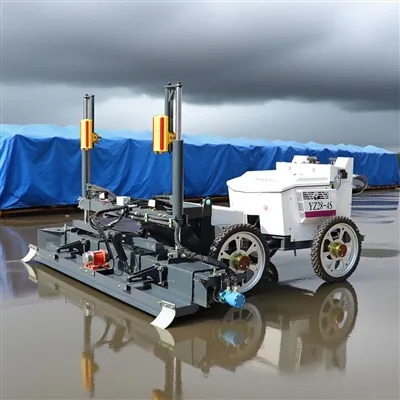
For concrete laser levelings, the main safety risks include equipment operating errors, laser system interference, poor road conditions, power and electrical safety, and improper maintenance and upkeep. These risks are mainly related to the precise control of the equipment, the operating environment and the maintenance status of the equipment.
For pavers, the safety risks mainly include equipment overturning, high-temperature oil, mechanical damage, construction environmental risks and traffic safety. These risks are mainly related to the stability of the equipment, the working environment and the interaction with the surrounding environment.
Therefore, it is impossible to simply judge which of the concrete laser leveling and the paver has a higher risk in terms of construction safety. In actual construction, it should be evaluated and taken accordingly based on the specific construction conditions, equipment status and operator experience. safety measures to ensure the safety of the construction process. At the same time, construction units should conduct regular safety training and drills to improve the safety awareness and emergency response capabilities of operators.
Thanks to All the Friends Who Support and Trust Shandong Vanse Machinery Technology Co., Ltd.
If you want to know more about Shandong Vanse Machinery Technology Co., Ltd. or have any questions, please feel free to contact us:
Our Factory
Shandong Vanse Machinery Technology Co., Ltd.








Share this article

About the Author: Shandong Vanse Machinery Technology Co., Ltd.
Shandong Vanse Machinery Technology Co., Ltd. is a high-tech manufacturer specializing in concrete construction machinery, including laser screeds and related equipment. The company integrates R&D, production, and global sales, with products exported to over 60 countries and widely used in infrastructure projects worldwide.
Previous Post
Next Post
Related Articles
You Might Also Like
Are the transmission parts of concrete power trowels of different brands universal?
– Design differences: When designing trowels of different brands, different transmission methods and structural designs are adopted according to their own technical characteristics, performance requirements and cost control factors. For example, some brands may use belt drive, while others use chain drive or gear drive. The transmission parts used in these different transmission methods are different in shape, size, tooth shape, module, etc., and cannot be replaced with each other. – Specification model differences: Even for the same type of transmission parts, the specifications and models used by trowels of different brands may be different. Taking gears as an example, different brands may choose gears with different modules, numbers of teeth, and pressure angles according to the power, speed, torque and other parameters of the trowel. The sizes and parameters of these gears do not match and cannot be installed on trowels of other brands. – Installation size and interface differences: The transmission parts of trowels of different brands will also be different in installation size and interface design. For example, the connection method between the transmission parts and the engine, working parts, etc., the location and size of the mounting holes, etc., may vary from brand to brand. This means that even if the principles and specifications of the transmission components are similar, they cannot be used interchangeably due to mismatched installation dimensions and interfaces. – Brand-specific technology and compatibility: Some brands may use unique technology or design on transmission components to improve transmission efficiency, reduce noise, enhance durability, etc. These exclusive technologies make the transmission components more compatible and work together with other components of the brand, but also limit their interoperability with other brand components.How to formulate an effective training plan for the operators of Concrete Laser Leveling machines to enhance equipment utilization and construction quality?
Formulating an effective training plan for the operators of Concrete Laser Leveling machines is a systematic project, aiming to cultivate high-skilled talents who "understand the principles, operate proficiently, maintain well and manage effectively". The following is a comprehensive and phased training program framework that can be directly applied to practice. Core skill mastery: Ensure that operators can independently, safely and standardly operate the Laser Leveling to complete construction tasks. Construction quality improvement: Enable operators to deeply understand the relationship between equipment movement and ground quality (flatness, levelness, density), and be able to proactively control quality. Maximize equipment utilization: Cultivate operators' awareness of preventive maintenance and their initial fault diagnosis capabilities to reduce unplanned downtime. Safety and team spirit: Firmly establish the idea of "safety first" and be able to collaborate efficiently with workers such as pavers, formwork erection, and logistics. Target: Newly recruited operators, transferred operators, and on-the-job operators for skill improvement. Stage Phase One: Theory and Safety Foundation (Pre-Job Compulsory Course) Phase Two: Simulation and Practical Skills (Assessment and Certification) Phase Three: Continuous Improvement and On-site Management (On-the-job Advancement) The goal of this stage: To establish a comprehensive knowledge system and safety awareness, laying a solid foundation for practical operations. Module Training content Training methods and assessment 1. Equipment structure and principle – Mechanical structure: Walking system, scraper and vibrator system, hydraulic lifting system, laser receiving and control system. Teaching combined with on-site disassembly instruction Assessment: Written test/oral test, requiring the ability to identify the main components and explain their functions. – Hydraulic Principles: Introduction to Hydraulic Oil Circuits, the functions of Hydraulic pumps and Motors, the Importance of hydraulic Oil filters. – Laser control principle: The laser transmitter establishes a horizontal/slope reference, the receiver receives the signal, and the controller drives the hydraulic system to achieve automatic leveling. 2. Safety operation specifications – Personal protective equipment (PPE) : The necessity of safety shoes, gloves and goggles. Safety lecture + case video analysis Assessment: Only those who pass the safety regulations written test and score 100% can proceed to the next stage. – Equipment safety: Pre-startup inspection, emergency shutdown operation, precautions for movement and steering, keep away from power lines. – On-site safety: Work area security, communication and collaboration with other personnel on site, prevention of falls from heights (note to reserve holes). Analysis of safety accident cases and emergency response plans. 3. Basic construction techniques – Basic knowledge of concrete: The influence of slump on leveling, and the control of initial setting time. Technical teaching + on-site observation Assessment: Be able to restate the construction process and key quality control points. – Understanding of the preliminary procedures: The significance of foundation treatment, formwork/elevation reinforcement setting, and steel bar laying. – The setting and calibration methods of laser emitters. – Quality Standards: Study national/industry standards (such as "Code for Acceptance of Construction Quality of Building Floor Engineering"), understand the definitions and measurement methods of flatness (such as 3mm/2m) and levelness. The objective of this stage: To master operational skills proficiently in a controlled environment and develop a sense of quality. Module Training content Training methods and assessment 1. Simulation operation – Unpowered simulation: In the off state, practice operating the handle, familiarize yourself with each function button, and feel the response of the equipment. Master guidance, one-on-one practice. Assessment: Smooth operation, no panic, and accurate execution of instructions. -No-load simulation:On a solid AND flat ground without pouring concrete,practice walking,turning,AND lifting the scraper,with a focus On experiencing the equipment boundary AND the height control of the laser system. 2. Basic Practical Operation – Venue preparation: Learn to participate in setting up templates and installing laser emitters. Under the supervision of the master, it will be carried out in the designated area Assessment: Completed a plot of approximately 100 square meters of leveling, with the foundation flatness meeting the standards and no operational safety incidents. – Start and Finish: Practice how to start smoothly and avoid "steps". How to perfectly finish the edges and handle the joints with walls and columns. – Straight line and steering practice: Perform regular walking and steering practice within the preset area to ensure smooth lap, no missed vibration or over-vibration. 3. Advanced Practice and Quality Control – Dealing with concrete of different slump: Practice applying different operation speeds and vibration strategies to dry-hard concrete and concrete with better fluidity. Practice on-site learning at real projects and then operate independently on small projects. Assessment: Independently complete the leveling of a standard unit (such as a warehouse number), with the flatness and visual quality meeting the requirements, and the construction efficiency reaching over 80% of the standard working hours. – Abnormal situation handling: Emergency response for situations such as loss of simulated laser signals, sudden shutdown of equipment, and local ground elevation or elevation. – Efficiency and lap training: Optimize the walking path, reduce empty running, ensure the lap width of the vibration rods, and guarantee uniform overall density. The objective of this stage is to elevate operators from "operators" to "equipment managers" and "on-site collaborators". Module Training content Training methods and assessment 1. Equipment maintenance and simple troubleshooting – Daily/Weekly inspection (daily inspection/weekly inspection) : In combination with the life cycle management of vulnerable parts in the first part, learn to check the oil level, tires, scraper wear, and the tightness of structural parts. On-site teaching + regular refresher training Assessment: Be capable of independently completing the daily maintenance process of the equipment and filling in the inspection record form. Preventive maintenance: Learn to replace vulnerable parts such as scrapers and hydraulic oil filters, and keep good records. – Fault code identification: Learn to consult the manual, identify the meanings of common alarm codes and initial handling measures (such as cleaning sensors, checking circuits). 2. Construction collaboration and efficiency optimization – "Big Picture" cultivation: Understand the position of the leveling process in the entire concrete pouring process, and learn to communicate effectively with mixer truck drivers, pavers, and polishing teams. Participation in project regular meetings + experienced mentors guiding new ones in practice. Assessment: Demonstrated excellent collaboration skills and a strong sense of prior preparation in the project. – Planning and Preparation: Learn to check whether the preparations (concrete supply, laser signal, site cleaning) are in place before the start of work to avoid any pauses in the middle. – Data recording and analysis: Learn to record daily working area, equipment operating hours, wear parts consumption, etc., and participate in the analysis of equipment utilization rate. 3. Skill Certification and continuous learning – Establish skill levels: Set up junior, intermediate and senior operator levels, which are linked to salary and benefits. Annual skills assessment + internal technical exchange meeting – Regular refresher training: Organize a safety and skills refresher training once a year to learn new technologies and new processes. – Experience Sharing Session: Regularly organize operators to share successful experiences and typical fault cases to form a knowledge base. Establish training files: Establish a complete training file for each operator, recording the assessment results at each stage. The "certified operation" system: Only operators who pass the comprehensive assessment in the second stage are allowed to operate the equipment independently. On-site tracking and feedback: After the training, the project manager or equipment supervisor will track the performance in the first few projects and provide immediate guidance. Link construction quality with equipment status: Take the final acceptance quality of the floor, the failure rate of the equipment and maintenance records as important bases for measuring the performance of operators and the effectiveness of training. Through this training system that progresses from the simple to the complex, combines theory with practice, and emphasizes continuous improvement, a novice can be effectively cultivated into an outstanding Laser Leveling operator, thereby directly enhancing equipment utilization and construction quality, and creating core value for the enterprise. Note: The parameters provided in this document are for reference only and are not mandatory. Due to differences in technical characteristics between different brands and models of laser levelers, please consult the manufacturer for a suitable solution before actual operation. This reference document assumes no responsibility for any issues arising from failure to follow the manufacturer's instructions.How to match concrete power floats with laser leveling for high-precision warehouse floor projects
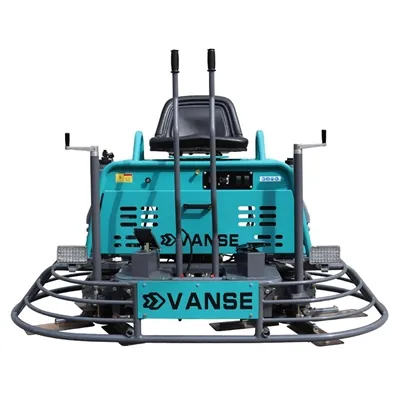
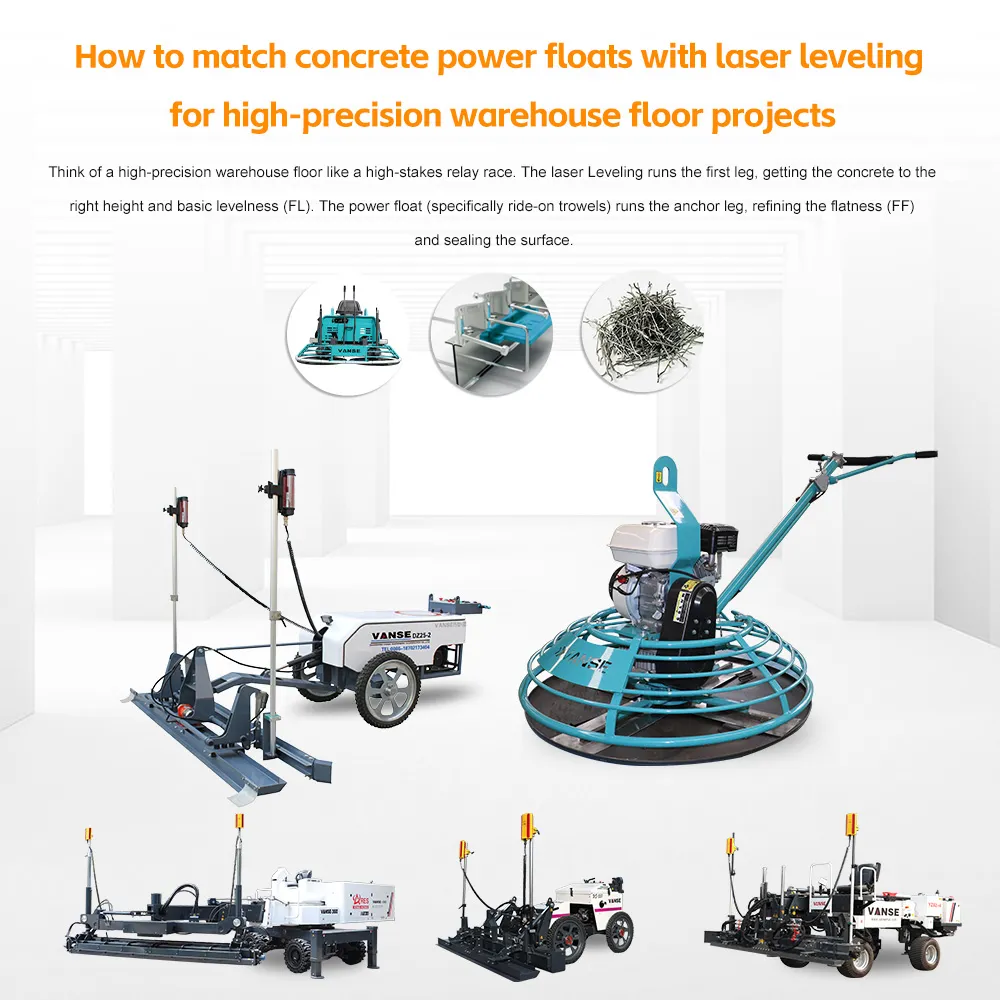
Think of a high-precision warehouse floor like a high-stakes relay race. The laser Leveling runs the first leg, getting the concrete to the right height and basic levelness (FL). The power float (specifically ride-on trowels) runs the anchor leg, refining the flatness (FF) and sealing the surface. If these two machines aren't perfectly "matched" in timing and technique, you'll end up with a floor that is level across the building but bumpy under a forklift. Here is how to synchronize them for elite results. For high-precision (Superflat) projects, weight is your friend. While walk-behind floats are fine for small shops, warehouse floors require heavy-duty ride-on power trowels. These machines provide the necessary downward pressure to "cut" high spots and "fill" low spots left by the Leveling. Machine Role Laser Leveling (The Macro) Power Float (The Micro) Primary Goal Elevation & Levelness (FL) Flatness & Density (FF) Key Component Laser receiver & Augers Float pans (Clip-on) Timing Immediate (Wet/Plastic) Delayed (Walkable/Plastic) Correction Moves bulk material Shaves "micro-waves" The most critical "match" between the Leveling and the float happens during the panning phase. * The Pan: Instead of using individual blades, you clip large, flat steel disks (pans) onto the bottom of the power float. The Synergy: The laser Leveling leaves a "closed" surface, but it's never perfectly flat. The pans act as a giant plane. Because the ride-on float has a wide wheelbase, the pans cannot fall into small dips; they "bridge" them and shave the peaks. The Technique: To maximize precision, the operator should run the power float perpendicular to the direction the laser Leveling traveled. This cross-cutting action cancels out any rhythmic waves the Leveling may have left behind. A laser Leveling is fast-it can place 20,000 square feet in a few hours. If your power floating crew can't keep up, the concrete will "get away" from them. The "Footprint" Test: You shouldn't start power floating until a man can stand on the concrete and leave a footprint about 3 mm to 6 mm deep. Matching the Pace: For every laser Leveling on-site, you typically need at least two high-speed ride-on trowels to ensure the entire slab is panned and finished within the same moisture window. If the concrete hardens unevenly, the float will "bounce" over high spots rather than cutting them. One common mistake is over-floating the edges or the areas around columns. The Problem: Power floats naturally want to "dig in" at the edges. The Match: High-precision projects use hand-leveling tools (like a 10-foot highway straightedge) in tandem with the power float. After the first pass of the float, a worker "restraightens" the floor manually to ensure the float didn't create any new "dishes" while trying to fix the old ones. Use Clip-on Pans: Never use just blades if you are chasing high FF numbers. Cross-Pass Pattern: Always float at a 90-degree angle to the laser Leveling's path. Non-overlapping Passes: Ensure the float operator maintains a consistent overlap (usually 50%) to prevent creating new ridges. Monitor Blade Pitch: As the floor hardens, increase the blade pitch gradually. Moving too fast to a high pitch can "chatter" the surface, ruining the flatness the laser Leveling worked so hard to establish. Pro Tip: On Superflat jobs, use a Floor Profiler (like a Dipstick) between floating passes. This allows the team to identify a low spot while the concrete is still "green" enough to be corrected with the power float. Would you like to see a step-by-step "Finishing Schedule" that outlines exactly when to switch from pans to combo blades for maximum floor density? Contact us NOW Note: The parameters provided in this document are for reference only and are not mandatory. Due to differences in technical characteristics between different brands and models of laser levelers, please consult the manufacturer for a suitable solution before actual operation. This reference document assumes no responsibility for any issues arising from failure to follow the manufacturer's instructions.