Technical Knowledge
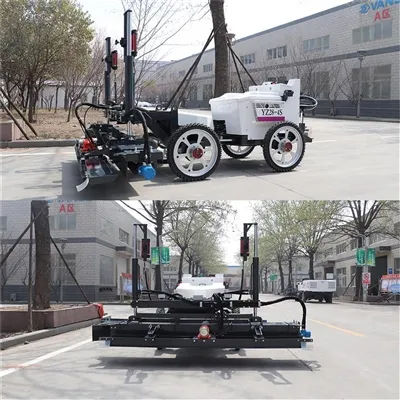
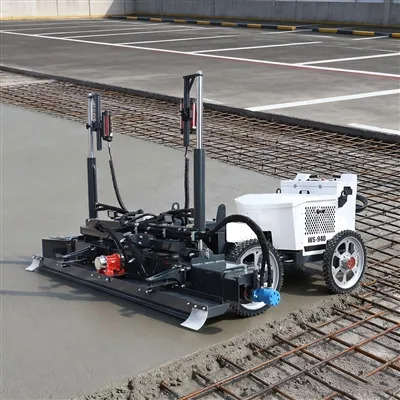
See how the laser leveling machine can show its skills in leveling construction

Laser leveling machines are convenient to use, without complicated operating techniques. Even inexperienced users can flexibly operate them. Secondly, traditional leveling machines will cause uneven construction when used, which will bring a lot of trouble to the construction. Moreover, the equipment can achieve large-area construction when used. This construction method effectively shortens the construction time and effectively ensures the smooth progress of the later work.
1. Small error:
Laser leveling machine is used for large-area construction ground. The ground elevation is easy to control and the ground flatness error is very small. Because of the laser point, the entire building only needs 1-2 reference point elevation, which can reduce the error caused by multiple reference points. The laser is independent of the decoration. The ground height rotates the laser to emit a beam of plane control. As long as the laser is not affected by interference, the laser leveling machine can ensure that the overall level of the paved ground is not affected. Therefore, the ground construction is laid in one area, and the level and smoothness of the entire ground can be ensured. The laser level measurement and control system of the laser leveling machine is controlled in real time. The leveling does not require the control of the line, nor does it require the middle horizontal template to control the ground elevation, avoiding the construction process due to the vibration (channel) of the template elevation error, and also reducing the elevation error caused by the traditional artificial block template.
2. The ground is more integrated:
Laser leveling machine, concrete is used in ground construction, it is easy to achieve large-area paving, one-time whole-sound paving process can be carried out according to the needs of any panel block construction, continuous operation and whole-layer construction, so that the surface is complete, which is the traditional construction process, the traditional laser leveling machine construction process, one day of death, pouring concrete, one day only jumps to construction, even if it is a limitation, it cannot be operated continuously, and the integrity is not good, which is easy to cause construction joint cumulative errors.
3. The ground is more compact and more uniform:
In ordinary concrete, the laser leveling machine always moves at a constant speed, and there is a high-frequency vibrator of 4000 times per minute, which makes the entire flat plate vibrate evenly, making the concrete floor more uniform.
The above basic knowledge about the laser leveling machine is basically over here. If you have good suggestions or opinions, you can communicate with us in time. We will have professional technicians to help you solve the problem. Thank you for your attention and support.
Thanks to All the Friends Who Support and Trust Shandong Vanse Machinery Technology Co., Ltd.
If you want to know more about Shandong Vanse Machinery Technology Co., Ltd. or have any questions, please feel free to contact us:
Our Factory
Shandong Vanse Machinery Technology Co., Ltd.








Share this article

About the Author: Shandong Vanse Machinery Technology Co., Ltd.
Shandong Vanse Machinery Technology Co., Ltd. is a high-tech manufacturer specializing in concrete construction machinery, including laser screeds and related equipment. The company integrates R&D, production, and global sales, with products exported to over 60 countries and widely used in infrastructure projects worldwide.
Previous Post
Next Post
Related Articles
You Might Also Like
What are the possible development directions of concrete laser leveling machine in the future?
What are the possible development directions of concrete laser leveling machine in the future development? With the continuous advancement of science and technology and the increasing complexity of engineering construction, as an important equipment for modern engineering construction, concrete laser leveling machine has broad development prospects and is full of challenges. This article will explore the possible development directions of concrete laser leveling machine in the future development from the aspects of technological innovation and optimization, intelligent and automated improvement, multifunctional integrated design, green environmental protection technology application, industry standardization and standardization, market expansion and diversified application, and after-sales service and training system improvement. 1. Technological innovation and optimization Technological innovation is the core driving force for the future development of concrete laser leveling machine. In the future, the equipment will be committed to improving construction efficiency, reducing energy consumption and improving construction quality. First, in terms of materials, we can explore the use of lighter and more durable new materials to reduce the weight of equipment and increase service life. Secondly, in terms of laser emission and reception technology, more accurate and stable laser control systems should be studied to meet the needs of complex terrain and high-precision construction. In addition, the transmission system and hydraulic system of the equipment can be optimized to reduce energy consumption and improve operating efficiency. 2. Intelligent and automated improvement Intelligence and automation are important trends in the future development of concrete laser leveling machine. With the continuous development of artificial intelligence and Internet of Things technology, concrete laser leveling machines will achieve a higher level of intelligence and automation. By integrating intelligent components such as sensors, controllers and actuators, the equipment can realize real-time perception and autonomous decision-making of the construction environment, thereby improving construction efficiency and construction quality. In addition, through remote monitoring and control systems, operators can realize remote control and monitoring of the equipment, reducing the difficulty and risk of on-site operations. 3. Multifunctional integrated design Multifunctional integrated design is another important direction for the future development of concrete laser leveling machines. By integrating multiple functions into one device, construction costs can be reduced and construction efficiency can be improved. For example, the laser leveling function can be combined with the concrete spreading function to achieve integrated construction of concrete spreading and leveling. In addition, other auxiliary functions such as automatic lifting and automatic adjustment can also be considered to meet the needs of different construction scenarios. 4. Application of green and environmentally friendly technology With the increasing attention of society to environmental protection issues, green and environmentally friendly technology will become an important direction for the future development of concrete laser leveling machines. First of all, in the process of equipment manufacturing and use, environmentally friendly materials and processes should be used preferentially to reduce the emission of harmful substances. Secondly, energy consumption and noise pollution can be reduced by optimizing the equipment structure and working principle. In addition, we can also explore the use of renewable energy such as solar energy and wind energy to power the equipment and achieve green construction. 5. Industry standardization and normalization Industry standardization and normalization are important guarantees for the healthy development of concrete laser leveling machines in the future. By formulating unified technical standards, operating specifications and inspection methods, the performance and quality of the equipment can be improved and fair competition in the market can be promoted. At the same time, standardization and normalization also help reduce the maintenance and operating costs of the equipment and improve the user experience. Therefore, in the future, we should strengthen cooperation with industry associations, scientific research institutions, etc. to jointly promote the standardization and normalization process of the concrete laser leveling machine industry. 6. Market expansion and diversified applications Market expansion and diversified applications are another important direction for the future development of concrete laser leveling machines. At present, concrete laser leveling machines are mainly used in the construction of flat concrete such as roads, bridges, and squares, but with the continuous advancement of technology and the expansion of application scenarios, its application field will continue to expand. For example, we can explore the application of concrete laser leveling machines in water conservancy projects, tunnel projects and other fields to achieve wider applications. At the same time, through international cooperation and market development, concrete laser leveling machines can be promoted to the international market to improve international competitiveness. 7. Perfect after-sales service and training system A perfect after-sales service and training system is crucial to the long-term development of concrete laser leveling machines. With the continuous upgrading and replacement of equipment, users' demand for after-sales service and training is also growing. Therefore, in the future, the training and management of after-sales service personnel should be strengthened to improve their professional skills and service level. At the same time, a perfect training system should be established to provide users with comprehensive technical support and training services to help them better use and maintain equipment. In summary, in the future development of concrete laser leveling machines, there will be diversified development directions such as technological innovation and optimization, intelligent and automated improvement, multi-functional integrated design, green environmental protection technology application, industry standardization and normalization. Market expansion and diversified application, and improvement of after-sales service and training system. These development directions will help improve the performance and quality of concrete laser leveling machines, reduce construction costs, improve construction efficiency, and meet users' needs for efficient, environmentally friendly and intelligent construction. At the same time, it will also help promote the progress and development of the entire engineering construction industry. It should be noted that these development directions do not exist in isolation, but are interrelated and mutually reinforcing. In the future development, we should consider all factors comprehensively, strengthen technology research and development and market research, and promote the concrete laser leveling machine to achieve comprehensive breakthroughs and development in technology innovation, intelligence, environmental protection, standardization, market expansion and after-sales service. Only in this way can we be invincible in the fierce market competition and make greater contributions to the modern engineering construction industry.How do I ensure the FF/FL numbers I achieve at 72 hours don’t drop significantly after six months?
That is an excellent and crucial question. The significant drop in FF/FL numbers over time is a common and costly problem in concrete slab construction, primarily due to Curling and Drying Shrinkage. Initial F-number testing is specifically required by ASTM E1155 and ACI 117 to be done within 72 hours to measure the contractor's work before these long-term effects take hold. It is not uncommon for initial FF/FL values to decrease by 20% to 40%â€"and sometimes as much as 70%â€"over the first six to twelve months if proper preventative measures are not taken. Here is a breakdown of the primary factors that cause this drop and the steps you must take to maintain your initial high numbers. The main cause of long-term FF/FL degradation is Curling. Curling occurs when the top surface of the concrete slab dries and shrinks faster than the bottom surface. This differential volume change causes the edges and corners of the slab panels (especially at joints) to lift upwards. The upward lift changes the original profile, introducing localized hills and valleys. This directly and negatively impacts the FL (Levelness) and, more critically for a high-flatness floor, the FF (Flatness). Preventing the drop requires meticulous attention to the design, mix, subgrade, and post-pour protection. The amount of water and cementitious material in the mix is the single biggest factor in long-term shrinkage. Minimize Water Content: Use the lowest practical mixing water content to achieve the required slump (workability). High water content is the primary driver of drying shrinkage. Maximize Aggregate Content: Use the largest practical maximum size and/or highest practical coarse aggregate content. The aggregate acts as a restraint against shrinkage. Use Shrinkage-Reducing Admixtures (SRAs): Specify SRAs in the mix to chemically reduce the potential for drying shrinkage. Control Cementitious Material: Avoid using higher-than-necessary cementitious materials, as this increases the paste volume, which increases shrinkage. Properly designed joints and reinforcement manage where and how shrinkage-induced stresses are released. Optimum Joint Spacing: Follow the rule-of-thumb that joint spacing (in feet) should not exceed 24 to 30 times the slab thickness (in inches). For example, a 6-inch slab should have joints no more than 12-15 feet apart. Tighter spacing reduces the accumulated shrinkage stress in each panel. Slab Thickness: Thicker slabs (e.g., 8-10 inches) curl less than thinner slabs (e.g., 4-6 inches) because the weight of the slab helps resist the upward lift. Top Reinforcement: Place steel reinforcement (rebar or welded wire mesh) in the upper one-third of the slab (e.g., about 2 inches below the surface) and perpendicular to the joints. This restrains the top surface from excessive shrinkage and curling. Load Transfer Devices: Use diamond dowels or plate dowels at all construction and contraction joints. These devices transfer vertical loads between panels while allowing for horizontal shrinkage, preventing vertical movement (faulting) that kills the FL number. The base beneath the slab dictates the moisture differential. Absorptive vs. Impermeable Subgrade: Placing concrete directly on a moistened, absorptive subgrade (like a crushed stone base) helps draw water from the bottom of the slab, reducing the moisture differential that causes curling. Vapor Barrier/Retarder: If a vapor barrier/retarder is specified, it must be robust. However, because it prevents moisture loss from the bottom, it can increase the potential for curling by trapping all drying to the top surface. In this case, the other design factors (especially reinforcement and mix) become even more critical. If used, ensure the subgrade is fully protected, and follow ACI guidelines for material selection. This is the most critical step immediately after placement. The goal is to ensure slow, uniform hydration. Moist Curing: Apply a curing compound (ASTM C309) or use wet-curing methods (e.g., wet burlap, polyethylene sheeting) immediately after final finishing. Protect from Wind and Sun: Erect temporary windbreaks and sunshades to prevent rapid evaporation from the surface, which leads to plastic shrinkage cracking and significant curling. Maintain Curing for 7+ Days: The concrete must be protected from drying for at least 7 days to achieve adequate strength and minimal long-term shrinkage. By rigorously controlling the concrete mix, slab design (especially joints and reinforcement), and post-placement curing, you significantly mitigate the forces of shrinkage and curling that cause your exceptional 72-hour FF/FL numbers to deteriorate. Note: The parameters provided in this document are for reference only and are not mandatory. Due to differences in technical characteristics between different brands and models of laser levelers, please consult the manufacturer for a suitable solution before actual operation. This reference document assumes no responsibility for any issues arising from failure to follow the manufacturer's instructions.Discussion on the Standards for Regular Safety Inspection of Concrete Laser Leveling at Construction Sites
Regular safety inspections of Concrete Laser Leveling are crucial for preventing accidents and ensuring the safety of personnel and the integrity of equipment. At present, China does not have a national mandatory independent inspection standard for the specific equipment of Concrete Laser Leveling machines. However, its safety inspection must follow a composite standard system composed of general regulations, relevant standards, industry best practices and requirements of equipment manufacturers. The following is a systematic discussion on the regular safety inspection standards for Concrete Laser Leveling at construction sites: The "Work Safety Law of the People's Republic of China" stipulates the responsibility of production and business operation entities for ensuring the safety of equipment. Regulations on Safety Supervision of Special Equipment and related procedures: Although Concrete Laser Leveling machines are generally not included in the "Special Equipment" directory, the lifting components (if any), hydraulic systems, and electrical systems on them need to refer to relevant safety concepts. GB/T 25648-2010 "Laser Motor Graders for Road Construction and Maintenance Machinery" : This is the most direct relevant recommended national standard, covering safety requirements, performance test methods, etc., and is an important technical reference for inspection. GB 5226.1-2019 "Mechanical and Electrical Safety – Mechanical and electrical equipment – Part 1: General Technical Conditions" : Applicable to the safety inspection of the electrical system of equipment. GB/T 15706-2012 "General Principles for Mechanical Safety Design – Risk Assessment and Risk Reduction" : It provides methodological guidance for safety risk assessment. Equipment Operation and Maintenance Manual: This is the most specific and important standard. The manual clearly stipulates the items, cycles, methods and safety warnings for daily inspections and regular maintenance. Safety Operation Manual: It indicates the location, function and inspection methods of the safety devices of the equipment. The "Safety Management Measures for Large Equipment" and "Inspection Standards for Mechanical Equipment at Construction Sites" formulated internally by large construction groups (such as China State Construction Engineering Corporation and China Railway Group, etc.) usually include specific inspection requirements for Concrete Laser Leveling. The industry-wide principle of "management, utilization, maintenance and repair" and the "three determinations" system of fixed personnel, fixed machines and fixed positions. Regular inspections should be divided into three levels: daily inspection, monthly inspection and annual inspection. The key points are as follows: Appearance and structure: Inspect the main frame, scraper, and vibrator housing for any cracks, severe deformations, or loose bolts. Safety device Emergency stop switch: Whether the function is effective. Warning signs and lights: Are they clear and in good condition? Protective cover: Whether the protective covers of the moving parts (hydraulic rods, belts, drive shafts) are firm. Laser system: Check whether the receiver and sensor are clean, firmly connected, and whether the self-check upon startup is normal. Walking and lifting: Conduct a trial run to check whether the walking, turning, and lifting of the scraper are smooth and free from jamming. Leakage inspection: Visually inspect for obvious leakage of hydraulic oil, fuel oil and lubricating oil. Tires/tracks: Check if the air pressure is normal, if the tracks are neither too tight nor too loose, and if there is any damage. On the basis of the daily inspection, add: Hydraulic system Oil level and quality: Check the oil level of the hydraulic oil and observe whether the oil has emulsified or deteriorated. Pipelines and joints: Systematically inspect all high-pressure hoses for wear, bulging, aging, and for leakage at joints. Pumps and valves: Check the hydraulic pump and control valve blocks for any abnormal noise or overheating. Electrical system Insulation and fixation of the circuit: Check whether the main wire harnesses are damaged or aged, and whether the fixation is reliable to prevent them from being crushed. Battery: Check if the battery terminals are corroded and if the connections are firm. Control unit: Check whether the control panel, remote control (if any) buttons, and joystick functions are normal and reliable. Transmission and Vibration system Vibrator: Check whether the temperature and sound of the vibrator bearing are abnormal and whether the fastening bolts are secure. Reducer/transmission shaft: Check for any abnormal sounds, oil leakage, and whether the lubrication is good. Key parts of structural components: Use tools to recheck the torque of bolts at critical force-bearing parts (such as the hinge points of the lifting arm and the welding points of the frame). This is the most comprehensive inspection, approaching the performance and safety assessment of the equipment at the factory. Systematic performance testing Laser system accuracy calibration: Use professional tools to recheck and calibrate the elevation and slope control accuracy of the Leveling on a standard test site. Hydraulic system pressure test: Check whether the working pressure of the system is within the rated range and whether there is any internal leakage. Comprehensive engine inspection (if any) : including oil analysis, emission testing, power testing, etc. Non-destructive testing of key components: For welds and stressed parts of major structural components, magnetic particle or ultrasonic testing can be adopted to check for internal cracks. Brake system test: Test the effectiveness of parking brake and emergency brake. Comprehensive safety function verification: The system tests all functions such as emergency stop, limit, and overload protection. Document review and update: Check previous maintenance records and update equipment safety files. Inspection date, equipment number, model. Inspection type (day/month/year). Inspection items, standard requirements, and actual measurement conditions. Problems identified and handling measures (immediate rectification, rectification within a specified time limit, suspension of use). The inspectors and the reviewers sign. Standard gap: It is urgently necessary for industry associations or leading enterprises to take the lead in formulating more detailed group or industry standards for the "Safety Inspection Regulations for Concrete Laser Leveling Machines in Construction", unifying inspection items, methods and cycles. Technological upgrade: Encourage the application of Internet of Things (iot) technology to achieve remote monitoring and early warning of equipment operation data (oil pressure, temperature, vibration frequency), transforming "regular inspection" into "condition-based inspection". Personnel qualifications: Inspection personnel, especially those conducting monthly and annual inspections, should receive training from equipment manufacturers or professional institutions and possess the corresponding capabilities. For the regular safety inspection of Concrete Laser Leveling at construction sites, currently, the manufacturer's manual should be taken as the specific guideline, national standards such as GB/T 25648 as the technical support, and the enterprise's safety management system as the organizational guarantee, to establish a system covering different levels of day, month and year. A systematic, tabular and archived inspection system covering mechanical, hydraulic, electrical and laser systems. Its core objective is to proactively identify and eliminate risks, ensuring that the equipment is always in a safe and controllable working state, thereby guaranteeing construction safety, project quality and operation efficiency. Note: The parameters provided in this document are for reference only and are not mandatory. Due to differences in technical characteristics between different brands and models of laser levelers, please consult the manufacturer for a suitable solution before actual operation. This reference document assumes no responsibility for any issues arising from failure to follow the manufacturer's instructions.