Technical Knowledge
Laser leveling machine manufacturers professional sharing: the correct way to use the equipment

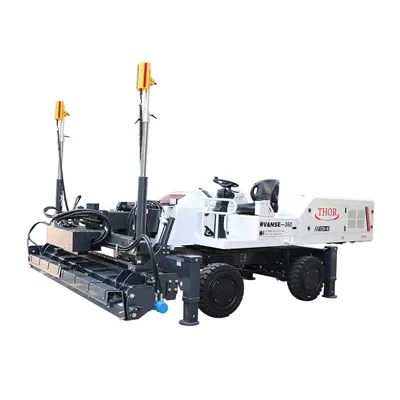
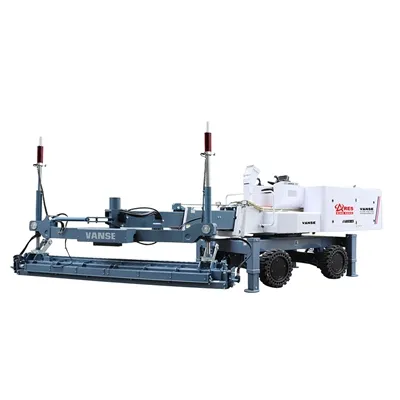
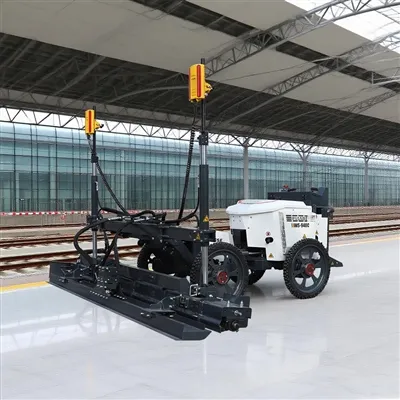
Laser leveling machine is an indispensable equipment in the construction industry. It is indispensable in the construction of large highways. In order to ensure the smooth progress of construction and the smoothness of the road surface, it is necessary to master the correct use of laser leveling machine. Secondly, you should read the instruction manual of the equipment before use, because this will make you familiar with the internal structure of the equipment as soon as possible, so as to achieve correct operation. The following laser leveling machine manufacturer will show you the correct use of laser leveling machine.
1. Laser leveling machine manufacturers explain from a professional perspective that it is important not to work under a load that exceeds the load that the machine can bear. The laser leveling machine should be used to the best of one's ability. As a laser leveling machine manager, when designating an operator, the laser leveling machine random data and operation manual should be handed over to the operator so that he can master the mechanical performance and operating procedures normally, and the relevant data should not be withheld at will.
2. Laser leveling machine manufacturers explain from a professional perspective that it is necessary to try to ensure the uniform addition and subtraction of the load of the laser leveling machine, so that the machine is in a relatively gentle load change. Specifically, it is necessary to add and subtract the throttle more evenly to prevent the ups and downs of the engine and working device.
3. Laser leveling machine manufacturers explain the scientific use of lubricants from a professional perspective. According to statistics, more than half of the leveling machine failures are caused by poor lubrication. Due to the precision of the various parts of the laser leveling machine, good lubrication can keep it in a normal working gap and a suitable working temperature, thereby reducing the degree of wear of the parts and reducing mechanical failures. Normal and reasonable lubrication is one of the effective measures to reduce mechanical failures. To this end, first, it is necessary to reasonably select lubricants. During use, neither low-grade lubricants nor other types of lubricants can be used as substitutes, let alone inferior products. Second, the quantity and quality of lubricants should be checked frequently.
4. Laser leveling machines should be maintained and repaired in a timely manner. Laser leveling machines will inevitably have various failures during use. Among these failures, some failures may have a very small impact on mechanical equipment, while some are more serious and may even cause major accidents of machine destruction and death.
The knowledge shared by the laser leveling machine manufacturer for you has basically come to an end here. If you have the intention to understand the equipment, you can contact us by phone, or log in to our official website and leave us a message. We will solve your problem as soon as we see it. Thank you for your reading.
Thanks to All the Friends Who Support and Trust Shandong Vanse Machinery Technology Co., Ltd.
If you want to know more about Shandong Vanse Machinery Technology Co., Ltd. or have any questions, please feel free to contact us:
Our Factory
Shandong Vanse Machinery Technology Co., Ltd.








Share this article

About the Author: Shandong Vanse Machinery Technology Co., Ltd.
Shandong Vanse Machinery Technology Co., Ltd. is a high-tech manufacturer specializing in concrete construction machinery, including laser screeds and related equipment. The company integrates R&D, production, and global sales, with products exported to over 60 countries and widely used in infrastructure projects worldwide.
Previous Post
Next Post
Related Articles
You Might Also Like
How can the accuracy of concrete laser leveling machines be guaranteed?
The accuracy guarantee of concrete laser leveling machine is a systematic project, which needs to be realized in coordination from many aspects such as equipment performance, pre-construction preparation, construction process control and subsequent maintenance. The following are specific guarantee measures: Laser transmitter: Using high-precision laser transmitter (such as wavelength stability ±5nm, range covering more than 300 meters), the horizontal laser surface is emitted by rotating prism, and the error can be controlled within ±2mm. Receiver sensitivity: Equipped with high-sensitivity laser receiver (response time <0.1 second), real-time capture of laser signals to ensure accurate feedback of elevation deviation. Control system algorithm: Built-in control algorithm, which can automatically adjust the lifting speed of leveling mechanism (such as scraper, vibrating beam) according to the deviation, with a response accuracy of ±1mm. Scraper and vibrating system: Using rigid alloy material, the scraper flatness error is ≤0.5mm/m, and the vibration frequency is stable at 3000-5000 times/minute to avoid elevation deviation caused by mechanical deformation. Drive system: hydraulic drive or servo motor drive (accuracy ±0.1mm), ensuring uniform travel speed (0.5-5m/min adjustable) to avoid speed fluctuations affecting the leveling effect. Use a total station or RTK measuring instrument (plane accuracy ±10mm, elevation accuracy ±15mm) to grid the site (recommended 5m×5m), establish a three-dimensional elevation model, and compare the design elevation with an error of ≤3mm. The laser transmitter needs to be installed at the center of the site to ensure that there is no blind spot in the signal coverage and the installation height error is ≤5mm. Horizontal calibration: Calibrate the horizontality of the fuselage through a high-precision level (accuracy ±0.1mm/m), and adjust the height of the legs to make the fuselage inclination <0.5°. Zero point calibration: Calibrate the receiver zero point at a known elevation point (such as a leveling point) to ensure that the elevation benchmark deviation is ≤2mm. No-machine trial run: Test the scraper lifting speed (required 100mm/s±5%), travel straightness (10m distance offset ≤10mm), and confirm that there is no abnormality in the mechanical system. The slump of concrete is controlled at 180-220mm to ensure that the fluidity meets the leveling requirements and avoid uneven thickness due to material segregation. When paving, reserve 5-10mm of leveling margin, and use the laser leveling machine to reach the designed elevation in one operation, with an error of ≤3mm. The operator views the elevation deviation data in real time through the display screen (display accuracy ±1mm), and performs secondary filling or scraping for local out-of-tolerance areas (such as deviations >5mm). For large-scale construction (such as >5000㎡), set a fixed calibration point every 500㎡, re-measure the elevation with a level, and adjust the equipment parameters immediately when the deviation exceeds 3mm. Temperature influence: When the temperature is >30℃, shorten the leveling operation time (control it within 1 hour before the initial setting of the concrete) to avoid surface settlement due to water evaporation, and control the error within ±5mm. Wind impact: When the wind speed is ≥ Level 4, set up a windproof barrier around the laser transmitter to prevent the laser beam from deviating and ensure signal stability. Use a 3m ruler or laser flatness meter (measurement accuracy ±1mm) for detection, with no less than 3 measuring points per 100㎡, and the allowable deviation is ≤3mm (GB 50204-2015 standard). After marking the out-of-tolerance area (such as deviation >5mm), use a small leveling machine or manual spatula to correct it until it meets the requirements. The equipment has a built-in data recorder to automatically save the elevation deviation curve during the leveling process, and generate an accuracy report after construction (including the error value of each area, pass rate, etc.), which is convenient for tracing the source of the problem. Replace the hydraulic oil filter every 50 hours, calibrate the laser transmitter every 200 hours (wavelength deviation ≤ 1nm), and check the scraper wear every 1000 hours (allowable wear ≤ 2mm). The receiver lens needs to be cleaned daily to prevent dust from affecting the accuracy of signal reception. Operators must undergo professional training (training time ≥ 50 hours), master equipment calibration, parameter adjustment and emergency handling skills, and can only take up their posts after passing the assessment. Before construction, you need to be familiar with the design drawings and clarify the location of the elevation control points to avoid deviations caused by human operating errors. Project Accuracy index Reference standards Elevation deviation ±3mm/3m GB 50204-2015 Flatness ±5mm/100㎡ Concrete Structure Engineering Construction Code Elevation difference between adjacent plates ≤2mm American ACI 302.1R-04 Standard The accuracy of the concrete laser leveling machine must rely on "high-precision hardware + scientific construction process + strict quality control". Through the full process control from equipment calibration to post-construction acceptance, the floor flatness error can be controlled within ±3mm, meeting the construction requirements of high-standard sites such as industrial plants and logistics warehouses. In actual applications, it is also necessary to flexibly adjust the process in combination with project characteristics (such as area, elevation complexity) to achieve optimal accuracy.Large boom operated laser guided concrete leveling machine
Concrete laser leveling machine is used in large-area floor construction. The ground elevation is easy to control and the ground flatness error is extremely small. Due to the use of laser point-to-point, the entire floor only needs 1-2 reference points for elevation, which can reduce the error caused by multiple reference points. The laser emitter is arranged independently, and the floor elevation is always controlled by the plane formed by the rotating light beam emitted by the laser emitter. As long as the laser emitter is not disturbed, no matter where the Ruifang concrete laser leveling machine goes, it can ensure that the overall elevation of the paved ground is not affected, so that large-area one-time paving can be achieved in floor construction, and the levelness and flatness of the entire floor can be guaranteed. The concrete laser leveling machine uses a laser measurement and control system to control the elevation in real time. There is no need to pull a control line for leveling, and there is no need to support the side template in the middle to control the ground elevation, thereby avoiding the elevation error caused by the vibration of the template (channel steel) during the construction process, and also reducing the elevation error caused by traditional manual block support. Concrete laser leveling machine, used in floor construction, is very easy to achieve one-time overall paving of large-area floor. This paving technology can be divided into blocks as needed, and the whole floor can be completed continuously, making the floor more integrated, which is impossible to achieve with traditional construction technology. When leveling concrete, the concrete laser leveling machine is always in a uniform speed construction state, with a high-frequency vibrator of 4000 times per minute, so that the vibration plate of the leveling head produces uniform high-frequency vibration, making the concrete floor more dense and uniform.The correct methods and protective measures for long-term storage of concrete laser leveling (such as placing them on a flat ground, dry and well-ventilated)
Let's delve into the correct methods and protective measures for long-term storage of concrete laser leveling machines (especially their precision components), such as across projects, during winter or the rainy season. This is a crucial topic. Proper storage can greatly prevent equipment from malfunctioning when it is used next time, save maintenance costs and extend its service life. Before driving the equipment into the warehouse, a thorough "physical examination" and "maintenance" must be carried out. Overall machine cleaning: Use a high-pressure water gun or steam cleaner to thoroughly remove all concrete slurry, oil stains and dust from the machine body. Focus on cleaning the accumulated materials around the tracks, scrapers and vibrators. Specialized cleaning of precision components Laser emitter/receiver: Use lens paper and blow balloons to carefully clean all lens and sensor surfaces to ensure there are no stains. Sensors and circuits: Clean the elevation sensors, tilt sensors, etc. at all parts. Thorough drying: After cleaning, park the equipment in a well-ventilated area to ensure that all components, especially electrical interfaces and precision parts, are completely dry. Compressed air can be used to dry the moisture in the gaps. Engine: Replace the engine oil and oil filter. Inject a small amount of engine oil into the cylinder and evenly distribute it by turning the crankshaft to prevent rusting inside. Fuel system: Fill the fuel tank to the brim to prevent water droplets from condensing on the inner walls of the tank and causing rust. At the same time, add fuel stabilizers to prevent diesel from deteriorating and forming gum during long-term storage. Hydraulic system Check the oil level and quality of the hydraulic oil, and replace it if necessary. Start the machine and retract all the hydraulic cylinders (such as the lifting cylinder and the leveling cylinder) to the shortest stroke state (that is, retract the piston rod into the cylinder). This is because the exposed surface of the piston rod is the most prone to rust. Lubrication and rust prevention Apply an adequate amount of grease to all lubrication points (such as pins and bearings), and squeeze out the old and potentially contaminated grease to form a new protective layer. For exposed metal surfaces, such as the base plate of the scraper and the housing of the vibrator, a thin layer of anti-rust oil or grease can be applied. Remove the batteries: It is strongly recommended to remove the batteries of the leveling and the laser emitter. Battery storage: Store the battery in a cool, dry and well-ventilated place. The ideal temperature is between 0°C and 25°C. Battery charging: Charge the battery to about 50%-70% of its capacity and store it. Perform a complete charge and discharge cycle every 1-2 months to maintain its activity and prevent permanent damage caused by "undercharging". Electrical interface: Unplug all sensor plugs, spray them with electronic contact cleaner, then cover them with dust caps or wrap them with insulating tape. Indoor priority: The best choice is a dry, well-ventilated and dust-free indoor warehouse. It can prevent exposure to the sun, rain, sudden temperature changes and dust invasion. Outdoor storage (if unavoidable) Terrain: A high, flat, solid and well-drained area must be selected to prevent the equipment from deforming due to ground subsidence or being soaked by water accumulation. Covering: Use professional waterproof and dustproof tarpaulins for covering. Avoid using ordinary plastic sheeting, as plastic sheeting is not breathable and water vapor is likely to condense inside, accelerating rusting. Make sure the tarpaulin is securely tied up to withstand strong winds. Park on a flat ground: Ensure that all tracks or tires of the equipment are steadily on the ground to release the stress on the frame. Raise the tracks/tires: Place wooden boards or rubber pads under the tracks or tires to isolate them from the wet ground and slightly release the track tension (refer to the equipment manual) to reduce rubber aging and the pressure on the load-bearing wheels. This is of Paramount importance in protecting the "brain and eyes" of the device. Laser emitter, receiver, control box It must be disassembled and put back into its original dedicated transport box. Place desiccants inside the box and replace them regularly. Store the boxes on the shelves or in safety cabinets in the warehouse, ensuring a stable temperature and humidity environment and keeping them away from any possible risks of heavy objects falling or colliding. Sensors and cables All sensors should be removed from the machine, cleaned and then placed in the drying oven as well. The cable should be coiled loosely (with a diameter of no less than 30 centimeters). It is strictly prohibited to fold it tightly or bend it excessively. It should be bound with cable ties. Hang or lay it flat on the shelf to avoid pressure. Long-term storage does not mean a one-time solution; regular inspections must be carried out. Monthly inspection: Check whether the tarpaulin is intact and if there is any leakage. Check if there is any new rust on the surface of the equipment. Check the tire/track pressure and replenish it if necessary. Perform charge and discharge maintenance on the battery. Manually rotate the tracks or move each working device several times to change the force application points of the hydraulic cylinder and bearings, preventing the seals and bearings from deforming due to long-term pressure at a single position. Project Specific measures Clean and dry Thoroughly clean the entire machine and its precision components and ensure they are completely dry. Oil and fluid management Change the engine oil, fill up the fuel and add stabilizer, and withdraw all the cylinders. Rust prevention and lubrication Apply anti-rust oil to exposed metal parts and add new grease to all lubrication points. Battery management Remove the battery, charge it to 50%-70%, store it in a cool place, and charge and discharge it regularly. Electrical system Unplug and protect all plugs, and properly wrap the cables. Storage environment First choose indoor Spaces, then outdoor high ground areas and cover them with professional tarpaulins. Equipment parking Stop on a flat ground, raise the tracks/tires, and release the tension of the tracks. Precision components It must be disassembled, placed in the original box and desiccant added, and stored safely separately. Regular inspection Check the tarpaulin, rust, battery, etc. every month and move all working devices. By following the above methods and measures, your concrete laser leveling can safely get through any long idle period. When it starts up at the next construction site, it can quickly return to its best condition and continue to create a smooth and mirror-like high-quality floor for you. Note: The parameters provided in this document are for reference only and are not mandatory. Due to differences in technical characteristics between different brands and models of laser levelers, please consult the manufacturer for a suitable solution before actual operation. This reference document assumes no responsibility for any issues arising from failure to follow the manufacturer's instructions.