Technical Knowledge
The secret of Shandong Vanse laser leveling machine’s hot sales

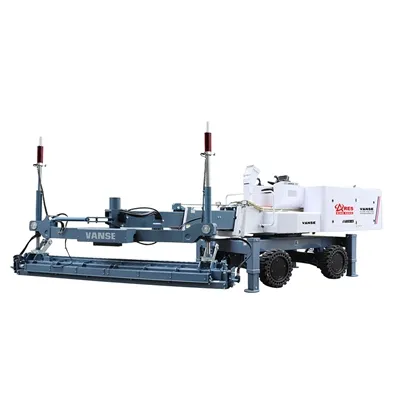
According to analysis, in 2017, Shandong Vanse Machinery's concrete laser leveling machine sales market share was four layers, and the turnover ratio was three layers, which is unmatched by any other leveling machine at present. What is the reason why the concrete laser leveling machine is so popular with customers? Today we will analyze the "tellable" secret behind the hot sales of laser leveling machines.
1. Let's analyze the advantages of "laser leveling machine" construction:
① Extremely small flatness error:
Concrete laser leveling machine is used for large-area floor concrete construction. The ground elevation is easy to control and the ground flatness error is extremely small. Because of the use of laser point-to-point, the entire floor only needs 1-2 accurate point elevations, which can reduce the error caused by multiple accurate points;
Laser transmitters are arranged independently, and the floor elevation is always controlled by the plane formed by the rotating light beam emitted by the laser transmitter. As long as the laser transmitter is not disturbed, no matter where the concrete laser leveling machine goes, it can ensure that the overall elevation of the paved ground is not affected, so that large-area one-time paving can be achieved in floor construction, and the levelness and flatness of the entire floor can be guaranteed;
Concrete laser leveling machine uses laser measurement and control system to control the elevation in real time. There is no need to pull control lines for leveling, and there is no need to support side templates in the middle to control the ground elevation, thus avoiding the elevation error caused by the vibration of the template (channel steel) during the construction process, and also reducing the elevation error caused by traditional manual block support.
② Better ground integrity:
Concrete laser leveling machine, applied to floor construction, is very easy to achieve one-time overall paving of large-area floor. This paving technology can be divided into blocks as needed, and the whole floor can be completed continuously (see Figure 7 for block construction diagram), making the ground integrity better, which is impossible to achieve with traditional construction technology.
Traditional construction technology, one day of formwork and one day of concrete pouring, can only be skipped one by one, which has great limitations, cannot be operated continuously, and has poor integrity, which easily causes cumulative errors in construction joints.
③ The ground is more dense and uniform:
When leveling the concrete, the concrete laser leveling machine is always in a uniform speed construction state, with a high-frequency vibrator of 4000 times per minute, so that the vibration plate of the leveling head produces uniform high-frequency vibration, making the concrete floor more dense and uniform.
2. High construction efficiency
Concrete laser leveling machine is used in large-area floor construction, and the operation efficiency is greatly improved. A construction team of about 6 workers can complete 300 square meters of paving work per hour, and an average of 2500-3500 square meters can be completed in a single shift. It is particularly suitable for projects with tight schedule requirements, large paving areas, and high quality requirements. In large-area floor construction, the number of workers in the traditional manual construction team is about 15, and the workload completed in a single shift is about 700 square meters.
3. Reduce resource input
① High degree of automation, low labor intensity, saving templates and channel steel, and reducing labor input:
Concrete laser leveling machine is a hand-held type that can be operated. It is used in concrete floor construction, which changes heavy physical labor into mechanical paving, vibration, leveling, slurry lifting, and plastering, which greatly reduces the number of operators and greatly reduces labor intensity. The realization of large-area one-time paving construction makes it unnecessary to support the formwork in the middle of the block. While reducing the formwork and channel steel, it also further reduces the construction process and speeds up the construction progress.
② The later maintenance cost of the ground is greatly reduced
Concrete laser leveling machine is used in large-area floor construction. While reducing construction joints, it can also effectively solve the problems of hollowing, peeling, cracking and inequality on the ground, greatly reducing the later maintenance cost of the floor.
Shandong Vanse Machinery Co., Ltd. has always been committed to the principle of "taking customer interests as the premise, leading in technology, operating with integrity, and creating a well-known brand". It has been highly recognized and praised by customers. The company has been awarded many honorary titles such as contract-abiding and credit-worthy unit and high-tech enterprise. If you need laser leveling machines, please visit our company for negotiation.
Thanks to All the Friends Who Support and Trust Shandong Vanse Machinery Technology Co., Ltd.
If you want to know more about Shandong Vanse Machinery Technology Co., Ltd. or have any questions, please feel free to contact us:
Our Factory
Shandong Vanse Machinery Technology Co., Ltd.








Share this article

About the Author: Shandong Vanse Machinery Technology Co., Ltd.
Shandong Vanse Machinery Technology Co., Ltd. is a high-tech manufacturer specializing in concrete construction machinery, including laser screeds and related equipment. The company integrates R&D, production, and global sales, with products exported to over 60 countries and widely used in infrastructure projects worldwide.
Previous Post
Next Post
Related Articles
You Might Also Like
Dust Control and Environmental Protection Measures in Concrete Spreader Construction
In anti-corrosion flooring construction, dry-spread materials typically contain high-grade cement, quartz sand, or metal aggregates. During the high-speed spreading process of the concrete spreader, a large amount of floating dust (such as silica dust) is easily generated. This not only affects worker health (risk of silicosis) but also contaminates surrounding expensive production equipment. The following are the mainstream dust control and environmental protection measures in concrete spreader construction: Modern automated concrete spreaders (especially ride-on or large laser-leveling spreaders) are designed with dust suppression in mind: Enclosed Hopper: Changing the traditional manual throwing method, materials are stored in an enclosed hopper and discharged via a bottom screw conveyor or roller, greatly reducing the material's exposure time to air. Windproof Enclosure/Soft Curtain: Anti-static rubber soft curtains are installed at the discharge port, as close as possible to the concrete surface (maintaining a distance of 10cm-15cm), confining dust to a very small local space. Low-Level Discharge Technology: The spreader's boom has an adjustable height, allowing for "ground-hugging" discharge, reducing airflow disturbance caused by free fall of materials. Substrate Water Control: Strictly control the "water discharge" state of the concrete. Utilize the concrete's own seepage water to moisten freshly applied powder. Environmental Humidification: Deploy mobile water mist fans or micro-mist dust suppression systems around the construction area. Note: Water mist must not be sprayed directly onto unpainted concrete surfaces to avoid altering the local water-cement ratio and affecting corrosion resistance. Localized Vacuuming: For manual replenishment areas in corners, a high-grade industrial vacuum cleaner with a HEPA filter must be used for simultaneous vacuuming. Collection and Disposal: Dry powder scattered along the spreader's path should be disposed of promptly to prevent it from being re-entered into the air due to the high-speed rotation of the power trowel. According to national and industry environmental protection requirements (such as the "Construction Site Environmental and Sanitary Standards"), the following operations must be performed: Measures Category Specific Operational Procedures: Objectives Packaging Handling Using large bags (ton bags) in conjunction with an automatic feeding machine is mandatory to reduce the instantaneous release of dust when opening small bags. Reduce start-up dust by over 70% Waste Management Empty bags remaining after feeding must be immediately placed into sealed recycling bags; littering or burning is strictly prohibited. Prevent secondary pollution Personnel Protection Construction personnel must wear P100/N95 dust masks and windproof goggles. Protect occupational health and safety Enclosed Construction When working indoors, a negative pressure ventilation system must be established or a large centrifugal fan must be used to exhaust filtered air. Prevent dust from spreading to other clean areas In the construction of acid-resistant, oil-resistant, and other special flooring materials, dry-spread mixes may contain special chemical additives: Water Solubility Monitoring: It is strictly forbidden to spray excessive water directly after spreading the mix to reduce dust, as this will lead to the loss of effective anti-corrosion components and contaminate the on-site drainage system. Material Selection: Pre-granulated dry-spread mixes should be given priority. These materials have low fly ash content, a heavy granular texture, and naturally generate less dust. If you are undertaking renovations or refurbishments within a pharmaceutical, food, or precision electronics factory, dust control requirements are extremely stringent. Would you like me to recommend a "clean-state" construction and coordination plan? Or are you preparing for an on-site inspection by the environmental protection bureau and require relevant compliance documentation? Note: The parameters provided in this document are for reference only and are not mandatory. Due to differences in technical characteristics between different brands and models of laser levelers, please consult the manufacturer for a suitable solution before actual operation. This reference document assumes no responsibility for any issues arising from failure to follow the manufacturer's instructions.How to effectively prevent and solve the problem of cracks in diamond wear-resistant floor?
How to effectively prevent and solve the problem of cracks in diamond wear-resistant floor Abstract: Diamond wear-resistant floor is widely used in the construction industry due to its high strength and good wear resistance. However, the problem of floor cracks has always been a key factor affecting its service life and aesthetics. This article will focus on how to effectively prevent and solve the problem of diamond wear-resistant floor cracks, and put forward specific and practical methods and suggestions from the aspects of cause analysis, material selection, construction technology, preventive measures, treatment and repair, and maintenance. 1. Analysis of the causes of floor cracks The causes of diamond wear-resistant floor cracks are varied, mainly including the following points: ☑ Improper foundation treatment: The ground foundation treatment is not thorough, and there are impurities such as oil, dust, etc., which leads to the weak bonding between the floor and the base layer, and cracks are easy to occur. ☑ Material quality problem: The quality of diamond wear-resistant materials does not meet the standards, such as excessive mud content and uneven particles, which will reduce the strength and wear resistance of the floor, and then cause cracks. ☑ Irregular construction process: If the construction process is not strictly carried out in accordance with the operating procedures, such as uneven pouring and insufficient vibration, cracks may occur in the floor. ☑ Changes in temperature and humidity: Changes in ambient temperature and humidity will cause thermal expansion and contraction of the floor material, resulting in cracks. 2. Material selection and quality control In order to prevent cracks in corundum wear-resistant floor, the material selection and quality control links should be strictly controlled: ☑ Select high-quality corundum wear-resistant materials: Ensure that the materials meet national standards and industry specifications and have good strength and wear resistance ☑ Strictly control the quality of raw materials: Inspect the incoming raw materials to ensure that indicators such as mud content and particle uniformity meet the requirements. ☑ Control the concrete mix ratio: According to the design requirements and actual conditions, reasonably adjust the concrete mix ratio to ensure the strength and durability of the floor. 3. Construction process optimization Optimizing the construction process is a key measure to prevent floor cracks: ☑ Strengthen foundation treatment: Thoroughly clean the ground foundation to ensure that there are no impurities such as oil and dust, and improve the adhesion between the floor and the base. ☑ Pouring and vibrating: Use layered pouring and uniform vibration to ensure that the concrete is dense inside and avoid hollowing and cracks. ☑ Smoothing and finishing: Smoothing is performed before the initial setting of the concrete to ensure the surface is flat; finishing is performed before the final setting to improve the gloss and wear resistance of the floor. ☑ Maintenance and cutting: After the floor construction is completed, timely maintenance is carried out to maintain appropriate temperature and humidity; at the same time, according to the design requirements and actual conditions, the cutting seams are reasonably set to reduce the impact of temperature stress on the floor. 4. Crack prevention measures In order to effectively prevent the occurrence of cracks in diamond wear-resistant floor, the following measures can be taken: ☑ Strengthen construction supervision: Establish a strict construction supervision system to ensure that construction personnel perform operations in accordance with operating procedures to avoid cracks caused by human factors. ☑ Control the construction environment: Try to carry out construction in an environment with suitable temperature and humidity to avoid the impact of extreme weather on the quality of the floor. ☑ Add anti-cracking measures: Add anti-cracking agent to concrete to improve the anti-cracking performance of the floor; at the same time, set anti-slip and anti-cracking textures on the floor surface to enhance the safety of the floor. 5. Crack treatment and repair When cracks appear on the floor, they should be treated and repaired in time: ☑ Clean the cracks: First remove the debris and oil in the cracks to ensure that the cracks are dry and clean. ☑ Fill and repair materials: Select suitable repair materials (such as epoxy mortar, polymer repair agent, etc.) to fill and repair the cracks. The repair material should have good adhesion, wear resistance and crack resistance. ☑ Polishing and finishing: After the repair is completed, polish and finish the repaired part to keep it consistent with the surrounding floor surface to ensure the overall aesthetics. 6. Maintenance recommendations In order to extend the service life of diamond wear-resistant floor and reduce the possibility of cracks, it is recommended to strengthen daily maintenance work: ☑ Regular cleaning: Clean the floor regularly to remove impurities such as oil and dust to keep the floor surface clean and tidy. ☑ Avoid heavy objects rolling: Avoid placing heavy objects on the floor or performing high-intensity rolling operations to avoid damage to the floor. ☑ Repair damaged parts in time: When the floor is damaged or cracked, it should be treated and repaired in time to prevent the problem from expanding. 7. Case analysis and experience summary Through the analysis of actual cases, we can summarize some experiences and lessons in preventing and solving the problem of cracks in diamond wear-resistant floors: ☑ In a certain project, due to the excessive humidity in the construction environment, many cracks appeared after the floor construction. In response to this problem, we strengthened the control of the construction environment in subsequent projects, and ensured the appropriate humidity of the construction environment by building temporary rainproof facilities and using hygrometers for monitoring, which effectively reduced the occurrence of cracks. ☑ In another project, we used high-quality diamond wear-resistant materials and advanced construction technology, and at the same time conducted professional training for construction personnel to ensure standardized construction operations. Through the implementation of these measures, the floor quality of the project has been significantly improved, and the crack problem has been effectively controlled. In summary, effective prevention and solution of cracks in diamond wear-resistant flooring needs to start from multiple aspects. By optimizing material selection, strengthening quality control, improving construction technology, taking preventive measures, and timely handling and repairing cracks, we can improve the quality and durability of the floor and reduce the occurrence of cracks. At the same time, maintenance is also an important step to maintain floor performance and extend service life. Regular cleaning and inspection, and timely handling of possible problems can effectively prevent the expansion of cracks and further damage to the floor. In the case analysis, it is not difficult to find that the specific conditions of each project are different, so the prevention and solution of floor cracks needs to be flexibly responded to according to the actual situation. Summarizing experience and lessons, and constantly improving and optimizing prevention and repair measures are the key to improving floor quality. In addition, with the advancement of science and technology and the continuous emergence of new materials, the construction technology and materials of diamond wear-resistant flooring are also constantly updated. We should actively pay attention to industry development and the latest research results, introduce advanced construction technology and materials, and improve the quality and performance of the floor. In the design and construction stage of diamond wear-resistant flooring, it is also necessary to fully consider the use environment and use requirements. For example, in places with heavy loads and high frequency of use, higher strength and more wear-resistant materials should be selected, and more stringent construction processes and quality control measures should be adopted. In addition, environmental protection and sustainable development are also important issues in the current construction industry. When selecting floor materials and construction processes, materials and processes with excellent environmental performance and low energy consumption should be selected as much as possible to reduce the impact on the environment. In short, the effective prevention and solution of the problem of cracks in diamond wear-resistant floors requires comprehensive measures from multiple aspects such as material selection, construction process, preventive measures, treatment and repair, and maintenance. By constantly summarizing experience, introducing new technologies and new materials, paying attention to environmental protection and sustainable development, we can continuously improve the quality and performance of the floor, meet the needs of customers, and contribute to the sustainable development of the construction industry. Looking to the future, with the continuous development of the construction industry and the advancement of technology, the application scope of diamond wear-resistant floors will be wider, and its performance and quality will be further improved. We have reason to believe that through continuous efforts and innovation, the problem of cracks in diamond wear-resistant floors will be better solved, providing a safer, more comfortable and beautiful environment for people's lives and work. Before concluding this article, it should be emphasized that the prevention and solution of cracks in diamond wear-resistant floor is not a one-shot process, but requires long-term efforts and continuous improvement. Therefore, we should keep an open mind and continue to learn and explore new methods and technologies to cope with various challenges and problems that may arise. Finally, it should be pointed out that although this article has made a relatively comprehensive discussion on the prevention and solution of cracks in diamond wear-resistant floor, due to the complexity and diversity of actual projects, there may still be some situations that have not been involved or fully considered. Therefore, in actual projects, we should flexibly apply the measures and suggestions mentioned in this article according to the specific situation, and carry out targeted treatment and improvement in combination with the actual situation. In summary, the prevention and solution of cracks in diamond wear-resistant floor is a systematic project, which requires us to start from multiple aspects, take comprehensive measures, and continuously improve and innovate. Only in this way can we ensure that the quality and performance of the floor are effectively improved and create a better environment for people's life and work. The above is an in-depth discussion on how to effectively prevent and solve the problem of cracks in diamond abrasive wear-resistant flooring. We hope that it can provide certain reference and reference value to relevant practitioners and readers. At the same time, we also look forward to more research and innovative results in the field of diamond abrasive wear-resistant flooring in the future to promote the sustainable development and progress of the industry.How does the concrete laser leveling machine achieve high-precision ground leveling?
The concrete laser leveling machine to achieve high-precision ground leveling mainly relies on the following technologies and methods: 1. Laser technology: Concrete laser leveling machines use laser technology for high-precision positioning and measurement. By installing a laser transmitter and receiver on the equipment, the leveling can form a laser beam in the construction area, and the height and level of the laser beam can be monitored and controlled in real time through sensors and control systems. This technology can achieve high-precision automatic positioning and ensure the accuracy of the leveling machine's walking trajectory and height adjustment. 2. Precise hydraulic system: The concrete laser leveling machine is equipped with a precise hydraulic system, which enables fine flow control and height adjustment. The hydraulic system can accurately control the movement of the leveling head based on data fed back by the laser positioning system, thereby achieving high-precision ground leveling. 3. Automatic control system: The concrete laser leveler adopts an advanced automatic control system, which can automatically adjust the operating status of the leveler based on preset parameters and real-time feedback data. The control system can monitor the position, height and concrete paving thickness of the leveling machine in real time, and automatically adjust the movement trajectory and speed of the leveling head to ensure that the flatness of the ground meets the design requirements. 4. High-precision scraper and vibrator: The concrete laser leveling machine is equipped with high-precision scraper and vibrator, which can achieve precise concrete leveling. The scraper can accurately control the movement trajectory and height of the scraper based on the feedback data from the laser positioning system, making the concrete surface smoother. The vibrator can vibrate the concrete to improve the compactness and smoothness of the ground. 5. Repeated leveling multiple times: In order to ensure that the flatness of the ground meets high-precision requirements, the concrete laser leveling machine can perform multiple repeated leveling in the same area. This method further improves the flatness of the floor by eliminating any slight height differences that may have existed after initial leveling. 6. Operator experience: Although concrete laser leveling machines have a high degree of automation and precise control capabilities, operator experience is still very important to achieve high-precision ground leveling. Operators should have rich construction experience and skills, be familiar with different construction conditions and requirements, and be able to make necessary adjustments and treatments according to the actual situation to ensure the best leveling effect. 7. Equipment maintenance and calibration: In order to maintain the high-precision performance of the concrete laser leveling, regular maintenance and calibration of the equipment are also essential. Equipment should be inspected and cleaned regularly to ensure that all parts are in good working order. At the same time, the positioning system, hydraulic system and other key parameters of the equipment should be calibrated regularly to ensure that the measurement and control accuracy of the equipment meets the requirements. 8. Construction technology optimization: In addition to the technical advantages of the equipment itself, reasonable construction technology is also a key factor in achieving high-precision ground leveling. The construction unit should formulate a scientific construction plan based on the actual situation, including the selection of concrete materials, the design of the mix ratio, and the arrangement of the construction sequence. By optimizing the construction process, the quality of ground flatness can be further improved. In summary, the realization of high-precision ground leveling by a concrete laser leveling relies on the comprehensive application of a variety of technologies and methods. Through laser technology, precise hydraulic systems, automatic control systems, high-precision scrapers and vibrators, multiple repeated leveling and operator experience, regular maintenance and calibration of equipment, and optimization of the T-laying process, it can be significantly improved. The flatness of the ground meets the requirements of high-precision construction. At the same time, construction units should continue to explore new technologies and methods to further improve the quality and efficiency of ground flatness.