Technical Knowledge
What factors affect the compaction effect of concrete power trowel?

1. Machine factors
– Trowel type and weight
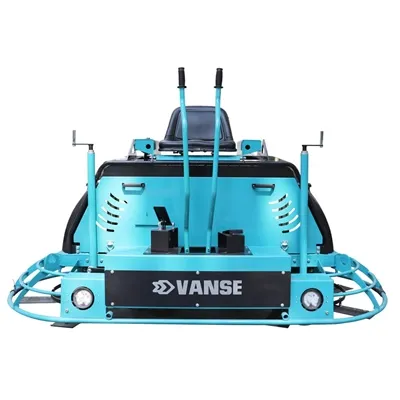
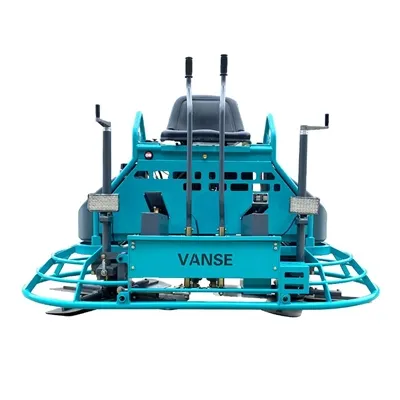
– Different types of trowels, such as walk-behind and ride-on, have different compaction effects. Ride-on trowels are usually heavier, and their own weight can provide greater pressure for the compaction process. They are generally suitable for compacting large areas and thicker concrete. Walk-behind trowels are relatively light, and may require the operator to apply additional pressure when compacting thicker concrete. For example, a ride-on trowel can weigh hundreds of kilograms, and through its own gravity and the pressure generated by the operation of the machine, it can effectively compact a concrete layer of 10-15 cm deep; a walk-behind trowel generally weighs tens of kilograms, and for the same thickness of concrete, it may be necessary to achieve similar compaction effects through repeated operations or increased downward operating force.
– The size and number of trowel discs on the trowel also affect the compaction effect.
Larger trowel discs can cover more ground area when rotating, making the pressure more evenly distributed, which helps to improve the compaction effect. Compared with a single-disc trowel, a double-disc trowel can apply pressure to concrete from two directions at the same time, making the pressure on the concrete surface more balanced, thereby enhancing the compaction effect to a certain extent. For example, the diameter of the two trowel discs of a double-disc ride-on trowel can reach about 1 meter, which can better compact a large area of concrete during operation and reduce the height difference of the ground.
– Power and speed of trowel
– A powerful trowel can better overcome the resistance of concrete during operation, allowing the trowel blade to embed deeper into the concrete surface, thereby improving the compaction effect. For example, a gasoline-powered trowel has more power than an electric trowel of the same type. When dealing with hard concrete, it can drive the trowel blade to rotate with higher torque to effectively compact the concrete.
– The speed of the trowel also has an important impact on the compaction effect. A trowel with a moderate speed can make the trowel blade fully contact with the concrete surface and evenly transfer the pressure to the concrete. If the speed is too high, the friction between the trowel and the concrete will increase, which may cause the trowel to jump and affect the uniformity of compaction; if the speed is too low, it will not generate enough centrifugal force and pressure, and the compaction effect will be greatly reduced. Generally speaking, the speed of the trowel machine is more suitable between 70 and 150 rpm. The specific speed should be adjusted according to the slump, hardness and other factors of the concrete.
2. Concrete material characteristics
– Concrete slump
– Slump is an indicator of the fluidity of concrete. Concrete with a large slump has good fluidity and is easier to be compacted under the action of the trowel. However, if the slump is too large and the concrete is too thin and soft, the trowel may sink into the concrete during operation, affecting the compaction effect and work efficiency. On the contrary, concrete with a small slump is relatively dry and hard, requiring greater pressure to compact, and the trowel of the trowel machine may be difficult to penetrate into the concrete, which is prone to uneven surface compaction. For example, concrete with a slump of 50-90 mm is more suitable for trowel compaction, which can ensure the compaction effect while making the trowel work normally.
– Concrete mix ratio and aggregate characteristics
– The mix ratio of concrete (the ratio of cement, sand, gravel and water) directly affects its performance. A reasonable mix ratio can make concrete have good workability and strength, which is conducive to compaction. For example, an appropriate increase in the amount of cement can improve the cohesion of concrete, making it easier to form a dense structure during compaction.
– The characteristics of aggregates (sand and gravel) are also critical. The particle size, shape and gradation of aggregates will affect the compaction effect of concrete. Aggregates with moderate particle size, regular shape and good gradation can better fill each other in concrete, reduce pores, and make it easier for concrete to reach a dense state under trowel compaction. If the aggregate particle size is too large or too small, or the gradation is unreasonable, it may cause more pores inside the concrete, and it is difficult to achieve the ideal density even after trowel compaction.
3. Operational factors
– Operation speed and pressure control
– The operation speed of the trowel has a significant impact on the compaction effect. If the operation speed is too fast, the trowel blade will stay in each position for too short a time and cannot fully compact the concrete; if the operation speed is too slow, the work efficiency will be reduced. In actual operation, it is necessary to adjust the appropriate operation speed according to the state of the concrete and the performance of the trowel. For example, when compacting and troweling concrete after initial setting, the operation speed of the hand-held trowel is generally controlled at 2-4 meters per minute.
– The pressure applied by the operator to the trowel is also important. Appropriately increasing the pressure can improve the compaction effect, but excessive pressure may cause excessive wear of the trowel blade and even damage the concrete surface. The operator needs to reasonably control the pressure according to the hardness of the concrete, the type of trowel and the trowel stage (rough grinding or fine grinding). In the rough grinding stage, the pressure can be appropriately increased to compact the concrete; in the fine grinding stage, the pressure should be reduced to obtain a smooth surface.
– Operation trajectory and number of times
– A reasonable operation trajectory can make the concrete surface subject to uniform pressure and improve the compaction effect. Usually, a zigzag, circular or spiral operation track is used. For example, in the construction of large-scale concrete floors, a circular operation track is used to gradually compact and smooth from the edge to the center or from the center to the edge to ensure that the entire floor can be evenly treated.
– The number of operations will also affect the compaction effect. Generally speaking, multiple smoothing and compacting of concrete, with each smoothing direction perpendicular to each other, can make the concrete surface smoother and denser. However, too many operations may cause the mortar layer on the concrete surface to be too thick, resulting in surface cracking and other problems, so the number of operations needs to be controlled according to actual conditions.
Thanks to All the Friends Who Support and Trust Shandong Vanse Machinery Technology Co., Ltd.
If you want to know more about Shandong Vanse Machinery Technology Co., Ltd. or have any questions, please feel free to contact us:
Our Factory
Shandong Vanse Machinery Technology Co., Ltd.








Share this article

About the Author: Shandong Vanse Machinery Technology Co., Ltd.
Shandong Vanse Machinery Technology Co., Ltd. is a high-tech manufacturer specializing in concrete construction machinery, including laser screeds and related equipment. The company integrates R&D, production, and global sales, with products exported to over 60 countries and widely used in infrastructure projects worldwide.
Previous Post
Next Post
Related Articles
You Might Also Like
What should we pay attention to when using metal trowels?
– Prevent entrapment: When the metal trowel is rotating at high speed, the operator should be careful to avoid clothing, hair, fingers, etc. from getting close to the rotating trowel. Wear work clothes, tie the cuffs and hems tightly, and wear a safety helmet and protective gloves. For example, before starting the trowel, be sure to carefully check the surrounding environment to ensure that there are no debris that may be involved. – Prevent fragments from splashing: If the metal trowel is cracked or broken, the fragments may splash and injure people. Therefore, check the integrity of the trowel regularly. If there are signs of cracks or damage, stop using it and replace it immediately. At the same time, during use, maintain an appropriate safety distance and avoid standing in the direction where you may be hit by fragments. – Proper installation: When installing the metal trowel, ensure that it is firmly installed. According to the instruction manual of the trowel, use appropriate tools to install the trowel on the corresponding shaft and tighten the screws. Insecure installation may cause the trowel to loosen or fall off during operation, which will not only affect work efficiency but also cause safety accidents. – Control operating parameters: – Speed control: Operate strictly according to the rated speed of the trowel machine, and do not increase the speed at will. Too high a speed will increase the centrifugal force of the trowel blade, which may cause the trowel blade to deform and damage, and will also increase wear. For example, for most concrete trowel operations, the trowel blade speed is generally controlled at around 70-150 revolutions per minute. – Pressure control: Reasonably control the pressure of the trowel blade on the ground. If the pressure is too high, the friction between the trowel blade and the ground will be too large, which may easily cause the trowel blade to wear too quickly, and may also cause scratches or unevenness on the ground. Generally, the pressure is adjusted according to the hardness of the ground and the trowel stage (rough grinding or fine grinding). The pressure should be appropriately reduced in the fine grinding stage. – Avoid idling and excessive friction: Try to reduce the idling time of the trowel blade. When idling, the trowel blade does not contact the ground for effective operation, but its own rotation will cause wear. At the same time, during use, avoid direct friction between the trowel and hard objects such as metal, such as avoiding operation on metal structures without concrete and other ground materials to prevent damage to the trowel blade. – Timely cleaning: After each use, clean the concrete residue, dust and other debris on the trowel in time. If these debris are not cleaned in time, the friction between the trowel and the ground will increase the wear rate during the next use. You can use a brush or a high-pressure air gun to clean it. – Check the wear condition: Check the wear degree of the trowel regularly. Observe whether the edge of the trowel becomes blunt, has a gap or a large area of wear. If the edge wear exceeds a certain limit (such as wear exceeding 2-3 mm), the trowel needs to be replaced. At the same time, check the flatness of the trowel. If deformation occurs, it should be replaced or repaired in time. – Prevent corrosion: If used in an environment with chemical substances (such as acid, alkali, etc.), the trowel should be cleaned in time to prevent chemical substances from corroding the metal trowel. In addition, when storing in a humid environment, anti-rust measures should be taken, such as applying anti-rust oil.What is the relationship between the compaction effect of the concrete power trowel and the construction efficiency?
-Reduce the number of reworks: When the compaction effect of the concrete trowel is good, the ground is flat and dense, which can effectively avoid the need for re-construction due to uneven or loose ground. For example, in the construction of industrial plant floors with high quality requirements, if the initial compaction and troweling can achieve the standard of flatness deviation within 2-3mm, there is no need for a lot of rework to correct ground defects in the future, thus saving time and labor costs. -Speed up the progress of subsequent construction: The compacted concrete surface is flat and solid, providing a good foundation for subsequent construction (such as laying epoxy floor paint, installing flooring, etc.). For example, when carrying out epoxy floor construction, a well-compacted concrete floor can make the coating of epoxy floor paint more uniform, and the drying speed may also be faster, because the dense concrete surface will not absorb too much solvent in the floor paint, thereby shortening the entire construction cycle. -High one-time molding quality: Concrete with good compaction effect has a more expected strength growth and better surface quality. In some projects with tight construction schedules, the ground that can be formed in one go and meet the quality requirements can be directly put into use or proceed to the next process, greatly improving the overall construction efficiency. For example, when building a parking lot, if the ground strength and wear resistance after the trowel compaction meet the design standards from the beginning, the parking lot can be opened in advance, saving time and money. -Balance between operating speed and compaction quality: If the operating speed of the trowel is excessively increased in pursuit of construction efficiency, the trowel piece will stay in each area for too short a time and cannot fully compact the concrete. For example, in the initial setting stage of concrete, if the trowel passes over the ground quickly, the bubbles inside the concrete may not have time to be discharged, the porosity will increase, and the compaction effect will be affected. Therefore, it is necessary to reasonably improve the construction efficiency while ensuring the compaction effect. -The importance of construction sequence and rhythm: A reasonable construction sequence and rhythm help to ensure both compaction effect and construction efficiency. For example, in the construction of large-area concrete floors, the entire area should be preliminarily compacted first, and then fine compaction and troweling should be carried out. If the construction sequence is chaotic, such as starting fine grinding before completing the initial compaction in some areas, it will lead to uneven ground compaction, which may require rework later, but reduce construction efficiency. At the same time, the rhythm of the construction process is also very important. For example, the start, stop, and turn of the trowel should be smooth and orderly to avoid frequent irregular operations that affect the compaction effect and work efficiency.Performance Characteristics And Usage Advantages Of Concrete Laser Leveling Machine
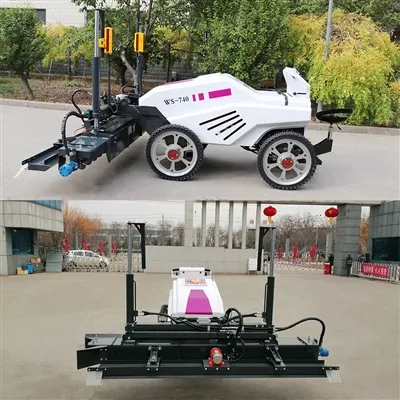
▷▷•▪◇ Introduction With the continuous advancement of science and technology, the construction industry is gradually moving towards a new era of efficient, precise and environmentally friendly construction. In this context, concrete laser leveling machines have gradually become the new favorite in the field of floor construction with their unique performance characteristics and usage advantages. This article will deeply explore the performance characteristics and usage advantages of concrete laser levelings, and analyze them based on specific cases, in order to provide reference and inspiration for relevant practitioners: ▷▷•▪◇ Performance characteristics of concrete laser leveling machine 1. Efficient construction: The concrete laser leveling machine adopts advanced laser measurement and control system and leveling device, which can realize large-area, fast and efficient concrete floor leveling operations. Compared with traditional construction methods, the use of laser leveling machines can greatly improve construction efficiency and shorten the construction period. 2. Precise control: The laser measurement and control system guides the leveling device to perform operations through precise laser beams to ensure that ground elevation, flatness and other parameters meet the design requirements. This precise control method can reduce construction errors and improve construction quality. 3. High degree of automation: The concrete laser leveling machine has a high degree of automation, which can reduce manual intervention and operation difficulty. Through intelligent handle operation, construction workers can easily control the entire construction process, improving the safety and convenience of operations. 4. Easy to operate: The laser leveling machine adopts an intelligent operating system and humanized design, allowing construction personnel to operate without professional training. This simple operation method not only reduces labor intensity, but also improves construction efficiency. 5. Wide scope of application: Concrete laser leveling machine is suitable for concrete floor construction of various sizes, shapes and materials. Whether it is indoors or outdoors, whether it is a large project or a small project, it can exert its excellent performance. ▷▷•▪◇ Advantages of using concrete laser leveling machine 1. Cost savings: Using a concrete laser leveler for construction can greatly improve construction efficiency and shorten the construction period, thereby reducing labor costs and equipment rental costs. In addition, laser leveling machines can effectively reduce the waste and rework rate of concrete materials, further saving costs. 2. Improve quality: Because laser leveling machines have precise control capabilities and efficient construction efficiency, they can significantly improve the quality of concrete floors. Using laser leveling machines for construction, ground flatness, elevation and other parameters are more in line with design requirements, reducing the occurrence of quality problems such as cracks and hollows. 3. Reduce labor intensity: The laser leveling machine has a high degree of automation and can turn heavy physical labor into mechanical operations, thereby reducing the labor intensity of construction workers. This advantage not only helps protect the physical health of construction workers, but also improves their work efficiency. 4. Enhance environmental protection: The laser leveling machine produces less noise, dust and other pollution during the construction process, which meets environmental protection requirements. In addition, using laser leveling machines for construction can also reduce the use of formwork and waste of concrete materials, further reducing the impact on the environment. ▷▷•▪◇ Actual case analysis In order to more intuitively demonstrate the performance characteristics and usage advantages of the concrete laser leveling machine, the following is an analysis based on a practical case. In a large-scale commercial complex project, the construction quality of the ground has an important impact on the appearance and functionality of the overall building. Traditional construction methods are difficult to meet the project's requirements for ground quality, construction period, and environmental protection. Therefore, the project party decided to use a concrete laser leveler for ground construction During the construction process, the laser leveler successfully achieved large-area, high-quality concrete floor leveling operations by virtue of its efficient, precise, and automated waiting points. Compared with traditional construction methods, the use of laser leveling machines not only improves construction efficiency and quality, but also significantly reduces labor costs and material waste. In addition, since the laser leveling machine produces less noise and dust during the construction process, it also meets the project party's environmental protection requirements. After strict testing and acceptance, the ground construction quality of this commercial complex project reached the expected goals. The project party is very satisfied with the performance and results of the laser leveling machine and believes that it provides a strong guarantee for the successful implementation of the project. ▷▷•▪◇ Conclusion and Outlook In summary, the concrete laser leveling machine shows broad application prospects in the field of floor construction with its efficient, accurate, automated performance characteristics and usage advantages. With the continuous advancement of science and technology and the continuous expansion of the market, it is believed that laser leveling machines will play a more important role in the future and provide strong support for the sustainable development and innovation of the construction industry. At the same time, we also expect more advanced technologies and equipment to continue to emerge, injecting new vitality into the green, smart, and efficient development of the construction industry.