Technical Knowledge
During concrete pavement construction, what is the effect of slump on pavement strength?

During the construction of concrete pavement, the influence of slump on pavement strength is mainly reflected in the following aspects
🎈Changes in water-cement ratio: Slump mainly affects pavement strength by affecting the water-cement ratio of concrete. Generally speaking, the larger the slump, the more water is used in concrete. According to the theory of concrete strength, under the condition of certain cement type and dosage, the larger the water-cement ratio, the lower the strength of concrete after hardening. This is because excessive water will form more pores and channels during the hardening process of concrete, and the pores left after the evaporation of water will reduce the density of concrete, thereby reducing the strength of concrete. For example, when the slump increases by 20-30mm from the appropriate value, the water-cement ratio may increase by 0.05-0.1, and the 28-day compressive strength of the pavement may decrease by 10%-20%.
🎈Cement slurry distribution: The appropriate slump can make the cement slurry evenly distributed in the concrete, wrapped on the surface of the aggregate, play a good bonding role, make the internal structure of the concrete dense, and thus ensure the strength of the pavement. If the slump is too small, the concrete is too dry and hard, and the cement paste is difficult to evenly wrap the aggregate, which will lead to more uncemented aggregate particles in the concrete, forming a weak link and reducing the overall strength of the road surface. On the contrary, if the slump is too large, the cement paste will sink due to its own weight, resulting in uneven distribution inside the concrete, resulting in relatively less cement paste in the upper part of the concrete and lower strength, while the lower part may be segregated due to excessive cement paste, which also affects the strength of the road surface.
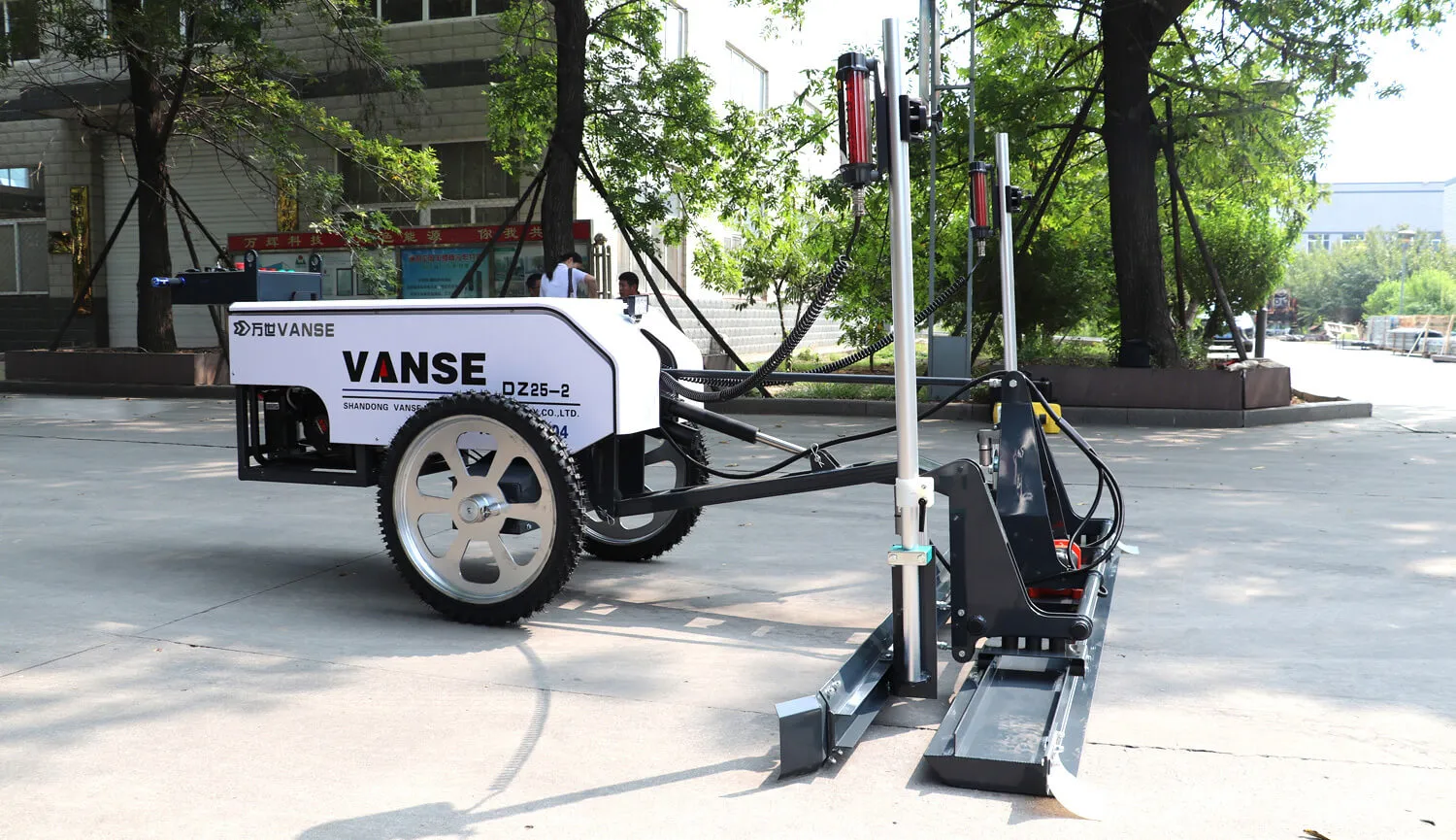
🎈Aggregate interface bonding: The interfacial bonding strength between aggregate and cement paste in concrete is crucial to the overall strength of concrete. When the slump is appropriate, the cement paste can fully contact and bond well with the aggregate surface. When the slump is not appropriate, such as too large, the cement paste layer around the aggregate will be too thick. During the hardening process of concrete, due to the large shrinkage of the cement paste, micro cracks are easily generated at the interface between the aggregate and the cement paste, weakening the interfacial bonding strength, thereby reducing the strength of the road surface; and if the slump is too small, the cement paste cannot wet the aggregate surface well, which will also lead to poor interfacial bonding and affect the strength of the road surface.
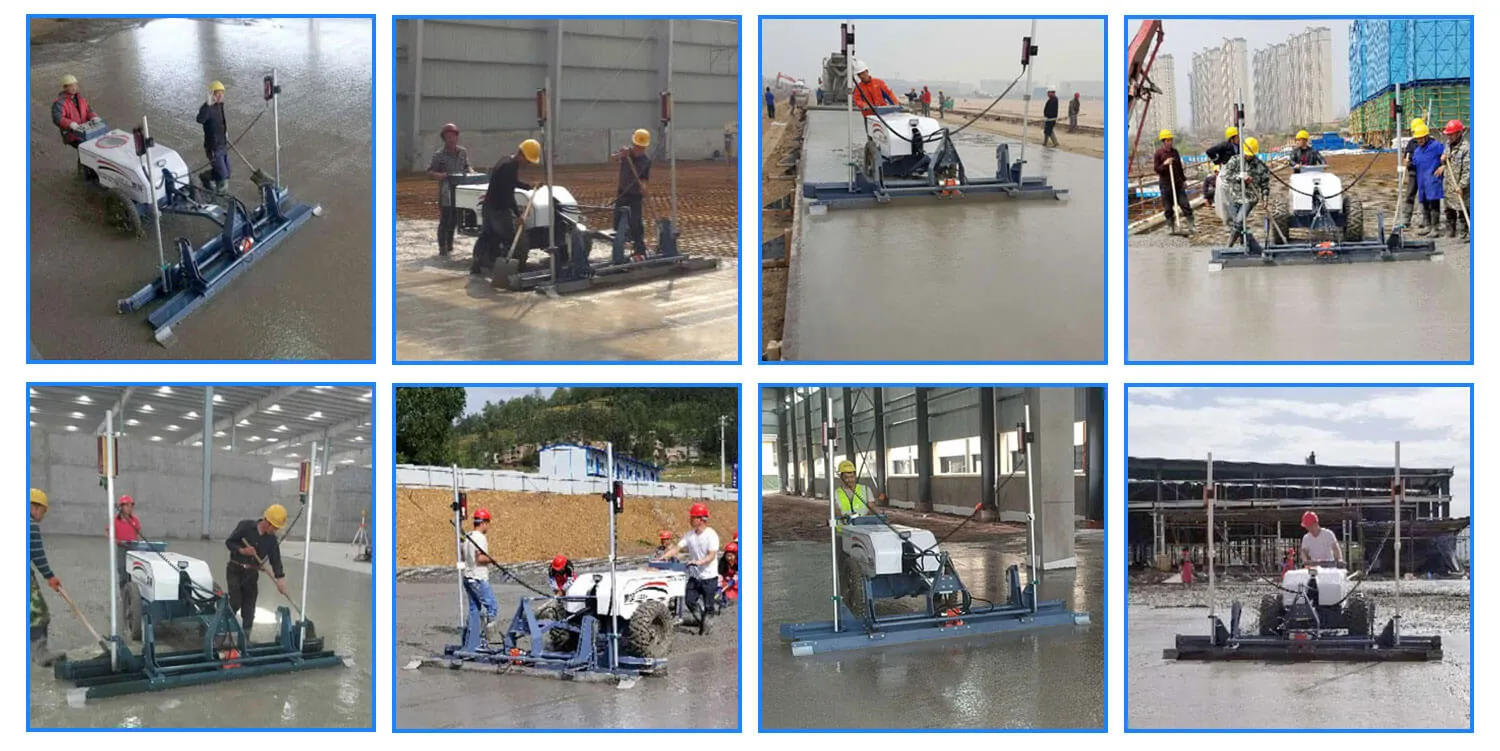
In concrete pavement construction, the slump should be strictly controlled, and concrete with appropriate slump should be selected according to construction conditions and design requirements to ensure that the pavement strength meets the design standards.
Thanks to All the Friends Who Support and Trust Shandong Vanse Machinery Technology Co., Ltd.
If you want to know more about Shandong Vanse Machinery Technology Co., Ltd. or have any questions, please feel free to contact us:
Our Factory
Shandong Vanse Machinery Technology Co., Ltd.








Share this article

About the Author: Shandong Vanse Machinery Technology Co., Ltd.
Shandong Vanse Machinery Technology Co., Ltd. is a high-tech manufacturer specializing in concrete construction machinery, including laser screeds and related equipment. The company integrates R&D, production, and global sales, with products exported to over 60 countries and widely used in infrastructure projects worldwide.
Previous Post
Next Post
Related Articles
You Might Also Like
How to prevent flatness problems on concrete pavement?
To prevent the problem of flatness of concrete pavement, it is necessary to strictly control the quality in various links such as construction preparation, concrete pouring, pavement paving and subsequent maintenance. The specific measures are as follows: – Do a good job of roadbed treatment: The roadbed is the foundation of the road surface and must be guaranteed to be solid, stable and uniform. Before construction, the original ground should be carefully cleaned, weeds, tree roots, garbage and other debris should be removed, and the soft soil, silt and other unfavorable geological areas should be replaced and reinforced. Fill and compact the roadbed according to the design requirements, control the moisture content of the fill, fill and compact in layers, ensure that the compaction meets the standard, and avoid uneven settlement of the roadbed in the later stage and affect the flatness of the road surface. – Precise measurement and layout: Use high-precision measuring instruments, such as total stations, levels, etc., to accurately measure and lay out the center line, side line, elevation, etc. of the road surface. During the construction process, the measurement control points should be reviewed regularly to ensure the accuracy of the measurement data. At the same time, according to the measurement results, set the road template or the guide line of the paver to provide an accurate benchmark for road construction. – Check construction equipment: Ensure that the performance of construction equipment such as concrete mixing equipment, transport vehicles, pavers, and rollers is good and can operate normally. Carry out regular maintenance and maintenance of the equipment, and conduct a comprehensive inspection and commissioning of the equipment before construction. For example, check whether the screed of the paver is flat, whether the vibrating device is working properly, whether the roller wheel of the roller is evenly worn, etc., to ensure that the equipment operates stably during the construction process and avoid problems with the flatness of the road surface due to equipment failure. – Control concrete mix ratio: According to the road design requirements and construction conditions, determine the reasonable concrete mix ratio through experiments. Strictly control the quality and amount of raw materials such as cement, sand and gravel, water, and admixtures to ensure that the workability, strength, and durability of the concrete meet the requirements. In particular, attention should be paid to controlling the slump of concrete. The slump should not be too large or too small. If it is too large, it will easily cause concrete segregation and surface water seepage, affecting the smoothness of the road surface; if it is too small, it will make it difficult to spread and vibrate the concrete. – Ensure the quality of concrete mixing: Use a forced mixer to mix to ensure that the concrete is mixed evenly. Strictly control the mixing time. Determine the appropriate mixing time according to the mix ratio of concrete and the performance of the mixer. Generally, it should not be less than 90 seconds to ensure that the various components of the concrete are fully mixed to avoid uneven distribution of cement slurry and stone clumping, which will affect the working performance of the concrete and the smoothness of the road surface. – Reasonably arrange concrete transportation: Choose appropriate transportation vehicles to ensure that concrete does not segregate or leak during transportation. According to the distance and traffic conditions of the construction site, reasonably arrange the number of transportation vehicles and transportation routes to ensure that concrete can be supplied to the construction site in time, avoid waiting for too long during transportation, resulting in excessive slump loss, and affecting the quality of concrete spreading and vibration. – Standardize paving operation: When using a paver for concrete paving, adjust the working parameters of the paver, such as the elevation angle of the screed, vibration frequency, paving speed, etc. The paver should move forward at a uniform speed, and the speed is generally controlled at 2-3m/min to avoid too fast or too slow speed. During the paving process, a special person should be arranged to follow the machine and deal with the leakage and uneven parts on both sides of the paver in time. If manual paving is used, the paving thickness and surface flatness must be strictly controlled. Use tools such as scrapers and shovels to roughly flatten the concrete, and then vibrate it with a vibrating beam or a flat vibrator. – Strengthen vibration control: Vibration is a key link to ensure the density and flatness of concrete. According to the slump and paving thickness of the concrete, choose the appropriate vibration equipment and vibration method. Generally, a combination of an inserted vibrator and an attached vibrator is used for vibration. The inserted vibrator should be inserted vertically into the concrete, and the vibration points should be evenly distributed. The spacing should not be too large, generally about 1.5 times the radius of the vibrator. The vibration time is based on the concrete surface no longer having bubbles, slurry and sinking, generally 20-30 seconds. The attached vibrator should be installed on the formwork to make the concrete dense by vibrating the formwork. During the vibration process, the vibrator should be prevented from colliding with the formwork, steel bars and force transmission rods, so as not to affect the flatness and structural dimensions of the road surface. – Do a good job of finishing: After the concrete is vibrated, the finishing operation should be carried out in time. The finishing is generally done in two times. The first finishing is done after the concrete surface absorbs water. A wooden trowel is used to scrape the surface slurry, gravel, etc. to make the road surface flat. The second finishing is done before the concrete is initially set. An iron trowel is used for fine finishing to make the road surface flatter and smoother. At the same time, attention should be paid to controlling the strength and number of finishing to avoid excessive finishing, which may lead to excessive thickness of cement slurry on the surface, cracks, peeling, etc. – Standard roughening treatment: After finishing, roughening should be done in time to increase the roughness of the road surface and improve driving safety. The depth and spacing of roughening should be uniform. Generally, the depth of roughening is 2-3mm and the spacing is 2-4cm. Roughening can be done with tools such as a roughening machine or a broom. The roughening direction should be consistent with the driving direction of the road surface to ensure uniform and beautiful roughening quality. – Timely maintenance of the road surface: After the concrete road surface is poured, it should be maintained within 12 hours. The maintenance method can be to cover with moisturizing materials such as geotextiles and straw mats, and regularly sprinkle water to keep it moist, or spray curing agents for maintenance. The maintenance time is generally not less than 7 days. For high-strength concrete or concrete constructed in high temperature and dry environments, the maintenance time should be appropriately extended. During the maintenance period, it is necessary to ensure that the concrete surface is always moist to avoid shrinkage cracks caused by water loss in the concrete, which will affect the flatness of the road surface. – Strict traffic control: During the maintenance of the concrete pavement, strict traffic control must be carried out, and all vehicles and pedestrians are prohibited from passing on the road surface until the concrete reaches the design strength. Before the road surface is opened to traffic, the road surface must be inspected and accepted to ensure that the various indicators such as the flatness and strength of the road surface meet the design requirements. At the same time, obvious warning signs should be set up on the road surface to guide vehicles and pedestrians to bypass the construction area to avoid damage to the road surface that has not been fully formed. ARMOUR JOINT CONCRETE LASER LEVELING MACHINE LIGHT TOWER POWER TROWEL STEEL FIBER TRACKED MINI DUMPERFailure Prevention And Treatment Methods Of Concrete Laser Leveling Machine
Failure prevention and treatment methods of concrete laser leveling machine As a key equipment in modern building construction, the concrete laser leveling machine has significantly improved construction quality and efficiency due to its high efficiency and accuracy. However, any equipment will inevitably malfunction during long-term use. This article will focus on the failure prevention and treatment methods of concrete laser leveling machines, with a view to providing practical guidance for equipment operators and maintenance personnel. ☆ Common fault types and causes of concrete laser leveling machines ♢Hydraulic system failure: The hydraulic system in the concrete laser leveling machine is the core part of its work. Common failures include hydraulic oil leakage, excessive oil temperature, loud oil pump noise, etc. These failures are often caused by aging seals, oil contamination, or improper system pressure settings. ♢Electrical system failure: The electrical system controls various functions of the leveler. Common failures include sensor failure, motor failure, controller failure, etc. These failures may be caused by environmental factors (such as high temperature, humidity), circuit aging or quality problems of electrical components. ♢Laser control system failure: The laser control system is the soul of the concrete laser leveling machine and accurately controls the leveling process. Common faults include unstable laser receiver signals, laser transmitter failures, etc. These failures can be caused by dust buildup on the laser, damaged optics, or improper system calibration. ♢Mechanical structural failure: Mechanical structural failure usually manifests as leveling knife wear, track damage, bearing failure, etc. These failures are mainly caused by long-term wear and tear, overload use or lack of regular maintenance. ☆ Concrete laser leveling machine failure prevention measures ♢Regular inspection and maintenance: Regularly conduct comprehensive inspections of the concrete laser leveling, including the hydraulic system, electrical system, laser control system and mechanical structure. Replace aging parts, replace and clean the oil to ensure the normal operation of the equipment. ♢Correct use and operation: Operators should be familiar with the operating procedures and precautions of the equipment to avoid illegal operations. During use, attention should be paid to observing the operating status of the equipment, and abnormal situations should be discovered and handled in a timely manner. ♢Environmental factor control: Optimize the working environment of the equipment to avoid the impact of high temperature, humidity and other harsh environments on the equipment. At the same time, keep the area around the equipment clean to prevent debris and dust from entering the inside of the equipment. ♢Training and education: Regularly train and educate operators to improve their understanding of equipment structure and performance, and enhance their ability to judge and handle equipment failures. ☆ Concrete laser leveling machine troubleshooting methods ♢Hydraulic system fault handling: For hydraulic system faults, you should first check whether the hydraulic oil is clean and whether the seals are aging, etc. If there is any problem, the seals should be replaced in time, the oil tank should be cleaned and new oil should be replaced. Also, check that the system pressure is set correctly and adjust if necessary. ♢Electrical system fault handling: When handling electrical system faults, you should first check whether the power supply is normal and whether the circuit is aging, etc. For problems such as sensor failure and motor failure, damaged electrical components should be replaced in time. At the same time, the controller should be calibrated and maintained regularly to ensure its normal operation. ♢Laser control system fault handling: For laser control system faults, you should first check whether the laser receiver is stable and whether the optical components are damaged, etc. If necessary, the laser can be cleaned, optics replaced, or the system recalibrated. ♢Mechanical structure failure handling: For mechanical structure failures, the wear and tear of wearing parts such as leveling knives and crawler tracks should be regularly checked and replaced in a timely manner. For failures of key components such as bearings, a comprehensive inspection should be carried out and corresponding measures should be taken to deal with them. ☆ Actual case analysis Take the laser control system failure of a concrete laser leveling machine at a construction site as an example. During use, the operator found that the leveling effect was unstable, and upon inspection it was found that the laser receiver signal was unstable. After a comprehensive inspection of the laser system, it was found that dust accumulated on the surface of the laser transmitter, causing signal transmission to be blocked. After cleaning the laser emitter and recalibrating the system, the problem was resolved and the leveling effect returned to normal. ☆ Conclusion and outlook Failure prevention and treatment of concrete laser leveling machines are of great significance to the long-term stable operation of the equipment. Equipment failures can be effectively prevented through regular inspection and maintenance, correct use and operation, environmental factor control, and training and education. At the same time, appropriate handling methods are adopted for different types of faults, which can quickly solve the fault and restore the normal operation of the equipment. Looking to the future, with the advancement of technology and the continuous upgrading of equipment, the failure prevention and treatment methods of concrete laser levelings will also continue to be improved. Equipment manufacturers should continue to improve the reliability and stability of equipment and reduce the probability of failure. At the same time, construction units and operators should also strengthen their ability to prevent and deal with equipment failures to ensure efficient and stable operation of equipment during the construction process. Through joint efforts, we can further promote the widespread application of concrete laser levelings in construction and contribute to the improvement of project quality and construction efficiency.Construction of Later Joint Cutting and Equipment Protection for Ultra-flat Floors
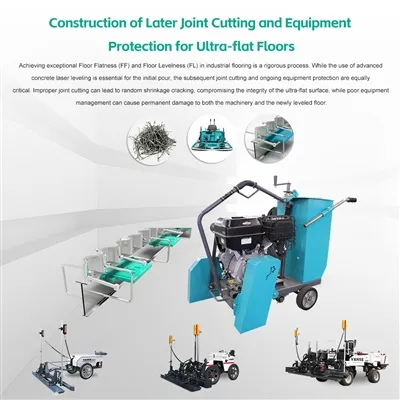
Achieving exceptional Floor Flatness (FF) and Floor Levelness (FL) in industrial flooring is a rigorous process. While the use of advanced concrete laser leveling is essential for the initial pour, the subsequent joint cutting and ongoing equipment protection are equally critical. Improper joint cutting can lead to random shrinkage cracking, compromising the integrity of the ultra-flat surface, while poor equipment management can cause permanent damage to both the machinery and the newly leveled floor. Here is a comprehensive guide to mastering later joint cutting and equipment protection for ultra-flat concrete floors. Controlling the natural shrinkage of concrete requires strategically placed control joints. For ultra-flat floors, precision is non-negotiable. Optimal Timing (The "Window of Opportunity"): Joint cutting must occur as soon as the concrete has gained enough strength to prevent raveling (dislodging of aggregates) but before internal tensile stresses cause random cracking. This is typically within 4 to 12 hours after finishing, depending on the ambient temperature, humidity, and concrete mix design. Early-entry dry-cut saws are highly recommended for ultra-flat projects. Cutting Depth and Spacing: To effectively guide cracks, the cut depth should generally be 1/4 to 1/3 of the slab's total thickness. Spacing typically follows a rule of 24 to 36 times the slab thickness, forming square panels wherever possible. Line Precision: Any deviation in the cutting line is visually magnified on a high-gloss, ultra-flat floor. Using chalk lines and guide bars ensures perfectly straight cuts that align with structural columns and armor joints (steel joints). The equipment used for post-pour work poses a risk to the pristine surface if not properly managed. Preventing Oil and Fluid Leaks: Ensure all cutting saws, power trowels, and utility vehicles are meticulously inspected for hydraulic fluid, oil, or fuel leaks before entering the slab. "Diapering" the equipment (placing absorbent pads underneath) during stationary periods is a standard best practice to prevent permanent staining. Non-Marking Tires: Any machinery moving across the newly finished floor must be equipped with clean, non-marking tires. Debris caught in tire treads can easily scratch the surface, ruining the FF/FL metrics achieved by the laser leveling. Dust and Slurry Management: Wet cutting generates slurry, while dry cutting generates fine silica dust. Immediate removal using industrial vacuums is required. If left to dry, slurry can permanently bond to the ultra-flat surface, requiring aggressive mechanical cleaning that damages the finish. Protecting your capital equipment-from laser leveling to joint cutting saws-extends their lifespan and ensures consistent performance on demanding ultra-flat projects. Immediate Post-Job Cleaning: Concrete residue is the biggest enemy of construction machinery. Pressure wash all equipment (while avoiding direct spray on electrical components and laser receivers) immediately after the pour. Blade and Belt Inspection: For cutting saws, regularly inspect the diamond blades for uneven wear or missing segments, which can cause chipping along the concrete joint. Check drive belts for proper tension to maintain optimal RPM. Routine Engine and Hydraulic Maintenance: High-performance equipment operates in dusty, harsh environments. Strictly adhere to the manufacturer's schedule for changing air filters, engine oil, and hydraulic fluids to prevent unexpected downtime. The construction of an ultra-flat floor is a continuous chain of precision. By executing flawless joint cutting and strictly enforcing equipment protection protocols, contractors can deliver a durable, flawless surface that meets the highest international logistics and warehousing standards. Note: The parameters provided in this document are for reference only and are not mandatory. Due to differences in technical characteristics between different brands and models of laser levelers, please consult the manufacturer for a suitable solution before actual operation. This reference document assumes no responsibility for any issues arising from failure to follow the manufacturer's instructions.