Technical Knowledge
What effect will improper adjustment of the power trowel blade angle have on the concrete surface?

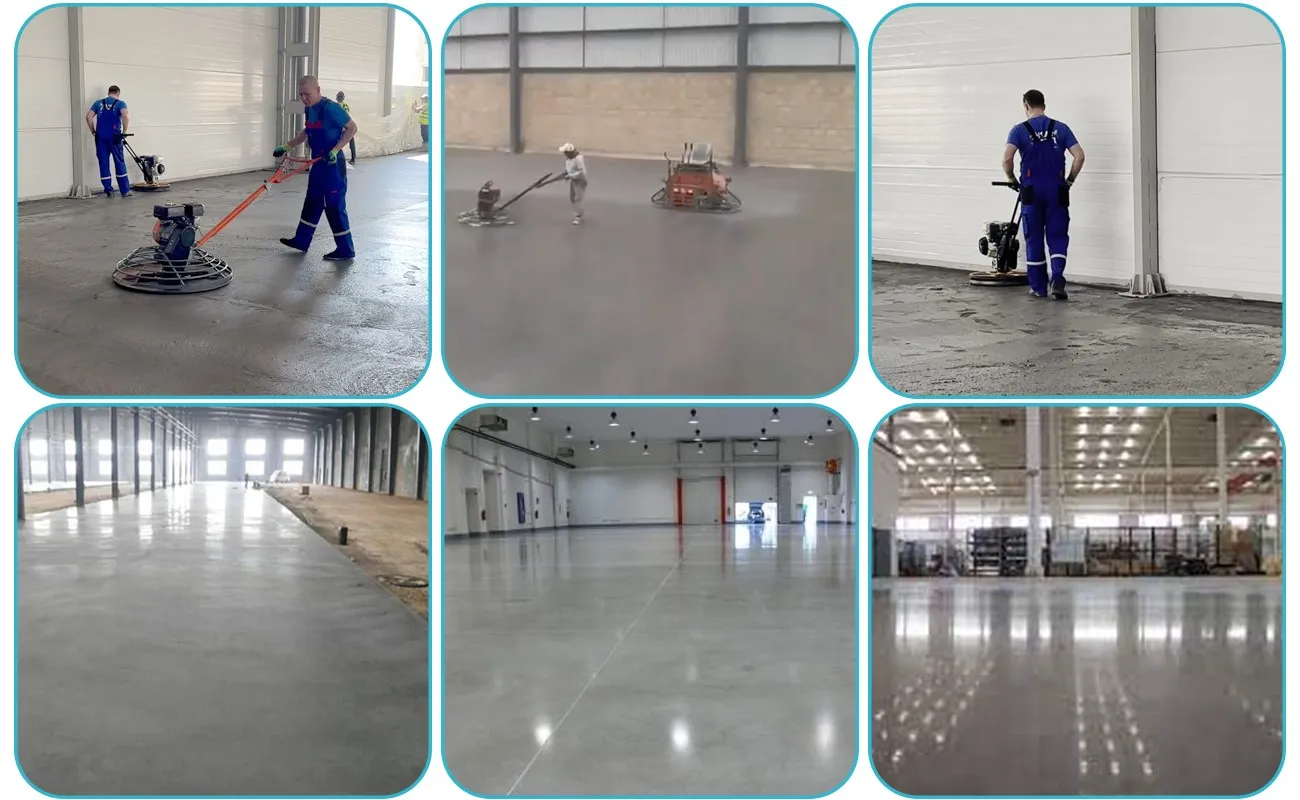
Improper adjustment of the trowel blade angle will have the following adverse effects on the concrete surface
Poor surface flatness
If the blade angle is too large, the blade will cut into the concrete surface excessively when the trowel is running, resulting in scratches of varying depths on the concrete surface, making it difficult to form a flat surface.
If the blade angle is too small, the contact area between the blade and the concrete surface is too large, and the pressure is insufficient, so that the unevenness of the concrete surface cannot be effectively smoothed, making the concrete surface flatness fail to meet the requirements.
Reduced finish
When the blade angle is not appropriate, such as a slightly large angle, the blade cannot evenly squeeze and smooth the concrete surface during the troweling process, which will cause uneven distribution of cement slurry on the surface. In some places, the cement slurry is excessively scraped away, and in some places, too much is retained, thereby affecting the surface finish and making the surface look rough and matte.
If the angle is too small, the blade will not compact the concrete surface enough, and the pores on the surface cannot be effectively filled and closed, which will also reduce the surface finish of the concrete.
Marks and cracks
Improper blade angle adjustment will cause the trowel to exert uneven force on the concrete surface during operation. If the angle is too large, the scraping force of the blade will be too strong, which will easily leave obvious marks on the concrete surface. In severe cases, excessive scraping may cause micro cracks on the concrete surface.
Uneven force caused by inappropriate angles may also cause inconsistent shrinkage in different parts of the concrete surface, which in turn causes surface cracks and affects the durability and aesthetics of the concrete structure.
Uneven strength distribution
Due to improper blade angles, the compaction degree of the concrete surface is different during the troweling process, which will lead to differences in the density of different areas of the concrete surface.
For example, in areas with too large angles, the concrete is over-extended and the surface is too dense, while in areas with smaller angles, the concrete density is insufficient, which makes the strength distribution of the concrete surface uneven, reducing the overall quality and performance of the concrete.
Thanks to All the Friends Who Support and Trust Shandong Vanse Machinery Technology Co., Ltd.
If you want to know more about Shandong Vanse Machinery Technology Co., Ltd. or have any questions, please feel free to contact us:
Our Factory
Shandong Vanse Machinery Technology Co., Ltd.








Share this article

About the Author: Shandong Vanse Machinery Technology Co., Ltd.
Shandong Vanse Machinery Technology Co., Ltd. is a high-tech manufacturer specializing in concrete construction machinery, including laser screeds and related equipment. The company integrates R&D, production, and global sales, with products exported to over 60 countries and widely used in infrastructure projects worldwide.
Previous Post
Next Post
Related Articles
You Might Also Like
Small laser leveling machine pouring and leveling construction and control matters
The liquid crystal surface on the body of the small laser leveler also needs to be cleaned. You can use organic resin or special cleaning cloth for lenses to wipe the dirt. If there is too much dirt, you can use lens cleaning fluid to remove it. The small laser leveler is a device that uses laser as the reference plane, adopts an original imported receiving and transmitting system, and controls the leveling head in real time to achieve high-precision and rapid leveling of concrete. I believe that friends in the industry circle have a certain understanding of the small laser leveler, so how to maintain the small laser leveler after normal use? The manufacturer of the small laser leveler will explain to you the best way to maintain the small laser leveler after use. 1. The liquid crystal surface on the body of the small laser leveler also needs to be cleaned. You can use organic resin or special cleaning cloth for lenses to wipe the dirt. If there is too much dirt, you can use lens cleaning fluid to remove it. 2. There will be a lot of dust and mud on the small laser leveler after construction. First, wipe the dust off the small laser leveler, and wipe the dirt and oil stains with thin paper or cotton cloth. 3. If the laser signal is lost during the construction of the small laser leveling machine, the machine needs to be restarted, and the interval time needs to be more than ten seconds. 4. If there are too many stains, you can soak a soft cloth in water diluted with a neutral detergent, wring it out and wash it. The small laser leveling machine manufacturer reminds everyone not to use volatile oil, thinner, gasoline and other chemicals for cleaning and wiping. 1. Preparation work ①. After the base layer is processed, the small laser leveling machine is debugged, and a fixed reference leveling point is made according to the original leveling point; non-woven fabrics are laid, side molds are supported, and laser transmitters are set up. According to the original leveling point, the ground elevation is introduced into the small laser leveling machine. Small laser leveling machine manufacturer ②. Concrete transportation Commercial concrete is used. The tank truck transports the commercial concrete to the garage entrance and exit, and then it is transported to the construction site with a three-wheel dump truck. ③. Check the elevation of the floor using a handheld laser receiver, introduce the elevation into the small laser leveler, and adjust the reference point on the leveler (±0.00). 2. Concrete pouring Pouring steps: ①. After the formwork is supported, clean the warehouse one day in advance before pouring concrete, rinse and soak with water. When pouring is approaching, drain the open water and sweep the cement slurry or interface agent. At this time, it is strictly forbidden to have obvious water accumulation. If there is, it must be removed resolutely before paving concrete. Small laser leveling machine manufacturer ②. After the concrete is put down, it is initially flattened. The flattening height should be 3 cm higher than the elevation. Then use a small laser leveler to level it. For the corners that cannot be leveled, you can use a gasoline leveling ruler or manually scrape it flat. ③. When pouring the warehouse near the wall, wait until the leveler passes by, and then use a scraper to scrape it flat in time. And so on. ④. For areas where concrete mixer trucks cannot be driven to the site, tractors are also used to transport concrete. After pouring, wait for the concrete to initially set before starting the floor finishing construction. 3. Receiver signal adjustment during construction The laser signal (frequency of 10 times/second) received by the small and medium-sized laser leveling machine receiver automatically adjusts the elevation in real time to ensure that the construction elevation is always within the set standard. Because the laser transmitter is fixed after setting, it can ensure that there is no cumulative error in the construction of large areas of ground. During construction, the operator uses a handheld laser receiver to detect the ground after the machine construction, and once again ensures that the flatness error is within the controllable range.What are the acceptance standards for concrete floors?
The acceptance standards and specifications for concrete floors mainly include the following aspects: ★Preparation before construction Before construction, it is necessary to check whether the base conditions, construction drawings and construction materials of the construction site meet the requirements. The base conditions should include foundation treatment, site drainage, etc.; construction drawings should include the design requirements, construction scope and construction technology of the floor, etc.; construction materials should meet design and quality requirements, and have corresponding certification documents. ★Construction process During the construction process, it is necessary to operate in accordance with the construction drawings and specifications to ensure that the flatness, strength and wear resistance of the floor meet the requirements. Specifically, the following points should be controlled: (1) Construction mix proportion: Conduct mix proportion tests in strict accordance with design requirements and specifications to ensure the quality and strength of concrete. (2) Pouring and Vibration: When pouring concrete, it should be poured in layers, and the thickness and vibration time of each layer should be controlled to ensure the density and integrity of the concrete. (3) Surface treatment: After the initial setting of the concrete, surface smoothing, compaction and wear-resistant treatment should be carried out to ensure the flatness and wear resistance of the floor surface. (4) Maintenance and protection: After the concrete reaches a certain strength, maintenance and protection should be carried out to prevent the floor from being damaged and polluted. ★Appearance quality Appearance quality is one of the important indicators for the acceptance of concrete floors. You should check whether the floor surface is flat, smooth, beautiful, and free of cracks, pits, holes and other defects. At the same time, the color and texture of the floor should be checked to ensure that it meets the design requirements. ★Dimensional deviation and elevation During acceptance, the dimensional deviation and elevation of the floor should be measured to ensure that it meets the design and specification requirements. Specifically, you should check whether the flatness, levelness, length, width, and height of the floor meet the requirements. ★Compressive strength and wear resistance Compressive strength and wear resistance are one of the important indicators for the acceptance of concrete floors, and corresponding tests should be carried out. Compressive strength refers to the maximum pressure value that the floor can withstand, and is generally tested using the rebound method or core drilling method; wear resistance refers to the degree to which the floor can withstand wear during use, and the wear resistance test method is generally used. Perform testing. ★Environmental performance During acceptance, the environmental performance of the concrete floor should also be checked to ensure that it will not cause harm to the environment and human body during use. Specifically, the materials used in the floor should be inspected to ensure that they do not contain ingredients harmful to humans and the environment. In general, the acceptance standards for concrete floors mainly include pre-construction preparation, construction process, appearance quality, dimensional deviation and elevation, compressive strength and wear resistance, environmental performance, etc. During acceptance, inspection and testing should be carried out in strict accordance with the design and specification requirements to ensure that the quality and use effect of the floor meet the requirements. At the same time, during daily use, the floor should also be inspected and maintained regularly to detect and deal with problems in time to extend its service life.What Impact Does The Maintenance Of Concrete Laser Leveling Have On Construction?
What impact does the maintenance of concrete laser leveling have on construction? Concrete laser leveling machine is an indispensable key equipment in modern construction. It plays an important role in concrete leveling operations with its high precision and high efficiency. However, any equipment needs to be properly maintained to ensure stable performance, extended service life, and maximum effectiveness during the construction process. This article will deeply explore the impact of concrete laser leveling maintenance on construction efficiency, quality, machine life, construction safety and cost-effectiveness, and propose some maintenance recommendations. 1. Overview of maintenance of leveling machine The maintenance of concrete laser leveling machine is a comprehensive work, covering many aspects such as cleaning, inspection, adjustment, lubrication and replacement of wearing parts of the equipment. These tasks are not only to ensure the normal operation of the equipment, but also to improve construction efficiency, ensure construction quality, extend the service life of the equipment and ensure construction safety. Maintenance work is usually performed before and after the equipment is used, including daily maintenance and periodic maintenance. Routine maintenance mainly involves cleaning and inspecting the equipment to ensure its appearance is clean and free of debris, and checking whether all components are intact and tight. Regular maintenance requires more in-depth inspection and adjustment of the equipment, such as changing lubricating oil, cleaning filters, checking transmission components, etc. 2. Impact on construction efficiency and quality The maintenance of the Thermosol Laser Leveler has a direct impact on the construction efficiency and quality. First, if the equipment is not properly maintained, it may cause malfunctions or performance degradation during operation, thereby affecting the construction progress. For example, if sludge accumulates on the underside of the walking track of the leveling machine, it will not only affect the walking speed, but also cause the leveling accuracy to decrease. Secondly, improper maintenance may also have a negative impact on the quality of construction. The main function of the concrete laser leveler is to ensure the flatness and compactness of the concrete surface. If the equipment performance is unstable or malfunctions, it will directly lead to poor leveling results and affect the quality of the project. Therefore, regular maintenance of the concrete laser leveling to ensure that it is in optimal working condition is of great significance to improving construction efficiency and quality. 3. Extend the service life of the machine As a high-precision, high-load equipment, the service life of the concrete laser leveling is closely related to daily maintenance. By regularly lubrication, cleaning and inspection of equipment, potential problems can be discovered and solved in time, preventing small problems from gradually deteriorating into big problems, thereby extending the service life of the equipment. In addition, correct maintenance can also slow down the wear rate of equipment. For example, regular replacement of hydraulic oil and filter elements can prevent oil contamination and increased wear; lubrication and maintenance of bearings can reduce friction and wear. These measures can effectively extend the service life of the concrete laser leveling and save the company the cost of replacing equipment. 4. Ensure construction safety and stability Construction safety is an important link that cannot be ignored during the construction process. The maintenance of concrete laser leveling machines is of great significance to ensure construction safety. First of all, the stability and reliability of equipment directly affect the safety of construction workers. If the equipment is faulty or performs erratically, there may be an increased risk of injury to the operator. Secondly, maintenance can also ensure that the safety devices and protective facilities of the equipment are in good condition. For example, the equipment's emergency braking devices and protective devices require regular inspection and maintenance to ensure normal operation in emergencies and protect the safety of operators. Therefore, by strengthening the maintenance of concrete laser leveling machines, safety hazards can be discovered and eliminated in time to ensure the safety and stability of the construction process. 5. Maintenance cost-effectiveness Although maintenance work requires a certain cost, including investment in manpower, material resources, etc., these investments are negligible compared with the benefits brought. First of all, maintenance can extend the service life of the equipment and reduce the risk of equipment scrapping. And bring replacement costs. Secondly, maintenance can improve construction efficiency and quality, and reduce economic losses caused by construction delays and quality problems. In addition, maintenance can also reduce equipment failure rates and reduce repair costs. Therefore, in the long run, maintenance of concrete laser leveling machines is a cost-effective investment. 6. Maintenance recommendations For the maintenance of concrete laser leveling machines, the following are some recommended measures: ☑ Develop a detailed maintenance plan, clarify the content and cycle of each work, and ensure the comprehensiveness and timeliness of maintenance work. ☑ Strengthen the training and management of operators, improve their maintenance awareness and skill level, and ensure that they can correctly perform daily and regular maintenance of equipment. ☑ Conduct comprehensive inspections and assessments of equipment on a regular basis to discover and solve potential problems in a timely manner to prevent small problems from gradually deteriorating into big problems. ☑ Choose appropriate maintenance tools and materials to ensure the quality and effect of maintenance work. ☑ Establish maintenance files to record the maintenance status and historical data of the equipment to provide a reference for subsequent management and maintenance of the equipment. In summary, the maintenance of concrete laser leveling machines has an important impact on construction efficiency, quality, machine life, construction safety and cost-effectiveness. By strengthening maintenance work, we can ensure the stable operation and efficient use of equipment, providing a strong guarantee for the smooth progress of the construction process. At the same time, this is also one of the important ways to improve the economic efficiency and market competitiveness of enterprises.