Technical Knowledge
Main methods for leveling concrete pavement

There are several main methods for leveling concrete pavement
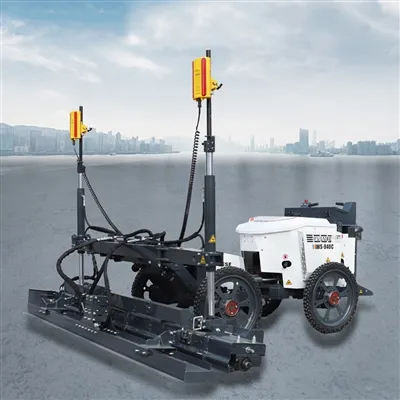
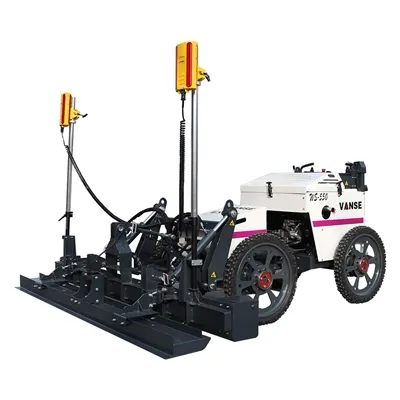
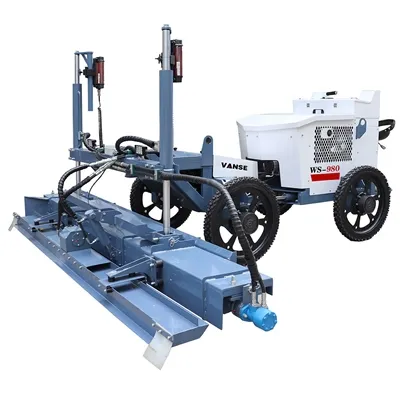
– Leveling with a laser concrete leveler
– Working principle:
The laser concrete leveler uses the laser beam emitted by the laser transmitter as the reference plane, receives the laser signal through the laser receiver, and automatically controls the scraper height of the leveler. During the leveling process, the scraper of the leveler is raised and lowered according to the height of the laser reference plane to accurately level the concrete, which can effectively control the flatness and levelness of the road surface.
– Operation points:
First, the laser transmitter should be reasonably arranged at the construction site to ensure that the laser beam it emits can cover the entire construction area and is not blocked by obstacles. Then, the operator drives the leveler at a constant speed on the concrete, and the machine will automatically adjust the scraper height according to the laser signal to level the concrete. During the construction process, pay attention to the working status of the laser receiver and the leveling effect of the machine. If there is any abnormality, stop the machine in time for inspection and adjustment. At the same time, for corners that are difficult for the leveler to reach, manual assistance is still required.
– Paver paving and leveling
– Working principle:
The paver evenly distributes concrete on the roadbed through the spiral distributor, and uses the vibrator to compact the concrete, forming a preliminary flat road surface during the process.
– Operation points:
Before construction, the paver parameters, such as the spiral distributor height, vibration frequency and amplitude, need to be adjusted according to the width and thickness of the road surface. During construction, the paver should be kept moving at a constant speed to ensure that the concrete paving thickness is uniform, thus laying the foundation for subsequent road leveling work.
– Vibration beam vibration leveling
– Working principle:
The vibration beam relies on its own vibration to squeeze and compact the aggregate particles in the concrete, and vibrate the cement mortar on the surface, so as to further level the road surface and improve the density.
– Operation points:
When using, the vibration beam needs to move slowly along the concrete road surface, and the vibration frequency and walking speed should be reasonably adjusted according to the slump of the concrete and the road surface conditions. For local uneven areas, the vibration beam can be manually assisted to carry out key treatment.
– Power trowel
– Working principle:
The disc or blade of the trowel squeezes and smears the concrete surface when rotating, making the surface smoother and more compact, and improving the density and wear resistance.
– Operation points:
The surface should be troweled after the water on the concrete surface is slightly dry, and the appropriate trowel operation speed should be selected according to the coagulation of the concrete. For large-area pavement, a driving trowel can be used to improve efficiency, and narrow areas such as corners can be carefully processed with a hand-held trowel.
– Manual leveling
– Working principle:
Construction workers use wooden trowels, iron trowels and other tools to carefully trim the pavement with experience and feel, and deal with local uneven areas that are difficult for equipment to take care of.
– Operation points:
Mainly fine-tune the corners of the pavement, around the construction joints, and the traces left by the equipment, requiring construction workers to be skilled and able to accurately judge and deal with uneven areas to achieve higher flatness requirements.
Thanks to All the Friends Who Support and Trust Shandong Vanse Machinery Technology Co., Ltd.
If you want to know more about Shandong Vanse Machinery Technology Co., Ltd. or have any questions, please feel free to contact us:
Our Factory
Shandong Vanse Machinery Technology Co., Ltd.








Share this article

About the Author: Shandong Vanse Machinery Technology Co., Ltd.
Shandong Vanse Machinery Technology Co., Ltd. is a high-tech manufacturer specializing in concrete construction machinery, including laser screeds and related equipment. The company integrates R&D, production, and global sales, with products exported to over 60 countries and widely used in infrastructure projects worldwide.
Previous Post
Next Post
Related Articles
You Might Also Like
When laying double-layer steel mesh for different types of building structures, what are the differences in the standards for steel mesh spacing?
General concrete slab: According to the "Concrete Structure Design Code", when the slab thickness is not more than 150mm, the steel bar spacing should not be greater than 200mm; when the slab thickness is greater than 150mm, the steel bar spacing should not be greater than 1.5 times the slab thickness, and should not be greater than 250mm. Residential roof panels: For multi-story residential roof panels, when the roof panels are at the corners of the house and the span ≥3.9m, double-layer bidirectional continuous steel bars should be set. The steel bar spacing at the corners should not be greater than 100mm, and the steel bar spacing of the floor slab with a span of ≥3.9m should not be greater than 150mm. The steel bar diameter should not be less than φ8. Highway cement concrete pavement: When cold-rolled ribbed steel bars are used, the steel bar diameter should not be less than 8mm, the longitudinal steel bar spacing should not be greater than 200mm, and the transverse steel bar spacing should not be greater than 300mm. Rectangular column: The horizontal spacing should not be greater than 200mm, and the vertical spacing should not be greater than 300mm. Circular column: The horizontal spacing should not be greater than 150mm, and the vertical spacing should not be greater than 200mm. General wall: Usually the horizontal and vertical steel bars are spaced about 150-300mm, which is determined according to the stress conditions, height, thickness, etc. of the wall. For example, the spacing of the steel bars in the filling walls of some buildings may be larger; while for the shear walls under stress, the spacing of the steel bars will be relatively small to ensure the shear and bending resistance of the wall. Hydraulic structure wall: Due to the high requirements for waterproofing and anti-seepage, the spacing of the steel bars is usually small and the arrangement is dense. Generally, the horizontal and vertical steel bars are spaced 100-200mm to improve the crack resistance and anti-seepage of the concrete and prevent water leakage. For general beams, the longitudinal steel bar clearance shall not be less than 30mm at the top and 25mm at the bottom, and shall not be less than the steel bar diameter. The upper row clearance at the bottom shall not be less than twice the lower row clearance, and the upper and lower rows clearance shall not be less than 25mm. When the beam bears a large load or has special requirements, the steel bar spacing may be appropriately adjusted according to the calculation, but it must meet the minimum spacing required by the specification to ensure that the steel bar and concrete work together and facilitate the pouring and vibration of the concrete. Long-span structures: such as long-span bridges and gymnasium roofs, in order to ensure the safety of the structure under large loads and deformations, the steel mesh spacing is usually small and the steel bars are densely configured, generally between 100-200mm, which is determined by structural calculation according to the span size, load type, etc. High-rise buildings: The loads borne by its foundations, columns, walls, beams and other structural components are large, and there are strict requirements for the steel mesh spacing. For example, the spacing of steel bars in the foundation raft of a high-rise building is generally 150-250mm; the spacing of steel bars in shear walls is usually 150-300mm; the spacing of steel bars in frame columns and beams is similar to that in ordinary buildings, but may be denser in some key parts to improve the seismic performance and bearing capacity of the structure. It should be noted that the above steel mesh spacing standards are only for reference. The determination of the steel mesh spacing in actual projects needs to be determined by professional structural engineers based on the specific project conditions, following relevant design specifications and standards, and through rigorous calculation and analysis.Methods for cleaning, grinding & renovation of terrazzo floors and emery floors
Methods for cleaning, grinding and renovation of terrazzo floors and emery floors With the development of modern architecture and industry, floor materials, as an important part of indoor floors, not only carry the functions of daily use, but also directly affect the beauty and comfort of the overall environment. Terrazzo floors and emery floors are common types of floors, and are widely used in various places because of their wear resistance, anti-slip, and beautiful characteristics. However, over time, these floor materials will also lose their original luster and performance due to wear, pollution and other reasons. Therefore, cleaning, grinding and renovation to restore their original beauty and performance has become an important maintenance work. ☑ Overview of floor material characteristics Terrazzo floor is a floor decoration material made of cement, stone particles and other raw materials through grinding, polishing and other processes. It has a hard texture, bright color, anti-slip and wear-resistant waiting points, and is often used in commercial and residential places. Emery floor is a floor paved with emery aggregate as the main component and added with special gelling materials. It has high wear resistance, compressive strength and anti-slip properties, and is suitable for heavy-load places such as industrial plants and warehouses. ☑ Cleaning methods and precautions Before cleaning, grinding and renovating terrazzo floors and diamond sand floors, the floor must be thoroughly cleaned first. The purpose of cleaning is to remove dirt, oil, old layers and other impurities on the floor surface, providing a good foundation for subsequent grinding and renovation work. When cleaning, you can choose to use a high-pressure water gun or a professional cleaning machine, and choose the appropriate cleaning agent and tools according to the degree and type of stains on the floor surface. At the same time, it should be noted that the choice of cleaning agent should avoid corrosion or damage to the floor material. During the cleaning process, it is also necessary to control the concentration and amount of cleaning agent to avoid pollution to the environment. In addition, the following points should be noted when cleaning: 1. Before cleaning, check whether the floor has problems such as damage or cracks. If necessary, repair it first. 2. When cleaning, the site should be well ventilated to avoid harmful gases generated by the volatilization of the cleaning agent from causing harm to the human body. 3. After cleaning, it should be rinsed with clean water in time, and the floor surface should be made dry to avoid residues from affecting subsequent work. ☑ Grinding steps and skills After cleaning, the next step is to grind the floor. The purpose of grinding is to remove the old coating, scratches and uneven parts on the floor surface, so that the floor surface can be restored to a flat and smooth state. When grinding, you can choose the appropriate grinding machine and grinding disc according to the actual situation of the floor. Generally speaking, you can first use a coarse grinding disc for preliminary grinding to remove large particles of impurities and uneven parts on the floor surface; then use a fine grinding disc for fine grinding to make the floor surface smoother and more delicate. During the grinding process, you need to pay attention to the following tips: 1. When grinding, you should maintain uniform force and speed to avoid excessive damage to the floor or uneven grinding. 2. During the grinding process, you should clean up the dust and debris generated by grinding in time to keep the site clean. 3. After grinding, check whether the floor surface is flat and smooth. If there are local unevenness or scratches, local treatment is required. ☑ Renovation and material selection After grinding, the last step is to renovate the floor. The purpose of renovation is to further improve the aesthetics and performance of the floor so that it is more in line with the requirements of use. During the renovation process, appropriate renovation materials and processes can be selected according to the actual situation of the floor. For terrazzo floors, you can choose to use professional terrazzo renovation agents for brushing or polishing to restore its original gloss and color. For diamond flooring, you can choose to use wear-resistant coatings or ring floor paints for brushing to enhance the wear resistance and aesthetics of the floor. When choosing renovation materials, you need to pay attention to the following points: 1. The materials should comply with relevant standards and specifications and have good environmental performance and durability. 2. The color and gloss of the materials should match the original floor to ensure the consistency of the overall effect after renovation 3. The materials should have good adhesion and wear resistance, and can maintain the beauty and performance of the floor for a long time ☑ Construction site safety management Safety management is essential when cleaning, grinding and renovating terrazzo floors and diamond floors. Obvious safety warning signs should be set up at the construction site to ensure the safety of construction workers and surrounding personnel. At the same time, construction workers should wear appropriate safety protection equipment, such as gloves, masks, safety shoes, etc., to avoid the dust and harmful gases generated during the construction process from affecting their health. In addition, the normal operation and maintenance of construction equipment should be ensured to avoid safety accidents caused by equipment failure. ☑ Quality control and effect evaluation In order to ensure the quality of cleaning, grinding and renovation work, strict quality control is required. During the construction process, the cleaning and grinding effects should be checked regularly to ensure that each link achieves the expected effect. At the same time, after the renovation is completed, an effect evaluation should be carried out to check whether the gloss, flatness, wear resistance and other indicators of the floor meet the requirements. If there are unqualified areas, they should be repaired and processed in time to ensure that the overall effect meets the requirements. ☑ Post-maintenance and maintenance suggestions After completing the cleaning, grinding and renovation work, post-maintenance and maintenance are equally important. For terrazzo floors and diamond sand floors, it is recommended to clean and maintain them regularly to avoid damage to the floor caused by the accumulation of stains and debris. At the same time, scratches and collisions with heavy objects and sharp objects should be avoided to avoid damage to the floor. In addition, regular maintenance and repair work should be carried out according to the use and wear of the floor to ensure the long-term service life and stable performance of the floor. ☑ Summary The cleaning, grinding and renovation of terrazzo floors and gold sand floors is a highly comprehensive work. It is necessary to fully consider the characteristics and usage scenarios of the floor materials, and select appropriate cleaning and grinding methods and renovation materials to ensure that the renovated floor is both beautiful and durable. Through the introduction of this article, we have learned about the basic characteristics of terrazzo floors and diamond sand floors, cleaning methods and precautions, grinding steps and techniques, renovation treatment and material selection. At the same time, we also recognize the importance of construction site safety management and the necessity of quality control and effect evaluation. In actual operation, we should flexibly apply this knowledge according to the specific situation to ensure the smooth progress of renovation work. For example, during the cleaning process, you can choose the appropriate cleaning agent and tools according to the type and degree of dirt on the floor surface: during the grinding process, you can choose the appropriate grinding disc and grinding intensity according to the material and wear of the floor. In addition, when choosing renovation materials, full consideration should be given to their environmental protection, durability and matching degree with the original floor. At the same time, later maintenance and care are also links that cannot be ignored. Regular cleaning and maintenance of the floor can extend its service life and maintain its beauty. For local wear or damage, it should be repaired and treated in time to avoid the problem from expanding. In addition, with the continuous development of science and technology, more and more new technologies and new materials are being applied to the field of floor renovation. For example, the application of some new environmentally friendly cleaning agents and high-efficiency grinding equipment can further improve the effect and efficiency of cleaning and bending: some new materials and technologies can also better improve the performance and beauty of the floor. Therefore, we should keep an eye on and understand new technologies and new materials so that we can better apply them in the renovation work. In summary, the cleaning, grinding and renovation of terrazzo floors and diamond sand floors is a complex and important task. By mastering relevant knowledge and skills and paying attention to safety management and quality control of the construction site, we can ensure the smooth progress of renovation work and achieve good results. At the same time, with the continuous emergence of new technologies and new materials, we should also constantly update our knowledge and skills to adapt to the changing market needs and technological development. In the future floor renovation field, as people's requirements for beauty and performance continue to increase, and the concepts of environmental protection and sustainable development are deeply rooted in the hearts of the people, we believe that more innovative technologies and materials will be applied to this field. For example, some floor materials with self-repairing functions may gradually become popular. They can automatically repair after a certain amount of damage, thereby greatly extending the service life of the floor. In addition, some intelligent floor management systems may also come into being, realizing real-time monitoring and intelligent maintenance of floor usage through technologies such as the Internet of Things and big data. At the same time, we also need to pay attention to the impact of floor renovation on the environment. During the renovation process, environmentally friendly materials and processes should be used as much as possible to reduce the generation of waste and pollutants. In addition, the burden of renovation work on the environment can be reduced by rationally utilizing waste materials and recycling resources. Finally, for those engaged in floor renovation, they need to continuously improve their professional skills and qualities to adapt to the ever-changing market demands and technological development. At the same time, they also need to pay attention to the cultivation of safety awareness and environmental awareness to ensure that both quality and safety and environment can be guaranteed in the renovation work. In short, the cleaning, grinding and renovation of terrazzo floors and emery floors is a constantly developing field. Through continuous learning and practice, we can continuously improve our professional level and service quality, and provide customers with better floor renovation solutions. At the same time, we should also actively embrace the application of new technologies and new materials to promote the sustainable development and progress of the floor renovation industry.How does the concrete laser leveling machine ensure construction accuracy?
1. Laser technology Laser technology is one of the most important components of concrete laser leveling machines, providing the equipment with high-precision measurement and positioning capabilities. Through the characteristics of laser, the equipment can accurately measure and position the construction surface, ensuring that the leveler can accurately control the depth and position of the scraper during work, thus improving construction accuracy. 2. Sensing technology Sensing technology is also a key part of the concrete laser leveling machine, which can monitor the operating status and working accuracy of the equipment in real time. Through various sensors, such as pressure sensors, displacement sensors and angle sensors, the equipment can monitor the pressure, position and angle of the scraper in real time, and feed this information back to the control system to adjust the operating status of the equipment in a timely manner to ensure construction Accuracy 3. Automation control system The automatic control system is the core part of the concrete laser leveling machine, which can realize automatic control and intelligent management of the equipment. Through the automated control system, the equipment can automatically complete various operations such as calibration, leveling, and detection, reducing the impact of human factors on construction accuracy. At the same time, the automated control system can also intelligently adjust the operating parameters and status of the equipment according to different construction needs and environmental conditions, improving the adaptability and construction accuracy of the equipment. In short, the concrete laser leveling machine can achieve high-precision measurement, control and intelligent management by using advanced technologies such as laser technology, sensing technology and automated control systems, thus ensuring the accuracy and quality of construction. The application of this technology has greatly It improves the efficiency and precision of concrete construction and provides strong support for the construction of buildings, roads, bridges and other fields.