Technical Knowledge
What are the methods to repair poor concrete pavement flatness?
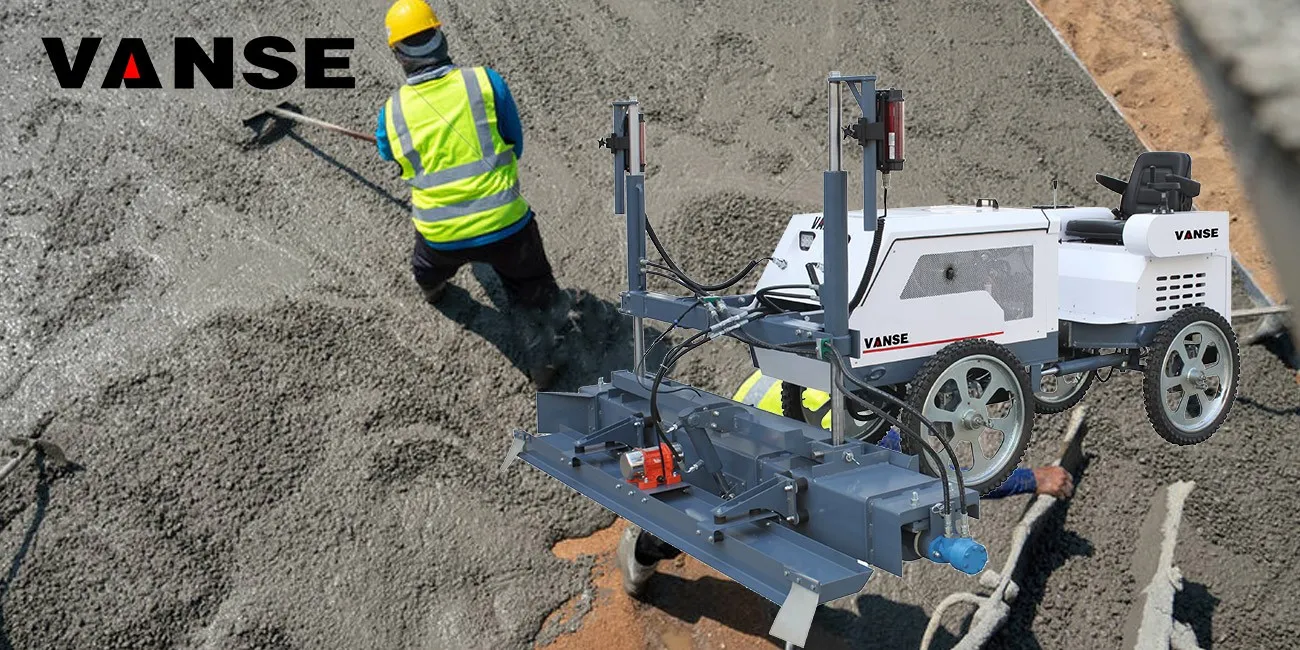
Poor flatness of concrete pavement can be repaired by the following methods according to different situations
🎈 Mild unevenness
– Grinding treatment
– Applicable situations:
Applicable to situations where there are small bulges or unevenness in the concrete pavement, the height of the bulge is generally within a few millimeters, and the unevenness is relatively mild.
– Operation method:
Use a pavement grinder to grind the uneven parts, and grind off the raised parts to make the pavement flat. When grinding, pay attention to controlling the depth and range of grinding to avoid excessive grinding causing the pavement to become thinner or new unevenness. After grinding, clean up the debris and dust on the pavement in time.
– Filling and leveling
– Applicable situations:
Applicable to situations where there are shallow potholes or local depressions on the pavement, the depth is usually less than 2-3 cm, and the area is not large.
– Operation method:
First clean the potholes and remove debris, dust and loose concrete fragments. Then use cement mortar or special pavement repair materials with the same or higher strength grade as the pavement concrete to fill them. When filling, the material should be fully compacted and smoothed to ensure that the surface after filling is consistent with the surrounding road surface. In order to ensure the adhesion between the repair material and the original road surface, a layer of interface agent can be applied to the surface of the pothole before filling.
🎈 Moderate unevenness
– Thin layer repair
– Applicable conditions:
When the road surface unevenness is more obvious, the depth of the potholes or depressions is about 3-5 cm, and the area is large, the thin layer repair method can be used.
– Operation method:
First, cut the area to be repaired into a regular shape. The depth is determined according to the degree of unevenness, generally about 3-5 cm. Then clean up the loose concrete in the cut area and treat the base appropriately, such as compaction, cleaning, etc. Then lay a thin layer of repair material that matches the performance of the original road concrete, such as polymer-modified concrete or high-performance repair mortar. When laying, use tools such as flat vibrators or trowels to vibrate and compact the materials, smooth them, and ensure that the repair layer is tightly combined with the original road surface and the surface flatness meets the requirements.
– Milling and re-paving
– Applicable situations:
Applicable to large areas with poor road flatness, serious unevenness, multiple potholes of varying depths, wavy unevenness, etc.
– Operation method:
Use a road milling machine to mill off the uneven surface of the road. The milling depth is generally about 5-10 cm, and the specific depth is determined according to the actual situation of the road surface. After milling, clean up the debris and dust, inspect and treat the base layer, and repair and compact any damaged or loose parts. Then re-pave the concrete road surface according to the design requirements, including paving, vibration, troweling and other processes to ensure that the flatness of the newly laid concrete road surface meets the standard. After the concrete is poured, it should be maintained in time to prevent quality problems such as cracks.
🎈 Severe unevenness
– Partial plate replacement
– Applicable situations:
When the concrete pavement is severely broken, sunken or uneven over a large area, and the base is also severely damaged, partial plate replacement is required.
– Operation method:
First determine the range of the plates that need to be replaced, use a cutting machine to cut the plates neatly around, then remove the broken concrete plates, and clean up the debris and loose materials on the base. Reinforce the base, such as using compaction, replacement and other methods to ensure that the bearing capacity and stability of the base meet the requirements. Then re-pour the concrete plates according to the design requirements, including installing the formwork, tying steel bars (if required), pouring concrete, vibrating and compacting, and smoothing. After pouring, strict maintenance must be carried out, and traffic will be opened after the concrete reaches the design strength.
– Overall renovation
– Applicable situations:
If the overall flatness of the concrete pavement is extremely poor, and there are large-scale defects such as severe cracks, potholes, and subsidence, and after evaluation, it is believed that the repair can no longer meet the use requirements, or the repair cost is too high, overall renovation can be considered.
– Operation method:
First, the original pavement should be demolished, the concrete pavement should be crushed and transported away, and the base layer should be thoroughly inspected and treated. If there are weak soil layers or poor geological conditions, corresponding treatments should be carried out, such as replacement and reinforcement. Then, according to the design plan, the pavement structure should be re-laid, including the base layer, subbase layer, surface layer, etc., and the construction should be carried out in accordance with the construction specifications, and the thickness, compaction and flatness of each layer should be strictly controlled. During the construction process, quality inspection and control should be strengthened to ensure that the performance indicators of the new pavement meet the design requirements. The pavement after overall renovation needs to be maintained and debugged for a period of time. After all indicators are stable, it can be officially opened to traffic.
Click the below to jump immediately!!!


CONCRETE LASER LEVELING MACHINE


TRACKED MINI DUMPER

Thanks to All the Friends Who Support and Trust Shandong Vanse Machinery Technology Co., Ltd.
If you want to know more about Shandong Vanse Machinery Technology Co., Ltd. or have any questions, please feel free to contact us:
Our Factory
Shandong Vanse Machinery Technology Co., Ltd.








Share this article

About the Author: Shandong Vanse Machinery Technology Co., Ltd.
Shandong Vanse Machinery Technology Co., Ltd. is a high-tech manufacturer specializing in concrete construction machinery, including laser screeds and related equipment. The company integrates R&D, production, and global sales, with products exported to over 60 countries and widely used in infrastructure projects worldwide.
Previous Post
Next Post
Related Articles
You Might Also Like
Laser leveling machine – four construction advantages
It is reported that over the years, the growth rate of the machinery industry has been higher than the industrial average, and the growth rate of benefits has also been higher than the growth of production and sales in the same period last year. Concrete laser paver, as a necessary equipment in construction machinery, has also maintained a high sales volume. Concrete laser leveling machines can be seen everywhere in today's building floor construction. Why are concrete laser leveling machines so popular? Let's analyze the four distinctive features of Shandong Wanshi Machinery's concrete laser leveling machine. Shandong Wanshi Machinery "Leilong" brand concrete laser leveling machine increases production efficiency by 61%, saves construction cost by 49%, shortens construction period by 40%, increases the strength and compactness of the floor by 25%, and the flatness error reaches the level of German related products standard. Let's take a look at the four distinctive features: 1. Intelligent handle operation mode, flexible operation, single person can operate construction. The movement and steering are flexible and convenient. The walking system is controlled by the handle, so that the machine can move freely without affecting each other with the leveling head. The wheel is manually controlled to move forward, backward, turn and travel speed, and the movement is very convenient. 2. The laser transmitter is arranged independently, and the large area is paved as a whole to ensure that the ground elevation is consistent. The elevation is not controlled by the formwork, and there will be no error. Large-scale block construction can reduce construction joints and greatly reduce the maintenance cost of the ground. 3. Integrated leveling head: It is composed of scraper, vibrator, vibrating plate, stirring cage and other components. It integrates multiple processes such as stirring, leveling, vibrating, and vibrating, and is completed by the machine at one time. Improve efficiency and save labor. In the case of undulating foundations and sloping road surfaces, maintain a level surface for construction. The high-frequency vibration of 4000 times per minute makes the vibrating plate of the leveling head vibrate evenly at high frequency, making the concrete floor dense and dispersing the deformation stress. It can effectively solve the problems of hollowing, shelling, cracking and inequality on the ground. 4. The laser measurement and control system automatically controls the elevation. The design elevation of the top surface of the floor is automatically controlled by the laser machine computer, which can ensure the flatness of the ground and achieve accurate. leveling directly on the concrete layer. The flatness of the ground is not affected by the vibration of the construction formwork, and no formwork is needed in the middle , Reduce the input of artificial materials, shorten the construction procedure and speed up the construction progress. The construction area per hour is more than 300㎡, and the daily workload can be more than 3000㎡ to 5000㎡, and the operation efficiency is greatly improved! The concrete laser leveling machine produced by Shandong Wanshi Machinery has its own intellectual property rights. The new generation of products is under research and development. The core components of the products are imported from Germany, the United States, Japan, etc. to ensure durability, safety, and reliability. The production equipment is complete. Fully meet customers' needs for high-quality products, welcome to come to the company to discuss cooperation if necessary.Is the remote monitoring and fault diagnosis system for concrete laser leveling machines highly practical?
The remote monitoring and fault diagnosis system for concrete laser leveling machines is highly practical. It is not merely an additional technology but is becoming an indispensable core competitiveness in modern and high-efficiency construction projects. This system, through technologies such as the Internet of Things, big data and cloud computing, has transformed traditional construction machinery into "intelligent terminals". Its strong practicality is mainly reflected in the following aspects: The traditional mode: When the equipment suddenly breaks down, the site stops working. Then, people are sent for maintenance. The time for troubleshooting is long, which delays the precious window period for concrete pouring and causes huge losses. Intelligent system: Real-time monitoring of key parameters such as the engine, hydraulic system, and laser system. Once any abnormal trend is detected (such as excessively high oil temperature or abnormal vibration), an immediate warning will be issued. Maintenance can be arranged before a fault occurs, transforming "unplanned shutdown" into "planned maintenance" to avoid construction interruption. The traditional model: Service engineers need to go to the site, troubleshoot based on experience, and may also have to go back and forth to pick up spare parts, which is time-consuming and labor-intensive. Intelligent system: Engineers can remotely view real-time data, historical operation records and fault codes of the equipment through a computer or mobile phone. It can accurately identify the problem in advance and complete the repair in one go with the correct accessories, increasing the service response speed by more than 50%. The system can precisely record the working duration, flat area, fuel consumption, etc. of each device. Managers can clearly see which equipment has a high usage rate and which is idle, thereby conducting optimal scheduling and improving the overall asset utilization rate. Through data analysis, the bad operating habits of operators can be optimized, reducing equipment wear and fuel costs. Through the electronic fence function, once the device is illegally moved or driven out of the designated area, the system will immediately sound an alarm. Accurate records of working hours provide an unalterable data basis for lease settlement, avoiding disputes. The project manager can view the real-time location, working status (running, idling, idle) and completed workload (leveled area) of all the levelers in the office, which is convenient for macro scheduling and progress management. The system can monitor and record the key operation parameters of the leveling, such as flatness and elevation control. These data can be compared with the design model to ensure that the construction process complies with the specification requirements, providing a data chain for quality traceability. The rapid response and maintenance by the equipment provider directly ensured the continuity of the project construction and avoided the risk of the entire working face coming to a standstill due to the failure of a single machine. Create differentiated services: Offer remote monitoring and intelligent diagnostic services to become a powerful selling point that outperforms competitors. Build a service loop: Shift from "selling equipment" to "selling services", predict customer needs in advance through data, proactively provide maintenance and repair suggestions, and enhance customer stickiness. Improve product design: Collect a vast amount of equipment operation data to analyze the weak links of the product, providing valuable data support for the optimization and improvement of the next generation of products. Although highly practical, its full-scale promotion also faces some challenges: Initial investment cost: The initial purchase cost of equipment and systems will increase. Network dependency: In remote construction sites with poor signal coverage, data transmission may be affected. Data security: It is necessary to ensure the security of data transmission and storage to prevent the leakage of business secrets. Personnel quality: It is necessary to cultivate operation and management personnel who can understand and apply these data. The remote monitoring and fault diagnosis system for concrete laser leveling is a typical practical technology that "empowers traditional manufacturing with informatization". It has brought significant economic benefits and improved management efficiency to equipment owners, construction parties and manufacturers through a data-driven approach. For any modern construction enterprise that pursues cost reduction, efficiency improvement, project duration assurance and quality enhancement, investing in the intelligent equipment of such systems is no longer a matter of "whether to use it or not", but an inevitable choice for "early use and early benefit". Its practicality has been fully verified in numerous large-scale infrastructure and commercial real estate projects. Note: The parameters provided in this document are for reference only and are not mandatory. Due to differences in technical characteristics between different brands and models of laser levelers, please consult the manufacturer for a suitable solution before actual operation. This reference document assumes no responsibility for any issues arising from failure to follow the manufacturer's instructions.Detailed explanation of application scope of laser leveling machine
Concrete laser leveling machine is widely used. It is an advanced machine used to super-flatten and level concrete floors. Its application range can be roughly divided into two categories: indoor floor engineering and outdoor floor engineering. These two categories are further subdivided. The following is a detailed introduction to the use of concrete laser leveling machine and the projects of this type that Vanse Machinery's products have done. Nowadays, concrete laser leveling machines are being used more and more widely. The specific scope of application can be divided into two categories: Vanse Machinery has done such projects as Harbin Haier workshop, Beijing Benz workshop, Baoding Great Wall Motors No. 5 spraying workshop, Shandong Classic Group steel structure production line workshop and other projects. Vanse Machinery has done such projects as: Suzhou Samsung Electronics Factory, Shandong Xingda Ecological Winery, Shandong Parkson Biological Workshop, Shandong Yuda Medical Workshop and other projects. Such projects that Vanse Machinery has done include: Xi'an Fuju Home Plaza, Shenzhen Walmart Supermarket, Wuhan Vipshop Logistics Park, Guangxi Convention and Exhibition Center, Tianjin Yupei Logistics Park and other projects. Such projects that Vanse Machinery has done include: Hubei Xiangzhou Industrial Park, Shanxi Shenlong Energy Coking and other projects. Such projects that Vanse Machinery has done include: Shandong Xinbaihui underground parking plant, Changchun FAW-Volkswagen parking lot, Hebei Hualian Supermarket large underground parking lot, Sichuan Wanda Plaza large underground parking lot, Hubei Xiangyang Dongjin Century City underground parking lot and other projects Such projects that Vanse Machinery has done include: Nanjing Huawei Electronics Company floor, Shenyang Electronics Factory floor integration, Sichuan Hualian Plaza, Hubei Xiangyang Dongjin Century City and other projects. Shandong Yanzhou Vanse Machinery Technology Co., Ltd. is the only high-tech enterprise in China that integrates R&D, manufacturing, sales, and technical services, specializing in concrete laser leveling machines. The use of "" brand concrete laser leveling machines can reduce about 60% of high-intensity labor, save about 50% of construction costs, shorten about 50% of construction period, and increase the strength and density of the floor by about 25%. The company has always been based on the tenet of "people-oriented, leading technology, honest management, and creating a well-known brand". We will provide customers with reliable products and perfect services, develop together, and create good results.