Technical Knowledge
How to optimize the use environment of concrete laser leveling machine in the project?

Strategies for optimizing the use environment of concrete laser levelers
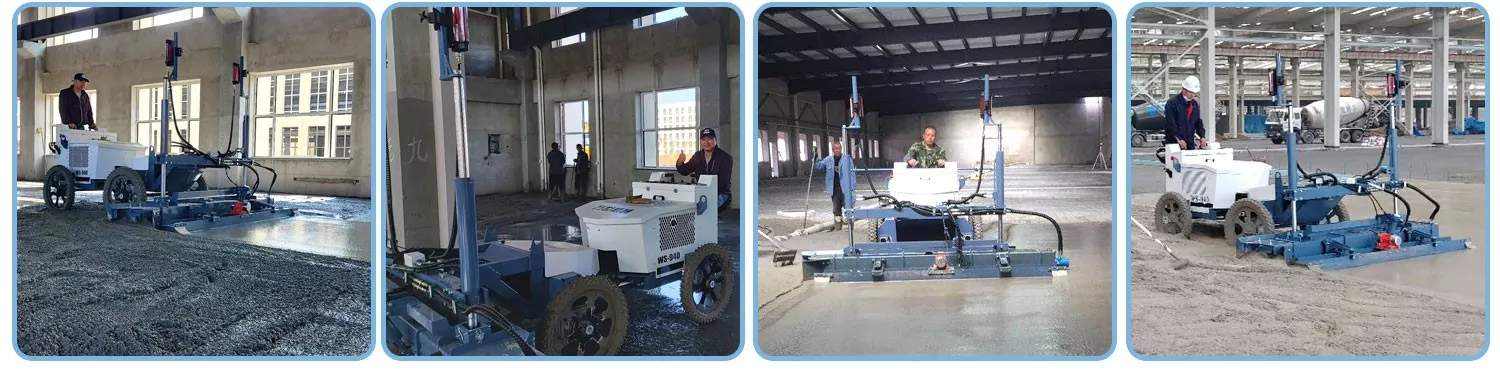
In the field of construction, concrete laser levelers (concrete laser leveling machines or concrete laser levelers) have become key equipment for improving the efficiency and quality of concrete construction. With the continuous advancement of global infrastructure construction and the growing demand for high-precision construction in the construction industry, the market size of concrete laser levelers continues to expand. According to market research reports, the global market size of concrete laser levelers is expected to reach US$1.76 billion in 2025, with an annual growth rate of approximately 11.4%. In order to give full play to the effectiveness of concrete laser levelers and extend their service life, it is crucial to optimize the use environment.

1. Pretreatment of construction sites
(I) Site cleaning and leveling
Before the operation of the concrete laser leveler, it is crucial to ensure that the construction site is clean and free of debris. Stones, wood, metal scraps and other debris in the site will not only hinder the normal operation of the equipment, but may also damage key components of the equipment, such as the leveling work head and walking tires. For example, if sharp stones remaining in the site are drawn into the walking mechanism of the laser leveler, it may cause the tires to be scratched and deviate, affecting the stability and walking accuracy of the equipment. At the same time, the construction site should be initially leveled so that the ground slope and undulation are within the range that the equipment can adapt to. Generally speaking, the concrete laser leveling machine is suitable for slopes within a certain range. If the site slope exceeds the specified range, it may cause the center of gravity of the equipment to be unstable, affect the leveling accuracy, and even cause safety accidents.
(II) Establish a safety warning area
In order to ensure the safety of construction personnel and equipment, a clear safety warning area should be set up around the concrete laser leveling machine operation area. Set up warning signs, such as "Construction site, no entry for idle people" and "Pay attention to equipment operation", and set up warning tapes to clearly divide the equipment operation range. Especially in construction sites where multiple types of work are cross-operated, prevent other personnel or equipment from mistakenly entering the operation path of the laser leveling machine to avoid collision accidents. For example, in the construction of basement floors in large commercial complexes, due to the complex construction space and frequent exchanges between personnel and equipment, a clear safety warning area can effectively reduce the probability of accidents. At the same time, arrange special personnel to be responsible for safety inspections to ensure the effectiveness of the warning area and promptly dissuade personnel and equipment from entering illegally.
2. Response to environmental factors
(I) Temperature influence and regulation
Response to high temperature environment:
In high temperature environment, the engine of the concrete laser leveler is prone to overheating, resulting in power reduction and increased wear of parts. When the ambient temperature exceeds 35℃, the load of the engine cooling system increases significantly. At this time, the maintenance of the engine cooling system should be strengthened, and the coolant level should be checked before daily operation. If it is insufficient, add coolant that meets the specifications in time. Clean the dust and debris on the surface of the radiator regularly to ensure that the heat dissipation air duct is unobstructed. Compressed air or high-pressure water gun (pay attention to moderate water pressure to avoid damage to the radiator fins) can be used for cleaning. For example, when constructing in an open-air parking lot with high temperature in summer, if the engine temperature is found to be too high, the equipment should be immediately moved to a cool place to shut down and cool down, and never force operation under high temperature. At the same time, consider installing a sunshade for the equipment to reduce the impact of direct sunlight on the equipment and reduce heat accumulation in the engine compartment.
Response to low temperature environment:
In a low temperature environment (such as an ambient temperature below 5℃), the viscosity of the lubricating oil of the concrete laser leveler increases and the fluidity becomes poor, which will make it difficult to start the equipment and increase the wear of various moving parts. Therefore, before construction in a low-temperature environment, lubricating oil and hydraulic oil suitable for low-temperature working conditions should be replaced, such as using low-freezing point engine oil and hydraulic oil. Before starting the equipment, a preheating device can be used to preheat the engine, such as an electric heating water jacket, a fuel heater, etc., to improve the starting performance of the engine. At the same time, the battery of the equipment should be kept warm and protected, and a battery warming sleeve can be installed to prevent the battery from degrading due to low temperature and affecting the start of the equipment. For example, in the construction of industrial plant floors in the northern winter, taking good low-temperature protection measures for the equipment can ensure the normal operation of the concrete laser leveling machine and improve construction efficiency.
(II) Humidity influence and protection
High humidity environment protection: High humidity environment can easily cause the metal parts of the concrete laser leveling machine to rust and corrode, especially when constructing in coastal areas or rainy seasons. In order to cope with high humidity environments, the equipment should be parked in a dry place, and try to choose indoors or in a place with a rain shelter. If it is unavoidable to work in a humid environment, anti-rust oil can be applied to the surface of the equipment, especially parts that are prone to rust, such as the frame, chassis, and walking mechanism. Check the electrical circuits regularly to prevent short circuits caused by moisture. Use an insulation resistance tester to detect the insulation performance of the electrical circuits and deal with problems in a timely manner. For the battery of the equipment, keep it clean and dry, check the electrolyte level and density regularly, and add distilled water in time to ensure good battery performance. For example, if the laser leveling machine used for a long time in a high humidity environment does not pay attention to rust prevention, the frame may rust and reduce strength in a short time, affecting the safety and service life of the equipment. Moisture-proof measures: When the concrete laser leveling machine is idle, effective moisture-proof measures should be taken. Desiccant, such as quicklime, silica gel desiccant, etc., can be placed at the equipment parking place to absorb moisture in the surrounding air and reduce humidity. For key components of the equipment, such as laser transmitting and receiving devices, electrical control cabinets, etc., moisture-proof covers can be used for protection to prevent moisture intrusion. During construction in the rainy season, if the equipment is exposed to rain for a long time, the moisture on the surface of the equipment should be wiped dry with a dry cloth in time after the operation, and the equipment should be fully inspected to ensure that no moisture enters the equipment. For example, in the construction site in the rainy season in the south, doing a good job of moisture-proofing the equipment can effectively reduce equipment failures caused by moisture.
(III) Dust and impurity protection
Concrete laser leveling machines usually operate at construction sites with a lot of dust, and a large amount of dust can damage the key components of the equipment. To reduce the impact of dust, a high-efficiency air filter can be installed at the air inlet of the equipment to filter dust particles in the air and ensure that the air entering the engine and hydraulic system is clean. Clean the air filter regularly. Depending on the dust concentration at the construction site, generally clean or replace the filter element every 50-100 hours of work. At the same time, protect the laser transmitting and receiving devices of the equipment to prevent dust from adhering to the lens and affecting the transmission of the laser signal. A dust cover can be installed or the lens can be wiped regularly with a clean soft cloth. In addition, when the equipment is operating, try to avoid staying in areas with severe dust for a long time to reduce the erosion of dust on the equipment. For example, in the floor construction of a cement plant, the dust concentration is extremely high. Strengthening dust protection measures can effectively extend the service life of the concrete laser leveling machine.

3. Power supply and energy guarantee
(I) Stable power supply (for electric equipment)
For electric concrete laser levelers, stable power supply is the key to the normal operation of the equipment. Before connecting to the power supply, check whether the power supply voltage meets the equipment requirements. The rated voltage fluctuation range of general equipment should be controlled within ±10%. If the voltage is too high or too low, it will affect the performance of the equipment motor and even burn the motor. You can use a voltmeter to regularly check the power supply voltage to ensure that the voltage is stable. At the same time, ensure that the capacity of the power supply line is sufficient to avoid safety accidents caused by voltage drop or line heating due to line overload. For temporary electricity use at the construction site, wiring should be carried out in accordance with relevant specifications, using a three-phase five-wire system and equipped with a leakage protector to ensure safe electricity use. For example, in the indoor floor construction of large shopping malls, if the power supply is unstable, the motor speed of the laser leveler may be uneven, affecting the leveling accuracy.
(II) High-quality fuel supply (for fuel-fired equipment)
Fuel-fired concrete laser levelers need to use high-quality fuel to ensure the normal operation of the engine. You should choose fuel that meets the equipment's required grades. For example, diesel engines generally use 0 or -10 diesel, and lower grades of diesel should be used in low temperature environments. Poor-quality fuel may contain impurities and moisture, which can cause the engine's fuel injectors to become clogged, combustion to be incomplete, reduce engine power, increase fuel consumption, and even damage the engine. Purchase fuel from regular gas stations and clean the fuel tank regularly to prevent impurities precipitated at the bottom of the tank from entering the fuel system. At the same time, before adding fuel to the equipment, you can use a fuel filter for secondary filtration to ensure fuel cleanliness. For example, in highway construction in remote areas, if non-standard fuel is used, the engine of the concrete laser leveler may frequently malfunction, affecting the construction progress.
4. Optimization of equipment storage environment
(I) Indoor storage
If conditions permit, the concrete laser leveler should be stored indoors as much as possible. Indoor storage can effectively prevent the equipment from being eroded by natural factors such as wind, sun, and rain, and reduce the risk of paint damage on the surface of the equipment and rust on metal parts. The indoor storage environment should be kept dry, well ventilated, and at a suitable temperature. The general temperature should be controlled between 5℃ – 35℃, and the relative humidity should be controlled between 40% – 70%. When storing indoors, the equipment can be parked on a dedicated bracket to avoid direct contact between the equipment and the ground, and to prevent the bottom parts from getting damp and rusting. At the same time, the equipment should be inspected and maintained regularly, such as checking the lubrication of the equipment, the connection of the electrical circuits, etc., to ensure that the equipment is in good standby condition.
(II) Outdoor storage protection
If the concrete laser leveling machine can only be stored outdoors, strict protective measures must be taken. First, build a rain shelter to ensure that the equipment is not directly exposed to rain. The material of the rain shelter should have good waterproof and sun-proof properties, such as color steel plates, canvas, etc. Cover the surface of the equipment with sun-proof and waterproof tarpaulin, and fix it firmly with ropes to prevent the tarpaulin from being blown away by the wind. At the same time, additional protection should be provided for key parts of the equipment, such as the engine, electrical control cabinet, laser transmitting and receiving devices, etc., which can be wrapped with a dedicated protective cover. During outdoor storage, the equipment should be inspected regularly, dust and debris on the surface of the equipment should be cleaned, and problems should be dealt with promptly. For example, in long-term outdoor construction sites, good storage protection of the equipment can effectively extend the service life of the equipment and reduce the occurrence of equipment failures.

Click the below to jump immediately!!!

ARMOUR JOINT

CONCRETE LEVELING MACHINE

LIGHT TOWER

POWER TROWEL

SLIPFORM MACHINE

STEEL FIBER

TOPPING SPREADER

Thanks to All the Friends Who Support and Trust Shandong Vanse Machinery Technology Co., Ltd.
If you want to know more about Shandong Vanse Machinery Technology Co., Ltd. or have any questions, please feel free to contact us:
Our Factory
Shandong Vanse Machinery Technology Co., Ltd.








Share this article

About the Author: Shandong Vanse Machinery Technology Co., Ltd.
Shandong Vanse Machinery Technology Co., Ltd. is a high-tech manufacturer specializing in concrete construction machinery, including laser screeds and related equipment. The company integrates R&D, production, and global sales, with products exported to over 60 countries and widely used in infrastructure projects worldwide.
Previous Post
Next Post
Related Articles
You Might Also Like
Introduction to Sports flooring
When you leap with all your might on the sports field and your running shoes draw graceful arcs on the track, the ground beneath your feet is your most loyal "invisible guardian". The sports ground is not merely a "flooring material", but a precise system that integrates materials science, ergonomics and sports mechanics. Sports flooring refers to the ground material layer specially designed and constructed for various sports competitions and fitness activities. It needs to meet the requirements of elasticity, anti-slip, wear resistance, shock absorption and environmental protection for sports, and adapt to the technical requirements of different sports. 1. Concept: The plastic track floor is an elastic ground material made of synthetic resins such as polyurethane (PU) and polyvinyl chloride (PVC) as the main binders, mixed with rubber particles and other raw materials. It is also known as an all-weather sports floor and is commonly seen in basketball courts, badminton courts and other venues. Due to its good elasticity, anti-slip and wear-resistant properties, it has become the mainstream choice for modern sports venues. 2. Advantages: Excellent elasticity, good anti-slip performance, high rebound rate, wear-resistant and shock-resistant, customizable according to the needs of different sports venues, and highly practical. 3. Disadvantages: Large initial investment, may release a slight odor at high temperatures, improper construction is prone to problems such as bulging and delamination, and the difficulty of later repair is relatively high. 4. Applicable venues: ball game venues, various types of track and field tracks, comprehensive sports venues in schools and stadiums, simple sports venues in communities and parks. Concept: Acrylic flooring is a new type of environmentally friendly flooring material composed of acrylic resin as the core component, combined with pigments, fillers and additives. 2. Advantages: Green, environmentally friendly and pollution-free, with excellent weather resistance and anti-aging ability, stable structure and not easy to fall off, long-term stable and reliable material performance, and simple construction process, short cycle and quick effect, suitable for a wide range of scenarios 3. Disadvantages: It has high requirements for the flatness of the base layer. An uneven base layer can easily lead to cracking and peeling of the coating. It has a relatively weak ability to resist the impact of heavy objects and is prone to damage when subjected to long-term heavy pressure or sharp object impacts. The stain resistance is average. Stubborn stains need to be cleaned up in time; otherwise, it is easy to leave marks. In low-temperature environments, its toughness decreases. Long-term use in extremely cold regions may lead to brittle cracking, and color differences are likely to remain after repair. 4. Applicable venues: Indoor and outdoor basketball courts, tennis courts, badminton courts and other professional sports venues as well as sports venues for leisure and entertainment. 1. Concept: Artificial turf can be classified into two major categories based on the production process: injection-molded artificial turf and woven artificial turf. (1) Injection-molded artificial turf: It adopts an integrated injection molding process, where plastic particles are extruded into shape in a dedicated mold at one time. Subsequently, professional bending techniques are used to make the grass leaves present a naturally curved shape. The arrangement of its grass leaves follows the rule of equal spacing and equal quantity, maintaining a completely uniform height, with excellent flatness and regularity. (2) Woven artificial turf: With synthetic fibers that imitate the shape of natural grass leaves as the core material, the fibers are precisely implanted into the woven base fabric through specialized equipment, and then a fixed coating is evenly applied to the back to enhance structural stability. It has a high degree of simulation, excellent toughness and is applicable in a wide range of scenarios. 2. Advantages and disadvantages: (1) The injection molding type adopts an integrated injection molding process, featuring regular grass leaves, low cost, wear resistance and easy maintenance. Its safety is suitable for children's scenarios, but its simulation degree and elasticity are average. (2) The woven type involves embedding synthetic fibers into the base fabric and applying a fixed coating. It features high simulation, comfortable foot feel, and excellent elasticity, making it suitable for professional venues. However, it has a relatively high cost and requires regular maintenance 3. Applicable scenarios (1) Injection-molded artificial turf can be used in multiple aspects such as activity areas in kindergartens, auxiliary areas of sports fields, balcony decoration, urban greening projects, and the laying of sand and gold fields. (2) Woven artificial turf can be widely applied in professional sports fields, leisure activity areas, golf courses, courtyard floor laying and urban greening projects, etc. 1. Concept: The silicon PU court floor is composed of elastic base material for the court, wear-resistant surface material, topcoat, marking lines and other parts 2. Advantages: It features outstanding wear resistance, weather resistance and anti-fouling properties. Moreover, the surface layer of the court can be adjusted to various colors as needed to beautify the environment and bring visual enjoyment. 3. Disadvantages: Higher initial investment cost, strict environmental requirements for construction, slight yellowing may occur when exposed to strong light for a long time, affecting the consistency of appearance, weak resistance to scratches from sharp objects, easy to leave marks when scratched by hard objects, and there may be color differences after repair. 4. Applicable scenarios: It is suitable for professional sports venues such as indoor and outdoor basketball courts, tennis courts, and badminton courts. It is also compatible with activity areas in kindergartens, school playgrounds, leisure and fitness areas, and children's play areas. 1. Concept: Suspended modular floor, also known as modular sports floor, is made of high-strength polypropylene environmentally friendly material at its core. It does not require professional bonding and can be directly laid on flat base surfaces such as cement and asphalt. Through the unique locking structure of the floor itself, it can be quickly assembled and fixed. 2. Advantages: It features environmental friendliness, durability, convenience, portability, cold and heat resistance, anti-aging, comfort, safety and health, as well as excellent sports performance 3. Disadvantages: It relies on the flatness of the base layer, the lock buckle is prone to loosening due to high-intensity use or temperature changes, the texture is relatively hard, the movement buffering performance is average, the anti-slip performance will decline with the passage of time, and it is prone to cracking at low temperatures. 4. Applicable scenarios: It can be used to lay ideal high-performance basketball courts, tennis courts, roller skating courts, table tennis courts, and multi-functional courts such as volleyball and badminton courts. It can also be used in various domestic sports venues and playgrounds and sports fields in kindergartens and primary schools. The texture, safety and comfort of sports fields are all hidden in every detail of the floor. Whether it is the wear resistance and elasticity required for professional events or the environmental protection and anti-slip features valued in school playgrounds and community leisure areas, high-quality floors silently protect every run, jump and laugh, laying a solid foundation of peace of mind for sports moments in different scenarios. Note: The parameters provided in this document are for reference only and are not mandatory. Due to differences in technical characteristics between different brands and models of laser levelers, please consult the manufacturer for a suitable solution before actual operation. This reference document assumes no responsibility for any issues arising from failure to follow the manufacturer's instructions.Requirements and treatment for troweling the concrete base layer before grinding special floors (such as epoxy floors and curing agent floors)
The success of special floors (such as epoxy floors and curing agent floors) is "70% dependent on the base layer and 30% on the materials". The quality and treatment of the base concrete's smoothing are the key prerequisites for determining the final floor effect and lifespan. The following are the detailed requirements and treatment procedures for the concrete base layer before grinding. The objective of the base concrete is to provide a "canvas" that is of high strength, dense and smooth, dry and clean, and free of defects. This refers to the operation carried out using a mechanical trowel during the period from the initial setting to the final setting of concrete. The requirements are far higher than those for ordinary concrete floors. The strength should not be lower than C25, and it is recommended to be above C30. The water-cement ratio should be low (generally ≤0.5) to reduce bleeding, enhance surface strength and wear resistance. The aggregate (sand and gravel) particle size is moderate and the mud content is low, ensuring a fine surface. It is necessary to vibrate thoroughly to expel air bubbles and ensure that the concrete is dense, free of voids and honeycombs. Preliminary leveling: After the concrete is laid, a laser screed or a scraper is used for initial leveling. Bleeding treatment: Allow the free water on the surface to fully evaporate. Start the operation before the initial setting (when the depth of the human footprint is about 2-3mm). The first coat of troweling (lifting the slurry) : Use a circular troweling machine to run at low speed to lift and smooth the surface slurry, filling in local unevenness. The second coat of smoothing (compaction) : When the surface moisture has further evaporated (and the footprints left by a person standing on it are very shallow), switch to a trowel blade (iron plate), run at medium speed, and apply in a cross direction to compact and smooth the surface. The third coat of polishing (fine polishing) : Before the concrete has finally set (with no standing water on the surface and slight marks when pressed by fingers), use a trowel blade to finely grind at high speed. This step is of vital importance as it can significantly enhance the surface density and flatness, resulting in a smooth and uniform hardened surface. When using a 2-meter straightedge for inspection, the gap should not exceed 3mm. The high-standard project requirement is ≤2mm. The overall slope should comply with the design requirements and there should be no water accumulation areas. After the smoothing is completed, full curing must be carried out immediately (it is recommended to cover with plastic film or spray a special curing agent) to prevent cracking due to excessive evaporation of water. The curing period should be no less than 7 days, with 14 to 28 days being the best. Even a well-polished floor must undergo strict inspection and targeted treatment before grinding. This stage is usually carried out after the concrete pouring and curing are completed (at least 28 days after the strength meets the standard). Strength: Tested by a rebound tester, the surface compressive strength is ≥ 25MPa. For curing agent floors, the higher the strength of the base layer, the better the final effect. Moisture content: Detected using an electronic hygrometer. Epoxy flooring has strict requirements (the moisture content of the base layer should be ≤ 4%, or as per the requirements of the material supplier). The curing agent floor has a relatively high tolerance for moisture, but it must not have standing water either. Flatness: Check again with a 2-meter straightedge and mark the areas that exceed the standard. Defect inspection: Carefully examine for hollowing (by tapping with a small hammer), cracks, oil stains, floating slurry, cement lumps, exposed steel bar ends, etc. Cleaning: Thoroughly sweep the floor and use an industrial vacuum cleaner to suck up all dust and sand particles. Hollowing and Defect repair Remove all hollow and loose parts. V-shaped grooves should be made for non-structural cracks, and they should be filled and repaired with high-strength non-shrinking epoxy resin or polymer cement mortar. The exposed ends of the steel bars on the ground should be cut to at least 3mm below the surface, then treated with anti-rust paint and filled with repair mortar. For local pits or height differences, they should be leveled with a professional grinding machine or milling machine and then filled with matching repair materials. Oil stain treatment: For oil stains, they must be thoroughly removed. Light oil stains can be wiped with special cleaning agents or solvents. Severely penetrating oil stains should be treated with fire roasting, milling or special degreasing agents. If necessary, the contaminated concrete should be knocked off and re-poured. Floating slurry and weak layer treatment: This is one of the core purposes of grinding. Even on a well-polished floor, there may still be a layer of cement slurry film (floating slurry) with relatively low strength formed due to bleeding on the surface. The primary task of the grinding machine is to remove this layer of floating Stage Key requirements for epoxy flooring Key requirements for concrete hardener flooring Polishing requirements Extremely high. The denser and flatter the surface is, the better the adhesion of the epoxy coating will be and the brighter and smoother the coating effect will be. It needs to be polished to perfection. High. The surface density directly affects the uniformity of the curing agent's penetration and the final hardening effect, and it also requires a fine finish. Strength requirements High (≥C25). The base layer is solid, and the coating is not prone to cracking due to base layer cracking. Very high (it is recommended to be ≥C30). The strength of the base layer is the foundation of the final strength, and the curing agent is an addition reaction. Moisture content requirement Extremely strict (≤4%). Moisture can cause the epoxy coating to bubble and delaminate. It should be relatively loose, but the ground must be dry and free of standing water. The curing agent can react with the hydration products of cement. Pretreatment before grinding The key points are absolute dryness, dust-free, oil-free and high flatness. The floating slurry layer must be removed to ensure adhesion. The key points are to remove the floating slurry, open the pores, deal with the defects and ensure the surface is smooth. Grinding opens up channels for the penetration of curing agents. Grinding particle size Usually, grinding to 80-120 mesh is sufficient to provide adequate roughness (anchor texture) for the epoxy primer. Usually, a coarser finish (such as starting at 30-40 mesh) is required to open up the surface, followed by multiple grinding processes to a higher mesh count (such as 1000-3000 mesh) for a brighter finish. Communication in advance: Before the concrete pouring, the floor construction unit should conduct a detailed technical briefing with the general contractor of the civil engineering, clearly defining the plastering standards and curing requirements. On-site supervision: The floor construction party should send personnel to supervise and guide during the concrete smoothing stage. System treatment: Regard the base treatment as a systematic project, from pouring to curing, and then to the inspection and repair before grinding, each step is interlinked and no step can be omitted. Professional assessment: For the renovation of old floors, a comprehensive assessment must be conducted by professionals before grinding, and a detailed treatment plan should be formulated. Only by following the above requirements and procedures can a perfect foundation be laid for the subsequent epoxy resin coating or concrete sealant and hardener construction, thereby creating a high-performance and long-life high-quality floor. Note: The parameters provided in this document are for reference only and are not mandatory. Due to differences in technical characteristics between different brands and models of laser levelers, please consult the manufacturer for a suitable solution before actual operation. This reference document assumes no responsibility for any issues arising from failure to follow the manufacturer's instructions.In what areas does the concrete laser leveling machine have broad application prospects?
With its high precision, high efficiency and automation advantages, the application scenarios of concrete laser leveling machines in the field of construction continue to expand. The following analyzes its broad prospects from six core areas, and explains it in combination with technology trends and market demand: Application requirements: Industrial factories (such as automobile manufacturing and electronic production) have high requirements for ground flatness (±3-5mm/2m), and need to withstand heavy equipment loads and frequent forklift transportation. Prospect advantages: Laser leveling machines can achieve large-area seamless construction, reduce expansion joint settings, and reduce the risk of ground cracking. For example, Tesla's Shanghai factory uses wide-width leveling machines, with a single-shift operation efficiency of 3,000 square meters, which shortens the construction period by 40% compared with traditional processes. Technical adaptation: Automated stereoscopic warehouses require a ground flatness of ±2mm/2m to ensure the precise operation of AGV robots. The laser leveling machine is equipped with a three-dimensional laser scanning system to achieve a slope control accuracy of ±0.1%, meeting the stringent requirements of unmanned warehousing. Market growth: In 2024, China's logistics and warehousing investment will increase by 22% year-on-year. In smart warehouse projects such as JD.com's "Asia No. 1", the application rate of laser leveling machines has reached more than 90%. Decorative needs: Shopping malls and high-end office buildings often use epoxy flooring and diamond wear-resistant flooring. The flatness of the base layer constructed by the laser leveling machine can improve the beauty and durability of the decorative layer. For example, the basement floor of Shenzhen Ping An Financial Center can achieve ±3mm accuracy through laser leveling, reducing the color difference caused by the difference in epoxy coating thickness. Airport runways and aprons: Airport pavements must meet FAA (Federal Aviation Administration) standards, with a flatness of ±3mm/3m. The laser leveling machine can achieve a concrete density of ≥98% and a 15% increase in flexural strength with high-frequency vibration technology. During the construction of the runway at Chengdu Tianfu International Airport, the laser leveling process increased the construction efficiency by 3 times. City squares and underground spaces: Municipal squares, underground parking lots and other scenes have strict requirements on drainage slopes (1%-2%). The laser leveling machine can accurately achieve slope gradients through real-time elevation control to avoid water accumulation problems. The Shanghai Bund Observation Platform uses this process, and the drainage efficiency is 50% higher than that of traditional construction. Thin layer construction advantages: Residential floors often use 50-80mm concrete cushion layers, and the laser leveling machine can achieve "one-time molding" without manual secondary leveling. In Vanke's "prefabricated housing" project, the laser leveling machine made the floor construction efficiency reach 2000㎡/day, and the hollowing rate was <1% (the hollowing rate of traditional processes is about 5%). Prefabricated base plates and wall panels: The base plate of the prefabricated concrete component mold needs to be flat ±1mm/2m. The laser leveling machine is combined with a precision scraper system to ensure the surface finish of the mold and improve the installation accuracy of prefabricated components. After Yuanda Zhugong PC Factory adopted this technology, the qualified rate of prefabricated components increased from 92% to 99%. Control of Large Volume Concrete: The concrete pouring volume of super-high-rise raft foundations (such as the 677-meter tower of Chengdu Greenland Center) exceeds 100,000 square meters. The laser leveling machine can control the temperature difference cracks of concrete through zoned flow construction, and with the intelligent temperature control system, the crack incidence rate can be reduced by 70%. Heavy-load Ground Solution: Port terminals and container yards need to withstand 20-50 tons of load. The concrete strength of the laser leveling machine can reach C40-C50, and with steel mesh, the ground damage rate can be reduced. Qingdao Port Automated Terminal adopts this process, and the service life of the ground is extended from the traditional 8 years to more than 15 years. BIM + laser leveling: By importing construction parameters through the BIM model, the laser leveling machine can automatically generate an elevation control plan to achieve "model-construction" integration. 5G remote control: 5G remote control laser leveling machine can be remotely constructed in dangerous environments (such as nuclear power plants and high slopes) to reduce personnel safety risks. Application of recycled concrete: The laser leveling machine has strong adaptability to recycled aggregate concrete (aggregate replacement rate 30%-50%) and can meet the requirements of green building certification. Low-carbon construction mode: The fully automatic laser leveling machine reduces energy consumption by 20%-30% compared with traditional machinery. With electric models (such as electric hydraulic systems), it can achieve zero-emission construction, which is in line with the "dual carbon" goal. Lightweight and miniaturized equipment: For scenes such as interior decoration and renovation of old floors, micro laser levelers (weight <1 ton, leveling width 1.5-2 meters) will become a new trend. AI visual recognition technology: Laser levelers with integrated visual sensors can automatically identify obstacles (such as steel bars and pipelines) to achieve obstacle avoidance and adaptive adjustment. The application prospects of concrete laser levelers have expanded from traditional industrial floors to multiple fields such as smart buildings, green infrastructure, and international projects. Its core competitiveness lies in the technical advantages of "high precision, high efficiency, and intelligence". With the rapid development of digital construction, new energy infrastructure, and the continuous iteration of equipment technology, this equipment will play a more critical role in the industrialization of construction and global infrastructure construction, and become an indispensable core equipment for modern construction.