Technical Knowledge
Which factors ought to be thought about when purchasing a concrete laser leveling machine?

When purchasing a concrete laser leveling, you need to consider construction requirements, equipment performance, cost-effectiveness and other factors to ensure that the equipment can adapt to the project scenario, improve construction efficiency and reduce long-term costs. The following are the core factors that need to be focused on:

🎯 Matching construction scenarios with requirements
1. Construction area and site size
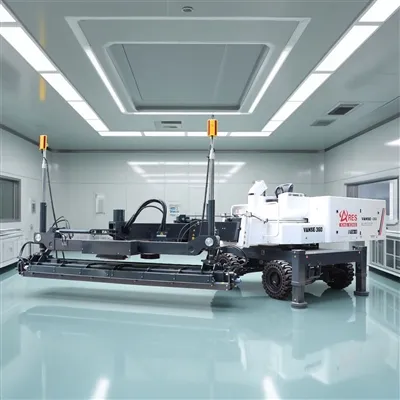
– For large-area floors (single area exceeds 1000㎡) such as large industrial plants (such as automobile plants and logistics warehouses), it is suitable to choose large laser levelings ( such as VANSE YZ40-4E, YZ30-4E, etc. ), which have a large operating width (3-4 meters) and high efficiency (average daily construction of 4000-5000㎡), can reduce joints and ensure overall flatness.
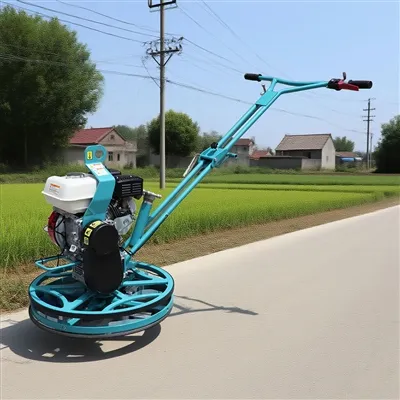
– For small plants, workshops or narrow areas (such as around equipment foundations and corners), small hand-held laser levelings ( such as DZ25-2, DZ30-2, etc. ) are suitable, with flexible bodies that can operate in small spaces.
2. Ground flatness requirements
– If the factory has
AGV robots,
precision equipment or high-bay warehouses (forklifts need to travel at high speed), the flatness requirements are extremely high (such as 2-meter ruler deviation ≤3mm, or even ≤1mm), and you need to choose a high-precision laser system (such as imported laser transmitters, accuracy ±0.5mm/10m) and a more rigid leveling head (to reduce the impact of body deformation).
– Ordinary industrial plants (such as warehouses) can choose medium-precision equipment to meet the basic flatness.
3. Concrete thickness and load requirements
– When the floor thickness is large (such as 200-300mm, including steel fiber and steel mesh), you need to pay attention to the paving capacity of the equipment, choose a high-power engine (such as 40-60 horsepower), a heavy-duty scraper and a vibrating system (vibration depth ≥300mm) to ensure that the concrete is vibrated densely and avoid honeycomb surface.
– If the ground needs to carry heavy equipment (such as forklifts and machine tools above 10 tons), the equipment must have sufficient paving uniformity to reduce local settlement caused by differences in concrete density.

🎯 Core performance parameters of the equipment
1. Laser system accuracy and stability
– Laser transmitter: Prioritize imported brands ( such as Trimble in the United States, Leica in Switzerland, and Topcon in Japan ), whose laser signals have strong anti-interference ability (avoid the influence of sunlight and other equipment signals), to ensure the uniformity of the benchmark during large-scale construction.
– Control system: Whether it has automatic leveling function (such as automatic slope compensation, real-time correction of height difference), which can reduce human errors when operated by novices.
2. Power and operation efficiency
– Engine power: High-power (such as more than 50 horsepower) equipment is suitable for high-intensity and continuous operation, especially in high-temperature environments where concrete sets quickly, and can quickly complete paving.
– Operation speed: It needs to match the concrete supply (such as paving 80-150m³ per hour) to avoid the inability to trim the concrete after initial setting due to the equipment being too slow.
3. Mechanical structure and durability
– Leveling machine head:
Rigid frame (such as square steel welding) has strong anti-deformation ability and prolongs service life; scraper and vibrator materials (such as high chromium alloy) need to be wear-resistant to reduce replacement frequency.
– Tires/tracks:
If the ground is soft during construction in the factory, crawler equipment (large ground contact area) is more anti-sinking; tire type (flexible movement) can be selected for hardened ground.
4. Additional functions
– Whether it supports synchronous spreading of wear-resistant materials (such as integrated spreader) to reduce subsequent processes;
– Folding design (such as foldable head) for easy transportation and entry into narrow factories.

🎯 Cost and after-sales service
1. Purchase cost
– The choice of imported or domestic equipment depends on personal budget and construction projects.
2. Operation cost
– Fuel consumption:
high-power equipment has high fuel consumption (such as 8-15L per hour), which needs to be calculated in combination with the construction volume;
– The price and replacement frequency of wearing parts (vibrators, scrapers), choose a brand with sufficient supply of accessories.
3. After-sales service
– Whether the manufacturer provides localized services (such as nearby repair outlets) to avoid delays in construction due to equipment failure (Shandong VANSE Machinery Technology Co., Ltd. has its own agents in the United States, Mexico, Russia, Spain, Thailand, Uzbekistan, the United Kingdom, Australia, Brazil and other countries, with branches + overseas warehouses in Malaysia and its own overseas warehouses in Saudi Arabia. Engineers are online 24 hours a day, and dedicated personnel will answer your questions, worry-free throughout the process);
– Training support: whether operation and maintenance training are provided, especially important for novice teams;
– Warranty policy: warranty duration (such as 1-2 years) and scope (whether core components are covered).

🎯 Brand and Reputation
– Reference industry cases: give priority to brands that are widely used in industrial plant construction (
VANSE Machinery Technology Co., Ltd.'s equipment has undertaken the construction of large and small logistics parks, as well as large supermarkets, and provides construction solutions. It has completed
TR34 and DM1
standard floor laying in Saudi Arabia
), and its equipment performance has been verified in practice.
– User evaluation: Understand the stability and failure rate of the equipment through peer feedback and industry forums to avoid choosing niche brands that lead to subsequent maintenance difficulties.

🎯 Summary
When purchasing, it is necessary to combine the area, flatness requirements, and concrete thickness of the plant construction, give priority to matching the accuracy, efficiency and structural durability of the equipment, and balance the procurement cost with the long-term operating cost, and choose a brand with guaranteed after-sales service. For example, automobile plants (high flatness, large area) are suitable for imported large laser leveling machines; small and medium-sized new energy plants (medium area, high precision) can choose domestic mid-to-high-end equipment to maximize cost performance.
Click the below to jump immediately!!!

ARMOUR JOINT

CONCRETE LEVELING MACHINE

LIGHT TOWER

POWER TROWEL

SLIPFORM MACHINE

STEEL FIBER

TOPPING SPREADER

Thanks to All the Friends Who Support and Trust Shandong Vanse Machinery Technology Co., Ltd.
If you want to know more about Shandong Vanse Machinery Technology Co., Ltd. or have any questions, please feel free to contact us:
Our Factory
Shandong Vanse Machinery Technology Co., Ltd.








Share this article

About the Author: Shandong Vanse Machinery Technology Co., Ltd.
Shandong Vanse Machinery Technology Co., Ltd. is a high-tech manufacturer specializing in concrete construction machinery, including laser screeds and related equipment. The company integrates R&D, production, and global sales, with products exported to over 60 countries and widely used in infrastructure projects worldwide.
Previous Post
Next Post
Related Articles
You Might Also Like
The construction of airport runways has extremely high precision requirements for concrete laser leveling. Which models can meet the demands?
According to the technical parameters in the product manual of Shandong Vanse Machinery Technology Co., LTD., and in combination with the strict requirements of airport runway construction for extremely high flatness, large area continuous operation, equipment stability and high-precision control systems, the following models are professional choices that can meet the needs and are arranged in the recommended order: These models are the preferred choice for high-standard projects such as airport runways and large industrial floors due to their high power, wide paving, advanced control systems and outstanding stability. Recommendation reason Maximum paving width: 4 meters, which is the model with the largest width in the manual. It can greatly improve the efficiency of large-area continuous paving and the flatness of the joints. Strong power: 57kW diesel engine, providing sufficient power for high-intensity and long-term continuous construction. Advanced control system: Clearly marked as "Compatible with 3D profiler system". This is the core configuration that meets the extremely high precision requirements of airport runways. The 3D system, controlled by GPS or total stations, can adjust the elevation in real time, perfectly achieving complex slopes and designed elevations, with a precision far exceeding that of traditional single-point lasers. High adaptability: The body can rotate 360 degrees infinitely and be leveled with one click, which can flexibly handle various situations during construction. Professional configuration: Standard cleaning system, soft landing system, etc., to ensure the long-term and stable operation of the equipment. Recommendation reason Balanced performance: 3.1 meters paving width, achieving a good balance between efficiency and flexibility. Long boom: 6-meter telescopic boom, providing a larger working coverage range and reducing the number of equipment movements. Also compatible with 3D systems: The product features clearly state that it has the technical foundation for achieving high-precision construction. Multi-mode steering: two-wheel, four-wheel, crab steering, providing greater maneuverability in narrow or complex areas. For the construction of runway accessory areas, taxiways or base layers with slightly lower precision requirements, the following models can also be considered as alternatives: WS550/ YZ28-4S/ WS940/ WS940C ride-on concrete laser leveling, among which WS940C also supports 3D system construction A 3D control system must be used: No matter which model is chosen, it is necessary to select or confirm its compatibility and actually install a high-precision 3D intelligent paving control system. This is the technical guarantee for achieving millimeter-level accuracy in the slope and elevation of the longitudinal and transverse slopes of airport runways. Give priority to the Boom Type model: The boom type leveling does not rely on formwork. It can control the paver head through laser or 3D signals, achieving large-scale seamless continuous operation and fundamentally reducing construction joints. This is the key to ensuring the overall flatness of the runway. Equipment stability and reliability: Airport runway construction is often characterized by tight schedules and high intensity. Particular attention should be paid to the: Engine brand and power (such as Yanmar, Kubota). Reliability of the hydraulic system. Strength of structural components. Comprehensive construction plan Concrete proportioning and conveying: It needs to be used in conjunction with high-efficiency concrete pavers (such as the BL-360 concrete distributor in the product manual) to achieve rapid and uniform sprouting. Subsequent process connection: After leveling, a large ride-on power trowel (such as VS836/VS1046) should be immediately used for finishing to meet the final density and wear resistance requirements of the runway surface. Joint treatment: The Armour joints of the runway need to be professionally treated with high-performance Armour joints (such as AFJ type, S type) to protect the edge of the runway and transfer the load. For the high-standard construction of the main surface layer of airport runways, the YZ40-4E is highly recommended. Its maximum paving width and powerful performance make it most suitable for large-scale and efficient operations. The next recommendation is the YZ30-4E, which has obvious advantages in terms of mobility and coverage. The most crucial point is to ensure that the selected model is equipped with and actually applies a high-precision 3D intelligent control system. Before making the final decision, it is strongly recommended: Contact Vanse ([email protected]) for more detailed technical solutions and 3D system configuration instructions. Request successful cases and construction data of relevant aircraft models in similar large airports or key infrastructure projects. If conditions permit, arrange on-site inspection and equipment demonstration. Only by choosing the right equipment and combining it with scientific construction techniques can the airport runway meet the highest quality standards of being "as smooth as a mirror and sturdy and durable". Note: The parameters provided in this document are for reference only and are not mandatory. Due to differences in technical characteristics between different brands and models of laser levelers, please consult the manufacturer for a suitable solution before actual operation. This reference document assumes no responsibility for any issues arising from failure to follow the manufacturer's instructions.Key points for lubrication & maintenance of the power trowel machine
Lubrication and maintenance of the power trowel is the core work to ensure the long-term stable operation of the equipment and prevent sudden failures. The key lies in "using the right oil, finding the right time, doing it on time and using the right method". The following are the specific key points 1. Power trowel the main shaft bearing – the most crucial and frequent Location: The center drive shaft of the pan, usually with 1-2 grease nozzles. Lubricant: High-temperature resistant (≥120℃), extreme pressure lithium-based grease (such as molybdenum disulfide grease) must be used. Ordinary butter must not be used. Method and Cycle It must be carried out after each shift's work (working for 8 to 10 hours). Thoroughly clean the grease nipple and its surroundings. Add until the new grease overflows: Use a grease gun to add until the clean new grease is completely squeezed out from the edge of the bearing seal ring from the old grease. Wipe off the excess grease. Objective: To remove metal shavings and impurities produced by internal wear and ensure that the bearing cavity is filled with new grease. 2. Gearbox/reducer Lubricant: Select the specified type of gear oil (such as SAE 80W-90 GL-4) strictly in accordance with the instructions. Check: Every day, check through the oil window or dipstick whether the oil level is between the upper and lower marks. Replacement cycle First replacement: After the new machine has been running for 20 to 30 hours, remove the running-in debris. Regular replacement: Replace it every 300 to 500 hours of operation or annually thereafter. Key point: Oil change should be carried out when the oil temperature is still hot after the equipment is shut down to ensure that the old oil is completely drained. 3. Traveling wheels and steering mechanism Location: Walking wheel bearing, steering tie rod ball joint, hinge point. Lubricant: The high-temperature resistant lithium-based grease as mentioned above. Cycle: Every 50 hours of operation or once a week. Method: Clean each grease nozzle and add grease until new grease overflows from the gaps. 4. Engine (Gasoline model) Engine oil inspection and replacement Check the oil dipstick before starting every day to ensure the oil level is normal. First replacement: After running for 20 to 30 hours. Regular replacement: Every 100 hours or every quarter. The cycle should be shortened in harsh environments. Air filter maintenance: Regular cleaning. For oil bath air filters, use the dedicated air filter oil as per the instructions. Cleaning first: Before filling, be sure to clean the oil nozzle, oil cap and the surrounding area to prevent sand, dust and concrete particles from being brought into the interior. Strict specifications: Different parts should use the specified type of grease/oil products. They must not be mixed or substituted. High-temperature grease is the "life-saving oil" for the main shaft bearings. Squeezing out the old grease: For bearing lubrication, "adding until the new grease overflows" is a necessary step. This is the only effective way to remove contaminants and ensure the lubrication effect. Precise cycle: The maintenance cycle is mainly based on the operating hours (rather than calendar time) and is strictly recorded. Error: Lubricate the main shaft bearings with ordinary grease. Consequence: The grease melts and leaks away at high temperatures, the bearings dry grind rapidly and burn out at high temperatures, leading to the failure of the entire machine. Error: Only add fat without squeezing out the old fat. Consequence: Metal shavings accumulate in the bearing cavity, forming abrasives, accelerating wear, and causing abnormal noises and jamming. Error: Ignoring the oil level in the gearbox and its replacement. Consequence: Insufficient lubrication of gears and bearings leads to pitting corrosion, broken teeth, and scrapping of the reducer. Error: The spilled grease was not cleaned up after lubrication. Consequence: Grease adsorbs dust to form hard scale, which damages the sealing performance of the oil seal and makes it easier for impurities to invade. Create a lubrication chart: Make a simple chart of all lubrication points, oil types and cycles of the equipment, and stick it in a prominent place on the equipment. Equipped with dedicated tools: Use high-quality grease guns and dedicated oiling nozzles to ensure sufficient filling pressure. Record: After each maintenance, record the operating hours and maintenance items to form a traceable maintenance file. Long-term storage and maintenance: Before the equipment is out of use, thoroughly lubricate all lubrication points once. The engine oil should be changed or stabilizers added as per regulations to prevent internal rusting. The lubrication and maintenance of a power trowel essentially involve the continuous confrontation with its harsh working environment (heavy load, high temperature, and much dust). By grasping the two key points of "post-shift high-temperature grease extrusion lubrication" for the main shaft bearings and "regular oil change" for the gearboxes, the vast majority of major mechanical failures can be avoided, significantly extending the service life of the equipment. Note: The parameters provided in this document are for reference only and are not mandatory. Due to differences in technical characteristics between different brands and models of laser levelers, please consult the manufacturer for a suitable solution before actual operation. This reference document assumes no responsibility for any issues arising from failure to follow the manufacturer's instructions.Standard operating procedures for daily cleaning and regular deep maintenance of the power trowel machine
This SOP is designed to ensure equipment performance, extend service life and guarantee operational safety. Standardize the daily cleaning and regular maintenance of the power trowel machine to ensure that the equipment is always in good working condition, reduce the failure rate, eliminate potential safety hazards, optimize the construction quality and extend the service life of the equipment. This program is applicable to the maintenance and servicing of all electric, gasoline or hydraulic-driven power trowels (including driver-operated and hand-guided types) of our company. Operator: Responsible for performing daily cleaning and inspection, and reporting any abnormal conditions. Equipment Administrator/Mechanic: Responsible for conducting regular deep maintenance, repair and record-keeping. Project Manager/Supervisor: Responsible for supervising the implementation of the maintenance plan and providing resource support. Before carrying out any maintenance, make sure that the equipment has been completely turned off, the engine/motor has stopped, the key has been removed, and all moving parts have come to a standstill and cooled down. Wear appropriate personal protective equipment (PPE), such as gloves and safety glasses. Do not clean or maintain the equipment while it is in operation. When handling fuel, engine oil and lubricating oil, keep away from fire sources and do it in a well-ventilated area. Operation process: Cleaning -> Inspection -> Report Remove large debris: Use a scraper or wooden chips to remove large pieces of concrete and mortar adhering to the power trowel plate, the bottom of the blades and the protective cover. Rinse/Wipe Timing: If the concrete has solidified, wipe it with a damp cloth. If the equipment permits and the circuit/air filter is protected, low-pressure water can be used for flushing. However, it is strictly forbidden to directly direct water at key parts such as the engine, motor, bearing housing, and control box. Key areas: power trowel plate, blades, chassis, walking wheels (or tracks). Drying and rust prevention: Use a dry cloth to wipe off water stains on the surface of the equipment. For exposed metal parts (non-friction surfaces), apply a small amount of lubricating oil for rust prevention. Power trowel and blade: Check for excessive wear, cracks or deformation. Make sure the installation bolts are tight and not loose. Transmission system Gearbox/reducer: Check for any oil leakage or abnormal noise. Belt/chain (if any) : Check the tension and wear condition, and adjust or replace them. Engine/Motor Gasoline engine: Check if the air filter is clean and visually inspect the oil dipstick (it should be in a horizontal position). Electric motor: Check if the power cord is damaged and if the plug is intact. Walking mechanism: Check the tire pressure and wear of the walking wheels, or the tightness and wear of the tracks. Fasteners: Quickly check whether the visible bolts and nuts at all parts are loose, especially at the connection points of the power trowel and the fixing points of the handle. Safety: Check whether the emergency shut-off switch and protective cover are in good condition and effective. Fill in the "Daily Inspection Form for Equipment". If any abnormality is detected (such as abnormal noise, oil leakage, severe vibration, inability to start, etc.), immediately hang the "Under Repair" sign and report to the equipment administrator. In addition to the daily content, add: Engine maintenance (gasoline engine) Change the engine oil (refer to the manufacturer's manual. The first maintenance is usually carried out after 20 to 30 hours of operation). Clean or replace the air filter element (more frequently in dusty environments). Check the spark plugs, clean the carbon deposits, adjust the clearance or replace them. Check and clean the fuel filter. Transmission system Gearbox: Check the oil level and replenish or replace the specified gear oil if necessary. Bearings: Apply high-temperature lithium-based grease to the main shaft bearings of the power trowel plate, the bearings of the walking wheels, etc. Comprehensive tightening: Use a torque wrench to re-tighten all key bolts in accordance with the torque values specified by the manufacturer. Electrical system: Check whether all wire connections are firm and clean the dust on the heat sink of the motor housing. Carried out by professional mechanics, it includes all first-level maintenance contents and adds: Deep cleaning and inspection Remove the protective cover and thoroughly clean the accumulated dust and oil stains inside. Check the wear condition of the clutch plates (if any). Deep maintenance of the transmission system Replace all the lubricating oil in the gearbox. Check for wear on the belts/chains and replace them in groups if necessary. Check the clearance and abnormal noise of the bearings, and replace them if necessary. Fuel system (gasoline engine) Clean the carburetor. Empty and clean the fuel tank (this must be done before long-term storage). Walking mechanism Inspect the wheel axles and steering mechanism, and apply grease. For the driving type power trowel, check the hydraulic oil level and whether there is any leakage in the hydraulic pipeline. Performance test After the maintenance is completed, run the equipment no-load for 10 to 15 minutes to check for any abnormal sounds, vibrations, overheating or oil leakage, and to ensure that each control lever operates flexibly and effectively. Thorough cleaning: As mentioned earlier, thoroughly clean the equipment and dry it. Fuel treatment (gasoline engine) : Drain the fuel from the fuel tank and carburetor, or add fuel stabilizer and run the engine for 5 minutes to fill the stabilizer system. Engine maintenance Change the engine oil. Remove the spark plug, inject about 15 milliliters of engine oil into the cylinder, pull the starting rope several times to distribute the oil, and then reinstall the spark plug. Anti-corrosion treatment: Apply anti-rust oil to all exposed metal surfaces. Apply butter to the smears and leaves to prevent rust. Storage location: Store the equipment in a dry, well-ventilated and flat indoor area. Lower the power trowel plate to the ground to release the pressure of the hydraulic system (if applicable). Lift the tire off the ground or maintain the standard air pressure. After each maintenance, the maintenance date, operating hours, maintenance items, replaced parts and oils, and the signature of the maintenance person must be recorded in detail on the "power trowel Maintenance and Repair Record Card". The record card should be randomly saved for easy tracking of the equipment's history. Core principles: Prevention first, cleanliness foremost, follow regulations, and keep complete records. Strict maintenance is not only about cost savings, but also an important guarantee for project quality and construction safety. Note: The parameters provided in this document are for reference only and are not mandatory. Due to differences in technical characteristics between different brands and models of laser levelers, please consult the manufacturer for a suitable solution before actual operation. This reference document assumes no responsibility for any issues arising from failure to follow the manufacturer's instructions.