Technical Knowledge
How to choose suitable supporting facilities for concrete laser leveling machine

The selection of supporting facilities for concrete laser leveling machines needs to comprehensively consider factors such as construction requirements, site conditions, and equipment performance. The following are specific suggestions:
🎊 Laser transmitter and receiver:
Products with high precision and good stability should be selected, such as Swiss Leica and American Trimble's laser transmitter and receiver, which can accurately control the construction surface and cover various situations such as planes, slopes, and double slopes (three-dimensional). Ensure that the emission range of the laser transmitter can meet the area requirements of the construction site, the signal transmission is stable, and the anti-interference ability is strong.

🎊 Vibration equipment:
If the thickness of the concrete to be constructed is large, a high-frequency plug-in vibrator with a vibration frequency of more than 100Hz can be selected, such as a motor-mounted plug-in vibrator, which is generally 50-100mm in diameter. It can be selected according to the slump of concrete and the actual construction situation. When the slump is large, a smaller diameter can be selected. The effective action radius is generally 4-10 times the diameter of the vibrator rod. The vibration spacing should not be greater than 1.5 times its effective action radius, and not greater than 500mm. For large-scale construction, consider equipping a row vibrator with a spiral distributor and a loose control scraper, and with an automatic walking function to improve construction efficiency.

🎊 Concrete conveying equipment:
Select a suitable concrete pump according to the size of the construction site and the amount of concrete poured. If the site is large and the amount of pouring is large, a large concrete pump truck with strong conveying capacity and long conveying distance can be selected; if the site is narrow or indoor construction is required, a small concrete pump or ground pump can be considered to ensure that the concrete can be delivered to the construction site in a timely and even manner, matching the construction speed of the laser leveler.

🎊 Tredging equipment:
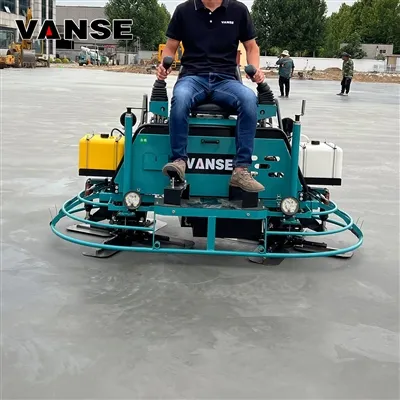
After the concrete is leveled, it needs to be troweled. You can choose a
driving power trowel (VS836/VS836H)
and select the appropriate model and power according to the construction area. Large-scale floor construction can use a
large driving power trowel (VS1046/VS1046H)
to improve work efficiency; for corners or small areas, a small
hand-held power trowel (VS436/VS424)
can be used to ensure the overall flatness and finish of the floor.

🎊 Measuring tools:
Levels, total stations and other measuring tools are essential for site elevation measurement before construction and flatness monitoring during construction. Instruments with accuracy that meets construction requirements should be selected, and they should be easy to operate and measure accurately, so that construction personnel can adjust the construction parameters of the laser leveler in a timely manner.
🎊 Auxiliary tools:
Such as levels, rulers, and scales, which can be used to check the flatness of the floor at any time, find problems in time and make adjustments. Plastic films, curing agents, etc. can also be prepared for maintenance after concrete pouring to ensure the normal growth of concrete strength and improve floor quality.
Click the below to jump immediately!!!


CONCRETE LEVELING MACHINE


SLIPFORM MACHINE


TOPPING SPREADER

Thanks to All the Friends Who Support and Trust Shandong Vanse Machinery Technology Co., Ltd.
If you want to know more about Shandong Vanse Machinery Technology Co., Ltd. or have any questions, please feel free to contact us:
Our Factory
Shandong Vanse Machinery Technology Co., Ltd.








Share this article

About the Author: Shandong Vanse Machinery Technology Co., Ltd.
Shandong Vanse Machinery Technology Co., Ltd. is a high-tech manufacturer specializing in concrete construction machinery, including laser screeds and related equipment. The company integrates R&D, production, and global sales, with products exported to over 60 countries and widely used in infrastructure projects worldwide.
Previous Post
Next Post
Related Articles
You Might Also Like
Requirements & treatment for laser leveling of concrete base layers before grinding of special floors (such as epoxy floors and curing agent floors)
The quality of the concrete base directly determines the final effect and service life of special floors (such as epoxy and curing agent floors). Laser leveling, as a high-standard process in modern floor construction, lays a solid foundation for subsequent grinding and surface layer construction. The following is a detailed description of the requirements and treatment for laser leveling of concrete base before grinding of special floors: The concrete base layer after laser leveling and treatment should achieve the following core goals to meet the requirements of special floors Extremely high flatness: Eliminate large areas of waves and local height differences, ensure uniform thickness of the floor surface layer, and avoid problems such as uneven coating wear and dust accumulation caused by uneven base surfaces. Excellent levelness: Ensures that the ground meets the designed elevation, especially for large factories, warehouses and other places with strict requirements for ground slope. Solid surface strength: The base concrete must have sufficient compressive strength and surface hardness to prevent sanding, hollowing, and be able to withstand grinding by a grinding machine. Dense and uniform surface: Reduce pores, prevent excessive penetration of floor materials (such as epoxy primer), and provide uniform adhesion for the surface layer at the same time. Controllable cracks: Through reasonable cutting techniques, irregular cracks are guided to the preset shrinkage joints to ensure that no random cracks occur on the surface layer. Laser leveling is the crucial first step to achieving the above goals. Compaction degree: The soil base must be fully compacted, with a density of no less than 90%, to prevent concrete cracking caused by future settlement. Cushion layer: Usually, graded crushed stone is used as the cushion layer, with a thickness of no less than 150mm. It needs to be evenly spread and compacted. The cushion layer serves as the foundation for stress dispersion and drainage. Waterproof and moisture-proof: For floors with a high groundwater level or the first floor, a moisture-proof layer (such as PE film) must be set up to prevent the rise of underground water vapor from causing the epoxy floor to bubble and peel off. Strength: The grade should not be lower than C25. For areas with heavy load requirements, it is recommended to use C30 or higher. The compressive strength should ultimately reach above 25MPa. Mix ratio: The water-cement ratio is crucial and should be strictly controlled below 0.5. A low water-cement ratio is the prerequisite for ensuring the high strength and wear resistance of concrete. Aggregate: Medium and coarse sand and continuously graded crushed stone should be used, with the maximum particle size not exceeding 25mm, to ensure the compactness of the concrete. Additives: Water-reducing agents (ensuring workability while reducing the water-cement ratio), fibers (anti-cracking), etc. can be added as needed. Set control points: Based on the designed elevation, establish an accurate horizontal control network through a laser emitter. Concrete paving: The height of the loose paving should be 2-3cm higher than the designed elevation to prepare for the compaction and leveling by the leveling head. Concrete laser leveling machine operation The concrete laser leveling relies on laser signals to automatically control the height of the scraper, precisely spreading and initially compacting the concrete. Advantages: Compared with traditional techniques, it can achieve extremely high flatness (the height difference within a 2-meter straightedge is ≤3mm) and levelness, with extremely high efficiency and reduced reliance on workers. Synchronous processing: After laser leveling, a large trowel with a diameter of more than 1 meter should be used immediately to lift the slurry and finish the surface, flattening the surface floating slurry and aggregates to prepare for subsequent processing. Laser leveling merely creates a "rough blank". To meet the standard of a base layer that can be ground, a series of fine treatments are still required. Timing control: The mechanical trowel operation should be carried out after the initial setting of the concrete and before the final setting (when the depth of the footprints left by a person standing on it is approximately 2-3mm). The process is usually carried out in 2 to 3 rounds. For the first coat, use a disc to lift the slurry and smooth it out. Subsequently, switch to different trowelers for cross-operation to smooth and polish the surface. High-quality polishing is the core for achieving a hard, dense and uniform surface. Objective: To ensure the full hydration of cement, enhance its strength and prevent cracking. Method Recommendation: Spray the special concrete curing agent to form a sealing film. Traditionally effective: Cover with plastic film or lay non-woven fabric and sprinkle water to keep it moist. Time: At least 7 days. During this period, no load is allowed. Objective: To guide the release of concrete shrinkage stress at the preset position, form neat straight cracks, and avoid irregular cracking. Timing: Usually within 6 to 24 hours after pouring (when the strength reaches 5 to 10MPa), it should be able to cut through the concrete without carrying the aggregates. Requirement Spacing: Generally 20 to 30 times the thickness of the concrete slab, usually 4 to 6 meters. Depth: 1/4 to 1/3 of the plate thickness. Position: Align with the center line of the column and the edge line of the equipment foundation to maintain aesthetics. Before planning the grinding construction, a comprehensive assessment of the concrete base must be conducted: Strength: The compressive strength should be ≥25MPa when tested using a rebound tester or core sampling. Insufficient strength and direct grinding will cause the aggregates to peel off. Flatness: Use a 2-meter straightedge for inspection. The drop at any point should be ≤3mm. Laser-leveled floors can usually be easily achieved. Moisture content: Tested using a CM type moisture content tester. For epoxy flooring, the moisture content of the base layer should be ≤4%. For the curing agent floor, the requirements can be appropriately relaxed, but there must be no standing water. Surface quality: Check for no hollowing (by tapping with a small hammer), no sanding, no cracks (except shrinkage joints), no oil stains or other contaminants. Even after the above processes, some pretreatment may still be required before formal grinding: Cleaning: Thoroughly remove any residual maintenance agent, dust and debris from the ground. Repair: To repair minor defects, cracks or hollows in a local area. Use high-strength epoxy resin or special cement-based repair mortar. Preliminary grinding: If there is a slight amount of floating slurry or hardener residue on the surface, it may be necessary to use a metal grinding disc for a preliminary and light grinding to open up the surface pores and prepare for the subsequent penetration of the curing agent or the adhesion of the epoxy primer. For special floors, the saying "seven parts base layer and three parts surface layer" is no exaggeration. Laser leveling technology makes it possible to achieve high-quality concrete base layers, but it must be combined with strict material control, precise timing of construction, perfect curing and scientific joint treatment. A qualified laser-leveled concrete base layer suitable for grinding should possess: Level: Check with a 2-meter straightedge. The drop should be no more than 3mm. Strong: Compressive strength ≥25MPa, with a hard surface and no sanding. Dry: Moisture content meets the standard (epoxy ≤4%). Clean: The surface is clean, free from contamination and hollowing. Uniform: The surface is dense and uniform with small color differences. Only in this way can the subsequent grinding process be carried out efficiently, and the epoxy or curing agent floor can fully demonstrate its best wear resistance, pressure resistance, aesthetic appeal and long service life. Note: The parameters provided in this document are for reference only and are not mandatory. Due to differences in technical characteristics between different brands and models of laser levelers, please consult the manufacturer for a suitable solution before actual operation. This reference document assumes no responsibility for any issues arising from failure to follow the manufacturer's instructions.By adjusting the operating parameters of the power trowel, what quality problems of the concrete surface can be solved?
Adjusting the operating parameters of the trowel machine can solve the following quality problems of the concrete surface: Adjust the speed: The speed of the trowel machine has an important influence on the flatness of the concrete surface. If the speed is too fast, the trowel blade may produce too much cutting force on the concrete surface, resulting in uneven surface; if the speed is too slow, the concrete surface may not be effectively smoothed. By appropriately reducing or increasing the speed of the trowel machine, the blade can act evenly on the concrete surface, which can improve the surface flatness. Adjust the trowel time: If the trowel time is too early, the concrete has not reached a certain strength, and it is easy to produce dents or marks during the trowel process; if the trowel time is too late, the concrete strength is too high, and the trowel machine is difficult to effectively trim the surface. According to factors such as the concrete mix ratio and ambient temperature, reasonable adjustment of the trowel time can make the concrete surface achieve better flatness. Adjusting the pressure: If the pressure applied by the trowel is too high during operation, the cement slurry on the concrete surface will be over-extruded, resulting in a thin cement slurry layer on the surface, which is prone to sanding; if the pressure is too low, the concrete surface cannot be compacted, which will also affect the surface quality. Properly adjusting the pressure of the trowel so that it can make the concrete surface compact while not over-extruding the cement slurry during operation will help solve the problem of surface sanding. Choose the right blade: Trowel blades of different materials and shapes have different effects on the concrete surface. For example, a blade with higher hardness and sharper edge may cut off some tiny particles on the concrete surface during troweling, increasing the risk of sanding; while a blade with a softer or blunter edge may not be able to effectively compact the surface. Choosing a blade with moderate material and appropriate edge shape can reduce surface sanding caused by blade factors. Control the troweling speed: If the water on the concrete surface evaporates quickly, if the trowel speed is too fast, it will accelerate the loss of surface water, causing cracks on the concrete surface due to drying shrinkage. Reduce the operating speed of the trowel machine to allow the concrete surface enough time for water migration and cement hydration reaction, which can reduce cracks caused by drying shrinkage. Adjust the number of trowel passes: Too many trowel passes may cause excessive disturbance to the concrete surface, destroy the formed structure, and cause cracks on the surface; too few passes may not make the surface achieve sufficient density and finish. According to the performance and surface condition of the concrete, reasonably adjust the number of trowel passes to ensure surface quality and avoid cracks caused by excessive troweling. AMOUR JOINT CONCRETE LASER LEVELING MACHINE LIGHT TOWER POWER TROWEL STEEL FIBER TRACKED MINI DUMPERHow to prevent and deal with concrete laser leveling machine failures to improve equipment reliability?
Concrete laser leveling machine is a key equipment to improve the efficiency and flatness of concrete construction. Its reliability directly affects the progress and quality of the project. Through scientific fault prevention measures and efficient fault handling methods, the reliability of the equipment can be significantly improved. The following is a detailed explanation from the two aspects of fault prevention and fault handling: Prevention is the basis for improving reliability. Through targeted maintenance and standardized operation, the risk of faults can be reduced from the source. Regular inspection and maintenance of key components Laser system: Clean the lens of the laser transmitter and receiver daily to avoid dust and concrete slurry blocking; check the stability of the laser signal weekly, calibrate the horizontal accuracy (using calibration blocks or professional instruments) to prevent construction errors or equipment overloads due to signal deviations. Hydraulic system: Check the hydraulic oil level and oil quality weekly (if emulsification or impurities occur, they must be replaced immediately); clean the hydraulic oil filter element monthly, and replace the hydraulic oil every 500 hours (according to the model required by the equipment manual) to prevent oil contamination from causing wear of the cylinder and pump body. Travel system: Check the tension and wear of the track/tire daily, and clean the concrete lumps between the tracks; lubricate the drive wheel and guide wheel bearings weekly to avoid motor overload due to jamming. Vibration system: Regularly check whether the fixing bolts of the vibration motor are loose and whether the bearings make abnormal noises (add grease every 200 hours) to prevent vibration imbalance from causing structural damage. Standardized operation procedures Operators must be trained before taking up their posts and start (such as preheating the hydraulic system for 3-5 minutes) and shut down (first turn off the vibration, then cut off the laser signal) in strict accordance with the equipment manual. Avoid long-term operation in extreme environments (such as temperature > 40℃, humidity > 90%). When the temperature is high, the heat dissipation of the hydraulic system needs to be strengthened, and the antifreeze hydraulic oil needs to be replaced when the temperature is low. Avoid hard objects such as steel bars and stones during construction to prevent the scraper and vibration plate from colliding and deforming. Storage and idle period maintenance When idle for a long time, clean the concrete residue on the surface of the equipment and apply anti-rust oil (focus on metal connectors and hydraulic rods); Laser transmitters, batteries and other electronic components need to be disassembled and stored in a dry, constant temperature environment, and charged once a month to prevent power loss. Add status monitoring devices Install temperature sensors (monitor hydraulic oil and motor temperature) and pressure sensors (monitor hydraulic system pressure) to warn of abnormal conditions in real time (such as automatic alarm when temperature > 60°C). Add dustproof and waterproof housing (reach IP65 protection level) to the laser system to reduce the impact of environmental factors. Optimize wearing parts Upgrade the scraper material to high-hardness wear-resistant steel (such as quenched 45# steel) to extend service life; The hydraulic pipeline uses a high-pressure hose (working pressure ≥ 25MPa), and a leak-proof seal is installed at the joint to reduce oil leakage failures. Even with good prevention, faults may still occur. Efficient handling can reduce downtime and indirectly improve reliability. Fault type Typical symptoms Processing steps Abnormal laser signal The equipment cannot level itself automatically and displays "signal lost" 1. Check the power supply and position of the laser transmitter for offset; 2. Clean the receiver lens and eliminate obstructions; 3. If the signal is still unstable, replace the transmitter battery or repair the circuit board. Oil leakage in hydraulic system The hydraulic oil level drops and the pipe joints leak oil 1. Stop the machine to check the oil leak point and tighten the loose joints; 2. Replace the damaged seal ring or hose; 3. After adding hydraulic oil, test run to confirm that there is no leakage. Vibration system failure The vibration plate does not work or the amplitude is abnormal 1. Check whether the vibration motor power supply and wiring are loose; 2. Test the motor bearings, and replace the bearings if there is an abnormal sound; 3. Check the hydraulic motor, and repair or replace it if the pressure is insufficient. Travel jam The track/tire moves slowly or deviates 1. Clean foreign matter in the crawler and adjust the tension; 2. Check the output shaft of the travel motor. If it is stuck, disassemble and lubricate or replace the gear box. First check simple causes, then go deeper into complex problems: if the signal is abnormal, check the power supply and cleanliness first, rather than directly dismantling the laser system. Spare parts reserve: Keep vulnerable parts (such as seals, hydraulic oil filters, laser batteries) on site to shorten the waiting time for maintenance. Recording and analysis: Establish a fault ledger to record the time, cause, and treatment of the fault, regularly analyze high-frequency faults (such as monthly statistics), and optimize preventive measures in a targeted manner (such as upgrading the material if a certain component is frequently damaged). Establish equipment life cycle archives: record purchase date, maintenance records, and fault history, provide data support for maintenance, and predict the replacement cycle of vulnerable parts. Regular skills training: Organize training for operators and maintenance personnel every quarter, and update fault handling experience (such as sharing typical cases). Establish a linkage mechanism with manufacturers: For complex faults (such as damage to the laser system circuit board), contact the manufacturer's technical support in a timely manner to avoid secondary damage due to self-repair. To improve the reliability of concrete laser leveling machines, prevention should be the core (daily maintenance + standardized operation + technology upgrade), supplemented by efficient processing (quick response + spare parts reserve + data analysis), and the two should be combined through management mechanisms to form a closed loop of "prevention – processing – optimization", ultimately achieving the goal of reducing equipment failure rate, extending service life, and improving engineering applicability. Click the below to jump immediately!!! ARMOUR JOINT CONCRETE LEVELING MACHINE LIGHT TOWER POWER TROWEL SLIPFORM MACHINE STEEL FIBER TOPPING SPREADER TRACKED MINI DUMPER