Technical Knowledge
How can the operational efficiency of concrete laser leveling be enhanced?
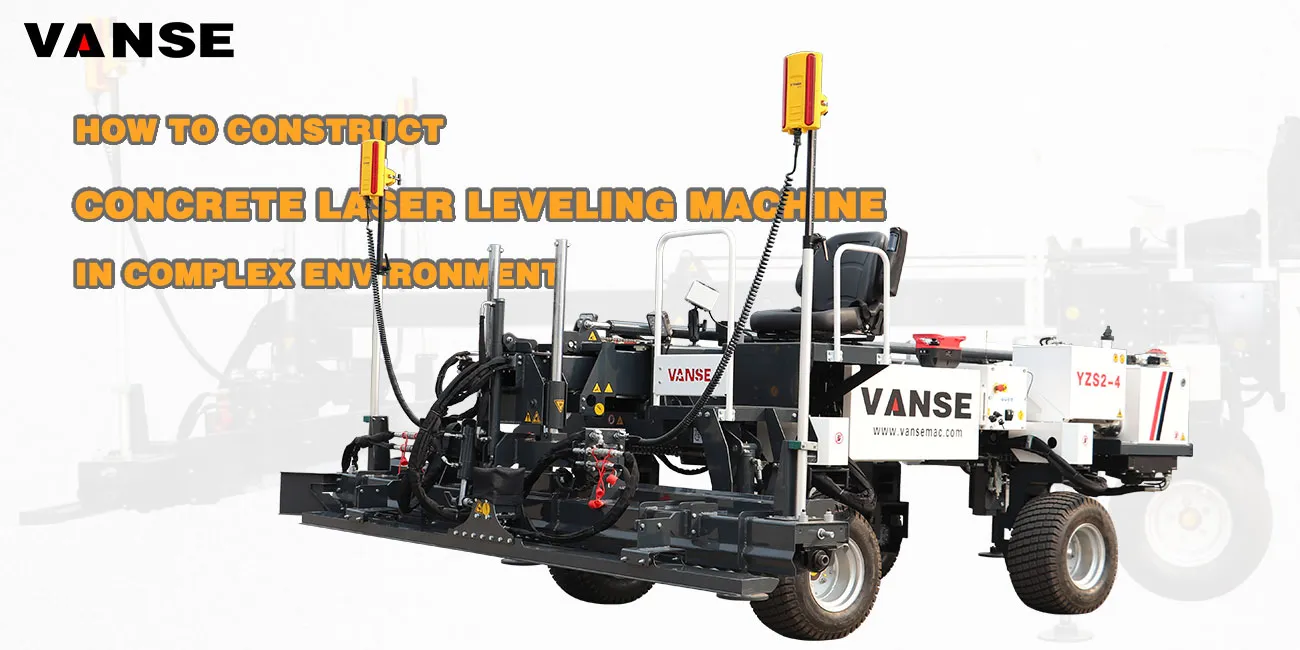
How to improve the construction efficiency of concrete laser leveling machine
Improving the efficiency of concrete laser leveling construction requires comprehensive control across multiple aspects, including equipment management, construction process optimization, personnel operation, and environmental coordination. The following is a detailed improvement strategy, covering key aspects such as preliminary preparation, construction process, and post-construction support:
1. Preliminary Preparation: Laying a Solid Foundation
Adequate preliminary preparation directly impacts construction efficiency and should focus on equipment, materials, and site planning.
① Equipment Inspection and Commissioning
Comprehensive Overhaul: Before construction, inspect the core components of the laser leveling, including the laser transmitter (ensuring horizontal accuracy, with an error of ≤±1.5mm/10m), the hydraulic system (no leaks and normal pressure), the scraper and vibrating plate (for wear and replacement if necessary), the engine (sufficient fuel, oil, and coolant), and the electrical system (sensors and control panel sensitivity).
Calibrating the Laser System: The laser transmitter must be mounted on a stable bracket to prevent vibration interference. Use a level to perform a secondary calibration of the laser plane to ensure that the construction elevation error meets design requirements (typically ≤5mm). Spare Parts Preparation: Prepare consumable parts such as laser receiver batteries, hydraulic hoses, and vibration motor carbon brushes in advance to avoid downtime due to missing parts.
② Optimizing Materials and Mix Ratios
Stable Concrete Supply: Communicate with the concrete mixing plant in advance to clarify the concrete strength grade and slump (a slump of 80-120mm is recommended for laser leveling to avoid segregation caused by excessive slump and increased resistance caused by excessive slump). Ensure continuous supply, with the hourly supply rate matching the leveling machine's operating efficiency (e.g., 300 m2/h requires sufficient concrete volume).
Ahead-of-site Material Arrival: If on-site mix ratio adjustments are required, prepare additives such as fly ash and water reducers in advance to avoid interruptions due to material shortages.
③ Site Planning and Clearance
Site Leveling and Marking: Clear the site of debris and accumulated water in advance. Install benchmark stakes according to the design elevation (spacing ≤5m). Use chalk lines to define the construction area (e.g., 20m x 20m blocks to avoid wasted time working across different areas). Base Preparation: The base must be compacted (compaction degree ≥ 93%). When laying steel mesh or plastic sheeting, secure it in place beforehand to prevent deformation or material shifting during leveling operation.
2. Construction Process: Optimizing Operations and Procedures
The key to improving efficiency during construction lies in reducing ineffective work and shortening intervals between work steps, while ensuring construction quality.
① Equipment Operation Optimization
Rational Parameter Setting: Adjust the vibration frequency (200-300 times/min for high slumps, 300-500 times/min for low slumps) and scraper speed (usually 3-5 m/min) based on the concrete slump. This will avoid rework due to improper parameters (such as missed vibrations, over-vibration, or uneven surfaces).
Continuous Working Path: Utilize a "Z-shaped" or "serpentine" working path to minimize equipment turns and starts and stops (each start and stop wastes approximately 1-2 minutes). The overlap width between adjacent working areas should be limited to 10-15 cm to avoid missed work. Multi-person coordination: Clear division of labor: One person operates the leveling, two to three assist with spreading (using a shovel or scraper to initially level the concrete to 5-10cm above the design elevation), and one person is responsible for edge trimming to avoid equipment waiting due to disjointed coordination.
② Reduce process transition time
Simultaneous auxiliary processes: After the leveling is operating, personnel should be promptly assigned to perform surface grouting and smoothing (a walk-behind smoothing machine can be used immediately following the leveling, with a distance of ≤5m). This prevents unresolved handling after the initial setting of the concrete (initial setting time in summer is approximately 2-3 hours, requiring a tight schedule).
Zone-by-zone flow construction: Follow a continuous flow of "spreading → leveling → smoothing → curing" procedures. While the previous section is smoothing, the next section is simultaneously spreading, creating a continuous construction rhythm and reducing equipment idle time.
③ Response to Emergencies
Constant Concrete Supply Interruptions: If the concrete mixing plant is experiencing a delay in supply, immediately suspend the leveling machine and temporarily smooth over the already placed concrete to prevent surface dehydration and cracking. Once supply is restored, prioritize joint repairs to ensure smoothness.
Quick Response to Equipment Failures: Deploy professional maintenance personnel on-site. Common faults (such as laser receiver failure and hydraulic oil leaks) must be identified and repaired within 10 minutes to avoid prolonged downtime.
3. Personnel Management: Improving Skills and Collaboration
Operator skill levels and teamwork directly impact efficiency and require improvement through both training and management.
① Professional Training and Assessment
Operational Skills Training: Ensure operators are familiar with equipment performance, master parameter adjustment techniques (such as fine-tuning vibration frequency based on concrete conditions), and emergency shutdown procedures (immediately stop and inspect the machine if the laser signal is lost).
Safety and Quality Training: Clarify construction standards (e.g., surface smoothness ≤3mm/2m) to avoid rework due to quality issues (rework increases work hours by at least 20%).
② Reasonable Scheduling and Incentives
Shift Work: For long-distance or large-area construction (e.g., over 1,000 square meters per day), a two-shift system is employed, with each shift lasting eight hours. Equipment is only stopped for one hour for refueling and inspection to maximize equipment utilization.
Performance Incentives: Incentives are set based on the construction area and the leveling pass rate to improve team motivation and reduce passive work.
4. Post-Construction Support: Reduce Rework and Maintenance
Efficient construction requires not only speed but also reduced rework, extending equipment life to ensure long-term efficiency.
① Quality Control to Reduce Rework
Real-Time Leveling Inspection: After each completed section, check the leveling with a 2-meter ruler. Areas exceeding the standard are immediately re-leveled with a leveler (performed before initial setting) to avoid extensive rework later.
Timely Maintenance Follow-up: Cover the leveling with plastic sheeting or water within two hours of completion to prevent surface cracking and reduce repair work.
② Daily Equipment Maintenance
Daily Cleaning and Lubrication: After construction, clean concrete debris from the equipment (especially between the vibrating plate and scraper blades). Lubricate hydraulic rods, bearings, and other parts to prevent solidified debris or component wear from affecting the next day's work.
Perform Regular Deep Maintenance: Check the laser system accuracy and hydraulic oil purity monthly, replace filters and adjust belt tension quarterly to reduce equipment failure rates.
5. Extension Techniques: Leverage External Conditions to Improve Efficiency
Rationally Schedule Construction Time: Avoid midday heat in summer (when concrete sets quickly) and work in the morning and evening. In winter, work during the higher midday temperatures to minimize the impact of low temperatures on concrete flowability.
Use Auxiliary Equipment: Use concrete pump trucks for concrete distribution to reduce manual shoveling time. When working on large areas, use multiple leveling machines operating in parallel (at least 5 meters apart to avoid interference).
The above measures can significantly improve the construction efficiency of concrete laser leveling machines, typically increasing the single-shift operating area from 200-300 square meters to 400-500 square meters, while reducing the rework rate to below 5%, achieving the construction goal of "high efficiency + high quality".
other machines
Click the below to jump immediately!!!
-

How can the operational efficiency of concrete laser leveling be enhanced? 7 -

How can the operational efficiency of concrete laser leveling be enhanced? 8 -

How can the operational efficiency of concrete laser leveling be enhanced? 9 -

How can the operational efficiency of concrete laser leveling be enhanced? 10
Thanks to All the Friends Who Support and Trust Shandong Vanse Machinery Technology Co., Ltd.
If you want to know more about Shandong Vanse Machinery Technology Co., Ltd. or have any questions, please feel free to contact us:
Our Factory
Shandong Vanse Machinery Technology Co., Ltd.








Share this article

About the Author: Shandong Vanse Machinery Technology Co., Ltd.
Shandong Vanse Machinery Technology Co., Ltd. is a high-tech manufacturer specializing in concrete construction machinery, including laser screeds and related equipment. The company integrates R&D, production, and global sales, with products exported to over 60 countries and widely used in infrastructure projects worldwide.
Previous Post
Next Post
Related Articles
You Might Also Like
How fast does a concrete laser leveling machine level? What is the effect?
Concrete laser leveling machine is a kind of mechanical equipment for construction. Like many mechanical equipment, it is composed of multiple parts: motor, vibration head, body, etc. It is the reasonable combination of these parts that makes the performance of the whole machine become like a strong pressure-adding equipment, full of pressure. In life, if you rely solely on manpower, it takes a lot of experience and ability to deal with the flatness of various ground, bridge decks and construction equipment, so people can't do other things well. 1. The combination of this equipment is good, and it can be used in many concrete projects. It is not affected by the environment and the size of the project, and has strong adaptability; 2. The concrete laser leveling machine has very good pressure resistance. It can exert strong pressure on the action surface. This pressure is the main driving force of its work. Only when it can withstand these strong pressures can it be used for construction; 3. This machine is made of high-quality steel, and it has good resistance in both hardness and wear resistance. This is reflected in the long service life in use; 4. The cutting of this machine is flat, the powerful laser processing is very fast, and the processing effect is also very good. Higher quality of flatness and levelness – the ground elevation can reach laser-level precision, and the ground flatness and levelness are 2-3 times that of manual leveling. The density of concrete is increased by more than 20%, and it is suitable for dry hard concrete, fiber concrete and large aggregate concrete. Reduce the compartment joints and achieve construction without compartment joints. Due to maintenance and formwork support, the compartment joints on large-area concrete floors will cause defects such as damage along the joints. The use of laser leveling and then cutting joints can avoid these problems. Faster construction speed – the work efficiency is increased by 100-300% (100-200 square meters of paving work can be completed per hour, and an average of 2000-3000 square meters can be completed per day), and more than 30% of labor is reduced. It is particularly suitable for projects with tight schedule requirements, large paving areas, and high quality requirements. Better ground integrity – it is very easy to achieve large-area overall paving. This overall paving technology can avoid the problems of hollowing and cracking caused by layered pouring of the floor on the one hand, and on the other hand, it can reduce a large number of construction joints and make the ground more integrated. This is not easy to do with other construction processes. It can reduce the cost of later maintenance of the ground – because the large-area overall paving can reduce more than 3 times the construction joints – and the construction joints are easily damaged by wheel loads, which can reduce the cost of later maintenance of the ground. Long-term cooperation with supporting manufacturers, all have undergone a complete production process of research and development, manufacturing, and testing. It has the characteristics of high rigidity, high precision, high efficiency and durability. It is mainly made of high-quality cast steel and is a product trusted by small and medium-sized enterprises. Adhering to the belief of "quality, reputation and service first", the company's Vanse laser leveling machine will be shipped and delivered in time within the time agreed by both parties after confirming the customer's order. With strong technical strength, advanced and sophisticated processing equipment and strict management, the high quality and timely delivery of Vanse laser leveling machines are effectively guaranteed.What are the application scenarios of concrete laser leveling machine?
Concrete laser leveling machine is a special equipment that uses laser technology to achieve high-precision leveling of concrete surface. With its advantages of high efficiency, high leveling accuracy, and labor saving, it is widely used in a variety of scenarios that require large-area, high-quality concrete surface construction. The following is the classification and specific description of its main application scenarios: Industrial plant workshop: Large industrial plants (such as automobile manufacturing plants, machinery processing plants, electronic plants, etc.) have extremely high requirements for ground flatness and strength. The laser leveling machine can ensure that the ground error is controlled at the millimeter level, meet the high-precision requirements of equipment installation and material transportation (such as forklifts, AGV robots), and avoid equipment operation failures or material transportation efficiency reduction due to uneven ground. Warehousing and logistics center: The ground of the stereoscopic warehouse and logistics sorting center needs to withstand the long-term rolling of heavy shelves and forklifts, and the smooth transportation of goods must be ensured. The concrete floor constructed by the laser leveling machine has high flatness and good density, which can reduce the risk of ground cracking and extend the service life. Large parking lot: Whether it is an indoor underground parking lot or an outdoor open-air parking lot, the laser leveling machine can quickly complete large-area ground construction, ensure the smooth driving of vehicles, reduce the problems of sand and dust on the ground, and reduce the cost of later maintenance. Municipal roads and squares: For the ground construction of non-motorized lanes, sidewalks, and large squares (such as citizen squares and commercial squares) on urban main roads and secondary roads, the laser leveling machine can improve construction efficiency, ensure the flatness of the road surface, reduce vehicle bumps and pedestrian discomfort, and improve the appearance of the road surface. Airports and ports: Airport runways, aprons, port yards, approach bridges and other areas need to bear the huge loads of aircraft and heavy container trucks, and have strict requirements on the flatness and strength of the ground. The laser leveling machine can accurately control the thickness and slope of the concrete to ensure that the ground meets the high standards of aviation and port operations. Sports venues: The ground of the stands of the track and field stadiums, the indoor venues of the gymnasiums (such as the base of basketball courts and badminton halls), etc., require a flat ground foundation to ensure the installation accuracy of sports facilities and sports safety. The laser leveling machine can meet their fine requirements for flatness and levelness. Large residential communities: The public areas such as the driveways, sidewalks, and underground garages in the community can be constructed with laser leveling machines to improve the quality of ground construction, reduce problems such as later ground settlement and cracking, and improve the overall quality of the community. Commercial complexes: The indoor and outdoor floors of shopping malls and shopping centers need to be not only flat and durable, but also aesthetically pleasing. The laser leveling machine can be combined with different surface treatment processes (such as embossing and polishing) to create a ground effect that meets the needs of commercial scenarios. High-rise building slabs: In the construction of the slabs of some high-rise buildings (such as beamless floor slabs), the laser leveling machine can efficiently complete the large-area concrete leveling, ensure the uniform thickness of the slabs and the flat surface, and provide a good foundation for subsequent decoration (such as laying floors and floor tiles). Water conservancy projects: Concrete lining construction of small dams, channels, and reservoirs. Laser leveling machines can accurately control the slope and flatness to ensure the anti-seepage performance and structural stability of water conservancy facilities. Tunnels and pipe corridors: For the construction of the floor inside the tunnel and the bottom plate of the integrated pipe corridor, a small laser leveling machine can be used when space is limited to ensure that the ground is flat to meet the needs of pipeline laying and personnel passage. Agricultural facilities: The ground of large greenhouses and modern breeding farms requires a flat concrete foundation to facilitate irrigation, breeding equipment installation and cleaning. Laser leveling machines can improve construction efficiency and ensure ground quality. The core advantages of concrete laser leveling machines are high efficiency in large-area construction, high flatness accuracy (usually up to ±2mm/2m), and good concrete density, so it is particularly suitable for scenes with high requirements for ground quality and large construction areas. Compared with traditional manual leveling, it can significantly reduce labor costs, shorten construction period, and reduce the cost of subsequent ground maintenance. It is one of the key equipment for improving ground quality in modern concrete construction. Click the below to jump immediately!!! ARMOUR JOINT CONCRETE LEVELING MACHINE LIGHT TOWER POWER TROWEL SLIPFORM MACHINE STEEL FIBER TOPPING SPREADER TRACKED MINI DUMPEREfficiency Advantages of Spreaders in Dry-Spread Hardener Floor Construction
In traditional dry-spread hardener (wear-resistant flooring) construction, spreading the material is often the most labor-intensive and difficult-to-control step in the entire process. The emergence of **fully automatic spreaders** directly solves the three major pain points of manual spreading: unevenness, inaccuracy, and slowness. The following is an analysis of the core efficiency advantages of spreaders in ultra-large area floor construction: Manual material spreading typically involves shoveling or manually pushing materials, which easily leads to material accumulation or missed areas. Quantitative Spreading: Automatic spreading machines can be computer-controlled, achieving precise spreading with an error of less than ±5% per square meter. For example, if the design requirement is 5 kg/m², the machine can maintain a constant output throughout the process. Reduced Material Waste: Compared to the dust and waste caused by manual spreading, automatic spreading machines can save approximately 10%-15% of material costs. In the construction of large logistics centers, the time window is the lifeline. Working Width and Speed: A large automatic material spreader typically has a working width of 2-4 meters, with adjustable travel speed. A single machine can achieve a daily construction capacity of 3000-5000 square meters, which is unattainable by traditional manual labor teams. Simultaneous Paving: Many advanced material spreaders can be mounted on the rear of laser screeds, enabling simultaneous "screing-spreading" and merging the two processes into one. Uneven Penetration Depth: The machine-applied material is extremely even, resulting in a tighter bond between the hardener and the concrete substrate. The absence of localized accumulation avoids color variations and peeling caused by uneven thickness later on. Low Dust and Environmentally Friendly Construction: Modern automatic material spreaders often employ enclosed hoppers and near-ground distribution designs, greatly reducing on-site dust pollution. This not only protects worker health but also meets the construction requirements of precision factories. Indicators Manual spreading Automatic material spreader Efficiency Improvement/Benefits Fabric uniformity Poor (highly human error) High efficiency (digitally controlled) Quality Stability Improvement by 90% Daily work area 800-1000 ㎡ (work team) 3000-5000 ㎡ Efficiency Increase by 3-5 Times Material utilization rate High loss (dust/excessive thickness) Precise and cost-effective Cost Reduction by 10%+ Labor intensity Extremely high (heavy manual labor) Low cost (requires only one operator) Savings on Labor Costs by 60% As you previously mentioned regarding nano-hardeners, if an automatic spreader is used to create a good base during the first dry-applied layer of abrasion-resistant material, the surface density will be very even. This provides a perfect substrate for the subsequent spraying of the nano-penetrating hardener, allowing the nanoparticles to penetrate deeper and react more fully, ultimately achieving a true "mirror-like" hardening effect. Note: The parameters provided in this document are for reference only and are not mandatory. Due to differences in technical characteristics between different brands and models of laser levelers, please consult the manufacturer for a suitable solution before actual operation. This reference document assumes no responsibility for any issues arising from failure to follow the manufacturer's instructions.