Technical Knowledge
What are the application scenarios of concrete laser leveling machine?

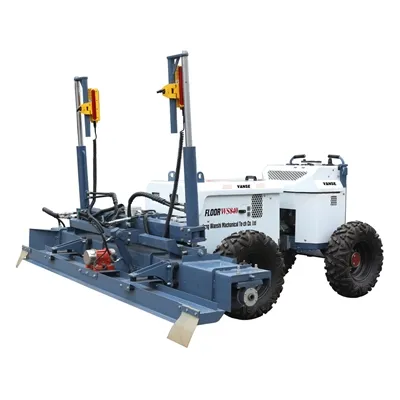
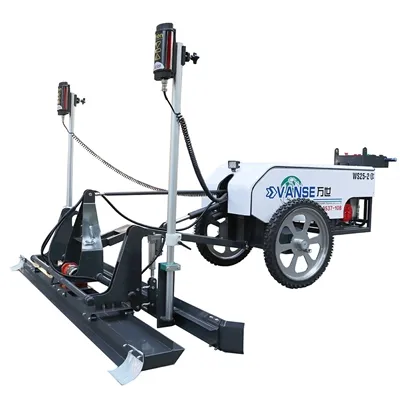
Concrete laser leveling machine is a special equipment that uses laser technology to achieve high-precision leveling of concrete surface. With its advantages of high efficiency, high leveling accuracy, and labor saving, it is widely used in a variety of scenarios that require large-area, high-quality concrete surface construction. The following is the classification and specific description of its main application scenarios:
🎁 1. Industrial and storage facilities
Industrial plant workshop:
Large industrial plants (such as automobile manufacturing plants, machinery processing plants, electronic plants, etc.) have extremely high requirements for ground flatness and strength. The laser leveling machine can ensure that the ground error is controlled at the millimeter level, meet the high-precision requirements of equipment installation and material transportation (such as forklifts, AGV robots), and avoid equipment operation failures or material transportation efficiency reduction due to uneven ground.
Warehousing and logistics center:
The ground of the stereoscopic warehouse and logistics sorting center needs to withstand the long-term rolling of heavy shelves and forklifts, and the smooth transportation of goods must be ensured. The concrete floor constructed by the laser leveling machine has high flatness and good density, which can reduce the risk of ground cracking and extend the service life.
Large parking lot:
Whether it is an indoor underground parking lot or an outdoor open-air parking lot, the laser leveling machine can quickly complete large-area ground construction, ensure the smooth driving of vehicles, reduce the problems of sand and dust on the ground, and reduce the cost of later maintenance.

🎁 2. Municipal and public facilities
Municipal roads and squares:
For the ground construction of non-motorized lanes, sidewalks, and large squares (such as citizen squares and commercial squares) on urban main roads and secondary roads, the laser leveling machine can improve construction efficiency, ensure the flatness of the road surface, reduce vehicle bumps and pedestrian discomfort, and improve the appearance of the road surface.
Airports and ports:
Airport runways, aprons, port yards, approach bridges and other areas need to bear the huge loads of aircraft and heavy container trucks, and have strict requirements on the flatness and strength of the ground. The laser leveling machine can accurately control the thickness and slope of the concrete to ensure that the ground meets the high standards of aviation and port operations.
Sports venues:
The ground of the stands of the track and field stadiums, the indoor venues of the gymnasiums (such as the base of basketball courts and badminton halls), etc., require a flat ground foundation to ensure the installation accuracy of sports facilities and sports safety. The laser leveling machine can meet their fine requirements for flatness and levelness.

🎁 3. Civil and commercial buildings
Large residential communities:
The public areas such as the driveways, sidewalks, and underground garages in the community can be constructed with laser leveling machines to improve the quality of ground construction, reduce problems such as later ground settlement and cracking, and improve the overall quality of the community.
Commercial complexes:
The indoor and outdoor floors of shopping malls and shopping centers need to be not only flat and durable, but also aesthetically pleasing. The laser leveling machine can be combined with different surface treatment processes (such as embossing and polishing) to create a ground effect that meets the needs of commercial scenarios.
High-rise building slabs:
In the construction of the slabs of some high-rise buildings (such as beamless floor slabs), the laser leveling machine can efficiently complete the large-area concrete leveling, ensure the uniform thickness of the slabs and the flat surface, and provide a good foundation for subsequent decoration (such as laying floors and floor tiles).

🎁 4. Special engineering scenarios
Water conservancy projects:
Concrete lining construction of small dams, channels, and reservoirs. Laser leveling machines can accurately control the slope and flatness to ensure the anti-seepage performance and structural stability of water conservancy facilities.
Tunnels and pipe corridors:
For the construction of the floor inside the tunnel and the bottom plate of the integrated pipe corridor, a small laser leveling machine can be used when space is limited to ensure that the ground is flat to meet the needs of pipeline laying and personnel passage.
Agricultural facilities: The ground of large greenhouses and modern breeding farms requires a flat concrete foundation to facilitate irrigation, breeding equipment installation and cleaning. Laser leveling machines can improve construction efficiency and ensure ground quality.

🎁 Summary
The core advantages of concrete laser leveling machines are high efficiency in large-area construction, high flatness accuracy (usually up to ±2mm/2m), and good concrete density, so it is particularly suitable for scenes with high requirements for ground quality and large construction areas. Compared with traditional manual leveling, it can significantly reduce labor costs, shorten construction period, and reduce the cost of subsequent ground maintenance. It is one of the key equipment for improving ground quality in modern concrete construction.
Click the below to jump immediately!!!

CONCRETE LEVELING MACHINE




TRACKED MINI DUMPER
Thanks to All the Friends Who Support and Trust Shandong Vanse Machinery Technology Co., Ltd.
If you want to know more about Shandong Vanse Machinery Technology Co., Ltd. or have any questions, please feel free to contact us:
Our Factory
Shandong Vanse Machinery Technology Co., Ltd.








Share this article

About the Author: Shandong Vanse Machinery Technology Co., Ltd.
Shandong Vanse Machinery Technology Co., Ltd. is a high-tech manufacturer specializing in concrete construction machinery, including laser screeds and related equipment. The company integrates R&D, production, and global sales, with products exported to over 60 countries and widely used in infrastructure projects worldwide.
Previous Post
Next Post
Related Articles
You Might Also Like
How to choose a concrete laser leveling machine?
When choosing a concrete laser leveling, you need to consider the following aspects: ✈Machine performance First, you need to understand the performance and specifications of the machine, including power, speed, accuracy, adjustability, etc. Different models of machines have different performances, and the appropriate model needs to be selected according to construction needs and site conditions. ✈Construction requirements Laser leveling machines with different powers and speeds need to be selected according to specific construction needs. For example, pouring concrete over a large area requires the use of high-power, high-speed machines, while smaller areas or delicate jobs require the use of low-power, low-speed machines. ✈Site conditions It is necessary to consider the conditions of the site, such as ground flatness, humidity, concrete thickness, etc. For uneven floors or occasions where thicker concrete needs to be laid, a laser leveling machine with automatic leveling function is required. ✈Operator proficiency The proficiency of operators has a direct impact on construction quality and efficiency. Therefore, it is necessary to consider the technical level and training of the operator and select a machine that is easy to operate and maintain. ✈Price and after-sales service The price and after-sales service of the machine need to be considered, including warranty period, maintenance, spare parts supply, etc. It is necessary to conduct full comparison and evaluation before purchasing, and choose products with high cost performance. ✈Brand and reputation Choosing a well-known brand and a manufacturer with a good reputation can guarantee the quality of the machine and the level of service. You can refer to the reviews and suggestions of other users to understand the advantages and disadvantages of different products and market feedback. To sum up, there are many factors to consider when selecting a concrete laser leveling, including performance, construction requirements, site conditions, operator proficiency, price and after-sales service, as well as brand and reputation. Before purchasing, you need to make a full comparison and evaluation to choose the best product that meets your needs.What are the characteristics of concrete laser leveling machine?
Concrete leveling machine is a kind of equipment widely used in the field of concrete construction. Its main features include the following aspects: High efficiency and efficient leveling: The concrete leveling machine can level the concrete surface quickly and efficiently, and can complete a project volume of 200 to 600 square meters per hour, which is more efficient than traditional manual leveling. Good flatness and high precision: The concrete leveling machine can provide precise elevation control and level adjustment. The concrete leveling machine can achieve a flatness of 3 mm/3 meters, and the elevation difference within 1000 square meters is less than 20 mm. , smoother than traditional manual leveling, effectively ensuring the quality of construction. Strong adaptability: The concrete leveler can level different types of concrete, such as sand, gravel, pebbles, etc., and can quickly complete the leveling work on the leveler. Reduce costs: Using a concrete leveler can reduce labor costs and improve construction efficiency. It can also reduce the use of materials, thereby reducing construction costs. High construction quality and high reliability: The concrete leveling machine adopts advanced mechanical structure, which has high reliability and can also ensure the quality of construction. It can significantly improve the flatness of the ground. The ground constructed by laser leveling machine and traditional method were tested at 22 points (one point every 5 meters × 4 meters). The average flatness values were 1.3 mm and 4.1 mm respectively. Laser leveling machine, etc. The leveling quality of the equipment is more than three times higher than that of traditional methods. The use of laser leveling machines can reduce a large number of construction joints, reduce concrete slump, and ensure concrete strength, making the ground more integrated and less prone to cracks. Simplified process and high safety: The operation of the concrete leveling machine is very simple and safe to use. It can save the formwork process. The concrete leveling machine is equipped with 6 to 10 people in a single shift and can complete a project volume of more than 3,000 square meters. It is more efficient than traditional Manual leveling is more convenient and can greatly reduce safety hazards caused by manual operations. Easy maintenance: The maintenance of the concrete levelinger is relatively simple. You only need to regularly check the lubricating oil, clean the machine body, etc. In short, the concrete leveling is an efficient, precise, adaptable, reliable, safe and easy-to-maintain equipment that has been widely used in the field of concrete construction.What construction scenarios are suitable for trowel blades of different designs?
– Features: The circular trowel blade is the most common design, which usually has multiple blades distributed in a circle around the central axis. This design enables the trowel blade to provide uniform pressure when rotating, and can effectively cover a large area during the troweling process. – Applicable scenarios: – Large area concrete plane: Such as large areas of concrete pouring ground such as industrial plants, large warehouses, and parking lots. In these scenarios, the circular trowel blade can quickly rough grind and level the ground and improve construction efficiency. For example, when building a large logistics warehouse, the ground area may reach thousands of square meters, and the circular trowel blade can perform preliminary troweling on the entire ground well. – Grounds with general flatness requirements: For some indoor and outdoor floors that do not require extremely high ground flatness, such as ordinary residential roads, simple outdoor activity venues, etc., the circular trowel blade can meet the basic troweling needs, making the ground surface smooth without obvious bumps or depressions. – Features: The four corners of the square trowel can better fit the corners, edges and some irregularly shaped areas. Compared with the round trowel, it has a better trowel effect at the corners. – Applicable scenarios: – Floors with corners and edges: In places with many corners and edges such as the floor of the room and corridor inside the building, the square trowel can fit these areas more closely to ensure that the floor of the corners and edges can also get a good trowel effect. For example, when decorating hotel rooms, the square trowel can smooth the four corners of the room and the floor near the wall to avoid "dead corners" that are difficult to reach with the round trowel. – Irregularly shaped floors: If the shape of the floor is not a regular rectangle or circle, but a complex shape such as a polygon or curve, the square trowel can flexibly adjust the angle according to the shape of the floor to effectively smooth these irregular areas. – Features: The perforated trowel is designed with many small holes, which are mainly used to discharge air and excess moisture from the concrete surface during the troweling process. It can make the floor more compact after troweling and reduce the generation of surface pores and bubbles. – Applicable scenarios: – Concrete surface with high quality requirements: In some scenarios with high requirements for concrete surface quality, such as high-precision laboratory floors, clean workshop floors in electronic factories, etc., the perforated trowel can effectively discharge air and moisture, so that the floor can achieve higher flatness and finish, meeting the strict requirements of these special places for floor quality. – Concrete construction in humid environments: When concrete construction is carried out in humid weather or in areas with high groundwater levels, water accumulation and bubbles are prone to occur on the concrete surface. The perforated trowel can discharge these excess moisture and air in time to ensure the quality of floor troweling. – Features: Double-layer trowels are composed of two layers of trowels of different sizes or shapes. The upper and lower trowels can cooperate with each other when rotating to achieve different degrees of trowel effects. Generally speaking, the diameter of the upper trowel will be slightly larger than that of the lower layer, or the blade angle of the upper trowel will be different from that of the lower layer. – Applicable scenarios: – Floors that require fine troweling: In scenes with extremely high requirements for floor finish, such as high-end shopping mall floors, high-end hotel lobby floors, etc., double-layer trowels can first use the lower trowel to perform preliminary large-area troweling and leveling, and then use the upper trowel to perform fine grinding to achieve a mirror-like smooth effect. – Concrete surfaces constructed in layers: For some concrete structures that are cast in layers, such as the concrete deck of a bridge, the concrete surface of a large hydraulic structure, etc., double-layer trowels can be used for different casting layers. First, the lower layer is coarse-grinded, and then the upper layer is finely ground to ensure the quality of the entire concrete surface.