Technical Knowledge
Standard use of concrete laser leveling machine
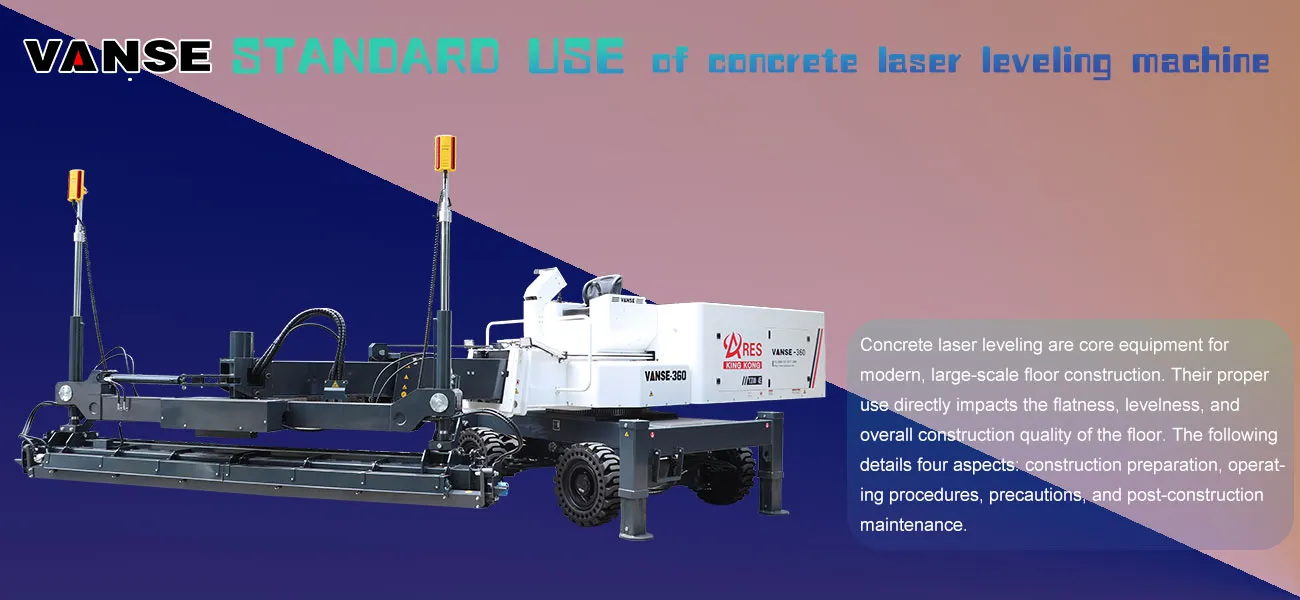
Concrete laser leveling are core equipment for modern, large-scale floor construction. Their proper use directly impacts the flatness, levelness, and overall construction quality of the floor. The following details four aspects: construction preparation, operating procedures, precautions, and post-construction maintenance.
1. Pre-construction Preparation
Proper preparation is half the battle for a successful construction project. Any negligence during this stage can lead to construction interruptions or quality defects.
Base Preparation:
Compaction: The foundation base (usually a gravel or lime soil layer) must be fully compacted to prevent future settlement.
Flatness: The base must be initially leveled, with minimal elevation deviation to minimize concrete waste.
Cleaning and Wetting: Clean the base to ensure it is free of debris and loose dust. Before pouring concrete, the base should be moderately moistened (but not with exposed water) to prevent it from absorbing moisture from the concrete too quickly.
Formwork Installation:
The top elevation of the formwork must be consistent with the designed floor elevation.
The formwork must be strong and stable, able to withstand the weight and vibration of the leveling and prevent deformation.
The formwork must be supported straight and the joints tight.
Benchmark and laser transmitter settings:
Establishing a benchmark network: Set up stable benchmark points outside the construction area according to the construction drawings.
Establishing the laser transmitter:
Mount the laser transmitter in the center or at a high point within the construction area, ensuring its field of view covers the entire work surface and is unobstructed.
Adjust the laser transmitter to its level and design elevation. This is the key to the accuracy of the entire construction process and must be carefully calibrated by a dedicated person.
Secure the laser transmitter securely to prevent movement due to vibration or impact during construction. Install protective equipment if necessary.
Concrete requirements:
Mix Proportion: The slump of concrete is crucial, generally recommended to be between 140-180mm. Excessive slump results in excessive fluidity, making it difficult for the laser leveling to operate; too little slump results in poor fluidity and difficulty leveling.
Aggregate: The maximum aggregate particle size should be minimal (usually no larger than 25mm).
Supply: Ensure a continuous supply of concrete to avoid cold joints during construction.
Equipment Inspection:
Fuel/Battery: Check the leveling machine's fuel or battery level.
Cutter Head Inspection: Check the leveling blade (cutter head) for wear and replace if necessary.
Sensitivity Calibration: Start the leveling machine and check whether its laser receiver is receiving signals properly and raising and lowering the machine according to the laser plane. Perform lift and lowering tests in both manual and automatic modes to ensure sensitive and accurate response.
2. Standard Operating Procedure
Concrete Pouring and Initial Paving:
The concrete truck unloads the material at the construction site.
Use a large rake or small excavator to initially spread the concrete to the approximate height. The pile should be slightly higher than the designed elevation (approximately 3-5 cm higher).
Equipment Positioning and Startup:
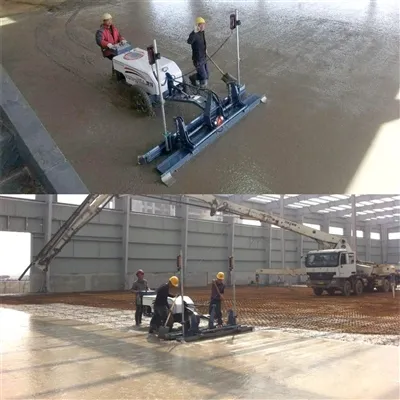
Place the laser leveling machine astride a pre-installed formwork or on pre-paved concrete.
Lower the leveling blade until it contacts the concrete surface.
Turn on the laser receiver to confirm it is receiving the laser signal. The machine will then automatically adjust the blade to the precise elevation set by the laser plane.
Leveling Operation:
Select a mode: There are usually two modes: automatic and manual. In automatic mode, the machine automatically controls the scraper height based on the laser plane; in manual mode, the operator manually controls it.
Start leveling:
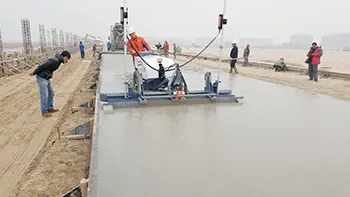
Start the leveling machine and slowly advance.
The scraper at the front removes any raised concrete and fills any low spots.
Simultaneously, a high-frequency vibrating plate behind the leveling machine vibrates, compacts, and raises the concrete. The vibration frequency should be adjusted according to the concrete's fluidity.
Travel Path: An overlapping travel path is typically used, meaning the next travel overlaps the previous travel path by approximately 10-20 cm to ensure no gaps are missed.
Operator Coordination: The operator must follow the machine and monitor the concrete's condition. If any areas are short of concrete, they should be replenished manually. Excessive material should be removed promptly to avoid affecting the levelinging effect.
Edge Treatment:
Corners and edges where the laser leveling cannot reach require manual levelinging using a scraper (rebar) against the formwork. The level should be aligned with the machine-leveled area.
Single pouring area:
For very large areas, the work should be divided into grids and constructed sequentially. The interval between adjacent grids should be controlled before the concrete begins to set.
3. Key Precautions
Precision Control:
Daily Calibration: The laser transmitter and leveling machine's measurement system must be recalibrated before each day's work.
Preventing Interference: Avoid frequent movement of people or equipment in the laser path, which could interfere with the signal.
Dedicated Supervision: Assign a dedicated person to supervise the laser transmitter to prevent it from being disturbed.
Concrete Quality Control:
Strictly control slump and inspect each load. Substandard concrete will be rejected.
Ensure the continuity of concrete pouring to avoid cold joints.
Safety of operation:
Operators must undergo professional training and hold a license.
Workers on site must wear safety equipment, especially insulated shoes, to prevent electric shock and concrete corrosion and injuries to the feet.
Pay attention to cables around the equipment to prevent them from being crushed.
Environmental factors:
Strong winds can affect laser signal stability, so construction should be conducted with caution or suspended.
High temperatures and strong winds can accelerate moisture evaporation from the concrete surface, so timely maintenance is required to prevent cracking.
4. Post-Operation Maintenance
Equipment Cleaning:
After each use, the leveling must be cleaned immediately and thoroughly, especially on the scraper, vibrating plate, travel wheels, and sensors. Solidified concrete can damage the equipment and affect accuracy during the next use.
When flushing, avoid direct high-pressure water jets onto delicate components such as bearings, motors, and laser receivers.
Inspection and Maintenance:
Check all connections for looseness.
Regularly lubricate and maintain the engine, hydraulic system, and vibrating bearings according to the manufacturer's instructions.
Check the scraper for wear and replace or rotate it promptly.
Storage :
Store the equipment in a dry, level area.
Stow the outriggers and reduce tire pressure.
Prevent rust on exposed metal parts.
Summary
Proper use of a concrete laser leveling is a systematic process, requiring meticulous preparation, precise operation, strict material control, and thorough maintenance. Following these guidelines not only significantly improves floor construction quality and efficiency (flatness can reach over 3mm/3m), but also effectively reduces labor costs and minimizes material waste, making it an indispensable process in modern floor construction.
Note:
The parameters provided in this document are for reference only and are not mandatory. Due to differences in technical characteristics between different brands and models of laser levelers, please consult the manufacturer for a suitable solution before actual operation. This reference document assumes no responsibility for any issues arising from failure to follow the manufacturer's instructions.
Thanks to All the Friends Who Support and Trust Shandong Vanse Machinery Technology Co., Ltd.
If you want to know more about Shandong Vanse Machinery Technology Co., Ltd. or have any questions, please feel free to contact us:
Our Factory
Shandong Vanse Machinery Technology Co., Ltd.








Share this article

About the Author: Shandong Vanse Machinery Technology Co., Ltd.
Shandong Vanse Machinery Technology Co., Ltd. is a high-tech manufacturer specializing in concrete construction machinery, including laser screeds and related equipment. The company integrates R&D, production, and global sales, with products exported to over 60 countries and widely used in infrastructure projects worldwide.
Previous Post
Next Post
Related Articles
You Might Also Like
During concrete pavement construction, what is the effect of slump on pavement strength?
🎈Changes in water-cement ratio: Slump mainly affects pavement strength by affecting the water-cement ratio of concrete. Generally speaking, the larger the slump, the more water is used in concrete. According to the theory of concrete strength, under the condition of certain cement type and dosage, the larger the water-cement ratio, the lower the strength of concrete after hardening. This is because excessive water will form more pores and channels during the hardening process of concrete, and the pores left after the evaporation of water will reduce the density of concrete, thereby reducing the strength of concrete. For example, when the slump increases by 20-30mm from the appropriate value, the water-cement ratio may increase by 0.05-0.1, and the 28-day compressive strength of the pavement may decrease by 10%-20%. 🎈Cement slurry distribution: The appropriate slump can make the cement slurry evenly distributed in the concrete, wrapped on the surface of the aggregate, play a good bonding role, make the internal structure of the concrete dense, and thus ensure the strength of the pavement. If the slump is too small, the concrete is too dry and hard, and the cement paste is difficult to evenly wrap the aggregate, which will lead to more uncemented aggregate particles in the concrete, forming a weak link and reducing the overall strength of the road surface. On the contrary, if the slump is too large, the cement paste will sink due to its own weight, resulting in uneven distribution inside the concrete, resulting in relatively less cement paste in the upper part of the concrete and lower strength, while the lower part may be segregated due to excessive cement paste, which also affects the strength of the road surface. 🎈Aggregate interface bonding: The interfacial bonding strength between aggregate and cement paste in concrete is crucial to the overall strength of concrete. When the slump is appropriate, the cement paste can fully contact and bond well with the aggregate surface. When the slump is not appropriate, such as too large, the cement paste layer around the aggregate will be too thick. During the hardening process of concrete, due to the large shrinkage of the cement paste, micro cracks are easily generated at the interface between the aggregate and the cement paste, weakening the interfacial bonding strength, thereby reducing the strength of the road surface; and if the slump is too small, the cement paste cannot wet the aggregate surface well, which will also lead to poor interfacial bonding and affect the strength of the road surface. In concrete pavement construction, the slump should be strictly controlled, and concrete with appropriate slump should be selected according to construction conditions and design requirements to ensure that the pavement strength meets the design standards.Know- how about laser leveling technology
Intellectual property assets such as patents are the core of many organizations and transactions related to technology. Patents that contribute to products with a wide market appeal or that represent a considerable improvement to an existing product in an established market may be likely to generate significant economic returns.Thus, the commercial value of a patent may be, in part, a function of the size and nature of the market for the product to which the patent pertains. Vanse passionate about being the premier manufacturer of placing . A patent provides a right to a technology holder to exclude others from exploiting the patented invention.There fore, other than the inventor cannot use, make or sell the patented invention without permission from the inventor. This is often referred to as the exclusive right of the invention. Vanse Concrete Laser leveling technology enables faster and flatter floors going for patented vanse laser leveling technology allows you to increase productivity, efficiency, and quality of each and every job.How to conduct safety evaluation of concrete laser leveling machine?
Structural stability: Check whether the body structure of the concrete laser leveling machine is strong, whether it can remain stable during driving, vibration and operation, and prevent the equipment from tipping over or parts from loosening and falling due to structural problems, endangering the safety of operators and surrounding personnel. Safety devices: Evaluate whether the equipment is equipped with necessary safety devices, such as emergency stop buttons, overload protection devices, laser transmitter protection devices, etc. The emergency stop button should be easy to operate and set at multiple locations on the equipment so that the operator can quickly cut off the power supply and stop the equipment in case of sudden dangerous situations. Electrical system safety: Check whether the electrical system meets safety standards and whether the wires and cables have good insulation protection to prevent leakage. At the same time, ensure that the electrical equipment has waterproof and moisture-proof properties to avoid electrical failures and safety accidents caused by moisture in the concrete construction environment. Operator qualifications: Confirm whether the operator has received professional training, is familiar with the working principle, operation method and safety precautions of the concrete laser leveling machine, and has obtained the corresponding operation qualification certificate through assessment. Operation process execution: observe whether the operator strictly follows the operating procedures during the construction process, such as inspection before equipment start-up, speed control during operation, and coordination with other construction personnel and equipment. For example, before starting the equipment, the operator should check whether the various parameters of the equipment are set correctly, whether the laser transmitter is working properly, and whether there are obstacles at the construction site. Safety awareness and emergency handling capabilities: examine the safety awareness of the operator, whether the abnormal conditions of the equipment can be discovered and reported in time, and whether the operator has the correct emergency handling capabilities when encountering sudden safety accidents, such as how to use a fire extinguisher correctly to extinguish the fire when the equipment catches fire. Ground conditions: evaluate the safety of the concrete laser leveling machine under different ground conditions, such as whether the equipment can operate stably when operating on uneven, soft or sloping ground, and whether there will be dangerous situations such as slipping and rollover. For ground that is not suitable for equipment operation, the construction unit should take corresponding treatment measures, such as leveling the ground, laying pads, etc. Surrounding environment: Consider the impact of the surrounding environment of the construction site on the safety of the equipment, such as whether the space size of the construction site is sufficient for equipment operation, whether there are obstacles such as overhead wires and buildings, and whether the distance between equipment meets safety requirements when multiple equipment are operating at the same time to prevent collisions between equipment. Daily inspection and maintenance: Understand whether the daily inspection and maintenance system of the equipment is perfect, whether the operator inspects the equipment before and after the operation every day, including checking whether the parts of the equipment are worn or loose, whether the accuracy of the laser receiver and transmitter is accurate, and whether the hydraulic system and lubrication system are normal, and perform maintenance and maintenance in time. Regular maintenance: Confirm whether the equipment is regularly inspected and maintained in accordance with the manufacturer's recommendations and relevant regulations, and professional maintenance personnel will conduct a comprehensive inspection and maintenance of the equipment, replace aging or damaged parts in time, and ensure that the performance and safety of the equipment are in good condition. Construction unit system: Check whether the construction unit has formulated a complete safety production management system and safety operating procedures for concrete laser leveling machine, and ensure that these systems and procedures are effectively implemented at the construction site. Training and briefing: Check whether the construction unit has conducted regular safety training and technical briefing for operators, so that operators understand the safety risks and preventive measures of the equipment. At the same time, whether new operators have received special pre-job training to ensure that they are familiar with the operation and safety requirements of the equipment. On-site supervision: Understand whether there is a dedicated person at the construction site responsible for safety supervision of the concrete laser leveling machine operation, promptly correct the operator's violations, and discover and eliminate safety hazards. Through the comprehensive evaluation of the above aspects, we can fully understand the safety status of the concrete laser leveling machine, promptly discover existing safety problems and take corresponding improvement measures to ensure the safe and reliable operation of the equipment in concrete pavement construction. Click the below to jump immediately!!! ARMOUR JOINT CONCRETE LEVELING MACHINE LIGHT TOWER POWER TROWEL SLIPFORM MACHINE STEEL FIBER TOPPING SPREADER TRACKED MINI DUMPER