Technical Knowledge
cold planer purpose
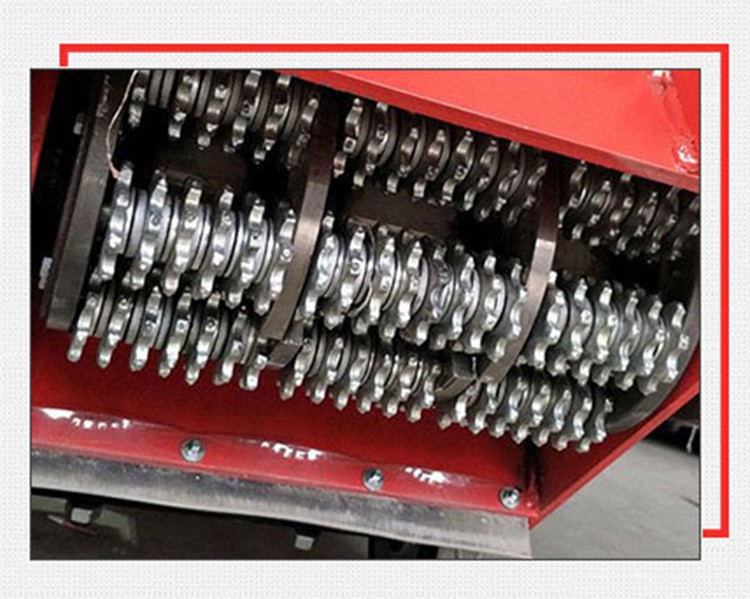
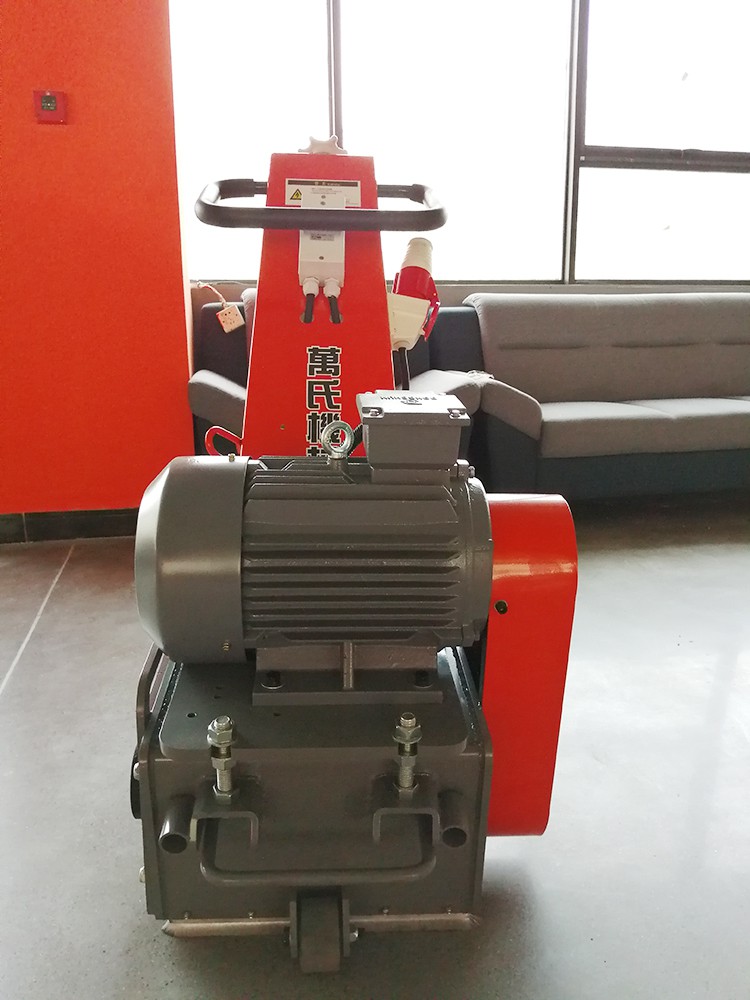
Cold planer is the key machine for pavement milling. Recycling of the road surface is one of the main reasons for milling a road surface. Milling is widely used for pavement recycling today, where the pavement is removed and ground up to be used as the aggregate in new pavement. For asphalt surfaces the product of milling is reclaimed asphalt pavement (RAP), which can be recycled in the asphalt hot mix asphalt (pavement) by combining with new aggregate and asphalt cement (binder) or a recycling agent. This reduces the impact that resurfacing has on the environment.
Milling can also remove distresses from the surface, providing a better driving experience and/or longer roadway life. Some of the issues that milling can remove include:
Raveling: aggregate becoming separated from the binder and loose on the road
Bleeding: the binder (asphalt) coming up to the surface of the road
Rutting: formation of low spots in pavement along the direction of travel usually in the wheel path
Shoving: a washboard like effect transverse to the direction of travel
Ride quality: uneven road surface such as swells, bumps, sags, or depressions
Damage: resulting from accidents and/or fires
It can also be used to control or change the height of part or all of the road. This can be done to control heights and clearances of other road structures such as: curb reveals, manhole and catch basin heights, shoulder and guardrail heights, and overhead clearances. It can also be done to change the slope or camber of the road or for grade adjustments which can help with drainage.
Thanks to All the Friends Who Support and Trust Shandong Vanse Machinery Technology Co., Ltd.
If you want to know more about Shandong Vanse Machinery Technology Co., Ltd. or have any questions, please feel free to contact us:
Our Factory
Shandong Vanse Machinery Technology Co., Ltd.








Share this article

About the Author: Shandong Vanse Machinery Technology Co., Ltd.
Shandong Vanse Machinery Technology Co., Ltd. is a high-tech manufacturer specializing in concrete construction machinery, including laser screeds and related equipment. The company integrates R&D, production, and global sales, with products exported to over 60 countries and widely used in infrastructure projects worldwide.
Previous Post
Next Post
Related Articles
You Might Also Like
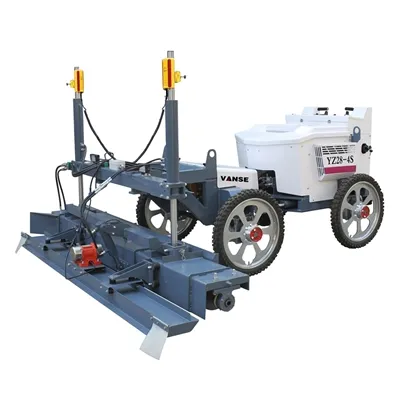
Small laser leveling machine pouring leveling construction and control matters
The LCD on the body of the small laser leveler also needs to be cleaned. You can use organic resin or lens cleaning cloth to wipe off the dirt. If there is too much dirt, it can be removed with a lens cleaning solution. The small laser leveling machine is a kind of equipment that takes the laser as the reference plane, adopts the original imported receiving and sending system, and controls the leveling head in real time to achieve high-precision and fast leveling of concrete. The leveling machine has a certain understanding, so how to maintain the small laser leveling machine after normal use? The small laser leveling machine manufacturer will explain to you how to maintain the small laser leveling machine after use. 1. The LCD on the body of the small laser leveler also needs to be cleaned. You can use organic resin or lens cleaning cloth to wipe off the dirt. If there is too much dirt, it can be removed with a lens cleaning solution. 2. There will be a lot of dust and mud on the small laser leveling machine after construction. First, wipe off the dust on the small laser leveling machine, and wipe off the dirt and oil stains with tissue paper or cotton cloth. 3. If the laser signal is lost during the construction of the small laser leveling machine, the machine needs to be restarted, and the interval should be more than ten seconds. 4. If there are too many stains, you can use a soft cloth to soak in water diluted with a neutral detergent, and then wring it out for cleaning. Small laser leveling machine manufacturers remind everyone not to use volatile oil, thinner, gasoline and other chemicals Clean and wipe. Small laser leveling machine pouring leveling construction and control items: 1. Preparation ①. After the base layer is processed, the small laser leveling machine is debugged, and the fixed reference level is drawn according to the original level; the non-woven fabric is laid, the side mold is supported, the laser transmitter is erected, and the ground is leveled according to the original level. Elevation introduced a small laser leveling machine. Small laser leveling machine manufacturer ②, conveying concrete Commercial concrete is used, and the commercial concrete is transported to the entrance and exit of the garage by tank truck, and then transported to the construction site by a three-wheel dump truck. ③, standard college verification Use a handheld laser receiver to check the level of the floor, introduce the level into a small laser leveler, and adjust the reference point (±0.00) on the leveler. 2. Concrete pouring Pouring steps: ① After the formwork is supported, the warehouse should be cleaned one day in advance and rinsed and soaked with water before pouring concrete. When pouring is approaching, drain the open water and sweep the cement slurry or interface agent. At this time, no obvious water accumulation is strictly prohibited. If there is, it must be resolutely removed before paving concrete. Small laser leveling machine manufacturer ②. After the concrete is put down, it should be preliminarily leveled, and the leveling height should be 3 cm thicker than the elevation. Then level it with a small laser leveler. The corners that cannot be leveled can be leveled with a gasoline leveler or manually. ③ When the warehouse near the wall is being poured, after the leveling machine walks over, it must be scraped with a scraper in time. and so on. ④. For areas where concrete mixer trucks cannot be driven to the site, tractors must be used to transfer concrete. After the pouring is completed, the floor finishing construction begins when the concrete is initially set. 3. Receiver signal adjustment during construction The laser signal (frequency of 10 times/second) received by the receiver of the small and medium-sized laser leveling machine in construction automatically adjusts the elevation in real time to ensure that the construction elevation is always at the set standard. Because the laser transmitter is fixed after being set up, it can ensure that the construction of a large area of ground does not produce cumulative errors. During construction, the operator uses a hand-held laser receiver to detect the ground after the construction of the machine to ensure that the flatness error is within the controllable range.How to deal with common technical problems during the construction process of concrete laser leveling?
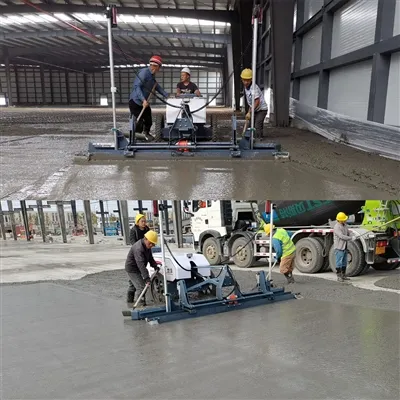
Solution to common technical problems during the construction process of concrete laser leveling machine ▶●●●★●●●◀ Laser positioning error During the construction process of concrete laser leveling machine, the accuracy of laser positioning is crucial. Laser positioning errors may lead to substandard ground flatness and affect the overall project quality. Solution: 1. Regularly check and calibrate the laser rangefinder to ensure that its accuracy meets construction requirements. 2. Set up multiple control points at the construction site to conduct laser positioning verification to detect and correct errors in a timely manner. 3. Strengthen the training of operators and improve their proficiency in using the laser positioning system. ▶●●●★●●●◀ Concrete fluidity control The flowing parts of concrete directly affect the leveling effect. Insufficient fluidity may cause the concrete to be difficult to distribute evenly, and excessive fluidity may cause problems such as flowing and settling of the concrete. Solution: 1. Select the appropriate concrete mix ratio according to Stinging requirements to ensure that the concrete has good fluidity. 2. During the construction process, the water-cement ratio of concrete should be adjusted in time according to weather, temperature and other factors to keep its fluidity stable. 3. Use a concrete vibrator to vibrate to improve the density and uniformity of concrete. ▶●●●★●●●◀ Ground flatness adjustment Ground flatness is an important indicator to measure the leveling effect. If the ground flatness is not up to standard, it will affect subsequent decoration and use. Solution: 1. Treat the foundation floor before construction to ensure that the foundation is smooth, free of oil stains, and free of debris. 2. Use a laser leveling machine for multiple levels. After each leveling, check the flatness of the ground promptly and deal with any unevenness in a timely manner. 3. During the leveling process, adjust the speed and height of the leveling machine according to the data displayed by the laser control system to ensure that the ground flatness meets the requirements. ▶●●●★●●●◀ Construction speed optimization Increasing the construction speed can effectively reduce project costs, but too fast a construction speed may result in poor concrete leveling results. Solution: 1. Arrange the construction schedule reasonably according to the solidification time of the concrete and the performance of the leveler to avoid too fast or too slow construction speed. 2. Strengthen on-site coordination to ensure close cooperation among all links and reduce unnecessary waiting and delays. 3. Improve the proficiency and work efficiency of operators and shorten the construction cycle. ▶●●●★●●●◀ Equipment maintenance and debugging The normal operation of equipment is crucial to ensuring construction quality. Equipment maintenance and debugging are a part of the construction process that cannot be ignored. Solution: 1. Carry out regular maintenance and maintenance on the laser leveling machine, and check whether the performance indicators of the equipment are normal. 2. Conduct periodic debugging of the laser leveling machine to ensure its optimal working condition. 3. Establish equipment maintenance files to record equipment repair and maintenance status to provide reference for future equipment management and maintenance. ▶●●●★●●●◀ Construction safety measures Safety regulations and operating procedures must be strictly observed during the construction process to ensure the safety and health of construction workers. Solution: 1. Set up obvious safety warning signs and protective measures at the construction site to ensure the safety of construction workers. 2. Provide safety education and training to construction personnel to improve their safety awareness and self-protection capabilities. 3. Develop emergency plans to ensure that measures can be taken quickly in emergencies to ensure the safety of construction workers. In short, during the construction process of concrete laser leveling machine, it is necessary to formulate corresponding treatment plans for various common technical problems to ensure construction quality and safety. At the same time, measures such as strengthening on-site management, improving the quality of operators, and optimizing the construction process are also An effective way to improve construction efficiency and quality.Tips to extend laser leveling laser emitter life? Let’s share!
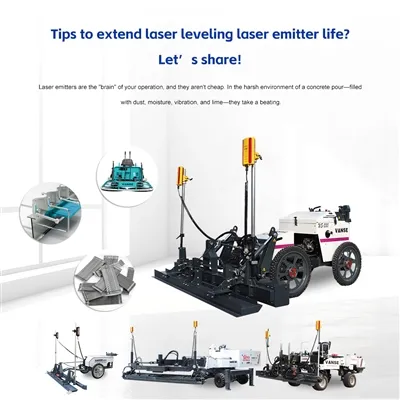
Laser emitters are the "brain" of your operation, and they aren't cheap. In the harsh environment of a concrete pour-filled with dust, moisture, vibration, and lime-they take a beating. Here are the best ways to keep your transmitter running with ±3mm accuracy for years instead of months: Vibration is the #1 killer of internal self-leveling pendulums and spinning diodes. Tripod Placement: Never set your tripod directly on a slab where the laser leveling or a vibrating truss is running. The micro-vibrations can wear out the internal motor bearings. Subgrade Stability: If you must set up on dirt, use a "tripod stabilizer" or sink three rebar pins into the ground and set the tripod legs on those to prevent settling during the pour. Concrete dust is highly abrasive and slightly alkaline. It eats through lens coatings. The Microfiber Only Rule: Never wipe a dry laser lens with your shirt or a paper towel. It's like using sandpaper. Cleaning Routine: Use compressed air (canned air is best) to blow off grit, then use a specialized camera lens cleaner and a fresh microfiber cloth. Shielding: If you are working in a windy, dusty warehouse, consider a "wind shield" (a clear acrylic housing) for the transmitter, provided it's optically rated so it doesn't refract the beam. Laser diodes are sensitive to temperature shifts. Acclimatization: If you transport your laser in a heated truck cab and then set it up in a 2℃(35℉) warehouse, the internal components will contract, and you might get "fogging" inside the glass. The "Slow Warm-up": Let the laser sit in its (closed) case in the work environment for 15 minutes before turning it on. Most modern emitters use Li-ion or NiMH packs. Don't "Cook" the Battery: Avoid leaving the transmitter on a charger for days at a time once it's full. Storage: If the machine is going to sit for more than two weeks, remove the batteries. Leaking alkaline batteries are a common cause of "totaled" transmitters. The internal leveling gimbals are designed to be upright. Case Orientation: Always store and transport the laser in its hardshell case, and ensure the case is secured upright in the vehicle. The "Seatbelt" Treatment: Don't let the laser case bounce around in the bed of a pickup truck. Put it in the cab, strapped down. Task Daily Monthly Lens Cleaning Blow off dust Use optical-grade solution Calibration Quick benchmark check Full "Two-Peg" field test Connections Check for moisture Clean battery contacts with ISO Storage Dry off any condensation Inspect case seals/latches Pro Tip: Keep a logbook in the laser case. Note the date of the last calibration and who did it. If your FF/FL numbers start to dip, you'll have a paper trail to see if the laser is drifting over time. Would you like a Step-by-Step Field Calibration Guide (the "Two-Peg Test") to help your crew verify the emitter's accuracy on-site? Contact us NOW Note: The parameters provided in this document are for reference only and are not mandatory. Due to differences in technical characteristics between different brands and models of laser levelers, please consult the manufacturer for a suitable solution before actual operation. This reference document assumes no responsibility for any issues arising from failure to follow the manufacturer's instructions.