Technical Knowledge
The Main Points of Small Roller in Subgrade Construction
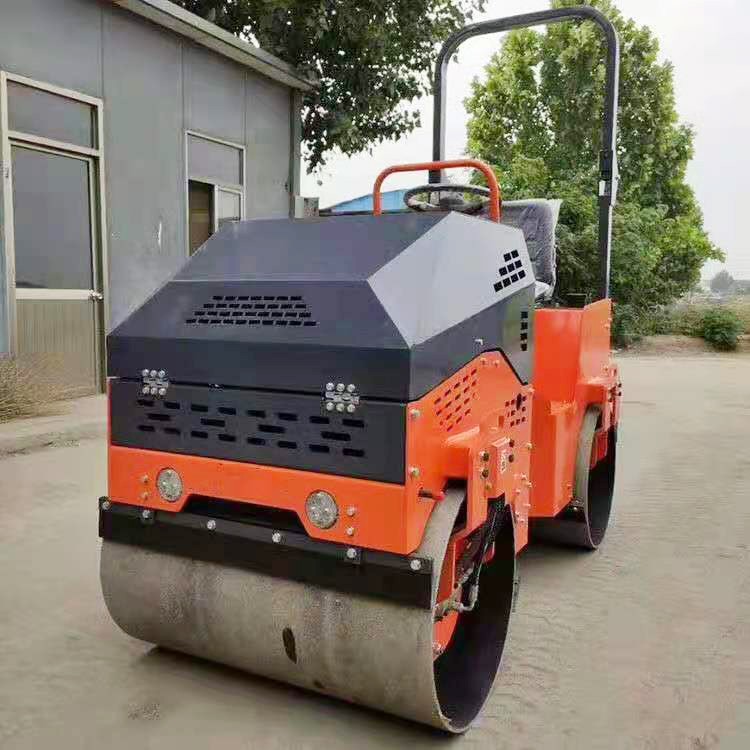
1, the use of small roller roadbed construction, in order to ensure that the first good drainage facilities to avoid flooding.
2, roadbed fill in the construction of the first embankment, remove the topsoil to the sidelines, fill the hole leveling and then compaction, embankment stability does not sink.
3, small roller manufacturers to remind you, roadbed filler must choose a good, to ensure that soil stability, strength particle size to meet the construction requirements.
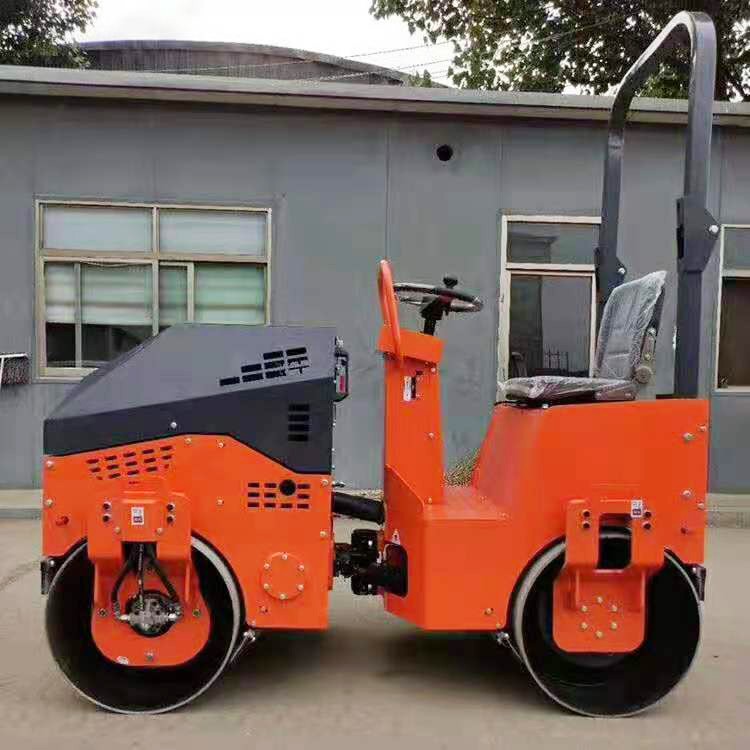
4, embankment fill ladder with each other to join the old and new interface to be linked to the slope on the digging steps, sub-section to fill the ladder, while the construction layer stack.
5, different soil fill embankment embankment fill is not the same, in accordance with the soil sub-layer, strength and permeability as the basis, to prevent roadbed instability.
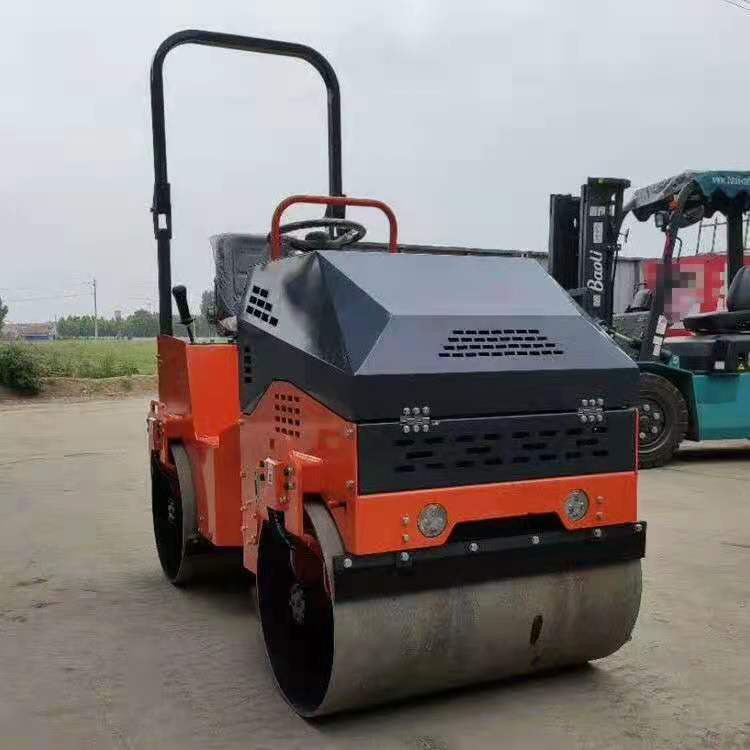
Thanks to All the Friends Who Support and Trust Shandong Vanse Machinery Technology Co., Ltd.
If you want to know more about Shandong Vanse Machinery Technology Co., Ltd. or have any questions, please feel free to contact us:
Our Factory
Shandong Vanse Machinery Technology Co., Ltd.








Share this article

About the Author: Shandong Vanse Machinery Technology Co., Ltd.
Shandong Vanse Machinery Technology Co., Ltd. is a high-tech manufacturer specializing in concrete construction machinery, including laser screeds and related equipment. The company integrates R&D, production, and global sales, with products exported to over 60 countries and widely used in infrastructure projects worldwide.
Previous Post
Next Post
Related Articles
You Might Also Like
What is the standard maintenance procedure for laser leveling machine?
No matter what kind of mechanical equipment, if you want to effectively extend its service life, you need to do regular maintenance and maintenance of the equipment, and this is no exception for laser leveling machines. In view of the fact that there is no detailed analysis of the maintenance standards for laser leveling machines in the relevant technical materials, our company will combine years of work experience to make a simple summary of the correct maintenance methods for each component of the laser leveling machine. I hope that the majority of users and friends We must follow this standard scientific operation. ►Engine maintenance: Choose an antifreeze solution suitable for the local temperature and replace it every 1 year. Before winter, the winter fuel should be replaced with a laser leveler in advance to avoid waxing of ordinary diesel in the filter and pipeline due to low temperature. As a result, the engine does not start properly, the anti-icing device of the compressed air system is turned on, and the ether level is checked regularly. Many engines require some additive in the coolant, known as SCA (Supply Coolant Additive), which usually acts on aluminum. More effective protection against metal corrosion, mineral deposits, air pockets and blistering of the cylinder liner during fitting contact with coolant. ►Parts maintenance: Before the laser leveling machine is parked for a long time in winter, the bearings should be mechanically hinged, lubricated and maintained. Check the integrity of the dust cover of the concrete laser leveling machine, and replace the damaged sealing ring in time. The metal contact surfaces exposed to the air should be rust-proof, the engine should be started regularly, and all reduction gearboxes should be operated to prevent shaft seals in the gearbox, rubber seals from being damaged by parking and gear oil for a long time. ►Hydraulic system maintenance: Regularly start the laser leveling machine and turn on all hydraulic functions on the machine, so that the hydraulic drive parts work regularly to prevent the related seals from being damaged due to long-term parking, and the metal parts such as cylinder rods from rusting, as much as possible. Retract all cylinder rods into the hydraulic cylinder housing to better protect the surface of the cylinder rods. ►Electrical system maintenance: Please start the laser leveling machine engine every two months, charge the battery, and run all hydraulic actuators, such as rotary hydraulic motors, telescopic cylinders, etc., do not remove the battery from the machine to prevent long-term parking equipment to control internal software Program failure is lost. Special reminder: Once the laser leveling machine is improperly operated, maintained, and managed, it will affect the efficiency and life of the equipment, and may even cause equipment failure and shutdown. Therefore, only the daily maintenance and management of each system and the whole machine should be done well. , can effectively reduce the probability of equipment failure, ensure the normal operation of equipment, and improve production efficiency.How to match a concrete laser leveling machine with the concrete mixture to achieve perfect leveling?
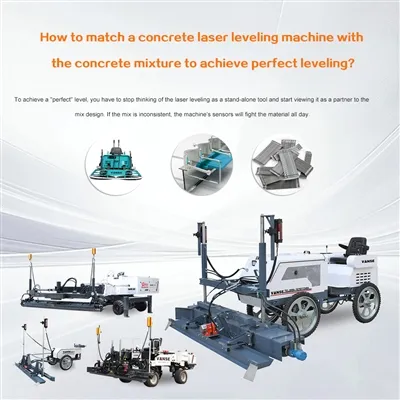
To achieve a "perfect" level, you have to stop thinking of the laser leveling as a stand-alone tool and start viewing it as a partner to the mix design. If the mix is inconsistent, the machine's sensors will fight the material all day. Here is how to calibrate your mix to your machine for maximum precision. For laser leveling, consistency is more important than the actual slump number. However, there is a "sweet spot" for machine performance. The Target: 4" to 5" (100mm – 125mm) slump. Too Wet (>6"): The leveling head will "sink" or create a wake like a boat. When the water evaporates, the "perfect" level you just pulled will settle and dip, ruining your FF (Floor Flatness) numbers. Too Stiff (<3"): The vibrator won't be able to liquefy the paste enough to close the surface, leaving "honeycombs" or tears that the machine can't fix. The auger on the front of the leveling head is designed to move excess concrete out of the way. The Mix: Use a well-graded aggregate (a mix of large, medium, and small stones). The Logic: If you use only large 1" stones (Gap-graded), the auger will "catch" them and drag them, creating gouges in the subgrade. A well-graded mix creates a "lubricated" matrix that the auger can trim precisely to the millimeter. Adjustment: If your mix is "rocky," increase your sand-to-aggregate ratio slightly (usually by 1-2%) to provide a "cream" cushion for the leveling head to glide on. The laser leveling needs the concrete to stay "live" long enough to finish a full pass, but not so long that it bleeds excessively. Avoid Sugar-Based Retarders: These can make the concrete "sticky." Sticky concrete clings to the back of the leveling head, causing it to "pull" the surface rather than shaving it. Use Mid-Range Water Reducers (MRWR): These provide workability (flow) without the massive water content that causes shrinkage. This ensures that the elevation the laser sets stays the same elevation after the concrete cures. Different mixes require different "energy" to settle. Air-Entrained Concrete (Exterior): Air bubbles act like tiny ball bearings. You should lower the vibrator frequency on the leveling. If you vibrate air-entrained concrete too hard, you'll pull the air out of the top 1/2 inch, leading to surface scaling later. Dense Interior Mixes: Use high frequency. You want to "liquefy" the paste immediately as the head passes over so the trailing edge can seal the surface perfectly. Element Specification for Laser leveling Water/Cement Ratio 0.45 to 0.50 (ideal for strength and minimal shrinkage) Air Content Interior: < 3% Sand Content 42% – 45% of total aggregate volume Chemicals Polycarboxylate-based superplasticizers (for flow without sag) The first truck of the day is often slightly different than the rest. Always check your grade with a manual stick after the first 20 feet of the first load. If the machine is struggling to "cut" the concrete, tell the plant to add a small dose of plasticizer to the remaining trucks to increase "cream" without adding water. Would you like me to help you draft a "Mix Design Requirement" sheet to send to your concrete supplier for your next high-tolerance job? Contact us NOW Note: The parameters provided in this document are for reference only and are not mandatory. Due to differences in technical characteristics between different brands and models of laser levelers, please consult the manufacturer for a suitable solution before actual operation. This reference document assumes no responsibility for any issues arising from failure to follow the manufacturer's instructions.Differentiated considerations for the selection of concrete laser leveling machine in indoor and outdoor projects
There are significant differences in the selection considerations of concrete laser leveling machine for indoor and outdoor projects, mainly due to the differences in engineering environments, concrete properties, technical requirements, and the quality goals of the final products. The following will elaborate on this differentiated consideration in detail from multiple dimensions: Interior engineering: Greater emphasis is placed on precision, efficiency, flexibility and environmental protection. The ground, as the final finish or the foundation for supporting precision equipment, has extremely high requirements for flatness and levelness. Outdoor engineering: More emphasis is placed on equipment power, passability, anti-interference ability and adaptability to the base layer. In the face of harsh environments, large aggregate concrete and complex base conditions, the stability and "brute force" of the equipment are the key. Dimension of consideration Dimension of consideration Interior engineering Outdoor engineering 1. Ground accuracy requirements Extremely high Relatively low The flatness (FF/FL) requirement is high, and it is often necessary to meet the super-flat floor standard (such as FF≥50, FL≥35). Most of them are road surfaces, storage yards, squares, etc., and the requirement for flatness is lower than that for indoor areas. It is used in warehouses, logistics centers, precision manufacturing workshops, etc., directly affecting the operational efficiency of equipment and the stability of shelves. The allowable error range is larger, but it is necessary to ensure that the drainage slope meets the design requirements. 2. Device type preference First choice: Wheeled concrete laser leveling machine First choice: Wheeled (large tire) laser leveling machine • Advantages: Low grounding specific pressure, which will not cause damage to the base layer or the already laid steel mesh. It walks smoothly with low vibration and has the highest leveling accuracy. It turns flexibly and is suitable for areas with complex shapes. • Advantages: Good mobility and fast transfer speed; It has a high ground clearance, strong passability and can adapt to uneven base surfaces. Tires have better tolerance for rough substrates. 3. Grassroots conditions and passability Good conditions The conditions are complex and changeable. The base layer is usually compacted and leveled, with a smooth and solid surface. The base layer may be compacted soil base or crushed stone layer, which may be uneven and soft. There may be obstacles such as columns and walls in the space, which requires the equipment to be mobile and flexible. There may be slopes and potholes, so the equipment is required to have good passability and strong driving force. 4. Concrete properties The slump is small Large slump and large aggregate Most of them are fine aggregate concrete with small aggregate particle size and low slump (dry-hard concrete), which is convenient for laser leveling machines to complete compaction and leveling in one go. Coarse aggregate concrete is often used, and the aggregate particle size is large. The slump may be relatively high, and the requirements for the disturbance and subsidence control capabilities of the leveling are different. 5. Laser system High precision and multi-adaptability Strong anti-interference ability A laser system must be used and the accuracy of the receiver is required to be high. Both laser systems and GPS systems can be used. In multi-storey buildings, the deflection of floor slabs needs to be taken into account. Sometimes, multi-point laser or GPS systems are required to simulate the preset camp. GPS has obvious advantages in large outdoor areas, with no problem of visual obstruction and no need to frequently move base stations. The laser system needs to take into account the influence of strong outdoor light and strong wind on the stability of the laser signal. 6. Power system Mainly electric or electric + hydraulic Mainly high-power diesel engines • Electric: Zero emissions, low noise, highly suitable for construction in confined Spaces, meeting indoor environmental protection requirements. • Diesel engine: It offers powerful traction and vibration power, capable of handling large-aggregate concrete and complex substrates. The power demand is relatively low. The requirements for emissions and noise are relatively lenient. 7. Environmental Protection and Working Environment Demanding The requirements are lenient It must be low-noise and have zero emissions to avoid polluting the indoor air. It has relatively low requirements for noise and emissions. The size of the equipment should take into account the size restrictions of construction elevators and door openings. The working environment is harsh (sun exposure, rain, and dust), which requires the equipment to have a high protection level and a sturdy and durable structure. 8. Construction efficiency and area High efficiency, medium and small area Continuous operation over an extremely large area The daily construction area is large, but the individual operation surface is usually smaller than the outdoor area. It is commonly seen in airports, highways and large squares, with a huge single pouring area. Efficiency is reflected in the rapid leveling with high precision, reducing subsequent manual repairs. Efficiency is reflected in the continuous and uninterrupted large-scale paving and leveling capabilities. Step 1: Clarify the project attributes (indoor/outdoor) If it is an interior project Precision requirement: Does it meet the standard of super-flat floor? Yes -> Give priority to high-precision tracked types. Space limitations: Are there any obstacles such as columns or walls? Is the size of the door opening restricted? Yes -> Choose small-sized or equipment with column anti-blocking function, such as Vanse YZ30-4E Environmental protection requirements: Is it a sealed or clean environment? Yes -> Electric power must be chosen. Concrete type: Is it fine aggregate low slump concrete? Yes -> Suitable for all types of levelings. If it is an outdoor project Area and terrain: Is the area large (> 10,000 square meters) and the terrain open? Yes -> Give priority to wheeled +GPS systems. Base conditions: Is the base soft and uneven? It is -> Choose wheeled equipment with large tires, high ground clearance and strong driving force. Concrete type: Is it aggregate concrete? Yes -> Choose equipment with powerful vibration power. Slope control: Are there any complex requirements for the drainage slope? Yes -> The GPS system has more advantages in three-dimensional slope control (Vanse YZ30-4E/WS940C supports 3D system construction). In conclusion, choosing a concrete laser leveling machine for indoor and outdoor projects is essentially a trade-off between "precision" and "robustness". The core of interior selection is to find a "meticulous artist" who can carve out an extremely smooth floor within a small space in a clean environment. Wheeled, electric/diesel, and high-precision laser are its labels. The core of outdoor selection is to find a "strong warrior" that can overcome wind, rain and rough terrain, and efficiently complete the paving task in the vast expanse of the world. Wheeled and diesel power are its weapons. Correct selection not only ensures construction quality but also greatly enhances construction efficiency, reduces labor costs and safety risks. Therefore, before purchasing or leasing equipment, it is essential to conduct a comprehensive assessment based on the specific characteristics of the project. Note: The parameters provided in this document are for reference only and are not mandatory. Due to differences in technical characteristics between different brands and models of laser levelers, please consult the manufacturer for a suitable solution before actual operation. This reference document assumes no responsibility for any issues arising from failure to follow the manufacturer's instructions.