Technical Knowledge
How to use power trowel
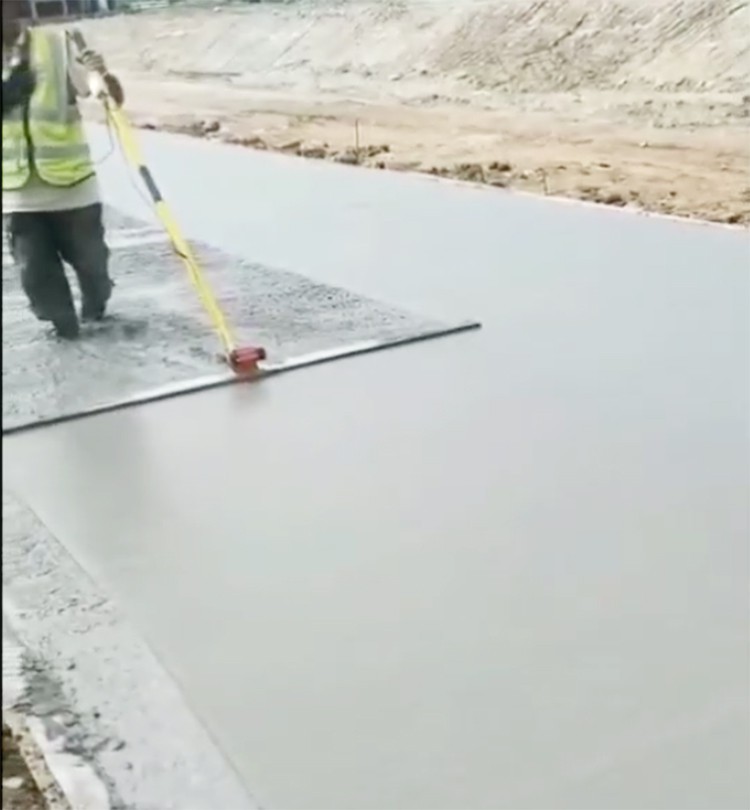
A power trowel machine is used to create a level, flat area of concrete, smooth finish on a large, just like a poured patio slab for a deck or an interior floor. A single or multiple blades are used that can rotate in a safety cage. The measurement of this tool is around 24 to 48 inches long and has three types such as finish, floating and combined. In relation and based on the size of work, you can use a riding model or a pushable concrete power trowel. Presented in this article are the steps that you can follow for you to use the tool to the best of its ability.
Concrete contractors demand reliable equipment to get the job done right. VANSE concrete power trowel spider assembly uses high-strength wear plates made of trowel steel to prevent wear on key components. Repairing your trowel shouldn’t be costly so we make certain our replacement parts are priced right. Spider trowel arm bushings Replacement of these high tolerance bushings assure like new trowel arm alignment.
Here are the steps:
1. Select a pushable power trowel for sale with 24 to 36-inch trowel blades if you are planning to level a small area, like those that measure under 1000 square feet. And to smooth the concrete in one series of passes, you can use both the finish and float trowel blades.
But if you are working on larger areas or those higher than 1000 square feet, choosing a riding power trowel can be a big help to quickly finish the job before the concrete sets too firmly. The recommended blades to use are those that measure around 36–48 inches. When working with corners, you can change your blade to a 24-inch one. Opt for a different finish or float blades, or a combination trowel blade.
2. Few hours before you use the power trowel, the concrete must be poured. Ensure that the concrete is firm enough to support the power trowel and you, conduct a footprint test. First is to step onto the slab and then measure the depth of the imprint. If the result is less or 1/8 of an inch deep, you can assume that the concrete is ready for troweling.
3. To level the concrete on your first pass, use the trowel with combined blades or float blades. Floating lessens the fills and bumps in the hollows.
The machine should be operated at 3/4 speed while keeping the blades flat for the even distribution of weight and to avoid digging into the concrete. The rotational speed will also prevent splatters of still-damp concrete being thrown forward into the path of the machine. Overlap each pass by 1/2 the trowel blades’ length as you traverse the poured plate.
Once you’re done floating the entire slab, turn the power trowel at 90 degrees to your first rows. The technique of crossover floating helps you finish missed spots.
4. Continue with the combined trowel blades or change your tool to finish blades to finish the surface, sealing the porous material. Walk behind power trowel to operate at its top speed, this time with the blades fully pitched downward onto the concrete. Doing so will give the slab that highest pressure. To get that matte, gleaming or light gloss finish, create as many passes at right angles.
VANSE's concrete power trowel using high quality meterial and with origional HONDA engine, if you had such needs in this field, welcome for asking~
Thanks to All the Friends Who Support and Trust Shandong Vanse Machinery Technology Co., Ltd.
If you want to know more about Shandong Vanse Machinery Technology Co., Ltd. or have any questions, please feel free to contact us:
Our Factory
Shandong Vanse Machinery Technology Co., Ltd.








Share this article

About the Author: Shandong Vanse Machinery Technology Co., Ltd.
Shandong Vanse Machinery Technology Co., Ltd. is a high-tech manufacturer specializing in concrete construction machinery, including laser screeds and related equipment. The company integrates R&D, production, and global sales, with products exported to over 60 countries and widely used in infrastructure projects worldwide.
Previous Post
Next Post
Related Articles
You Might Also Like
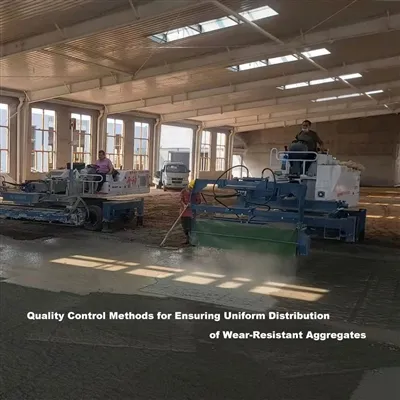
Quality Control Methods for Ensuring Uniform Distribution of Wear-Resistant Aggregates
Ensuring the uniform distribution of wear-resistant aggregates (such as corundum and alloy aggregates) is crucial to preventing color differences, peeling, and uneven wear resistance in floor coatings. Quality control should be implemented throughout the entire process, from "base layer treatment" to "mechanical finishing." The following are the core control methods for achieving uniformity: Do not rely solely on experience for random spreading; instead, adopt **"grid management."** Grid division: Based on the total amount used (e.g., 5 kg/m²), divide the construction surface into several equal areas. Quota placement: Pre-place the corresponding weight of aggregate in the center of each area to ensure consistent consumption in each grid cell. The "two-stage application method" effectively re pairs gaps left after the first application. First application (2/3 of the total amount): Applied when the concrete is initially setting (footprint indentation of approximately 5mm), utilizing the bleed water from the base layer to moisten the aggregate. Second application (1/3 of the total amount): After the first application is finished and smoothed, a reinforcing application is performed in a perpendicular direction, focusing on areas with lighter color or sparser aggregate. Mechanical Spreading Machines: For large-area construction, the use of automatic spreading machines is recommended. Compared to manual application, mechanical spreaders can precisely control the amount of material applied per square meter through rotational speed and travel speed, greatly improving consistency. Manual Assistance: When spreading manually, use a "scattering" motion rather than "pouring," and ensure the material is distributed evenly. Edge Prioritization: In areas difficult for large machinery to cover, such as column edges and wall corners, manual application of extra material and manual compaction should be performed first. Joint Treatment: At construction joints, the application amount should slightly overlap to ensure that the hardness and flatness of the joint area are consistent with the main surface. Avoid strong winds: During indoor construction, doors and windows should be closed to prevent drafts that could cause fine aggregates to deviate during placement, resulting in localized areas with insufficient material. Strictly prohibit adding extra water: If the aggregate is locally too dry, direct watering is strictly prohibited. The slurry generated by the power trowel should be used for wetting; otherwise, it will lead to reduced surface strength and color differences. Quality inspection tips: After spreading, assess the consistency of the color (checking for light or dark patches) and the balance of moisture content by visual inspection. If localized areas appear lighter in color, it usually indicates an excess of aggregate or insufficient moisture in that area. Mechanical troweling to bring the mortar to the surface should be performed immediately. Note: The parameters provided in this document are for reference only and are not mandatory. Due to differences in technical characteristics between different brands and models of laser levelers, please consult the manufacturer for a suitable solution before actual operation. This reference document assumes no responsibility for any issues arising from failure to follow the manufacturer's instructions.Construction Technology And Construction Process Of Concrete Laser Leveling Machine
Construction technology and construction process of concrete laser leveling machine ★Introduction to laser leveling machine☆ The concrete laser leveling machine is an advanced ground leveling equipment that uses a laser control system to accurately level the concrete surface. Laser leveling machine combines modern laser technology, mechanical technology and electronic control technology, which can greatly improve the flatness of concrete floors, reduce construction time, and ensure construction quality. ★Preparation work before construction☆ 1. On-site survey: Before construction, a detailed survey of the construction site should be conducted to understand the ground foundation conditions, drainage facilities, surrounding environment, etc., to ensure that the laser leveler can operate smoothly. 2. Material preparation: Prepare sufficient concrete materials and select appropriate concrete proportions according to design requirements. 3. Equipment inspection: Ensure that the laser leveler and other auxiliary equipment (such as concrete pumps, mixer trucks, etc.) are in good condition, and have necessary wearing parts and maintenance tools. 4. Safety protection: Set up construction areas and set up warning signs to ensure the safety of the construction site. ★Key points for concrete laying☆ 1. Foundation treatment: Ensure that the foundation ground is solid, flat, free of oil and water, and lay an isolation layer or moisture-proof layer as needed 2. Concrete pouring: Concrete pouring should be continuous and even to avoid quality problems such as hollows and cracks. 3. Control the water-cement ratio: Strictly control the water-cement ratio of concrete according to design requirements to ensure the strength and durability of concrete. ★Laser leveling machine operation☆ 1. Laser transmitter setting: Set up the laser transmitter in the construction area, and adjust the position and height of the laser transmitter according to the design requirements 2. Equipment positioning: Position the laser leveler within the construction area, and ensure that the laser receiver of the laser leveler can accurately receive the signal from the laser transmitter. 3. Concrete leveling: Start the laser leveling machine and adjust the driving speed and leveling depth of the equipment to make the concrete surface achieve the flatness required by the design. 4. Corner treatment: For corner areas that cannot be covered by the laser leveling machine, hand tools should be used for supplementary leveling. ★Construction quality monitoring☆ 1. Flatness testing: During and after construction, professional flatness testing tools should be used to test the flatness of the concrete floor to ensure that the construction quality meets the design requirements. 2. Strength testing: After the construction is completed, the strength testing of the concrete floor should be carried out at specified intervals to ensure that the concrete reaches the design strength. 3. Quality control records: Keep detailed records of key parameters and quality control measures during the construction process to facilitate subsequent quality tracing and problem handling. ★Later maintenance and care☆ 1. Equipment cleaning: After the construction is completed, the laser leveling machine should be thoroughly cleaned to remove concrete residue and dust on the equipment. 2. Lubrication and maintenance: Regularly lubricate and maintain the key components of the laser leveling machine to ensure smooth operation of the equipment. 3. Equipment inspection: Conduct comprehensive inspections of the laser leveling machine regularly to discover and deal with potential problems in a timely manner. 4. Storage protection: During the storage period of the equipment, necessary protective measures should be taken to prevent the equipment from getting damp, rusty or other damage. ★Safe construction measures☆ 1. Personnel training: Ensure t hat operators have received professional training and have corresponding operating qualifications, and can operate the laser leveling machine skillfully and accurately. 2. Safety protection facilities: Set up necessary safety protection facilities at the construction site, such as guardrails, warning signs, etc., to ensure safety during the construction process 3. Emergency plan: Develop an emergency plan to clarify response measures and rescue procedures in the event of emergencies (such as equipment failure, casualties, etc.). 4. Safety inspection: Conduct regular safety inspections on the construction site to discover and deal with potential safety hazards in a timely manner ★Environmental protection and energy saving considerations☆ 1. Reduce noise pollution: Choose a low-noise laser leveling machine model, and reasonably arrange the operating time during the construction process to reduce the impact on surrounding residents. 2. Reduce waste production: Strictly control the amount of concrete used during the construction process to avoid excessive waste production. The waste materials generated should be classified and processed, and the recyclable materials should be recycled and the non-recyclable materials should be properly disposed of. 3. Energy-saving measures: Optimize the construction process, reasonably arrange operation time, and reduce unnecessary equipment idling and energy consumption. At the same time, the equipment is regularly maintained and maintained to ensure that the equipment is in optimal working condition and improve energy utilization efficiency. 4. Environmental awareness education: Strengthen the environmental awareness education of construction workers and improve their understanding and attention to environmental protection work. Through training and education, construction personnel can understand environmental protection regulations and policies, master environmental protection knowledge and skills, and actively participate in environmental protection work. To sum up, the construction technology and construction process of concrete laser leveling machine need to comprehensively consider many factors, including equipment performance, construction quality, safe construction, environmental protection and energy saving, etc. During the construction process, operations and management should be carried out in strict accordance with relevant standards and requirements to ensure construction quality and safety. At the same time, environmental protection and energy-saving measures should be actively adopted to promote green construction and sustainable development.