Technical Knowledge
The application of pervious concrete floor in daily life
The application of pervious concrete floor in daily life
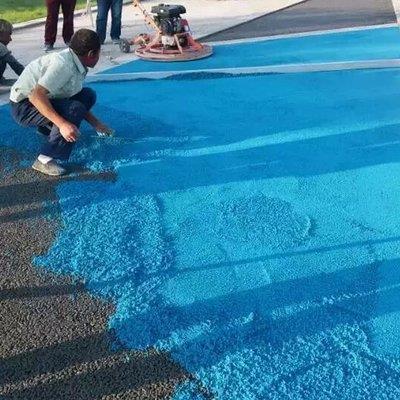
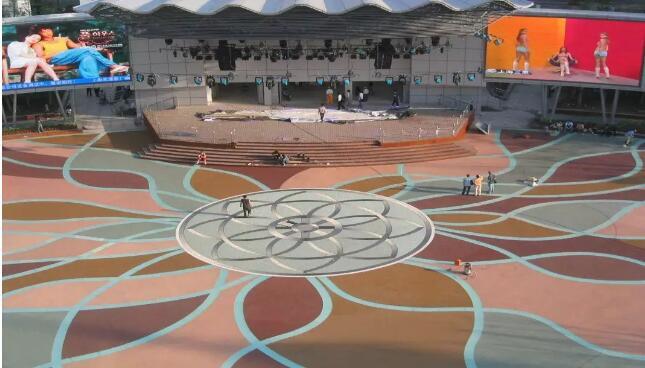
As a new kind of ecological friendly pavement material, the color permeable floor has been paid more and more attention especially in the industry.
Permeable floor, also known as ecological permeable floor, permeable concrete floor, sand free concrete floor and so on, is the use of coarse aggregate gravel, cementing material, cement and water and other raw materials, after a certain time of mixing evenly, paved into a new type of environmental protection pavement.
In the city, the scope of application of this permeable ground is very common, municipal footpath, garden path, city square, upscale residential community outside the garden, parking lot, outdoor sports venues and other outdoor places can be used.

Thanks to All the Friends Who Support and Trust Shandong Vanse Machinery Technology Co., Ltd.
If you want to know more about Shandong Vanse Machinery Technology Co., Ltd. or have any questions, please feel free to contact us:
Our Factory
Shandong Vanse Machinery Technology Co., Ltd.








Share this article

About the Author: Shandong Vanse Machinery Technology Co., Ltd.
Shandong Vanse Machinery Technology Co., Ltd. is a high-tech manufacturer specializing in concrete construction machinery, including laser screeds and related equipment. The company integrates R&D, production, and global sales, with products exported to over 60 countries and widely used in infrastructure projects worldwide.
Previous Post
Next Post
Related Articles
You Might Also Like
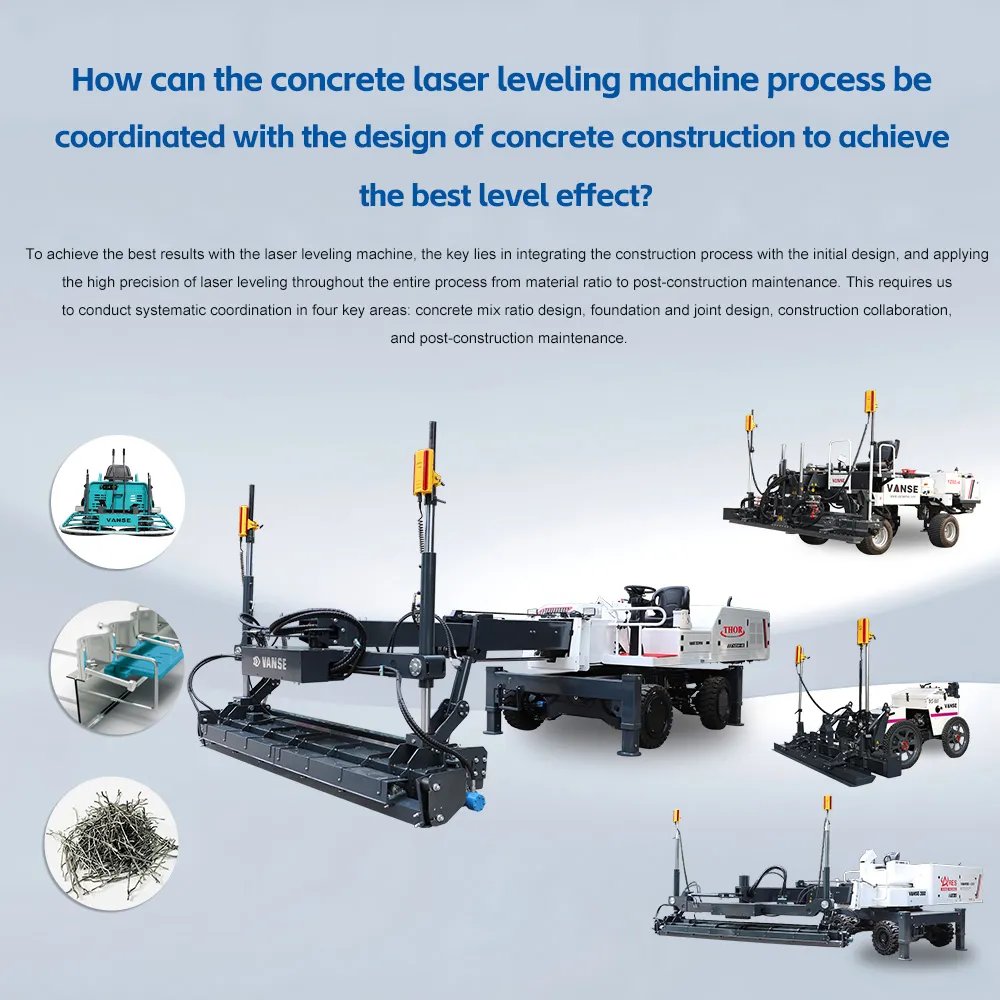
How can the concrete laser leveling machine process be coordinated with the design of concrete construction to achieve the best level effect?
To achieve the best results with the laser leveling machine, the key lies in integrating the construction process with the initial design, and applying the high precision of laser leveling throughout the entire process from material ratio to post-construction maintenance. This requires us to conduct systematic coordination in four key areas: concrete mix ratio design, foundation and joint design, construction collaboration, and post-construction maintenance. Objective: To prevent problems before they occur and promptly identify potential issues through daily observation. The high-frequency vibration and precise leveling of the laser leveling machine require that the concrete itself have good and stable working performance. Mix ratio design is the foundation. Design parameters Recommendation requirements: The influence on the laser leveling effect Water-cement ratio Not more than 0.5, no water addition allowed on site Controlling the water-cement ratio can ensure the strength and volume stability of the hardened concrete, preventing shrinkage cracks or insufficient strength due to excessive moisture. Adding water on-site will disrupt the mix ratio, causing segregation and bleeding, which seriously affects the leveling accuracy. Consistency 14 ± 2 cm (maximum 16 cm) This slump range can ensure that the concrete has good fluidity, facilitating the leveling by the laser leveling machine, while not being too thin to maintain the shape after leveling, which is the key to ensuring the stability of the leveling accuracy. Setting time Initial setting time controlled within 3-5 hours It provides sufficient operation windows for the spreading, vibrating and repeated leveling of the laser leveling machine, ensuring the continuity of large-scale construction and avoiding cold joints. Aggregate gradation Maximum particle size of coarse aggregate ≤ 25 mm; sand ratio controlled within 35% – 40% Good gradation can ensure the concrete is dense and uniform, avoiding surface defects (such as cracking and sanding) caused by aggregate segregation, creating a uniform working surface for laser leveling. Without a solid foundation and scientific joint design, the accuracy of laser leveling will be impossible to achieve. Foundation preparation: Before concrete pouring, it is necessary to ensure that the base has been leveled, compacted, and precisely controlled in terms of elevation. This is the fundamental measure to prevent ground settlement and deformation after completion, thereby ensuring the final levelness. Joint design: Construction joints: In design, efforts should be made to minimize the occurrence of construction joints. When they cannot be avoided, a force transmission system should be set up. This can effectively transfer the load between the slabs and prevent misalignment at the joint, thus avoiding damage to the overall flatness of the ground. Expansion joints/cutting joints: The design should clearly define the time and method for cutting the joints. To overcome concrete shrinkage and temperature stress, the cutting should be carried out as early as possible (usually within 24 hours), and the quality of the cutting should be strictly controlled to prevent the edges from cracking or the formation of irregular cracks. The laser leveling machine is the core, but it cannot function without the close collaboration between humans and the environment. Human-machine collaboration: The equipment operator is responsible for precise leveling, while 3-4 workers are needed to assist, responsible for quickly leveling the concrete, handling the formwork, the edges of columns, and the corner areas that the machine cannot cover. This "machine operator with human assistance" model is the key to ensuring overall flatness without any blind spots. Process control: Material supply stability: It is necessary to ensure continuous concrete supply (speed ≥ 40m³/h), and the slump and initial setting time of each truckload of concrete should be highly consistent to avoid affecting the construction quality and progress due to material fluctuations. Leveling verification: During the leveling process, the ground elevation should be regularly rechecked to ensure that the laser emitter is working properly. Once any problems are identified, they should be immediately adjusted to prevent large-scale rework. Environmental protection: The ground that has just been leveled must not be exposed to direct sunlight, strong winds, or rainwater. At the same time, the construction site should avoid electric welding operations and reflective objects to prevent interference with the reception of the laser signal. The later maintenance and surface treatment are the final procedures for protecting and enhancing the laser-levelled finished products. Timely maintenance: Use the maintenance agent compatible with the floor material for maintenance. This can form a high-density crystalline film, effectively locking in moisture and preventing concrete from developing dry shrinkage cracks or surface dusting due to rapid water loss, ensuring strength and flatness. Wear resistance and joint sealing: For floors with wear resistance requirements, apply high-performance floor hardener at the appropriate time (determined by the concrete setting time). After cutting the joints, use polyurethane joint sealing adhesive of the same color as the floor to handle the joints, to ensure the tear resistance, aging resistance and aesthetic performance of the joints. To achieve the best results with the laser leveler, it must be regarded as a systematic project. From the design stage, create the best conditions for this efficient and high-precision process, and strictly control the entire construction process. If you can provide more information about your project, such as whether it is a logistics warehouse with super-leveling or a basement with decoration requirements, I can provide you with more targeted design suggestions. Contact us NOW Note: The parameters provided in this document are for reference only and are not mandatory. Due to differences in technical characteristics between different brands and models of laser levelers, please consult the manufacturer for a suitable solution before actual operation. This reference document assumes no responsibility for any issues arising from failure to follow the manufacturer's instructions.Analysis of the application of the concrete laser leveling machine in large-area floor construction
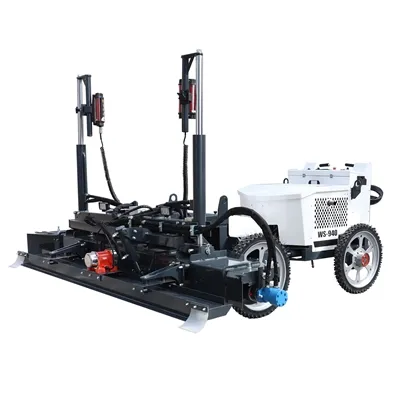
The concrete laser leveling machine is a device that uses the laser emitted by the transmitter as the reference plane, and controls the leveling head in real time through the laser receiver on the laser leveling machine, thereby achieving high-precision and rapid leveling of concrete. In large-area floor construction, its application is as follows: – High-precision leveling: The ground elevation is controlled by a laser system consisting of a laser transmitter, a laser receiver and a leveling rod. The laser transmitter emits lasers at a frequency of 10 times or even higher per second to form a control plane. The laser receiver on the laser leveling machine monitors the leveling head elevation in real time. The computer control system automatically adjusts the leveling head height according to the deviation to ensure the flatness and levelness of large-area floors. The accuracy can reach millimeter level (within ±3mm). Compared with traditional methods, the flatness and levelness are improved by more than 3 times. – High construction efficiency: Mechanized construction replaces a large number of manual labor, and the work efficiency is more than 3-5 times that of manual labor. For example, laser screed construction can adopt large-area compartments, with each compartment area up to 2,000 square meters, reducing the setting of construction joints, while reducing the work of force transmission rods and formwork support, speeding up the construction progress. Some large telescopic arm laser screeds can complete the leveling of 15 square meters of concrete each time, and some equipment can spread up to 5,000 square meters per day. – Improve ground quality: The powerful vibrator can vibrate at a frequency of up to 4,000 times/minute, which can ensure that the concrete is vibrated and compacted, making the entire paved concrete matrix homogeneous and dense, and the density and strength are more than 20% higher than traditional methods, effectively enhancing the wear resistance and impact resistance of the ground. – Save labor costs: The use of concrete laser screeds can save about 35% of labor, and some robot equipment can be remotely controlled by one person, which reduces manpower input while also reducing the labor intensity of workers. – Flexible adaptation to various working conditions: It can automatically control the longitudinal and transverse slopes, and can also be equipped with a three-dimensional special-shaped ground processing system to meet the construction of complex-shaped ground with high requirements such as drainage, such as squares with special drainage designs, airport runways and other places. – Industrial Plant: The third phase of the Flanders Plant is an industrial plant for manufacturing transmission parts assembly and testing. The steel fiber concrete metal wear-resistant floor area is 22,000 square meters and the floor thickness is 300 mm. It has high requirements for flatness and bearing capacity. The floor flatness error is required to be controlled within 3 mm. The use of laser leveling machine construction meets high standards. – Underground Garage: The underground garage of the National Treasury Unified Payment Center in Xicheng District, Beijing has an area of 10,500 square meters of metal wear-resistant floor and a floor thickness of 200 mm. The use of this equipment has achieved good results; in the construction of the basement concrete floor of a company's production headquarters project in Suzhou, the four-wheel laser floor leveling robot solved the construction problems of large volume, tight schedule, and high strength, and the flatness deviation was controlled within 5 mm. – New Energy Vehicle Intelligent Industrial Park: In order to ensure the safety of AGV transport vehicles, the Feixi New Energy Vehicle Intelligent Industrial Park EPC project has strict requirements on floor quality. The steel fiber concrete leveling process of this project uses a large laser leveling machine, which greatly improves the flatness of the ground. – Equipment Debugging and Maintenance: Before construction, the laser transmitter, receiver and other equipment must be accurately installed and debugged to ensure that their position is accurate and they operate normally; during the construction process, the equipment must be regularly inspected and maintained to avoid equipment failures affecting the construction quality and progress. – Construction Site and Environment: The construction site should be cleared of obstacles in advance to ensure that the laser signal is not blocked; at the same time, the impact of environmental factors such as temperature and wind on the construction should be considered, and corresponding measures should be taken to deal with it, such as paying attention to the concrete setting speed at high temperatures and avoiding the shaking of the laser transmitter in windy weather. – Concrete Quality Control: Strictly control the mix ratio, slump, initial setting time and other parameters of the concrete to ensure that the quality of the concrete is uniform and stable, so as to ensure the construction effect of the laser leveling machine. – Personnel operating skills: Operators must undergo professional training, be familiar with the operating procedures and techniques of the equipment, and be able to skillfully deal with various construction situations to ensure smooth construction.What is the difference between a disc and blade concrete trowel?
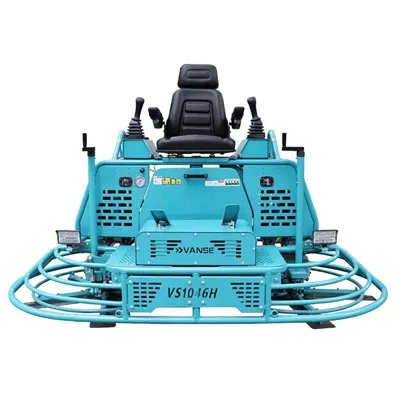
– Disc concrete trowel: This type of trowel is usually equipped with one or more circular steel discs that grind and smooth the concrete surface by rotating. The discs can be fixed or adjustable to suit different construction needs. – Blade concrete trowel: Blade trowels use fan-shaped blades that are mounted on a rotating shaft. When the machine is running, the blades swing as the shaft rotates to polish and smooth the concrete surface. The angle of the blade is usually adjustable, which allows the operator to adjust the angle between the blade and the ground according to the state of the concrete to achieve the best smoothing effect. – Disc type: More suitable for larger areas of concrete surface treatment, especially when a large area needs to be covered quickly. It can provide good flatness and is suitable for the initial leveling stage. – Blade type: More effective in detail processing, edge processing and situations where higher precision is required. Blade type trowels can be used when the concrete is still in a relatively soft state to help improve the density and smoothness of the surface. – Disc type: Usually requires greater force to push or manipulate, especially when dealing with hard concrete. However, with the development of technology, there are now electric or gasoline-driven disc trowels, which greatly reduce the burden on the operator. – Blade type: Relatively speaking, blade trowels are more flexible to operate, especially for small projects or occasions with special requirements. Due to its design features, blade trowels distribute pressure on the ground more evenly during operation, which helps to reduce damage to the concrete surface. In short, which type of concrete trowel to choose depends on factors such as specific construction conditions, the type of work to be completed, and personal preference. In practical applications, these two types of trowels are sometimes used in combination to achieve the best construction results.