Technical Knowledge
Concrete laser leveling machine – modern machinery for hardening large areas of cement
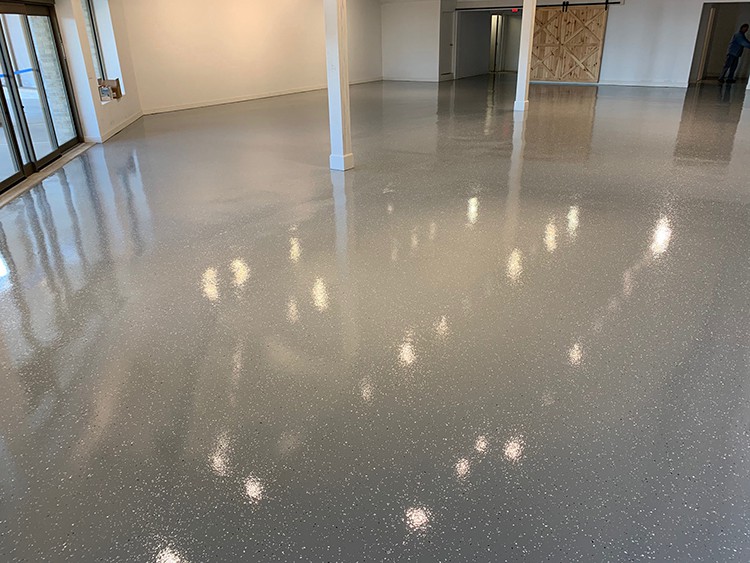
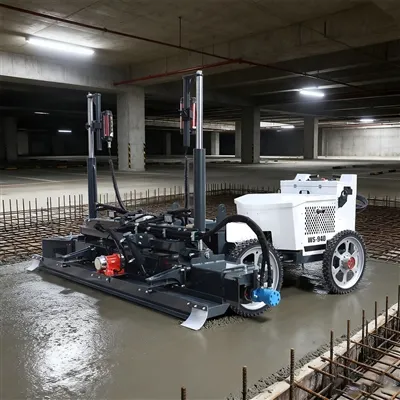
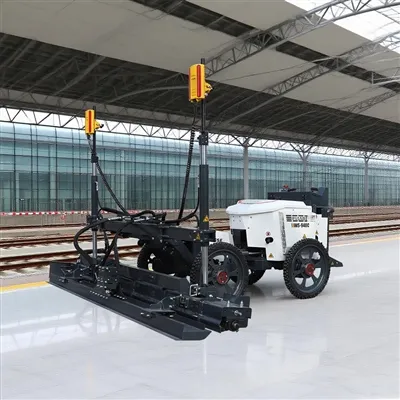
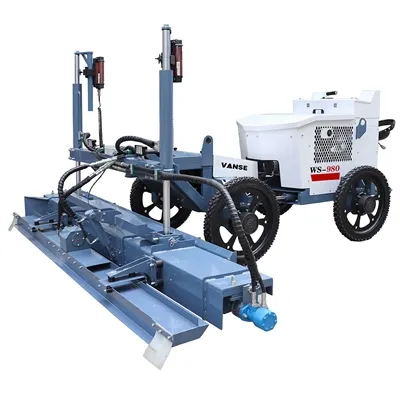
Concrete laser leveling machine – modern machinery for hardening large areas of cement, can effectively improve the hardness of the cement floor strength flatness. Nowadays, for the construction industry, the simple ground has higher requirements, so there are many companies will produce some machinery to help people to successfully complete the goal they want to achieve. The Vanse concrete laser leveling machine is made with the development of society. Its biggest effect is to help people maximize the strength of the cement after hardening or the levelness of the cement floor. It is an essential machine for modern construction industry. Concrete laser leveling machine is a machine that operates on large floors, or floors that require a very flat surface. After placing it on the ground, it can be leveled manually or automatically. The concrete floor is then hardened and leveled by means of high frequency vibration. This is an extremely efficient and modern way of working. The use of Vanse concrete laser leveling machine can reduce labor costs significantly. Although it costs about tens of thousands of dollars to buy a machine, it basically pays for itself in a few relatively small projects. And then the machine is still your own. This is a very worthwhile investment in modern machinery and equipment. Such a machine and equipment is through a variety of feedback mechanism and a variety of electrical equipment to collect signals. Then on the computer host for processing, and finally feedback to the machine itself and then through the computer analysis and processing to tell the answer to the machine. The Vanse concrete laser leveling machine has a very efficient operation. It can guarantee 24 hours a day non-stop work, and can reduce the length of time and labor costs. This is an essential piece of machinery for modern building construction.
Thanks to All the Friends Who Support and Trust Shandong Vanse Machinery Technology Co., Ltd.
If you want to know more about Shandong Vanse Machinery Technology Co., Ltd. or have any questions, please feel free to contact us:
Our Factory
Shandong Vanse Machinery Technology Co., Ltd.








Share this article

About the Author: Shandong Vanse Machinery Technology Co., Ltd.
Shandong Vanse Machinery Technology Co., Ltd. is a high-tech manufacturer specializing in concrete construction machinery, including laser screeds and related equipment. The company integrates R&D, production, and global sales, with products exported to over 60 countries and widely used in infrastructure projects worldwide.
Previous Post
Next Post
Related Articles
You Might Also Like
Application cases and performance requirements of concrete laser leveling in smart city construction (such as municipal roads and airport runways)
Concrete laser leveling machines have evolved from simple industrial floor construction equipment to indispensable high-precision and high-efficiency key equipment in the construction of smart city infrastructure. The following will elaborate in detail on its specific application cases and performance requirements in the construction of smart cities. The value of the concrete laser leveling lies in its ability to achieve extremely high flatness and levelness in one go and over a wide range, which is crucial for the infrastructure that relies on seamless connection and reliability in smart cities. Application scenarios: Mainly used for the paving and leveling of the base layer (water-stabilized layer) and surface layer of roads. In the "white-to-black" (asphalt overlay on cement pavement) project, an extremely smooth cement concrete base is provided for the asphalt surface layer. The value of smart cities Laying the foundation for intelligent transportation systems: Extremely smooth roads are ideal environments for vehicle-road coordination (V2X) and autonomous driving. It can reduce vehicle jolts, ensure the stability and accuracy of data from on-board sensors (lidar, cameras), and enhance driving safety and comfort. Enhancing road durability: High flatness avoids stress concentration, reduces rutting, pushing and cracking on the road surface, lowers maintenance costs throughout the entire life cycle, and aligns with the concept of "long-term management" in smart cities. Integrated intelligent construction: It can be combined with a 3D digital paving system to directly utilize the BIM model data of the road for construction, without relying on traditional physical pile foundations. This achieves pile-free construction, which is more precise, faster, and reduces human errors. Application scenario: This is one of the fields with the most stringent requirements for flatness. It is used for the new construction and major repair of runways, taxiways and aprons. The value of smart cities Flight safety and comfort: The flatness of the runway directly affects the safety of aircraft takeoff and landing as well as the comfort of passengers. The laser leveling can achieve an extremely high precision of less than 3 millimeters per 4-meter drop, meeting the strict standards of institutions such as the FAA (Federal Aviation Administration of the United States). Ensuring airport operational efficiency: A flat apron can guarantee smooth parking of aircraft, precise connection of jet Bridges, and efficient loading and unloading of goods. At the same time, it reduces the vibration damage to the aircraft on the runway and lowers the maintenance costs for airlines. Supporting the construction of smart airports: It provides an ideal foundation plane for the installation of sensors on airport runways (such as aircraft tracking sensors) and the installation of Internet of Things devices. Application scenarios: railway stations, subway station squares, bus hub stations, port and wharf storage yards, etc. The value of smart cities Seamless connection and accessibility: The flat ground facilitates the rapid gathering and distribution of people, vehicles and goods, especially providing an unobstructed passage environment for the disabled and the elderly. Supporting smart logistics: In ports and logistics parks, a flat storage yard is the foundation for the efficient and safe operation of intelligent equipment such as automated guided vehicles (AGVs) and automated gantry cranes. Even a slight deviation in the slope can cause the equipment to stop working or position wrongly. Enhancing the city's image: Large areas of high-precision flooring are a manifestation of the beauty and practicality of modern urban public Spaces. Application scenarios: It is used for the construction of the bottom cushion layer of pipe galleries and road surfaces. The value of smart cities Provide a platform for inspection robots: A flat bottom surface of the pipe gallery is the prerequisite for the stable operation of automatic inspection robots and the precise collection of data (such as temperature, humidity, and equipment status). Convenient for pipeline installation and maintenance: The flat foundation ensures the accuracy of subsequent pipeline support installation, facilitating standardized construction and rapid maintenance. To be competent for the above-mentioned high-standard application scenarios, the concrete laser leveling machine needs to have the following performance: Flatness and levelness: These are the core indicators. The equipment must be capable of stably achieving values of FF (flatness) ≥ 50, FL (levelness) ≥ 40, or even higher values (such as FF/FL > 100). For special projects such as runways, specific standards must be met (for example, the gap under a 3-meter straight ruler should be ≤3mm). System stability: The laser emission system, control system and hydraulic actuator must possess extremely high anti-interference capabilities and long-term operational stability to prevent drift or malfunction during prolonged and large-scale construction. 3D control system integration: This is an inevitable requirement for the construction of smart construction sites. The leveling machine should be capable of seamless integration with the 3D control system composed of GNSS (Global Navigation Satellite System), total stations, etc. By importing BIM or 3D design models, "form-based construction" can be achieved, completely getting rid of the reliance on traditional layout. Data collection and output: The equipment should be capable of real-time recording of data such as elevation, position, and workload during the construction process, and can transmit the data to the project management platform via the network to achieve digital traceability and quality monitoring of the construction process. High power and high efficiency: To deal with the large-scale concrete pouring in municipal engineering, high-power engines and efficient vibration systems are needed to ensure that the daily construction area can reach several thousand square meters. Complex working condition handling capacity: Capable of adapting to concrete of different grades and slump degrees; Have the ability to handle single and double slope ground. The equipment should be sturdy and durable, capable of adapting to the harsh environment on the construction site. Flexible sizes and models: We offer flat heads of various specifications to meet the needs of projects of different scales, ranging from narrow pipe galleries to wide runways. Core component quality: Core components such as the hydraulic system, laser sensor, and control computer should come from internationally renowned brands to ensure their reliability and lifespan. Structural design: The machine body structure is sturdy and can withstand long-term high-intensity construction operations. Key parts are designed to prevent wear and tear. Simple operation interface: Operators can quickly set parameters and monitor the status of the equipment through an intuitive graphical interface.Excessive bleeding: A large amount of water rises to the surface, forming a layer of cement slurry with an extremely high water-cement ratio. Convenient maintenance and upkeep: The equipment should be designed with channels that facilitate daily inspection, maintenance, and replacement of vulnerable parts, reducing downtime and enhancing equipment utilization. In the construction of smart cities, the concrete laser leveling has evolved from "a tool" to "a data-driven construction node". Through its inherent high-precision characteristics, it provides a precise reference surface of the physical world for the "nerve endings" (sensors, smart devices) and "arteries" (roads, runways) of smart cities. Selecting and applying laser leveling that meet the above performance requirements and integrating them into the BIM-based digital construction process is a key technical path for building high-quality, long-life, perceptible and interconnected smart city infrastructure. This is not only an upgrade in construction technology, but also a manifestation of the transformation of the construction management model towards intelligence and refinement Note: The parameters provided in this document are for reference only and are not mandatory. Due to differences in technical characteristics between different brands and models of laser levelers, please consult the manufacturer for a suitable solution before actual operation. This reference document assumes no responsibility for any issues arising from failure to follow the manufacturer's instructions.The correct methods and protective measures for long-term storage of concrete laser leveling (such as placing them on a flat ground, dry and well-ventilated)
Let's delve into the correct methods and protective measures for long-term storage of concrete laser leveling machines (especially their precision components), such as across projects, during winter or the rainy season. This is a crucial topic. Proper storage can greatly prevent equipment from malfunctioning when it is used next time, save maintenance costs and extend its service life. Before driving the equipment into the warehouse, a thorough "physical examination" and "maintenance" must be carried out. Overall machine cleaning: Use a high-pressure water gun or steam cleaner to thoroughly remove all concrete slurry, oil stains and dust from the machine body. Focus on cleaning the accumulated materials around the tracks, scrapers and vibrators. Specialized cleaning of precision components Laser emitter/receiver: Use lens paper and blow balloons to carefully clean all lens and sensor surfaces to ensure there are no stains. Sensors and circuits: Clean the elevation sensors, tilt sensors, etc. at all parts. Thorough drying: After cleaning, park the equipment in a well-ventilated area to ensure that all components, especially electrical interfaces and precision parts, are completely dry. Compressed air can be used to dry the moisture in the gaps. Engine: Replace the engine oil and oil filter. Inject a small amount of engine oil into the cylinder and evenly distribute it by turning the crankshaft to prevent rusting inside. Fuel system: Fill the fuel tank to the brim to prevent water droplets from condensing on the inner walls of the tank and causing rust. At the same time, add fuel stabilizers to prevent diesel from deteriorating and forming gum during long-term storage. Hydraulic system Check the oil level and quality of the hydraulic oil, and replace it if necessary. Start the machine and retract all the hydraulic cylinders (such as the lifting cylinder and the leveling cylinder) to the shortest stroke state (that is, retract the piston rod into the cylinder). This is because the exposed surface of the piston rod is the most prone to rust. Lubrication and rust prevention Apply an adequate amount of grease to all lubrication points (such as pins and bearings), and squeeze out the old and potentially contaminated grease to form a new protective layer. For exposed metal surfaces, such as the base plate of the scraper and the housing of the vibrator, a thin layer of anti-rust oil or grease can be applied. Remove the batteries: It is strongly recommended to remove the batteries of the leveling and the laser emitter. Battery storage: Store the battery in a cool, dry and well-ventilated place. The ideal temperature is between 0°C and 25°C. Battery charging: Charge the battery to about 50%-70% of its capacity and store it. Perform a complete charge and discharge cycle every 1-2 months to maintain its activity and prevent permanent damage caused by "undercharging". Electrical interface: Unplug all sensor plugs, spray them with electronic contact cleaner, then cover them with dust caps or wrap them with insulating tape. Indoor priority: The best choice is a dry, well-ventilated and dust-free indoor warehouse. It can prevent exposure to the sun, rain, sudden temperature changes and dust invasion. Outdoor storage (if unavoidable) Terrain: A high, flat, solid and well-drained area must be selected to prevent the equipment from deforming due to ground subsidence or being soaked by water accumulation. Covering: Use professional waterproof and dustproof tarpaulins for covering. Avoid using ordinary plastic sheeting, as plastic sheeting is not breathable and water vapor is likely to condense inside, accelerating rusting. Make sure the tarpaulin is securely tied up to withstand strong winds. Park on a flat ground: Ensure that all tracks or tires of the equipment are steadily on the ground to release the stress on the frame. Raise the tracks/tires: Place wooden boards or rubber pads under the tracks or tires to isolate them from the wet ground and slightly release the track tension (refer to the equipment manual) to reduce rubber aging and the pressure on the load-bearing wheels. This is of Paramount importance in protecting the "brain and eyes" of the device. Laser emitter, receiver, control box It must be disassembled and put back into its original dedicated transport box. Place desiccants inside the box and replace them regularly. Store the boxes on the shelves or in safety cabinets in the warehouse, ensuring a stable temperature and humidity environment and keeping them away from any possible risks of heavy objects falling or colliding. Sensors and cables All sensors should be removed from the machine, cleaned and then placed in the drying oven as well. The cable should be coiled loosely (with a diameter of no less than 30 centimeters). It is strictly prohibited to fold it tightly or bend it excessively. It should be bound with cable ties. Hang or lay it flat on the shelf to avoid pressure. Long-term storage does not mean a one-time solution; regular inspections must be carried out. Monthly inspection: Check whether the tarpaulin is intact and if there is any leakage. Check if there is any new rust on the surface of the equipment. Check the tire/track pressure and replenish it if necessary. Perform charge and discharge maintenance on the battery. Manually rotate the tracks or move each working device several times to change the force application points of the hydraulic cylinder and bearings, preventing the seals and bearings from deforming due to long-term pressure at a single position. Project Specific measures Clean and dry Thoroughly clean the entire machine and its precision components and ensure they are completely dry. Oil and fluid management Change the engine oil, fill up the fuel and add stabilizer, and withdraw all the cylinders. Rust prevention and lubrication Apply anti-rust oil to exposed metal parts and add new grease to all lubrication points. Battery management Remove the battery, charge it to 50%-70%, store it in a cool place, and charge and discharge it regularly. Electrical system Unplug and protect all plugs, and properly wrap the cables. Storage environment First choose indoor Spaces, then outdoor high ground areas and cover them with professional tarpaulins. Equipment parking Stop on a flat ground, raise the tracks/tires, and release the tension of the tracks. Precision components It must be disassembled, placed in the original box and desiccant added, and stored safely separately. Regular inspection Check the tarpaulin, rust, battery, etc. every month and move all working devices. By following the above methods and measures, your concrete laser leveling can safely get through any long idle period. When it starts up at the next construction site, it can quickly return to its best condition and continue to create a smooth and mirror-like high-quality floor for you. Note: The parameters provided in this document are for reference only and are not mandatory. Due to differences in technical characteristics between different brands and models of laser levelers, please consult the manufacturer for a suitable solution before actual operation. This reference document assumes no responsibility for any issues arising from failure to follow the manufacturer's instructions.What materials are suitable for concrete laser leveling machines?
Concrete laser leveling: suitable materials and applications ★1★ Introduction to compact soil laser leveling machine The concrete laser leveling is a high-efficiency, high-precision concrete construction equipment that is widely used in the construction of floors, roads, bridges and other fields. This equipment achieves high-precision positioning and leveling through laser technology, which can greatly improve the quality and efficiency of concrete construction. ★2★ Concrete material properties Concrete is a composite material widely used in construction projects. It is mainly composed of aggregates, cement, water and other additives. The hardening process of concrete involves factors such as hydration reaction and temperature changes, and it requires a certain amount of time and appropriate maintenance to reach the design strength. Due to the diversity of concrete materials, different types and proportions of mixers have different characteristics and application ranges. ★3★ Working principle of concrete laser leveling machine The working principle of the compacted soil laser leveling machine mainly uses laser technology for high-precision positioning and measurement. By installing a laser transmitter and receiver on the equipment, the concrete laser leveling can form a laser beam in the construction area, and monitor and control the height and level of the laser beam in real time through sensors and control systems. During the leveling process, the equipment will automatically adjust the walking track and concrete paving thickness to ensure the flatness and compactness of the floor. ★4★ Applicable material range of concrete laser leveling machine Concrete laser leveling machines are suitable for many types of concrete materials, including but not limited to the following: 1. Ordinary concrete: suitable for concrete construction in general construction projects, such as floors, roads, etc. 2. High-strength concrete: suitable for structures with high strength requirements, such as bridges, high-rise buildings, etc. 3. Durable concrete: Suitable for projects with high durability requirements, such as nuclear power plants, tunnels, etc. 4. Special function concrete: such as thermal insulation concrete, refractory concrete, etc., suitable for projects with specific functions. It should be noted that for different types of concrete materials, appropriate mix design and construction process adjustments need to be carried out according to their characteristics and requirements to ensure Construction Quality. ★5★ Application of concrete laser leveling machine in different scenarios The application of concrete laser leveling machines in different scenarios includes the following aspects: 1. Floor construction: Suitable for floor construction in industrial plants, warehouses, parking lots, shopping malls, etc., which can improve the flatness and durability of the floor. 2. Road construction: It is suitable for the construction of urban roads, highway bridges and other road projects. It can improve the smoothness and durability of the road and reduce maintenance costs. 3. Bridge construction: It is suitable for construction on the surface of bridges, which can improve the flatness and durability of the bridge and extend the service life of the bridge. 4. Airport runway construction: Suitable for the construction of airport runways, it can improve the flatness and durability of the runway and ensure flight safety. 5. Special projects: Suitable for the construction of special projects with extremely high safety requirements such as nuclear power plants, tunnels, and oil depots. ★6★ Advantages and limitations of concrete laser leveling machine The advantages of the compacted soil laser leveler mainly include high precision, high efficiency, and high degree of automation, which can greatly improve construction quality and efficiency, and reduce labor costs and material waste. However, there are also some limitations to the compacted soil laser leveling, such as the higher skill level requirements for operators, additional processing and adjustments that may be required for construction with complex shapes and special requirements, and in addition, the purchase and maintenance costs of the equipment. It also requires reasonable economic considerations. ★7★ Operation and maintenance of concrete laser leveling machine Operating a concrete laser leveling requires professional training and practical experience. Operators need to master the performance and working principles of the equipment and strictly abide by operating procedures and safety regulations. During use, the equipment must be inspected and maintained regularly to ensure the normal operation and service life of the equipment. At the same time, for different types of concrete materials and construction scenarios, corresponding adjustments and treatments are required to ensure construction quality. ★8★ Market Prospects and Investment Value Analysis With the continuous expansion of the scale of construction projects and the continuous improvement of construction requirements, the market demand for concrete laser leveling machines is also gradually increasing. In the next few years, with the continuous advancement of technology and the expansion of application fields, there is still a lot of room for improvement in the accuracy, efficiency and service life of concrete laser levelings. Therefore, for investors with a long-term perspective, concrete laser leveling machines are a potential investment area. However, it should be noted that the investment cost of equipment is relatively high, and adequate preparation and planning are required economically. At the same time, market competition is becoming increasingly fierce, and it is necessary to strengthen technological innovation and service quality improvement to maintain competitive advantages.