Technical Knowledge
Whether the laser leveling machine should be maintained in time after use
WHETHER THE LASER LEVELING MACHINE SHOULD BE MAINTAINED IN TIME AFTER USE

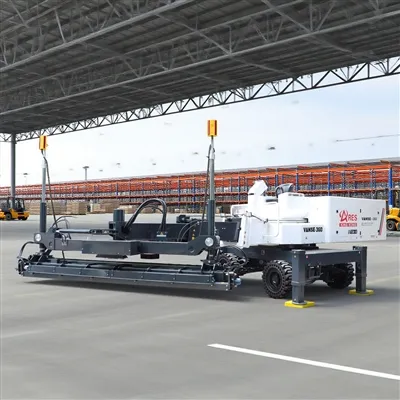
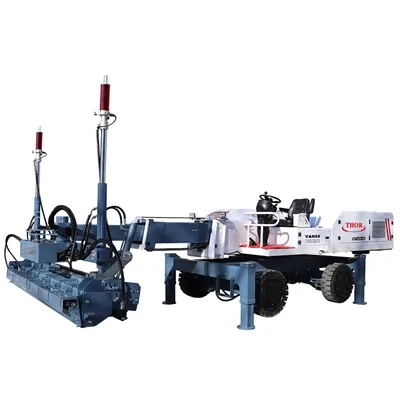
We found that when many users use the laser leveling machine, they often just know how to use it, but the follow-up maintenance and maintenance are basically not done. They don’t know that maintenance and maintenance are actually a crucial step for the leveling machine, because the correct maintenance steps are actually an important prerequisite for ensuring the efficient use of the leveling machine.
Maintenance method of laser leveling machine:
1. After the work is completed, please use the arm lift button to manually lift the machine head, and then push it out of the construction site. It is forbidden to push the machine when the vibrating leveling part is in contact with the ground to avoid damage to the vibrating plate.
2. After the construction is completed, it is necessary to rinse the laser leveling machine with a high-pressure water gun in time (it is strictly forbidden to flush the water gun directly at the mesh part of the fuselage, so as to prevent water from entering the inside of the fuselage and causing short circuits, etc.).
3. The place where the laser leveling machine is placed must be kept dry, and debris and flammable and explosive materials must not be piled up around it.
4. The battery of the leveler also needs to be paid attention to. If it is not used together for a long time, make sure to remove all batteries from the host and receiver and store them properly. The transmitter comes with a rechargeable battery with a charging time of eight hours.
5. During the use of the laser leveling machine, please try to charge the battery after the battery is fully used. When charging, try to ensure that it is fully charged for 8 hours at a time. The charging time is recommended to be 12 hours, and it is advisable to charge it for 8 hours later. To avoid damage to the battery and the transmitter, please unplug the power plug in time after it is fully charged.
6. If the laser signal is lost during the construction process, the concrete laser leveling machine needs to be restarted, and the interval time needs to be more than ten seconds.
7. If the laser leveling machine is placed on a stable ground when it is not used for a long time, lubricating grease should be added to each bearing part once a week, and lubricating oil should also be added to each chain to maintain good lubrication. At the same time, attention should be paid to avoid sand and other sundries getting into the chain to prevent premature damage to the chain. Generally, at the end of one month or every construction period, the laser leveling machine should be inspected and maintained once. Always pay attention to the tightness of the V-belt and the chain, adjust it in time if it is too loose, and adjust the fastening bolts frequently to prevent loosening.
About the maintenance method of the laser leveling machine, I will introduce you here. I believe that you have understood it clearly after reading it. If you want to know more about the leveling machine, you can continue to pay attention to our website. We will provide you with more information in this regard.
Thanks to All the Friends Who Support and Trust Shandong Vanse Machinery Technology Co., Ltd.
If you want to know more about Shandong Vanse Machinery Technology Co., Ltd. or have any questions, please feel free to contact us:
Our Factory
Shandong Vanse Machinery Technology Co., Ltd.








Share this article

About the Author: Shandong Vanse Machinery Technology Co., Ltd.
Shandong Vanse Machinery Technology Co., Ltd. is a high-tech manufacturer specializing in concrete construction machinery, including laser screeds and related equipment. The company integrates R&D, production, and global sales, with products exported to over 60 countries and widely used in infrastructure projects worldwide.
Previous Post
Next Post
Related Articles
You Might Also Like
How can I adjust the laser leveling’s parameters and settings to achieve optimal leveling machine results?
The key to adjusting laser leveling parameters is to "take concrete properties as the basis and laser benchmark as the core". It is necessary to achieve a balance between flatness and efficiency through three steps: matching material conditions, optimizing mechanical parameters, and adjusting the laser system. Concrete slumpand Initial setting timeIt is the fault that determines all parameters. Different states require corresponding different settings, otherwise "over-vibration analysis" or "leveling failure" will occur. Specific status Core Impact Key parameter adjustment direction High slump (≥180mm) Strong fluidity, easy to segregate and produce sand 1. Reduce the vibration frequency (3000-4000 times/minute); 2. Slow down the driving speed (3-5m/min); 3. Reduce the scraper/warehouse pressure depth Medium slump (120-180mm) Moderate fluidity, easy to level 1. The vibration frequency is set to 4000-5000 times/minute; 2. Travel speed 5-8m/min; 3. Set the scraper/stack pressure depth to 5-10mm Low collapse (≤120mm) Poor fluidity, easy to honeycomb, uneven surface 1. Increase the vibration frequency (5000-6000 times/minute); 2. Slow down the driving speed to 2-4m/min; 3. Appropriately increase the scraper/warehouse pressure depth (10-15mm) After determining the foundation direction according to the concrete state, it is necessary to make detailed adjustments, vibration, walking, leveling. The three core parameters are the key to determining flatness. Vibration frequency: The core function is to make the concrete dense. If the frequency is too low, it is easy to hollow out, and if it is too high, it is easy to segregate. It is the first choice for conventional projects.4000-5000 times/minute. For thick concrete (≥200mm), the speed can be appropriately increased to 5500 times/minute, and for thin floors (≤100mm), it needs to be reduced to below 3500 times/minute to avoid vibrating dark and shallow layers. Vibration depth:The thickness of concrete pouring needs to be covered 1.2-1.5 times. For example, if the thickness of the poured ground is 150mm, the vibration depth should be set to 180-225mm to ensure that the upper and lower layers of concrete are tightly combined without stratification. Driving speed: Too fast will result in insufficient leveling and vibrating of the concrete, while too slow will affect the construction efficiency. It is recommended to follow the "Slow start, constant speed, slow stopPrinciple, normal speed is controlled at 5-8 m/min, the speed needs to be reduced by 2-3m/min in turning or corner areas to avoid edge abnormalities caused by centrifugal force. Walking path:use"Overlapping Paths", overlapping working width is200-300 mm, to prevent missing areas, especially suitable for large-area floor construction. Scraper/Neck Height:Based on the "reference signal" of the laser receiver, the initial height of the scraper must be higher than the design elevation.5-10mm high(Preset vibration subsidence amount), the warehouse height is slightly lower than the scraper (responsible for secondary finishing and leveling). Adjust:The consistency of the laser receiver determines the response speed of the equipment with high deviation. The large flat ground is set to "Medium sensitivity" (trigger adjustment when the deviation is ±2mm), corner or complex area setting "High sensitivity" (Adjustment is triggered when the deviation is ±1mm) to avoid surface depression caused by excessive adjustment. The premise for all parameter adjustments is that the laser reference is "accurate". If the laser system is offset, even the best mechanical parameters cannot guarantee flatness. Place it on a hard surface away from vibration sources (such as rollers and pump trucks), and use a spirit level to ensure that the transmitter is level (the bubble is in the center). After turning on the transmitter, use a tape measure or laser range finder to check whether the laser elevation within the 360° range of the transmitter is consistent (the workpiece must be ≤1mm). If the deviation is large, it needs to be corrected using the leveling screws at the bottom of the transmitter. Stop at a benchmark point with a known elevation (such as a poured lawn concrete block) and manually adjust the height of the receiver so that the display shows "Benchmark Elevation". Move the device to another reference point and check whether the display elevation is consistent with the actual height. If the deviation is greater than 1mm, open the host architecture panel and adjust the connection parameters between the receiver and the host. The chassis deviation should be ≤1mm. The adjustment logic for the best leveling effect is "First determine the benchmark (laser layout) → then match the materials (adjust parameters according to collapse) → finally fine control (vibration, movement, flattening and refinement). After adjustment, it is recommended to conduct a trial operation on a small area (2-3㎡) first, check the flatness with a 2-meter ruler (the gap is qualified if it is ≤3mm), and then use the error parameters based on the trial operation results to avoid rework caused by direct large-scale construction. Concrete slump Vibration frequency Travel speed Scraper/stack pressing depth Laser receiver is the same ≤120mm (low slump) 5000-6000 (times/minute) 2-4 (m/min) 10-15 (mm) High deviation (trigger adjustment when deviation is ±1mm) 120-180mm (medium slump) 4000-5000 (times/minute) 5-8 (m/min) 5-10 (mm) Middle deviation (trigger adjustment when deviation is ±2mm) ≥180mm (high slump) 3000-4000 (times/minute) 3-5 (m/min) Appropriately reduce (mm) Middle deviation (trigger adjustment when deviation is ±2mm) Note: The parameters provided in this document are for reference only and are not mandatory. Due to differences in technical characteristics between different brands and models of laser levelers, please consult the manufacturer for a suitable solution before actual operation. This reference document assumes no responsibility for any issues arising from failure to follow the manufacturer's instructions.Concrete Laser Levelings Machine User Manual And Operating Guide
♢ • ♢ • ♢ • ☆ Equipment Overview ☆ • ♢ • ♢ • ♢ The concrete laser leveling machine is an efficient and accurate ground leveling equipment that is widely used in various construction projects. It combines modern laser technology and mechanical engineering technology, captures the signal from the laser transmitter through the laser receiver, controls the scraper height of the leveling machine, and realizes automatic leveling of newly poured concrete, greatly improving work efficiency and leveling quality. . This equipment is suitable for large-area, high-precision concrete ground construction, such as commercial complexes, parking lots, warehouses and other places. ♢ • ♢ • ♢ • ☆ Equipment composition ☆ • ♢ • ♢ • ♢ The concrete laser leveling machine mainly consists of the following parts: 1. Main machine: including core components such as engine, traveling system, leveling system, control system, etc., it is the main working mechanism of the leveling machine. 2. Laser transmitter: used to emit laser signals to provide a reference plane for the leveling machine. 3. Laser receiver: installed on the leveling machine, used to capture laser signals and convert them into mechanical control signals. 4. Water source and water spray system: Provide an appropriate amount of moisture to the concrete during the leveling process to ensure that the concrete surface is flat and smooth. 5. Accessories: including various to ols, measuring tools, etc., used to assist the use and maintenance of the leveling machine ♢ • ♢ • ♢ • ☆ Safety Instructions ☆ • ♢ • ♢ • ♢ When operating a concrete laser leveling, the following safety regulations must be strictly observed: 1. Operators must receive professional training, be familiar with the equipment structure and operating points, and must obtain operating qualifications before taking up their posts. 2. Before starting the equipment, you must check whe ther all components are intact and whether the fasteners are firm and reliable to ensure that the equipment is in good working condition. 3. During operation, overloading, overspeeding, and over-range use are strictly prohibited to avoid equipment damage due to overload. 4. At the construction site, obvious safety war ning signs must be set up to ensure that non-workers stay away from the work area. 5. When the equipment has a fault or abnormality, it should be stopped immediately for inspection and the fault can be eliminated before continued use. 6. Operators must wear complete safety protective equipment, such as hard hats, protective glasses, gloves, etc., to ensure personal safety. ♢ • ♢ • ♢ • ☆ Preparation ☆ • ♢ • ♢ • ♢ Before operating the concrete laser leveling machine, you need to make the following preparations: 1. Check whether the appearance of the equipment is intact and whether there is any obvious damage or deformation. 2. Check whether the engine oil, water tank water level, etc. are within the specified range to ensure that the equipment lubrication and cooling systems are working properly. 3. Check whether each connection part is fastened reliably to prevent the equipment from loosening or falling off during work. 4. Check whether the laser transmitter and receiver are installed correctly to ensure that the laser signal can be transmitted and received normally. 5. According to the conditions of the construction site, reasonably arrange the position of the laser transmitter to ensure that the leveler can receive stable laser signals. 6. Prepare the water source and water spray system to ensure that the concrete surface can be fully moistened during the leveling process. ♢ • ♢ • ♢ • ☆ Operational procedures ☆ • ♢ • ♢ • ♢ The operation process of the concrete laser leveling is as follows: 1. Start the engine, preheat the equipment, and check whether each system is working properly. 2. Set the parameters of the laser transmitter according to the construction drawings and site conditions to ensure that the laser signal emitted meets the leveling requirements. 3. Connect the laser receiver to the leveling machine to ensure stable and reliable signal transmission. 4. Adjust the height and angle of the scraper of the leveling machine to maintain an appropriate distance and angle from the laser signal. 5. Turn on the water spray system to provide the appropriate amount of moisture to the concrete surface. 6. Start the leveling operation. According to the construction progress and the initial setting time of the concrete, reasonably control the walking speed of the leveling machine and the lifting frequency of the scraper. 7. During the leveling process, always observe the flatness and wetness of the concrete surface, and adjust the scraper height and water spray volume in a timely manner. 8. After the leveling operation is completed, turn off the engine and water spray system, and disconnect the laser receiver from the leveling machine. 9. Clean the equipment surface and construction site to ensure that the equipment is tidy and the environment is clean. ♢ • ♢ • ♢ • ☆ Care and Maintenance ☆ • ♢ • ♢ • ♢ In order to ensure the long-term stable operation of the concrete laser leveling machine, regular maintenance and upkeep work must be performed, including: 1. Regularly replace the engine oil and clean the oil filter to ensure that the engine lubrication system is clean and effective. 2. Check whether the cooling system components such as water tanks and water pipes are leaking or blocked, and keep the cooling system unimpeded. 3. Check the wear of scrapers, running wheels and other wearing parts, and replace damaged parts in time to ensure stable equipment performance. 4. Clean dust, oil and other debris on the surface and inside of the equipment to keep the equipment clean and tidy. 5. Regularly check the working status of key components such as electrical systems, laser transmitters and receivers to ensure their normal operation. 6. In accordance with the requirements of the equipment instruction manual, conduct regular comprehensive inspections and maintenance of the equipment to ensure long-term stable operation of the equipment. ♢ • ♢ • ♢ • ☆ Troubleshooting ☆ • ♢ • ♢ • ♢ During use, the concrete laser leveling may encounter some malfunctions or abnormal situations. To solve these problems, we can take the following measures to eliminate them: 1. Difficulty starting the engine: Check whether the battery power is sufficient, whether the starter motor is working normally, whether the fuel supply is smooth, etc. If there is any problem, replace the battery, start the motor or clean the fuel system in time. 2. Poor leveling effect: Check whether the laser transmitter and receiver are installed correctly and whether the signal is stable and reliable; check whether the height and angle of the scraper are adjusted appropriately; check whether the concrete surface is even and moist. If there is any problem, adjust or replace relevant parts in time. 3. The equipment is running abnormally: check whether the running wheels are seriously worn, whether the bearings are damaged, whether the transmission chain is loose, etc. If there is any problem, replace the running wheel, bearing or adjust the transmission chain in time. 4. The laser signal is unstable: Check whether the laser transmitter and receiver are interfered, whether the reflective surface is clean, whether the lens is damaged, etc. If there is any problem, promptly eliminate the interference, clean the reflective surface or replace the lens. 5. Electrical system failure: Check whether the cables are damaged, whether the wiring is loose, whether the components are damaged, etc. If there is a problem, repair the cable, tighten the wiring or replace the components in time. When troubleshooting, operators should strictly follow the requirements of the equipment instruction manual and are strictly prohibited from dismantling or repairing the equipment at will. If you encounter a fault that cannot be solved, you should contact professional maintenance personnel in time to handle it. ♢ • ♢ • ♢ • ☆ Transportation and Storage ☆ • ♢ • ♢ • ♢ When transporting and storing the concrete laser leveling, you need to pay attention to the following points: 1. Before transportation, make sure the device is turned off and disconnect the power supply and cables to prevent accidental startup during transportation. 2. During transportation, the equipment should be fixed and protected to prevent the equipment from being collided or damaged during transportation. 3. After arriving at the destination, the equipment should be fully inspected to ensure that the equipment has not been damaged or deformed during transportation. 4. When storing equipment, you should choose a dry, ventilated, and dark place to prevent the equipment from moisture, rust, or other damage. 5. During the storage period, the equipment should be maintained and maintained regularly to ensure that the equipment can work normally the next time it is used. In short, the warm concrete laser leveling machine is an efficient and accurate ground leveling equipment, but during use it needs to strictly abide by safety regulations, make preparations, follow operating procedures, perform regular maintenance and troubleshooting, and troubleshoot in a timely manner , and take necessary protective measures during transportation and storage. Only in this way can the long-term stable operation and service life of the equipment be ensured.Solutions for cooling the oil temperature of the hydraulic system of the power trowel machine when it is too high
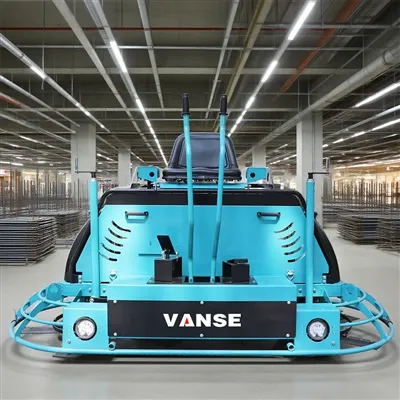
When the hydraulic oil temperature of your power trowel is too high, you can check and implement the following solutions one by one in the order from simple to complex: These steps can be carried out quickly on the construction site, aiming to control the situation immediately. Immediately stop the polishing operation, lift the polishing disc and let the equipment idle for a few minutes without load. This can quickly relieve system pressure and reduce heat generation. This is one of the most immediate methods. The vast majority of power trowel use air-cooled coolers. Please immediately use compressed air or a low-pressure water gun to blow and wash from the inner side to the outer side of the cooler fins to thoroughly remove the dust, cement powder lumps and debris adhering to them, ensuring smooth ventilation. After the machine stops, check the oil level gauge of the hydraulic oil tank. Low oil level (insufficient oil volume) can cause the oil pump to suck air and have insufficient cooling circulation, resulting in high temperatures. If the oil level is too high, the foam inside the fuel tank will be difficult to dissipate, which will also affect heat dissipation. Make sure the oil level is between the upper and lower marks on the dipstick. Move the equipment to a cool and well-ventilated place and avoid continuous operation under direct sunlight or in an environment with extremely high temperatures. If the problem persists or recurs after emergency measures are taken, a more in-depth inspection is required. Oil type: Ensure the use of anti-wear hydraulic oil of the grade and viscosity level specified by the equipment manufacturer. Excessively high viscosity will increase flow resistance and generate heat, while excessively low viscosity will intensify internal leakage, leading to a decrease in pump efficiency and heat generation. Oil quality: If the hydraulic oil has turned black, has a burnt smell or produces a large amount of foam, it indicates that the oil has oxidized and deteriorated, and its lubricating and heat dissipation performance has sharply declined. The oil must be completely replaced with new oil, and the oil tank should be cleaned and the hydraulic oil filter element replaced at the same time. Cooling fan: Check whether the motor driving the cooling fan is working properly and whether the circuit is intact. If it is belt drive, check whether the belt is loose, slipping or broken, and adjust or replace it in time. Upgrade cooling capacity: For old equipment or devices operating under extremely harsh conditions, if the original cooler's capacity is insufficient, it is advisable to consider installing a larger-capacity or independently driven air-cooled cooler. If the set pressure of the relief valve is too high or the valve core is stuck in the pressure relief state, it will cause high-pressure oil to continuously return to the oil tank through the relief valve. This is a common cause of a sharp increase in oil temperature. It is recommended that professional maintenance personnel use a pressure gauge to detect the system pressure and readjust the relief valve according to the specified value. If the valve core is damaged, it needs to be cleaned or replaced. Hydraulic pump: Internal wear of the hydraulic pump (such as wear of the plunger, gears or blades) can lead to severe internal leakage. High-pressure oil leaked inside the pump into the low-pressure area, generating a large amount of heat. It is usually accompanied by phenomena such as weak machine power, slow movement and increased noise. Professional personnel are required to conduct efficiency tests. After confirmation, maintenance or replacement should be carried out. Control valve group: The wear of the valve cores of each control valve (such as directional control valves) can also lead to internal leakage, causing local high temperatures. One can touch the surface of the valve block to feel if there are any abnormal hot spots to assist in the judgment. Prevention from the perspective of usage habits is fundamental. Arrange the construction rhythm reasonably to avoid the equipment running at full load for a long time without interruption. When the working conditions are particularly heavy, it is necessary to consciously arrange intermediate rest periods to allow the hydraulic system to "catch its breath" and cool down. Daily: Clean the exterior of the cooler after work. Weekly: Check the hydraulic oil level and quality. Every six months or according to the working hours: Replace the hydraulic oil and filter element regularly as recommended by the manufacturer. This is the most effective means to prevent system contamination and oil deterioration. Solving the problem of excessively high hydraulic oil temperature in the power trowel machine is a systematic process. Please follow the principle of "start from the outside to the inside, from the easy to the difficult" : Begin with external factors such as cleaning the cooler and checking the oil level, as these often solve most problems. If it is ineffective, further investigate the core parameters such as the quality of the hydraulic oil and the setting of the relief valve. Finally, complex maintenance such as internal leakage of hydraulic pumps and valve groups should be considered. Adhering to standardized operation and regular maintenance is the fundamental way to prevent such problems from happening. Note: The parameters provided in this document are for reference only and are not mandatory. Due to differences in technical characteristics between different brands and models of laser levelers, please consult the manufacturer for a suitable solution before actual operation. This reference document assumes no responsibility for any issues arising from failure to follow the manufacturer's instructions.