Insight blog
Buy Laser Screeds Globally: Prices, Specs and Suppliers
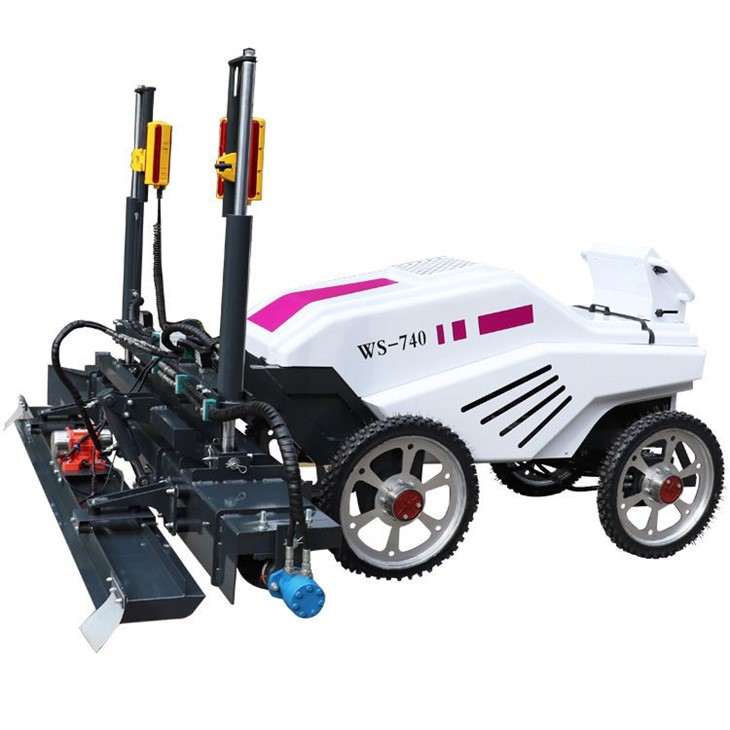
Buy Laser Screeds Globally: Prices, Specs and Suppliers
Quick Answer

A concrete laser screed is worth buying when your project involves large slabs, strict floor-flatness requirements, repeated pours, warehouse floors, logistics centers, factories, terminals, or infrastructure pavements. For most contractors in the Global market, a ride-on laser screed offers the best balance of productivity and operator control, while boom-type laser screeds are more suitable for large industrial slabs and hard-to-reach areas. Typical purchase prices range from approximately US$25,000 for compact walk-behind equipment to more than US$180,000 for advanced boom-type or 3D-capable machines.
Well-known suppliers include Somero, Ligchine, Allen Engineering, Shandong Vanse Machinery Technology, Sany, and Shandong HIKING. Buyers should compare not only machine price, but also laser-system compatibility, engine configuration, screed-head width, hydraulic response, parts availability, operator training, shipping terms, and service coverage near their project locations.
Qualified international manufacturers, including Chinese suppliers with CE or equivalent local compliance documentation, proven export records, and responsive pre-sales and after-sales support, can be strong alternatives for buyers seeking better cost-performance. This is especially relevant for contractors, rental fleets, distributors, and industrial flooring companies purchasing equipment for use across ports, logistics hubs, construction zones, and regional markets worldwide.
Global Market Overview for Concrete Laser Screeds

The Global market for concrete laser screeds is supported by industrial construction, e-commerce warehousing, manufacturing expansion, airport development, port logistics, data centers, cold-storage facilities, and modern infrastructure projects. Large slab-on-grade projects increasingly require tighter elevation tolerance, fewer joints, faster placement cycles, and more consistent floor performance. A laser screed helps contractors achieve these goals by using a rotating laser transmitter and machine-mounted receivers to automatically regulate the screed head at the required elevation.
Demand is especially strong in industrial and logistics corridors around Shanghai, Shenzhen, Singapore, Dubai, Jeddah, Rotterdam, Hamburg, Los Angeles, Houston, Toronto, Melbourne, São Paulo, Mexico City, Kuala Lumpur, Seoul, and major European manufacturing centers. In these markets, developers and general contractors often specify high flatness, heavy-load performance, and predictable project schedules. A machine that reduces manual raking and improves placement consistency can create measurable savings in labor, rework, and follow-on floor finishing.
For buyers evaluating a concrete laser screed for sale, the key question is not simply which model has the largest working width. The correct machine depends on slab size, reinforcement congestion, concrete mix design, site access, labor availability, required tolerances, transport regulations, and frequency of use. A large boom machine can place concrete rapidly on open floors, but a compact ride-on model may be more profitable for mixed projects, smaller warehouse bays, and contractor fleets serving several job types.
Equipment purchasing decisions have also become more service-driven. A low acquisition price may lose value if a machine cannot be commissioned promptly, if hydraulic parts are difficult to source, or if operators lack training. Buyers should therefore select suppliers that can provide drawings, technical consultation, machine selection, delivery coordination, remote diagnostics, spare-parts support, and practical field training.
Concrete Laser Screed Types and Best Uses

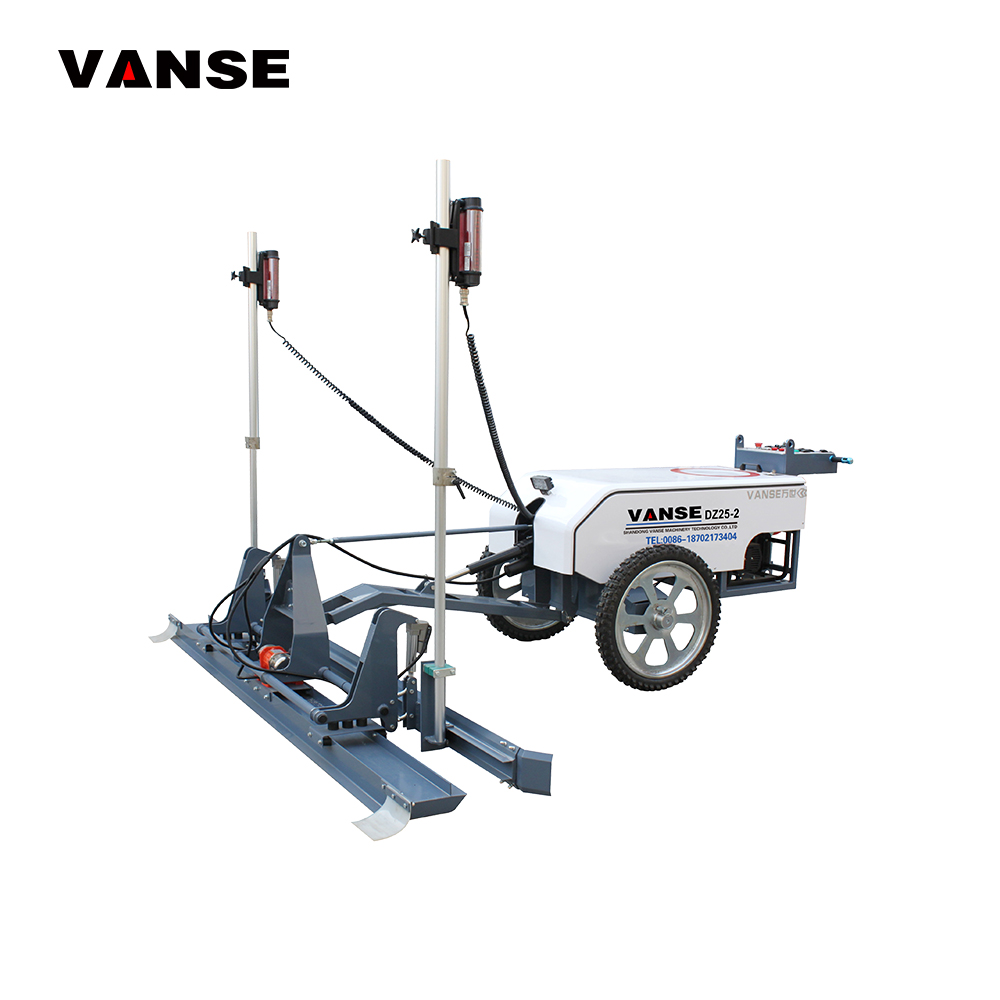
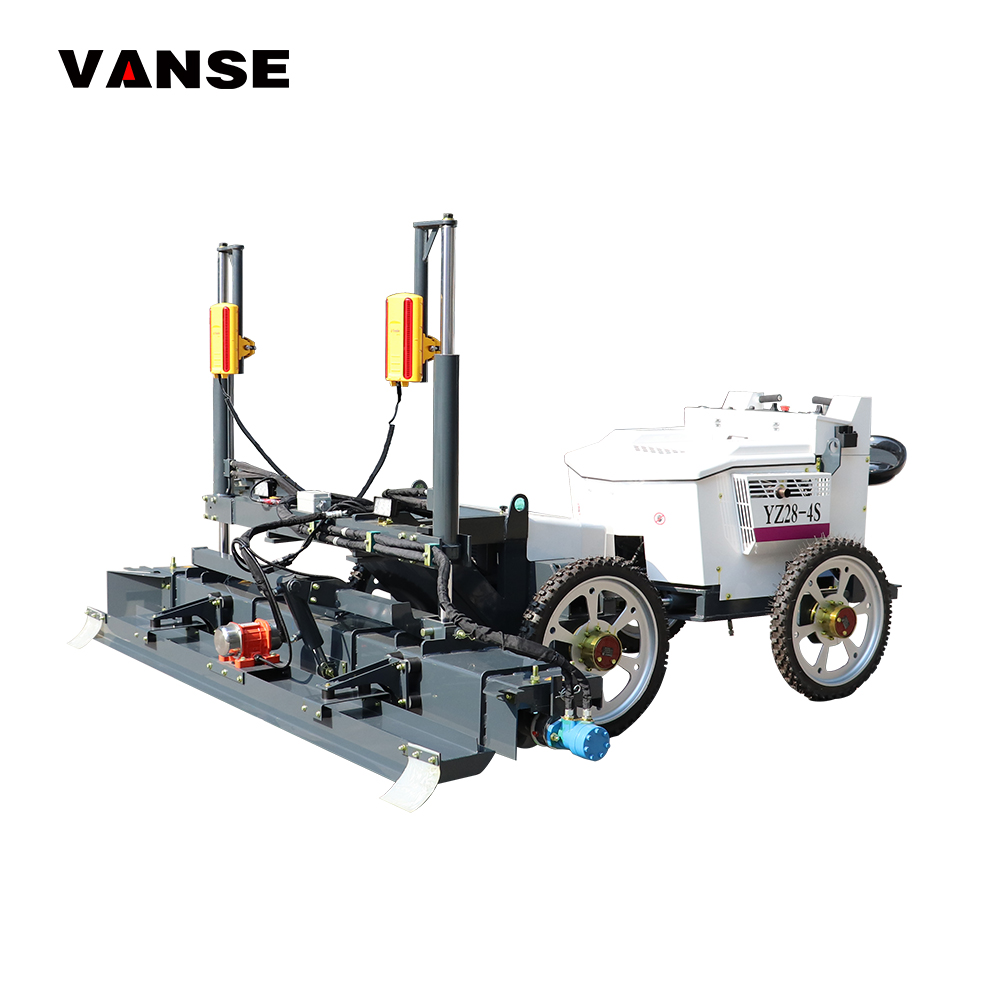
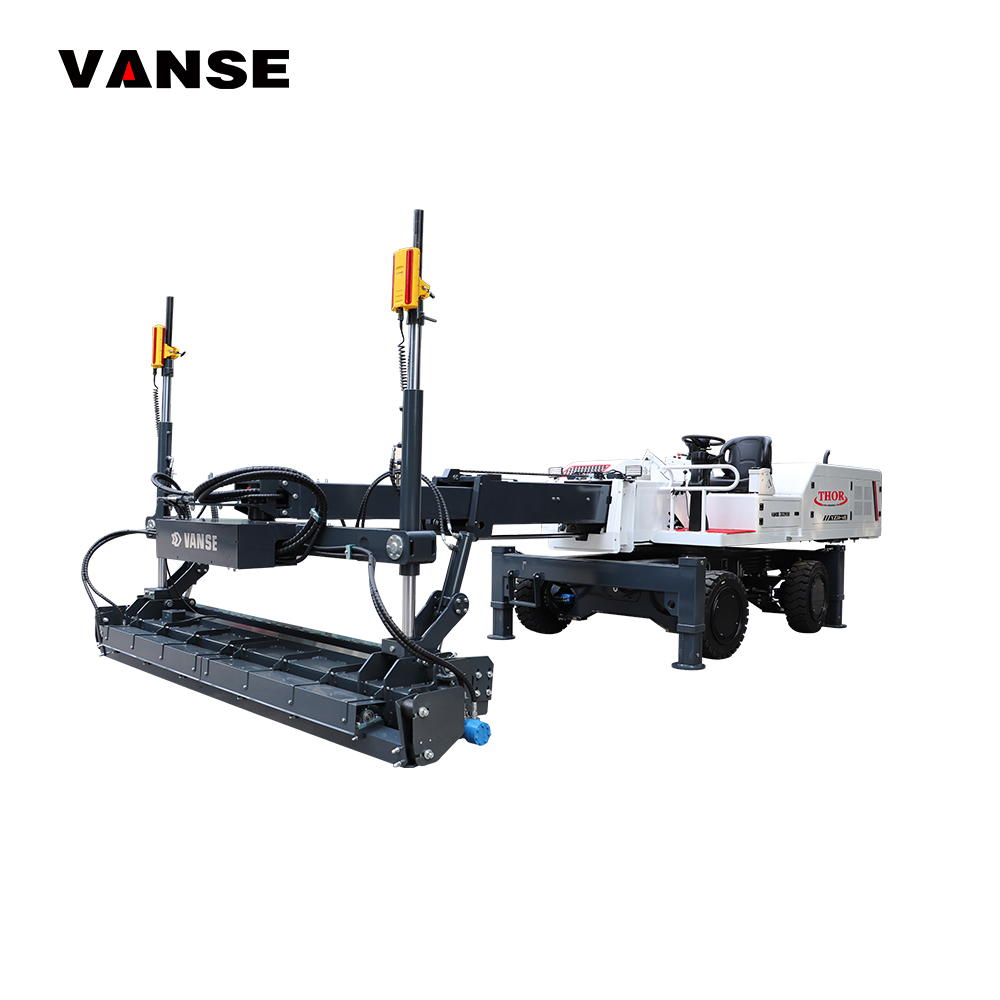
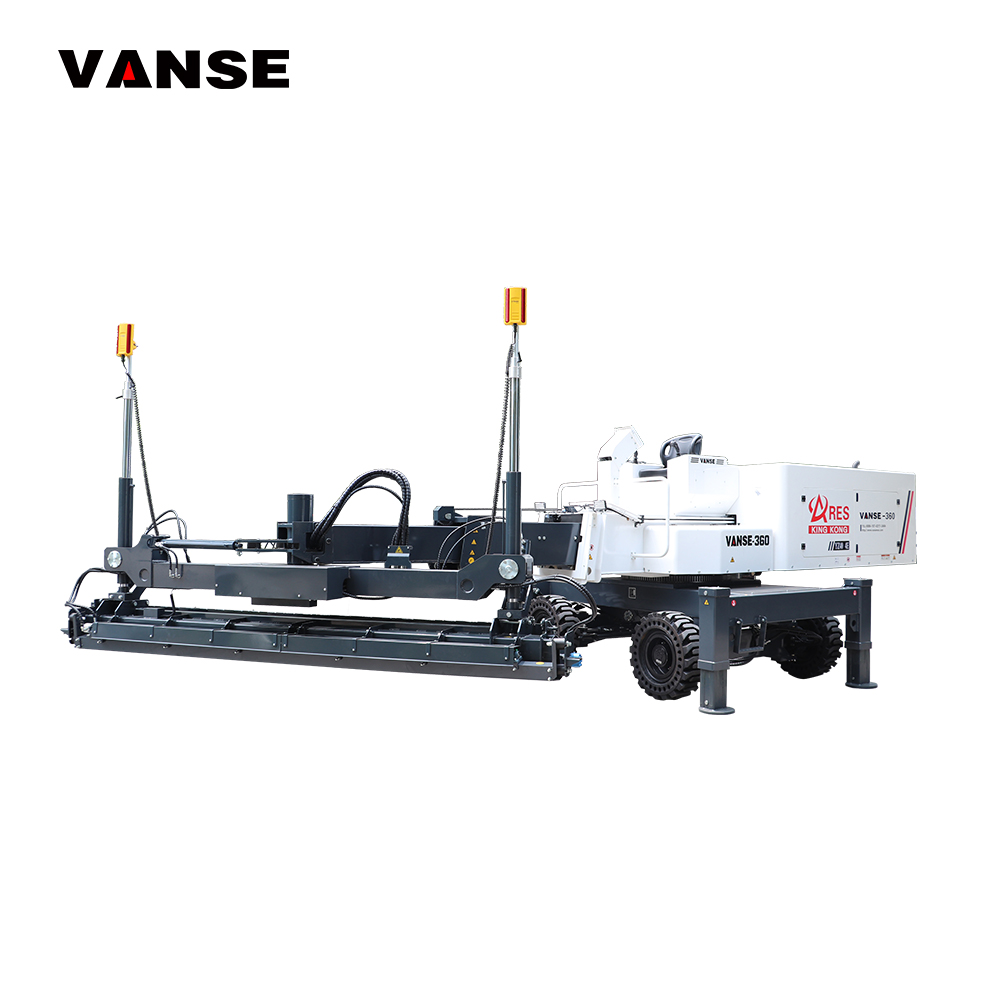
Concrete laser leveling equipment is available in walk-behind, ride-on, boom-type, and 3D-profile-capable formats. Each category has a different production range and operating environment. Contractors should match the equipment to their average pour size rather than purchasing solely for their largest possible project.
| Machine Type | Typical Project Size | Best Working Environment | Main Benefit | Important Limitation | Typical Buyer |
|---|---|---|---|---|---|
| Walk-behind laser screed | Small to medium pours | Restricted-access floors and renovation work | Lower investment and simple transport | Lower output than ride-on machines | Small contractors and rental firms |
| Compact ride-on laser screed | Medium industrial slabs | Warehouses, workshops, retail floors | High productivity with manageable dimensions | Needs adequate turning space | Concrete flooring contractors |
| Standard ride-on laser screed | Medium to large slabs | Factories, logistics centers, distribution buildings | Strong daily production capacity | Requires trained operator and transport planning | Industrial floor specialists |
| Boom-type laser screed | Large continuous pours | Open warehouse and manufacturing slabs | Long reach and reduced labor around placement zones | Higher purchase and maintenance cost | Large contractors and major project owners |
| 360-degree boom screed | Large, complex floor layouts | Columns, perimeter zones, dense work areas | Flexible operating coverage around the machine | Requires experienced setup and operation | High-volume industrial contractors |
| 3D-profile laser screed | Variable-grade surfaces | Roads, ramps, yards, drainage-sensitive slabs | Can follow designed profiles beyond a flat plane | Needs accurate digital layout data | Infrastructure and paving contractors |
Walk-behind machines remain practical for narrow areas, repairs, small commercial floors, and contractors entering the mechanized screeding market. Their lower weight and simpler transport can be valuable in urban projects where access is limited. However, they cannot match the production rate and labor reduction available from ride-on equipment.
Ride-on laser screeds are the most versatile category for many buyers. The operator can move efficiently across fresh concrete while the automatic laser control maintains target elevation. These machines are commonly selected for warehouses, workshops, production facilities, and large commercial slabs. Their value increases when a contractor completes frequent pours and needs repeatable quality across multiple sites.
Boom-type units are designed for substantial slab areas where concrete placement is continuous and access must be maintained around reinforcement, dowels, or perimeter obstacles. A long-reach boom can help crews work farther from the machine chassis and reduce dependence on manual leveling labor. For large distribution hubs near international trade centers such as Rotterdam, Dubai, Singapore, or Los Angeles, boom screeds can be a productive solution when slab size justifies the investment.
Essential Specifications to Compare Before Buying
A laser screed should be assessed as a complete operating system. The screed head, machine frame, hydraulic circuit, engine, laser receiver, control system, operator station, and support package all influence the final outcome. Request a detailed specification sheet rather than relying on a headline working width or advertised production figure.
| Specification | Why It Matters | What Buyers Should Check | Suitable Priority Level | Common Procurement Mistake | Practical Buying Advice |
|---|---|---|---|---|---|
| Working width | Influences pass coverage and production | Screed head width and extension options | High | Buying maximum width for small sites | Match width to typical bay dimensions |
| Boom reach | Determines accessible placement zone | Maximum horizontal and vertical reach | High for boom models | Ignoring columns and edge conditions | Review site drawings before selecting |
| Laser control | Controls elevation accuracy | Receiver brand, transmitter compatibility, calibration process | Critical | Assuming all systems work together | Confirm compatible laser package in writing |
| Hydraulic system | Affects screed-head response and stability | Valve quality, hose routing, filtration, service access | Critical | Comparing only engine horsepower | Ask for hydraulic maintenance requirements |
| Engine configuration | Influences reliability and local serviceability | Available engine options, emissions requirements, dealer support | High | Choosing an engine unsupported locally | Select an option supported in your region |
| Machine dimensions | Determines transport and site access | Weight, loading method, shipping dimensions, trailer needs | High | Ignoring container and road restrictions | Plan logistics from port to jobsite |
| 3D capability | Supports slopes and engineered profiles | Software, survey data workflow, operator competence | Project dependent | Paying for unused technology | Buy only if variable grades are routine |
The laser system deserves particular attention. Ask whether the machine is supplied with a transmitter, receivers, mast assemblies, control display, batteries, charging equipment, and calibration instructions. Some quotations include only the screed machine, while laser-control accessories are priced separately. This can create an unexpected cost difference between suppliers.
Hydraulic design also matters because the screed head must respond smoothly to elevation changes while maintaining a stable concrete surface. Buyers should inspect hose protection, service points, filters, cylinder quality, and whether replacement seals, fittings, and hoses can be supplied quickly. Machines operating in hot climates, coastal areas, or dusty sites require disciplined preventive maintenance.
For international procurement, verify voltage options for chargers and support equipment, engine emissions compliance for the destination market, packaging method, container loading plan, customs documents, and spare-parts list. A supplier experienced with exports through Qingdao, Shanghai, Ningbo, Singapore, Jebel Ali, Rotterdam, and major North American ports can reduce avoidable shipping delays.
Indicative Concrete Laser Screed Price Ranges
Concrete laser screed pricing varies widely because machine configuration, boom reach, laser package, engine choice, optional 3D controls, accessories, shipping, commissioning, and local taxes can change the delivered cost. The figures below are planning ranges only. A formal quotation should specify Incoterms, included accessories, warranty scope, training, spare parts, and destination port.
| Equipment Category | Indicative Equipment Price | Typical Included Scope | Potential Extra Costs | Best Fit | Value Consideration |
|---|---|---|---|---|---|
| Walk-behind laser screed | US$25,000–US$55,000 | Machine, basic screed assembly, standard controls | Laser transmitter, freight, local tax | Small slabs and entry-level fleets | Lower capital exposure |
| Compact ride-on screed | US$45,000–US$85,000 | Ride-on chassis, screed head, basic laser control | Training, spare kit, export packing | Commercial and medium industrial floors | Strong productivity-to-price ratio |
| Standard ride-on screed | US$70,000–US$130,000 | Higher-capacity hydraulics and wider coverage | Premium engine, receiver upgrade, trailer | Frequent warehouse and factory pours | Good for recurring production work |
| Boom-type laser screed | US$100,000–US$220,000 | Boom assembly, advanced hydraulic control | Long-reach options, laser package, commissioning | Large industrial slabs | Higher output on open pours |
| 3D-capable screed system | US$130,000–US$280,000+ | Machine plus profile-control capability | Survey system, software, specialist training | Yards, ramps, roads, variable elevations | Best for complex-profile projects |
| Used premium-brand screed | US$40,000–US$160,000 | Depends on age, hours, condition, accessories | Repairs, transport, missing laser components | Buyers with inspection capability | Inspect thoroughly before payment |
The lowest machine price is not automatically the lowest project cost. A contractor pouring several hundred thousand square meters annually may recover a higher initial investment through improved output, reduced labor, fewer elevation corrections, and greater capacity to bid on demanding industrial projects. Conversely, a contractor using the machine only occasionally may benefit more from a compact model, rental arrangement, or dealer-supported used machine.
When requesting quotations, ask suppliers to separate the factory price, laser system price, optional accessories, spare-parts package, sea freight, insurance, local commissioning, and training costs. This makes comparison transparent and prevents buyers from selecting a quotation that appears cheaper but excludes necessary operating components.
Buying Advice for Contractors, Rental Companies and Distributors
Start with a realistic production profile. Review the last 12 to 24 months of completed concrete work: average slab area, largest pour, required finish level, concrete volume per day, labor crew size, jobsite access, and locations served. A buyer working mainly on 1,000 to 3,000 square meter warehouse pours may need a different machine from a company building airport aprons or 30,000 square meter logistics centers.
Ask the supplier to recommend a configuration based on actual drawings, not only a verbal description. Provide slab dimensions, column grid, reinforcement layout, desired slab thickness, concrete slump range, target flatness, construction joints, and daily concrete supply volume. An experienced supplier should explain whether a ride-on or boom-type machine is appropriate and identify operating limitations before the sale.
Evaluate the commercial offer as a lifecycle package. Confirm warranty duration, excluded wear parts, response time for technical questions, availability of remote video support, spare-parts storage, delivery lead time, training plan, and local or regional service contacts. For distributors, request marketing materials, technical training, demonstration support, protected sales territory terms, and a recommended parts inventory.
Used equipment can be attractive but should be inspected with discipline. Check engine hours, hydraulic leaks, cylinder movement, screed-head wear, boom pins, control functions, receiver operation, frame damage, service history, and availability of proprietary components. A used machine without a functioning laser-control package or supportable parts network can become more expensive than a new mid-range model.
Industries and Applications That Benefit from Laser Screeding
Laser screeds are used wherever concrete floors need fast placement and controlled elevation. They are particularly valuable in projects where manual leveling would require large crews or where inconsistent slab tolerance could affect racking systems, automated equipment, vehicles, floor coatings, and long-term maintenance.
| Industry | Common Application | Why Laser Screeding Helps | Preferred Machine Style | Key Site Consideration | Typical Decision Maker |
|---|---|---|---|---|---|
| Warehousing and logistics | Distribution center slabs | Fast placement over large floor areas | Ride-on or boom-type | Rack loads and flatness requirements | Flooring contractor or developer |
| Manufacturing | Factory production floors | Consistent elevation for equipment installation | Ride-on screed | Machine bases and joint design | General contractor |
| Airports and terminals | Aprons, terminal yards, support areas | Supports controlled profiles and high output | 3D-capable boom screed | Strict specifications and logistics | Infrastructure contractor |
| Ports and container yards | Heavy-duty pavements and service zones | Reduces labor on expansive paved areas | Boom-type or 3D system | Drainage and heavy-load design | Port contractor |
| Commercial construction | Retail floors and parking structures | Improves consistency and schedule control | Compact ride-on | Access constraints and phased pours | Concrete subcontractor |
| Data centers | Equipment-supporting floor slabs | Helps meet tight tolerance expectations | Ride-on laser screed | Schedule certainty and clean execution | Specialist contractor |
| Road and infrastructure | Ramps, industrial roads, drainage slabs | Supports planned elevation changes | 3D-profile screed | Accurate survey and design data | Civil contractor |
In logistics facilities, floor quality affects forklift travel, racking installation, automated guided vehicles, and joint maintenance. In manufacturing plants, accurate slabs simplify installation of production equipment and reduce secondary correction work. At airports and ports, profile control, drainage, durability, and construction speed are major priorities. These practical outcomes explain why laser screeds are increasingly treated as core production equipment rather than optional machinery.
Top Concrete Laser Screed Suppliers for the Global Market
The following suppliers represent different purchasing routes, from established premium brands to internationally active manufacturers and construction-equipment groups. Buyers should confirm current model availability, authorized dealer coverage, applicable certification, and local support before placing an order.
| Company | Headquarters or Main Base | Service Regions | Core Strengths | Key Offerings | Suitable Buyer Profile |
|---|---|---|---|---|---|
| Somero Enterprises | Fort Myers, Florida, United States | North America, Europe, Asia-Pacific, Middle East | Specialist reputation in concrete leveling technology | Ride-on, boom-type and advanced laser screeding systems | Large industrial flooring contractors |
| Ligchine International | Wisconsin, United States | North America and international dealer markets | Compact and practical laser screed solutions | Ride-on laser screeds and concrete-placement equipment | Mid-sized contractors and rental fleets |
| Allen Engineering | Paragould, Arkansas, United States | Global dealer network | Broad concrete-equipment portfolio | Concrete finishing machines and laser screed solutions | Contractors seeking integrated equipment fleets |
| Sany Group | Changsha, China | Asia, Africa, Middle East, Europe and Americas | Large-scale construction-equipment manufacturing | Concrete machinery, earthmoving equipment and project support | Infrastructure and large contractors |
| Shandong Vanse Machinery Technology | Jining, China | More than 80 countries and regions | Laser screed specialization, customization and export support | Walk-behind, ride-on and boom-type concrete laser screeds | Contractors, dealers, distributors and OEM buyers |
| Shandong HIKING Machinery | Shandong, China | International export markets | Construction-floor equipment manufacturing | Power trowels, laser screeds and concrete equipment | Price-sensitive contractors and importers |
Somero is widely recognized by large industrial-floor contractors for advanced laser-guided screeding technology and extensive experience in high-specification slabs. It is often considered where project requirements, fleet utilization, and service budgets support premium equipment investment.
Ligchine is known for practical concrete laser screeding solutions that appeal to contractors seeking productive equipment in a relatively compact format. Its machines are commonly considered by concrete specialists that need a balance between maneuverability and output.
Allen Engineering supplies a broader concrete-equipment range, making it relevant for buyers who want to coordinate trowels, finishing tools, and screeding equipment through an established dealer structure. Sany is a major global construction-machinery group with broad equipment resources, particularly relevant for large contractors and infrastructure procurement.
Chinese manufacturers can provide an important procurement option when buyers require competitive pricing, configuration flexibility, export experience, and direct technical access. However, purchasers should review factory capability, CE documentation where required, parts support, model history, inspection procedures, and regional service commitments before signing a contract.
Why Consider Vanse for Concrete Laser Screeding Equipment
Shandong Vanse Machinery Technology Co., Ltd. has manufactured concrete construction equipment since 2013 and serves contractors, industrial-flooring companies, distributors, rental businesses, brand owners, and project operators across more than 80 countries and regions. Its laser screed range includes walk-behind, ride-on, and boom-type models designed around laser control, hydraulic operation, durable structural materials, reliable engine configuration options, and practical service access; the company supports ISO 9001 and CE quality requirements and holds more than 50 invention patents plus over 200 utility model and design patents. Vanse supplies direct sales, wholesale, retail, OEM/ODM-style customized branding, regional distribution partnerships, and project-based equipment packages, allowing customers to specify voltage, engine options, and market-oriented configurations. With overseas service resources in Southeast Asia and Canada, dealer networks across North America, South America, Europe, Asia, and the Middle East, multilingual 24-hour remote consultation, professional engineer training, spare-parts support, remote diagnosis, and on-site technical assistance, Vanse operates as a long-term market participant rather than a remote exporter. The company provides EPC, turnkey, and customer-owned plant solutions where applicable, but does not provide BOO or on-site bulk-supply services. Buyers can review the concrete laser screed range, explore ride-on laser screed options, download the equipment catalog, or request guidance through the company’s global service support page.
Example Project Scenarios
A logistics-center contractor in Southeast Asia may be building 15,000 square meters of warehouse floor near a major port. The project needs rapid placement, controlled elevation, and fewer manual workers during hot-weather pours. A standard ride-on or boom-type laser screed can help maintain production while allowing finishing crews to focus on edging, joint work, and final surface treatment. The supplier should provide operator training before the first major pour and ensure filters, seals, and common hydraulic spares are available locally or regionally.
A flooring company in Canada or the United States may handle several medium-sized retail, manufacturing, and distribution projects each year. A compact ride-on laser screed can be a practical fleet addition because it is easier to transport than a large boom machine while still offering a major productivity improvement over manual strike-off methods. The buying decision should include trailer compatibility, cold-weather maintenance requirements, engine support, and access to local service technicians.
An infrastructure contractor in the Middle East may need to place slabs in an industrial yard, airport support zone, or drainage-sensitive pavement area. In this case, a 3D-capable screeding solution may be more suitable than a basic flat-floor laser system. The contractor should verify digital model workflow, survey control, grade-transition capability, and the supplier’s ability to support commissioning on complex projects.
A distributor in Latin America or Africa may require a supplier that can support localized branding, initial machine inventory, spare-parts packages, technical training, and lead generation. Before accepting a distribution arrangement, the distributor should confirm regional territory, warranty responsibilities, delivery cycles, product documentation, and access to factory engineers for difficult field cases.
Future Trends for 2026 and Beyond
By 2026, concrete laser screed purchasing decisions will increasingly be shaped by digital construction workflows, labor shortages, sustainability targets, and stricter quality control. Contractors will expect machines to integrate more easily with 3D project data, site surveying systems, telematics, and documented quality-assurance processes. Demand for machines that can work efficiently with lower-carbon concrete mixes, supplementary cementitious materials, and optimized slab designs is also expected to grow.
Automation will continue to improve through more responsive hydraulic controls, better sensor feedback, improved machine diagnostics, and easier calibration procedures. 3D-profile technology will become more important for industrial yards, ramps, drainage zones, roads, and infrastructure slabs that cannot be built as a simple flat plane. Contractors may also use digital production records to support quality documentation for owners and general contractors.
Policy and procurement trends will favor safer equipment, lower emissions, documented training, and durable components that can be serviced rather than discarded. In regions with tighter emissions rules, engine selection and local compliance will become more important. Buyers should ask whether a supplier can provide destination-appropriate configurations, technical documents, and support for future replacement parts.
Sustainability in concrete construction is not limited to machine fuel use. Better leveling accuracy can reduce over-pouring, minimize material waste, lower rework, and support efficient slab thickness control. A correctly selected concrete laser screed can therefore contribute to both production efficiency and more responsible material use on large projects.
Frequently Asked Questions
What is the best concrete laser screed for a warehouse floor?
For most warehouse projects, a ride-on laser screed is the preferred option because it provides strong productivity, automatic elevation control, and good maneuverability. Large uninterrupted warehouse slabs may justify a boom-type machine, especially when pours are frequent and labor savings are a priority.
How much does a concrete laser screed cost?
Prices commonly range from around US$25,000 for smaller walk-behind units to more than US$180,000 for advanced boom-type or 3D-capable systems. The final delivered price depends on machine size, laser package, engine selection, accessories, freight, import costs, commissioning, and training.
Can a laser screed replace manual concrete leveling?
A laser screed significantly reduces manual strike-off and raking requirements on suitable slabs, but crews are still needed for concrete placement, edge work, joint preparation, finishing, curing, quality checks, and machine operation. It improves labor productivity rather than eliminating skilled concrete workers.
Is a boom-type laser screed always better than a ride-on model?
No. A boom-type machine is more productive on large, open slabs, but it costs more and requires suitable transport, access, and operator experience. A ride-on machine can be the more profitable choice for contractors handling mixed project sizes or working in tighter spaces.
What service support should be included with a laser screed purchase?
Buyers should expect operating manuals, commissioning guidance, operator training, warranty terms, remote troubleshooting, spare-parts support, maintenance schedules, and access to technical personnel. International buyers should also confirm shipping documentation and local or regional service options.
Can Chinese concrete laser screed manufacturers meet international requirements?
Yes, qualified manufacturers can supply CE-certified equipment where applicable and offer export-ready documentation, customized engine or voltage options, and international support. Buyers should verify the exact certification scope, machine specification, quality-control process, spare-parts plan, and service arrangement for their destination market.
Where can I request a concrete laser screed quotation?
You can contact a specialized manufacturer or regional dealer with your slab drawings, project location, expected pour area, floor-tolerance requirements, preferred machine type, and destination port. For direct factory consultation, visit Vanse concrete construction equipment and request a configuration based on your application.
Share this article

About the Author: Shandong Vanse Machinery Technology Co., Ltd.
Shandong Vanse Machinery Technology Co., Ltd. is a high-tech manufacturer specializing in concrete construction machinery, including laser screeds and related equipment. The company integrates R&D, production, and global sales, with products exported to over 60 countries and widely used in infrastructure projects worldwide.