Insight blog
Worldwide Concrete Laser Screed Purchasing Guide
Worldwide Concrete Laser Screed Purchasing Guide
Quick Answer

For buyers in the Global market, the best concrete laser screed for sale depends on slab size, concrete volume, required flatness, site access, operator experience, and the availability of local service. Ride-on laser screeds are usually the best value for warehouses, factories, logistics parks, and large commercial slabs. Boom-type laser screeds suit wide pours, airport aprons, terminal yards, and infrastructure work, while compact walk-behind units are practical for smaller spaces, renovation work, and projects with limited access.
Start by comparing real working width, paving output, laser control accuracy, hydraulic system design, engine configuration, spare-parts lead time, commissioning support, and warranty terms—not only purchase price. Established suppliers such as Somero, Ligchine, Husqvarna Construction, Wacker Neuson, Allen Engineering, and Shandong Vanse Machinery Technology offer different machine sizes and support models for international contractors.
Qualified international manufacturers, including Chinese equipment suppliers with CE, ISO-based quality systems, relevant local compliance documentation, and responsive pre-sales and after-sales support, should also be considered. Their cost-performance advantages can be especially valuable for contractors, distributors, rental fleets, and project owners working across multiple regions.
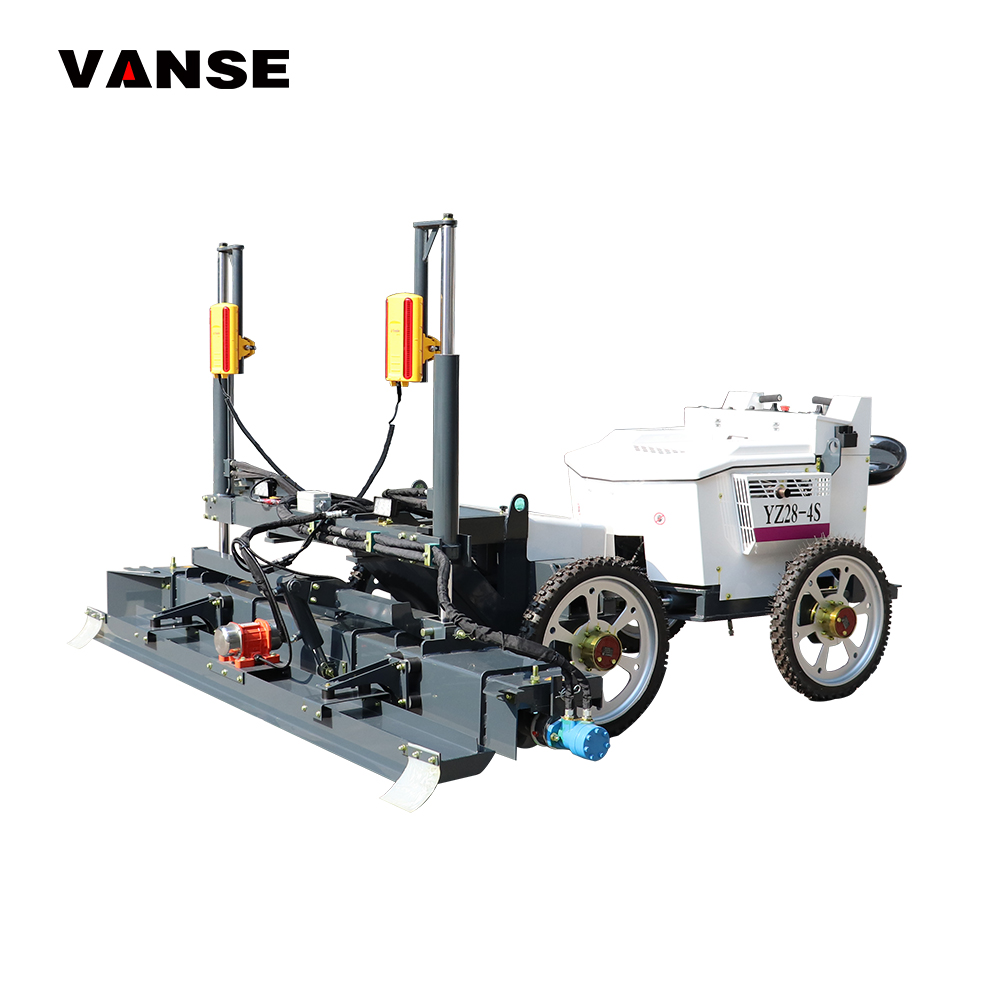
- Choose a ride-on screed for most industrial floors above medium-scale daily pour volumes.
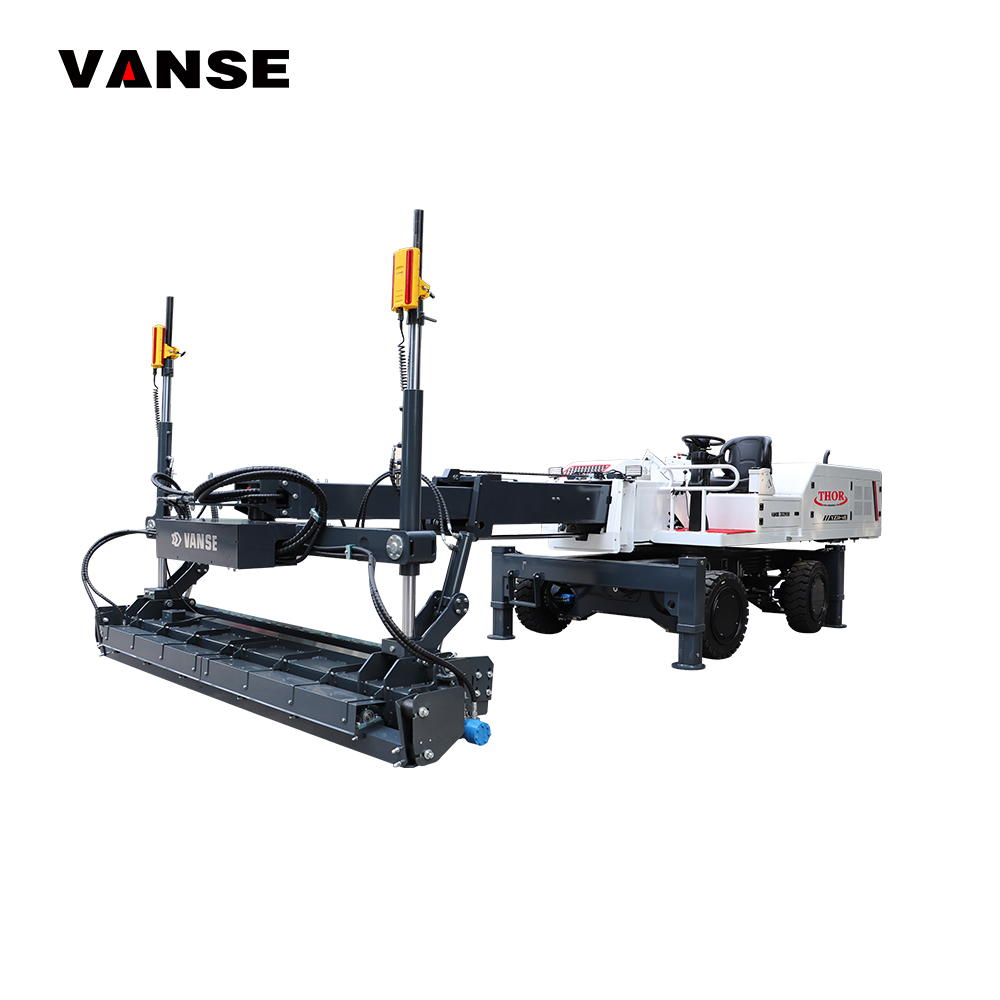
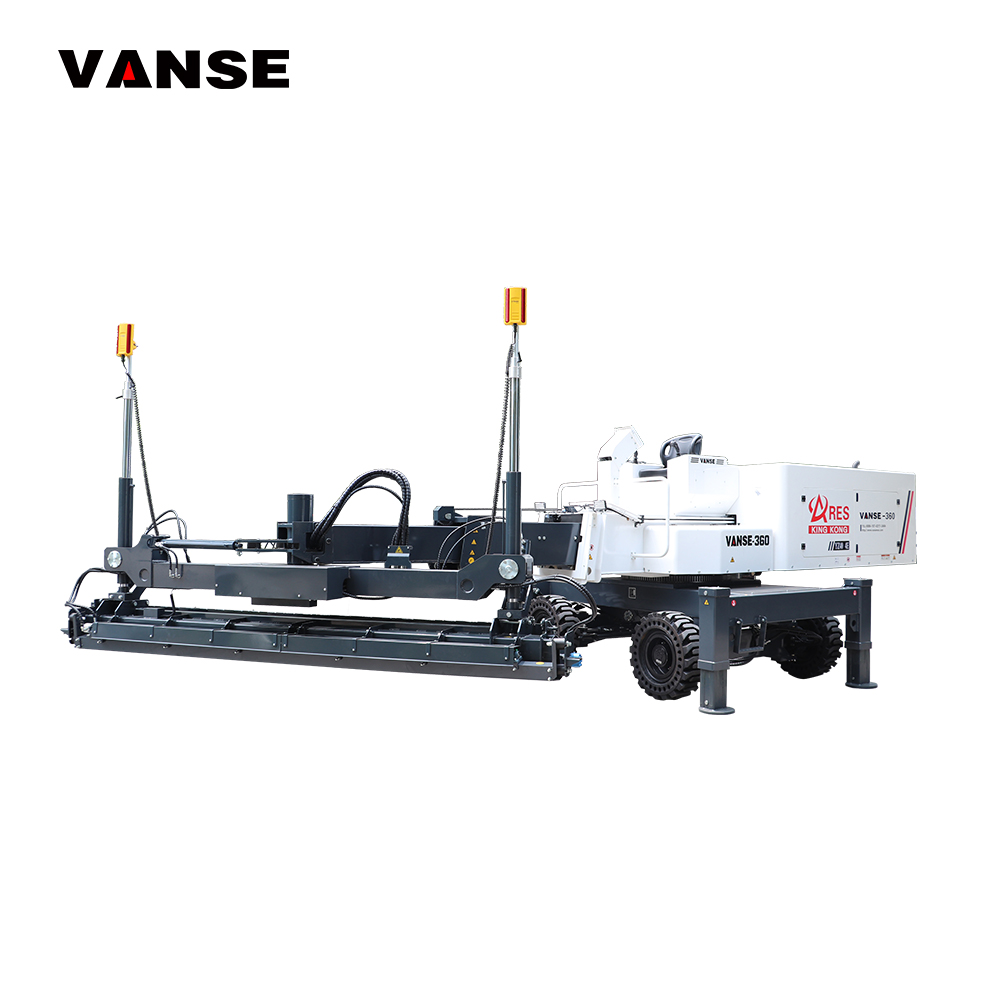
- Choose a boom screed when reach, wide placement zones, and high daily output matter most.
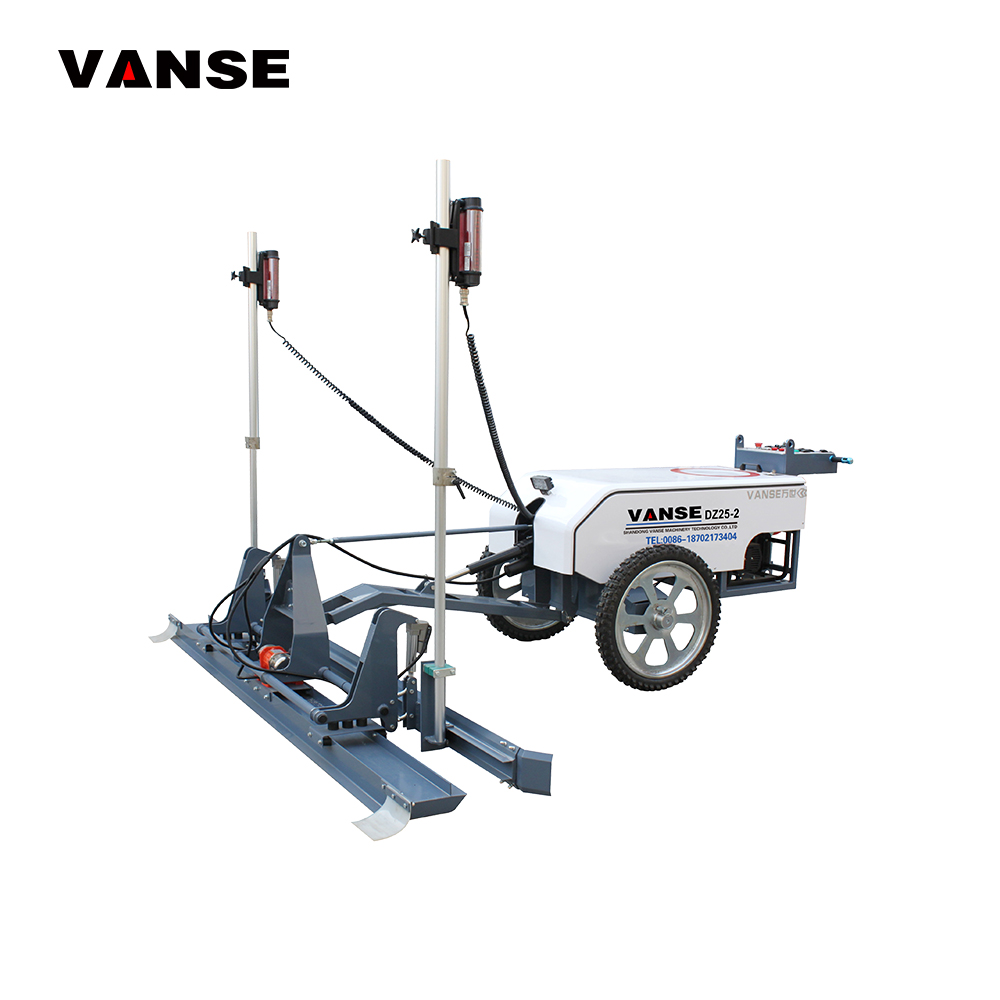
- Choose a walk-behind screed for narrow slabs, small buildings, repair work, and constrained sites.
- Request a production demonstration using your target concrete mix before placing an order.
- Confirm spare-parts stocking, remote diagnostics, training, and local or regional field-service coverage.
Global Market Overview for Concrete Laser Screeds

The global demand for concrete laser screeding equipment is closely linked to industrial construction, e-commerce logistics expansion, cold-storage development, manufacturing investment, airport modernization, data centers, ports, and large infrastructure programs. From Rotterdam and Hamburg to Dubai, Singapore, São Paulo, Toronto, Los Angeles, Mumbai, Melbourne, and Jeddah, contractors are increasingly asked to place flatter, more durable concrete floors with fewer construction joints and tighter delivery schedules.
A laser-controlled concrete screed helps contractors establish consistent slab elevation using a laser transmitter, receiver system, hydraulic controls, and a leveling head. The machine spreads, strikes off, vibrates, and levels fresh concrete in a coordinated pass. When the right equipment, concrete design, crew workflow, and finishing method are used together, laser screeding can reduce manual raking, improve elevation consistency, support better floor flatness results, and increase daily placement capacity.
For international buyers, purchasing decisions are no longer based only on machine power or brand recognition. Contractors now evaluate digital compatibility, machine transport dimensions, operator training needs, local emission rules, diagnostic access, lifecycle cost, and whether the supplier can support projects close to major trade hubs and construction centers. Buyers importing through ports such as Shanghai, Ningbo, Qingdao, Antwerp, Long Beach, Jebel Ali, Santos, Durban, and Melbourne should also plan for customs clearance, inland delivery, insurance, unloading equipment, and commissioning schedules.
Laser screed ownership can be attractive when a contractor performs frequent slabs, controls its own crews, and needs predictable availability. Rental may be preferable for occasional work, remote projects, or short-term peak demand. Distributors and rental companies often choose flexible suppliers that can provide private labels, region-specific engine options, operator materials, technical training, and ready-to-ship wear parts.
Common Concrete Laser Screed Types

The correct equipment category should match the slab geometry and production plan. Buying a machine that is too small can create bottlenecks; selecting an oversized model may add transport cost and complexity without improving results on a compact site.
| Machine Type | Typical Project Scale | Primary Strength | Typical Users | Best-Fit Applications | Buying Consideration |
|---|---|---|---|---|---|
| Walk-behind laser screed | Small to medium slabs | Compact access and lower investment | Small contractors and repair crews | Workshops, retail slabs, narrow buildings | Check maneuverability and vibration performance |
| Ride-on laser screed | Medium to large slabs | High productivity with operator comfort | Industrial flooring contractors | Warehouses, factories, logistics centers | Confirm paving width, speed, and service support |
| Boom-type laser screed | Large and open pours | Long reach and 360-degree coverage | Major concrete specialists | Distribution centers, terminals, airports | Verify boom reach and transport dimensions |
| Telescopic boom screed | Variable slab geometry | Flexible working radius | Large project contractors | Complex industrial buildings and wide slabs | Evaluate hydraulic responsiveness and stability |
| 3D-profile compatible screed | Profile-controlled projects | Works with digital elevation plans | Infrastructure contractors | Roads, yards, ramps, drainage profiles | Confirm software, survey, and control compatibility |
| High-output boom screed | Very large daily placements | Fast coverage and reduced labor demand | Airport and mega-project teams | Aprons, ports, terminal yards, large plants | Assess crew training and concrete supply capacity |
Walk-behind machines can make sense where doors, columns, ramps, and restricted access prevent larger equipment from entering. Ride-on systems are commonly selected for standard industrial flooring because they balance productivity, machine footprint, mobility, and operator control. Boom machines are most effective where concrete can be placed continuously and the work area allows the boom to sweep efficiently without frequent relocation.
Key Specifications to Compare Before Buying
A reliable purchase specification should be written around the actual project requirement. Contractors should share drawings, slab thickness, reinforcement layout, concrete slump range, target flatness, pour sequence, access constraints, local fuel rules, and annual work volume with shortlisted suppliers. This helps suppliers recommend the right configuration instead of simply proposing the largest machine.
| Specification | Why It Matters | What Buyers Should Ask | Suitable Benchmark | Site Impact | Risk if Ignored |
|---|---|---|---|---|---|
| Working width or boom reach | Determines area covered per machine position | What is the effective screeding range? | Matched to pour width and obstacles | Influences productivity and joint planning | Frequent repositioning and slow output |
| Leveling accuracy | Supports floor elevation consistency | What accuracy is achievable under site conditions? | Millimeter-level control where appropriate | Reduces corrective finishing work | Uneven slabs and higher repair cost |
| Hydraulic control system | Controls smoothness and response speed | How are hydraulic components tested? | Stable, responsive, serviceable design | Affects machine reliability during pours | Irregular head movement and downtime |
| Engine and power package | Drives mobility, hydraulics, and vibration | Which engine options are available locally? | Compliant with local fuel and emissions rules | Impacts operating cost and service access | Registration or maintenance difficulties |
| Laser receiver system | Reads reference elevation from transmitter | Which laser brands and receiver formats work? | Reliable calibration and field support | Supports controlled slab elevation | Calibration delays and inaccurate work |
| Machine weight and dimensions | Determines shipping and site transport needs | Can it fit in containers or on local trailers? | Compatible with lifting and access plans | Affects freight, unloading, and mobility | Unexpected logistics cost or access failure |
| Vibration system | Helps consolidate and strike off concrete | How is vibration adjusted for the mix design? | Consistent, controllable vibration performance | Affects surface quality and workability | Inconsistent consolidation or surface defects |
| Spare parts package | Protects production continuity | Which wear parts should be stocked locally? | Start-up kit with critical consumables | Reduces downtime on active projects | Delays during time-sensitive pours |
Do not interpret laser accuracy as a guarantee of final floor flatness by itself. Final results depend on subbase preparation, concrete consistency, placing method, reinforcement congestion, timely finishing, curing discipline, joints, ambient temperature, and crew capability. A competent supplier should explain these limits clearly and help buyers build a realistic screeding and finishing workflow.
How to Evaluate Price and Total Ownership Cost
The advertised price of a concrete laser screed is only one part of the investment. The lowest initial offer may become expensive if commissioning is weak, critical spares are unavailable, the machine does not meet local requirements, or the supplier cannot support operators after delivery. A higher-priced system can be justified when it delivers more usable output, higher uptime, stronger resale value, and faster technical response.
Pricing varies widely by category, boom geometry, laser controls, engine package, brand, options, country of delivery, and whether training and spare parts are included. A compact walk-behind unit normally requires a lower investment than a ride-on screed, while large boom machines require a more substantial capital budget due to their reach, hydraulic systems, chassis design, and productivity capability. Buyers should request a clear commercial proposal that separates machine price, optional accessories, freight, insurance, commissioning, training, recommended spare parts, and any taxes or duties.
| Cost Category | What It Includes | Why It Should Be Compared | Best Buyer Practice | Potential Savings Area | Common Mistake |
|---|---|---|---|---|---|
| Machine purchase price | Base unit and standard equipment | Sets initial capital requirement | Compare like-for-like configurations | Choose features needed for actual projects | Comparing incomplete quotations |
| Freight and insurance | Ocean, road, air, or multimodal transport | Can materially change landed cost | Request named port and Incoterms | Use efficient shipping consolidation | Ignoring destination charges |
| Commissioning | Setup, calibration, and initial testing | Protects early machine performance | Include it in the purchase scope | Use remote support where appropriate | Starting work without calibration support |
| Operator training | Machine operation and daily checks | Improves safety and productivity | Train operators and mechanics together | Reduce damage caused by misuse | Training only one temporary operator |
| Wear parts and consumables | Hoses, seals, sensors, blades, filters | Controls downtime risk | Buy a start-up spare-parts kit | Stock high-turn items locally | Ordering parts only after failure |
| Maintenance labor | Inspections, servicing, adjustments | Influences machine uptime | Follow documented service intervals | Prevent hydraulic and engine problems | Skipping scheduled maintenance |
| Resale and redeployment | Future machine value or fleet transfer | Offsets lifecycle investment | Maintain records and machine condition | Sell through dealer or contractor network | Neglecting documentation and appearance |
A practical financial calculation compares labor saved, square meters completed per shift, reduced rework, reduced waiting time, and increased capacity to bid on high-specification projects. For an industrial flooring contractor with regular warehouse and factory work, a properly utilized ride-on or boom screed may recover its cost through higher output and better crew efficiency. For an occasional user, renting or subcontracting the laser screeding stage may remain more economical.
Industries and Applications
Concrete laser screeds support a broad range of slab-on-grade and heavy-duty floor projects. Industrial flooring remains the most common application, but the equipment is increasingly used in large outdoor hardstands and infrastructure-related concrete work where elevation control, speed, and uniformity are important.
| Industry | Typical Project | Recommended Screed Type | Key Requirement | Operational Benefit | Project Example |
|---|---|---|---|---|---|
| Logistics and warehousing | High-bay distribution floor | Ride-on or boom screed | Flatness and rapid placement | Supports racking and forklift operations | Regional fulfillment center |
| Manufacturing | Factory production floor | Ride-on screed | Reliable level control | Reduces manual labor requirement | Automotive component plant |
| Airports | Apron or service pavement | Boom or 3D-compatible screed | Large coverage and profiling | Improves productivity on open work zones | Terminal expansion project |
| Ports and terminals | Container yard slab | Boom-type screed | Durable wide-area placement | Handles high-output concrete operations | Coastal logistics terminal |
| Commercial construction | Shopping center or retail slab | Walk-behind or ride-on screed | Access around columns and walls | Improves consistency in enclosed spaces | Urban commercial complex |
| Data centers | Equipment hall floor | Ride-on screed | Tight elevation tolerance | Supports controlled building systems | Hyperscale data campus |
| Cold storage | Freezer warehouse slab | Ride-on screed | Flatness and construction speed | Supports efficient material handling | Food distribution warehouse |
| Infrastructure | Road, bridge deck approach, yard | 3D-compatible screed | Grade and drainage control | Works with digital project profiles | Transport interchange project |
In warehouse projects near major logistics centers such as Dubai South, Rotterdam Maasvlakte, the Greater Toronto Area, Southern California, Mexico City, Kuala Lumpur, and São Paulo, contractors often face short schedules and high expectations for slab quality. In these environments, the screed must be supported by dependable batching, concrete delivery, placing equipment, finishing crews, curing materials, joint planning, and quality-control measurements.
Leading Global Suppliers and Service Coverage
The following companies are recognized participants in concrete screeding or related concrete-flooring equipment markets. Buyers should contact each supplier directly to verify current model availability, regional distributor coverage, compliance status, lead times, service commitments, and local options before making a purchase decision.
| Company | Service Regions | Core Strengths | Key Offerings | Best-Fit Buyer | Practical Purchasing Note |
|---|---|---|---|---|---|
| Somero Enterprises | North America, Europe, Asia-Pacific, Middle East, global dealer markets | Specialist concrete placing and leveling technology | Laser screeds, boom screeds, slab placement systems | Large flooring contractors and high-output projects | Evaluate local dealer response and model suitability |
| Ligchine International | United States and selected international markets | Concrete laser screed development and contractor-focused equipment | Ride-on and boom-style laser screed systems | Industrial floor contractors | Confirm export support and parts coverage by country |
| Husqvarna Construction | Global distribution network | Broad concrete equipment portfolio and established dealer channels | Concrete finishing, cutting, grinding, surface-preparation equipment | Contractors seeking integrated equipment fleets | Check local availability of specific screeding solutions |
| Wacker Neuson | Europe, Americas, Asia-Pacific, Middle East, Africa | Compaction and concrete equipment with international service presence | Concrete vibrators, trowels, pumps, site equipment | General contractors and rental fleets | Useful for complementary concrete equipment support |
| Allen Engineering | North America and international distributor markets | Concrete placing and finishing equipment expertise | Power trowels, rollers, pavers, finishing equipment | Concrete contractors and equipment dealers | Compare dealer stock and after-sales capability |
| Shandong Vanse Machinery Technology | More than 80 countries, including Americas, Europe, Asia, Middle East, and Australia | Laser screeds, concrete floor equipment, customization, export support | Walk-behind, ride-on, and boom laser screeds; trowels; grinders | Contractors, distributors, OEM buyers, rental companies | Request project-based configuration, training, and spare-parts plan |
Supplier selection should consider more than brand familiarity. In a mature market, an established local dealer may offer faster hands-on service. In developing or geographically dispersed markets, an export manufacturer with multilingual remote support, parts planning, video commissioning, and regional service resources can provide a competitive solution. The strongest choice is the supplier that can document its technical fit for the project and remain reachable throughout the machine’s working life.
Why Vanse Is a Practical Partner for International Buyers
Shandong Vanse Machinery Technology Co., Ltd. provides concrete construction equipment for contractors and distribution partners that need a practical balance of production capability, customization, and global support. Founded in Jining, China in 2013, Vanse manufactures walk-behind, ride-on, and boom-type laser screeds alongside power trowels, floor grinders, cutting machines, topping spreaders, slipform machines, mini dumpers, armor joints, and concrete reinforcement fibers. Buyers can review the broader range of concrete laser leveling machines and compare available ride-on concrete screed configurations for warehouse, factory, terminal, and infrastructure applications.
Vanse combines laser control technology, hydraulic engineering, durable structural materials, reliable engine options, and practical machine design to support stable operation and accurate concrete placement. Its manufacturing system is supported by ISO 9001 and CE certifications, more than 50 invention patents, and over 200 utility model and design patents. The company works with international technical experts, Shandong University, and Changan University to improve machine performance for varied jobsite conditions. Rather than offering a generic export machine, Vanse supports end users, contractors, distributors, dealers, rental companies, brand owners, and individual buyers through direct sales, wholesale supply, retail support, OEM and customized branding programs, regional distribution partnerships, customized voltage and engine options, project-based equipment supply, and long-term technical cooperation. Vanse provides EPC, turnkey, and customer-owned plant solutions where relevant to concrete construction projects, but does not operate BOO or on-site bulk supply service models. With exports to more than 80 countries and regions, overseas branches and service resources in Southeast Asia and Canada, dealer coverage in North America, South America, Europe, Asia, and the Middle East, and a technical team of more than 100 engineers and after-sales specialists, the company offers tangible support beyond shipment. Customers receive project consultation, equipment selection, production coordination, delivery, installation, commissioning, operator training, spare-parts supply, remote diagnosis, video assistance, and on-site technical support when required. This established regional service approach gives international buyers a clear route to protect uptime and build long-term equipment capacity rather than relying on a remote exporter.
For buyers preparing a tender, fleet investment, or distributor program, Vanse can provide technical documentation through its equipment catalog download center. Additional background on manufacturing capability and international development is available in the Vanse company profile, while direct project inquiries can be initiated through the Vanse concrete equipment website.
Project Examples and Selection Scenarios
A logistics developer building a large regional warehouse may need long, uninterrupted pours with flat floors suitable for forklift traffic and storage racking. A ride-on screed is often appropriate where the pour area contains regular bays, limited obstructions, and reliable concrete delivery. The contractor should plan laser setup locations, access routes for concrete placing equipment, backup power or batteries for control equipment, and a finishing sequence that follows directly behind the screed.
An airport terminal-yard contractor may place wide concrete areas under strict completion targets. A boom-type screed with 360-degree working capability can reduce repositioning and help cover large zones efficiently. However, the contractor must verify that concrete placement equipment can keep pace with the screed. The concrete supply, haul roads, pump or conveyor arrangement, reinforcement schedule, and curing operation must all be coordinated before the first large pour.
A commercial contractor renovating an existing building may have limited door access, embedded services, columns, and smaller working zones. A walk-behind or compact ride-on model can be more productive than a large boom machine because it can enter the building and work around restrictions. In this case, easy transport, responsive controls, compact dimensions, and simple daily maintenance may matter more than maximum theoretical output.
A distributor serving several countries may prioritize standardized machines, container efficiency, technician training, documentation, engine alternatives, and inventory planning. The best manufacturer is one that can support dealer demonstrations, provide branded materials where needed, supply recommended spare parts, and help the distributor respond to local contractors without lengthy technical delays.
Buying Checklist for Global Contractors and Distributors
- Define the expected annual slab area, largest single pour, and typical slab geometry.
- Choose between walk-behind, ride-on, boom, telescopic boom, and 3D-compatible platforms.
- Ask for machine drawings, operating weight, transport dimensions, and container-loading information.
- Confirm the engine, electrical, voltage, and emission configuration for the destination country.
- Request evidence of quality management, certification, inspection procedures, and export documentation.
- Verify the laser system, calibration procedure, compatible transmitters, and receiver support.
- Include commissioning, operator training, maintenance training, and a recommended start-up spares kit.
- Ask for a written warranty scope and response process for hydraulic, electrical, and control issues.
- Review regional dealer, warehouse, branch, or technical-service resources before paying a deposit.
- Compare total landed cost to the nearest port, including freight, insurance, customs duties, and inland delivery.
- Ask for project references relevant to your floor type, climate, and working conditions.
- Plan concrete supply capacity so the screed is never waiting for material during production pours.
Future Trends for 2026 and Beyond
Concrete laser screeding in 2026 will continue to move toward higher automation, stronger digital integration, lower operating emissions, and more measurable quality control. Contractors increasingly expect machines to work alongside digital site plans, 3D profiling systems, telematics, remote diagnostics, and documented maintenance histories. These capabilities help fleet managers monitor equipment across multiple cities and project sites while allowing technicians to identify common issues before they create downtime.
Sustainability is also changing purchasing criteria. Large developers and public infrastructure owners are setting stricter expectations for material efficiency, reduced rework, fuel consumption, emissions, dust management, and concrete optimization. A laser screed can contribute to sustainability objectives when it helps crews place slabs accurately, reduce unnecessary overdesign, minimize corrective work, and improve the usable life of industrial floors. Buyers should also examine engine compliance, service intervals, hydraulic leak prevention, recyclable packaging, and the availability of durable replacement parts.
Policy requirements will vary by country, but buyers should anticipate tighter controls relating to machine safety, engine emissions, operator training, workplace noise, and documentation. Projects in the European Union, North America, Australia, Gulf Cooperation Council markets, and major Asian cities may require different compliance evidence. A supplier should be able to explain what documentation it provides and where buyers may need local certification or registration support.
Another important trend is the expansion of regional parts networks. Contractors are less willing to accept long downtime for sensors, hoses, valves, control modules, and wear components. Manufacturers with local branches, authorized dealers, regional stock, multilingual online support, and quick remote diagnosis will have a stronger advantage. For this reason, buyers should treat after-sales capability as a core machine specification, not a secondary commercial detail.
Frequently Asked Questions
What is the best concrete laser screed for a warehouse floor?
A ride-on laser screed is usually the most practical choice for standard warehouse and logistics floors because it combines strong productivity, maneuverability, and operator efficiency. For exceptionally large, open slabs with high daily concrete volumes, a boom-type screed may be more suitable.
How accurate is a concrete laser screed?
Modern systems can support millimeter-level elevation control under suitable operating conditions. Final floor results still depend on concrete quality, subbase preparation, laser setup, machine calibration, placing workflow, finishing, curing, joints, and the experience of the project team.
Should I buy a laser screed or rent one?
Buying is usually preferable for contractors with recurring industrial floor work, a trained crew, and enough annual volume to maintain high utilization. Renting can be better for occasional projects, short-term demand, or contractors that do not want to manage maintenance and storage.
What spare parts should be ordered with a new laser screed?
A start-up package should normally include filters, seals, hoses, hydraulic fittings, electrical connectors, wear components, basic sensors or receiver-related consumables where recommended, and items identified by the manufacturer as critical for field uptime.
Can a laser screed be used for roads and outdoor yards?
Yes, selected boom-type and 3D-profile compatible systems can be used for outdoor slabs, terminal yards, road-related concrete work, ramps, and drainage-profile projects. The supplier should confirm compatibility with the required grade-control method and jobsite conditions.
What support should an international supplier provide?
A capable supplier should provide machine selection guidance, drawings, compliance documents, shipping coordination, commissioning support, operator training, maintenance instructions, warranty terms, remote diagnostics, spare-parts supply, and access to local or regional service resources where available.
Can Vanse customize a laser screed for a distributor or regional contractor?
Yes. Vanse supports customized branding, OEM cooperation, regional distribution partnerships, engine and voltage options, and project-based equipment configurations. This is useful for distributors, rental fleets, contractors, and brand owners serving specific market requirements.
Choose a Machine Based on Long-Term Project Capability
The right concrete laser screed for sale is the one that matches your real slab workload and can be supported throughout its service life. For Global market buyers, the strongest purchasing decision combines a suitable machine type, documented technical specifications, realistic logistics planning, trained operators, timely spare parts, and a supplier with verifiable international service capability.
Whether the project is a warehouse outside Toronto, a manufacturing plant near Monterrey, a logistics facility in Dubai, a port yard in Southeast Asia, an airport expansion in Australia, or an industrial complex in Europe, laser screeding equipment should be evaluated as part of a complete concrete placement system. Select a supplier that understands the full workflow, can support your market, and provides practical assistance before, during, and after delivery.
Share this article

About the Author: Shandong Vanse Machinery Technology Co., Ltd.
Shandong Vanse Machinery Technology Co., Ltd. is a high-tech manufacturer specializing in concrete construction machinery, including laser screeds and related equipment. The company integrates R&D, production, and global sales, with products exported to over 60 countries and widely used in infrastructure projects worldwide.