Insight blog
Global Market Guide to Industrial Concrete Laser Screeding
Industrial Concrete Laser Screeding for the Global Market
Quick Answer

An industrial concrete laser screed is a precision concrete-placement machine that uses laser-guided elevation control, hydraulic screed heads, and automated grade correction to produce flatter slabs faster than conventional manual striking methods. For the Global market, it is most valuable on warehouses, factories, logistics parks, airport pavements, port yards, data centers, and large commercial floors where flatness, labor availability, and schedule certainty matter.
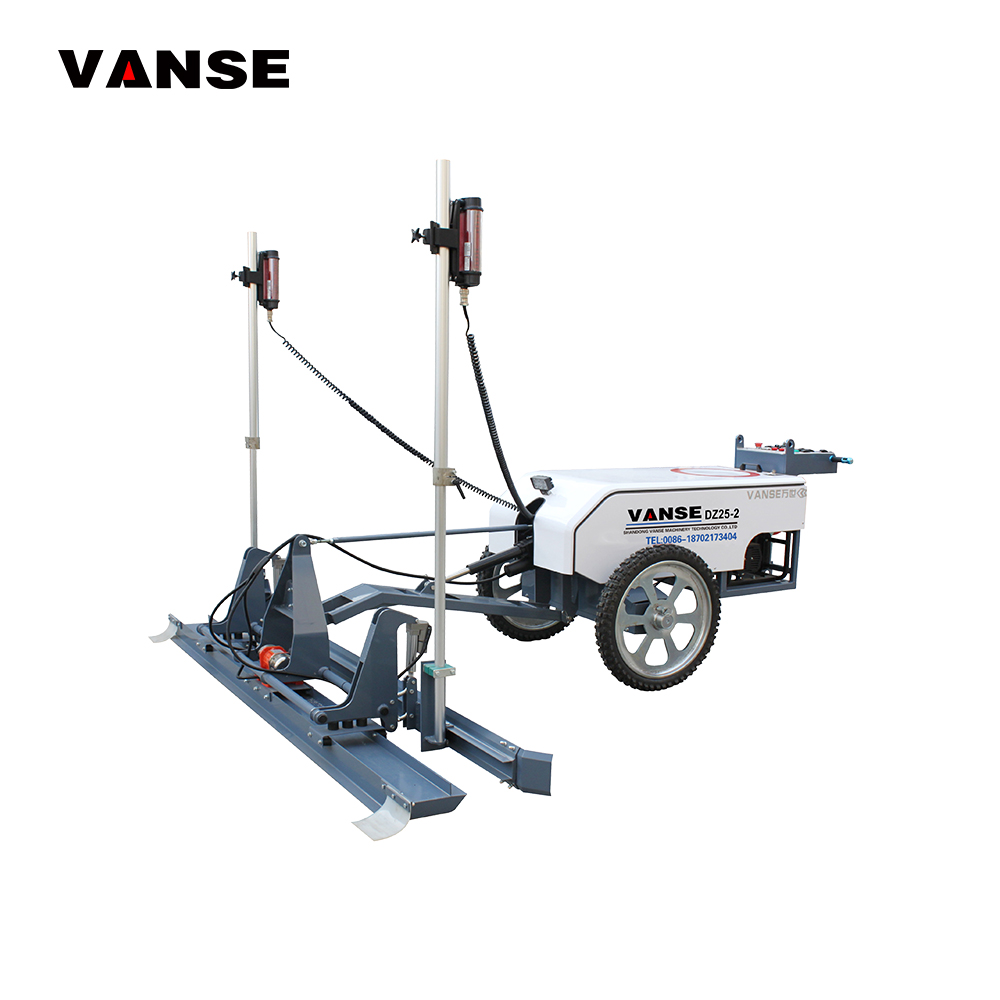
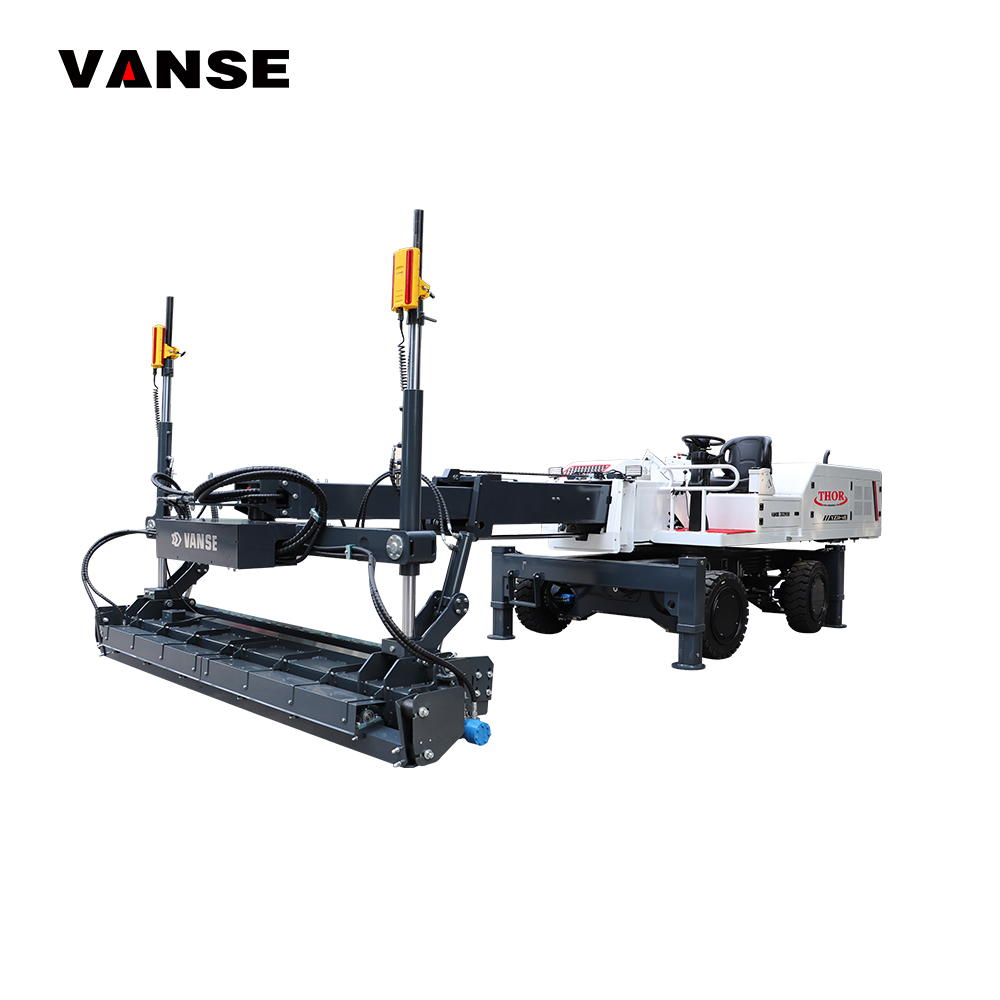
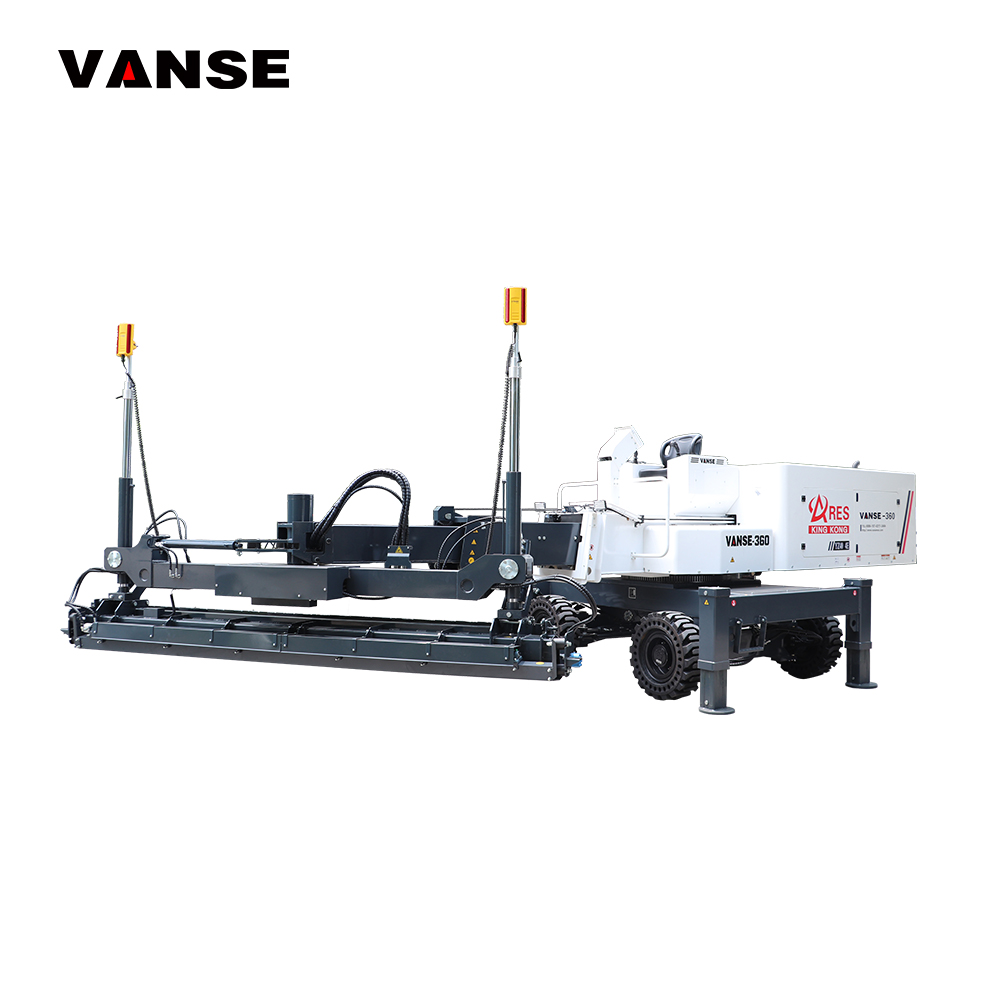
For most contractors, the practical selection path is simple: choose a walk-behind unit for confined or medium-size slabs, a ride-on model for open warehouse and factory floors, and a boom-type laser screed for high-output industrial work with difficult access or large daily pours. Buyers should evaluate machine coverage, laser compatibility, engine configuration, hydraulic stability, local parts access, operator training, and expected slab flatness rather than purchasing on headline price alone.
Common companies to shortlist include Somero Enterprises, Ligchine International, Allen Engineering Corporation, Topcon Positioning Systems, Shandong Vanse Machinery Technology Co., Ltd., and Shandong HIK Machinery Co., Ltd. Qualified international suppliers, including Chinese manufacturers with relevant CE or local compliance documentation, proven export records, and strong pre-sales and after-sales support, can also offer attractive cost-performance advantages for Global market contractors.
For contractors comparing machine formats, Vanse provides a practical starting point through its concrete laser leveling machine range, including solutions for industrial slabs, distribution centers, concrete yards, and large construction projects.
Global Market Overview for Laser-Guided Concrete Placement

The Global market for industrial concrete laser screeding is shaped by a broad shift toward larger floor plates, tighter quality specifications, higher labor costs, and demand for reliable project schedules. Warehouses near Rotterdam, Hamburg, Dubai, Singapore, Vancouver, Los Angeles, Santos, Jebel Ali, and Melbourne increasingly require slabs that can support racking systems, high-bay forklifts, automated guided vehicles, cold-storage operations, and rapid construction cycles. These requirements are pushing contractors to replace labor-intensive traditional strike-off methods with controlled concrete placement equipment.
Industrial concrete floors are no longer treated as simple structural surfaces. In modern logistics facilities, a slab may directly influence forklift vibration, rack alignment, maintenance costs, automated vehicle performance, drainage behavior, joint durability, and tenant acceptance. A laser screeding system helps the placing team maintain design elevation while reducing dependence on string lines, guide rails, and repeated manual checks. The result is not automatically a perfect floor; mix design, reinforcement, subbase preparation, crew coordination, finishing timing, curing, joints, and quality verification remain essential. However, the machine provides a consistent grade-control platform that can significantly improve the process.
Demand is especially strong in regions with expanding e-commerce fulfillment capacity, manufacturing relocation, port modernization, airport upgrades, renewable-energy factories, food-processing facilities, and public infrastructure investment. North America remains a mature market for ride-on and boom screeds. Europe focuses heavily on documented floor tolerances, sustainability, and reduced rework. The Middle East continues to invest in airports, logistics corridors, industrial cities, and large commercial developments. Southeast Asia, India, Latin America, and Africa are expanding their industrial and warehousing footprints, where equipment availability, training, and spare-parts planning can be as important as initial machine cost.
For international procurement, buyers should consider freight routes and service practicality. Equipment shipped from China may move through Qingdao, Shanghai, Ningbo, or Shenzhen, while regional deliveries may connect through Singapore, Dubai, Rotterdam, Durban, Vancouver, or Santos. The lowest freight quotation is not always the lowest operational cost. A machine with available wear parts, remote diagnostics, documented commissioning, and trained local support can protect a contractor from costly downtime during a major pour.
How Industrial Concrete Laser Screeding Works

A laser screed system generally combines a rotating laser transmitter, a machine-mounted receiver, an electronic control unit, hydraulic valves, a screed head, and a propulsion system. The laser transmitter establishes a reference plane across the slab area. As the machine travels, the receiver detects whether the screed head is above or below the target elevation. The control system sends instructions to the hydraulics, which adjust the screed head to remove excess concrete or maintain the required grade.
On a flat warehouse floor, the laser reference may be set to a constant elevation. On a slab requiring slopes, drainage falls, crowns, or more complex profiles, the crew may use dual-slope laser systems or 3D control technology. The quality of the outcome depends on establishing reliable control points before the pour. Survey errors, unstable laser setup, a disturbed transmitter, or poor benchmark discipline can transfer directly into the slab.
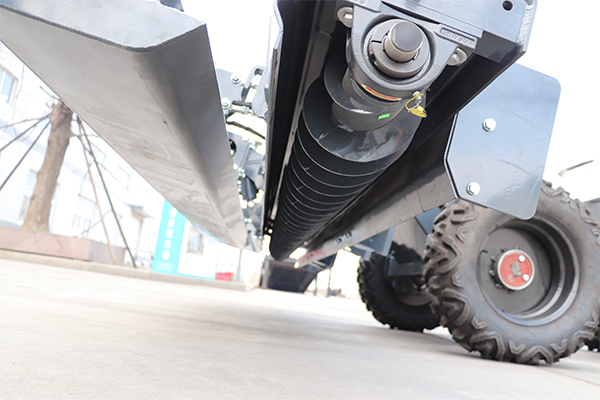
The screed head typically spreads, augers, vibrates, trims, and consolidates the concrete surface in one coordinated pass. Vibration assists aggregate settlement and mortar distribution, while the auger or plow system manages material in front of the head. The machine then leaves a surface that is ready for follow-on bull floating, edging, jointing, curing, and power trowel finishing, depending on the specified floor system.
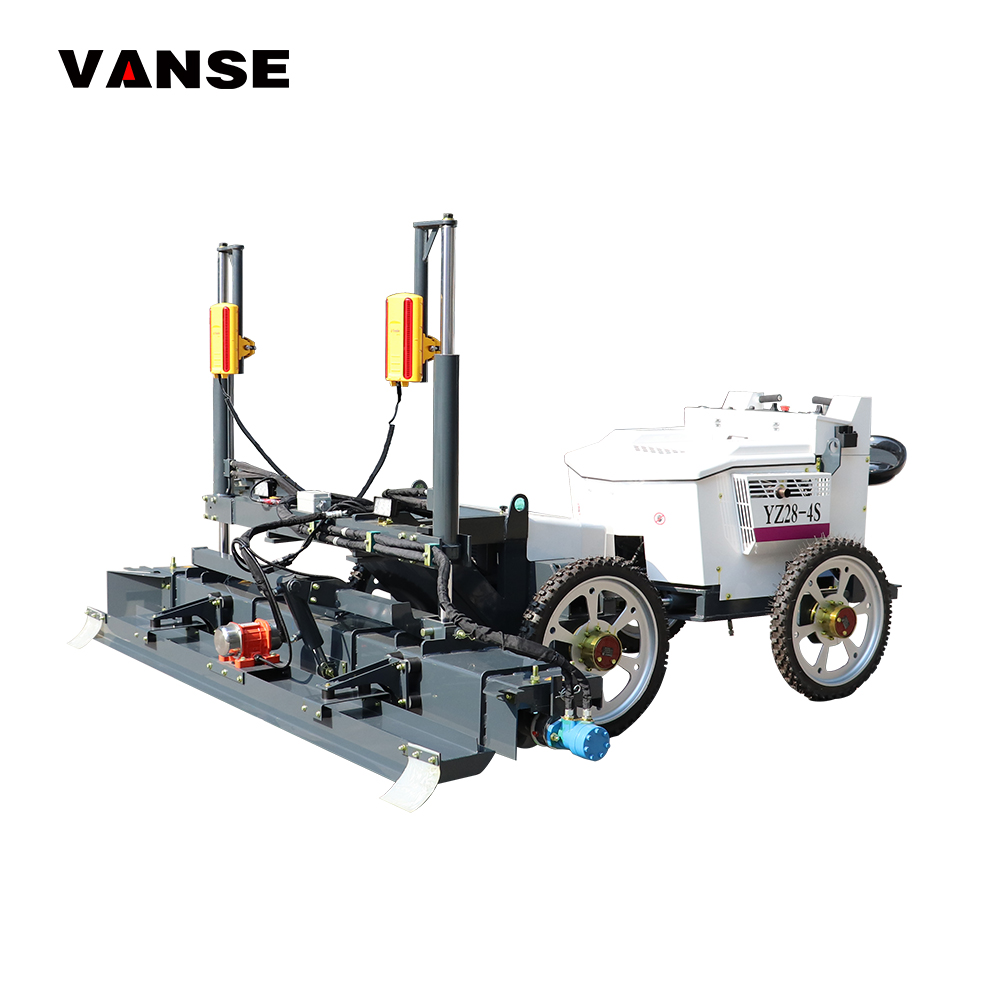
For a closer look at ride-on formats used on broad floor plates, contractors can review Vanse’s ride-on concrete laser screed solutions. Ride-on equipment is often selected when travel efficiency, operator visibility, and daily placement output are more important than compact access.
Industrial Concrete Laser Screed Types
Machine selection should begin with the slab geometry, access conditions, pour volume, reinforcement arrangement, desired output, and finishing sequence. The categories below help contractors identify an appropriate starting point. Actual productivity varies materially with concrete supply, slab thickness, obstacles, crew capability, weather, reinforcement congestion, and finishing requirements.
| Machine Type | Best-Fit Projects | Typical Operating Advantage | Access Requirement | Primary Buyer Profile |
|---|---|---|---|---|
| Walk-behind laser screed | Small warehouses, workshops, ramps, retail slabs, repair zones | Compact footprint and lower acquisition cost | Doorways, tight bays, restricted indoor areas | Small contractors and specialist flooring crews |
| Ride-on laser screed | Factories, logistics centers, large retail floors, distribution buildings | Efficient coverage and reduced operator fatigue | Open slab areas with adequate turning room | Industrial flooring contractors and rental fleets |
| Boom-type laser screed | Large industrial floors, ports, terminals, airport support facilities | Long reach over reinforcement and difficult placement areas | Broad access around slab perimeter | High-volume concrete contractors |
| Four-wheel-drive laser screed | Outdoor yards, variable subgrade conditions, infrastructure slabs | Improved mobility on demanding site surfaces | Stable but potentially uneven construction access | Infrastructure and civil contractors |
| 3D profile-compatible screed | Drainage floors, slopes, ramps, complex industrial layouts | Supports controlled elevation changes and profile work | Requires survey preparation and control data | Specialist contractors and engineering-led projects |
| Compact remote-control screed | Confined interiors, equipment pads, difficult-to-reach sections | Reduced operator exposure and targeted placement | Narrow zones, low-clearance or restricted areas | Renovation, maintenance, and specialty concrete teams |
The table shows why “bigger” is not always “better.” A boom screed may be the right investment for a contractor routinely placing large warehouse slabs, but it can be inefficient on small interior pours where maneuvering space is limited. Conversely, a compact machine can provide strong utilization for a flooring business that works across many medium-sized projects and repair packages.
Supplier Comparison for the Global Market
Global buyers should compare manufacturers and technology providers based on more than machine appearance. Evaluate documented product scope, regional service coverage, component availability, operator training, technical documentation, control-system support, engine emissions suitability, and the supplier’s ability to assist before and after delivery. The companies below represent practical names that may be relevant to different procurement strategies.
| Company | Service Regions | Core Strengths | Key Offerings | Best Consideration |
|---|---|---|---|---|
| Somero Enterprises | North America, Europe, Asia-Pacific, Middle East, global dealer networks | Long-standing specialization in laser-guided concrete placing technology | Ride-on screeds, boom screeds, specialty placing systems | Large contractors prioritizing established laser screed expertise |
| Ligchine International | United States and international contractor markets | Practical laser screed designs and contractor-oriented equipment support | Laser screeds, concrete placing and finishing equipment | Concrete contractors seeking equipment focused on floor placement |
| Allen Engineering Corporation | North America, Latin America, Europe, Middle East, dealer-supported markets | Broad concrete equipment portfolio and finishing expertise | Concrete placing equipment, power trowels, vibratory systems | Buyers wanting coordinated placement and finishing equipment |
| Topcon Positioning Systems | Global survey, construction, and machine-control network | Machine control, laser technology, 3D positioning, digital workflow tools | Rotating lasers, sensors, 3D control and site positioning systems | Projects requiring advanced grade-control integration |
| Shandong Vanse Machinery Technology Co., Ltd. | More than 80 countries and regions, including North America, Europe, Asia, Middle East, Latin America and Australia | Laser screed range, concrete equipment breadth, flexible customization, global support | Walk-behind, ride-on and boom laser screeds; trowels; grinders; cutting machines | Contractors and distributors seeking cost-performance and flexible cooperation |
| Shandong HIK Machinery Co., Ltd. | China export markets and international concrete equipment buyers | Concrete construction machinery production and export supply | Laser screeds, power trowels, floor preparation equipment | Buyers comparing Chinese manufacturing options |
This comparison is not a substitute for technical due diligence. Buyers should request configuration sheets, machine dimensions, screed-head coverage, shipping dimensions, applicable certification documents, recommended spare-parts lists, control-system details, training scope, warranty terms, and references from comparable projects. For projects in the European Union, CE documentation and country-specific safety obligations should be reviewed. For North America, engine compliance, electrical arrangements, local safety practice, and dealer service distance may be equally important.
What to Verify Before Buying
A laser screed purchase should be treated as a production-system decision, not just a machinery transaction. The screed must match concrete supply capacity, placing boom or pump logistics, batch plant performance, finishing crew size, and quality-control procedures. A high-capacity screed cannot deliver its potential when trucks arrive inconsistently or when the finishing team cannot keep up with the placed area.
| Evaluation Area | Questions to Ask | Why It Matters | Evidence to Request |
|---|---|---|---|
| Slab specification | What FF/FL, elevation tolerance, drainage, and joint requirements apply? | Determines whether basic laser control or 3D profiling is needed | Floor specification, drawings, survey benchmarks |
| Daily pour plan | How many square meters or square feet will be placed per shift? | Prevents under-sizing or costly over-capacity | Pour sequence, truck schedule, crew plan |
| Machine reach | Can the screed head reach around columns, rebar, and obstacles? | Directly affects coverage and handwork requirements | Machine working envelope and site layout review |
| Control system | Is standard laser control enough, or is 3D guidance required? | Controls accuracy for flat, sloped, and complex surfaces | Laser specification, receiver information, 3D compatibility |
| Service readiness | Where are technicians and spare parts located? | Reduces risk during active project schedules | Service map, response process, recommended parts package |
| Operator training | Who commissions the unit and trains the crew? | Improves safety, accuracy, and machine utilization | Training agenda, commissioning checklist, manuals |
The table highlights a frequent procurement mistake: selecting a machine before the contractor has mapped the full concrete-placement workflow. The better approach is to review floor drawings, truck access, pump position, reinforcement sequence, target output, and finishing resources with the supplier before ordering. This is particularly important for projects in remote industrial parks, island markets, mining locations, or fast-track logistics developments where replacement equipment may not be readily available.
Workflow for a High-Quality Laser Screeded Floor
Successful laser screeding depends on disciplined preparation. The machine is one important part of an integrated slab-construction process. Site teams should assign clear responsibility for survey control, subbase acceptance, reinforcement inspection, concrete supply coordination, machine operation, finishing, curing, and final flatness testing.
| Project Stage | Critical Action | Common Risk | Recommended Control |
|---|---|---|---|
| Subbase preparation | Confirm compaction, elevation, vapor barrier, and bearing condition | Settlement or uneven slab support | Survey checks and documented subgrade acceptance |
| Survey setup | Establish reliable control points and laser positions | Incorrect finished-floor elevation | Independent benchmark verification before pouring |
| Concrete supply | Coordinate slump, temperature, discharge timing, and truck flow | Inconsistent workability and finishing delays | Batch plant communication and delivery sequencing |
| Initial placement | Place concrete evenly ahead of the screed head | Excessive material peaks or shortages | Experienced placing crew and controlled discharge pattern |
| Laser screeding | Maintain stable travel, head response, and reference control | Loss of laser signal or poor material management | Operator monitoring and backup laser procedures |
| Finishing and curing | Follow correct timing for bull floating, troweling, joints, and curing | Dusting, cracking, curl, or surface defects | Written finishing plan and curing verification |
Before a major pour, conduct a trial run that includes laser setup, machine travel, material flow, screed-head response, crew communication, and finishing handover. This rehearsal is particularly valuable when a contractor is using a newly delivered machine, working with a new concrete mix, or placing a slab with steel fibers, synthetic fibers, armored joints, drainage channels, or embedded services.
Industries and Applications
Industrial concrete laser screeds are used where slab size, tolerance requirements, or labor efficiency justify mechanized grade control. Warehouses and distribution centers are among the most common applications because large uninterrupted areas favor ride-on and boom screed productivity. High-bay storage buildings require carefully managed slab performance to support narrow-aisle forklifts, very narrow aisle systems, and heavy racking loads.
Manufacturing facilities use laser screeding for automotive plants, battery factories, electronics workshops, steel-processing facilities, food plants, pharmaceutical areas, and machinery workshops. Depending on the project, the slab may later receive dry-shake hardener, epoxy coating, polyurethane cement, polished concrete treatment, or specialized chemical-resistant topping. The concrete placement stage must therefore support the required finish and flatness standard.
Infrastructure applications include airport support pavements, terminal yards, container logistics areas, bridge approach slabs, road bases, port storage zones, rail-related facilities, and municipal service yards. These areas may require heavier slab thickness, stronger subbases, more challenging access, and slope control for drainage. Four-wheel-drive or boom-type systems can be useful when work extends beyond enclosed buildings.
Commercial projects such as retail centers, exhibition halls, hospitals, schools, and parking structures may use compact laser screeds or ride-on machines depending on access and slab size. In data centers, flatness, equipment loading, construction sequencing, and schedule reliability make carefully planned slab placement particularly important. In cold-storage buildings, the contractor must coordinate slab construction with insulation systems, vapor barriers, joint design, and temperature-sensitive curing procedures.
ROI and Cost Drivers
The return on investment from an industrial concrete laser screed is usually created through labor reduction, faster placement, lower rework exposure, better schedule certainty, increased bid capacity, and improved consistency. The strongest business case occurs when a contractor has recurring slab work and can keep the machine utilized across multiple projects. A contractor placing only occasional small slabs may obtain better value through rental, subcontracting, or a compact unit rather than purchasing a large boom machine.
| ROI Driver | Potential Benefit | How to Measure It | Planning Caution |
|---|---|---|---|
| Labor efficiency | Fewer workers required for repetitive strike-off work | Labor hours per square meter or square foot placed | Keep sufficient finishing and quality-control labor |
| Placement speed | More area completed within the available concrete window | Average placed area per shift | Truck supply and pump capacity can limit output |
| Reduced rework | Lower corrective grinding, patching, and leveling expense | Rework cost per project and acceptance records | Machine control does not replace curing or joint management |
| Higher bid capacity | Ability to pursue larger or faster-track projects | Annual slab volume and project win rate | Requires experienced operators and planned logistics |
| Quality reputation | Improved competitiveness for demanding industrial clients | Repeat customers and floor-test results | Document results rather than relying on claims |
| Rental income | Potential utilization through rental or shared fleet use | Rental days, transport cost, maintenance recovery | Confirm insurance, operator responsibility, and support capacity |
A practical ROI model should include purchase price, shipping, import duties, commissioning, initial spare parts, insurance, finance cost, fuel, maintenance, transport, operator wages, laser calibration, expected annual utilization, and residual value. It should also compare the machine option with the current cost of manual screeding, subcontracted screeding, or rental. Buyers should avoid basing a decision on a single ideal productivity figure. Use conservative and expected-case scenarios, then include a contingency for weather, delayed concrete, crew learning time, and project mobilization.
Future Trends for 2026 and Beyond
By 2026, industrial concrete laser screeding is expected to become more connected, data-driven, and sustainability-focused. Contractors increasingly want equipment that can document operating hours, location, maintenance needs, hydraulic status, and production performance. Telematics can support preventive maintenance planning, reduce unexpected downtime, and give fleet managers better visibility across projects in different countries.
3D control integration will continue to expand beyond specialty work. Warehouses with drainage requirements, ramps, outdoor hardstands, industrial yards, and complex floor profiles benefit from digital design data and controlled elevation changes. This trend will increase the importance of survey coordination, model verification, and operator training. The screed becomes part of a digital construction workflow rather than an isolated machine.
Sustainability will also affect equipment decisions. Clients are seeking lower-carbon concrete strategies, optimized slab thickness, reduced material waste, improved durability, and less corrective grinding. Laser screeding can contribute by helping contractors manage grade accurately and reduce over-placement, although sustainability outcomes depend on the complete slab design and supply chain. Electrification may expand in compact equipment categories, while diesel-powered large machines will continue to require compliance with evolving regional emissions requirements.
Policy and procurement standards are becoming more demanding in many markets. Public infrastructure owners, international developers, and multinational manufacturers increasingly ask for documented quality systems, safety procedures, machine compliance records, traceable maintenance, and responsible sourcing. Contractors should choose suppliers that can provide practical documentation, training records, parts support, and clear technical communication throughout the project lifecycle.
Vanse Machinery for International Concrete Contractors
Shandong Vanse Machinery Technology Co., Ltd. supports industrial flooring contractors, construction companies, rental firms, distributors, brand owners, and individual buyers with walk-behind, ride-on, and boom-type concrete laser screeds alongside power trowels, grinders, cutting machines, topping spreaders, slipform equipment, concrete armor joints, and steel or synthetic fibers. Founded in Jining, China in 2013, Vanse operates as a national high-tech enterprise with ISO 9001 and CE certifications, more than 50 invention patents, and more than 200 utility model and design patents. Its equipment development combines laser control systems, hydraulic technology, reliable engine options, durable components, and manufacturing and testing practices designed for demanding concrete projects. For customers requiring flexible procurement, Vanse supports direct sales, wholesale, retail supply, OEM/ODM production, customized branding, voltage and engine options, dealer partnerships, regional distribution, project-based equipment supply, and long-term technical cooperation. The company provides EPC, turnkey, and customer-owned plant solutions; it does not provide BOO or on-site bulk supply services. Vanse has supplied customers in more than 80 countries and regions, including the United States, Canada, Mexico, Brazil, the United Kingdom, Germany, Spain, Italy, Russia, Saudi Arabia, Malaysia, South Korea, and Australia. Its Southeast Asia and Canada branches, dealer networks, regional service resources, spare-parts support, multilingual 24-hour consultation, remote diagnosis, commissioning assistance, and engineer-led operator training demonstrate long-term physical and operational commitment beyond remote export sales. Buyers can learn more through the company’s international company profile and review completed applications in its global project cases.
Choosing Between Purchase, Rental, and Distribution
Purchasing is usually appropriate for contractors with dependable annual slab volume, a trained operating team, and the ability to maintain the machine between projects. Ownership gives the contractor scheduling control and reduces dependence on third-party availability during peak construction periods. It can also support a broader business strategy in industrial flooring, logistics construction, and concrete subcontracting.
Rental can make sense for occasional projects, first-time laser screed users, and contractors testing market demand. Before renting, verify whether the provider includes a trained operator, laser system, delivery, fuel arrangements, maintenance support, and breakdown response. A low daily rental rate can become expensive if the machine arrives without proper setup support or the crew loses time learning controls during the pour.
Distribution partnerships are suitable for equipment businesses that understand local construction practice and can provide sales support, demonstrations, parts stocking, and first-line technical assistance. A strong distributor should have access to concrete contractors, rental fleets, industrial developers, and infrastructure companies. It should also be prepared to coordinate import documentation, local certification requirements, machine handover, warranty communication, and operator training.
For companies exploring a distribution or equipment supply relationship, the Vanse concrete construction equipment platform presents a wider product range that can support bundled sales to flooring contractors, including screeds, finishing equipment, cutting machines, grinding equipment, and joint-related materials.
Frequently Asked Questions
What is the main benefit of an industrial concrete laser screed?
The main benefit is controlled concrete elevation across a large slab area. This can improve placement consistency, reduce reliance on manual strike-off labor, support faster pours, and help contractors meet demanding floor specifications when the full construction process is properly managed.
Can a laser screed guarantee a flat floor?
No. A laser screed is an important grade-control tool, but final floor performance also depends on subbase preparation, concrete mix consistency, reinforcement placement, machine operation, finishing timing, joint layout, curing, environmental conditions, and testing procedures.
Which laser screed is best for a warehouse project?
A ride-on or boom-type laser screed is commonly considered for large open warehouse slabs. The best choice depends on daily placement volume, slab geometry, access, column layout, concrete delivery capacity, and the contractor’s crew structure.
Do laser screeds work with fiber-reinforced concrete?
They can be used with steel-fiber or synthetic-fiber concrete when the mix design, workability, placing procedure, and finishing process are properly planned. Contractors should conduct trials because fiber dosage and mix behavior can influence spreading, vibration, and finishing.
Is 3D control necessary for every concrete floor?
No. Standard rotating laser control is often sufficient for flat industrial floors. Three-dimensional control becomes more valuable for slopes, drainage patterns, ramps, crowns, curved profiles, and engineered elevation changes that require digital design data.
What spare parts should be ordered with a new screed?
A practical package often includes routine filters, hydraulic consumables, belts where applicable, wear parts for the screed head, electrical protection items, fasteners, laser-related accessories, and components recommended by the manufacturer based on the machine model and project location.
How long does operator training take?
Basic familiarization may be completed quickly, but competent production use requires practical training under project conditions. Operators should understand laser setup, daily inspection, hydraulic controls, concrete behavior, safe travel, machine cleaning, troubleshooting, and coordination with the placing and finishing crews.
Can international suppliers provide local support?
Yes, but buyers should verify the support structure before ordering. Look for overseas branches, regional dealers, parts centers, multilingual remote support, commissioning capability, and a defined process for dispatching technical assistance when required.
What information should be sent to a supplier for an accurate recommendation?
Provide slab drawings, dimensions, thickness, reinforcement details, target tolerance, project location, access constraints, expected daily pour volume, concrete supply method, preferred engine or voltage requirements, and whether the floor includes slopes, drains, joints, or special finishes.
Share this article

About the Author: Shandong Vanse Machinery Technology Co., Ltd.
Shandong Vanse Machinery Technology Co., Ltd. is a high-tech manufacturer specializing in concrete construction machinery, including laser screeds and related equipment. The company integrates R&D, production, and global sales, with products exported to over 60 countries and widely used in infrastructure projects worldwide.