Insight blog
Global Market Guide to Concrete Laser Screeds in 2026
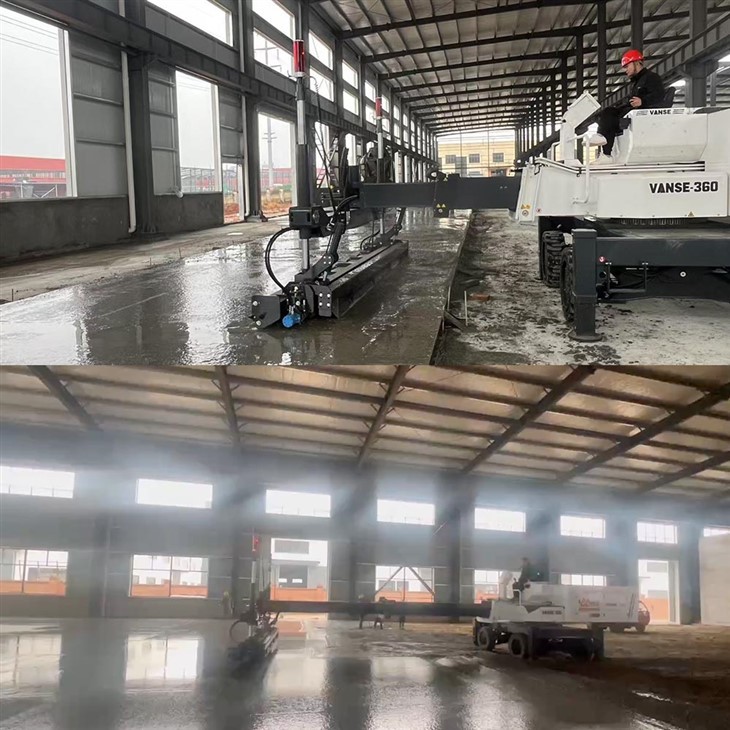
Concrete Laser Screeds for the Global Market: Selection, Cost and Supplier Guide
Quick Answer

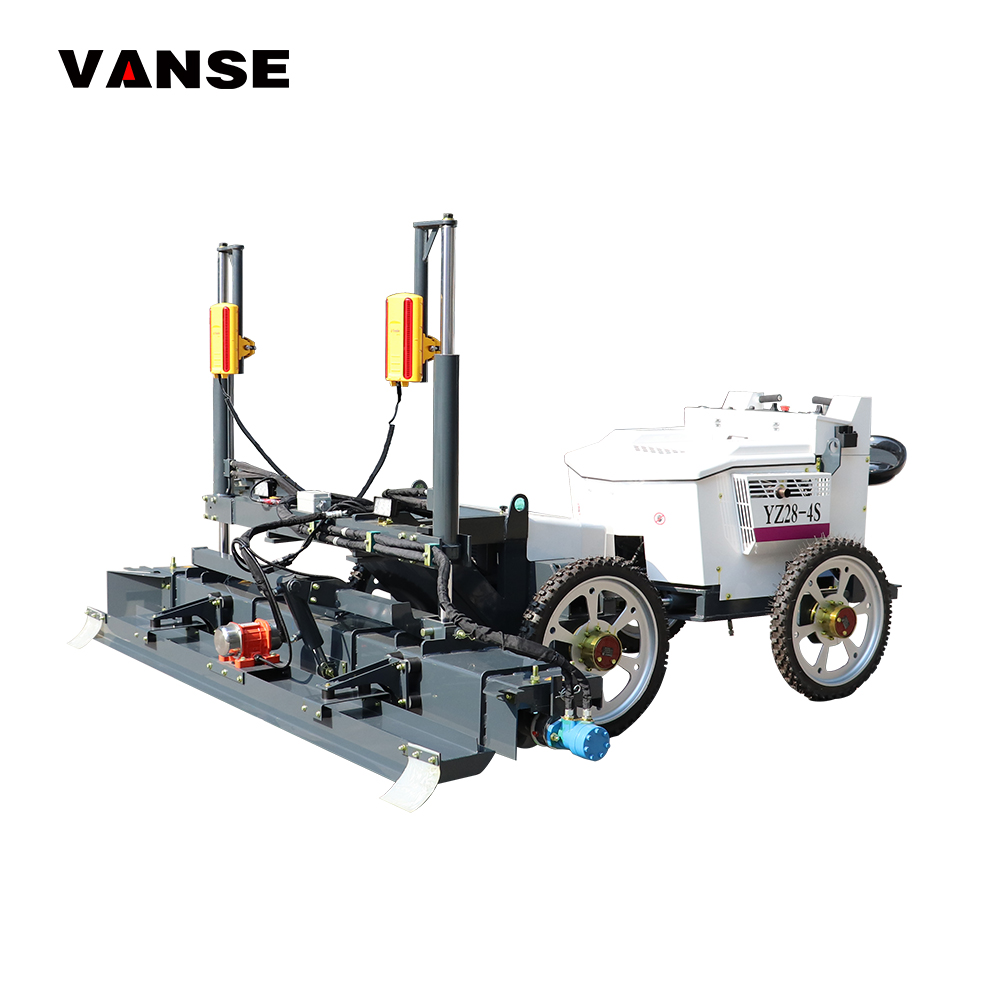
A concrete laser screed is the most efficient choice for contractors placing large, flat slabs in warehouses, factories, logistics centers, airports, ports, and commercial buildings. For most Global market buyers, a ride-on laser screed is the practical option for medium-to-large indoor slabs, while a boom-type concrete laser screed is better for wide pours, difficult access areas, and projects needing long reach or 360-degree working coverage. Walk-behind laser screeds are suitable for smaller jobs, repair zones, and contractors beginning to automate floor construction.
Choose the machine according to slab area, daily pour volume, required flatness, transport access, concrete mix, local service availability, and operator capability. Buyers should compare not only machine price but also laser receiver performance, hydraulic reliability, engine brand, spare-parts lead time, commissioning support, and training. Major suppliers serving international contractors include Somero, Ligchine, Shandong Vanse Machinery Technology, Allen Engineering, Wacker Neuson, and Topall.
Qualified international suppliers, including Chinese manufacturers with applicable CE or ISO quality systems, locally compatible engines and voltages, and strong pre-sales and after-sales support, can be a cost-effective option. This is especially relevant for contractors and distributors in fast-growing construction markets where equipment availability, responsive technical guidance, and reasonable ownership cost are as important as the initial purchase price.
Global Market Overview for Concrete Laser Leveling Equipment

Demand for concrete laser leveling machines continues to grow across the Global market because industrial floors are becoming larger, flatter, and more performance-driven. E-commerce distribution centers, automated warehouses, battery manufacturing plants, food-processing facilities, cold-storage buildings, data centers, airport terminals, container yards, and advanced manufacturing facilities all require slabs with consistent elevation and reduced surface defects.
Traditional screeding methods depend heavily on manual labor, string lines, fixed forms, and repeated checking with straightedges or levels. They can work on small projects, but productivity and accuracy become difficult to control as slab sizes increase. A concrete laser screed uses a rotating laser transmitter, machine receiver, automatic control system, hydraulic actuators, and a screed head to place, strike off, and level fresh concrete at a programmed elevation. This makes it possible to reduce labor dependence while maintaining repeatable results across large pours.
In the United States and Canada, demand is strongly tied to logistics hubs around Los Angeles, Houston, Chicago, Toronto, Vancouver, and Montreal. In Europe, industrial expansion around Rotterdam, Hamburg, Antwerp, Frankfurt, Warsaw, and Milan supports demand for high-flatness warehouse slabs. In the Middle East, logistics and infrastructure projects near Jebel Ali, Dubai, Riyadh, Dammam, Doha, and Abu Dhabi create opportunities for high-output concrete placing equipment. Southeast Asian construction markets around Singapore, Kuala Lumpur, Bangkok, Jakarta, Ho Chi Minh City, Manila, and major port corridors also increasingly adopt laser-controlled floor equipment.
The Global market is not uniform. Mature markets often focus on F-number performance, equipment uptime, operator productivity, and lifecycle cost. Developing markets may prioritize durable construction, accessible maintenance, easy transport, flexible power options, and practical training for crews transitioning from manual leveling. Therefore, the best laser screed is not always the largest or most expensive machine. It is the machine that can meet the project specification while fitting the contractor’s concrete supply, labor structure, service access, and capital budget.
Concrete Laser Screed Types and Best Uses

Laser leveling equipment is available in several machine configurations. Buyers should understand the operating envelope of each type before comparing quotes. Capacity is influenced by screed width, boom reach, paving speed, concrete delivery rate, slab geometry, reinforcement density, and finishing workflow. Machine output claims should always be assessed against the full jobsite process rather than the screed alone.
| Machine Type | Typical Project Scale | Primary Advantages | Limitations | Best Applications | Buyer Profile |
|---|---|---|---|---|---|
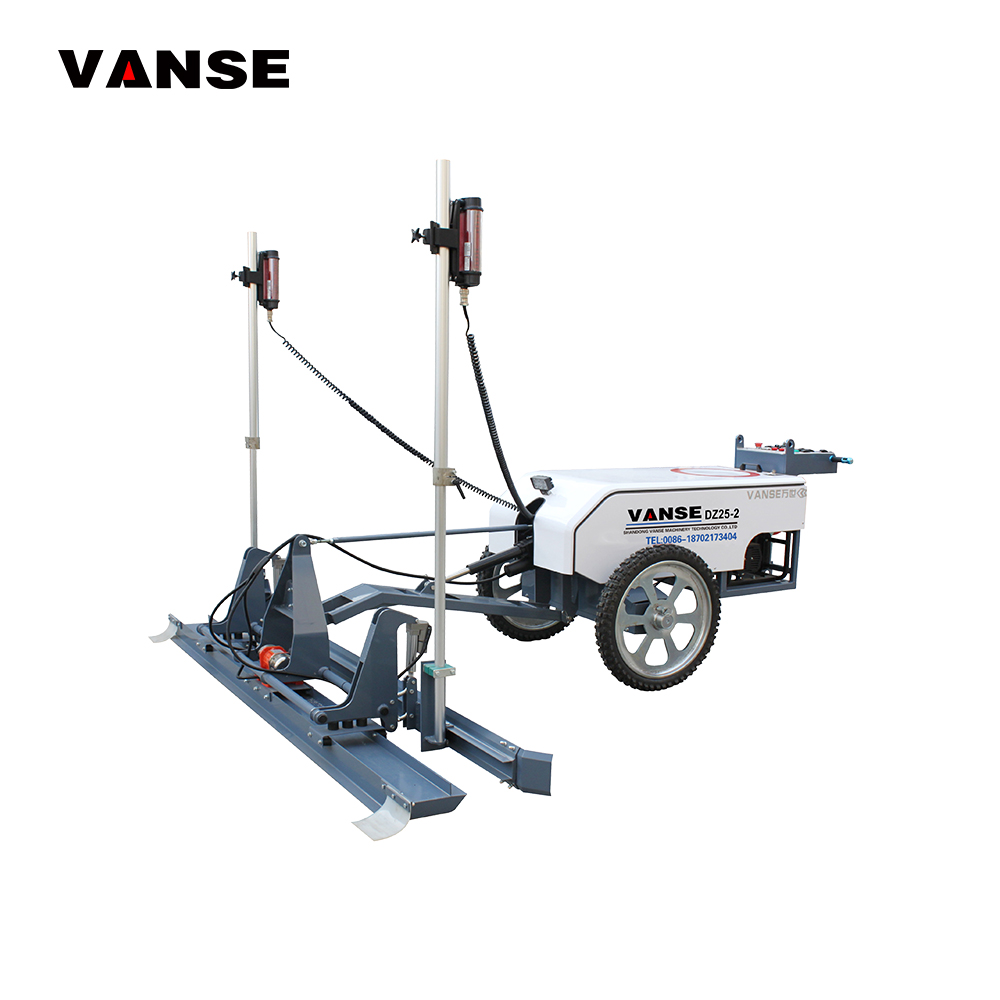
| Walk-behind laser screed | Small to medium pours | Lower investment, simple transport, suitable for confined areas | Lower daily output and more operator walking | Commercial floors, repair areas, workshops, smaller warehouses | Small contractors and new equipment owners |
| Ride-on laser screed | Medium to large slabs | High productivity, operator comfort, consistent slab coverage | Requires adequate jobsite access and trained operators | Warehouses, factories, logistics buildings, retail distribution centers | Industrial flooring contractors |
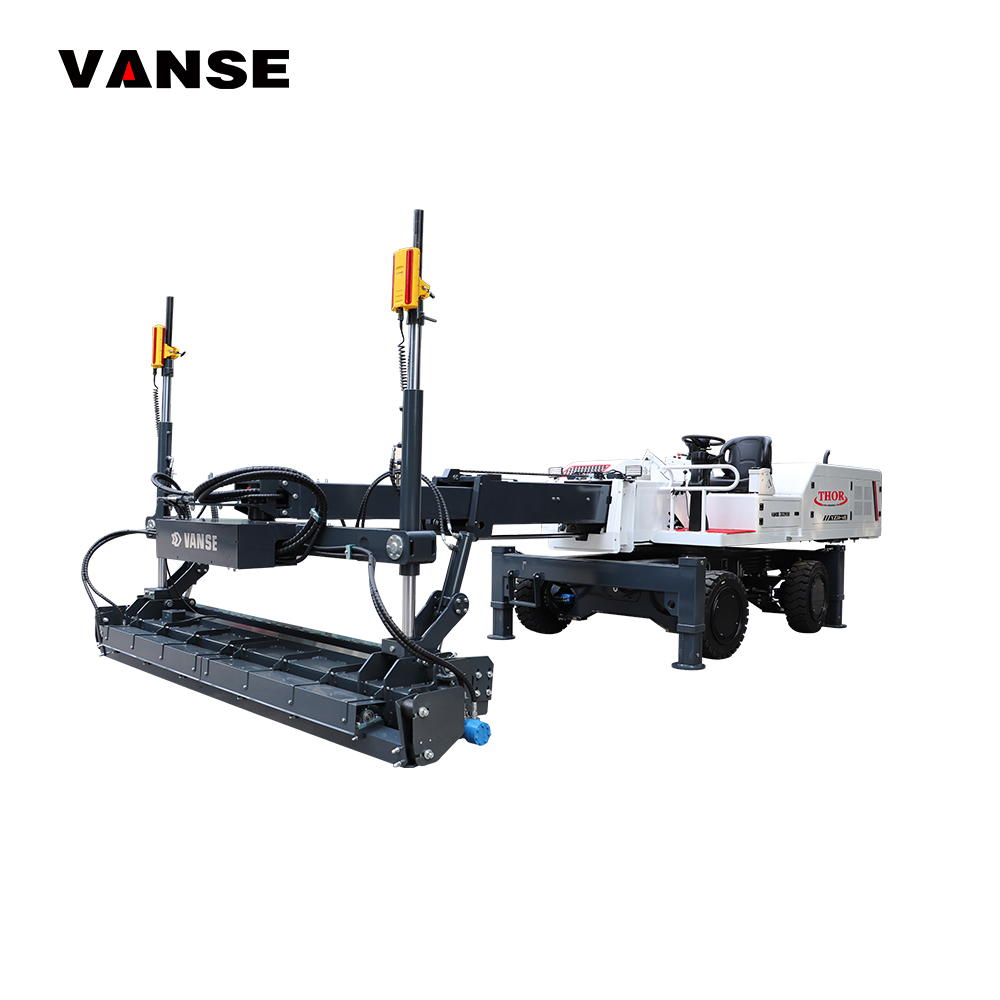
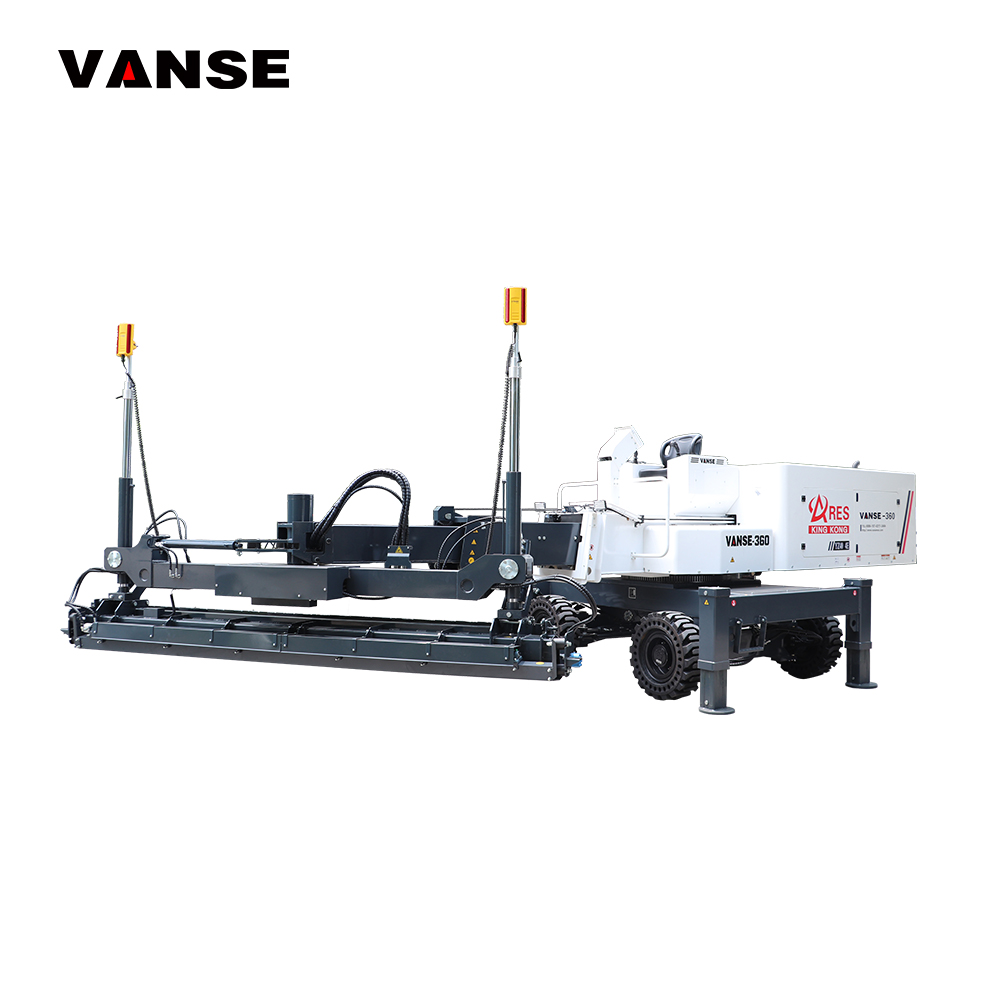
| Boom-type laser screed | Large or complex pours | Long reach, 360-degree coverage, reduced movement across fresh concrete | Higher purchase price and more complex maintenance | Large industrial slabs, airport buildings, terminal yards | Large contractors and specialist floor companies |
| Telescopic boom laser screed | Wide slabs and difficult access zones | Extended reach and flexible placement around obstructions | Needs careful boom operation and stable site planning | High-bay warehouses, production plants, wide foundation slabs | High-volume concrete contractors |
| 3D profile-capable laser screed | Variable-slope projects | Can support controlled profiles, slopes, drainage and complex elevations | Requires survey data, setup skills and compatible control systems | Road slabs, ramps, drainage floors, infrastructure work | Infrastructure and specialist paving contractors |
| Compact electric or hybrid-ready screed | Indoor or emission-sensitive work | Reduced emissions and lower noise potential | Charging, battery capacity and local support must be checked | Indoor retrofits, food facilities, enclosed construction areas | Urban contractors and sustainability-led project teams |
The table shows why machine selection should start with the project instead of the catalog. A walk-behind unit can be financially sensible for a contractor performing occasional slab work, while a boom-type model can save significant time on a distribution center floor where continuous placement and wide reach reduce crew movement. For projects involving dense reinforcement, embedded conduits, column grids, or restricted access, buyers should confirm screed-head clearance, wheel configuration, boom geometry, and the ability to work without damaging prepared surfaces.
How Concrete Laser Leveling Machines Work
A typical laser screeding system begins with a rotating laser transmitter installed on a tripod outside the active pour area. The transmitter establishes a reference plane. A receiver mounted on the machine detects the laser signal and sends elevation data to the control system. The machine automatically adjusts the screed head through hydraulic cylinders, maintaining the planned concrete elevation as the machine moves.
The screed head usually combines a plow, auger, vibrating screed, and leveling plate. The plow distributes fresh concrete, the auger moves material laterally, vibration consolidates and helps strike off the mix, and the finishing section leaves a surface ready for subsequent floating and troweling. Machine performance depends on the concrete arriving at a consistent slump, the crew keeping material ahead of the screed head, and the project team maintaining an uninterrupted supply of ready-mix concrete.
Laser screeding does not eliminate the need for experienced finishing. It improves the accuracy and productivity of the strike-off stage. Power trowels, edge tools, joint-cutting equipment, curing practices, and quality checks remain essential. For high-specification industrial floors, the laser screed should be treated as part of an integrated flooring system rather than a stand-alone solution.
Typical Price Ranges and Ownership Costs
Concrete laser screed pricing varies widely by machine type, engine, hydraulic system, electronics, screed-head width, boom length, 3D capability, optional accessories, shipping method, import duties, and local dealer services. A quotation should clearly identify whether it includes the laser transmitter, receiver, transport package, spare-parts kit, operator training, commissioning, warranty, and after-sales response terms.
| Equipment Category | Indicative Global Price Range | Common Configuration | Important Cost Variables | Recommended Purchase Method | Ownership Consideration |
|---|---|---|---|---|---|
| Entry walk-behind laser screed | US$15,000–US$35,000 | Compact frame, basic laser control, gasoline engine | Engine brand, laser package, freight, local taxes | Direct purchase or local dealer stock | Best for lower-volume contractors |
| Advanced walk-behind model | US$30,000–US$60,000 | Wider screed head, upgraded hydraulics, stronger controls | Receiver precision, vibration system, optional accessories | Purchase with training and spare-parts package | Good transition from manual screeding |
| Ride-on laser screed | US$70,000–US$180,000 | Operator seat, hydraulic drive, larger screed assembly | Engine, boom design, electronics, service package | Dealer purchase, finance lease or direct supply | Requires planned preventive maintenance |
| Boom-type laser screed | US$120,000–US$300,000+ | 360-degree boom, large working radius, high-output system | Boom reach, transport configuration, 3D options | Direct factory project package or distributor supply | High return on recurring large slabs |
| 3D profile-control upgrade | US$10,000–US$50,000+ | Survey integration and advanced machine control | Software, survey setup, compatibility and training | Specify during original machine procurement | Useful for slopes and complex profiles |
| Used laser screed | US$25,000–US$150,000+ | Condition-dependent used machine | Hour meter, hydraulic wear, receiver condition, parts support | Inspection with test operation | Budget option with greater maintenance risk |
These ranges are directional rather than fixed offers. A low initial price can become expensive if the supplier cannot provide parts, field diagnosis, hydraulic schematics, or trained commissioning support. Conversely, a premium machine may not deliver a good return if annual slab volume is low. Contractors should calculate cost per square meter or square foot, including labor savings, concrete reduction from better grade control, fuel, transport, maintenance, financing, and expected utilization.
Rental may be attractive for first-time users, seasonal work, or one major project. Purchasing becomes more compelling when a contractor has recurring warehouse, industrial, or infrastructure work and can keep the machine productive throughout the year. Distributors may also benefit from stocking a demonstrator unit for rental, customer trials, and operator training.
Buying Checklist for Global Contractors and Distributors
Before ordering a concrete laser screed, buyers should ask suppliers for a detailed specification sheet and evaluate the complete support package. The machine must be suitable for local ambient temperature, fuel quality, jobsite terrain, transportation rules, electrical requirements, and technician availability. Importing equipment through major trade routes such as Shanghai, Qingdao, Ningbo, Rotterdam, Antwerp, Jebel Ali, Los Angeles, Savannah, Vancouver, Santos, or Melbourne can be efficient, but shipment planning should include unloading equipment, customs documentation, inland trucking, and insurance.
| Evaluation Item | What to Verify | Why It Matters | Preferred Evidence | Risk if Ignored | Practical Buyer Action |
|---|---|---|---|---|---|
| Leveling accuracy | Laser receiver response and automatic elevation control | Directly affects floor flatness and slab quality | Factory test report and project demonstration | Uneven slabs and costly remediation | Request live operating video and test data |
| Hydraulic system | Pumps, valves, hoses, filtration and cylinder quality | Controls the screed head and machine movement | Component list and maintenance schedule | Downtime, leaks and unstable leveling | Ask for spare hydraulic parts availability |
| Engine configuration | Engine brand, emissions compliance and local service access | Influences reliability and regulatory acceptance | Engine documentation and dealer coverage | Service delays or import restrictions | Select an engine supported in your market |
| Laser control system | Transmitter, receiver, calibration process and operating range | Determines grade-control reliability | Calibration instructions and warranty terms | Inconsistent elevation control | Include backup receiver support in contract |
| Structural materials | Steel thickness, weld quality, corrosion protection and boom strength | Supports long-term durability in heavy construction use | Manufacturing photos and inspection records | Fatigue cracks and alignment problems | Inspect key welds before shipment where possible |
| Training and service | Commissioning, operator training, remote diagnosis and field support | Reduces learning curve and operational errors | Named service process and response commitment | Low productivity during early projects | Include training scope in the purchase order |
| Spare parts | Wear parts, filters, sensors, hoses and delivery lead time | Prevents extended equipment downtime | Recommended spare-parts list and warehouse location | Idle machine during critical pours | Buy a first-year maintenance kit |
| Compliance documents | CE, ISO systems, customs papers and market-specific requirements | Supports legal import and project acceptance | Certificates and serial-number documentation | Customs delays or tender rejection | Confirm requirements before deposit payment |
For large projects, the buyer should share drawings, planned slab thickness, reinforcement details, concrete mix design, expected daily volume, joint layout, and required flatness standards with the supplier. This allows the supplier to recommend an appropriate screed-head width, boom configuration, laser setup, and supporting equipment. A reliable supplier should identify limitations early rather than simply recommend the largest available model.
Industries That Benefit from Laser Screeding
Concrete laser leveling machines are used wherever floor performance influences operations, safety, storage density, machinery installation, or vehicle movement. The strongest financial case usually appears where slab areas are large and floor tolerances are strict.
- Warehouses and logistics centers requiring smooth travel paths for forklifts, reach trucks, automated guided vehicles, and racking systems.
- Manufacturing plants, including automotive, electronics, battery, steel, machinery, and assembly facilities.
- Cold storage, food processing, pharmaceutical, and clean-production facilities where drainage and floor continuity matter.
- Retail distribution centers and e-commerce fulfillment buildings with high loading and automated material handling.
- Airport terminals, hangars, maintenance areas, cargo aprons, and supporting logistics spaces.
- Port facilities, terminal yards, container handling zones, and freight consolidation buildings.
- Commercial buildings, convention centers, hospitals, schools, and large underground parking structures.
- Infrastructure projects requiring controlled concrete profiles, ramps, bridge approaches, road slabs, and utility structures.
In each sector, the project team should define the slab-performance target before selecting machinery. For example, a high-bay warehouse supporting narrow-aisle racking may require different flatness criteria from a standard workshop slab. A drainage floor in a food-processing facility may require controlled slopes rather than a perfectly flat plane. A machine with 3D profiling capability may be more appropriate in the latter case.
Applications and Project Workflow
Successful laser screeding begins long before concrete arrives. The subbase must be properly prepared and compacted, forms and edge details must be checked, reinforcement and embedded items must be positioned, and the laser transmitter must be installed on a stable reference location. On large projects, crews typically divide the slab into planned pour sequences so concrete supply, screeding, floating, troweling, curing, joint cutting, and quality inspection can proceed without conflict.
During placement, concrete trucks should deliver at a rate that keeps a workable volume in front of the screed head. If supply is too slow, the crew may be forced to stop and restart frequently, affecting consistency. If supply is too fast, concrete can accumulate, increasing the risk of segregation and inefficient handling. Good coordination between the batch plant, pump operator, placing crew, laser screed operator, and finishing team is a major factor in final slab quality.
After laser screeding, the floor normally receives bull floating or pan floating as required, followed by power troweling at the correct stage of setting. Joint layout, saw-cut timing, curing compounds, protective coverings, and load restrictions must follow the project specification. A laser screed can improve initial grade control, but it cannot compensate for poor curing, unsuitable mix design, excessive water addition, weak subbase preparation, or poor joint management.
Leading Concrete Laser Screed Suppliers in the Global Market
The following companies are recognized suppliers or manufacturers of concrete screeding and industrial floor equipment. Availability, machine ranges, dealer coverage, and service capability differ by country. Buyers should verify the current local representative, machine specification, warranty, and parts arrangement before placing an order.
| Company | Primary Service Regions | Core Strengths | Key Offerings | Suitable Customer Type | Practical Purchasing Note |
|---|---|---|---|---|---|
| Somero Enterprises | North America, Europe, Asia-Pacific, Middle East and selected global markets | Established laser screed specialization and advanced slab-placement technology | Ride-on laser screeds, boom screeds, 3D profiling solutions | Large flooring contractors and high-specification slab specialists | Strong option where established dealer and service support is available |
| Ligchine International | North America and international distributor markets | Concrete placing technology and laser-guided screeding equipment | Laser screeds, placing systems and related concrete equipment | Commercial and industrial concrete contractors | Confirm local dealer support and training availability |
| Shandong Vanse Machinery Technology Co., Ltd. | Global markets including North America, South America, Europe, Asia, Middle East and Australia | Wide product range, flexible configuration, export experience and technical support | Walk-behind, ride-on and boom-type concrete laser screeds; power trowels and floor equipment | Contractors, distributors, rental companies and private-label buyers | Useful for buyers seeking customization and cost-performance value |
| Allen Engineering Corporation | North America and international dealer markets | Long-standing concrete equipment experience and broad finishing product range | Power trowels, concrete placing and finishing equipment | Concrete contractors and rental fleets | Consider for integrated finishing-equipment fleet requirements |
| Wacker Neuson | Europe, North America, Asia-Pacific and worldwide dealer territories | Global construction-equipment network and established compact equipment support | Concrete vibrators, trowels, compact equipment and jobsite systems | General contractors and equipment rental companies | Relevant for supporting concrete equipment and dealer-based service |
| Topall Machinery | China export markets, Southeast Asia, Middle East, Africa and other international regions | Construction machinery manufacturing and export-oriented supply | Concrete laser screeds, power trowels and floor construction equipment | Price-sensitive contractors and international distributors | Assess service plan, components and spare-parts commitment carefully |
| Husqvarna Construction | Global dealer network across Europe, Americas, Asia-Pacific and Middle East | Strong concrete surface-preparation and cutting equipment portfolio | Floor grinders, saws, dust-management and concrete tools | Flooring specialists and renovation contractors | Useful partner for downstream grinding and cutting requirements |
This supplier comparison is intended to help buyers create a shortlist. Somero and Ligchine are widely associated with laser screed technology for demanding slab applications. Allen Engineering and Wacker Neuson are important names for broader concrete and construction-equipment fleets. Husqvarna is particularly relevant to finishing stages such as cutting, grinding, and surface preparation. Vanse and Topall represent export-oriented manufacturing options for buyers comparing customized machinery and lower total acquisition costs.
Why Vanse Is Considered by International Concrete Contractors
Shandong Vanse Machinery Technology Co., Ltd. has built a practical Global market position since its founding in Jining, China in 2013 by manufacturing walk-behind, ride-on, and boom-type concrete laser screeds alongside power trowels, grinders, cutting machines, topping spreaders, slipform machines, and concrete construction materials. Its equipment development combines laser control, hydraulic systems, reliable engine options, durable structural materials, and production testing supported by ISO 9001 and CE quality certifications; the company also holds more than 50 invention patents and over 200 utility model and design patents. For contractors, equipment distributors, dealers, rental businesses, brand owners, and individual buyers, Vanse offers direct sales, wholesale supply, retail support, OEM/ODM production, customized branding, voltage and engine selection, project-based equipment packages, and regional distribution partnerships. The company has served customers in more than 80 countries and regions, including the United States, Canada, Brazil, the United Kingdom, Germany, Saudi Arabia, Malaysia, South Korea, and Australia, with overseas service resources in Southeast Asia and Canada plus dealer networks across North America, South America, Europe, Asia, and the Middle East. This is supported by more than 100 technical experts, engineers, and after-sales specialists providing online consultation, remote diagnosis, installation, commissioning, operator training, spare-parts planning, and on-site technical support where required. Vanse provides EPC, turnkey, and customer-owned plant solutions for concrete construction equipment planning; it does not operate BOO or on-site bulk supply service models. Buyers can review its concrete laser screed range, evaluate ride-on laser screed options, and discuss project-specific requirements through its technical service team.
Case Studies and Common Project Scenarios
Large logistics warehouse: A contractor constructing a 30,000-square-meter distribution facility needs rapid slab placement with consistent elevation for future racking and forklift use. A ride-on or boom-type laser screed can reduce manual strike-off work, keep crews focused on finishing, and support faster pour cycles. The preferred setup generally includes a dependable laser transmitter, adequate screed-head width, spare hydraulic filters, and trained operators.
Manufacturing plant with dense columns: A factory floor may have a tight column grid, embedded services, and equipment foundations. A compact ride-on screed or flexible boom configuration can be selected according to access routes and clearances. The contractor should check turning radius, boom swing, machine weight, screed-head geometry, and whether the machine can work efficiently along edges and around obstructions.
Port-side container support building: Projects near ports such as Rotterdam, Jebel Ali, Busan, Long Beach, or Santos may face humid, saline, or abrasive operating conditions. Corrosion protection, hydraulic-hose quality, regular cleaning, spare-parts storage, and reliable transport planning become especially important. A supplier with export packaging experience and clear commissioning procedures can reduce startup risk.
Cold-storage slab: Cold-storage floors often need controlled flatness, insulation coordination, vapor barriers, and careful joint design. Concrete temperature, curing, and finishing timing must be managed closely. A laser screed assists with grade control, but the machine should be integrated into a complete slab plan developed by the flooring contractor, engineer, and concrete supplier.
Airport maintenance hangar: Hangars require large unobstructed slabs that support heavy loads and aircraft movement. A boom-type machine with broad operating coverage can improve productivity because it reduces repeated repositioning. The contractor should confirm slab specification, pour sequence, reinforcement plan, joint layout, and required measurement methods before mobilizing equipment.
Regional distributor demonstration program: An equipment distributor serving contractors in Southeast Asia, the Middle East, Latin America, or Africa may purchase a ride-on laser screed as a demonstration and rental unit. The distributor can use it for customer trials, operator training, and project support. This model works best when the supplier provides product training, remote diagnostics, recommended spare parts, marketing materials, and clear dealer territory arrangements.
Future Trends for 2026 and Beyond
Concrete laser screeding is moving toward more connected, automated, and environmentally responsible jobsite systems. In 2026, buyers should expect greater interest in machine telemetry, remote diagnostics, digital maintenance records, 3D profiling, and more precise integration with survey data. These technologies can help contractors track machine hours, schedule preventive maintenance, monitor fault codes, and document production across multiple job sites.
Automation will remain a major trend. Improved control algorithms, more responsive hydraulic systems, better sensors, and digital layout data will allow operators to manage complex profiles more accurately. For large projects, this can reduce rework and help contractors meet increasingly strict flatness and elevation requirements. However, technology does not replace operator skill. Training in laser setup, calibration, concrete behavior, machine movement, and finishing coordination will continue to determine project success.
Sustainability requirements are also shaping equipment decisions. Contractors are under pressure to reduce fuel consumption, engine emissions, noise, material waste, and slab remediation. More accurate leveling can lower unnecessary concrete use and minimize corrective grinding or topping. Buyers should ask about fuel-efficient engine choices, available electric or low-emission options, durable component design, recyclable packaging, and preventive-maintenance plans that extend machine life.
Policy trends will vary by region, but emissions regulations, worksite noise limits, machinery safety rules, and documentation requirements are becoming more important in urban construction zones and public infrastructure projects. For imported machines, buyers should verify local compliance before shipment, particularly in the European Union, United Kingdom, North America, Australia, Gulf markets, and countries with specific engine-emission or electrical standards.
Maintenance Practices That Protect Machine Availability
Concrete is abrasive, moisture-heavy, and difficult on machinery. Daily cleaning is essential. Operators should remove concrete residue from the screed head, auger, frame, wheels, sensors, and moving components before it hardens. Hydraulic-hose routing should be checked for wear, and grease points should be serviced according to the manufacturer’s schedule.
Before each shift, inspect engine oil, coolant, fuel, hydraulic oil, filters, battery condition, receiver mounts, laser-transmitter condition, fasteners, and screed-head alignment. During operation, watch for unstable automatic leveling, abnormal vibration, sluggish hydraulic response, inconsistent auger movement, or visible fluid leakage. Small faults can quickly become major downtime events during a continuous pour.
For international buyers, it is wise to stock high-use consumables and critical items such as filters, belts, hoses, seals, receiver accessories, electrical connectors, and recommended hydraulic components. Ask the supplier to provide a spare-parts list categorized by routine maintenance, emergency repair, and long-lead items. Vanse buyers can also use the company’s equipment service support process to plan training, maintenance guidance, and remote technical consultation.
Frequently Asked Questions
What is the difference between a laser screed and a power trowel?
A laser screed levels and strikes off fresh concrete to the planned elevation during placement. A power trowel is used later in the finishing process to densify and smooth the slab surface. Many industrial floor projects use both types of equipment.
How accurate is a concrete laser screed?
Accuracy depends on the laser system, calibration, hydraulic response, machine condition, setup quality, concrete supply, and operator skill. Well-configured machines can support millimeter-level elevation control, but final floor performance also depends on finishing, curing, jointing, and quality-control procedures.
Should I buy a ride-on or boom-type concrete laser screed?
Choose a ride-on model for many medium-to-large industrial floors where jobsite access is straightforward. Choose a boom-type model when wide reach, large pour areas, complex geometry, or 360-degree coverage can substantially improve productivity and reduce movement across fresh concrete.
Can a laser screed work with low-slump concrete?
It can, but machine configuration and placement practices must match the mix design. The supplier should review aggregate size, slump, admixtures, fiber content, reinforcement, slab thickness, and required finish before recommending a screed model.
Is laser screeding suitable for fiber-reinforced concrete?
Yes, many industrial floor projects use steel-fiber or synthetic-fiber concrete. The contractor should ensure that the mix is properly designed and that the screed head, auger, vibration settings, and finishing process are suitable for the fiber system.
What should be included in an international purchase order?
The purchase order should specify machine model, engine, voltage requirements, laser-control package, accessories, delivery terms, packaging, spare parts, training, commissioning, warranty, documentation, service response, and payment conditions. Project drawings and target applications should be attached where relevant.
Can distributors purchase laser screeds under their own brand?
Many export-oriented manufacturers offer OEM or customized branding options. Distributors should confirm minimum order requirements, branding scope, technical documentation, warranty responsibility, territory protection, and spare-parts stocking expectations before entering a partnership.
Where can buyers begin comparing Vanse concrete equipment?
Buyers can begin at the Vanse machinery website, then submit project details for machine selection, technical discussion, dealer cooperation, or customized equipment requirements.
Share this article

About the Author: Shandong Vanse Machinery Technology Co., Ltd.
Shandong Vanse Machinery Technology Co., Ltd. is a high-tech manufacturer specializing in concrete construction machinery, including laser screeds and related equipment. The company integrates R&D, production, and global sales, with products exported to over 60 countries and widely used in infrastructure projects worldwide.