Insight blog
Global Market Guide to Laser-Guided Concrete Levelers 2026
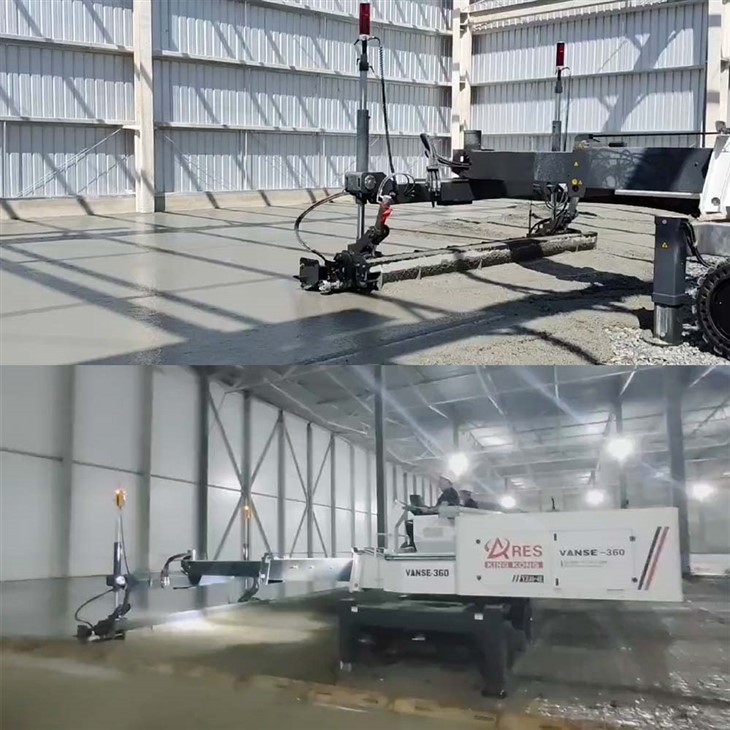
Laser-Guided Concrete Leveling Equipment for the Global Market
Quick Answer

A laser concrete leveling machine, often called a laser screed or laser-guided concrete screed, is the best choice for contractors that need flatter, more consistent large-area slabs with less manual labor. For warehouse floors, factories, logistics parks, airports, and commercial projects, ride-on and boom-type laser screeds normally provide the highest output, while walk-behind models are better for smaller slabs, narrow spaces, and repair work.
For Global market buyers, the practical short list includes Somero, Ligchine, Allen Engineering, Wacker Neuson, GOMACO, and Shandong Vanse Machinery Technology. Select the machine according to slab size, required FF/FL tolerance, concrete mix, access conditions, local service coverage, engine regulations, and operator availability. Qualified international suppliers, including Chinese manufacturers with CE or ISO certifications, proven export records, and strong pre-sales and after-sales support, can offer compelling cost-performance advantages when local parts and training are available.
- Somero: Strong choice for high-volume industrial slabs and advanced flatness requirements.
- Ligchine: Suitable for contractors seeking compact laser screeds and practical jobsite maneuverability.
- Allen Engineering: Known for concrete placement and finishing equipment for broad contractor use.
- Wacker Neuson: Relevant for concrete equipment fleets supported through international dealer channels.
- GOMACO: Suitable for specialist concrete paving, airport, and infrastructure applications.
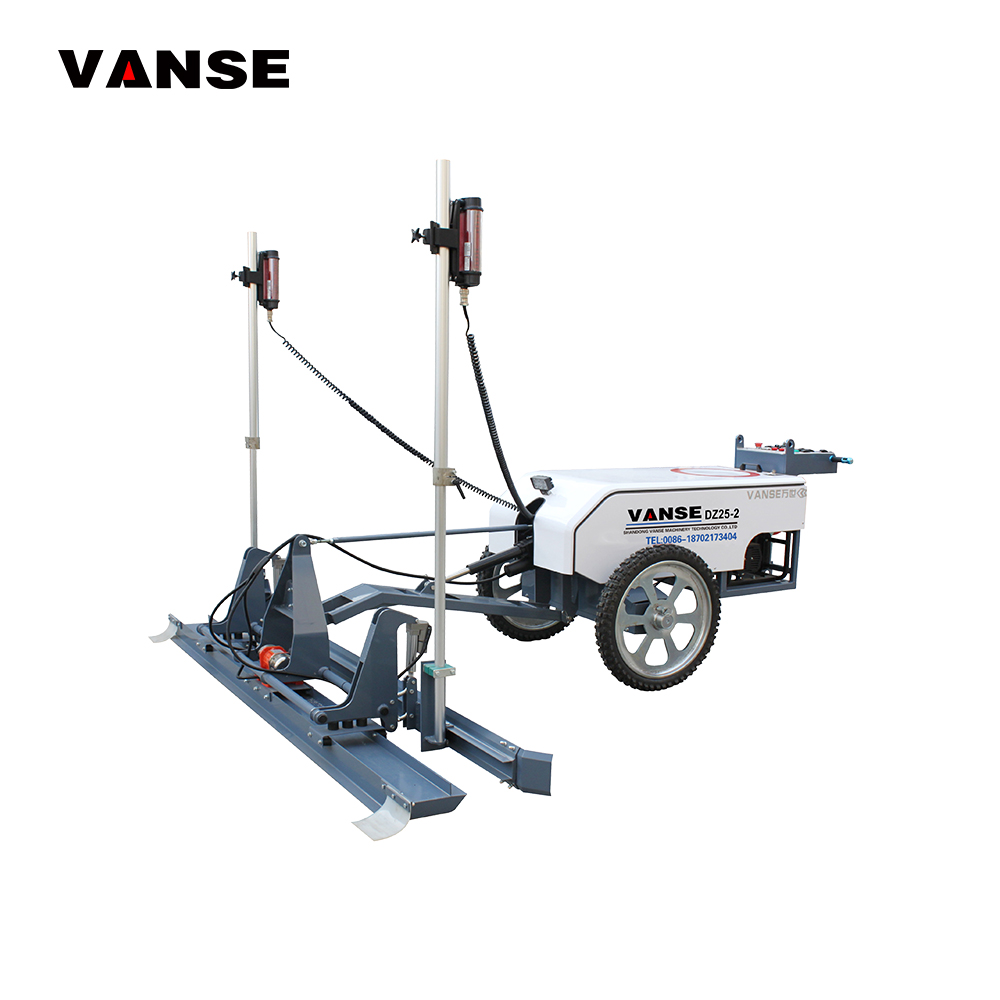
- Shandong Vanse: Competitive option for walk-behind, ride-on, and boom laser screeds with flexible customization and global support.
Why Laser-Leveling Equipment Matters in the Global Market

Concrete floors are no longer judged only by whether they appear level. Large facilities in Rotterdam, Dubai, Singapore, Toronto, São Paulo, Melbourne, Hamburg, Jeddah, and Los Angeles increasingly require documented floor tolerance, reliable load transfer, controlled joint performance, and efficient construction schedules. Distribution centers with very-narrow-aisle forklifts, high-bay warehouses, cold-storage facilities, data centers, and manufacturing plants need slabs that support predictable vehicle operation and reduced maintenance.
A laser-guided concrete leveling system uses a rotating laser transmitter, receivers, control electronics, hydraulic actuators, and a screed head to place and strike off fresh concrete at a controlled elevation. Compared with manual screeding, a properly operated machine can reduce dependence on highly skilled hand screed crews, improve placement consistency, and shorten the time between concrete discharge and finishing.
The market is especially active around industrial and logistics construction corridors. Key buying and service locations include the Port of Rotterdam and Antwerp-Bruges in Europe, Jebel Ali in the Middle East, Port Klang and Singapore in Southeast Asia, Shanghai and Ningbo in China, Santos in Brazil, Durban in South Africa, Vancouver and Toronto in Canada, and Houston, Savannah, and Long Beach in the United States. Equipment buyers in these areas often prioritize containerized shipment planning, local parts availability, emission-compliant engines, operator training, and rapid technical response.
A laser screed does not replace planning. It performs best when the concrete supplier, batch plant, contractor, survey team, finishing crew, joint-installation team, and curing-material supplier work from one placement plan. Slab thickness, reinforcement layout, vapor barrier condition, pour-strip arrangement, mix slump, fiber dosage, access lanes, and curing requirements should be confirmed before the machine arrives onsite.
How a Laser Concrete Leveling Machine Works

The operating principle is straightforward but the execution requires discipline. A rotating laser transmitter establishes a reference plane across the work zone. Laser receivers mounted on the screed head read the reference signal. The machine controller compares the actual screed elevation with the target elevation and sends commands to hydraulic cylinders. The screed head rises or lowers continuously while the machine spreads and strikes off fresh concrete.
On advanced systems, the control package can work with 3D profiling data rather than a single flat plane. This is relevant for drainage slopes, loading yards, aprons, ramps, bridge decks, aircraft hardstands, and floors with designed falls. A 3D-capable system can improve consistency on complex grades, but it requires accurate site control data, trained operators, and disciplined survey verification.
The laser screed operator must still manage concrete delivery, travel speed, screed head angle, overlap, slump variation, edge conditions, and machine stability. Laser control is a precision tool, not an automatic substitute for good concrete practice. Contractors should verify elevations with independent checks during the pour and conduct floor-flatness testing after placement where the specification requires it.
Common Types of Laser-Guided Concrete Levelers
Different job conditions call for different machine layouts. Selecting a machine purely by width or engine power can create costly access, productivity, and service problems. The following comparison explains the most common categories used in the Global market.
| Machine Type | Typical Working Environment | Main Advantages | Limitations | Typical Buyer |
|---|---|---|---|---|
| Walk-behind laser screed | Small warehouses, rooms, slab repairs, narrow work zones | Lower acquisition cost, compact transport, easier access | Lower output than ride-on or boom machines | Small contractors and finishing crews |
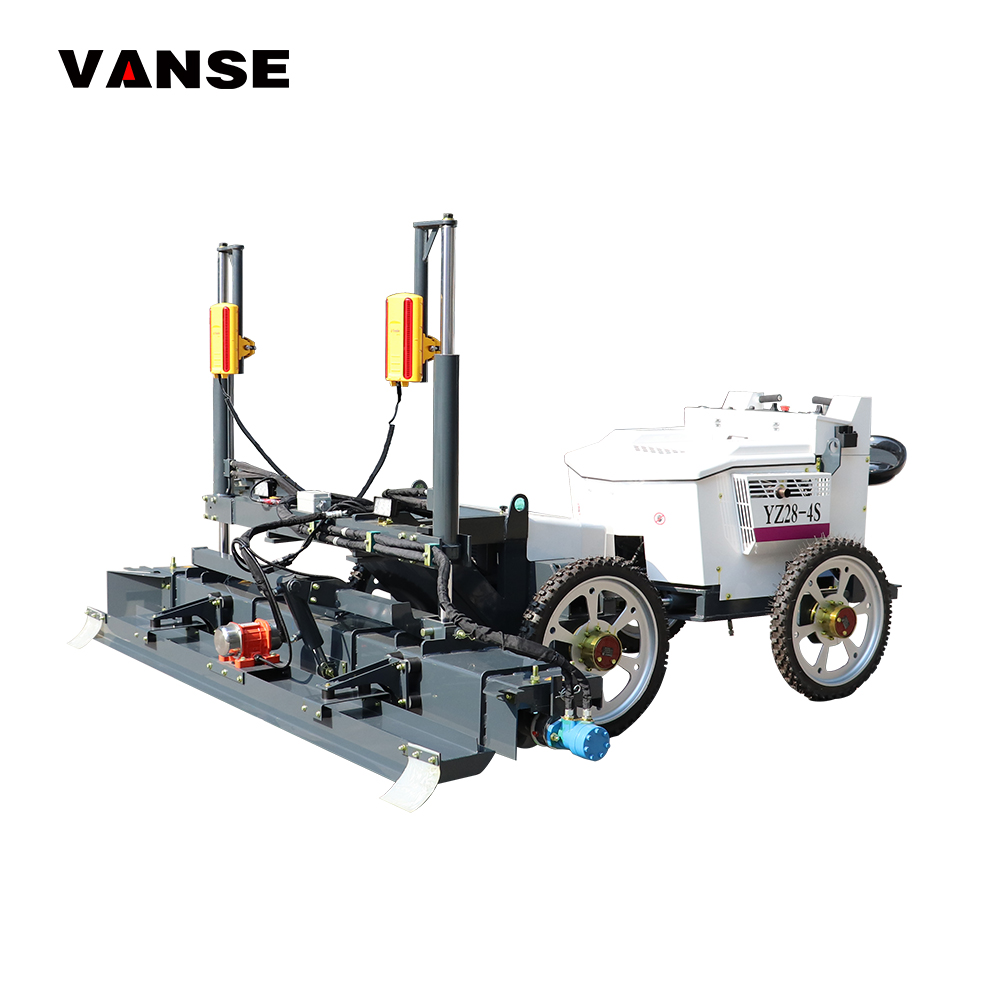
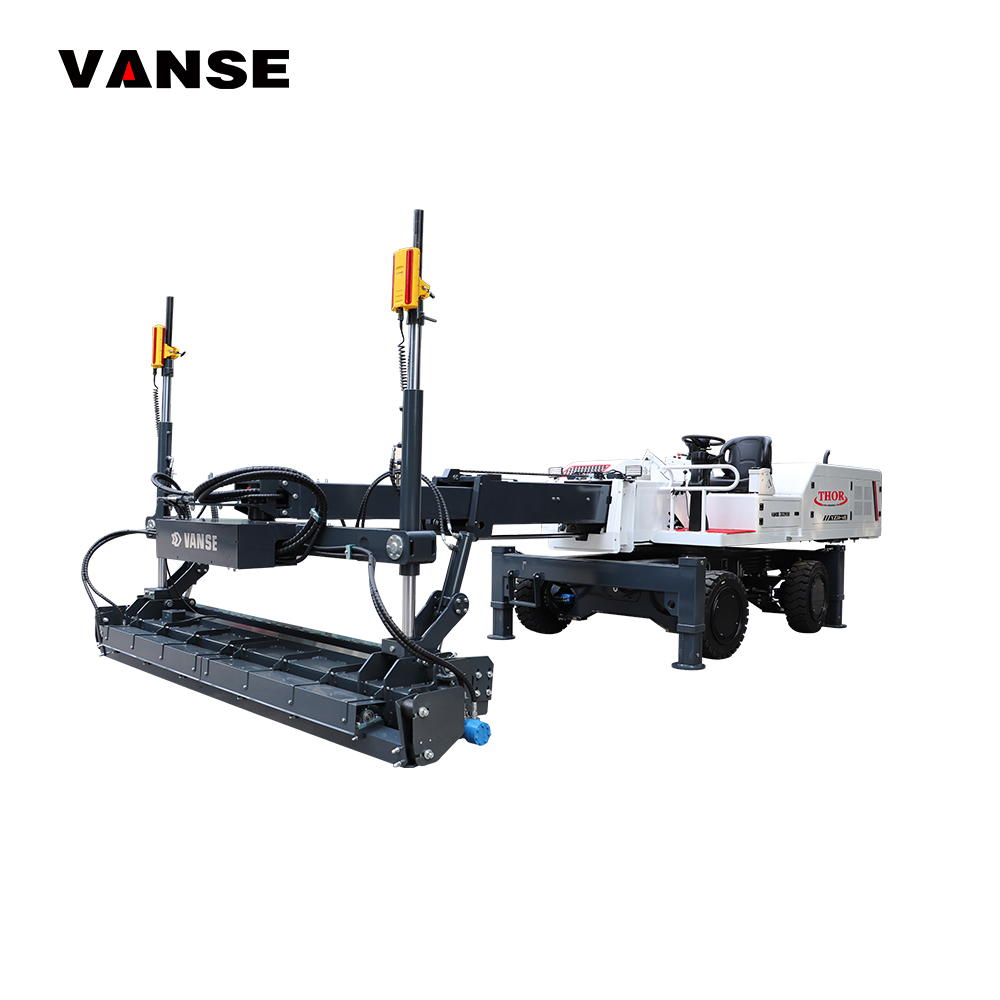
| Ride-on laser screed | Medium to large industrial floors and commercial slabs | High daily output, operator comfort, efficient slab coverage | Needs adequate access and organized concrete supply | Industrial flooring contractors |
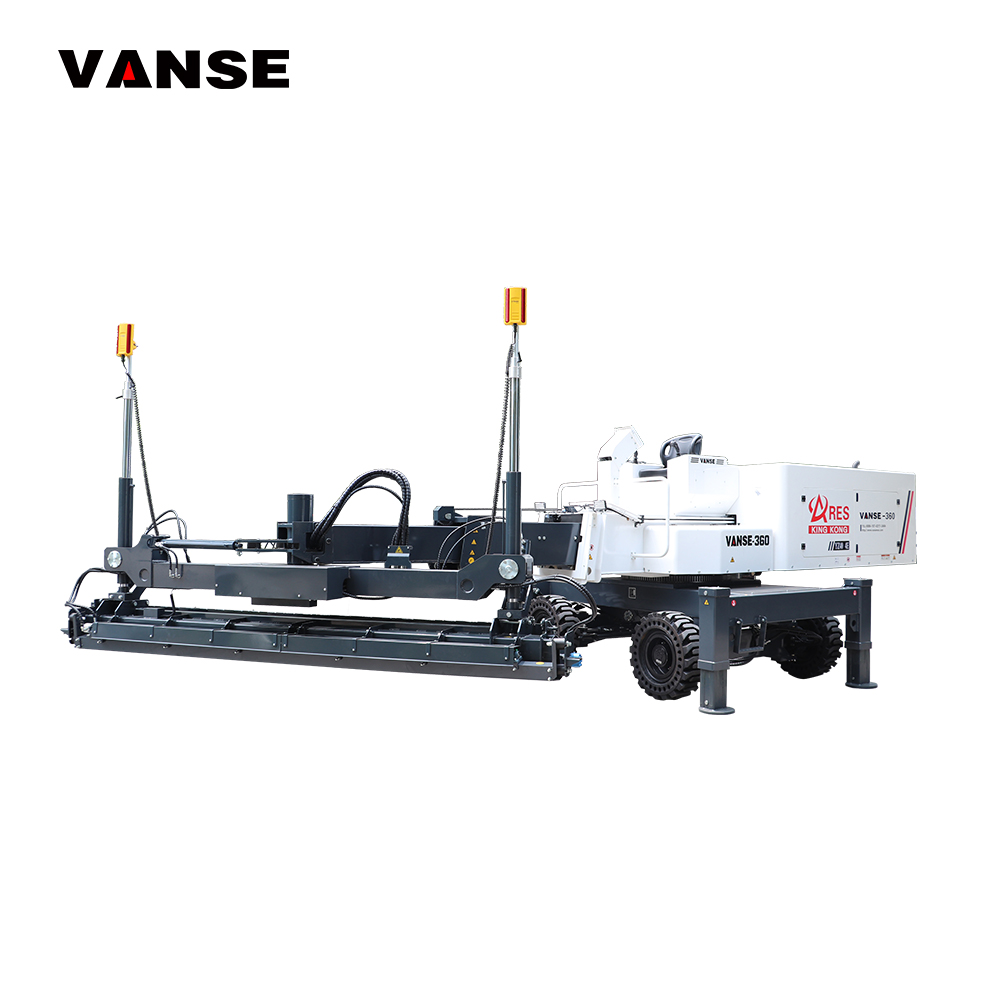
| Boom-type laser screed | Large open slabs, logistics centers, factories, airport buildings | Long reach, fewer tracks in fresh concrete, high productivity | Higher purchase cost and operator skill requirement | Major slab contractors and rental fleets |
| Four-wheel drive laser screed | Rougher subgrades and larger construction sites | Improved traction and mobility across demanding sites | May require more transport and maintenance planning | Infrastructure and large-project contractors |
| 3D-profile laser screed | Sloped floors, yards, ramps, drainage areas, infrastructure | Supports defined grades and complex elevation control | Requires reliable digital design and survey inputs | Specialist civil and concrete contractors |
| Compact remote-control screed | Confined spaces, restricted-access zones, safety-sensitive areas | Operator can work away from selected hazards or edges | Usually less productive than large boom models | Specialty contractors and refurbishment teams |
The table shows why machine type should be tied to the project portfolio rather than a single upcoming job. A contractor performing regular 8,000 m² to 30,000 m² warehouse pours may justify a ride-on or boom machine. A contractor focused on supermarkets, small manufacturing extensions, basements, and repairs may receive better return from a compact walk-behind system.
Specifications That Should Drive Your Purchase Decision
Brochures often highlight screed width and engine power, but the most valuable specifications are those that affect real placement quality, uptime, logistics, and operating cost. Compare quoted machines on an equivalent configuration basis. Confirm whether the offer includes laser transmitter, receivers, transport package, spare parts kit, training, commissioning, and warranty terms.
| Specification | Why It Matters | Recommended Buyer Check | Operational Impact |
|---|---|---|---|
| Leveling accuracy | Directly affects slab tolerance and finishing workload | Ask for test method and conditions, not only a headline claim | Improves elevation consistency when setup is correct |
| Screed head width | Influences coverage and output per pass | Match width to pour-strip geometry and site access | Wide heads increase productivity in open areas |
| Boom reach | Determines how much slab can be covered from one position | Compare reach with planned truck and pump locations | Reduces unnecessary travel over fresh concrete |
| Hydraulic system | Controls screed response, travel, and machine movements | Review maintenance intervals and local hose support | Supports smooth grade correction and reliability |
| Engine configuration | Affects fuel use, local emissions compliance, and service access | Confirm approved engine option for the destination country | Reduces registration and parts risks |
| Machine dimensions and weight | Controls container loading, trucking, and site entry | Check transport width, height, lifting points, and trailer needs | Prevents delivery and mobilization delays |
| Laser and 3D compatibility | Determines capability for flat slabs or complex grades | Confirm included control package and upgrade path | Expands future project opportunities |
| Serviceability | Downtime can disrupt an entire concrete pour schedule | Ask about parts stock, remote diagnostics, and training | Protects project continuity and resale value |
Millimeter-level elevation control may be achievable under suitable operating conditions, but buyers should avoid treating this as a guaranteed finished-floor result. Final slab performance also depends on subbase preparation, formwork, concrete consistency, placement sequence, vibration, finishing, joint cutting, curing, and testing. A credible supplier will discuss the complete process instead of claiming that machine accuracy alone guarantees a high FF/FL result.
Indicative Price and Ownership Cost
Laser concrete leveling machine prices vary widely by class, engine, laser system, boom configuration, 3D controls, shipping distance, import duties, training package, and service support. Buyers should request an itemized quotation instead of relying on online price ranges. The lowest machine price can become expensive if the supplier cannot provide commissioning support, hydraulic parts, laser-control troubleshooting, or operator training.
| Equipment Category | Indicative Global Price Range | Typical Cost Drivers | Best Use Case |
|---|---|---|---|
| Entry walk-behind laser screed | US$15,000–US$35,000 | Control package, screed width, engine, shipping | Small slabs and constrained areas |
| Professional walk-behind laser screed | US$30,000–US$60,000 | Hydraulics, remote functions, brand support | Frequent small-to-medium placements |
| Ride-on laser screed | US$55,000–US$120,000 | Drive system, boom size, laser controls, engine | Industrial and commercial floors |
| Boom-type laser screed | US$90,000–US$220,000+ | Reach, chassis, automation, 3D capability | Large warehouses and logistics facilities |
| 3D-enabled specialist screed | US$130,000–US$280,000+ | Digital control, surveying integration, accessories | Slopes, yards, pavements, infrastructure |
| Used laser screed | US$20,000–US$150,000+ | Hours, maintenance records, controller age, parts access | Budget-conscious buyers with inspection capability |
These ranges are budgetary indicators rather than formal offers. Freight from manufacturing hubs such as Qingdao, Shanghai, Ningbo, Hamburg, Rotterdam, Houston, or Jebel Ali can materially affect delivered cost. Buyers should calculate total landed cost, including crating, inland transport, marine insurance, customs clearance, taxes, commissioning travel, operator training, initial spare parts, and expected annual maintenance.
For rental companies, utilization is the key economic metric. A higher-capacity screed can generate stronger returns if it remains booked across industrial projects. For contractors, the business case should include labor savings, reduced rework, faster placements, improved slab tolerance, and the ability to bid on larger flooring packages.
Buying Advice for Contractors, Distributors, and Rental Companies
Begin with a project audit. Review the average slab area, annual concrete volume, access restrictions, typical thickness, floor-flatness specifications, climate, concrete supply capacity, and labor availability. A machine should fit the work that produces most of the company’s revenue, not only the largest project in its history.
Ask suppliers to demonstrate the machine on fresh concrete or provide a live video demonstration showing startup, laser calibration, grade correction, boom movement, screed head cleaning, and emergency-stop procedures. Ask for the standard delivery scope in writing. A quotation that excludes transmitter, spare wear parts, transport frame, training, or hydraulic oil can be misleading.
For distributors, assess parts turnover before committing to a regional agreement. Consumables, hoses, sensors, relays, filters, seals, and screed-head wear components are more important than showroom inventory alone. Suppliers should provide exploded parts drawings, serial-number tracking, technician training, response procedures, and stock recommendations based on expected fleet size.
For end users, specify acceptance criteria. This may include machine commissioning, operator training, response time for remote support, warranty coverage, included tools, documentation, and a pre-delivery inspection record. If the project has strict slab tolerances, include a test-pour procedure and agree on the responsibilities of the machine supplier, concrete contractor, and finishing contractor.
Industries and Applications
Laser-guided screeding is used wherever large concrete surfaces need controlled elevation, fast placement, and repeatable quality. The technology is especially valuable where forklift traffic, automated storage systems, heavy racking, wheeled equipment, or drainage performance depend on slab regularity.
| Industry | Typical Application | Preferred Machine Direction | Key Requirement |
|---|---|---|---|
| Warehousing and logistics | High-bay floors, fulfillment centers, cross-dock terminals | Ride-on or boom-type screed | Flatness, speed, racking readiness |
| Manufacturing | Production plants, assembly halls, machinery foundations | Ride-on screed with flexible reach | Elevation control and durable finishing |
| Airports and terminals | Hangars, terminal yards, service pavements | Boom or 3D-capable screed | Large-area coverage and grade control |
| Commercial construction | Retail floors, parking structures, podium slabs | Walk-behind or ride-on screed | Access flexibility and schedule control |
| Infrastructure | Roadside facilities, bridge approaches, yards, depots | 3D-profile or heavy-duty screed | Slopes, drainage, project documentation |
| Cold storage and food processing | Temperature-controlled warehouses and processing floors | Ride-on screed with reliable support | Joint planning and rapid placement |
| Ports and freight hubs | Container areas, maintenance buildings, logistics sheds | Boom-type or 3D-capable screed | Heavy-load slab consistency |
The table highlights that equipment choice must align with the finished-floor purpose. A logistics floor designed for automated guided vehicles requires a different level of planning than a general-purpose yard. Likewise, an airport hangar slab may require broader pour widths, larger equipment reach, and detailed coordination with embedded services and drainage design.
Practical Project Examples
Warehouse Distribution Center
A contractor building a 25,000 m² regional distribution center may use a boom-type laser screed to support larger daily pour areas. The placement plan should coordinate pump capacity, truck arrival intervals, joint layout, reinforcement, curing compound, and finishing crews. The main benefit is not just faster screeding; it is the ability to maintain a consistent workflow from concrete discharge through final finish.
Manufacturing Plant Expansion
For a plant expansion in an industrial district near Toronto, Birmingham, Monterrey, or Kuala Lumpur, a ride-on laser screed can be an efficient fit when access is available but the slab is divided by columns, trenches, and equipment bases. The contractor should use defined pour strips, protect embedded items, and verify elevations independently around fixed interfaces.
Airport Maintenance Hangar
Aircraft hangars require broad, open slabs with careful attention to floor regularity, drainage, and door thresholds. A long-reach boom screed reduces the need for workers to disturb fresh concrete. For sloped apron transitions or drainage zones, 3D profile capability may be worth considering if the survey control and digital model are dependable.
Small Commercial Refurbishment
A compact walk-behind laser screed is often more practical for supermarket refurbishments, loading-bay repairs, basements, and smaller commercial slabs. The machine can improve elevation control without the transport and setup demands of a large boom screed. It is particularly useful where skilled manual screed labor is limited.
Leading Suppliers Serving the Global Market
The supplier landscape includes established North American and European brands, concrete specialists, and export-oriented manufacturers from China. Buyers should compare local dealer coverage, technical documentation, control-system support, delivery time, training, and parts access before selecting a brand.
| Company | Service Regions | Core Strengths | Key Offerings |
|---|---|---|---|
| Somero Enterprises | North America, Europe, Asia-Pacific, Middle East and distributor markets | Specialist laser screed experience and large-slab productivity | Ride-on and boom laser screeds for industrial flooring |
| Ligchine International | North America and international dealer markets | Concrete placement specialization and compact equipment options | Laser screeds, placing equipment, concrete tools |
| Allen Engineering | North America, Latin America, Europe, Asia and dealer markets | Broad concrete placement and finishing equipment portfolio | Laser screeds, power trowels, pumps, finishing tools |
| Wacker Neuson | Global dealer and branch network | International construction-equipment service presence | Concrete equipment, compaction, site equipment |
| GOMACO | North America and global infrastructure markets | Concrete paving and specialist slipform engineering | Pavers, curb-and-gutter systems, concrete paving solutions |
| Shandong Vanse Machinery Technology | More than 80 countries and regions, including North America, Europe, Asia, Middle East and South America | Flexible laser screed range, customization, global export and service capability | Walk-behind, ride-on and boom laser screeds; flooring equipment |
This comparison is intended as a practical starting point rather than a ranking. Somero is widely associated with high-productivity laser screeding for large industrial slabs. Ligchine and Allen Engineering are relevant to contractors seeking concrete-placement equipment and established market presence. Wacker Neuson offers broad construction-equipment support through international channels, while GOMACO is particularly relevant to concrete paving and infrastructure applications. Shandong Vanse is a strong consideration for buyers seeking a wider cost-performance range, customized configurations, and equipment supply for industrial floor projects.
Shandong Vanse Machinery Technology: Concrete Equipment Support for Global Buyers
Shandong Vanse Machinery Technology Co., Ltd. has manufactured concrete construction equipment since 2013 and supplies walk-behind, ride-on, and boom-type laser screeds alongside power trowels, grinding machines, cutting machines, topping spreaders, slipform equipment, and concrete-floor materials. Its laser screed equipment is developed around laser control, hydraulic systems, durable structural design, configurable engine and voltage options, and practical jobsite operation. Vanse holds ISO 9001 and CE certifications, has more than 50 invention patents and over 200 utility model and design patents, and applies manufacturing and testing controls aimed at international project requirements. Rather than offering a one-size-fits-all export package, the company supports direct sales, wholesale, retail supply, OEM and ODM production, customized branding, dealer partnerships, regional distribution, and project-based equipment supply for contractors, rental firms, distributors, brand owners, and individual buyers. Vanse provides EPC, turnkey, and customer-owned plant solutions where equipment planning is part of a wider project requirement; it does not operate BOO or on-site bulk supply services. With customers in more than 80 countries and regions, overseas service resources in Southeast Asia and Canada, regional dealer networks, parts support, multilingual 24-hour technical consultation, remote diagnosis, engineer-led training, and onsite support when required, Vanse has established a long-term service approach beyond remote equipment export.
For buyers evaluating a laser-guided concrete leveling machine, Vanse can help match machine configuration to slab area, required working range, site access, engine preference, local voltage requirements, and operator experience. Contractors can also review the company’s ride-on laser screed options when comparing productivity for industrial floor construction.
Before delivery, buyers should request clear confirmation of the included machine configuration, laser-control scope, spare-part package, inspection process, packing method, shipping schedule, training plan, and warranty service route. Vanse supports project consultation, machine selection, installation, commissioning, maintenance guidance, and technical assistance through its technical service team and its broader global service support system.
Installation, Training, and Maintenance Priorities
A laser screed purchase should include an operating plan, not merely a machine delivery. Before the first pour, confirm that the transmitter is stable, the work zone is free from significant laser obstruction, hydraulic oil and filters are correct, the screed head is clean, safety guards are installed, and all emergency controls function properly. Operators should understand reference setup, receiver calibration, grade verification, travel sequence, cleaning, and shutdown.
Daily maintenance normally includes cleaning hardened concrete from the screed head and chassis, checking hydraulic hoses, inspecting fasteners, verifying oil levels, cleaning sensors, and reviewing visible electrical connections. Scheduled maintenance should follow the manufacturer’s instructions for engine servicing, hydraulic filters, lubrication points, belts, batteries, and wear components.
Service response becomes critical when a breakdown occurs during a large pour. Buyers should keep frequently used parts onsite or within local reach, especially filters, hoses, seals, relays, sensors, fuses, and screed-head wear elements. Rental companies should establish pre-rental inspection checklists and operator handover procedures to reduce preventable damage.
Future Trends for 2026 and Beyond
Laser concrete leveling technology is moving toward higher automation, stronger data integration, lower fuel consumption, and improved service visibility. In 2026, contractors are likely to see wider adoption of digital jobsite workflows that connect 3D designs, surveying information, equipment settings, production reporting, and quality records.
3D profiling systems will become more relevant for drainage-sensitive slabs, exterior logistics yards, parking facilities, road-adjacent pavements, and infrastructure work. The main opportunity is reduced rework where slopes must be formed accurately. However, adoption will depend on skilled survey control and clean design data.
Sustainability will also influence buying decisions. Project owners are increasingly focused on lower-carbon concrete mixes, reduced material waste, longer slab life, and efficient equipment use. Accurate screeding can support sustainability goals by limiting excessive topping material, reducing corrective grinding, improving placement consistency, and helping contractors complete pours with fewer repeated operations.
Policy changes may affect engine selection, especially in cities and regions with tighter non-road mobile machinery emissions rules. Buyers should confirm the applicable engine standard before ordering. Electrification may expand in compact equipment categories, while larger screeds are likely to continue using efficient internal-combustion power systems until battery capacity, charging access, and project-duty requirements align more widely.
Remote technical support will remain important. Video diagnostics, multilingual online consultation, digital parts identification, and preventive maintenance records can reduce downtime for contractors working far from equipment headquarters. The suppliers most likely to earn long-term trust will combine reliable machinery with practical local support and transparent service commitments.
Frequently Asked Questions
What is the difference between a laser screed and a power trowel?
A laser screed spreads and strikes off fresh concrete to a controlled elevation. A power trowel is used later in the finishing process to close and refine the concrete surface. Many industrial floor projects use both machine types.
Can a laser concrete leveling machine improve floor flatness?
Yes, it can improve placement consistency and help contractors achieve demanding flatness requirements. Final floor flatness also depends on concrete quality, subbase preparation, pour planning, finishing, joints, curing, and quality-control testing.
Which laser screed is suitable for a warehouse?
For medium and large warehouse slabs, a ride-on or boom-type laser screed is usually suitable. The best choice depends on pour size, column spacing, access routes, required output, and slab-tolerance specification.
How much does a laser concrete leveling machine cost?
Prices range from approximately US$15,000 for smaller entry-level systems to more than US$220,000 for large boom-type or advanced 3D-capable models. The total delivered cost should include freight, taxes, training, spare parts, and service support.
Does a laser screed require special operator training?
Yes. Operators should be trained in laser setup, receiver calibration, hydraulic controls, concrete placement coordination, machine cleaning, safety procedures, and basic troubleshooting. Training helps protect slab quality and reduce downtime.
Can Chinese laser screed suppliers serve international contractors?
Yes. Buyers should assess certifications, export experience, documentation quality, engine compliance, spare-parts supply, training, response times, and regional service resources. Suppliers with overseas branches, dealers, and multilingual remote support can provide stronger risk protection.
What should be included in a laser screed quotation?
The quotation should identify the exact machine model, screed head, laser transmitter, receivers, engine, control system, accessories, spare parts, training, warranty, packing, shipping terms, and estimated delivery schedule.
Can laser screeds be used for sloped concrete floors?
Yes. A machine equipped for 3D profiling or controlled grade work can be used for slopes, drainage zones, ramps, yards, and other non-flat surfaces. Accurate survey data and operator competence are essential.
Final Buying Checklist
- Define your average pour size, annual slab volume, and required floor tolerance.
- Select walk-behind, ride-on, boom-type, or 3D-capable equipment based on real project conditions.
- Compare complete delivered packages rather than base machine prices.
- Verify local engine compliance, transport dimensions, and import requirements.
- Request live demonstrations, detailed specifications, and customer references where available.
- Confirm operator training, commissioning, spare parts, warranty terms, and technical response channels.
- Choose a supplier with proven service capability in your region and a clear long-term support plan.
For additional information about concrete construction equipment, laser screed configurations, and project support, visit Shandong Vanse Machinery Technology.
Share this article

About the Author: Shandong Vanse Machinery Technology Co., Ltd.
Shandong Vanse Machinery Technology Co., Ltd. is a high-tech manufacturer specializing in concrete construction machinery, including laser screeds and related equipment. The company integrates R&D, production, and global sales, with products exported to over 60 countries and widely used in infrastructure projects worldwide.