Technical Knowledge
Concrete finishing equipment for high FF scores
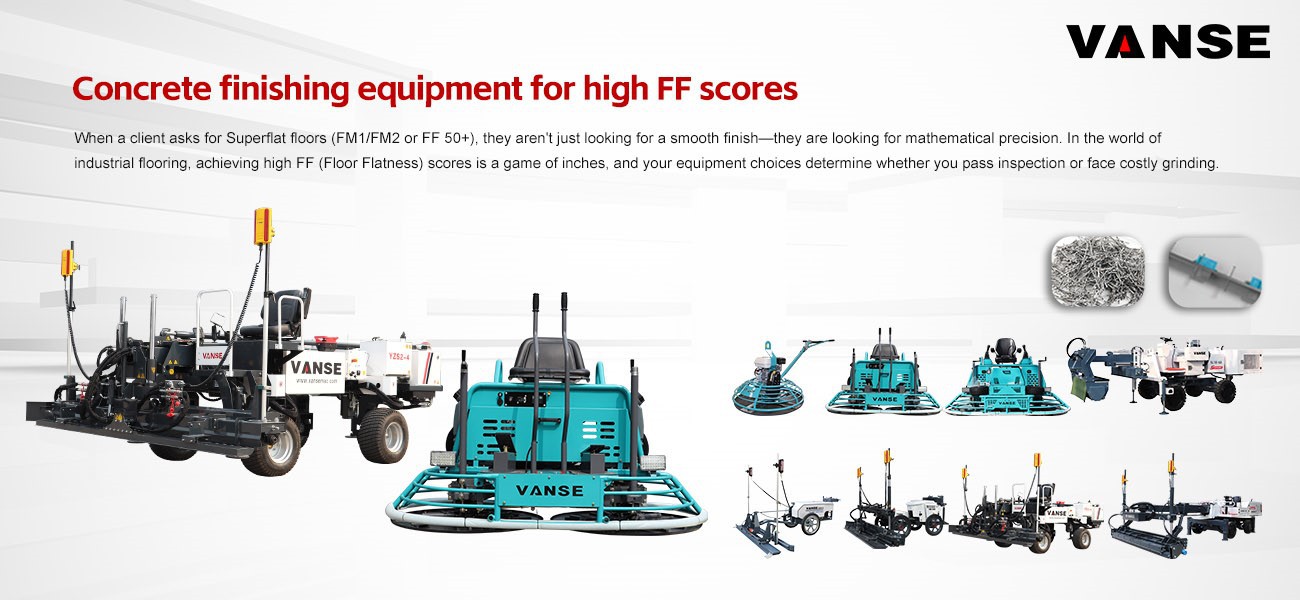
When a client asks for Superflat floors (FM1/FM2 or FF 50+), they aren't just looking for a smooth finish-they are looking for mathematical precision. In the world of industrial flooring, achieving high FF (Floor Flatness) scores is a game of inches, and your equipment choices determine whether you pass inspection or face costly grinding.
To consistently hit those high-spec numbers, you need a synchronized fleet. Here is the professional equipment breakdown for high FF scores, featuring the specialized lineup from Vanse Machinery.
1. The Foundation: Concrete Laser Leveling Machine
You can’t finish a floor flat if it wasn't placed flat. The Concrete Laser Leveling Machine is the most critical variable for FF scores.
The Vanse Approach: For large-scale warehouse projects, the Vanse YZ30-4E Telescopic Boomed Laser leveling is the industry standard. Its 360-degree rotation and 6-meter telescopic boom allow the leveling head to reach out and strike off the concrete while the machine remains stationary. This prevents "tire track" deviations. For tighter workspaces, the WS940/WS940C/YZ28-4S/YZ25-4 offers the same high-frequency vibration and laser precision in a more agile frame.
2. Strategic Placement: Concrete Distributor & Mini Dumper
Consistency is the enemy of "dips" and "mounds." If your concrete is dumped in massive, uneven piles, the leveling has to work harder, which can lead to inconsistencies in FF scores.
The Workflow: Use a Vanse Concrete Distributor to ensure an even "ribbon" of concrete is placed across the bay. To get material into the strips quickly without disturbing the subgrade, the Vanse Mini Dumper (available in electric and gasoline) is the perfect support tool. It allows for controlled, precise dumping that makes the laser leveling’s job much easier.
3. Surface Integrity: Topping Spreader
High FF floors often require a dry-shake hardener for wear resistance. If you spread this manually, you risk creating "hills" and "valleys" that ruin your flatness numbers.
The Vanse Approach: The Vanse Automatic Topping Spreader applies the material with mechanical consistency. By linking the spreader’s output to the machine's travel speed, you get a uniform layer that integrates perfectly with the wet concrete, preserving the flatness achieved by the laser leveling machine.
4. The Final Polish: Ride-on Power Trowel
Once the slab is leveled, you need to densify it. However, a "chattering" trowel can actually lower your FF score.
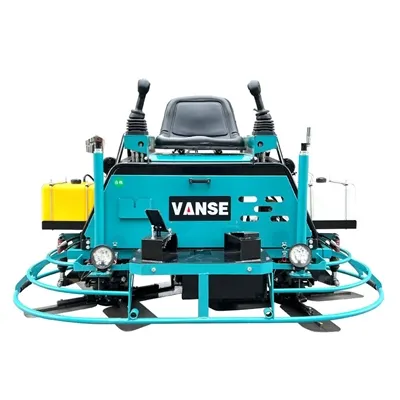
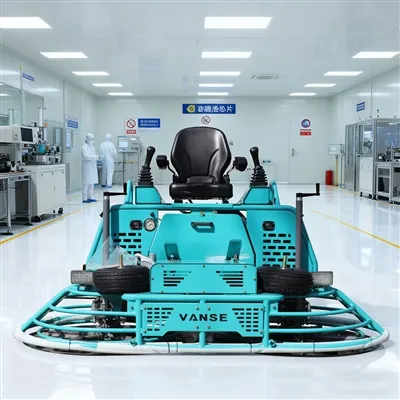
The Workflow: Transition to a Vanse VS1046 Ride-on Power Trowel. With its heavy-duty gearbox and high-torque BRIGGS & STRATTON engine, it provides the steady, powerful compaction needed to "burnish" the floor. Its precision pitch control allows the operator to make micro-adjustments to the blades, smoothing out the surface to a mirror finish without introducing new waves into the slab.
5. Managing the Stress: Concrete Cutting Machine
Even a Superflat floor will fail if the joints are ragged or spalled.
The Workflow: As soon as the concrete can support it, use a Vanse Concrete Cutting Machine (Floor Saw) for your contraction joints. A stable, high-speed saw ensures the edges of the joints stay crisp, which is vital for the long-term maintenance of FF scores once heavy forklift traffic begins.
Why Global Contractors Invest in the Vanse Ecosystem
When you browse www.vansemac.com, you’re looking at a complete Superflat Solution. Here’s why this workflow is the gold standard for international buyers:
Labor Efficiency: A full Vanse fleet can turn a 12-man manual crew into a high-output 5-man team.
Data-Driven Results: These machines are designed to meet ACI 117 and TR34 standards. When you use a Vanse laser leveling followed by a Vanse power trowel, you are practically guaranteed higher F-numbers.
Reliability: In high-spec flooring, equipment downtime can ruin a pour. Vanse uses world-class components (Honda, Rexroth, Danfoss) to ensure your fleet keeps moving until the last pass is done.
Final Word
Achieving high FF scores isn't a secret-it’s a process. By combining the placement precision of the Concrete Distributor, the leveling power of the Laser leveling, and the finishing torque of the Power Trowel, you create a floor that isn't just flat-it's Vanse Flat.
Visit www.vansemac.com to see our full lineup and start hitting those FM1 numbers on your next project.
Note: The parameters provided in this document are for reference only and are not mandatory. Due to differences in technical characteristics between different brands and models of laser levelers, please consult the manufacturer for a suitable solution before actual operation. This reference document assumes no responsibility for any issues arising from failure to follow the manufacturer's instructions.
Thanks to All the Friends Who Support and Trust Shandong Vanse Machinery Technology Co., Ltd.
If you want to know more about Shandong Vanse Machinery Technology Co., Ltd. or have any questions, please feel free to contact us:
Our Factory
Shandong Vanse Machinery Technology Co., Ltd.








Share this article

About the Author: Shandong Vanse Machinery Technology Co., Ltd.
Shandong Vanse Machinery Technology Co., Ltd. is a high-tech manufacturer specializing in concrete construction machinery, including laser screeds and related equipment. The company integrates R&D, production, and global sales, with products exported to over 60 countries and widely used in infrastructure projects worldwide.
Previous Post
Next Post
Related Articles
You Might Also Like
How to maintain and service a riding power trowel?
Body cleaning: After each use of the trowel, the dust, concrete residue and other debris on the body should be cleaned in time. You can use a damp cloth to wipe the surface of the body, but be careful to avoid water entering key parts such as the engine. For stubborn stains, you can use a mild detergent to clean them. Clean the trowel and spatula: If the concrete remaining on the trowel and spatula is not cleaned in time, it will affect the effect of the next use. You can use special tools such as scrapers to remove the solidified concrete residues, and then rinse with clean water. Check screws and nuts: Regularly check whether the screws and nuts of various parts of the trowel are loose. Focus on checking the installation screws of the trowel and spatula, as well as the fasteners of the various connecting parts of the body. If looseness is found, tighten it in time with appropriate tools. Replace the engine oil and oil filter: Regularly replace the engine oil and oil filter according to the engine's working hours or the manufacturer's recommendations. Generally speaking, the engine oil needs to be replaced every 50-100 hours of work. When replacing the engine oil, choose a high-quality engine oil that is suitable for the engine model. Check the air filter: The air filter is essential for the normal operation of the engine. Regularly check whether the air filter is blocked. If the filter element is found to be dirty, it should be cleaned or replaced in time. Usually, it needs to be checked every 20-30 hours of work. Spark plug maintenance: Regularly check the electrode wear and carbon deposits of the spark plug. If the electrode is severely worn or there is too much carbon deposits, it will affect the engine's ignition performance. Generally, the spark plug can be cleaned every 100-200 hours of work, or replaced according to the actual wear of the spark plug. Trowel maintenance: Regularly check the degree of wear of the tiller. When the blade wear of the spatula exceeds a certain limit (such as 2-3 mm), the spatula should be replaced in time. At the same time, during use, the spatula can be properly lubricated to reduce wear. Pad maintenance: Check the flatness and balance of the pad. If the pad is deformed, it will affect the polishing effect and needs to be corrected or replaced in time. At the same time, pay attention to whether the connection part of the pad is loose or worn. Tire maintenance: Check the tire pressure regularly to ensure that the tire pressure meets the requirements. Generally, the tire pressure of the driving trowel is maintained at about 2-3 atmospheres. At the same time, check the wear of the tire. If the tire is found to be damaged or bulging, the tire should be replaced in time. Steering system and transmission system maintenance: Regularly check the flexibility and accuracy of the steering system, and lubricate the steering shaft, steering knuckle and other components. For the transmission system, check the tightness of the transmission chain or belt. If it is too loose or too tight, it needs to be adjusted. And check the wear of the chain or belt, if necessary, it should be replaced in time. Cleaning and drying: Before storing the trowel for a long time, the machine should be thoroughly cleaned, including the machine body, trowel plate, spatula and other parts. Make sure the surface of the machine is dry to avoid rust. The machine can be placed in a well-ventilated place for natural drying. Rust-proof treatment: Anti-rust treatment is performed on the metal parts of the machine. A layer of anti-rust oil can be applied on the metal surface, especially on the spatula, trowel plate, screws and other parts that are prone to rust. Battery maintenance (if it is an electric trowel): For electric driving trowels, pay attention to the maintenance of the battery during long-term storage. Store the battery after fully charging it, and charge and discharge the battery once every period of time (such as one month) to maintain the battery activity. At the same time, the battery should be stored in a dry and cool place to avoid moisture or overheating. Storage environment: Choose a suitable storage environment, preferably a dry, ventilated indoor space that avoids direct sunlight. If stored outdoors, use facilities such as awnings to prevent the machine from being eroded by rain and exposed to the sun.The causes of excessively high oil temperature in the hydraulic system of the power trowel machine
Excessively high oil temperature in the hydraulic system of concrete power trowel is a common and highly worthy issue. Long-term high temperatures will rapidly accelerate the deterioration of hydraulic oil and the damage of components, leading to a decline in equipment efficiency or even paralysis. The following are the main causes of excessively high oil temperature in the hydraulic system. You can investigate them from simple to complex Low oil level: Insufficient oil volume causes the oil pump to be sucked empty, resulting in insufficient circulating oil volume. The oil rubs vigorously inside the pump and heats up quickly, while the cooling effect also deteriorates. Excessively high oil level: There is insufficient space for the oil in the fuel tank, making it difficult for foam and air to separate. The mixture of oil and air will accelerate oxidation and temperature rise. Improper oil viscosity: Hydraulic oil with a viscosity that is either too high or too low was used. The viscosity is too high, the internal frictional resistance is large, and more heat is generated. When the viscosity is too low, internal leakage increases, the efficiency of the oil pump decreases, and energy is converted into heat. Oxidation and deterioration of the oil: The hydraulic oil has been in use for too long and has been severely oxidized and contaminated. Deteriorated oil has a decline in lubrication performance and anti-wear performance, which will lead to increased friction and temperature rise among various components. This is one of the most common reasons. The relief valve is the safety valve of the system. If the set pressure is too high or the valve core is stuck in the normally open or normally closed position, it will cause the hydraulic oil to continuously flow back to the oil tank through the relief valve under high pressure. This "pressure relief" process will convert a large amount of hydraulic energy into heat energy, causing the oil temperature to rise rapidly. When the internal components of the pump (such as plungers, gears, and blades) wear out, internal leakage will be very severe. High-pressure oil leaked inside the pump into the low-pressure area, generating a large amount of heat. This is usually accompanied by the phenomenon of overall machine weakness and a decline in work efficiency. The valve core of the directional control valve that controls the lifting and Angle of the polishing disc is worn, and the seal fails, causing high-pressure oil to flow and leak inside the valve, generating heat. Air-cooled cooler: The heat dissipation fins are severely blocked by dust, oil sludge and cement powder, resulting in a sharp decline in heat dissipation efficiency. Insufficient rotational speed of the cooling fan or its complete stop can also cause the same problem. Water-cooled coolers: Scaling or blockage of impurities in the internal waterways affects the heat exchange efficiency. The motor driving the fan is damaged, the circuit malfunctions, or the drive belt slips or breaks, causing the fan not to rotate or the rotational speed to be too low, and thus unable to provide sufficient air volume to the cooler. In pursuit of efficiency, operators keep the equipment running at maximum power or under overload conditions continuously, maintaining a high pressure in the hydraulic system, which naturally generates a large amount of heat. Construction is carried out in the hot summer when the ambient temperature is already high. If the equipment is still operating in an environment with poor ventilation, heat will be even more difficult to dissipate. The return oil pipeline is not unobstructed, resulting in excessive back pressure of the return oil. When the oil returns to the oil tank, the resistance is large and additional heat will also be generated. When it is found that the hydraulic oil temperature of the power trowel machine is too high, the following sequence of "from outside to inside, from simple to complex" can be followed for troubleshooting: Stop the machine and check whether the hydraulic oil level is within the standard range. Observe the color and condition of the hydraulic oil to see if it turns black, has excessive foam or emulsification. Visually inspect whether the fins of the cooler are clogged with dirt. Listen/check if the cooling fan is rotating normally. Touch the hydraulic pipeline with your hand to feel which part has an abnormally high temperature, which helps to locate the fault point. Listen for any abnormal and persistent noises from the hydraulic pump and the relief valve. Use a pressure gauge to test whether the working pressure of the system and the set pressure of the relief valve are normal. Check the volumetric efficiency of the hydraulic pump (that is, determine whether the internal leakage is severe). Clean or replace the cooler. Check and clean the return oil filter. The key point is that excessively high oil temperature in a hydraulic system is rarely caused by a single factor; it is usually the result of the combined effect of multiple factors. Regular maintenance (replacing hydraulic oil and filter elements, cleaning the cooler) is the key to preventing such problems. Once high temperatures occur, they must be dealt with promptly; otherwise, it will cause irreversible and serious damage to the hydraulic system. Note: The parameters provided in this document are for reference only and are not mandatory. Due to differences in technical characteristics between different brands and models of laser levelers, please consult the manufacturer for a suitable solution before actual operation. This reference document assumes no responsibility for any issues arising from failure to follow the manufacturer's instructions.Power Trowel Blade Selection: Carbon Steel, Magnesium Alloy, or Plastic Blades?
When choosing power trowel blades, the material directly affects the smoothness, gloss, and presence of burn marks (black streaks) on the floor. Below are the key differences and applicable scenarios for carbon steel, magnesium alloy, and plastic blades: Carbon steel is the most commonly used blade material for power trowels, primarily divided into high-carbon steel and cold-rolled steel. Advantages: High Durability: Extremely hard, capable of withstanding prolonged high-speed friction. Good Smoothness: Due to its hardness and some elasticity, it effectively fills small pits on concrete surfaces. Moderate Cost: Excellent cost-performance ratio, making it the first choice for most large-area industrial floors. Disadvantages: Prone to leaving black burnish marks on concrete surfaces, caused by metal particles abrading and embedding into the concrete surface. Applications: Base leveling (combination blades) and hardened floors that do not require special decorative effects. Note: On power trowels, magnesium alloy is more often used for hand floats or specific leveling discs/machines than for high-speed rotating finishing blades. Advantages: Extremely lightweight: Lighter than aluminum, reducing operator workload. Opens capillaries: Magnesium alloy effectively opens the capillaries of the concrete surface, removing excess water (bleed), allowing aggregates to settle and slurry to float. Non-stick: Magnesium alloy is less likely to stick to concrete than other metals. Disadvantages: Less wear-resistant than carbon steel and unsuitable as a final "smoothing" tool. Applications: Leveling and initial smoothing of concrete after initial setting. These blades are typically made of high-performance reinforced plastics such as polycarbonate or special composite materials. Advantages: No Black Marks: Completely eliminates the "scorching" problem of metal blades, leaving no black marks. High Gloss and Smoothness: Provides a uniform and bright gloss even when concrete hardens quickly. Chemical Resistance: Will not rust, suitable for special flooring materials. Disadvantages: More expensive, and wears out faster than carbon steel. Suitable for: Colored concrete, artistic flooring, epoxy flooring, or showroom floors where aesthetics are paramount. Features Carbon steel blade Magnesium alloy (commonly found in scrapers) Plastic blades Main Applications Leveling, hardening and finishing Slurry raising, initial leveling Decorative, seamless finishing Abrasion Resistance Extremely high hardness Medium Lower finish Surface Finish May leave black marks Rough, facilitates drainage Glossy, no discoloration Weight Relatively heavy Extremely light Lighter finish Recommended Stage Final hardening and finishing Initial setting and slurry raising Fine finishing for decorative surfaces If you are working on a typical factory workshop or underground warehouse floor: Choose a carbon steel combination blade with a leveling tray. This is the most economical and efficient solution. If you are working on colored or white decorative flooring: You must choose plastic blades. Although more expensive, this prevents the flooring from becoming unusable. If you are leveling manually: Prioritize a magnesium alloy trowel, as it will help you easily complete the initial leveling and finishing. Note: The parameters provided in this document are for reference only and are not mandatory. Due to differences in technical characteristics between different brands and models of laser levelers, please consult the manufacturer for a suitable solution before actual operation. This reference document assumes no responsibility for any issues arising from failure to follow the manufacturer's instructions.