Technical Knowledge
What Kind Of Consumables Do Concrete Laser Leveling Need?
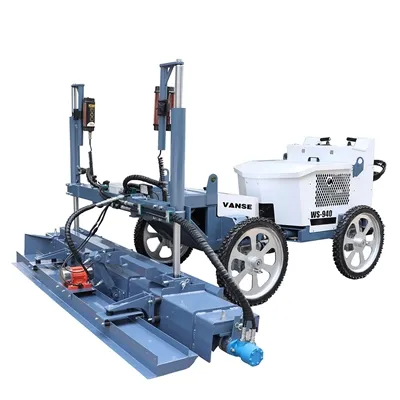
Concrete laser leveling machine is a kind of equipment used in concrete construction. Its function is to achieve flatness and smoothness of the concrete surface. In the process of using the concrete laser leveling machine, some consumables are needed to ensure the normal operation and construction effect of the equipment.
Here are some supplies you may need for your concrete laser leveling:
1. Laser:
One of the main components of the concrete laser leveling machine is the laser, which is used to emit laser beams to control the flatness and height of the concrete surface. Therefore, the quality and performance of the laser have an important impact on the effectiveness and service life of the leveler.
2. Laser head:
The laser head is the key component of the laser. It is responsible for focusing and projecting the laser beam onto the concrete surface. The quality and performance of the laser head will also affect the effectiveness and service life of the leveler.
3. Mixer:
Concrete laser leveling machines are usually equipped with a mixer, which is used to mix the concrete evenly to ensure the construction effect. The quality and performance of the agitator also affects the effectiveness and service life of the leveler.
4. Filter element:
The concrete laser leveling machine will inhale a large amount of dust and debris during operation, so a filter element is needed to filter the air to ensure the normal operation of the equipment and construction results.
5. Lubricant:
The concrete laser leveling needs regular lubrication to reduce wear and failure. Therefore, lubricating oil is needed to lubricate various parts of the equipment.
6. Cleaning agent:
During the operation of the concrete laser leveling machine, it will be affected by dust, debris and other dirt, so cleaning agents need to be used to clean the equipment. In addition, the concrete laser leveling machine also needs some other accessories and tools to clean the equipment. Auxiliary construction, such as scrapers, trowels, measuring rulers, etc. The quality and performance of these accessories and tools will also affect the effectiveness and service life of the leveler
In short,
the consumables of the concrete laser leveling need to be determined according to the specific model and usage of the equipment. When choosing consumables, you need to choose brands and models with reliable quality and stable performance to ensure the normal operation of the equipment and construction results. At the same time, it is also necessary to regularly inspect and maintain the equipment, promptly replace damaged parts and replenish consumables to ensure the long-term stable operation and service life of the equipment.
Thanks to All the Friends Who Support and Trust Shandong Vanse Machinery Technology Co., Ltd.
If you want to know more about Shandong Vanse Machinery Technology Co., Ltd. or have any questions, please feel free to contact us:
Our Factory
Shandong Vanse Machinery Technology Co., Ltd.








Share this article

About the Author: Shandong Vanse Machinery Technology Co., Ltd.
Shandong Vanse Machinery Technology Co., Ltd. is a high-tech manufacturer specializing in concrete construction machinery, including laser screeds and related equipment. The company integrates R&D, production, and global sales, with products exported to over 60 countries and widely used in infrastructure projects worldwide.
Previous Post
Next Post
Related Articles
You Might Also Like
The standardized construction process of coarse grinding followed by fine grinding, and the timing for switching between the trowel disc and the trowel on the power trowel.
Let's take a detailed look at the standardized construction process of concrete plastering, especially the technique of "rough grinding first and then fine grinding", as well as the key switching timing between the grinding plate and the power trowel. This is the core link to ensure that the concrete floor (especially the industrial floor) achieves a dense, flat and high-strength surface. This process is a dynamic one that advances based on the setting state of the concrete. The entire process can be summarized into the following stages: Concrete pouring: Ensure that the concrete pouring is smooth and slightly higher than the designed elevation. Vibration and leveling: Use a vibration rod to compact it tightly, and then perform an initial leveling with a long straightedge or a laser screed. Natural settlement and bleeding: Let the concrete settle naturally and bleed out. No mechanical operations are allowed before the bleeding water has completely evaporated. Core objective Slurry lifting: Bringing the slurry rich in cement and fine aggregates on the surface to the surface layer. Preliminary leveling: Eliminate the large undulations left by the straightedge, and slightly press the aggregate down to make the large area basically flat. Seal the pores: Compact the surface layer to lay a solid foundation for subsequent fine grinding. Entry timing (first disc operation) : Concrete condition: When a person stands on it, it sinks by 3 to 5 millimeters, with clear footprints but no obvious overflow of slurry water. This is the critical point of "initial condensation". Test method: The same as the finger pressure method and scratch method mentioned above. This is the signal for the first entry of the power trowel machine. Key points of operation Installation disc: Ensure that the power trowel machine is equipped with a plastic or magnesium alloy power trowel disc. Blade Angle: Adjust the power trowel blade (even if not in use) or keep the chassis parallel to the ground. Operation mode Start the machine and slowly cut into the concrete area at an Angle. Operate along an overlapping route to ensure that each path overlaps with the previous one by one-third. Maintain a slow and steady moving speed to allow the disc sufficient time to knead and lift the slurry. When encountering uneven areas, you can appropriately increase the rotational speed or stay in the local area for a while longer. Effect inspection: After rough grinding is completed, the surface should be a uniform and moist layer of cement slurry, without obvious exposed stones, and the large area should be smooth. Core objective Compact the surface layer: Further enhance the surface density and strength. Final leveling and smoothing: Eliminate the fine scratches left by the disc to achieve the designed flatness and smoothness. Surface sealing: Seal the surface capillary pores to enhance wear resistance, impermeability and dust resistance. Entry timing (first blade operation) : Concrete condition: This is the most crucial judgment throughout the entire process. After completing the first disc operation, it is necessary to wait for the concrete to continue hardening. When the following phenomena occur, it can be switched to blade: Surface moisture disappearance: The previously moist and reflective surface layer has become dull and lackluster. When people walk on it, they leave only very shallow marks or no footprints at all. When touched by hand, there is a distinct sense of resistance (roughness), but it does not stick to the slurry. In simple terms: When the surface of the concrete changes from "wet bright" to "dry dark" and has a certain load-bearing capacity. Key points of operation Switch the power trowel: Remove the disc and install the metal power trowel (blade). Make sure the blade is installed flat. Adjust the Angle: For the final finishing, you can slightly lift the tail of the power trowel to form a small Angle (about 5°) between the front edge of the blade and the ground. This will achieve a better shearing and calendering effect. Operation mode Cross-operation methods (for example, one horizontal pass and one vertical pass) can be adopted to ensure flatness. Increase the machine's rotational speed appropriately and speed up the lateral movement. Perform multiple rounds of polishing, each lighter and faster than the previous one, with the aim of "flattening" the surface. Final polishing: Before the concrete is about to set, a final fine polishing is carried out. At this time, the best bright effect can be achieved. For a more intuitive understanding, we can summarize the switching timing as follows: Component Homework stage Core role Judgment of switching timing (Key signal) Description of concrete state Grinding plate/disc Rough grinding Slurry extraction and initial leveling First entry: The concrete reaches initial setting. "Wet soft and malleable" Subsequent disc operation: When the surface is damaged due to operation and slurry needs to be lifted again. • The footprint depth is 3 to 5mm • Scratches can be maintained • No free bleeding Spatula/blade Fine grinding Compact and finally smooth The first switch: After rough grinding, the moisture on the surface of the concrete evaporates and its hardness increases. "Dry, dark, tough and astringent" • The surface water luster disappears • The footprints are extremely shallow or non-existent • It feels rough when touched and is not sticky to the hand Important Notes: Dynamic adjustment: This process is not static. If, after the first blade operation, it is found that the surface is not hard enough and "waves" or "blade marks" appear, it indicates that the switch was made too early. The disc should be switched back or wait further. If the switch is too late and the surface has hardened, it will not be able to effectively collect light and is prone to surface cracking. Environmental sensitivity: Temperature, wind speed and humidity can greatly affect the time Windows of each stage. In summer, on sunny days, the window period is very short and needs to be closely connected. In winter or humid environments, a long wait is required. The "Better late than early" principle: When it comes to the timing of switching blades, it is better to do it a little later (as long as it can still produce luster) than too early. Switching too early will tear the surface, causing irreparable damage. Summarize the process chain Pouring → Leveling → standing (waiting for initial setting) → Rough grinding of [disc] (lifting slurry) → Waiting (surface dries and darkens) → Fine grinding of [blade] (finishing) → curing Mastering this process and timing judgment proficiently is an essential skill for producing high-quality concrete floors. Note: The parameters provided in this document are for reference only and are not mandatory. Due to differences in technical characteristics between different brands and models of laser levelers, please consult the manufacturer for a suitable solution before actual operation. This reference document assumes no responsibility for any issues arising from failure to follow the manufacturer's instructions.What are the standards for the super flat floors?
Super-flat flooring is a high-precision, high-flatness floor treatment method that is commonly used in places that require long-term use and maintenance, such as commercial sites, industrial plants, and airports. The following are the standards for super flat floors: ▶Surface flatness The surface flatness requirements of ultra-flat floors are very high, and generally require millimeter-level or even micron-level accuracy. During construction, professional floor sanders and coatings are required to obtain a smoother and flatter surface. This high-precision surface treatment reduces dust accumulation and maintenance while improving floor efficiency and aesthetics. ▶Abrasion resistance Super flat floors need to have good wear resistance to cope with frequent use in various commercial places and industrial plants. During the construction process, high-quality materials and professional techniques are required to enhance the wear-resistant performance of the ground. For example, you can apply a layer of wear-resistant coating on the floor surface, or use a floor paint with better wear-resistant properties. ▶Waterproof Super flat floors need to have certain waterproof properties to avoid water accumulation or water seepage on the ground. During the construction process, waterproof materials and professional waterproofing technology need to be used to ensure that the floor does not seep water. At the same time, during daily use, it is also necessary to regularly check the waterproof performance of the floor to detect and deal with problems in a timely manner. ▶Slip resistance Super flat floors need to have certain anti-slip properties to ensure the safety of people walking on them. During the construction process, some measures can be taken to enhance the anti-skid performance of the floor, such as applying a layer of anti-skid coating on the floor surface or using floor coatings with better anti-skid properties. ▶Pressure resistance Super flat floors need to have certain compression resistance to withstand the pressure of various heavy objects. During the construction process, high-quality materials and techniques need to be used to enhance the floor's compression resistance. For example, a reinforced concrete layer can be laid under the floor or a stronger floor material can be used. ▶Dust-free The surface of the super flat floor should be free of dust, particles and other impurities to ensure the cleanliness and hygiene of the floor. During the construction process, some measures need to be taken to reduce dust and particulate matter on the ground, such as using professional dust collectors and filters. ▶Aesthetics Super flat floors need to have good aesthetics to enhance the image and quality of commercial places and industrial plants. During the construction process, professional techniques and materials need to be used to obtain a more beautiful floor surface. For example, the floor surface can be painted with brightly colored paint or decorated with decorative patterns and textures. In general, the standards for super-flat floors include surface smoothness, wear resistance, waterproofness, anti-slip, pressure resistance, dust-freeness and aesthetics. These standards need to be strictly observed and implemented during the construction process to ensure the quality and use effect of super-flat floors. At the same time, during daily use, the floor also needs to be inspected and maintained regularly to detect and deal with problems in a timely manner.How Often Should A Concrete Laser Leveling Be Maintained?
What is the frequency of maintenance of concrete laser leveling machine? As an indispensable and important equipment in modern building construction, the diffuse concrete laser leveling machine's performance stability and service life directly affect the construction quality and efficiency. Therefore, it is particularly important to carry out scientific and reasonable maintenance of concrete laser leveling machines. However, many users may have some questions about the frequency of maintenance of concrete laser leveling machines. This article will focus on this issue and elaborate on the key points of daily equipment inspections, periodic maintenance plans, special maintenance needs, lubrication and cleaning, electrical system inspection, replacement of wearing parts, and repair and maintenance records. 1. Key points for daily inspection of equipment Routine inspection is the basic work to ensure the normal operation of the concrete laser leveling, and its frequency should be relatively high. In general, a thorough daily inspection should be performed before and after each use. Key check points include: ☀ Check whether the appearance of the equipment is intact and whether there is any damage, deformation, etc.; ☀ Check whether the fasteners of the equipment are loose. If they are loose, tighten them in time; ☀ Check whether the hydraulic and electrical systems of the equipment are working normally. If there are any abnormalities, they should be dealt with in time; ☀ Check whether the operation control of the equipment is flexible and reliable. If there is any jamming or failure, repair it in time; ☀ Check whether the walking system of the equipment is stable and whether the track is seriously worn, etc. Through daily inspections, problems with the equipment can be discovered and solved in time to ensure the normal operation of the equipment. 2. Periodic maintenance plan In addition to daily inspections, a periodic maintenance schedule should be developed based on the equipment's usage and manufacturer's recommendations. The frequency of periodic maintenance can generally be determined based on the working hours or length of use of the equipment. ☀Weekly maintenance: Conduct a comprehensive inspection of the equipment every week, including checking the oil level and quality of the hydraulic oil, cleaning the radiator and filter, and checking whether the wiring of the electrical system is loose, etc. ☀ Monthly maintenance: Perform more in-depth maintenance on the equipment every month, such as replacing hydraulic oil and filters, checking the engine oil and water tank, etc. ☀ Quarterly maintenance: Conduct extensive maintenance and upkeep on the equipment every quarter, such as checking the wear of the track, replacing severely worn track shoes, checking the sealing of the hydraulic cylinder, etc. By formulating and executing a periodic maintenance plan, the service life of the concrete laser leveling can be effectively extended and its work efficiency improved. 3. Special maintenance needs In some special cases, additional maintenance on your concrete laser leveling may be required. These special circumstances include: ☀ The equipment has not been used for a long time: If the equipment has not been used for a long time, it should be started and operated regularly to prevent parts from rusting or aging due to long-term parking of the equipment. ☀ Harsh working environment: In harsh working environments, such as high temperature, dusty, humid and other environments, the maintenance frequency of the equipment should be appropriately increased to cope with the impact of environmental changes on the equipment. ☀ Equipment failure: When equipment fails, troubleshooting and repairs should be carried out in a timely manner to ensure that the equipment can resume normal operation in a timely manner. For these special circumstances, we need to formulate corresponding maintenance measures and plans based on the actual situation to ensure the normal operation of the equipment and extend its service life. 4. Lubrication and cleaning Lubrication and cleaning are important aspects that cannot be ignored in the maintenance of concrete laser leveling machines. Lubrication can effectively reduce the wear and friction of equipment and extend its service life; while cleaning can prevent equipment failures caused by dust, debris, etc. ☀ In terms of lubrication, all lubrication points of the equipment should be lubricated regularly, such as bearings, chains, etc. At the same time, pay attention to selecting appropriate lubricating oil and grease to ensure the lubrication effect. ☀ In terms of cleaning, dust and debris on the surface of the equipment should be cleaned regularly to keep the equipment tidy. In addition, the radiator and filter of the equipment should be cleaned regularly to ensure the heat dissipation effect and ventilation performance of the equipment. Through reasonable lubrication and cleaning work, the working efficiency and stability of the concrete laser leveling can be effectively improved. 5. Electrical system inspection The electrical system is a critical part of the proper operation of the concrete laser leveling, so regular inspection and maintenance of it is essential. Electrical system inspection mainly includes the following aspects: ☀ Check whether the cable lines are intact and not damaged or aged; ☀ Check the working status of electrical components, such as whether switches, relays, etc. are working normally; ☀ Check the stability and accuracy of the electrical control system to ensure that the operation and control of the equipment are accurate and reliable; ☀ Clean and dust-proof the electrical system regularly to prevent failures caused by dust accumulation. Through electrical system inspection, electrical faults can be discovered and solved in time to ensure the normal operation of the concrete laser leveler. 6. Replace wearing parts During the use of the concrete laser leveling, some wearing parts will gradually wear or be damaged as the use time increases. In order to ensure the normal operation of the equipment and extend its service life, these wearing parts need to be replaced in time. Common wearing parts include blades, scrapers, track shoes, etc. These parts will wear or deform during long-term use, affecting the construction quality and efficiency of the equipment. Therefore, the wear of these parts should be checked regularly and replaced according to the actual situation. When replacing wearing parts, you should choose qualified products produced by regular manufacturers and perform replacement operations in accordance with the requirements of the equipment manual. At the same time, replacement records should be kept for reference in subsequent maintenance work. 7. Repair and maintenance records In order to better understand the maintenance status of the concrete laser leveling machine, it is recommended to establish complete repair and maintenance records. The record content includes basic information of the equipment, maintenance time, content, personnel, and replaced parts and other information. Through repair and maintenance records, you can clearly understand the maintenance history and usage status of the equipment, providing a reference for subsequent maintenance work. At the same time, it also helps to discover potential problems in the operation of the equipment and take timely measures to deal with them to avoid failures. In addition, repair and maintenance records can help improve the efficiency of equipment management. Through the analysis of records, the effectiveness of equipment maintenance can be evaluated, deficiencies in maintenance work can be found, and a more scientific and reasonable maintenance plan can be formulated. When establishing repair and maintenance records, it is recommended to use electronic methods for recording and management. Through the electronic recording system, data can be easily queried, counted and analyzed to improve work efficiency. At the same time, it can also reduce the risk of loss and damage of paper records and ensure the integrity and reliability of data. In summary, the maintenance of concrete laser leveling machines is of great significance to the normal operation and extended service life of the equipment. By formulating reasonable maintenance plans, performing daily inspections and periodic maintenance, paying attention to special maintenance needs, doing lubrication and cleaning work, checking electrical systems, replacing wearing parts in time, and establishing complete repair and maintenance records, we can ensure that The stable operation of the pyrolysis soil laser leveling machine improves construction quality and efficiency. However, it should be noted that the maintenance frequency and content mentioned in this article are only general recommendations, and actual operations need to be adjusted and improved according to the specific conditions of the equipment, the use environment and the manufacturer's recommendations. At the same time, maintenance work should be performed by professionals with corresponding qualifications and experience to ensure correct, safe and effective operations. Finally, we hope that the discussion in this article can provide some reference and help for the maintenance of concrete laser levelings, and contribute to the stable operation and extended service life of the equipment.