Technical Knowledge
What is the future development trend of concrete laser leveling machine?

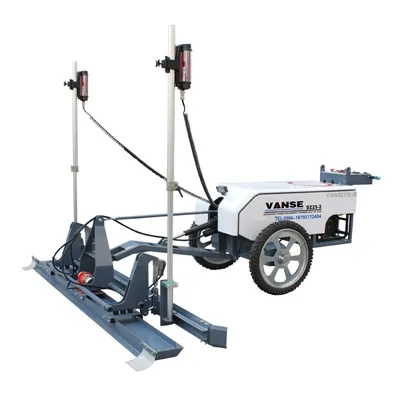
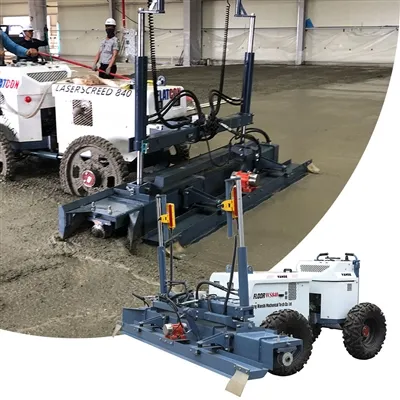
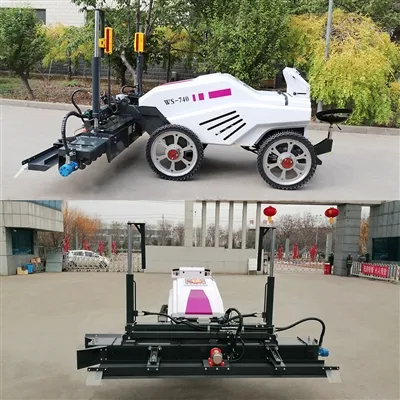
In the future, concrete laser leveling machines will develop in the direction of intelligence, high precision, energy saving and environmental protection, multi-function, miniaturization and lightness to adapt to the ever-changing needs of the construction industry. The following is a specific analysis:
⛳ The degree of intelligence continues to improve:
In the future, concrete laser leveling machines will be equipped with more advanced sensors and control systems, such as laser radar, BIM technology, etc. For example, BIM navigation concrete leveling robots can generate construction maps in 5 minutes, and laser radar scans the environment 1,000 times per second, correcting path deviations in real time, and flatness deviations ≤ 2mm. At the same time, remote monitoring and operation will also be realized. Operators can grasp the operating status of the equipment in real time through mobile phones or computer terminals, perform remote parameter adjustments and fault diagnosis, and improve construction management efficiency.

⛳ Further improvement in accuracy:
As construction projects continue to increase their requirements for ground flatness, concrete laser leveling machines will continue to optimize leveling technology. By improving the laser ranging system, improving the computing speed and accuracy of the control system, etc., the flatness error can be controlled within a smaller range. For example, the future leveling robot can lock the leveling accuracy within the 2mm error range, and the accuracy is expected to be further improved.
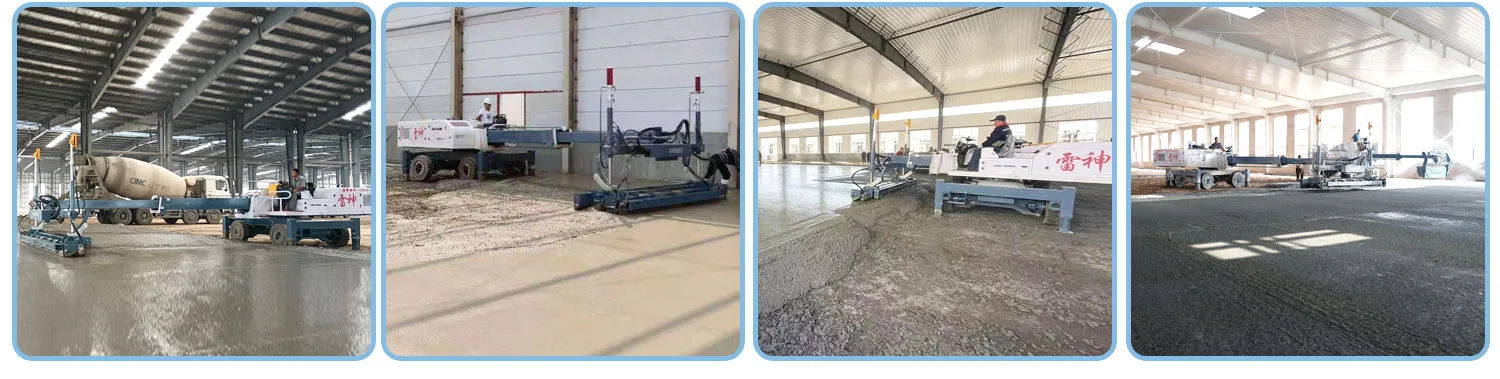
⛳ Energy-saving and environmental protection trends are obvious:
Against the backdrop of increasingly stringent environmental protection policies, concrete laser leveling machines will develop in the direction of energy conservation and environmental protection. On the one hand, a more energy-saving power system is adopted, such as electric drive instead of traditional fuel drive. For example, lithium-powered laser leveling machines are small and flexible and suitable for construction in confined spaces without exhaust emissions. On the other hand, the hydraulic system and control algorithm of the equipment are optimized to reduce energy consumption.

⛳ More diversified functions:
In the future, concrete laser leveling machines may integrate more functions. In addition to the existing concrete leveling and vibration functions, they may also have functions such as slurry lifting and polishing, realizing one-stop operations from concrete laying to surface treatment.

⛳ Miniaturization and lightweight of products:
In order to adapt to different construction scenarios, especially narrow spaces and indoor construction, concrete laser leveling machines will develop in the direction of miniaturization and lightweight. Lightweight equipment is easy to transport and move, which can increase the scope and flexibility of equipment use and meet more construction needs.
Click the below to jump immediately!!!

ARMOUR JOINT

CONCRETE LEVELING MACHINE

LIGHT TOWER

POWER TROWEL

SLIPFORM MACHINE

STEEL FIBER

TOPPING SPREADER

TRACKED MINI DUMPER
Thanks to All the Friends Who Support and Trust Shandong Vanse Machinery Technology Co., Ltd.
If you want to know more about Shandong Vanse Machinery Technology Co., Ltd. or have any questions, please feel free to contact us:
Our Factory
Shandong Vanse Machinery Technology Co., Ltd.








Share this article

About the Author: Shandong Vanse Machinery Technology Co., Ltd.
Shandong Vanse Machinery Technology Co., Ltd. is a high-tech manufacturer specializing in concrete construction machinery, including laser screeds and related equipment. The company integrates R&D, production, and global sales, with products exported to over 60 countries and widely used in infrastructure projects worldwide.
Previous Post
Next Post
Related Articles
You Might Also Like
How to deal with the existing cracks in the diamond wear-resistant floor?
How to deal with existing cracks in diamond wear-resistant flooring Diamond wear-resistant flooring has been widely used in industrial plants, warehouses, parking lots and other places due to its high wear resistance, high strength and beautiful appearance. However, during use, cracks may appear in the floor due to the influence of various factors such as materials, construction, and environment. Cracks not only affect the aesthetics of the floor, but also the durability and performance of the floor. Therefore, for cracks in diamond wear-resistant flooring that have already appeared, appropriate treatment methods must be adopted. This article will combine actual cases to explore how to deal with cracks in diamond wear-resistant flooring that have already appeared. 1. Crack type and cause analysis Before dealing with cracks in diamond wear-resistant flooring, it is necessary to first analyze the types and causes of cracks. Crack types mainly include transverse cracks, longitudinal cracks, mesh cracks and irregular cracks. The causes of these cracks are varied, and may involve various factors such as material quality, construction technology, temperature changes, humidity changes, foundation settlement, etc. Therefore, different treatment methods are needed for cracks of different types and causes. 2. Preparation before crack treatment Before treating the cracks in the diamond wear-resistant floor, a series of preparations need to be carried out. First, the cracks need to be inspected and recorded in detail, including the length, width, depth and distribution of the cracks. Secondly, it is necessary to clean up the debris and oil in the cracks to ensure that the surface of the cracks is clean and dry. Finally, according to the type and cause of the cracks, a suitable treatment plan is formulated. 3. Crack treatment method ☑ Filling method For cracks with smaller width and shallower depth, the filling method can be used for treatment. First, select the filling material suitable for the floor material, such as elastic caulking agent, polyurethane sealant, etc. Then, apply the filling material evenly on the crack surface to ensure that the filling material fully fills the crack. Finally, use a sharp plate to level the excess filling material so that it is flush with the floor surface. The filling method is simple to operate and low in cost, and is suitable for treating minor cracks. ☑ Expansion method For cracks with larger width and deeper depth, the filling method may not be effective. At this time, the expansion method can be used for treatment. First, use a cutting machine or a drilling machine to widen and deepen the profile joint so that the profile joint forms a V-shaped groove. Then, fill the special floor repair material into the V-shaped groove to ensure that the repair material fully fills the entire crack. Finally, use a scraper to scrape off the excess repair material and maintain it until the repair material is completely solidified. The crack expansion method can effectively improve the quality of crack repair, but the operation is relatively complicated and the cost is high. ☑ Pressure grouting method For cracks with larger width and deeper depth, the crack position is more special, and it is difficult to expand the crack, the pressure grouting method can be used. First, set a grouting hole at one end of the crack and an exhaust hole at the other end. Then, use a grouting machine to inject special grouting materials (such as epoxy resin, polyurethane, etc.) into the crack through the grouting hole. During the grouting process, the grouting pressure and grouting speed are controlled to make the grouting material fully fill the crack. Finally, after the grouting material is solidified, the crack surface is polished and processed. Pressure grouting can effectively improve the density and strength of crack repair, but the operation is difficult and requires professional equipment and personnel. 4. Maintenance and precautions after crack treatment ☑ Maintenance After the crack treatment is completed, the repaired part needs to be maintained. During the maintenance period, heavy objects should be avoided from rolling over and sharp objects should be avoided from scratching the repaired part to avoid affecting the repair effect. At the same time, the repaired part should be kept dry and clean to avoid water or other liquids from penetrating into the repaired part. The maintenance time is generally determined by the curing time of the repair material and environmental conditions. ☑ Precautions (1) When dealing with cracks, the appropriate treatment method should be selected according to the type and cause of the cracks. Avoid blind treatment or inappropriate treatment methods that may cause crack expansion or poor repair effect. (2) When selecting repair materials, ensure that the performance of the repair materials matches the original floor materials. Avoid using inferior or incompatible repair materials that may cause problems such as falling off and cracking at the repaired part. (3) When dealing with cracks, safety protection measures should be taken. Avoid dust and splashes generated during the treatment process that may cause harm to personnel and the environment. At the same time, relevant safety operating procedures must be followed to ensure the safety and stability of the construction process. 5. Case Analysis After a period of use, the diamond wear-resistant floor of a large industrial plant had multiple horizontal cracks and mesh cracks. After a detailed inspection and cause analysis of the cracks, it was found that the cracks were mainly caused by factors such as temperature changes, humidity changes and foundation settlement. In response to this situation, the expansion method was adopted for treatment. First, the cracks were widened and deepened to form a V-shaped groove. Then, a special floor repair material was used to fill the V-shaped groove to ensure that the repair material fully filled the entire crack. Finally, the repaired part was maintained and polished. After treatment, the cracks were effectively repaired, and the flatness and aesthetics of the floor were restored. 6. Summary and Outlook The treatment of diamond wear-resistant floor cracks is a complex and important task. By analyzing the types and causes of cracks and selecting appropriate treatment methods, the quality of crack repair and the performance of the floor can be effectively improved. At the same time, attention should be paid to safety protection and maintenance work during the crack treatment process to ensure the safety of the construction process and the durability of the repair effect. With the continuous advancement of science and technology and the emergence of new materials, the crack treatment technology of diamond wear-resistant floor will be more mature and perfect in the future. For example, advanced non-destructive testing technology can be used to accurately measure and locate cracks to improve the accuracy and efficiency of treatment: more excellent repair materials can be developed to improve the strength and durability of the repaired parts: more environmentally friendly and energy-saving crack treatment methods can be explored to reduce the impact on the environment during the treatment process. In addition, in addition to crack treatment, daily maintenance and care are also the key to keeping diamond wear-resistant floor in good condition. The floor should be cleaned and maintained regularly, and small cracks and damage should be discovered and treated in time to prevent them from expanding and deteriorating. At the same time, care should be taken to avoid collisions with heavy objects and scratches with sharp objects to avoid damage to the floor. In summary, the treatment of diamond wear-resistant floor cracks is a systematic project, which requires comprehensive consideration of the types, causes, treatment methods and daily maintenance of cracks. Only by scientific analysis, reasonable treatment and careful maintenance can the long-term use effect and aesthetics of diamond wear-resistant floor be ensured. In practical applications, we also need to constantly sum up experience and lessons, combine specific engineering practices, and explore crack treatment methods that are more suitable for different environments and needs. At the same time, strengthening the training and education of relevant personnel and improving their professional skills and operation level are also important measures to ensure the quality and effect of crack treatment. In the future, with the continuous advancement of science and technology and the continuous development of floor materials, we have reason to believe that the treatment of diamond wear-resistant floor cracks will become simpler, more efficient and more reliable. This will provide safer, more beautiful and more durable floor solutions for industrial plants, warehouses, parking lots and other places, and provide a more comfortable and convenient environment for people's production and life. In the process of crack treatment, in addition to the traditional methods such as the expansion method and pressure grouting method mentioned above, some new technical means can also be tried. For example, using drones or robots to automatically detect and identify cracks, accurately determine the location and size of cracks through image recognition technology, and improve processing efficiency and accuracy. In addition, it is possible to consider the use of new self-healing materials that can automatically fill and repair cracks when they occur, thereby extending the service life of the floor. At the same time, with the continuous improvement of environmental awareness, attention should also be paid to environmental protection and sustainable development in the process of crack treatment. Select repair materials with excellent environmental performance, reduce waste and pollutants generated during the treatment process, and ensure that the impact of the treatment process on the environment is minimized. In addition, energy-saving technologies should be actively promoted and applied to reduce energy consumption in the treatment process and improve resource utilization efficiency. In short, the treatment of cracks in diamond wear-resistant floor is a field that is constantly developing and improving. Through continuous exploration of new technical means, improving treatment efficiency and accuracy, and focusing on environmental protection and sustainable development, we are expected to provide more high-quality, efficient and environmentally friendly solutions for the treatment of cracks in diamond wear-resistant floor. This will bring a better experience to industrial production and people's daily life. Before ending this article, it should be emphasized that for the treatment of cracks in diamond wear-resistant floor, prevention is always better than treatment. Therefore, in the design and construction stages, factors such as material selection, construction technology, and foundation treatment should be fully considered to avoid the occurrence of cracks as much as possible. At the same time, during use, the maintenance and care of the floor should be strengthened, potential problems should be discovered and dealt with in a timely manner, and the long-term stable operation of the floor should be ensured. Looking to the future, with the advancement of science and technology and the development of floor materials, we look forward to seeing more innovative solutions applied to the treatment of cracks in diamond wear-resistant floor. This will bring a broader development prospect to the flooring industry and make greater contributions to the sustainable development of society. In summary, the treatment of diamond wear-resistant flooring is a complex process that requires comprehensive consideration of multiple factors. Through scientific analysis, reasonable treatment methods and careful maintenance, we can effectively solve this problem and ensure the long-term stable operation and aesthetics of the floor. At the same time, we should also pay attention to the application of new technologies and new materials to promote the continuous innovation and development of the flooring industry. This article discusses in detail the treatment methods, precautions, case analysis and future prospects of diamond wear-resistant floor cracks, and strives to provide readers with a comprehensive and in-depth understanding. It is hoped that this article can provide certain reference and reference value for practitioners and researchers in related fields, and jointly promote the continuous progress and development of diamond wear-resistant floor crack treatment technology.Analysis on rapid construction technology of high-flatness flooring in large-area automobile workshops
▶1◀ Technical Overview The rapid construction technology of large-area and high-flatness floors in automobile factories is an efficient and high-precision floor construction method. It is mainly used in floor construction of industrial factories such as automobile manufacturing and machinery manufacturing. This technology uses advanced laser leveling technology and equipment to achieve high flatness requirements for large-area floors, while improving construction efficiency and shortening the construction period. ▶2◀ Key points of construction technology 1. Before construction , clean and level the construction site to ensure that there are no debris or bumps on the ground. At the same time, according to the design requirements and construction conditions, select the appropriate laser leveler and other auxiliary equipment, and carry out inspection and debugging. 2. Concrete mix proportion design: Carry out concrete mix proportion design based on the design requirements and material properties of the floor. While meeting the strength requirements, optimize the mix ratio, reduce the amount of cement, reduce the heat of hydration, and avoid cracks in the concrete. 3. Concrete pouring and leveling shall adopt the method of large-area concrete pouring, and concrete shall be poured continuously according to the construction sequence. A laser leveler is used to initially level, vibrate and finely level the concrete to ensure the flatness and compactness of the floor. During the leveling process, pay attention to controlling the traveling speed and elevation of the leveling head to avoid excessive vibration or vibration leakage. 4. Surface treatment and maintenance: After the concrete is initially set, use a polishing machine to polish the floor surface to improve the gloss and wear resistance of the floor. During the maintenance period, keep the floor surface moist and take appropriate moisturizing measures to prevent cracks. 5. Quality inspection and acceptance After the floor construction is completed, quality inspection and acceptance will be carried out. The testing content includes the flatness, strength, wear resistance and other aspects of the floor. For unqualified floors, promptly handle and repair them. ▶3◀ Technical advantages 1. High flatness: Using laser leveling technology, high-precision floor flatness requirements can be achieved and the visual effect and performance of the floor can be improved. 2. Rapid construction: Compared with the traditional manual scraping method, the laser leveling machine has higher production efficiency, can shorten the construction period and reduce the construction cost. 3. High degree of automation: Laser leveling machines and other equipment have a high degree of automation, which can reduce manual operations and human errors and improve construction quality. 4. Wide scope of application: This technology is suitable for floor construction of various large-area industrial plants with high flatness requirements, such as automobile manufacturing, machinery manufacturing, electronics industry and other fields. 5. Environmentally friendly: There is no noise, no vibration and no pollution during the construction process, which is in line with the concept of green construction. To sum up, the rapid construction technology of large-area and high-flatness floors in automobile workshops has significant advantages and characteristics. Through reasonable construction preparation, concrete mix ratio design, pouring and leveling surface treatment and maintenance, as well as quality inspection and acceptance and other construction technical points, the quality and efficiency of floor construction can be effectively improved. In the future, with the continuous advancement of technology and the expansion of application scope, this technology will play a more important role in industrial construction fields such as automobile factories.Energy Consumption, Energy Saving And Environmental Protection Performance Of Concrete Laser Leveling Machine
Discussion on energy consumption and energy saving and environmental protection performance of concrete laser leveling machine ▷••◇•• Introduction As the world pays increasing attention to environmental protection and sustainable development, the construction industry has begun to shift towards more environmentally friendly and energy-saving construction methods. In this context, as a new type of construction equipment, the energy consumption, energy saving and environmental protection performance of the concrete laser leveling have become the focus of attention. This article will conduct an in-depth discussion on the energy consumption, energy saving and environmental protection performance of the concrete laser leveling, and analyze and evaluate it based on actual cases. ▷••◇•• Concrete laser leveling machine energy consumption analysis The energy consumption of the concrete laser leveler during the construction process mainly comes from the power system, laser measurement and control system and leveling device. Among them, the power system is the main source of energy consumption, generally using diesel or electricity as energy. Although the energy consumption of the laser measurement and control system and leveling device is relatively low, it will also have a certain impact on energy consumption when working continuously for a long time. Taking a certain model of concrete laser leveling machine as an example, its power system uses a diesel engine with a rated power of 150KW. Under normal working conditions, the fuel consumption per hour is about 15L. In addition, the energy consumption of the laser measurement and control system and leveling device is approximately 5kWh per hour. All things considered, the total energy consumption of this equipment is approximately 25kWh per hour. ▷••◇•• Energy saving and environmental protection performance of concrete laser leveling machine In order to reduce the energy consumption and emissions of concrete laser levelings and improve energy conservation and environmental protection performance, the new generation of equipment has made many improvements in design and functionality. 1. Power system optimization: The new generation of concrete laser leveling machines uses more efficient diesel engines or electric drive systems to reduce energy consumption and emissions by optimizing fuel injection and improving thermal efficiency. 2. Laser measurement and control system upgrade: The new laser measurement and control system uses a higher-precision laser sensor and a more sensitive control algorithm to improve leveling accuracy and efficiency, thereby reducing energy consumption. 3. Improvement of leveling device: The new generation leveling device uses lighter and more wear-resistant materials, which reduces the weight and friction loss of the equipment itself, further reducing energy consumption. In addition to technical improvements, concrete laser levelings also show good energy-saving and environmentally friendly performance in practical applications. The following is a practical case: In a highway construction project, a new generation of concrete laser leveling machine was used for road leveling operations. By comparing traditional leveling methods, it was found that using a concrete laser leveling machine not only improves leveling accuracy and efficiency, but also significantly reduces energy consumption and emissions. Specifically, under the same conditions, a concrete laser leveler is used to perform leveling operations. Compared with traditional methods, it can reduce fuel consumption and emissions by about 20%. This result shows that the concrete laser leveling has significant advantages in energy conservation and environmental protection. ▷••◇•• Energy saving and environmental protection performance evaluation and suggestions Based on the above analysis, the concrete laser leveling machine performs well in terms of energy consumption, energy saving and environmental protection performance. By adopting measures such as efficient power systems, upgrading laser measurement and control systems, and improving leveling devices, the new generation of equipment has achieved remarkable results in reducing energy consumption and emissions. However, the following points still need to be noted: 1. Equipment selection: When purchasing a concrete laser leveling, you should give priority to equipment with high efficiency, energy saving and environmental protection performance, and avoid purchasing old equipment with high energy consumption and large emissions. 2. Maintenance: Regularly maintain and maintain the equipment to ensure that the equipment is in good working condition and avoid increased energy consumption and excessive emissions caused by equipment failure or improper maintenance. 3. Construction personnel training: Strengthen the training and management of construction personnel, improve their operating skills and environmental awareness, and ensure that the equipment can fully exert its energy-saving and environmental protection performance during use. 4. Construction site management: Strengthen the management and supervision of the construction site to ensure that equipment operates under specified working conditions and avoid increased energy consumption and excessive emissions caused by illegal operations or poor management. ▷••◇•• Conclusion As a new type of construction equipment, concrete laser leveling machine has excellent performance in terms of energy consumption, energy saving and environmental protection performance. By adopting measures such as efficient power systems, upgrading laser measurement and control systems, and improving leveling devices, the new generation of equipment has achieved remarkable results in reducing energy consumption and emissions. In the future development of the construction industry, concrete laser levelings will continue to play an important role and contribute to promoting the green and sustainable development of the construction industry.