Technical Knowledge
What are the major misunderstandings in the maintenance of concrete laser leveling machines?

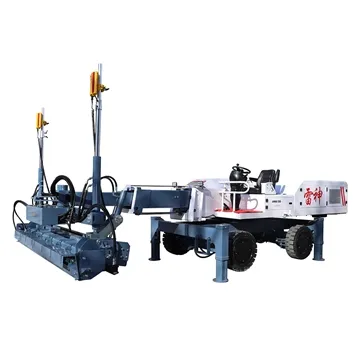
The concrete laser leveling machine can meet the construction requirements of large area, high flatness and levelness. It plays a very important role in the construction process. After the equipment is used, I believe everyone knows about the maintenance of the leveling machine. In this article, our staff will explain to you the three major maintenance misunderstandings of the concrete laser leveling machine.
1. THE BOLTS ARE TOO TIGHT
There are many bolts and nuts on the concrete laser leveling machine. In order to make the connection reliable, it should be ensured that it has sufficient pre-tightening force. However, it should not be mistaken to think that the tighter the bolt is, the better. Blindly increasing the torque of the bolt will not only cause permanent deformation of the fastener due to excessive external force, but also cause the thread to slip or the screw to break due to excessive tension.
2. THE TIRE PRESSURE IS TOO HIGH
The tire inflation pressure of the concrete laser leveling machine is the main factor that determines its service life and work quality. When the air pressure is too low, the deformation of the carcass increases, which will cause an increase in internal stress, and accelerate rubber aging and cord fatigue; at the same time, the rolling resistance increases, so the tire shoulder wear increases. However, when the inflation pressure is too high, the tire cord will generate a lot of tension, the resistance to impact will be weakened, and the rock edges will easily damage the tire; at the same time, the tire tread will wear more and cause the tire to slip, which will reduce the working efficiency of the concrete laser leveling machine.
3. ONLY DRAIN THE OIL IN THE OIL TANK WHEN CHANGING THE HYDRAULIC OIL
The concrete laser leveling machine has many hydraulic components and needs sufficient hydraulic oil. Whenever the hydraulic oil needs to be replaced due to long-term use and deterioration, there will always be people who mistakenly think that it is only necessary to drain the oil in the hydraulic oil and think that it is enough to fill up new hydraulic oil. In fact, the correct oil change procedure should first let go of the hydraulic oil in the hydraulic oil tank, then clean the oil tank and add new hydraulic oil; then remove the circuit main pipe, start the engine and run it at a low speed, and the oil pump truck will be operated manually.
If you have maintenance misunderstandings mentioned in the above article when you are maintaining the concrete laser leveling machine, I hope you can correct it in time and adopt the correct maintenance method to avoid machine failure due to improper maintenance. We will continue to organize and publish information about levelings, and you are welcome to pay attention to our website.
Thanks to All the Friends Who Support and Trust Shandong Vanse Machinery Technology Co., Ltd.
If you want to know more about Shandong Vanse Machinery Technology Co., Ltd. or have any questions, please feel free to contact us:
Our Factory
Shandong Vanse Machinery Technology Co., Ltd.








Share this article

About the Author: Shandong Vanse Machinery Technology Co., Ltd.
Shandong Vanse Machinery Technology Co., Ltd. is a high-tech manufacturer specializing in concrete construction machinery, including laser screeds and related equipment. The company integrates R&D, production, and global sales, with products exported to over 60 countries and widely used in infrastructure projects worldwide.
Previous Post
Next Post
Related Articles
You Might Also Like
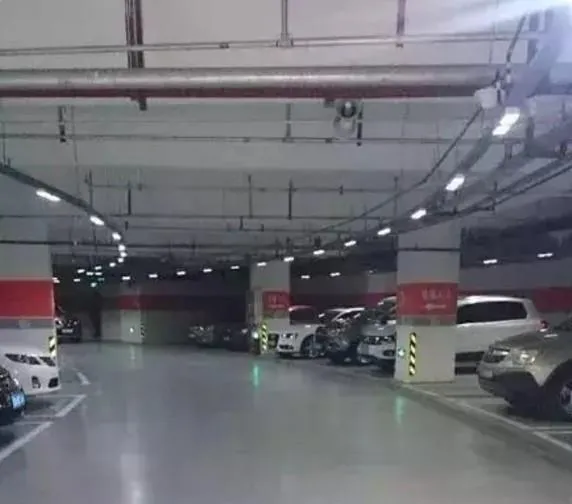
Maintenance of underground parking lot floor
We often see some old underground parking lot floor has peeling, dust, cracks and other problems, most of which are caused by the back and forth rolling of cars, the ground did not do maintenance treatment. Tips for curing concrete floor of parking lot. If the dirt on the ground is serious, can choose neutral cleaner to clean, can also use general detergent to add a small concentration of water to make cleaning solution, oil pollution is more, can use the solution to clean. After the completion of floor construction in the parking lot, maintenance must be carried out. During the maintenance period, no personnel or vehicles can enter. Generally, maintenance of the floor needs at least 7 days. After being put into use, it is necessary to avoid heavy machines and objects directly hitting the floor, and sharp objects scratching the floor surface .I f the dirt on the ground is serious, can choose neutral cleaner to clean, can also use general detergent to add a small concentration of water to make cleaning solution, oil pollution is more, can use the solution to clean. After the completion of floor construction in the parking lot, maintenance must be carried out. During the maintenance period, no personnel or vehicles can enter. Generally, maintenance of the floor needs at least 7 days. Finally is the parking lot carrying items as far as possible to do light, avoid direct damage to the ground.How to maintain concrete floors in different seasons?
HOW TO MAINTAIN CONCRETE FLOORS IN DIFFERENT SEASONS? -VANSE Machinery The current concrete floor is compacted with a concrete laser leveling machine, and there is almost no error. Concrete technology is becoming more and more important. Concrete has developed from the initial low-strength grade and ordinary concrete to today's high-strength grade and high performance. Sometimes the maintenance of concrete is often ignored in engineering construction, causing the surface of the concrete to shrink. , cracking, peeling and other phenomena, in order to make the concrete floor more sustainable and long-term use, it is necessary to pay special attention to the concrete curing method during construction. Different environments have different maintenance methods: During the high temperature and dry season, the moisture in concrete is easy to lose, so the following measures should be actively taken: 1. Cooling measures must be taken during construction, such as choosing to pour at night to avoid direct sunlight, and adjusting the concrete ratio in time. 2. At the same time, it must be noted that the temperature of the concrete formwork must be cooled, because if the temperature of the formwork is too high, the surface of the concrete will lose moisture quickly after pouring, resulting in defects such as sanding on the concrete surface. The maintenance of concrete in this season requires a lot of water, especially for the parts that are not easy to maintain, such as columns, cover beams, and beam webs, they should be tightly wrapped with geotextiles and sprinkled regularly. The surface of the concrete is always in a humid environment. In the early stage of curing, the concrete surface is sometimes dry and sometimes wet, because the strength of concrete that is sometimes dry and sometimes wet is easy to reduce, and it is easy to produce shrinkage cracks. Therefore, within 7 days of concrete pouring, it is necessary to prevent water evaporation and keep the concrete surface moist. In short, the focus of concrete maintenance in this season is moisturizing. If measures such as moisturizing and cooling are done well, problems such as early setting of concrete, plastic cracks, reduction of concrete strength and durability caused by high temperature will not appear. In the cold season when the temperature is lower than 5°C, the following measures should be taken for the maintenance of concrete: 1. After demoulding, cover and maintain the insulation. 2. The use of steam curing. 3. Improve the thermal insulation performance of the formwork. Most of the steel formwork used in bridge construction has good thermal conductivity and is easy to lose temperature. Therefore, insulation materials such as straw curtains should be wrapped outside the formwork or measures such as thickened formwork and double-layer formwork should be used. 4. Increase the mixing temperature of concrete. First of all, the heating treatment of the mixing water can be considered, and the aggregate can also be considered to be heated. The purpose is to ensure the initial cement hydration temperature and improve the early strength of the concrete. If the maintenance of concrete in the early cold period takes the above measures actively, the concrete will be prevented from freezing due to low temperature. After the concrete is frozen, its hydration will stop. After the temperature rises, although it can continue, the surface of the concrete has changed. Crisp, lose strength, and even larger cracks appear. Therefore, it is necessary to especially strengthen the early insulation and maintenance of concrete, and it must not be frozen before the concrete strength reaches 50% of the design strength.Standard operating procedures for daily cleaning and regular deep maintenance of the power trowel machine
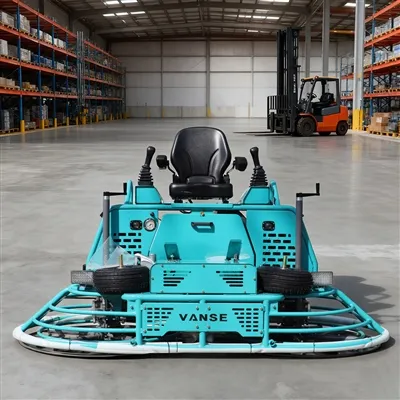
This SOP is designed to ensure equipment performance, extend service life and guarantee operational safety. Standardize the daily cleaning and regular maintenance of the power trowel machine to ensure that the equipment is always in good working condition, reduce the failure rate, eliminate potential safety hazards, optimize the construction quality and extend the service life of the equipment. This program is applicable to the maintenance and servicing of all electric, gasoline or hydraulic-driven power trowels (including driver-operated and hand-guided types) of our company. Operator: Responsible for performing daily cleaning and inspection, and reporting any abnormal conditions. Equipment Administrator/Mechanic: Responsible for conducting regular deep maintenance, repair and record-keeping. Project Manager/Supervisor: Responsible for supervising the implementation of the maintenance plan and providing resource support. Before carrying out any maintenance, make sure that the equipment has been completely turned off, the engine/motor has stopped, the key has been removed, and all moving parts have come to a standstill and cooled down. Wear appropriate personal protective equipment (PPE), such as gloves and safety glasses. Do not clean or maintain the equipment while it is in operation. When handling fuel, engine oil and lubricating oil, keep away from fire sources and do it in a well-ventilated area. Operation process: Cleaning -> Inspection -> Report Remove large debris: Use a scraper or wooden chips to remove large pieces of concrete and mortar adhering to the power trowel plate, the bottom of the blades and the protective cover. Rinse/Wipe Timing: If the concrete has solidified, wipe it with a damp cloth. If the equipment permits and the circuit/air filter is protected, low-pressure water can be used for flushing. However, it is strictly forbidden to directly direct water at key parts such as the engine, motor, bearing housing, and control box. Key areas: power trowel plate, blades, chassis, walking wheels (or tracks). Drying and rust prevention: Use a dry cloth to wipe off water stains on the surface of the equipment. For exposed metal parts (non-friction surfaces), apply a small amount of lubricating oil for rust prevention. Power trowel and blade: Check for excessive wear, cracks or deformation. Make sure the installation bolts are tight and not loose. Transmission system Gearbox/reducer: Check for any oil leakage or abnormal noise. Belt/chain (if any) : Check the tension and wear condition, and adjust or replace them. Engine/Motor Gasoline engine: Check if the air filter is clean and visually inspect the oil dipstick (it should be in a horizontal position). Electric motor: Check if the power cord is damaged and if the plug is intact. Walking mechanism: Check the tire pressure and wear of the walking wheels, or the tightness and wear of the tracks. Fasteners: Quickly check whether the visible bolts and nuts at all parts are loose, especially at the connection points of the power trowel and the fixing points of the handle. Safety: Check whether the emergency shut-off switch and protective cover are in good condition and effective. Fill in the "Daily Inspection Form for Equipment". If any abnormality is detected (such as abnormal noise, oil leakage, severe vibration, inability to start, etc.), immediately hang the "Under Repair" sign and report to the equipment administrator. In addition to the daily content, add: Engine maintenance (gasoline engine) Change the engine oil (refer to the manufacturer's manual. The first maintenance is usually carried out after 20 to 30 hours of operation). Clean or replace the air filter element (more frequently in dusty environments). Check the spark plugs, clean the carbon deposits, adjust the clearance or replace them. Check and clean the fuel filter. Transmission system Gearbox: Check the oil level and replenish or replace the specified gear oil if necessary. Bearings: Apply high-temperature lithium-based grease to the main shaft bearings of the power trowel plate, the bearings of the walking wheels, etc. Comprehensive tightening: Use a torque wrench to re-tighten all key bolts in accordance with the torque values specified by the manufacturer. Electrical system: Check whether all wire connections are firm and clean the dust on the heat sink of the motor housing. Carried out by professional mechanics, it includes all first-level maintenance contents and adds: Deep cleaning and inspection Remove the protective cover and thoroughly clean the accumulated dust and oil stains inside. Check the wear condition of the clutch plates (if any). Deep maintenance of the transmission system Replace all the lubricating oil in the gearbox. Check for wear on the belts/chains and replace them in groups if necessary. Check the clearance and abnormal noise of the bearings, and replace them if necessary. Fuel system (gasoline engine) Clean the carburetor. Empty and clean the fuel tank (this must be done before long-term storage). Walking mechanism Inspect the wheel axles and steering mechanism, and apply grease. For the driving type power trowel, check the hydraulic oil level and whether there is any leakage in the hydraulic pipeline. Performance test After the maintenance is completed, run the equipment no-load for 10 to 15 minutes to check for any abnormal sounds, vibrations, overheating or oil leakage, and to ensure that each control lever operates flexibly and effectively. Thorough cleaning: As mentioned earlier, thoroughly clean the equipment and dry it. Fuel treatment (gasoline engine) : Drain the fuel from the fuel tank and carburetor, or add fuel stabilizer and run the engine for 5 minutes to fill the stabilizer system. Engine maintenance Change the engine oil. Remove the spark plug, inject about 15 milliliters of engine oil into the cylinder, pull the starting rope several times to distribute the oil, and then reinstall the spark plug. Anti-corrosion treatment: Apply anti-rust oil to all exposed metal surfaces. Apply butter to the smears and leaves to prevent rust. Storage location: Store the equipment in a dry, well-ventilated and flat indoor area. Lower the power trowel plate to the ground to release the pressure of the hydraulic system (if applicable). Lift the tire off the ground or maintain the standard air pressure. After each maintenance, the maintenance date, operating hours, maintenance items, replaced parts and oils, and the signature of the maintenance person must be recorded in detail on the "power trowel Maintenance and Repair Record Card". The record card should be randomly saved for easy tracking of the equipment's history. Core principles: Prevention first, cleanliness foremost, follow regulations, and keep complete records. Strict maintenance is not only about cost savings, but also an important guarantee for project quality and construction safety. Note: The parameters provided in this document are for reference only and are not mandatory. Due to differences in technical characteristics between different brands and models of laser levelers, please consult the manufacturer for a suitable solution before actual operation. This reference document assumes no responsibility for any issues arising from failure to follow the manufacturer's instructions.