Technical Knowledge
VANSE leveling machine speaks with quality and service!
VANSE leveling machine speaks with quality and service!
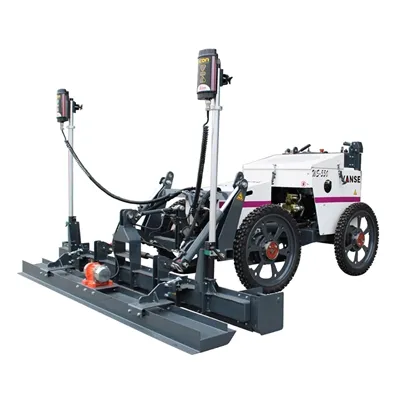
The laser transmitter of the concrete laser leveling machine generates a rotating laser. The laser receiver on the laser leveling machine receives the signal and is analyzed by the laser measurement and control system. The deviation will be fed back to the sensitive computer control system on the laser leveling machine. The linear actuator will adjust the height of the scraper to ensure leveling accuracy.
Shandong VANSE Machinery, as the earliest and most professional manufacturer of laser leveling machines in China, believes that occasional quality problems are not enough to negate the strength of the entire brand. Does a brand have strength? The key lies in whether the company has a sound after-sales system and whether it can provide high-quality after-sales service in the first place.
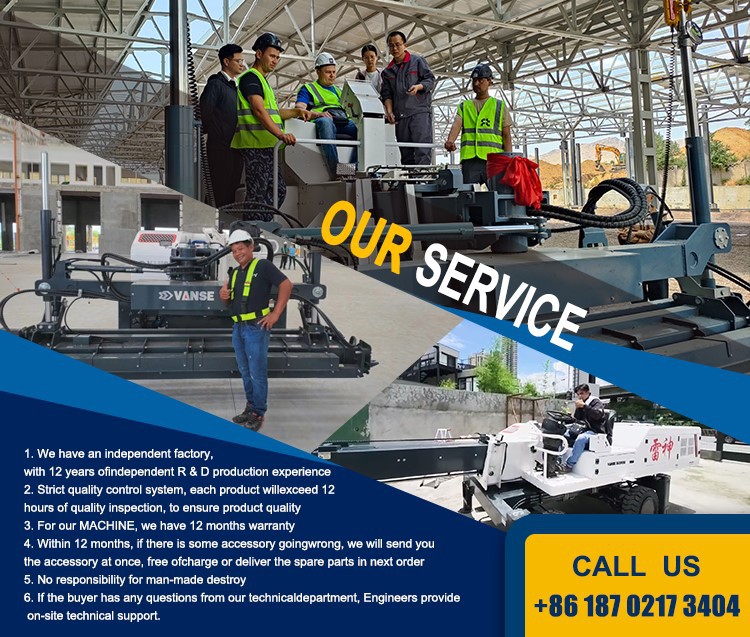
High-quality products are the theme of long-term development of enterprises, and high-quality services are the key to the sublimation of corporate brand image. Shandong VANSE laser leveling machine manufacturer has been committed to the research and development and production of concrete laser leveling machine products for many years. The product quality has also experienced the test of various working conditions, and the high-quality after-sales service has been recognized by the majority of users.
Our service tenet As long as there is a VANSE laser leveling machine, we only need a call from you, and we can always provide you with high-quality services in the first time. We insist on making high-quality products and high-quality services!
Thanks to All the Friends Who Support and Trust Shandong Vanse Machinery Technology Co., Ltd.
If you want to know more about Shandong Vanse Machinery Technology Co., Ltd. or have any questions, please feel free to contact us:
Our Factory
Shandong Vanse Machinery Technology Co., Ltd.








Share this article

About the Author: Shandong Vanse Machinery Technology Co., Ltd.
Shandong Vanse Machinery Technology Co., Ltd. is a high-tech manufacturer specializing in concrete construction machinery, including laser screeds and related equipment. The company integrates R&D, production, and global sales, with products exported to over 60 countries and widely used in infrastructure projects worldwide.
Previous Post
Next Post
Related Articles
You Might Also Like
What are the special adjustment methods of laser leveling machines in different construction environments?
Laser leveling machine is a professional equipment used for large-area concrete construction such as concrete floors and ground, which can greatly improve the flatness and construction efficiency of concrete. In different construction environments, laser leveling machines need to make some special adjustments to adapt to environmental changes. The following are some common adjustment methods: 1. Ground slope adjustment: When constructing on a sloped ground, the laser leveling machine needs to be slope adjusted. This can be achieved by adjusting the angle sensor on the machine or using a dedicated slope meter. 2. Laser signal intensity adjustment: When there are obstacles or other interference sources at the construction site, the transmission of the laser signal may be affected. At this time, it is necessary to adjust the power of the laser transmitter or change the emission direction to ensure that the laser signal can be accurately transmitted to the receiver. 3. Height adjustment: When constructing on floors of different heights, the height of the laser leveling machine needs to be adjusted. This can be achieved by adjusting the lifting mechanism on the machine or using a dedicated bracket. 4. Temperature compensation: Since temperature changes will affect concrete materials, temperature compensation of the laser leveling machine is required when constructing in high or low temperature environments. Compensation can be made by adjusting the temperature sensor inside the machine or using a dedicated thermometer. 5. Ambient light adjustment: When working in a dark or bright environment, the brightness of the laser leveler needs to be adjusted. This can be achieved by adjusting the brightness control knob on the machine or using a dedicated light shield. The above are some special adjustment methods for laser levelers in different construction environments. The specific operations should be carried out according to the actual situation and the equipment manual. At the same time, regular maintenance should be paid attention to during use to ensure the good operation of the equipment.Timing Control of Concrete Spreader & Power Trowel Machine Collaboration
In concrete floor construction, the coordinated operation of concrete spreaders and power trowels is like a relay race against time. Because anti-corrosion flooring (such as acid-resistant and oil-resistant flooring) requires extremely high density, poor timing control can lead to peeling, cracking, or failure of anti-corrosion performance. The following are the key timing points and collaborative logic in the standard construction process: Judgment Criteria: After concrete paving and leveling, when construction workers step on the concrete surface, the footprint depth is approximately 3mm-5mm. Collaborative Operation: At this point, most of the moisture on the concrete surface has evaporated, but it can still moisten the aggregate. The spreader begins spreading the first layer of material (usually 2/3 of the total). Note: Spreading material on a surface with standing water is strictly prohibited, as it will dilute the thickness of the anti-corrosion coating. Judgment Criteria: After material spreading, wait for the aggregate to absorb moisture from the concrete and darken (approximately 5-15 minutes). Coordinated Operation: The power trowel, equipped with a "disc," performs the initial grouting. Objective: Through the kneading action of the disc, the anti-corrosion aggregate is pressed into the concrete surface, integrating it with the base grout. Timing: Immediately after the initial slurry application. Coo rdinated Operation: The material application machine applies the remaining 1/3 of the material (to reinforce areas unevenly applied in the first round). The power trowel then applies the slurry again in a crisscrossing pattern. Judgment Criteria: The concrete begins to harden; footprints are barely visible when stepped on. Coordinated Operation: The power trowel removes its disc and uses a blade for finishing. Key to Corrosion Prevention: 3-4 repeated finishing passes are required. As the concrete hardens, continuously increase the blade angle until a mirror-like surface is achieved. Construction joints are not fixed; the coordination speed of the spreading machine and the power trowel must be adjusted according to environmental changes. Environmental factors Impact on timing Coordinated Adjustment Strategies High temperature/strong wind Concrete dehydrates extremely quickly, shortening the window period. The spreading machine should closely follow the leveling machine, and the number of power trowels should be increased to operate synchronously. Low temperature/high humidity Slow setting; premature construction may bury materials. Extend the waiting time to prevent aggregate from settling to the bottom of the concrete. Indoor/underfloor heating The bottom heats up quickly, causing a skin to form on the surface. The power trowel should apply slurry as early as possible to prevent "false drying" that can lead to hollow areas. For special functional flooring such as acid-resistant and oil-resistant flooring, extra attention needs to be paid during collaborative construction: Prioritize Density: The power trowel should apply 1-2 more passes than for ordinary flooring to seal all micropores and prevent acid/oil penetration. Joint Treatment: When the spreader is moving, ensure that the overlap area between two applications is approximately 10cm. The power trowel should then focus on strengthening the grinding at the overlap area. Finished Product Protection: After the final pass, a curing agent or anti-corrosion sealant should typically be sprayed within 4-6 hours. If your construction area is large (over 1000㎡ per day), we recommend using a combined operation mode of laser leveling machine + automatic material spreader + ride-on power trowel to ensure that the corrosion resistance of the entire floor is at a consistent level. Is your current construction environment indoors or outdoors? Depending on the ventilation conditions, I can provide you with detailed parameters for controlling the material spread thickness. Note: The parameters provided in this document are for reference only and are not mandatory. Due to differences in technical characteristics between different brands and models of laser levelers, please consult the manufacturer for a suitable solution before actual operation. This reference document assumes no responsibility for any issues arising from failure to follow the manufacturer's instructions.How Often Should A Concrete Laser Leveling Be Maintained?
What is the frequency of maintenance of concrete laser leveling machine? As an indispensable and important equipment in modern building construction, the diffuse concrete laser leveling machine's performance stability and service life directly affect the construction quality and efficiency. Therefore, it is particularly important to carry out scientific and reasonable maintenance of concrete laser leveling machines. However, many users may have some questions about the frequency of maintenance of concrete laser leveling machines. This article will focus on this issue and elaborate on the key points of daily equipment inspections, periodic maintenance plans, special maintenance needs, lubrication and cleaning, electrical system inspection, replacement of wearing parts, and repair and maintenance records. 1. Key points for daily inspection of equipment Routine inspection is the basic work to ensure the normal operation of the concrete laser leveling, and its frequency should be relatively high. In general, a thorough daily inspection should be performed before and after each use. Key check points include: ☀ Check whether the appearance of the equipment is intact and whether there is any damage, deformation, etc.; ☀ Check whether the fasteners of the equipment are loose. If they are loose, tighten them in time; ☀ Check whether the hydraulic and electrical systems of the equipment are working normally. If there are any abnormalities, they should be dealt with in time; ☀ Check whether the operation control of the equipment is flexible and reliable. If there is any jamming or failure, repair it in time; ☀ Check whether the walking system of the equipment is stable and whether the track is seriously worn, etc. Through daily inspections, problems with the equipment can be discovered and solved in time to ensure the normal operation of the equipment. 2. Periodic maintenance plan In addition to daily inspections, a periodic maintenance schedule should be developed based on the equipment's usage and manufacturer's recommendations. The frequency of periodic maintenance can generally be determined based on the working hours or length of use of the equipment. ☀Weekly maintenance: Conduct a comprehensive inspection of the equipment every week, including checking the oil level and quality of the hydraulic oil, cleaning the radiator and filter, and checking whether the wiring of the electrical system is loose, etc. ☀ Monthly maintenance: Perform more in-depth maintenance on the equipment every month, such as replacing hydraulic oil and filters, checking the engine oil and water tank, etc. ☀ Quarterly maintenance: Conduct extensive maintenance and upkeep on the equipment every quarter, such as checking the wear of the track, replacing severely worn track shoes, checking the sealing of the hydraulic cylinder, etc. By formulating and executing a periodic maintenance plan, the service life of the concrete laser leveling can be effectively extended and its work efficiency improved. 3. Special maintenance needs In some special cases, additional maintenance on your concrete laser leveling may be required. These special circumstances include: ☀ The equipment has not been used for a long time: If the equipment has not been used for a long time, it should be started and operated regularly to prevent parts from rusting or aging due to long-term parking of the equipment. ☀ Harsh working environment: In harsh working environments, such as high temperature, dusty, humid and other environments, the maintenance frequency of the equipment should be appropriately increased to cope with the impact of environmental changes on the equipment. ☀ Equipment failure: When equipment fails, troubleshooting and repairs should be carried out in a timely manner to ensure that the equipment can resume normal operation in a timely manner. For these special circumstances, we need to formulate corresponding maintenance measures and plans based on the actual situation to ensure the normal operation of the equipment and extend its service life. 4. Lubrication and cleaning Lubrication and cleaning are important aspects that cannot be ignored in the maintenance of concrete laser leveling machines. Lubrication can effectively reduce the wear and friction of equipment and extend its service life; while cleaning can prevent equipment failures caused by dust, debris, etc. ☀ In terms of lubrication, all lubrication points of the equipment should be lubricated regularly, such as bearings, chains, etc. At the same time, pay attention to selecting appropriate lubricating oil and grease to ensure the lubrication effect. ☀ In terms of cleaning, dust and debris on the surface of the equipment should be cleaned regularly to keep the equipment tidy. In addition, the radiator and filter of the equipment should be cleaned regularly to ensure the heat dissipation effect and ventilation performance of the equipment. Through reasonable lubrication and cleaning work, the working efficiency and stability of the concrete laser leveling can be effectively improved. 5. Electrical system inspection The electrical system is a critical part of the proper operation of the concrete laser leveling, so regular inspection and maintenance of it is essential. Electrical system inspection mainly includes the following aspects: ☀ Check whether the cable lines are intact and not damaged or aged; ☀ Check the working status of electrical components, such as whether switches, relays, etc. are working normally; ☀ Check the stability and accuracy of the electrical control system to ensure that the operation and control of the equipment are accurate and reliable; ☀ Clean and dust-proof the electrical system regularly to prevent failures caused by dust accumulation. Through electrical system inspection, electrical faults can be discovered and solved in time to ensure the normal operation of the concrete laser leveler. 6. Replace wearing parts During the use of the concrete laser leveling, some wearing parts will gradually wear or be damaged as the use time increases. In order to ensure the normal operation of the equipment and extend its service life, these wearing parts need to be replaced in time. Common wearing parts include blades, scrapers, track shoes, etc. These parts will wear or deform during long-term use, affecting the construction quality and efficiency of the equipment. Therefore, the wear of these parts should be checked regularly and replaced according to the actual situation. When replacing wearing parts, you should choose qualified products produced by regular manufacturers and perform replacement operations in accordance with the requirements of the equipment manual. At the same time, replacement records should be kept for reference in subsequent maintenance work. 7. Repair and maintenance records In order to better understand the maintenance status of the concrete laser leveling machine, it is recommended to establish complete repair and maintenance records. The record content includes basic information of the equipment, maintenance time, content, personnel, and replaced parts and other information. Through repair and maintenance records, you can clearly understand the maintenance history and usage status of the equipment, providing a reference for subsequent maintenance work. At the same time, it also helps to discover potential problems in the operation of the equipment and take timely measures to deal with them to avoid failures. In addition, repair and maintenance records can help improve the efficiency of equipment management. Through the analysis of records, the effectiveness of equipment maintenance can be evaluated, deficiencies in maintenance work can be found, and a more scientific and reasonable maintenance plan can be formulated. When establishing repair and maintenance records, it is recommended to use electronic methods for recording and management. Through the electronic recording system, data can be easily queried, counted and analyzed to improve work efficiency. At the same time, it can also reduce the risk of loss and damage of paper records and ensure the integrity and reliability of data. In summary, the maintenance of concrete laser leveling machines is of great significance to the normal operation and extended service life of the equipment. By formulating reasonable maintenance plans, performing daily inspections and periodic maintenance, paying attention to special maintenance needs, doing lubrication and cleaning work, checking electrical systems, replacing wearing parts in time, and establishing complete repair and maintenance records, we can ensure that The stable operation of the pyrolysis soil laser leveling machine improves construction quality and efficiency. However, it should be noted that the maintenance frequency and content mentioned in this article are only general recommendations, and actual operations need to be adjusted and improved according to the specific conditions of the equipment, the use environment and the manufacturer's recommendations. At the same time, maintenance work should be performed by professionals with corresponding qualifications and experience to ensure correct, safe and effective operations. Finally, we hope that the discussion in this article can provide some reference and help for the maintenance of concrete laser levelings, and contribute to the stable operation and extended service life of the equipment.