Technical Knowledge
What are the application ranges of concrete laser leveling machines?
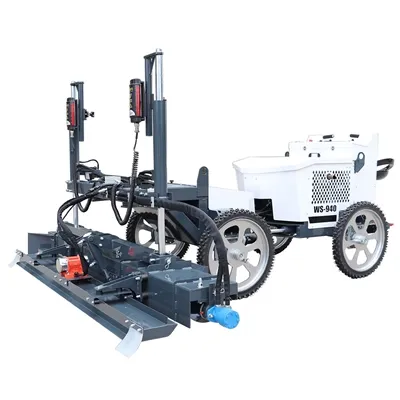
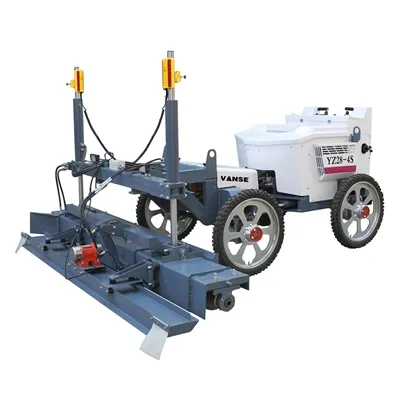
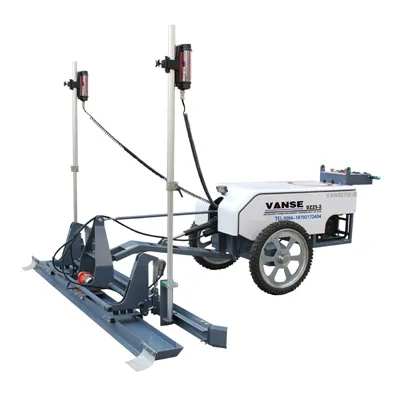
The concrete laser screed is a high-tech equipment used in concrete construction, which can greatly improve the flatness and precision of the concrete surface. Below we will introduce the application range of concrete laser screed machine in detail.
I. Overview
Concrete laser leveling machine is a kind of equipment specially used for concrete construction. It uses advanced laser technology to achieve high-precision concrete leveling, vibration, slurry lifting and light collection operations. Compared with traditional concrete construction methods, concrete laser screed machines have higher construction quality and efficiency and can be widely used in various types of buildings and structures.
2. Application scope
◆Industrial plant
Concrete laser screed machines are widely used in industrial plants. These factories include large factories, workshops, warehouses, etc. In these places, the ground needs to bear a lot of weight and friction, so it is necessary to ensure the smoothness, hardness and load-bearing capacity of the ground. The concrete laser leveling machine can quickly and accurately complete the leveling, vibrating and polishing work of concrete, making the ground smoother and denser, and improving the load-bearing capacity and service life of the ground.
◆Commercial buildings
Commercial buildings include shopping malls, office buildings, hotels, etc. The floors of these buildings need to withstand a large amount of foot traffic and vehicle pressure, so the flatness, hardness and aesthetics of the floors need to be ensured. The concrete laser leveler can complete large-area concrete construction in a short time, making the ground smoother and more beautiful, and improving the use value and commercial value of commercial buildings.
◆Parking lots and roads
Parking lots and roads are another area of application for concrete laser screeds. These places require pavements that are flat, spacious, durable and have high load-bearing capacity. The concrete laser screed can quickly and accurately complete the leveling, vibrating and polishing work of the road surface, making the road surface smoother and denser, and improving the load-bearing capacity and service life of the road surface. Especially in parking lots, concrete laser screeds can improve the flatness and compactness of the parking lot, enhance the carrying capacity of the parking lot, and reduce damage to the road surface by vehicles.
◆Bridges and Tunnels
Bridges and tunnels are another area of application for concrete laser screeds. These places require high-precision, high-flatness concrete structures to ensure the safe passage of pedestrians and vehicles. The concrete laser leveling machine can complete large-area concrete construction in a short time, making the surfaces of bridges and tunnels smoother and denser, and improving the load-bearing capacity and service life of bridges and tunnels.
◆Airport runway
Airport runways are another application area for concrete laser screeds. These places require high-precision, high-flatness concrete structures to ensure safe takeoff and landing of aircraft. The concrete laser leveling machine can complete large-area concrete construction in a short time, making the surface of the airport runway smoother and denser, and improving the carrying capacity and service life of the airport runway. At the same time, the concrete laser leveling machine can also improve the construction quality and efficiency of the airport runway, making the airport runway more beautiful and durable.
In short, concrete laser screed machines are widely used in various types of buildings and structures. They can greatly improve the efficiency and accuracy of concrete construction, increase the load-bearing capacity and service life of the ground, and also improve the quality and quality of construction. efficiency. If you need more information about concrete laser screeds, seek professional advice.
Thanks to All the Friends Who Support and Trust Shandong Vanse Machinery Technology Co., Ltd.
If you want to know more about Shandong Vanse Machinery Technology Co., Ltd. or have any questions, please feel free to contact us:
Our Factory
Shandong Vanse Machinery Technology Co., Ltd.








Share this article

About the Author: Shandong Vanse Machinery Technology Co., Ltd.
Shandong Vanse Machinery Technology Co., Ltd. is a high-tech manufacturer specializing in concrete construction machinery, including laser screeds and related equipment. The company integrates R&D, production, and global sales, with products exported to over 60 countries and widely used in infrastructure projects worldwide.
Previous Post
Next Post
Related Articles
You Might Also Like
How to ensure the safety and reliability of concrete laser leveling machine during construction?
It is very important to ensure the safety and reliability of the concrete laser leveling machine during the construction process. This is not only related to the quality of the project, but also directly affects the safety of the operator. Here are some key steps and suggestions to ensure the safe and reliable operation of the concrete laser leveling machine: 1. Training and certification: Ensure that all operators have received appropriate operation training and are familiar with all functions and emergency stop procedures of the equipment. 2. Equipment inspection: Before starting work every day, perform a comprehensive visual inspection of the leveling machine, including checking tires, fuel levels, oil, coolant, and all controls. 3. Laser calibration: Ensure that the laser transmitter is properly installed and calibrated to provide an accurate height reference. 4. Safety protection: Ensure that all safety devices such as emergency brake buttons, safety guardrails, etc. are in good condition. 1. Site leveling: Before using the laser leveling machine, properly prepare the construction site to ensure that the ground is relatively flat and free of large debris. 2. Traffic control: Set up warning signs and fences to restrict unauthorized personnel from entering the work area. 3. Material supply: Rationally arrange the supply speed of concrete to avoid idling of equipment or pouring too quickly due to waiting for concrete, resulting in quality degradation. 4. Smooth communication: Ensure good communication means within the construction site to facilitate command and dispatch and emergency response. 1. Smooth driving: The operator should maintain a constant speed and avoid sharp turns or sudden braking, which can improve flatness and reduce the risk of equipment damage. 2. Monitoring laser signals: Keep an eye on the working conditions of the laser receiver to ensure that a stable signal is received. 3. Timely adjustment: Adjust the scraper angle and vibration frequency according to the actual construction conditions to achieve the best effect. 4. Rest and inspection: Let the machine rest regularly and check the equipment condition again during this period. 1. Regular maintenance: Perform routine maintenance tasks according to the manufacturer's recommended schedule, such as changing the engine oil and cleaning the filter. 2. Record keeping: Keeping detailed records of each maintenance helps track the historical performance of the equipment and predict possible problems in the future. 3. Professional repair: When encountering complex failures, please contact professional repair services instead of trying to repair them yourself. The above measures can greatly improve the safety and reliability of concrete laser leveling machines on the construction site. It is important to always follow the guidelines in the user manual provided by the manufacturer and comply with relevant local safety regulationsWhat details do you need to pay attention to when using a concrete laser leveling machine to deal with special ground conditions?
When using a concrete laser leveling to deal with special ground conditions, you need to pay attention to the following details: 1. For situations where construction efficiency is high, it is necessary to ensure that the later cutting work is carried out in a timely manner. Usually, each laser paving and leveling machine needs to be equipped with 7-8 seam cutting machines to meet the requirements. 2. The laser leveling machine should not travel too fast during leveling operations to ensure the leveling effect and quality. 3. Before concrete leveling, preliminary leveling work is required to ensure that the concrete surface after initial leveling is higher than the established elevation. 4. When dealing with special ground conditions, you can consider using mulching film covering and maintenance methods, and covering the seams with non-woven fabric to protect the surface. 5. When installing the laser transmitter, special attention needs to be paid to avoiding obstacles to avoid affecting the laser emission and leveling effects. 6. During the construction process, the steel mesh may experience horizontal displacement due to the alkaline side pressure. In order to effectively control the horizontal displacement of the steel mesh sheets, isolation benches can be placed between adjacent steel mesh sheets, and these benches can be used interchangeably. Please note that the above are just some basic considerations and specific details may vary depending on ground conditions and construction requirements. When dealing with special ground conditions, it is recommended to evaluate based on the actual situation and seek professional advice.How does the concrete laser leveling machine achieve automatic control and laser positioning?
The key to automatic control and laser positioning of concrete laser leveling machines lies in its internal control system and laser technology. The equipment integrates advanced technologies such as automation technology, electronic technology, laser technology and computer technology to achieve high-precision automated construction. In terms of automatic control, the control system of the concrete laser leveling machine is its core part. The system usually uses a programmable logic controller (PLC) or microprocessor, which can automatically control the operation of the leveling machine according to preset parameters and conditions. For example, it can automatically control the walking speed, amplitude, frequency, etc. of the leveling machine to ensure the concrete paving and leveling effect. At the same time, the system can also receive and process various sensor signals, such as height sensors, level sensors and flow sensors, to monitor the paving status and leveling effect of concrete in real time. Based on the feedback from these sensors, the control system can automatically adjust the operating parameters of the leveling machine to ensure the stability and quality of the leveling effect. In terms of laser positioning, concrete laser levelings mainly rely on laser technology for high-precision positioning and paving control. Laser technology has the characteristics of high precision, high speed and high reliability, enabling fast and accurate positioning and measurement. Concrete laser levelings are typically equipped with laser transmitters and receivers capable of emitting and receiving laser beams. The laser transmitter emits a laser beam into the work area and forms a beam on the surface of the compacted soil. The receiver will receive and process the signal of this laser beam to obtain the height and level information of the current location. This information will be used by the control system to monitor and control the operation of the leveling machine in real time. Specifically, when the concrete laser leveling machine is working, the laser transmitter emits a laser beam to the work area and scans the entire work area. The receiver will continuously receive and process the signal of the laser beam to obtain the three-dimensional coordinates of each point in the working area. By comparing with the preset three-dimensional model, the control system can calculate the error value of each point, and adjust the walking trajectory of the leveling and the concrete paving thickness based on the error value. In this way, by continuously adjusting and optimizing the operating parameters of the leveling machine, high-precision automated construction can be achieved and the paving quality and leveling effect of concrete can be improved. In addition, the concrete laser leveling machine is also equipped with a variety of sensors and auxiliary equipment to achieve more comprehensive automated control and monitoring. For example, some advanced models may be equipped with automatic control systems, sensor integration networks, visual interfaces, etc. These technologies and equipment enable the leveling machine to work continuously without human intervention, greatly improving construction efficiency and quality. To sum up, the concrete laser leveling machine achieves high-precision automated construction by integrating advanced technologies such as automation technology, electronic technology, laser technology and computer technology. Its automatic control system can automatically adjust the operating parameters of the leveling machine based on preset parameters and real-time feedback; laser positioning technology provides high-precision, high-speed positioning and measurement capabilities. These technologies work together to ensure the quality of concrete paving and smoothing effects. With the continuous advancement of technology and the expansion of application fields, concrete laser leveling machines are expected to achieve higher and smarter automated construction in the future.