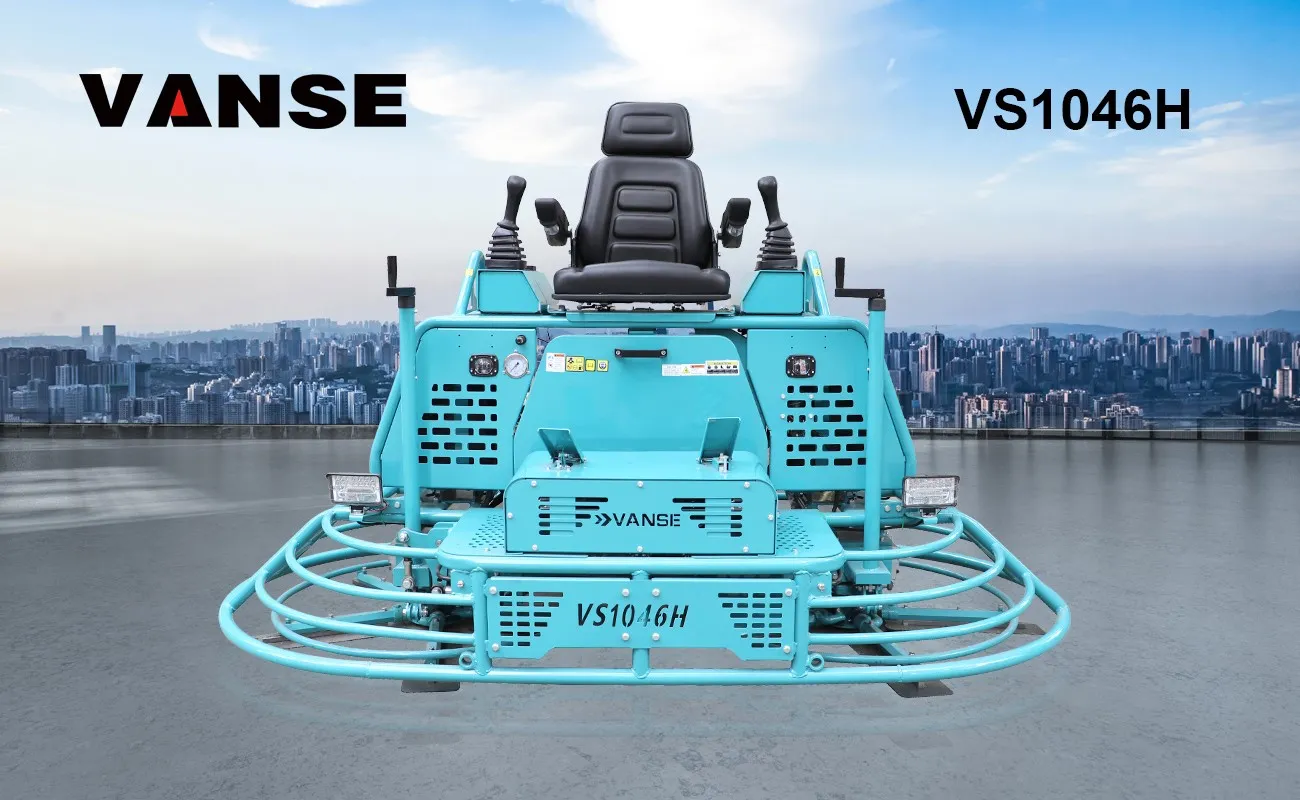
– Fast working speed: The working efficiency of the concrete troweling machine is much higher than that of manual troweling. For example, one ride-on troweling machine is equivalent to the workload of 6 walk-behind troweling machines. It can complete large-area concrete troweling operations in a short time, effectively shortening the construction cycle. – Strong continuous operation ability: It can run continuously for a long time without frequent breaks. It is especially suitable for large-area and large-scale concrete construction projects, such as ground construction in large factories, warehouses, parking lots, etc.
Polishing quality is good
– High surface flatness: The troweling machine can make the concrete surface smoother and smoother through mechanical rotation and pressure, reducing possible unevenness and errors caused by manual troweling, and improving the overall quality of the ground. – Strong compactness and wear resistance: The compactness of the concrete surface constructed by the trowel machine is significantly improved, which can effectively enhance the wear resistance of the ground and extend the service life of the ground. It is suitable for improving the quality of the ground. Places with higher requirements, such as airport runways, industrial workshops, etc.
Excellent operating performance
– Comfortable driving operation: The driving trowel is equipped with a comfortable seat and a good operating system. The operator can sit and operate, which greatly reduces the labor intensity and reduces the operator's fatigue, thus Improve work efficiency and construction quality. – Flexible steering: The mechanical steering operating system is responsive and easy to operate, allowing the trowel to turn quickly and accurately during the construction process, adapting to construction sites of different shapes and layouts, and better meeting construction needs.
Good compaction effect
– Double wiping disc design: Some troweling machines adopt a double wiping disc configuration. Two troweling discs can be installed at the same time to quickly lift slurry. The two-way multiple blades have a larger weight and have a better compaction effect on the ground. Make the concrete surface stronger and stronger.
High security
– Stable and reliable: The trowel machine has a reasonable structural design and smooth operation, which can effectively reduce vibration and shaking during the construction process and reduce the risk of operator injury. – Equipped with safety devices: such as safety cut-off switches, etc. In an emergency, the operator can quickly shut down the engine to ensure construction safety.
Wide range of application
– Multiple construction scenarios: Can be widely used in the construction of various concrete surfaces such as construction sites, municipal roads, factory warehouses, park roads, community roads, rural streets, etc., whether indoors or outdoors, large or small areas It can be used for all kinds of concrete troweling work. – Different construction stages: It can be used for rough grinding, slurry extraction and compaction on the concrete surface, as well as fine grinding and polishing. One machine has multiple uses to meet the needs of different stages of concrete construction.
Low maintenance cost
– Simple structure: The structure of the concrete troweling machine is relatively simple, mainly composed of power unit, transmission parts, troweling working parts, operating handle and control device, body and chassis, etc. It is easy to manufacture and low cost. Moreover, daily maintenance and upkeep are also more convenient, which reduces the maintenance cost and usage cost of the equipment. – Durable parts and components: The use of high-quality materials and parts, such as wear-resistant manganese steel grinding discs and grinding discs, extremely large-diameter carbon structural steel trowel support arms that have undergone strict heat treatment, etc., makes the equipment more durable. Reducing the frequency of parts replacement and further reducing maintenance costs.
About the Author: Shandong Vanse Machinery Technology Co., Ltd.


Shandong Vanse Machinery Technology Co., Ltd. is a high-tech manufacturer specializing in concrete construction machinery, including laser screeds and related equipment. The company integrates R&D, production, and global sales, with products exported to over 60 countries and widely used in infrastructure projects worldwide.

Floor engineering laser leveling/ leveling construction technology
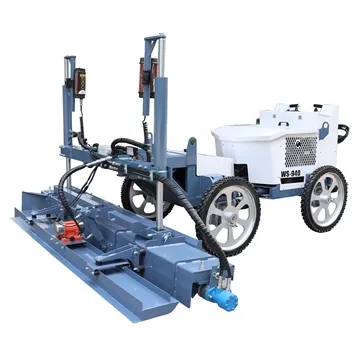
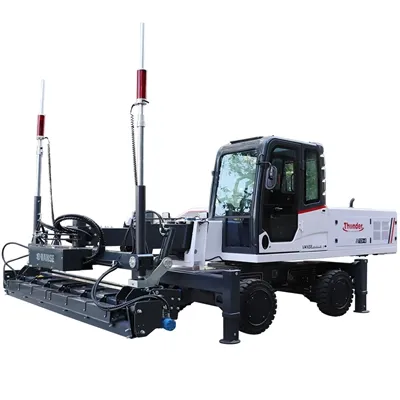
• • • ★ • • •Pre-construction preparation • • • ★ • • • Before carrying out laser leveling construction of floor projects, adequate preparation is the key to ensuring construction quality and progress. The following are the main contents of preparation before construction: 1. On-site investigation and evaluation: Conduct a detailed investigation of the construction site to understand basic conditions such as terrain, landforms, and soil conditions, evaluate the difficulty of construction and possible problems, and provide a basis for the formulation of subsequent construction plans. 2. Construction plan formulation: Based on the on-site survey results and engineering requirements, formulate a detailed construction plan, including construction process, personnel organization, equipment configuration, construction schedule, etc. 3. Personnel training and preparation: Provide operating training for laser leveling equipment to personnel involved in construction to ensure that they are familiar with equipment performance, operating essentials and safety precautions. At the same time, construction personnel should be equipped with necessary labor protection supplies. 4. Equipment inspection and debugging: Conduct a comprehensive inspection of construction equipment such as laser levelers and mixed soil pumps to ensure their good performance, safety and reliability. Carry out necessary debugging and calibration of equipment to ensure that it can work accurately and efficiently during the construction process. 5. Site layout and preparation: Clean the construction site to ensure there is no debris or water accumulation, and provide sufficient working space for construction equipment. Set up construction signs, warning signs and other safety facilities to ensure safety during construction. • • • ★ • • •Material selection and blending • • • ★ • • • The materials required for laser leveling construction of floor projects mainly include cement, aggregates, additives, etc. Choosing appropriate materials and reasonable mixing ratios are crucial to ensuring construction quality. 1. Cement selection: Choose cement with stable quality and meeting the requirements to ensure the strength and durability of the concrete. 2. Aggregate selection: Select appropriate aggregates, such as sand, stone, etc., according to project requirements. Aggregates should have good gradation and particle shape to improve the compactness and workability of the concrete. 3. Use of additives: According to the needs of the project, an appropriate amount of water reducing agent, slow agent and other additives can be added to improve the working performance and hardening performance of the concrete. 4. Material preparation: Material preparation is carried out according to the design requirements, and key parameters such as water-cement ratio and aggregate content are strictly controlled to ensure that the quality of the concrete meets the standard requirements. • • • ★ • • •Basic Processing • • • ★ • • • Before laser leveling construction, the foundation needs to be treated to ensure the flatness and solidity of the floor. 1. Foundation cleaning: Remove oil, debris, etc. from the foundation surface to ensure that the foundation surface is clean and dry. 2. Foundation leveling: If the surface of the foundation is uneven, mortar and other materials must be used for leveling to ensure the quality of subsequent construction. 3. Foundation solidification: The newly poured foundation needs to be cured and cured for a certain period of time to ensure that the foundation strength reaches the required level before laser leveling construction is carried out. • • • ★ • • •Laser Equipment Calibration • • • ★ • • • Laser leveling machine is the core equipment for laser leveling construction of floor projects, and its calibration accuracy is directly related to the quality of construction. 1. Laser transmitter installation and calibration: Install the laser transmitter in a fixed position and ensure that its height and angle meet the requirements. Calibration using a laser receiver ensures that the laser beam is accurately projected onto the ground to be leveled. 2. Laser receiver installation and debugging: Install the laser receiver on the concrete laser leveler to ensure that it can accurately receive the laser signal from the laser transmitter. Make adjustments to the laser receiver as needed to ensure it is working properly. • • • ★ • • • Concrete Pouring • • • ★ • • • Concrete pouring is a key link in laser leveling construction of floor projects, and the quality and speed of concrete pouring need to be strictly controlled. 1. Concrete mixing and transportation: Mix concrete according to the material mixing ratio to ensure that the concrete is evenly mixed and free of impurities. Use equipment such as concrete pumps to transport concrete to the construction site to ensure that the concrete maintains good working performance during the construction process. 2. Concrete pouring speed: According to the construction plan and actual site conditions, the concrete pouring speed should be reasonably controlled to ensure that the concrete can cover the entire construction area in a timely and even manner. 3. Concrete pouring quality: During the pouring process, the uniformity and compactness of the concrete should be checked to ensure that the concrete pouring quality meets the design requirements. • • • ★ • • •Laser Leveling Operations • • • ★ • • • Laser leveling operation is the core step of laser leveling construction in floor engineering, which requires operators to master equipment operation skills. 1. Operator requirements: Operators should receive professional training and be familiar with the performance characteristics, operating essentials and safety precautions of the laser leveler. During the construction process, stay focused and strictly follow the operating procedures. 2. Leveling operation points: After starting the laser leveling machine, adjust the height and angle of the scraper according to the laser signal to ensure that the scraper maintains an appropriate distance and angle from the ground. During operation, the stability of the scraper must be maintained to avoid adverse effects such as shaking or ripples on the scraper. At the same time, the leveling speed must be controlled according to construction requirements to ensure the best leveling effect. 3. Construction quality monitoring: During the leveling process, the construction quality should be monitored in real time to observe whether the ground is flat and smooth, and whether there are cracks, sand and other defects. If problems are found, the machine should be stopped immediately for inspection and equipment parameters or construction methods should be adjusted to ensure that the construction quality meets the design requirements. • • • ★ • • •Conservation and Protection • • • ★ • • • After the laser leveling construction of the floor project is completed, certain maintenance and protection work is required to ensure the durability and beauty of the floor. 1. Maintenance measures: The floor should be maintained within a period of time after the construction is completed (usually 7-14 days). During the maintenance period, adverse factors such as heavy pressure and flooding should be avoided, and the floor surface should be kept dry and clean. At the same time, laser leveling construction technology for floor engineering can be used. • • • ★ • • •Conservation and Protection (continued) • • • ★ • • • 1. Use special curing agents to maintain the floor surface to enhance the wear resistance, dustproof and anti-slip properties of the floor. 2. Protection measures: During the use of the floor, necessary protective measures should be taken to prevent the floor from being scratched, worn and contaminated. For example, set up protective mats or anti-slip mats on the passages in and out of the construction area to reduce wear and tear on the floor: clean and maintain the floor regularly, and remove dirt and debris in a timely manner. • • • ★ • • •Quality inspection and acceptance • • • ★ • • • Quality inspection and acceptance are important links to ensure the quality of laser leveling construction of floor projects, and they need to be carried out in strict accordance with relevant standards and specifications. 1. Quality inspection: During and after construction, the floor should be inspected for various quality indicators, including flatness, levelness, strength, wear resistance, anti-slip, etc. The detection method can use a combination of visual inspection, measuring instrument measurement, laboratory testing and other methods to ensure that the detection results are accurate and reliable. 2. Acceptance standards: The acceptance standards for laser leveling construction of floor projects should comply with relevant national standards and specifications, as well as the stipulations in the project contract. During acceptance, check whether the various quality indicators of the floor meet the requirements and whether there are defects such as cracks, sand, and hollows. If problems are found, rectification and repair should be carried out in a timely manner to ensure that the floor construction quality meets the acceptance standards. 3. Acceptance procedure: The acceptance procedure should include three stages: initial inspection, preliminary inspection and final inspection. The initial inspection is carried out during the construction process, mainly to check whether the construction technology of each roof meets the requirements; the re-inspection is carried out after the construction is completed, and all quality indicators of the floor are comprehensively tested; the final inspection is during the maintenance period Conducted after completion, the final quality of the floor is evaluated and confirmed. During the acceptance process, relevant records and documentation should be compiled for subsequent review and audit. • • • ★ • • •Summary• • • ★ • • • The laser leveling construction technology for floor engineering is an efficient and accurate construction method that can effectively improve the flatness and construction efficiency of the floor. During the construction process, various operations should be carried out strictly in accordance with the construction technology requirements to ensure The construction quality meets the design requirements. At the same time, during the construction process and after the construction is completed, necessary maintenance and protection work should be carried out on the floor to extend the service life and aesthetics of the floor. Finally, through the quality inspection and acceptance process, the reliability and stability of the laser leveling construction quality of the floor project are ensured.
Read More
June 20, 2024
Technical difficulties and solutions in concrete floor construction
Technical difficulties and solutions in concrete floor construction With the continuous advancement of modernization, concrete floors have been widely used in various construction projects. Concrete floor construction not only requires high strength and stability, but also needs to meet the requirements of beauty and durability. However, in the construction process of concrete floors, many technical difficulties are often encountered. If these difficulties are not handled properly, they will directly affect the quality and use effect of the floor. Therefore, this article will conduct an in-depth discussion on the technical difficulties and corresponding solutions in concrete floor construction, in order to provide a useful reference for actual construction. 1. Material selection and proportioning issues The material selection and proportioning of concrete floors are the primary links in construction, which are directly related to the strength, durability and beauty of the floor. In actual construction, floor quality problems often occur due to improper material selection or unreasonable proportioning. Technical difficulties: ☑ Unstable material quality affects the performance of concrete. ☑ Unreasonable proportioning design leads to insufficient strength or cracking of concrete. Solution: ☑ Select high-quality materials: Ensure that the quality of raw materials such as cement, aggregates, additives, etc. is stable and meets construction requirements. ☑ Reasonable design of the proportion: According to the project requirements and material properties, scientific proportion design is carried out to ensure the strength, durability and working performance of the concrete. 2. Construction preparation and base treatment Construction preparation and base treatment are important prerequisites for concrete floor construction, and are crucial to ensuring the quality of the floor. If the construction preparation is not sufficient or the base treatment is not in place, the flatness and adhesion of the floor will be seriously affected. Technical difficulties: ☑ Poor construction environment affects the construction effect. ☑ Inadequate base treatment causes cracking or hollowing of the floor. Solution: ☑ Fully prepare the construction environment: Ensure that the construction site is dry and clean, without stagnant water, oil and other debris, to provide good conditions for construction. ☑ Strictly handle the base: Thoroughly clean and polish the base to ensure that there is no floating dust, oil, etc. At the same time, check the strength and flatness of the base, and reinforce or repair the base that does not meet the requirements. 3. Concrete pouring and vibration Concrete pouring and vibration are key links in concrete floor construction, which directly affect the density and strength of the floor. If the pouring is uneven or the vibration is not in place, it will cause quality problems such as honeycombs and rough surfaces on the floor. Technical difficulties: ☑ Uneven concrete pouring, resulting in thickness differences. ☑ Insufficient or excessive vibration affects the density of concrete. Solution: ☑ Evenly pour concrete: Use appropriate pouring methods to ensure that the concrete is poured evenly and continuously on the base to avoid thickness differences ☑ Reasonably control vibration: According to the slump of concrete and construction requirements, select appropriate vibration equipment and methods to ensure that the concrete is vibrated and dense, and avoid excessive vibration that causes concrete segregation. 4. Surface flatness and aesthetics The surface flatness and aesthetics of concrete floors are important indicators for measuring construction quality. If not handled properly, it will lead to problems such as uneven floor surface and uneven color. Technical difficulties: ☑ Surface flatness is difficult to control, resulting in height differences ☑ Poor aesthetics, uneven color or stains Solution: ☑ Control surface flatness: Use appropriate scraping tools and methods to finely handle the concrete surface to ensure that the surface is flat and smooth. At the same time, pay attention to controlling the fluidity and slump of concrete during pouring to avoid height differences. ☑ Improve aesthetics: Choose appropriate pigments and additives to make the concrete surface present a uniform color and texture. For stains or color differences that have already appeared, grinding, repairing and other methods can be used to deal with them. 5. Construction joint treatment and maintenance Concrete floors will inevitably produce construction joints during construction. If not handled properly, the floor will crack or affect the overall appearance. At the same time, maintenance is also an important part of ensuring the quality of the floor. Technical difficulties: ☑ Improper construction joint treatment leads to floor cracking. ☑ Inadequate maintenance affects the strength and durability of the floor Solution: ☑ Reasonable treatment of construction joints: Set force transmission rods at the construction joints or take other effective measures to ensure that the connection at the construction joints is firm and flat. At the same time, strengthen vibration and compaction on both sides of the construction joints to avoid voids or cracks. ☑ Strengthen maintenance management: Develop a reasonable maintenance plan based on construction requirements and climatic conditions. Keep the floor surface warm during maintenance, avoid direct sunlight and wind and rain erosion. For cracking or peeling problems, handle and repair them in time. 6. Quality monitoring and problem troubleshooting Quality monitoring and problem troubleshooting are key links to ensure the quality of concrete floor construction. Through monitoring and troubleshooting, problems in the construction process can be discovered and handled in a timely manner to ensure that the floor quality meets the design requirements. Technical difficulties: ☑ Insufficient quality monitoring means make it difficult to fully control quality. ☑ Untimely or inaccurate problem troubleshooting leads to quality risks. Solution: ☑ Improve the quality monitoring system: Establish a sound quality monitoring system and methods to comprehensively monitor and record the raw materials, construction process, and finished product quality of concrete. Use advanced testing equipment and instruments to improve the accuracy and reliability of monitoring. ☑ Strengthen problem investigation; regularly patrol and inspect the construction site, focusing on construction joints, corners and other parts prone to problems. Once quality problems or hidden dangers are found, immediately organize relevant personnel to investigate and deal with them to ensure that the problems are solved in a timely manner. At the same time, establish a quality problem record and feedback mechanism, track and evaluate the treatment process, and continuously improve the quality management system. 7. Implementation of safety and environmental protection measures In the process of concrete floor construction, the implementation of safety and environmental protection measures is equally important. This is related to the life safety and physical health of construction workers, as well as environmental protection and sustainable development. Technical difficulties: ☑ There are many safety hazards at the construction site, and management is difficult. ☑ Pollution problems such as noise and dust during construction are difficult to effectively control. Solution: ☑ Strengthen safety management: formulate strict construction safety management system and operating procedures to ensure that construction personnel abide by relevant regulations. Conduct regular safety inspections on the construction site to promptly discover and rectify safety hazards. At the same time, provide necessary safety protection equipment and supplies to ensure the safety of construction personnel. ☑ Implement environmental protection measures: Take effective dust reduction and noise reduction measures during the construction process to reduce the impact of construction on the surrounding environment. Reasonably handle construction wastewater and waste to avoid pollution of soil and water sources. Promote the use of environmentally friendly materials and construction technologies to reduce energy consumption and emissions during construction. In summary, the technical difficulties and solutions in concrete floor construction involve many aspects. In the actual construction process, it is necessary to formulate appropriate construction methods and measures according to specific circumstances, and at the same time strengthen quality monitoring and safety management to ensure that construction quality and safety and environmental protection meet the requirements. By constantly summarizing experience and lessons and optimizing construction techniques and methods, the quality of concrete floors can be improved. The efficiency and quality level of construction contribute to the sustainable development of construction projects. It should be noted that the technical difficulties and solutions mentioned in this article are only general discussions and cannot cover all possible situations. In actual projects, comprehensive considerations should be made based on specific conditions and requirements and the opinions of professionals should be consulted. At the same time, with the advancement of science and technology and the continuous development of engineering practice, new technologies and methods will continue to emerge, providing more possibilities for solving technical difficulties in concrete floor construction. Therefore, construction units and related personnel should keep paying attention to and learning new technologies and methods to adapt to the ever-changing market demand and construction environment.
Read More
March 4, 2026
How to use concrete vibratory leveling to assist laser leveling in small-area super flat floor construction
In small-area Superflat (SF) construction, a massive 4-wheel drive laser Leveling is often like bringing a tank to a knife fight-it's too bulky to maneuver around tight corners, pits, or columns. To achieve Superflat tolerances in these spaces, contractors use a "Hybrid Approach": combining the precision of a Laser Reference System with the agility of Vibratory Leveling (hand-held or truss Levelings). Here is how to use vibratory leveling to assist the laser process for high-precision results. In small areas, you don't use a laser Leveling machine; you use laser receivers mounted on a vibratory Leveling pole. The Equipment: A handheld vibratory Leveling (like a "Magic Leveling" or a small "LevelingBot") equipped with a laser receiver. The Process: The laser transmitter (rotary laser) sends a beam across the room. The receiver on the vibratory Leveling gives the operator real-time "High/Low/Level" feedback via LEDs or an audible tone. The Benefit: This ensures that even in a 10' x 10' corner, your Levelness (FL) matches the rest of the 50,000 sq. ft. warehouse perfectly. To hit FF (Flatness) numbers above 50 in small areas, the vibratory Leveling is just the first step. You must follow this sequence: The vibratory Leveling is pulled across the concrete. The vibration "liquefies" the top 1/2 inch of the slab, bringing enough paste (cream) to the surface to seal the face while the laser receiver ensures the height is correct. Warning: Do not "over-vibrate." If you stay in one spot too long, the aggregate will sink, leaving a "soup" of weak paste that will shrink and crack later. This is where Superflat floors are actually made. Immediately after the vibratory Leveling passes, use a 10-foot Highway Straightedge (also called a Bump Cutter). The Action: Run the straightedge at a 45-degree angle to the direction of the Levelinging. The Result: The vibratory Leveling sets the height (FL), but the straightedge cuts the "micro-waves" left by the vibration, ensuring extreme Flatness (FF). Tool Role in Superflat Limitation Laser Transmitter Provides the "Source of Truth" (The Plane). Cannot fix a bumpy surface on its own. Vibratory Leveling Consolidates concrete and sets FL (Levelness). Often leaves small "rhythmic waves." Highway Straightedge Refines FF (Flatness) by cutting/filling. Requires a skilled operator and physical labor. Maneuverability: You can work around floor drains, electrical conduits, and stub-ups that a large laser Leveling would destroy. Lower Risk of "Cold Joints": In tight spaces, big machines often have to wait for manual edges to catch up. Handheld vibratory leveling allows for a continuous, "wet-on-wet" pour. Edge Precision: Laser Levelings sometimes "dip" at the start or end of a pass. Manual vibratory leveling allows for a slower, more controlled approach at the formwork edges. Laser Calibration: In small areas, the laser transmitter must be set to its highest rotation speed (usually 600–1100 RPM). This provides more frequent data "hits" to the receiver on the vibratory Leveling as it moves. Slump Consistency: If the concrete slump varies by even 1 inch (e.g., from a 5-inch slump to a 6-inch slump), the vibratory Leveling will "sink" differently. For Superflat results, the concrete must be identical truck-to-truck. Head-to-Head Overlap: When using a handheld vibratory Leveling, ensure each pass overlaps the previous one by 20–30%. This "erases" the line between passes. Would you like a list of the specific F-number tolerances required for "Category 1" VNA (Very Narrow Aisle) floors versus standard warehouse floors? Contact us NOW Note: The parameters provided in this document are for reference only and are not mandatory. Due to differences in technical characteristics between different brands and models of laser levelers, please consult the manufacturer for a suitable solution before actual operation. This reference document assumes no responsibility for any issues arising from failure to follow the manufacturer's instructions.
Read More
Online now. Replies personally on WhatsAppFionaCustomer specialist
Hi! I am here to help you find the right solution for your project.
You can share your product, capacity, or project needs. Our specialist will help you work out the next step.
Would you like a quick answer? Tap below to speak directly with our specialist on WhatsApp.