The one-step forming construction technique for high-precision, wear-resistant floors without cutting joints, which is based on laser leveling technology
March 31, 2025
The one-step forming construction technique for high-precision, wear-resistant floors without cutting joints, which is based on laser leveling technology 2
🎄 1. Construction equipment
(I) Power core equipment
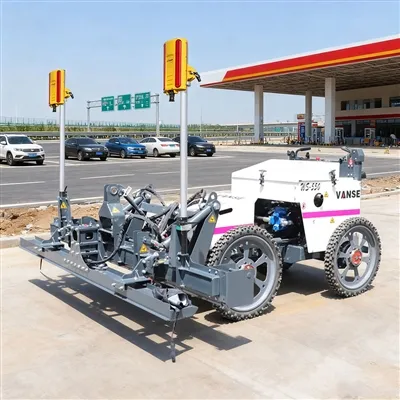
The equipment is equipped with a HONDA GX690 engine with a power of 18.4kW (25HP). It uses gasoline as fuel. The 20L fuel tank capacity can ensure that the equipment can operate stably for a certain period of time and provide reliable power for floor construction. This power configuration enables the equipment to operate stably for a long time in large-area floor construction scenes such as large industrial plants and commercial plazas, avoiding the impact of insufficient power on the construction progress.
(II) Leveling equipment
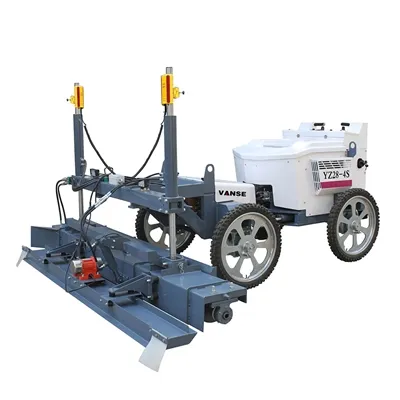
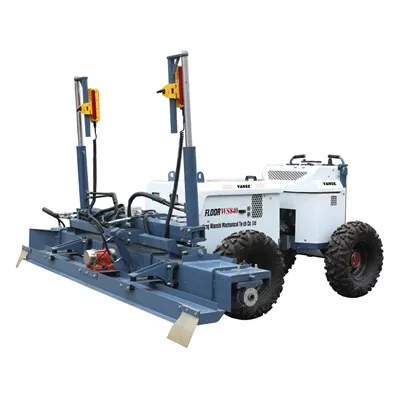
❶. **Vibration leveling equipment**:The vibration system of the equipment is driven by an electric motor with an excitation force of 2000N. After the concrete is poured, the equipment makes the concrete more compact through vibration, effectively eliminates the gaps and bubbles inside the concrete, and lays the foundation for creating a high-precision wear-resistant floor. In actual operation, this vibration leveling equipment can quickly and evenly process the concrete surface to ensure the flatness of subsequent construction.
❷. **Paving and leveling equipment**:It adopts hydraulic screw conveying paving mode with a leveling width of 2.5m (8.20ft). During the construction process, it can spread the concrete evenly and level it accurately. Whether it is indoor flooring or outdoor road flooring construction, this paving and leveling method can ensure that the thickness and flatness of the concrete meet high-precision requirements.
The equipment is equipped with two types of solid anti-skid tires and pneumatic wide tires. The net weight of the whole machine is 990kgs (2183lbs) and the overall dimensions are 3600x3000x1650mm (11.81×9.84×5.41ft). Such tire configuration and body specifications enable the equipment to move flexibly and operate stably under different ground conditions, such as on rough construction site floors or smooth indoor floors.
🎄 2. Construction process
(I) Construction preparation
Before construction, the construction site needs to be accurately measured and cleaned. At the same time, debug the construction equipment to ensure that the engine is running normally, the vibration system and hydraulic system are in good performance, and the laser receiving device can accurately receive signals, so as to make full preparations for construction.
(II) Concrete pouring
The mixed concrete is transported to the construction site for pouring, and the pouring thickness and speed of the concrete are controlled to provide a good foundation for subsequent leveling operations.
(III) Laser leveling
The laser transmitter is used to establish a reference plane. After the laser receiver on the equipment receives the signal, the scraper height is automatically adjusted. Through the hydraulic screw conveying paving mode, precise leveling is performed according to the leveling width of 2.5m (8.20ft). At the same time, the vibration system works with an exciting force of 2000N to make the concrete dense and the surface flat.
(IV) Spreading and finishing of wear-resistant materials
When the floor concrete is initially set, evenly spread the wear-resistant material. Afterwards, professional equipment is used to perform surface finishing treatment to make the floor surface smooth and flat, improve the wear resistance and aesthetics of the floor, and complete the one-time molding construction of high-precision wear-resistant floor without cutting.
🎄 3. Technical advantages
(I). **High precision**:
With the help of laser leveling technology and advanced equipment, the flatness of the floor can be accurately controlled, and the error can be controlled within a very small range, meeting the needs of various places with extremely high requirements for floor accuracy, such as precision instrument manufacturing workshops, electronic production workshops, etc.
(II). **Free cutting**:
By optimizing the concrete mix ratio and construction process, the generation of floor cracks is effectively reduced, and free cutting construction is achieved, which not only improves the overall aesthetics of the floor, but also reduces the subsequent maintenance costs.
(III). **High efficiency**:
The high-performance parameters of the equipment, such as the powerful engine, efficient hydraulic paving system and stable vibration system, ensure the rapid advancement of construction, greatly shorten the construction period and improve construction efficiency.
(IV). **Strong adaptability**:
Equipment equipped with two types of tires can adapt to different working site conditions, whether indoors or outdoors, dry or wet ground, can stably and efficiently complete construction tasks.
About the Author: Shandong Vanse Machinery Technology Co., Ltd.
Shandong Vanse Machinery Technology Co., Ltd. is a high-tech manufacturer specializing in concrete construction machinery, including laser screeds and related equipment. The company integrates R&D, production, and global sales, with products exported to over 60 countries and widely used in infrastructure projects worldwide.
Analysis of the Causes of Unstable Laser Signals in Concrete Laser Leveling and Treatment Measures
The following is a detailed answer to the analysis of the causes of unstable laser signals in Concrete Laser Leveling and the corresponding treatment measures. Unstable laser signals are one of the common faults in the construction of Concrete Laser Leveling, which will directly lead to a decrease in the leveling accuracy and affect the flatness and quality of the floor. It is of vital importance to quickly locate and solve problems. The main causes of unstable laser signals come from four aspects: the laser emitter, the signal receiver, the external environment and the machinery itself. Power supply issue: Insufficient battery power or poor contact of the power adapter leads to unstable power supply to the laser and fluctuations in output power. Laser itself malfunction: Aging, damage of the laser module or loosening or contamination of internal optical components (such as lenses) can cause the beam to diverge or drift. Unstable reference point: The tripod of the laser emitter is not stably set up and may slightly move or sink under the influence of wind or human touch. Automatic calibration failure: The calibration system of the transmitter with self-leveling function (such as pendulum, magnetic damping or electronic sensor) malfunctions and cannot maintain a stable level reference. Power connection issue: The connection cable between the receiver and the main body of the leveler is loose, poorly connected or damaged. Sensor failure: The photoelectric sensor on the receiver is aged, its sensitivity has decreased, or it is covered with dirt (dust, cement slurry), making it impossible to accurately identify the laser signal. Improper installation: The receiver is not correctly installed on the mast, or there is severe vibration at the installation position, which affects signal reception. Strong light interference: The intense sunlight at noon, especially its infrared spectrum, can interfere with the receiver's recognition of laser signals. Obstruction: Temporary obstructions such as scaffolding, personnel, and equipment at the construction site block the laser beam, causing signal discontinuity. Vibration interference: There are large equipment (such as excavators, heavy trucks) operating nearby, or the laser emitter is set up on a platform with obvious vibration, causing the reference optical path to jitter. Atmospheric disturbance: At super-large construction sites, heat waves caused by high ground temperatures can lead to uneven air density, resulting in slight refraction and jitter of laser beams. Mechanical vibration: If the engine of the Leveling machine operates unsmoothly or the hydraulic system vibrates excessively, the vibration will be transmitted to the receiver, introducing signal noise. Electrical system interference: The generator, frequency converter or high-current circuit of the leveling machine itself generates electromagnetic interference, affecting the sensitive receiver circuit. Follow the principle of "from simple to complex and from outside to inside" in the investigation. Check the power supply: Ensure that the laser emitter is fully charged and all power connections are firm and reliable. Clean and inspect optical components: Use dedicated lens cleaning paper to clean the output lens of the laser emitter and the sensor window of the receiver. Stable reference: Confirm that the laser emitter tripod is firmly set up on a solid floor and kept away from vibration sources. Use counterweights to stabilize the tripod when necessary. Eliminate environmental interference Shading: Install a sunshade on the receiver to prevent direct exposure to strong light. Obstacle clearance: Inspect and clear all possible obstacles along the laser propagation path. Vibration avoidance: Suspend operations that generate strong vibrations nearby or move the position of the laser emitter. 5. Restart the system: Turn off the power of the laser emitter and the leveler, wait for one minute, and then restart to reset the electronic system. 6. Calibration check Manually rotate the transmitter to check if it can provide a stable signal throughout the entire 360-degree range. Use professional tools to check whether the automatic leveling function of the laser emitter is normal. If necessary, send it for repair and calibration. 7. Substitution method test Install the receiver on another confirmed normal level machine for testing. If the problem persists, it indicates that the receiver is faulty. Replace it with a confirmed normal laser emitter. If the problem is solved, the original emitter needs to be repaired. 8. Inspect the cables and connections: Carefully check all the cables from the receiver to the main controller for any signs of compression, wear or breakage, and reinsert all the connectors. 9. Seek professional support: If none of the above steps can solve the problem, it is very likely that there is a hard fault with the electronic components inside the laser or the receiver. At this point, you should immediately contact the after-sales service department of the equipment manufacturer (such as Shandong Wansai Technology) for diagnosis and repair by professional technicians. Do not disassemble the core components by yourself. Regular maintenance: Clean and calibrate the laser transmitter and receiver regularly in accordance with the operation manual. Standard operation: Set up and move the equipment correctly to avoid violent impacts. On-site investigation: Observe the on-site environment before construction, plan the installation position of the laser emitter in advance, and avoid potential interference sources. Backup equipment: For critical projects, it is recommended to prepare backup laser transmitters or receivers to deal with sudden malfunctions. Through systematic analysis and step-by-step investigation, the problem of unstable laser signals of concrete Laser Leveling machines can be efficiently solved, ensuring the quality and efficiency of construction. Note: The parameters provided in this document are for reference only and are not mandatory. Due to differences in technical characteristics between different brands and models of laser levelers, please consult the manufacturer for a suitable solution before actual operation. This reference document assumes no responsibility for any issues arising from failure to follow the manufacturer's instructions.
Read More
March 26, 2024
In actual construction, what performance indicators should the construction unit evaluate based on specific needs?
1. Adaptability and adjustability of the construction site The on-site adaptability and adjustability of the concrete laser leveling are also very important evaluation indicators. An excellent leveling should be able to adjust quickly and maintain stable performance in different construction site environments. Terrain adaptability: The equipment should be able to adapt to different terrain conditions, such as slope, height inequality. Equipment with strong terrain adaptability can maintain efficient grading operations in complex construction environments. Material adaptability: Different concrete materials have different characteristics, such as viscosity, fluidity, etc. The equipment should be able to adapt to the characteristics of different concrete materials to ensure smoothing results. Adjustability: Various parameters of the equipment, such as leveling speed, laser ranging range, etc., should be easily adjusted to adapt to different construction needs. 2. Safety and protective measures Safety and protective measures are also aspects that cannot be ignored when evaluating concrete laser levelings. Safety design: The equipment should have good safety design, such as emergency stop buttons, protective covers, etc., to ensure the safety of operators. Fault warning and protection: The equipment should have fault warning and protection functions, which can issue timely warnings when equipment malfunctions or abnormal conditions occur, and take protective measures to prevent accidents. 3. Cost-benefit analysis When evaluating a concrete laser leveling, you also need to consider its cost-effectiveness Purchase cost: Different brands and models of concrete laser levelings may have different purchase costs, which need to be considered comprehensively based on the budget. Operating costs: Operating costs include equipment maintenance, consumable replacement, operator training, etc., and are also factors that need to be considered when evaluating the cost-effectiveness of equipment. Long-term return: Considering the service life and long-term return of the equipment, it is a wiser choice to choose equipment with stable performance and strong durability. 4. After-sales service and support Excellent after-sales service and support can ensure that the equipment is maintained and maintained in a timely manner during use and ensure the normal operation of the equipment. After-sales service network: Evaluate whether the after-sales service network of the equipment manufacturer or seller is complete and whether it can provide timely technical support and maintenance services. Warranty period and maintenance policy: Understand the warranty period and maintenance policy of the equipment to ensure that the equipment can be handled in a timely manner when it fails. 5. Market feedback and user evaluation Understanding the reviews and feedback of other users on the market about concrete laser levelings can help to more fully evaluate the performance of the equipment. Market reputation: Understand the reputation and user reviews of the device in the market by consulting relevant forums, social media and other channels. Professional evaluation: Refer to the evaluation reports of concrete laser leveling machines by professional organizations or media to understand the performance, advantages and disadvantages of the equipment. To sum up, evaluating the performance indicators of concrete laser leveling requires comprehensive consideration from multiple dimensions. Through a comprehensive evaluation of the equipment's leveling efficiency, flatness accuracy, equipment stability, laser control system, energy consumption and environmental protection, ease of operation, maintenance and upkeep, durability and lifespan, adaptability and adjustability of the construction site, Safety and protective measures, cost-benefit analysis, and after-sales service and support can provide comprehensive decision-making support for construction units to choose the appropriate concrete laser leveling. At the same time, paying attention to market feedback and user evaluations will also help to understand the actual performance and user satisfaction of the equipment, and provide a reference for the selection and use of equipment.
Read More
February 29, 2024
How to optimize the performance & stability of laser receivers?
Optimizing laser receiver performance and stability requires consideration of the following aspects: 1. Select high-performance optical components: Selecting high-quality optical components can reduce problems such as scattering, reflection, and aberration in the optical path, thereby improving the sensitivity and stability of the receiver. 2. Improve the detection efficiency of the receiver: Using efficient photoelectric detectors can improve the detection efficiency of the receiver, thereby improving the sensitivity and dynamic range of the receiver. 3. Optimize the optical system design: Optimizing the optical system design can reduce the beam divergence angle and improve the beam quality, thereby reducing the noise and dynamic range limitations of the receiver. 4. Add temperature control and compensation mechanisms: By adding temperature control and compensation mechanisms, the impact of ambient temperature on receiver performance can be reduced and the stability and reliability of the receiver can be improved. 5. Implement regular maintenance and calibration: Maintaining and calibrating the receiver regularly can ensure its long-term stability and reliability. 6. Optimize circuit design: Optimizing circuit design can improve the response speed of the receiver, reduce noise and distortion, thereby improving the performance of the receiver. 7. Strengthen production process control: Strengthening production process control can improve the manufacturing quality of the receiver, thereby reducing the performance difference between batches. 8. Select appropriate interfaces and connection methods: Selecting appropriate interfaces and connection methods can reduce signal attenuation and distortion, thereby improving receiver performance. To sum up, optimizing the performance and stability of the laser receiver requires consideration of many aspects, including hardware, software, and production processes.
Read More
Online now. Replies personally on WhatsAppFionaCustomer specialist
Hi! I am here to help you find the right solution for your project.
You can share your product, capacity, or project needs. Our specialist will help you work out the next step.
Would you like a quick answer? Tap below to speak directly with our specialist on WhatsApp.