Technical Knowledge
The ‘beauty’ work of the ground depends on the laser leveling machine (2)
May 4, 2023
The "beauty" work of the ground depends on the laser leveling machine (2)
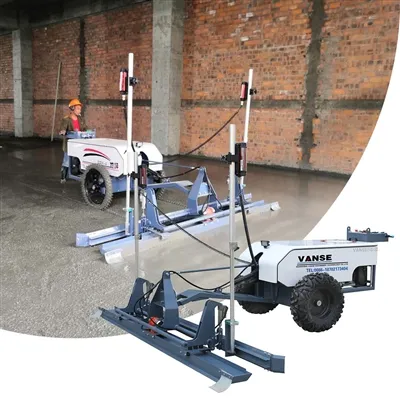
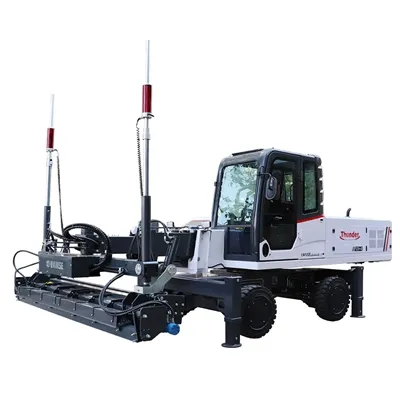
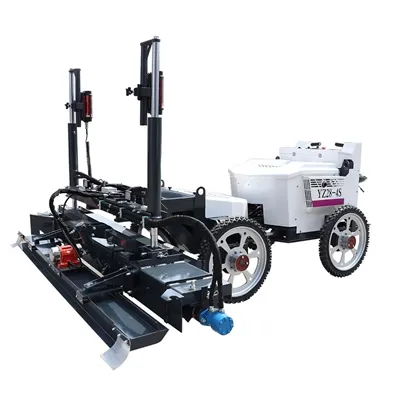
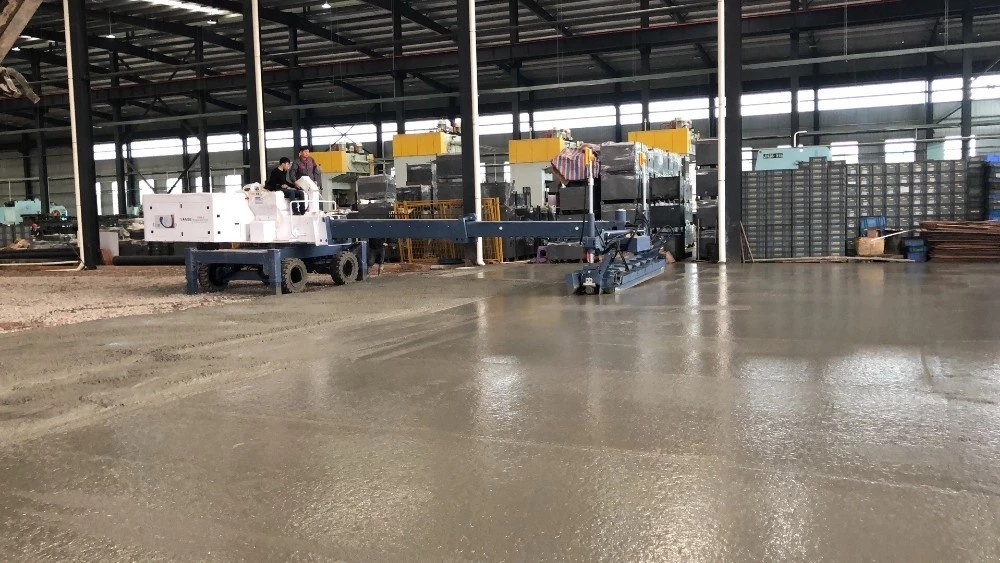
In detail, after reading the previous article, you already know a little about laser leveling machines. Some environments that require relatively high ground flatness, such as: shopping malls, airports, etc., and it is no longer suitable to continue construction by manually grinding the ground Because this will greatly affect the efficiency and quality of the work, the concrete laser leveling machine alone will take the lead.
Reasonable workload
The size and nature of the working load of the concrete laser leveling machine have an important influence on the loss process of the machine. In general, the wear of parts increases proportionally with the load. Wear increases when a part is subjected to higher than average design loads. In addition, when other conditions are the same, the stable load has less wear, less failure and lower life than the dynamic load.
Ensuring the normal working load mainly depends on the operator's use of the concrete laser leveling machine.
One must pay attention not to work under the maximum load that the machine can bear, and use the machine within its capacity. As the manager of the concrete laser leveling machine, when appointing the operator, the random information and operation manual of the concrete laser leveling machine should be handed over to the operator, so that they can normally grasp the mechanical properties and operating procedures, and should not be arbitrarily assigned Relevant information is withheld.
Second, try to ensure the uniform addition and subtraction of the mechanical load, so that the machinery is in a relatively gentle load change. Specifically, it is necessary to increase and decrease the throttle more evenly to prevent the engine and working devices from fluctuating greatly.
Use lubricating oil scientifically
According to statistics, more than half of the failures of concrete laser leveling machines are caused by poor lubrication. Due to the precision of the parts of the concrete laser leveling machine, good lubrication can maintain a normal working gap and a suitable working temperature, thereby reducing the wear of the parts and reducing mechanical failures. Normal and reasonable lubrication is one of the effective measures to reduce mechanical failures. For this reason, one is to choose lubricants reasonably. During use, neither low-grade lubricants nor other types of lubricants can be used instead, let alone inferior products. The second is to always check the quantity and quality of lubricants.
Timely maintenance and repair
Various failures will inevitably occur during the use of the concrete laser leveling machine. Among these failures, some failures may have a slight impact on mechanical equipment, while some are more serious, and may even cause major accidents such as machine crashes and human deaths.
Experience has shown that major mechanical failures are often caused by minor failures. The reason is that the timely disposal of minor faults has been neglected. Therefore, for mechanical failures, regardless of their size, they should be eliminated in time, so as to maintain the normal performance of the machinery and reduce the possibility of causing larger failures.
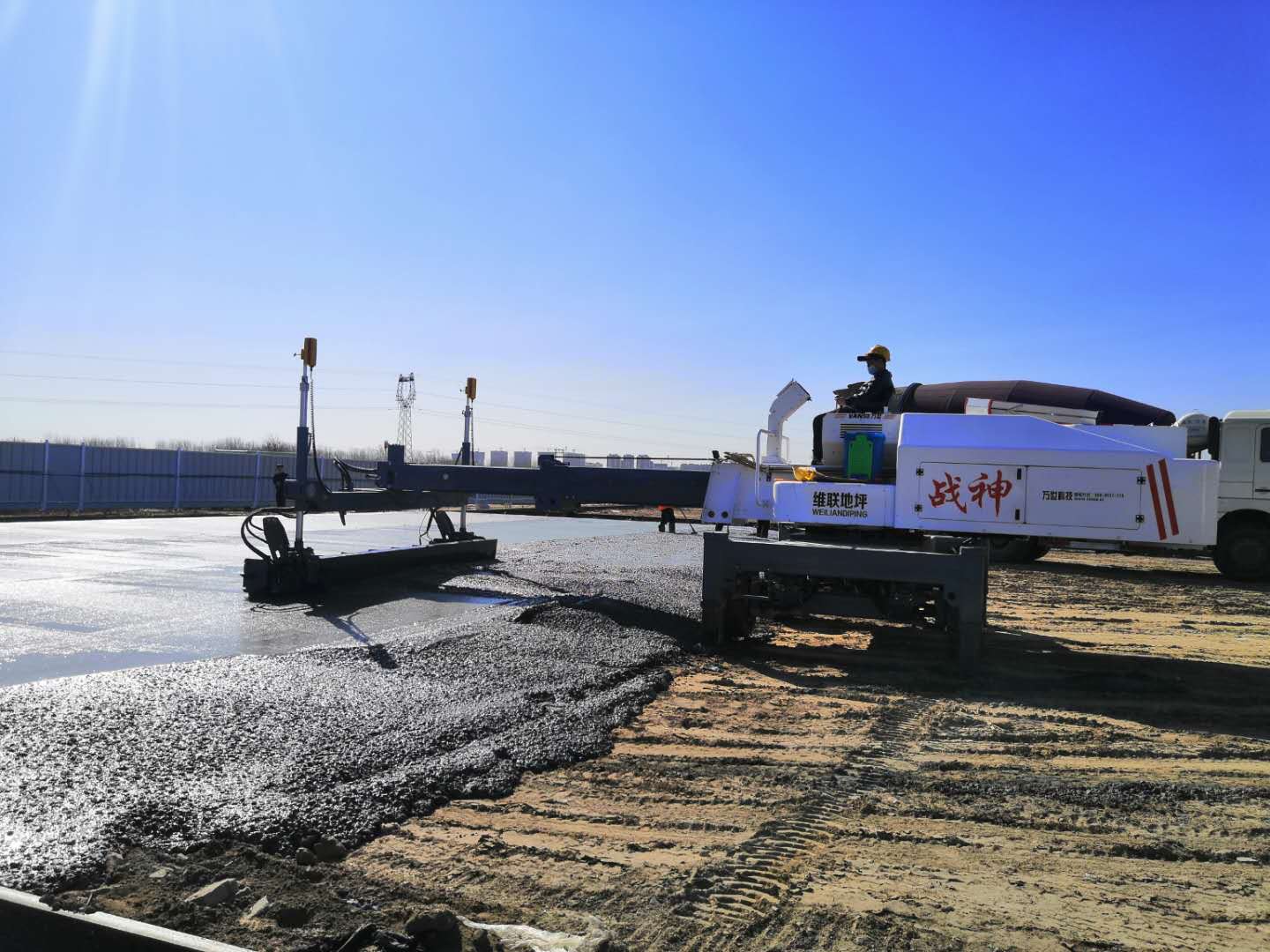
Thanks to All the Friends Who Support and Trust Shandong Vanse Machinery Technology Co., Ltd.
If you want to know more about Shandong Vanse Machinery Technology Co., Ltd. or have any questions, please feel free to contact us:
Our Factory
Shandong Vanse Machinery Technology Co., Ltd.


About the Author: Shandong Vanse Machinery Technology Co., Ltd.

Shandong Vanse Machinery Technology Co., Ltd. is a high-tech manufacturer specializing in concrete construction machinery, including laser screeds and related equipment. The company integrates R&D, production, and global sales, with products exported to over 60 countries and widely used in infrastructure projects worldwide.

Shandong Vanse Machinery
Leading manufacturer specializing in high-performance concrete laser screeds, telescopic arm flatwork handlers, and mechanical ride-on power trowels.
Post overview
Main PRODUCT Categories
Need Machine Guidance?
Speak directly with Shandong Vanse field specialists for tailored equipment quotes and site planning.
Contact Us TodayRelated Articles
You Might Also Like
November 10, 2025
The impact of the maturity of the rental market on the sales strategies of power trowels and the business models of manufacturers
The maturity of the leasing market is a core variable influencing the construction machinery industry, especially for equipment like power trowels. It will have a fundamental impact on the sales strategies and business models of manufacturers. Let's explore this influence in detail in two parts below. The maturity of the rental market directly changes who the manufacturers' "customers" are and how they deal with them. Target customers: mainly end users, such as construction team leaders, individual contractors, and small and medium-sized construction companies. Core of sales strategy Price-driven: Customers are extremely sensitive to prices, and their purchase decisions are mainly based on the initial purchase cost. Function and durability promotion: Emphasize the basic functions, power and "durability" of the product, as the equipment is used and maintained by the owner themselves, and what they care about is "how long it can be used without recouping the cost". Channel penetration: Relying on a wide network of distributors to cover scattered end customers, providing timely in-stock purchases and basic after-sales services. Marketing methods: mainly offline stores, industry exhibitions, and referrals from acquaintances. Target customers: Professional leasing companies have become core major customers (such as United Leasing, Solar Belt Leasing, etc.), as well as large contractors. Core of sales strategy Value and total cost of ownership driven: Price is no longer the only factor. Leasing companies are more concerned about the total cost of ownership, including: Reliability & Attendance Rate: Does the machine rarely break down? Because idle machines mean a loss of rent. Maintenance convenience & Service Cost: Is it easy to maintain on a daily basis? Are the components cheap and readily available? Residual value: How much can the equipment still be sold for after several years of use? This is directly related to the asset return of the leasing company. Standardization and universality: Leasing companies hope that for products of the same brand or even the same platform, their operation methods, maintenance procedures and components can be as universal as possible to reduce training costs and inventory pressure. Direct sales to major clients and customization: Manufacturers will establish dedicated major client teams to directly connect with large leasing companies, and even provide customized products based on their specific needs (such as special color markings, software interfaces, and security configurations). Data and service support: Remote data monitoring (optional) is provided to assist leasing companies in managing equipment fleets, predicting maintenance times, and optimizing equipment deployment The maturity of the rental market has not only changed "what to sell" and "to whom to sell", but also profoundly promoted the transformation of manufacturers' "who I am". Core model: Production, manufacturing and sales The core of a manufacturer is to produce a product and then sell it. The business chain is basically over at this point. The profits mainly come from the sales of new machines. After-sales service is a cost center, and its main purpose is to support sales and prevent customer complaints. The rise of the rental market has forced manufacturers to transform from mere "equipment manufacturers" to "comprehensive solution providers". Model Evolution One: From selling products to operating assets Manufacturers have realized that their equipment is the "asset" that leasing companies use to make money. Therefore, they need to ensure that this asset can operate efficiently and economically throughout its entire life cycle. This has given rise to an extreme pursuit of reliability, durability and residual value management. Manufacturers will proactively release residual value reports and design products that are easy to refurbish to maintain their brand's value in the second-hand market. Model Evolution Two: Financial Services Become a key pillar Financial companies affiliated with or cooperating with manufacturers have become crucial. They offer to leasing companies: Flexible financial leasing solutions help it expand its fleet. Credit support helps its customers (end tenants) rent equipment more easily. This is not only a tool to boost sales, but also a source of profit in itself. Model Evolution Three: The proportion of after-market and service revenue has increased The new machine sales market fluctuates with the economic cycle, but the large fleet of existing equipment brings stable after-market income. Manufacturers actively sell original factory parts, repair services, extended warranties and maintenance contracts. The profit margins of these businesses are usually higher than those of new machine sales. Services have transformed from a "cost center" to a "profit center". Model Evolution Four: Exploration of Datafication and Service Orientation By installing sensors on the equipment, manufacturers can offer: Remote diagnosis and predictive maintenance can notify the leasing company in advance that the equipment may need repair, reducing unexpected downtime. Fleet management report helps leasing companies understand equipment utilization rate, fuel consumption, working hours, etc., and optimize business decisions. This initiated an upgrade in the business model from "selling hardware" to "selling hardware + services + data". Model Evolution Five: Entering the second-hand equipment and leasing business Some powerful manufacturers (such as Caterpillar) establish official certification and resale channels for used equipment, which helps control residual value and provides customers with full life-cycle options. A few manufacturers may even directly enter the market, operate their own leasing businesses, compete or cooperate with downstream customers, and gain a deeper understanding of market demands. Dimension A low-maturity rental market A highly mature rental market Core customers Scattered end users Large leasing companies, major contractors Competitive focus Price, basic functions TCO (Total Cost of Ownership), reliability, residual value Product Strategy It meets basic needs with a wide variety of models Platform-based, standardized and customizable Sales relationship One-time transaction, through the distributor Strategic cooperation, direct management of major clients Source of profit It mainly relies on the sales of new models New machine sales + after-market services + financial services Service role Cost center, supporting sales Profit center, independent business segment Business model Equipment manufacturer Provider of equipment asset management and solutions The maturity of the leasing market is a key force driving the evolution of the power trowel machine and even the entire construction machinery industry. It forces manufacturers to shift their focus from one-time sales of products to the value of operating equipment throughout its entire life cycle. In mature markets, the competition among manufacturers is no longer a simple price war, but a comprehensive ecological competition concerning brand reputation, service networks, financial support and digital capabilities. For manufacturers who want to enter or establish themselves in mature markets such as North America and Europe, understanding and adapting to these rules of the game is a prerequisite for success. Note: The parameters provided in this document are for reference only and are not mandatory. Due to differences in technical characteristics between different brands and models of laser levelers, please consult the manufacturer for a suitable solution before actual operation. This reference document assumes no responsibility for any issues arising from failure to follow the manufacturer's instructions.Read More
June 3, 2024
Key points for quality control of diamond wear-resistant floor construction
What are the key points of quality control in the construction of diamond wear-resistant flooring? With the continuous development of the industrial and commercial fields, diamond wear-resistant flooring is increasingly widely used in factories, warehouses, parking lots and other places due to its high strength, wear resistance, anti-slip and beautiful appearance. However, the construction quality of diamond wear-resistant flooring is directly related to its service life and performance. Therefore, it is very important to strictly control the key points of quality during the construction process. This article will elaborate on the key points of quality control in the construction of diamond wear-resistant flooring in order to provide a useful reference for the majority of construction personnel. 1. Material selection and testing standards The selection of materials is the basis for ensuring the quality of diamond wear-resistant flooring. First of all, high-quality diamond aggregates that meet national standards should be selected to ensure that their performance indicators such as hardness, wear resistance, and particle size distribution meet the requirements. Secondly, a high-performance special binder for wear-resistant flooring should be selected to ensure that it has good bonding properties with diamond aggregates. Finally, for other auxiliary materials required for construction, such as interface agents and sealants, products with reliable quality and stable performance should also be selected. In terms of material testing, the materials such as diamond aggregate and binder entering the factory should be strictly inspected and accepted, including appearance inspection and performance testing. Materials that do not meet the requirements should be resolutely returned to ensure the qualification of the construction materials. 2. Base treatment and flatness requirements Base treatment is a key link in the construction of diamond wear-resistant floor. Before construction, the base should be thoroughly cleaned to remove oil, floating dust and other debris to ensure that the base is clean and dry. For bases with defects such as cracks and potholes, repairs and leveling should be carried out to ensure that the base is flat and dense. Flatness is one of the important indicators for evaluating the quality of diamond wear-resistant floor. During the construction process, the flatness should be strictly controlled to ensure that the surface of the floor after construction is flat and smooth. To this end, mechanical grinding, scraping and other methods can be used to pre-treat the base to improve the flatness of the base. 3. Construction environment and temperature and humidity control The construction environment has a significant impact on the quality of the gold side sand floor. During the construction process, the construction environment should be kept dry and well ventilated to avoid construction in a humid and rainy environment. At the same time, the temperature of the construction site should be strictly controlled to avoid construction under conditions of too high or too low temperature, so as not to affect the curing speed of the material and the performance of the floor. In addition, temperature is also a key factor affecting the construction quality. In a high temperature environment, the moisture in the material is not easy to volatilize, which may cause problems such as sanding and opening of the floor. Therefore, the material ratio and construction process should be adjusted according to the ambient temperature during construction to ensure the quality of the floor. 4. Construction process and technical points The construction process of diamond wear-resistant floor includes primer construction, diamond aggregate spreading, wear-resistant layer construction, sealing treatment and other steps. In each step, the construction specifications should be strictly followed to ensure the construction quality. In the primer construction, the primer should be ensured to be uniform and leak-free to enhance the adhesion between the floor and the base. The spreading of diamond aggregate should be uniform and appropriate to avoid problems such as uneven thickness and aggregate accumulation. The construction of the wear-resistant layer should be carried out in multiple times, and polishing and trimming should be carried out in time after each construction to ensure that the floor surface is flat and smooth. Finally, sealing treatment is carried out to improve the wear resistance and aesthetics of the floor. In terms of technical points, the following points should be noted: First, control the construction speed to avoid quality problems caused by too fast or too slow; second, ensure the cleanliness and integrity of the construction equipment to avoid equipment failure affecting the construction quality; third, strengthen on-site construction management to ensure the continuity and stability of the construction process. 5. Post-maintenance and hardening period management After the construction of diamond wear-resistant floor is completed, it needs to be maintained and hardened for a certain period of time. During the maintenance period, the floor surface should be kept dry and clean to avoid damage to the floor by liquids such as water and oil. At the same time, heavy rolling or mechanical operation on the floor should be avoided to avoid damage to the floor. The hardening period is a critical period for the formation of floor strength and wear resistance. During the hardening period, the maintenance and care of the floor should be strengthened to ensure its normal curing. After the hardening period, the floor can be comprehensively inspected to ensure that it meets the design requirements. 6. Quality inspection and acceptance standards Quality inspection is an important means to ensure the construction quality of diamond wear-resistant floor. During and after the construction, the floor should be regularly inspected for quality, including flatness, hardness, wear resistance, compressive strength and other indicators. For parts that do not meet the requirements, rectification and treatment should be carried out in a timely manner. Acceptance standards are an important basis for evaluating the construction quality of diamond wear-resistant floor. During the acceptance process, acceptance should be carried out in strict accordance with national standards and design requirements to ensure that all indicators of the floor meet the requirements. For floors that fail the acceptance, they should be rejected and the construction unit should be required to make rectifications. 7. Common problems and preventive measures During the construction of diamond wear-resistant floor, common problems such as sanding, cracking, and unevenness may occur. The occurrence of these problems is often related to factors such as material quality, construction technology, and environmental conditions. Therefore, during the construction process, effective preventive measures should be taken to avoid the occurrence of these problems. For the problem of sanding, reliable diamond aggregate and binder can be selected to ensure that the material has good bonding properties. At the same time, strengthen the base treatment to improve the density and flatness of the base. For cracking problems, the construction speed and temperature should be controlled to avoid construction at too fast or too high a construction speed and too high or too low a temperature. In addition, strengthen the post-maintenance and hardening period management to ensure the normal solidification of the floor. Unevenness is an important factor affecting the aesthetics and performance of the floor. In order to prevent the occurrence of unevenness, the flatness of the base layer should be strictly controlled, and the base layer should be pre-treated by mechanical grinding, scraping and other methods. In addition to the above-mentioned aspects, the quality control points of diamond wear-resistant floor construction also involve the professional quality of construction personnel, the selection and maintenance of construction equipment, and safety management during construction. These aspects will be further elaborated below. First of all, the professional quality of construction personnel is crucial to ensuring construction quality. Construction personnel should undergo professional training, be familiar with the construction process and technical requirements of diamond wear-resistant floor, and be able to master the operation methods of construction equipment. At the same time, construction personnel should also have a high sense of responsibility and a rigorous work attitude, operate strictly in accordance with construction specifications, and ensure that each construction step meets quality requirements. Secondly, the selection and maintenance of construction equipment are also key factors affecting construction quality. Construction equipment with stable performance and easy operation should be selected to ensure that the equipment can operate normally during the construction process. At the same time, regularly maintain and service the construction equipment, check the wear and performance of the equipment, replace damaged parts in time, and ensure the integrity and reliability of the equipment. In addition, safety management during the construction process is also an aspect that cannot be ignored. Strict safety management systems and operating procedures should be formulated to ensure the personal safety of construction personnel and the stable operation of construction equipment. Obvious safety warning signs and protective measures should be set up at the construction site to avoid safety accidents. At the same time, safety education and training should be carried out for construction personnel to improve their safety awareness and self-protection ability. In the construction process of diamond wear-resistant floor, attention should also be paid to environmental protection and energy saving. Select materials and construction equipment with good environmental performance to reduce the emission of pollutants such as noise and dust during construction. At the same time, optimize the construction process and process, reduce energy consumption and resource consumption, and achieve green construction and sustainable development. In summary, the quality control points of diamond wear-resistant floor construction involve many aspects, which require the cooperation and guarantee of construction personnel, equipment, materials, environment and other aspects. Only under the premise of strictly controlling the quality points of each construction link can the construction quality and performance of diamond wear-resistant floor be guaranteed to reach the expected goals. Finally, it should be emphasized that the construction quality control of diamond wear-resistant flooring is not only related to the current use effect, but also to its long-term service life and performance. Therefore, construction units and construction personnel should always adhere to quality as the core, user demand as the guide, and continuously improve their own technical level and professional quality to provide users with more high-quality and reliable diamond wear-resistant flooring products and services. Before concluding this article, it should also be pointed out that with the continuous advancement of science and technology and the continuous innovation of construction technology, the construction quality control of diamond wear-resistant flooring will continue to face new challenges and opportunities. In the future, we should continue to strengthen the research and exploration of diamond wear-resistant flooring construction technology, continuously improve and optimize construction technology and processes, improve construction quality and efficiency, and make greater contributions to promoting the healthy development of the flooring industry. In summary, the key points of quality control of diamond wear-resistant flooring construction are a complex and systematic project, which requires us to strictly control every link in the construction process, pay attention to details and standardization. Only in this way can we ensure that the quality and performance of diamond wear-resistant flooring are in the best state and create a safe, comfortable and beautiful use environment for users.Read More
October 20, 2025
The detection methods and acceptance standards for the flatness and smoothness of the floor after the construction by the concrete laser leveling machine
The detection methods and acceptance standards for the flatness and smoothness of the floor after the construction by the concrete laser leveling machine are a very professional and important issue. Although laser levelings can achieve extremely high quality standards, the final acceptance relies on objective data. The following are the detailed testing methods and acceptance criteria: Flatness is the greatest advantage of the laser leveling machine, and its acceptance criteria are much higher than those of traditional processes. Straightedge and feeler gauge method (traditional, commonly used) Tools: 2-meter or 3-meter national standard straightedge (or electronic straightedge), feeler gauge. Method: Place the straightedge steadily on the ground and use a feeler gauge to measure the maximum gap between the bottom of the straightedge and the ground. At least 10 points should be measured in the same area (such as a slab or a room), and the measurement points should be randomly distributed and cover key parts such as the edges of walls and the bases of columns. Advantages: Simple tools, convenient operation and intuitive. Disadvantage: It reflects local "wavy" undulations and cannot accurately measure the overall flatness of a large area. Level or total station measurement method (elevation method) Tools: High-precision level, tower ruler or total station. Method: Set up measurement points on the ground in a certain grid (for example, 1m×1m or 2m×2m), measure the elevation value of each point with a level, and then calculate the height difference between any two points or the standard deviation of the entire area. Advantages: The data is precise and can generate an elevation map of the entire ground, making it the most scientific. Disadvantages: It takes a long time and requires high technical skills from the operators. F-Number System (Internationally recognized and the most scientific method) This is the method stipulated in the ASTM E1155 standard of the United States. It is currently the mainstream and highest standard for evaluating the flatness of the floor internationally, and is particularly suitable for high-standard floors constructed by laser levelings. Tools: Specialized floor profile meters (such as DipStick, DynaPulse, etc.) or continuous inertial profile measurement vehicles. Evaluation index F<sub>F</sub> value (flatness value) : It measures the undulation of the large wavelength (>600mm) of the floor, reflecting the degree of "tilt" or "wave" of the floor. The larger the F<sub>F</sub> value, the flatter the overall floor. F<sub>L</sub> value (levelness value) : It measures the undulation of the small wavelength (<600mm) of the floor surface, reflecting the degree of "roughness" or "micro-vibration" of the floor surface. The larger the F<sub>L</sub> value is, the smoother the local area of the floor will be. Method: Measurement and calculation are carried out by professionals and equipment in accordance with standard procedures. Domestic traditional standard (ruler method Ordinary industrial floor: Within a 2-meter straightedge range, the flatness deviation is ≤ 4mm. High-standard industrial floor /VNA ultra-flat floor: Within a 2-meter straightedge range, the flatness deviation is ≤ 2mm. For VNA flooring, it is usually required to be ≤ 1.5mm / 2m. International F-Number Standard (Recommended for high-standard projects) Ordinary industrial floor: F<sub>F</sub> 20 / F<sub>L</sub> 15 High-standard warehouse/logistics center: F<sub>F</sub> 35 / F<sub>L</sub> 25 VNA narrow channel library/super flat floor: F < sub > F < / sub > 50 / F < sub > L < / sub > 40 or higher (F < sub > F < / sub > 60 / F < sub > L < / sub > 50) Commercial floor (such as supermarkets) : F<sub>F</sub> 25 / F<sub>L</sub> 20 Note: The specific F value should be clearly stipulated in the project contract or design documents. Smoothness is a comprehensive concept, encompassing appearance, wear resistance, dust resistance, etc., and it is more dependent on visual inspection and functional acceptance. Visual inspection method Method: Observe the floor surface from different angles under well-lit conditions. Inspection contents Color uniformity: Whether the surface color is consistent, and whether there are obvious color differences, water marks, excessive or insufficient cement slurry. Defects: Whether there are honeycombs, pitted surfaces, holes, peeling, sanding, or exposed stones. Cracks: Check for visible plastic shrinkage cracks and dry shrinkage cracks to the naked eye. Focus on inspecting corners and areas with stress concentration. Bubbles: The quantity and size of surface bubbles. Generally, it is required that there should not be too many bubbles with a diameter greater than 2mm. Mark and gloss: Whether the surface is smooth and if there are any obvious machine marks or manual marks. Hard object scratching method Tools: Keys, coins and other hard objects. Method: Use a hard object to scratch the surface with a certain force. Judgment: If only light white scratches are left, it indicates that the surface hardness is good. If there is obvious sand grain shedding or deep grooves, it indicates that the surface strength is insufficient and sanding may occur. Rebound instrument method Tool: Concrete rebound tester. Method: Indirectly calculate the strength of the floor surface through the rebound value. This method has certain errors and needs to be corrected in accordance with the standards. Judgment: The rebound value should meet the design strength requirements. Abrasion resistance test (Laboratory) For places with high wear resistance requirements, cores can be taken on-site and sent to the laboratory for "abrasion tests" (such as ASTM C779). Visual quality Color: The surface color is uniform and consistent, without obvious color differences or contamination. Defects: The surface is dense and smooth, free from quality defects such as honeycombing, pitting, cracks, sanding, peeling, and hollowing. Seam: The cutting seam should be straight, with uniform width and depth, and no missing edges or corners. Surface hardness and anti-dusting property Scratching with a hard object should not produce sanding or loose substances. In daily use, the movement of vehicles and the movement of people should not cause dust to rise on the ground. In addition to flatness and smoothness, the following indicators also need to be paid attention to Elevation and slope Tools: Level, total station. Standard: The allowable deviation between the measured elevation and the designed elevation is usually ±10mm. In areas with drainage requirements, the slope should comply with the design requirements and there should be no water accumulation. Levelness (not flatness) Tools: Laser leveler, level. Standard: It refers to the degree of inclination of the entire floor relative to the absolute horizontal plane. For equipment foundations with strict level requirements, the allowable error is very small (such as ±3mm/10m). Inspection items Main detection tools Reference for High-standard acceptance Flatness 2-meter straightedge, feeler gauge ≤ 2mm / 2m (Recommended ≤ 1.5mm / 2m) F-Number measurement system F<sub>F</sub> 50 / F<sub>L</sub> 40 (Applicable to VNA floor) Smoothness Visual inspection, hard object scratches The color is uniform, without cracks, sanding or holes, and there is no sanding when scratched Elevation Level, total station ±10mm Slope Level, total station It meets the design requirements and there is no water accumulation Important Notice Prior agreement: All acceptance criteria (especially the methods and standards for flatness) must be clearly stipulated in the contract before construction to avoid disputes later on. Comprehensive inspection: During the acceptance process, a combination of a thorough census and key spot checks should be conducted; it is not advisable to merely focus on a few points. Environmental conditions: The inspection should be carried out after the concrete has reached a certain strength and the surface should be cleaned thoroughly. For high-standard floors constructed by laser leveling machines, it is strongly recommended to introduce the F-Number system for acceptance, as it can most scientifically and comprehensively evaluate the quality and performance of the floor, especially suitable for projects with extreme requirements for the ground such as automated warehouses and logistics centers. Note: The parameters provided in this document are for reference only and are not mandatory. Due to differences in technical characteristics between different brands and models of laser levelers, please consult the manufacturer for a suitable solution before actual operation. This reference document assumes no responsibility for any issues arising from failure to follow the manufacturer's instructions.Read More