Technical Knowledge
How does the acceptance of concrete laser leveling machine reflect the reliability of equipment performance?
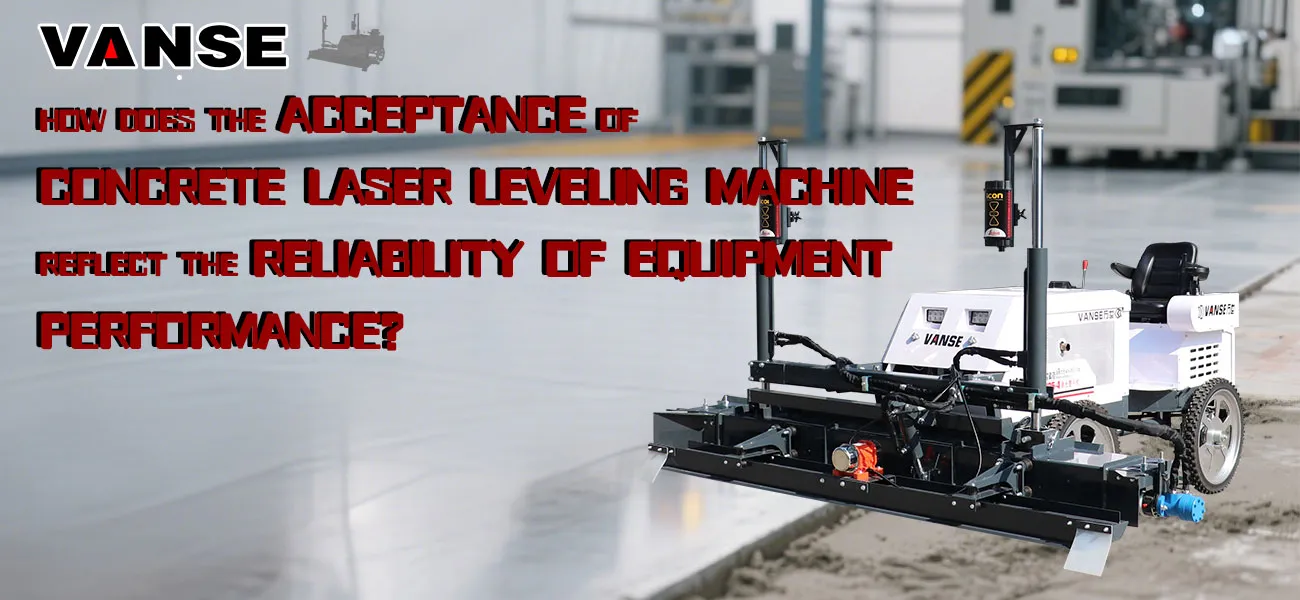
The acceptance of concrete laser leveling machines is a core step in verifying the reliability of equipment performance. This requires multi-dimensional verification through systematic testing, data verification, and operating simulation to ensure that the equipment meets design standards and construction requirements in key performance indicators such as accuracy, stability, durability, and safety. The reliability evaluation process can be broken down into the following five core acceptance dimensions, each with its own specific testing methods and reliability assessment criteria:
Ⅰ . Core performance: laser system and leveling accuracy acceptance (core reliability indicator)
The core value of a laser leveler lies in its "high-precision leveling." This dimension's acceptance directly determines whether the equipment can meet construction quality requirements and is the primary verification point for reliability. Acceptance requires a two-way verification of both "laser positioning accuracy" and "mechanical execution accuracy." The specific methods are as follows:
| Acceptance Project | Test Method | Reliability judgment criteria | Risk of failure (if not met) |
| Laser transmitter accuracy | 1. Place the laser transmitter on a horizontal reference point and use a precision level (accuracy ≥ 0.1mm) to calibrate the transmitter's levelness. | Within the full operating radius, the laser receiving height deviation is ≤±0.5mm; the deviation fluctuation during rotation is ≤0.3mm, and there is no "break" or "jump" phenomenon. | Unstable laser signals lead to deviations in the leveling height, resulting in ground height differences and substandard flatness, necessitating rework. |
| 2. Place a laser receiver at 10m/20m/30m (maximum operating radius of the coverage device) and record the receiving height deviation. | |||
| 3. Rotate the transmitter 360° and record the deviation value every 45°. | |||
| Leveling mechanism execution accuracy | 1. Simulate standard construction conditions (concrete slump 120-180mm) and cast a 3m×3m test block; | The flatness deviation of the 2m straightedge is ≤3mm/2m; the elevation deviation is ≤±2mm; the fluctuation of the 3 test data is ≤1mm, with no obvious dispersion. | Poor mechanical execution accuracy results in excessive ground flatness, affecting the subsequent construction of the wear-resistant layer or the use of the ground (such as storage and workshop floors). |
| 2. After the concrete has initially set, use a 2m straightedge to check the surface flatness (measure one point every 1m, for a total of 9 points) and use a laser leveler to check the overall elevation deviation; | |||
| 3. Repeat the test three times and compare the data consistency each time. | |||
| Slope control accuracy | 1. Set the slope mode of the laser transmitter (e.g. 2%, 5% bidirectional slope); | The deviation between the actual slope and the set slope is ≤±0.1%; the slope of the entire working surface is uniform, with no local "steep drops/sharp rises". | Failure of slope control results in poor ground drainage (such as roofs and outdoor areas), causing water accumulation and leakage problems. |
| 2. Measure one point every 2 meters along the diagonal direction of the test block and calculate the deviation between the actual slope and the set slope; | |||
| 3. Test the slope accuracy in both horizontal and vertical directions. |
Ⅱ. Power and Drive System: Stability and Responsiveness Acceptance (Reliability Assurance)
The power system (engine/motor) and drive system (travel and leveling roller drive) are the "power source" for continuous operation of the equipment. Their stability directly determines whether the equipment can cope with long-term, high-load construction and is the foundation of reliability. Acceptance requires a combination of "static parameter verification" and "dynamic operating condition testing":
1. Power system acceptance
Parameter verification: Check the engine/motor model, rated power, speed (e.g., diesel engine rated speed 2200-2800 rpm), output torque and other parameters to ensure they are consistent with the equipment manual to avoid "downgrading" and resulting in insufficient power.
Dynamic testing:
Run the machine at no load for 30 minutes, monitoring the power system speed fluctuation (≤±50r/min), oil temperature (≤85°C), and noise (≤95dB). No abnormal vibration or noise should be observed.
Run at full load (the leveling head is pressed into the concrete to a depth of 50-80mm) for 1 hour, observe whether the power system experiences any "speed drop" or "stall", and verify the overload capacity (run at 120% of the rated load for 10 minutes without any fault).
2. Drive system acceptance
Travel reliability: Test forward/reverse/turning functions on a concrete surface (before initial setting). Ensure the travel speed (adjustable from 0-15 m/min) is smooth, the turning radius complies with the specifications (e.g., minimum turning radius ≤ 2 m), and the drive wheels do not slip and the bearings do not overheat (≤ 70°C) after one hour of continuous travel.
Leveling auger drive: Test the forward and reverse rotation of the leveling auger and the speed adjustment (0-60r/min). Observe whether the auger rotates evenly, without "stuck" or "eccentric shaking", and whether the auger rotates freely after shutdown (to verify the reliability of the brake).
Ⅲ . Structure and Durability: Fatigue and Damage Resistance Acceptance (Key to Long-term Reliability)
Laser leveling machines are required to operate for long periods of time under bumpy and high-load conditions. The strength and durability of their structural components (frame, leveling rollers, laser bracket) directly affect the life of the equipment. Therefore, acceptance must be verified through "static strength verification" and "dynamic fatigue testing":
1. Static inspection of structural parts
Size and material: Use calipers and spectrometers to inspect key structural parts (such as the wall thickness of the leveling roller ≥12mm, the cross-sectional size of the frame main beam ≥150×80mm). The material must be Q355B grade steel or above, and the welding points must be free of pores and cracks (using penetrant testing).
Load-bearing capacity: Apply a load 1.5 times the rated pressure to both ends of the leveling roller (e.g., 750 kg for a rated load of 500 kg) for 30 minutes. Measure the deformation of the structural components (frame deflection ≤ 2 mm/m, leveling roller bending ≤ 1 mm). No permanent deformation should be observed after unloading.
2. Dynamic fatigue testing
Simulate bumpy road conditions at a construction site (set a 50mm high bump and a 10° slope). Drive the machine continuously at a medium speed (8m/min) for 2 hours with the leveling function enabled.
After the test, check the tightness of the structural connection parts (bolts, pins) (torque attenuation ≤ 10%), whether the welding points are cracked, and whether the laser bracket is loose (laser receiver position deviation ≤ 0.3mm) to verify the structural fatigue resistance.
Ⅳ. Control system: operational stability and fault self-diagnosis acceptance (embodiment of intelligent reliability)
Modern laser levelers rely on electronic control systems (PLC, touch screen, sensors) for automated operation. The stability of the control system directly affects the safety and efficiency of equipment operation. Acceptance verification focuses on "operational response" and "fault handling capabilities":
1. Operational response reliability
Human-computer interaction: Test the touch screen (or operating handle) command response speed (e.g., slope adjustment, speed switching response time ≤ 0.5s), with no "delay" or "misoperation", and the display interface data (laser height, travel speed, oil temperature) is updated in real time (refresh rate ≥ 1 time/second).
Automatic leveling function: Artificially create a height deviation of the laser receiver (e.g., raise it by 5mm) and observe whether the equipment can automatically adjust the leveling roller height to the set elevation within 3 seconds. Repeat 10 times with an adjustment accuracy deviation of ≤0.5mm, with no over-adjustment or under-adjustment.
2. Fault self-diagnosis reliability
Simulate common faults (such as laser signal interruption, low engine oil pressure, and drive motor overload) to verify that the control system can alarm within 3 seconds (audio-visual alarm + on-screen fault code display), and that the alarm information is consistent with the actual fault;
Test the fault protection function: for example, when the laser signal is interrupted, whether the equipment automatically shuts down (to avoid blind operation); when the oil pressure is too low, whether the power output is automatically reduced and an alarm is issued to prevent engine damage.
Ⅴ. Safety and Compliance: Protection Performance Acceptance (Reliability Bottom Line Requirements)
Equipment reliability not only means "being able to work", but also "working safely". The acceptance of safety protection measures is the bottom line for ensuring the safety of operators and equipment. It must comply with the "Technical Regulations for Safety in the Use of Construction Machinery" (JGJ33-2012):
| Safety features | Acceptance requirements | Reliability judgment criteria |
| Emergency stop function | Test the operating handle and the emergency stop button on the side of the machine. After pressing it, the device must cut off power within 1 second (engine shutdown, motor power off), and must be manually reset after restarting. | Emergency shutdown response time ≤ 1s, no "failure" or "false triggering". |
| Protective devices | 1. There must be a guardrail (height ≥ 1.2m) on the outside of the leveling roller to prevent people from contacting it; | The protective device is firm (withstands 500N force without deformation) and is not missing or damaged. |
| 2. The engine exhaust port must be equipped with a heat shield with a surface temperature of ≤60°C; | ||
| 3. Wires and hydraulic pipes must have protective covers and no exposed parts. | ||
| Stability | Park the equipment on a 15° slope (empty or fully loaded) and observe whether it slides or overturns. Test the supporting strength of the outriggers (if any) to ensure they do not sink after loading. | There is no sliding when parking on the slope, and the horizontal deviation of the fuselage after support by the outriggers is ≤0.5°. |
Summary: The logical relationship between acceptance and reliability
The acceptance of concrete laser levelings essentially involves transforming the abstract concept of "reliability" into measurable, concrete data (such as accuracy deviation, fault response time, and structural deformation) through quantitative performance testing and simulated operating conditions. Only when these five dimensions meet design standards and the test data demonstrates consistency (no significant fluctuations across multiple tests) and redundancy (such as dynamic overload capacity and structural load margin) can the equipment be proven to deliver reliable performance with long-term stable operation, low failure rates, and high fault tolerance in actual construction, thus preventing quality defects and project delays caused by equipment issues.
Click the below to jump immediately!!!
Thanks to All the Friends Who Support and Trust Shandong Vanse Machinery Technology Co., Ltd.
If you want to know more about Shandong Vanse Machinery Technology Co., Ltd. or have any questions, please feel free to contact us:
Our Factory
Shandong Vanse Machinery Technology Co., Ltd.








Share this article

About the Author: Shandong Vanse Machinery Technology Co., Ltd.
Shandong Vanse Machinery Technology Co., Ltd. is a high-tech manufacturer specializing in concrete construction machinery, including laser screeds and related equipment. The company integrates R&D, production, and global sales, with products exported to over 60 countries and widely used in infrastructure projects worldwide.
Previous Post
Next Post
Related Articles
You Might Also Like
How does the material and design of the trowel blades affect the power trowel effect?
– The wear resistance of the trowel directly affects its service life and the sustainability of the trowel effect. For example, the trowel made of high-hardness alloy steel has a slow wear rate during long-term friction with the ground due to its high hardness. When dealing with large areas of concrete or stone floors, the size and shape of the trowel can be maintained to ensure that the contact area and pressure of each trowel are uniform, so that the gloss and flatness of the ground remain consistent throughout the construction process. In contrast, trowels with softer materials, such as some ordinary plastic trowels, are easy to wear. After a period of use, the edges of the trowels may be worn and deformed, resulting in uneven contact with the ground during troweling, causing local unevenness or inconsistent gloss on the ground. – Trowels with certain elasticity and flexibility have unique advantages in the troweling process. For example, when a rubber trowel encounters an uneven ground or tiny particles, it can produce a certain deformation to adapt to the ground conditions. When smoothing delicate floors such as wooden floors, rubber trowels will not scratch the floor as easily as hard materials. At the same time, this elasticity can also make the trowel fit the floor better, enhance the pressure transmission to the floor, and improve the smoothing effect. If the trowel material is too rigid, such as some ceramic trowels, it may not fit the floor effectively when the floor is uneven, resulting in a significant reduction in the smoothing effect. – Different floor materials require trowels of different materials to achieve the best effect. For concrete floors, metal trowels (such as stainless steel and alloy steel) can rub well with the floor, remove the slurry and bubbles on the concrete surface, and make the floor more dense and smooth. For more sensitive floor materials such as epoxy floors, it is more appropriate to use softer polyurethane trowels, because this material will not react chemically with epoxy materials, and can be finely smoothed without damaging the epoxy floor coating, so that the epoxy floor can achieve a bright mirror effect. – The shape and size of the trowel affect its coverage area and work efficiency. Round trowels are the most common type, and their diameter determines the coverage area of each trowel. For example, round trowels with a larger diameter (such as about 1 meter) are efficient when troweling large areas of the floor, and can quickly cover the floor, but are not convenient to operate in corners. Round trowels with a smaller diameter (such as 0.3-0.5 meters) are more suitable for troweling in narrow spaces and corners. In addition, there are square trowels, which can better fit the shape of the corners in right-angle areas such as corners, achieving more thorough troweling. – The surface texture of the trowel has a significant impact on the trowel effect. Smooth-surface trowels are mainly used for the final fine troweling of the floor, which can produce a higher gloss on the floor. For example, when polishing indoor marble floors, using smooth metal trowels can make the marble surface shiny. Trowels with a certain degree of roughness, such as those with fine bumps or frosted textures on the surface, are suitable for removing large unevenness and impurities on the ground in the early stage of troweling, and for preliminary compaction and leveling of the ground. In concrete floor construction, this kind of rough trowel can smooth the coarse particles on the concrete surface, laying the foundation for subsequent fine troweling. – The installation method of the trowel affects its stability and the convenience of replacement. If the trowel is designed to be easy to disassemble and install, such as through a slot or bolt connection, it will be convenient to operate when the trowel is worn or needs to be replaced with a trowel of different material and texture. In addition, trowels with adjustable angles can better adapt to different construction requirements. For example, when troweling a sloped ground (such as a parking lot slope), by adjusting the angle of the trowel, the trowel effect can be made more uniform, ensuring that the ground slope meets the design requirements, while achieving a good trowel effect.What is the principle of leveling machine
The principle of the leveling machine is mainly to use laser control technology, closed-loop control technology and high-precision hydraulic system, and then use the computer to adjust the control, so that the scraper and vibration instrument of the leveling head can complete most of the procedures in the project, realizing one-time Through this, the computer…What is the future development direction of concrete laser leveling machine?
Concrete laser leveling machine is a high-tech equipment commonly used in construction engineering. It uses laser technology to achieve automatic leveling and leveling of concrete. In the future, the development direction of concrete laser leveling machine includes the following aspects: Improve construction efficiency With the acceleration of the urbanization process, the requirements for the construction period of building construction are becoming more and more stringent. The concrete laser leveling machine has played an important role in shortening the construction period and improving construction efficiency. In the future, by further optimizing the equipment structure and control system, the construction efficiency of the concrete laser leveling machine will be further improved to better meet the construction schedule requirements. Realize intelligent construction With the continuous development of technologies such as artificial intelligence and the Internet of Things, concrete laser leveling machines will gradually have more intelligent functions. For example, by combining with building information modeling (BIM) technology, real-time monitoring and data management of the construction process can be realized, the construction process can be further optimized, and construction quality and efficiency can be improved. At the same time, through the combination with intelligent equipment such as robots and drones, more automatic and intelligent construction methods can be realized, human intervention can be reduced, and construction costs can be reduced. Multifunctional development At present, the concrete laser leveling machine is mainly used for leveling and leveling concrete, but it will have more functions in the future. For example, by adding additional equipment, operations such as automatic concrete distribution, finishing, and compaction can be realized, realizing one-stop concrete construction. In addition, with appropriate sensors and testing equipment, quality testing such as concrete strength testing and crack testing can be carried out, providing a more comprehensive guarantee for construction quality. Expand the scope of application At present, the concrete laser leveling machine is mainly used in the construction of concrete structures such as buildings, bridges, and tunnels, but its application range will be expanded to more fields in the future. For example, in road construction, operations such as automatic leveling and compaction of the road surface can be realized; in the field of agriculture, operations such as leveling and compaction of farmland can be realized to improve the efficiency and quality of agricultural production. In short, the future concrete laser leveling machine will develop in a more efficient, intelligent, and multi-functional direction, providing more high-quality, efficient, and intelligent solutions for construction. With the continuous advancement of technology and the expansion of the scope of application, concrete laser leveling machines will play an important role in more fields and make greater contributions to the modernization of the construction industry.