Technical Knowledge
How does concrete laser leveling machines ensure construction accuracy?

How does the concrete laser leveling machine ensure construction accuracy?
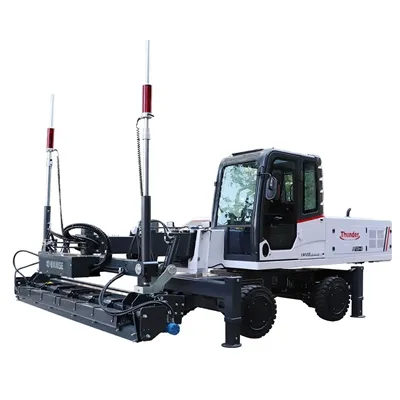
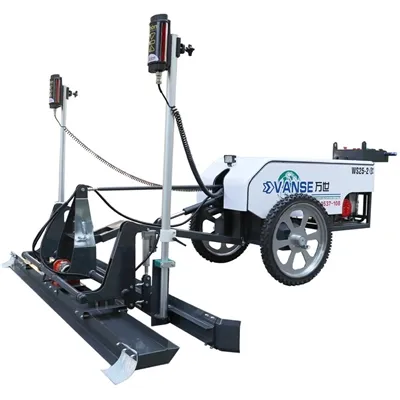
The concrete laser leveling machine significantly improves the construction accuracy through its high-precision laser control system and automated operation. During the construction process, the laser leveling machine uses the laser emitted by the laser transmitter as the reference surface, and controls the height of the leveling head in real time through the laser receiver to ensure that the ground flatness reaches the optimal state. This system can monitor and adjust the leveling head in real time to achieve high-precision ground elevation and flatness control.
In addition, the construction characteristics of the laser leveling machine include high flatness quality, greatly improved work efficiency, and good integrity of the ground concrete. By choosing the laser leveling machine for construction, fixed investment can be saved, labor costs can be reduced, and operating costs can be reduced. The wide application of concrete laser leveling machines has improved the green and environmental protection performance of the floor, and the supply of laser paving machine equipment market has also driven the development of floor equipment.
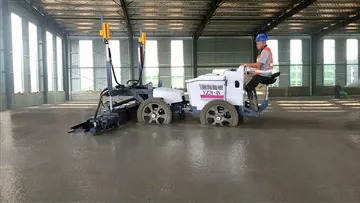
The construction process of the laser leveling machine includes construction preparation, concrete paving + laser leveling, initial grinding and breaking of concrete laser leveling machines, and throwing wear-resistant aggregates. Before construction, the laser transmitter is fixed, and the elevation of the finished surface is accurately measured using a leveling ruler. During the construction process, the laser leveler uses laser technology to automatically level and complete the leveling work under computer control. Since the laser transmitter is fixed, it ensures that there is no cumulative error in the construction of a large area of ground, and ensures that the elevation of the ground after pouring is not affected.
In summary, the concrete laser leveler significantly improves the construction efficiency and quality through its automation and high precision. It is suitable for large-area floor construction projects, especially in projects with tight schedule requirements, large paving areas, and high quality requirements.
Thanks to All the Friends Who Support and Trust Shandong Vanse Machinery Technology Co., Ltd.
If you want to know more about Shandong Vanse Machinery Technology Co., Ltd. or have any questions, please feel free to contact us:
Our Factory
Shandong Vanse Machinery Technology Co., Ltd.








Share this article

About the Author: Shandong Vanse Machinery Technology Co., Ltd.
Shandong Vanse Machinery Technology Co., Ltd. is a high-tech manufacturer specializing in concrete construction machinery, including laser screeds and related equipment. The company integrates R&D, production, and global sales, with products exported to over 60 countries and widely used in infrastructure projects worldwide.
Previous Post
Next Post
Related Articles
You Might Also Like
What is the principle and structure of concrete laser leveling machine?
The concrete laser leveler is a construction machine that uses modern laser technology and a computer control system to level the concrete surface with high precision. The emergence of this kind of machinery has changed the shortcomings of traditional concrete leveling methods, improved the quality and efficiency of concrete construction, and reduced manual labor intensity and construction costs. The following is a detailed introduction to the principle and structure of the concrete laser leveling. 1. Principle of concrete laser leveling machine The concrete laser leveling machine uses a laser interferometer for measurement, and the control system uses computer control to achieve high-precision concrete leveling by automatically controlling the leveling head of the laser leveling machine. Laser interferometer measurement principle Laser interferometer is an instrument that uses the interference phenomenon of laser beams to measure. In the concrete laser leveling machine, the laser interferometer divides the laser beam into two paths, one is the reference beam and the other is the measured beam. The reference beam passes through the standard reflector, and the measured beam passes through the movable reflector. The two beams meet in the interferometer, causing interference. By measuring and processing the interference phenomenon through the computer control system, the length change of the measured beam can be obtained, thereby achieving high-precision measurement of the concrete surface. Computer control system principles The computer control system of the concrete laser leveling machine is built based on the industrial control computer (IPC) and programmable logic controller (PLC). The IPC is responsible for the control, data acquisition, data processing and output of the entire system, while the PLC is responsible for executing underlying tasks such as motion control and switch control. In the concrete laser leveling machine, the computer control system mainly completes the following tasks: (1) Control and collect data from the laser interferometer, and calculate the elevation data of the concrete surface based on the measurement results. (2) Calculate the control instructions of the leveling head based on the elevation data to realize the automatic leveling function. (3) Manual control and adjustment of the position and angle of the flattening head are achieved through the operation interface and remote control. 2. Structure of concrete laser leveling machine The concrete laser leveling machine mainly consists of a bracket, a laser interferometer, a computer control system, a leveling head, etc.: Bracket The bracket of the concrete laser leveling machine is welded with high-strength steel to support the structure of the entire machine. It is also equipped with components such as a laser interferometer and a computer control system. The bracket generally consists of four columns, two of which are used to support the laser interferometer and the other column is used to install the computer control system. The columns are connected by high-strength bolts, forming the basic structure of the entire machine. Laser Interferometer The laser interferometer of the concrete laser leveling machine is a high-precision measuring instrument used to achieve high-precision measurement of the concrete surface. Laser interferometer consists of laser, beam splitter, reflector, photodetector, etc. The laser generates a laser beam, and the beam splitter divides the laser beam into two paths, one is the reference beam and the other is the measured beam. The two beams of light meet again after being reflected by the reflector, causing interference. The photodetector measures and processes the interference phenomenon to obtain the length change of the measured beam, thereby achieving high-precision measurement of the concrete surface. Computer control system The computer control system of the concrete laser leveling machine is built based on the industrial control computer (IPC) and programmable logic controller (PLC). The IPC is responsible for the control, data acquisition, data processing and output of the entire system, while the PLC is responsible for executing underlying tasks such as motion control and switch control. The computer control system also includes components such as an operating interface and a remote control. The operator can control and adjust the machine through the operating interface or remote control. Flat head The leveling head of the concrete laser leveling machine is a key component used to achieve leveling of the concrete surface. Its structure consists of a support frame, an electric vibrator, a reducer, a scraper, etc. The support frame is used to support the electric vibrator and reducer. The electric vibrator generates vibration, and the reducer drives the scraper to perform rotating and smoothing operations. The flat head is installed under the bracket and connected with the bracket. The smoothing head can also adjust the distance between the scraper and the concrete surface by adjusting the height of the support frame to ensure the quality and effect of the smoothing operation. In short, the concrete laser leveling is an advanced construction machine that integrates modern laser technology, computer control system and mechanical structure. It has high-precision measurement and automatic leveling functions, which can greatly improve the efficiency and quality level of concrete construction. Its application will help improve the shortcomings of traditional construction methods and promote the progress and development of concrete construction technology.Laser leveling machine – four construction advantages
It is reported that over the years, the growth rate of the machinery industry has been higher than the industrial average, and the growth rate of benefits has also been higher than the growth of production and sales in the same period last year. Concrete laser paver, as a necessary equipment in construction machinery, has also maintained a high sales volume. Concrete laser leveling machines can be seen everywhere in today's building floor construction. Why are concrete laser leveling machines so popular? Let's analyze the four distinctive features of Shandong Wanshi Machinery's concrete laser leveling machine. Shandong Wanshi Machinery "Leilong" brand concrete laser leveling machine increases production efficiency by 61%, saves construction cost by 49%, shortens construction period by 40%, increases the strength and compactness of the floor by 25%, and the flatness error reaches the level of German related products standard. Let's take a look at the four distinctive features: 1. Intelligent handle operation mode, flexible operation, single person can operate construction. The movement and steering are flexible and convenient. The walking system is controlled by the handle, so that the machine can move freely without affecting each other with the leveling head. The wheel is manually controlled to move forward, backward, turn and travel speed, and the movement is very convenient. 2. The laser transmitter is arranged independently, and the large area is paved as a whole to ensure that the ground elevation is consistent. The elevation is not controlled by the formwork, and there will be no error. Large-scale block construction can reduce construction joints and greatly reduce the maintenance cost of the ground. 3. Integrated leveling head: It is composed of scraper, vibrator, vibrating plate, stirring cage and other components. It integrates multiple processes such as stirring, leveling, vibrating, and vibrating, and is completed by the machine at one time. Improve efficiency and save labor. In the case of undulating foundations and sloping road surfaces, maintain a level surface for construction. The high-frequency vibration of 4000 times per minute makes the vibrating plate of the leveling head vibrate evenly at high frequency, making the concrete floor dense and dispersing the deformation stress. It can effectively solve the problems of hollowing, shelling, cracking and inequality on the ground. 4. The laser measurement and control system automatically controls the elevation. The design elevation of the top surface of the floor is automatically controlled by the laser machine computer, which can ensure the flatness of the ground and achieve accurate. leveling directly on the concrete layer. The flatness of the ground is not affected by the vibration of the construction formwork, and no formwork is needed in the middle , Reduce the input of artificial materials, shorten the construction procedure and speed up the construction progress. The construction area per hour is more than 300㎡, and the daily workload can be more than 3000㎡ to 5000㎡, and the operation efficiency is greatly improved! The concrete laser leveling machine produced by Shandong Wanshi Machinery has its own intellectual property rights. The new generation of products is under research and development. The core components of the products are imported from Germany, the United States, Japan, etc. to ensure durability, safety, and reliability. The production equipment is complete. Fully meet customers' needs for high-quality products, welcome to come to the company to discuss cooperation if necessary.Summer maintenance tips for hybrid laser leveling machines
In the hot summer, the construction of concrete laser leveling machines has not stopped. The high temperature construction environment in summer is a heavy test for engineering machinery and equipment such as concrete laser leveling machines. Therefore, it is very important to do a good job of daily maintenance of laser leveling machines in summer. Today, the editor of Shandong Vanse will explain to you some construction precautions for concrete laser leveling machines in summer for your reference. 1. In summer construction, we must first prevent the engine from overheating. Under normal circumstances, the engine temperature should not exceed 95°. If the temperature is too high, we should choose a relatively cool area to shut down and cool down. At the same time, we can lift the engine hood for ventilation and heat dissipation. 2. The amount of cooling water should be detected in time. When the water radiator reaches 100°, do not rush to add cooling water. Instead, we should shut down the engine immediately to cool down the engine at idle speed, and then add coolant. 3. The construction temperature in summer is high. We should check the tire pressure and tire temperature frequently. If the tire temperature is too high, we should shut down the engine in time and place it in a cool place to cool down. Remember to use the wrong method of deflation or pouring cold water to cool down. 4. Check the battery level frequently, add distilled water in time, dredge the vents, pay attention to the density of the electrolyte, and maintain a good charging state. 5. Prevent engine explosion. Before entering the summer, the carbon deposits in the combustion chamber, valve top and other parts should be thoroughly removed to maintain good heat dissipation and normal compression ratio; and the fuel supply advance angle should be checked and adjusted to prevent engine explosion. 6. Check the temperature of hydraulic oil and hydraulic transmission oil frequently. If the temperature is too high, stop the machine for a rest, and never exceed high temperature operation. In short, engineering machinery such as concrete laser leveling machines are subjected to the test of long-term continuous operation during summer construction, and are also affected by high temperature environments. Therefore, summer construction must pay attention to the above conditions, and regular inspections and maintenance work must be carried out regularly, which is not only related to the service life of the concrete machine leveling machine, but also to the construction hidden dangers and the smoothness of the concrete laser leveling machine at work.