Technical Knowledge
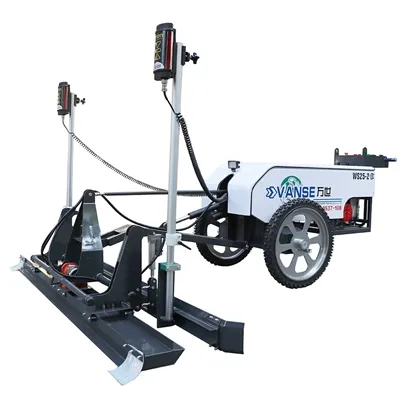
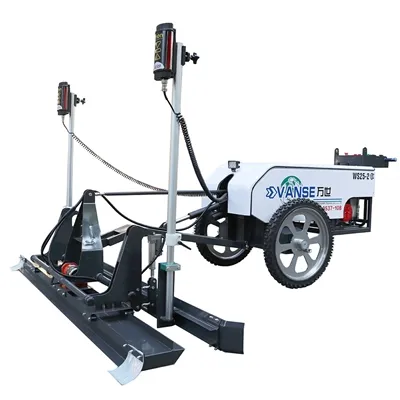
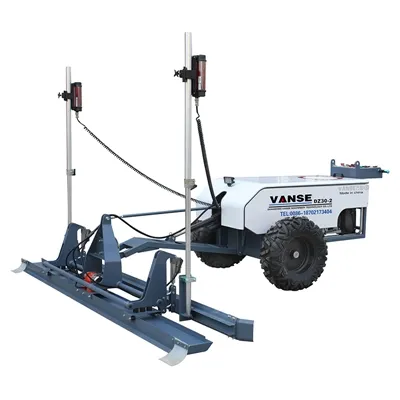
How does a concrete laser leveling improve the flatness?
Concrete laser levelings improve flatness by:
1. Utilize laser technology to ensure the flatness and thickness of the concrete surface by precisely controlling the position and height of the laser beam.
2. Automated control technology can realize continuous and automatic leveling operations and improve work efficiency.
3. When performing automatic leveling, there is an accurate reference plane. Generally, when the main focus is to control the height, the tightrope method is suitable; when the main focus is to control the thickness, the floating datum beam method is adopted. Generally, tightrope is used for the bottom layer, and the floating datum beam method is used for the middle layer and surface layer.
4. The leveling machine has a vibration function, which can effectively compact the concrete materials evenly to the required thickness, further improving the flatness.
5. Leveling machines are usually equipped with high-precision sensors and controllers that can monitor and adjust the flatness and height of the concrete surface in real time.
Therefore, through the above methods, the concrete laser leveling can effectively improve the flatness of the concrete surface, thereby improving the quality of stinging.


Thanks to All the Friends Who Support and Trust Shandong Vanse Machinery Technology Co., Ltd.
If you want to know more about Shandong Vanse Machinery Technology Co., Ltd. or have any questions, please feel free to contact us:
Our Factory
Shandong Vanse Machinery Technology Co., Ltd.








Share this article

About the Author: Shandong Vanse Machinery Technology Co., Ltd.
Shandong Vanse Machinery Technology Co., Ltd. is a high-tech manufacturer specializing in concrete construction machinery, including laser screeds and related equipment. The company integrates R&D, production, and global sales, with products exported to over 60 countries and widely used in infrastructure projects worldwide.
Previous Post
Next Post
Related Articles
You Might Also Like
What are the requirements of laser leveling technology for the construction environment?
Introduction Laser leveling technology has been widely used in modern construction due to its high efficiency and precision. However, in order to ensure that laser leveling technology can achieve the best results, the suitability of the construction environment is crucial. This article will explore the specific requirements of laser leveling technology for the construction environment. 1. Construction site conditions Laser leveling technology has the following basic requirements for the construction site: – **Flatness**: The construction site should be leveled in advance to reduce the preparation work before laser leveling. – **Solidity**: The site foundation should be solid enough to support the weight of construction equipment and materials. – **Drainage**: A good drainage system to prevent water accumulation during construction from affecting the laying and leveling effect of concrete. 2. Environmental and climatic factors Laser leveling technology is sensitive to environmental and climatic conditions. Specific requirements include: – **Temperature**: A suitable temperature range helps the coagulation and hardening of concrete. Too high or too low a temperature may affect the effect of laser leveling. – **Humidity**: Appropriate humidity can ensure that the moisture in the concrete does not evaporate too quickly, affecting the strength and leveling effect of the concrete. – **Wind**: Strong winds may affect the stability of the laser beam, so laser leveling operations should be avoided in windy weather during construction. 3. Construction equipment requirements The efficient operation of laser leveling technology depends on advanced construction equipment, including: – **Laser transmitter**: A stable and accurate laser transmitter is required to provide an accurate horizontal reference. – **Leveling equipment**: Automated leveling equipment should have a high degree of adjustment and stability to adapt to different construction conditions. – **Sensors and control systems**: High-precision sensors and advanced control systems to ensure the accuracy and automation of the leveling process. 4. Construction material requirements The quality of construction materials directly affects the effect of laser leveling. Specific requirements include: – **Concrete mix ratio**: Reasonable concrete mix ratio to ensure that the fluidity and hardening speed of concrete meet the construction requirements. – **Aggregate and cement**: High-quality aggregate and cement to ensure the strength and durability of concrete. – **Additives**: Appropriate additives to improve the workability of concrete and reduce the impact of environmental factors on construction. 5. Construction personnel requirements Laser leveling technology has high requirements for the professional skills and experience of construction personnel: – **Operation skills**: Operators need to receive professional training and master the operation methods of laser leveling equipment. – **Safety awareness**: Construction personnel should have a high degree of safety awareness to prevent accidental injuries during construction. – **Teamwork**: Good teamwork ability to ensure coordination and consistency of all links in the construction process. 6. Construction management requirements Effective construction management is the key to ensure the smooth implementation of laser leveling technology: – **Construction plan**: Detailed construction plan, including construction process, time arrangement and resource allocation. – **Quality control**: A strict quality control system to ensure that every link in the construction process meets the standards. – **Risk management**: Identify the risks that may be encountered during the construction process and formulate corresponding countermeasures. 7. Construction safety requirements Construction safety is an aspect that cannot be ignored in the application of laser leveling technology: – **Equipment safety**: Ensure that all construction equipment meets safety standards and conduct regular safety inspections. – **Operational safety**: Formulate operating procedures to ensure that construction personnel operate in accordance with safety regulations. – **Environmental safety**: Assess the potential safety hazards in the construction environment and take corresponding protective measures. 8. Conclusion Laser leveling technology has a series of specific requirements for the construction environment, including construction site conditions, environmental climate factors, construction equipment, materials, personnel, management and safety. Only by meeting these requirements can laser leveling technology give full play to its advantages of high efficiency and precision, ensuring the smooth progress of construction and high standards of construction quality. By continuously optimizing the construction environment and management measures, the construction effect and application scope of laser leveling technology can be further improved.Laser leveling machine operation steps and slope adjustment?
•••▶★◀••• Introduction As an indispensable construction equipment in the modern construction industry, the laser leveler's efficient and accurate leveling capabilities provide a strong guarantee for the construction of large-area concrete floors. Correct operation of the laser leveler and reasonable adjustment of the slope can not only ensure Improve construction quality, improve construction efficiency and reduce costs. This article aims to introduce in detail the operating steps and slope adjustment methods of the laser leveling machine, with a view to providing clear and practical operating guidelines for relevant construction personnel. •••▶★◀••• Equipment inspection and preparation Before operating the laser leveling machine, a comprehensive equipment inspection and preparation must be carried out. Specific steps are as follows: 1. Check the appearance of the equipment to ensure that the leveler has no obvious damage, deformation or rust. 2. Check the power system, including engine, battery, etc., to ensure that it is in good condition and has sufficient fuel or power. 3. Check the laser system, including laser transmitter, receiver, etc., to ensure that they are intact and working properly 4. Check the walking system of the leveler, including tires, tracks, etc., to ensure smooth walking and no jamming. 5. Check the control system, including the operation panel, sensors, etc., to ensure that its functions are normal and the display is accurate. After completing the above inspection, the operator should be familiar with the various function keys and operation panel of the leveling machine to ensure that they can operate it skillfully. •••▶★◀••• Laser system calibration The leveling accuracy of a laser leveler depends largely on the calibration of the laser system. The specific steps for laser system calibration are as follows: 1. Set a reference point in the construction area to ensure that the reference point is stable and at the same height. 2. Install the laser transmitter on the reference point, adjust the level of the transmitter, and ensure that the laser beam is projected vertically downward. 3. Turn on the laser transmitter and place the laser receiver on the ground to be leveled to ensure that the receiver can accurately receive the laser signal. 4. According to the data displayed by the receiver, adjust the parameters of the laser system to ensure that the laser beam is consistent with the actual ground height. After completing the laser system calibration, a test should be conducted to ensure that the leveler can accurately level according to the guidance of the laser beam. •••▶★◀••• Set leveling parameters Before officially starting the leveling operation, the leveling parameters need to be set according to the construction requirements. The specific steps for setting leveling parameters are as follows: 1. According to the construction drawings or design requirements, determine the flatness, levelness and other indicators of the ground. 2. Set the leveling speed, lifting range and other parameters of the leveling machine according to the ground indicators. 3. Set the vibration frequency, spatula angle and other parameters of the leveler according to the construction environment. After completing the parameter setting, a trial run should be carried out to ensure that the leveling machine can perform leveling operations according to the set parameters. •••▶★◀••• Start leveling operation After equipment inspection, laser system calibration and parameter setting are completed, leveling operations can begin. The specific steps are as follows: 1. Turn on the leveler and drive the leveler to the ground to be leveled. 2. According to the guidance of the laser system, operate the leveling machine to perform leveling operations. During the leveling process, the operator should promptly adjust the speed and lifting range of the leveling machine according to the actual situation to ensure the leveling quality. 3. During the leveling process, attention should be paid to the operating status and leveling effect of the leveling machine. If any abnormality is found, the machine should be stopped in time for inspection and treatment. After the leveling operation is completed, the leveling machine should be closed and necessary cleaning and maintenance should be carried out. Work. •••▶★◀••• Adjust the slope If the slope needs to be adjusted, this can be achieved by adjusting the lifting device of the leveling machine. The specific steps to adjust the slope are as follows: 1. Set up slope control points in the construction area to ensure that the control points are stable and highly accurate. 2. Install the slope sensor on the leveling machine and calibrate its sensitivity. 3. Determine the slope requirements of the ground according to construction drawings or design requirements. 4. Operate the leveling machine to the slope adjustment area. According to the instructions of the slope sensor, adjust the lifting device of the leveling machine so that the ground reaches the preset slope. During the slope adjustment process, attention should be paid to maintaining the stability and stability of the leveling machine. Level the quality to avoid obvious waves or unevenness. •••▶★◀••• Monitoring and Adjustment During the leveling operation, the leveling quality should be monitored and adjusted in real time. The specific steps are as follows: 1. Use a laser receiver or other measurement tools to measure the leveled ground in real time to ensure that the leveling quality meets the requirements. 2. According to the measurement results, timely adjust the parameters and operating methods of the leveling machine to improve the leveling quality. 3. During the leveling operation, attention should be paid to observing the operating status of the leveling machine and changes in the surrounding environment to ensure the safety and continuity of the leveling operation. 8. End operation and maintenance After the leveling operation is completed, necessary equipment cleaning and maintenance work should be carried out. Specific steps are as follows: 1. Turn off the leveler and clean the dust and debris on the surface of the leveler. 2. Check all components and systems of the leveler to ensure they are intact and functioning properly. 3. Lubricate and maintain the lubricating parts of the leveling machine to ensure that the equipment can operate normally the next time it is used. 4. Park the leveler in a dry and ventilated place, and take necessary protective measures to prevent the equipment from getting damp or damaged. •••▶★◀••• Safety precautions When operating a laser leveling machine, the following safety precautions must be strictly observed to ensure the safety of the operator and the normal operation of the equipment: 1. Operator training: Ensure that all operators have received professional training and are familiar with the operating instructions and safety procedures of the leveling machine. 2. Wear protective equipment: When working near the leveling machine, operators should wear personal protective equipment that meets regulations, such as hard hats, protective glasses, protective shoes, etc. 3. Regular inspection and maintenance: Regular inspection and maintenance of the leveling machine to ensure that the equipment is in good working condition. In particular, important components such as laser systems and power systems should be inspected and calibrated regularly. 4. Pay attention to the surrounding environment: When operating the leveling machine, you should pay attention to changes in the surrounding environment, such as terrain, obstacles, other construction personnel, etc. Avoid operating the leveling on unstable or dangerous ground. 5. Overloading is prohibited: The leveler should operate within the specified load range and must not be overloaded. Overloading may cause equipment damage or cause safety accidents. 6. Observe the operating procedures: When operating the leveling machine, the operating procedures should be strictly followed, and the operating sequence or equipment parameters should not be changed at will. 7. Stop the machine to deal with abnormal situations: During the leveling operation, if any abnormality or malfunction is found in the equipment, the machine should be stopped immediately and professionals should be sought for inspection and repair. Do not disassemble or repair the equipment without authorization. 8. Keep away from power sources and water sources: The leveler should be placed away from power sources and water sources to prevent electrical failure or equipment damage. 9. Prevent dust and noise hazards: The leveling machine may produce dust and noise during operation. Operators should wear corresponding protective equipment, such as dust-proof mouthpieces, earplugs, etc. 10. Obey safety warning signs: When operating the leveling machine, pay special attention to the safety warning signs and prompt information on the equipment, and operate as required. •••▶★◀••• Summary As an important piece of equipment in modern building construction, the laser leveling machine's operation steps and slope adjustment methods are of great significance to ensure construction quality and improve construction efficiency. This article introduces in detail the operating steps and slope adjustment methods of the laser leveling machine, and emphasizes the importance of safety precautions. It is hoped that this article can provide useful reference and guidance for relevant construction personnel to ensure the safe and efficient operation of laser leveling machines. At the same time, it is also recommended that construction units strengthen the training and management of operators, improve the skill level and safety awareness of operators, and jointly promote the healthy development of the construction industry.Introduction to technical parameters of concrete laser leveling machine
Concrete laser leveling: application fields, technical features and advantages of use ▶•1•◀ Application fields of concrete laser leveling machine Precise construction concrete laser leveling machine, as an efficient and reliable equipment, is widely used in many fields. The following are some common application areas of compact soil laser levelings: 1. Road construction: In the field of road construction, concrete laser leveling machines are mainly used for paving and leveling road surfaces. It provides high-precision smoothness, improves road performance and safety, and reduces the need for maintenance and repairs. 2. Bridge engineering: As an important traffic structure, bridges have extremely high requirements for flatness. Concrete laser levelings play an important role in bridge projects and are able to meet high standards of flatness and construction quality. 3. Airport runway: Airport runway is crucial for the safety of aircraft taking off and landing. The concrete laser leveling machine can provide precise surface smoothness, reduce vibration and turbulence during takeoff and landing, and ensure flight safety. 4. Interior decoration: In the field of interior decoration, concrete laser leveling machines are mainly used for leveling floors, floors and platforms. It can improve the flatness and beauty of the ground to meet the high-quality requirements of interior decoration. 5. Precast concrete components: In the production process of precast concrete components, high-precision surface flatness is required. The concrete laser leveling machine can quickly and accurately complete the leveling of component surfaces, improving production efficiency and product quality. ▶•2•◀ Technical characteristics of concrete laser leveling machine The concrete laser leveling machine adopts advanced laser technology and automated control system and has the following technical characteristics: 1. High-precision measurement: Through laser ranging technology, the concrete laser leveling machine can achieve high-precision surface measurement. It detects surface height differences in real time to ensure accuracy and consistency of leveling. 2. Automated operation: The concrete laser leveling machine is equipped with an automated control system, which can achieve continuous concrete laying and leveling work. Operators only need to make simple monitoring and adjustments, greatly reducing the need for manual intervention. 3. One-time forming: The concrete laser leveling machine can achieve the leveling effect of one-time forming, reducing the need for repeated work and improving construction efficiency. 4. Remote control: The concrete laser leveling can also be equipped with a remote control system, so operators can control the equipment away from the construction site, improving the safety and convenience of construction. 5. Easy to maintain: The concrete laser leveling machine has a relatively simple structure, easy component replacement, and low maintenance costs. At the same time, the equipment adopts a modular design, which facilitates disassembly and transportation, improving the maintainability of the equipment. ▶•3•◀ Advantages of using concrete laser leveling machine Compared with traditional construction methods, concrete laser leveling machines have the following advantages: 1. Improve construction efficiency: The concrete laser leveling machine can achieve efficient and fast construction, shorten the construction time and improve production efficiency. This helps reduce construction costs and speed up project delivery. 2. Reduce material waste: The concrete laser leveling machine can minimize material waste through precise control and high-precision measurement. It only needs to be laid and leveled once reducing the need for rework and repetitive work, thus reducing the amount of concrete used. This helps reduce costs and reduce environmental impact. 3. Improve construction quality: Concrete laser leveling machine can provide high-precision surface flatness and improve construction quality. It reduces manual intervention and experience dependence, ensuring consistency and accuracy of construction. This helps improve process quality and safety. 4. Reduce labor costs: The concrete laser leveling machine adopts automated operation, reducing the need for manpower. Operators only need to perform simple monitoring and adjustments, reducing reliance on skills and experience. This helps reduce labor costs and labor input. 5. Remote control and monitoring possible: The concrete laser leveling machine can be equipped with a remote control system and monitoring system to facilitate remote control and real-time monitoring of the equipment. This helps improve the flexibility and convenience of construction and reduces the risk and difficulty of on-site operations. 6. Adaptable to a variety of construction environments: The concrete laser leveler has strong adaptability and can adapt to a variety of construction environments and conditions. Whether indoors or outdoors, its advantages can be exerted in various construction projects with high flatness requirements. This helps improve the device's versatility and applicability. 7. Improve work efficiency and safety: Concrete laser leveling machine can improve work efficiency and safety. Compared with traditional construction methods, this equipment reduces manual labor intensity and work risks, reduces repetitive work and material waste. At the same time, it also improves the accuracy and consistency of construction, ensuring that project quality and safety performance requirements are met. . This helps improve work efficiency, safety and project quality levels. In summary, concrete laser levelings are widely used in many fields and have significant advantages. Through the introduction of technical characteristics and working principles, we can better understand its efficient and precise construction capabilities and application value. In future construction projects, with the continuous development and improvement of technology, concrete laser levelings will play a more important role in promoting the development and innovation of the construction industry.