Technical Knowledge
How can reasonable consumable replacement standards for concrete laser leveling machines be established?
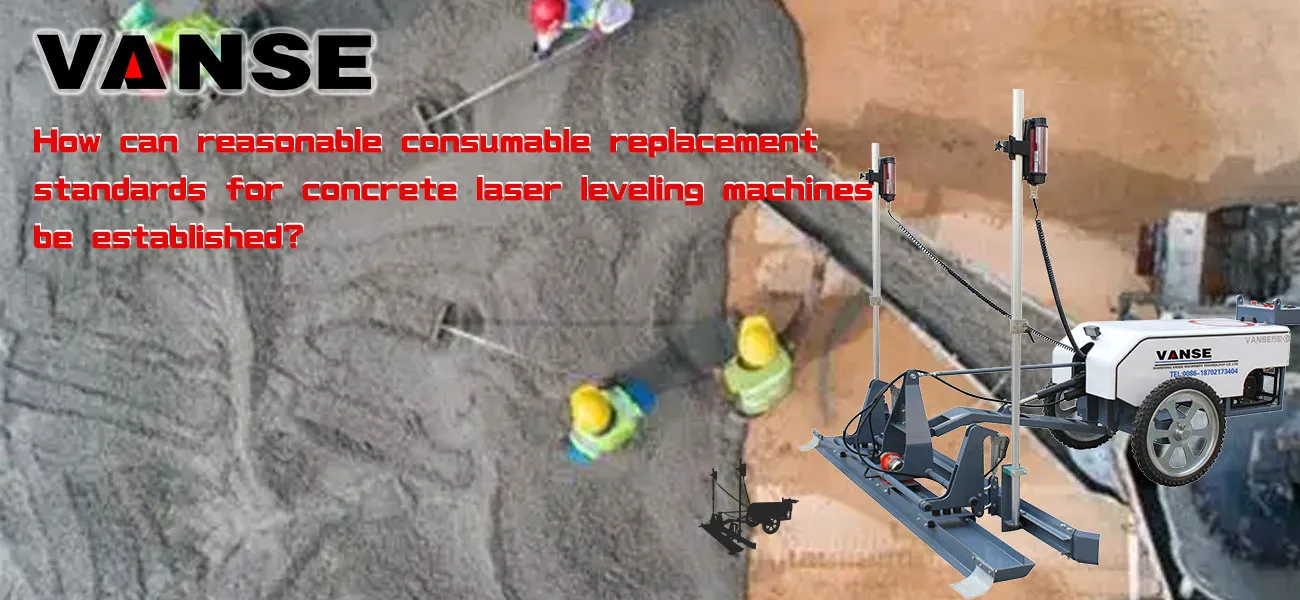
Concrete laser leveling machine consumables replacement standards
I. Core Principles
Two-dimensional judgment : Combining " usage time " (basic threshold) and " performance degradation/wear " (key indicators) to avoid waste or missed replacements caused by replacing only based on time.
Adapt to construction needs : In scenarios with high flatness requirements (such as industrial plant floors), the standards for replacing consumables must be stricter than those in ordinary civilian scenarios.
Prioritize original factory parameters : Take the consumable life recommended in the equipment manual as the benchmark, and make fine adjustments based on actual usage.
II. Product Replacement Standards (with Quantitative Indicators)
(1) High-frequency replacement consumables (directly affecting construction accuracy)
|
Consumables Name |
Replacement criteria (any one is sufficient) |
Remark |
|
Leveling scraper/blade |
1. Cutting edge wear > 3mm (measured with a caliper);
|
After replacement, the scraper level needs to be calibrated to avoid affecting the flatness |
|
Laser receiver lens |
1. Scratches on the lens cause a laser signal reception error of >2mm (compared to the standard spot);
|
Do not use hard objects to scratch, and wipe with special cleaning agents first |
|
Travel wheels/tracks |
1. The tire pressure remains below 0.6 bar (standard 0.8-1.2 bar) after three consecutive inflations;
|
Tracks must be replaced in pairs to avoid deviation |
(2) Intermediate frequency replacement consumables (to ensure equipment operation stability)
|
Consumables Name |
Replacement criteria (any one is sufficient) |
Remark |
|
Hydraulic oil filter |
1. The hydraulic system pressure fluctuation during equipment operation is greater than 0.5 MPa (monitored by a pressure gauge);
|
After replacement, drain the old hydraulic oil and fill it with new oil to the mark. |
|
Hydraulic seals |
1. Leakage at the hydraulic oil pipe joint (leakage volume > 5ml within 1 hour);
|
The sealing ring model must be matched to avoid leakage caused by size mismatch |
|
Grease for rotating parts |
1. The bearing makes abnormal noises during operation for more than 5 minutes;
|
When filling, clean out the old grease to avoid mixed contamination |
(3) Low-frequency replacement consumables (affecting the long-term life of the equipment)
|
Consumables Name |
Replacement criteria (any one is sufficient) |
Remark |
|
Laser transmitter |
1. Laser spot range shortened by >20% (compared to the new transmitter, tested in the same environment);
|
The laser level needs to be recalibrated after replacement |
|
Air/Fuel Filter |
1. The engine idle speed is unstable (speed fluctuation > 100 r/min);
|
The fuel filter needs to be vented after replacement to avoid insufficient fuel supply |
|
Battery (electric motor type) |
1. The single continuous operating time after full charge is less than 70% of the standard time (e.g. the standard is 8 hours, the actual time is less than 5.6 hours);
|
Avoid deep discharge and charge immediately when the battery level is below 20% |
3. Standard Implementation and Adjustment
Record tracing : After each replacement of consumables, fill in the "Reason for replacement (such as amount of wear, length of use)" in the "Maintenance Record Form" to facilitate subsequent analysis of the life cycle of consumables.
Regular calibration : After replacing new consumables, the equipment accuracy (such as laser leveling error and scraper levelness) needs to be calibrated to ensure that it meets construction requirements.
Dynamic adjustment : If a certain type of consumable frequently fails prematurely (e.g., 100 hours of wear is achieved after 60 hours), it is necessary to investigate whether there is improper operation (e.g., excessive scraper pressure) and appropriately relax the replacement standard (e.g., adjust it to 80 hours).
4. Emergency Replacement Plan
Reserve 1-2 sets of high-frequency consumables (scraper blades, sealing rings). When a sudden failure occurs, you can follow the principle of "replace spare parts first, then supplement records" to avoid downtime.
When replacing non-standard consumables (non-original), compatibility testing (such as the matching degree between the laser tube and the receiver) is required in advance. Only after passing the test can they be used in batches.
Note: The parameters provided in this document are for reference only and are not mandatory. Due to differences in technical characteristics between different brands and models of laser levelers, please consult the manufacturer for a suitable solution before actual operation. This reference document assumes no responsibility for any issues arising from failure to follow the manufacturer's instructions.
Thanks to All the Friends Who Support and Trust Shandong Vanse Machinery Technology Co., Ltd.
If you want to know more about Shandong Vanse Machinery Technology Co., Ltd. or have any questions, please feel free to contact us:
Our Factory
Shandong Vanse Machinery Technology Co., Ltd.








Share this article

About the Author: Shandong Vanse Machinery Technology Co., Ltd.
Shandong Vanse Machinery Technology Co., Ltd. is a high-tech manufacturer specializing in concrete construction machinery, including laser screeds and related equipment. The company integrates R&D, production, and global sales, with products exported to over 60 countries and widely used in infrastructure projects worldwide.
Previous Post
Next Post
Related Articles
You Might Also Like
Concrete laser leveling machine helps you overcome the labor shortage problem!
CONCRETE LASER LEVELING MACHINE HELPS YOU OVERCOME THE LABOR SHORTAGE PROBLEM! It is difficult to find labor force in the current market, especially for some industries that are tiring and often exposed to wind and sun. It is even more difficult to recruit people. What should we do in the market floor leveling industry facing a labor shortage? This situation had begun to emerge a few years ago, and VANSE, as a professional laser leveling machine manufacturer, developed a laser leveling machine that can replace manual labor, which greatly eased the current situation. For example, a construction company won 5 new bidding projects from January to February this year, a year-on-year increase of 66.0%. At the end of February, the surveyed companies had the largest number of construction projects in progress, 95. Despite the growth in business, there is still a shortage of skilled workers. The first reason is that there is a large market demand for skilled workers; the "demographic dividend" of low labor wages is gradually disappearing, and labor costs have greatly increased. But the construction industry has to continue to develop, so a better solution is to replace labor with machines. CONCRETE LASER LEVELING MACHINE HELPS YOU OVERCOME THE LABOR SHORTAGE PROBLEM! With the development of logistics and aviation industry, the golden age of floor construction has opened. Thousands of square meters of ground are only allowed to have a flatness error of 3 mm, which has become a new standard for floor construction. It is undoubtedly a dream to realize it by traditional manual labor. Owning a laser leveling machine has become an essential requirement for floor construction companies to undertake projects. CONCRETE LASER LEVELING MACHINE HELPS YOU OVERCOME THE LABOR SHORTAGE PROBLEM! 1. The leveling principle of the laser leveling machine is realized under the automatic control of the computer by using precision laser technology, closed-loop control technology and high-precision hydraulic system. This is the most prominent difference between it and other floor construction processes features. CONCRETE LASER LEVELING MACHINE HELPS YOU OVERCOME THE LABOR SHORTAGE PROBLEM! 2. The leveling principle of the precision laser leveling machine is to rely on the leveling head driven by hydraulic power, cooperate with the laser system and the computer control system to complete the leveling work while automatically leveling. The leveling head is equipped with an integrated scraper, vibrator and leveling plate, which integrates all leveling, leveling, vibration and compaction work, and completes it at one time. The computer control system automatically adjusts the elevation 10 times per second in real time, and the vibration frequency of the vibrator with a balanced design reaches 3000 times per minute. CONCRETE LASER LEVELING MACHINE HELPS YOU OVERCOME THE LABOR SHORTAGE PROBLEM! 3. The laser transmitter used to control the ground level is arranged independently, so that the level of the ground is not controlled by the template, and no cumulative error will occur. CONCRETE LASER LEVELING MACHINE HELPS YOU OVERCOME THE LABOR SHORTAGE PROBLEM! 4. The laser leveling machine can also automatically control the longitudinal and transverse slopes, which is also completed by the laser system, computer system, hydraulic system, and mechanical system. 5. There are many people in the construction of the traditional craft, which requires support formwork (channel steel), spotting, and paving. About 20 people are needed. The daily construction area is 2000㎡. The use of laser leveling machine can reduce the overall number of people to 4-8. Can be operated by one person. The daily construction area is increased to 3000㎡-5000㎡. Greatly reduced labor costs. In the long run, if we want to continue to develop in the flooring industry, we can only use laser leveling machines instead of labor. Now Shandong VANSE Machinery conforms to the needs of the development of the times.In a low-temperature winter environment, how should a concrete laser leveling machine be maintained to avoid difficulties in starting?
In a low-temperature winter environment (typically referring to an ambient temperature of ≤5℃), concrete laser leveling machines are prone to difficulties in starting due to issues such as increased oil viscosity, battery discharge, and fuel solidification (for diesel models). Maintenance should be carried out from four dimensions: "protection of the starting system, optimization of oil performance, anti-freezing of core components, and protection of idle storage". The specific measures are as follows: At low temperatures, the battery capacity will drop significantly (for every 10℃ drop in temperature, the capacity approximately decreases by 10% to 15%), and the load on the starting motor increases, which is the main reason for the difficulty in starting. Special protection is required: Check the battery status: Use a multimeter to measure the battery voltage. For a 12V battery, it should be ≥12.4V (fully charged state). If the voltage is lower than 12V, immediately use a dedicated low-temperature charger (to avoid the low charging efficiency of ordinary chargers) to recharge the battery. If the battery has been in use for more than two years, it is prone to "quick discharge" at low temperatures. It is recommended to replace the battery with a new one in advance (to avoid failure when starting temporarily). Prevent the battery from cracking due to freezing: The freezing point of the battery electrolyte varies with its concentration (if the concentration is too low, it may freeze and crack the casing). Check the electrolyte level (if it is below the scale line, add distilled water; do not add tap water or electrolyte). If necessary, test the density of the electrolyte (use a hydrometer, standard value 1.26-1.28g/cm³; if the density is low, adjust the concentration). Clean the battery connection: If there is white sulfide (which is prone to condensation at low temperatures) at the connection, rinse it with hot water, then sand it clean with sandpaper, and apply vaseline or battery protector (to prevent re-oxidation and ensure smooth current conduction). Check the terminal blocks of the starting motor: Ensure that the bolts are tightened (metal shrinks and is prone to loosening at low temperatures, resulting in poor contact). If the terminal blocks are oxidized, they need to be sanded with sandpaper. Manually rotate the starting motor gear to ensure there is no jamming (to avoid poor gear meshing at low temperatures). Additional inspection for diesel models: Check if the start preheater (if any) is functioning properly – after power-on, the preheater indicator light should be on. If it is not on, check the circuit or replace the preheater (the preheater can increase the temperature inside the cylinder, help diesel atomize, and avoid difficulties in cold starting). Low temperatures can cause a sharp increase in the viscosity of engine oil, hydraulic oil and diesel, resulting in slow flow and difficulty in oil suction by the pump body. It is necessary to ensure the fluidity of the oil through "oil change + preheating". Replace with low-grade diesel: Select the corresponding grade based on the ambient temperature (for example, -20 # diesel for -10 ℃ to -20℃ and -35 # diesel for -20℃ to -35 ℃), to prevent diesel from solidifying in the fuel tank or fuel line (solidification can cause fuel supply interruption and prevent starting). If high-grade diesel has been added, diesel pour point depressant should be added (add it in the proportion specified in the manual to lower the freezing point of the diesel). Fuel system preheating: Before starting, you can first turn on the ignition switch (without starting the engine), and let the fuel pump be powered on to work for 30 seconds (some models have a "fuel preheating" mode), allowing the diesel to preheat and flow in the fuel pipes. If the diesel in the fuel tank has slightly solidified, a small amount of low-grade diesel or kerosene (not exceeding 10%) can be added to the tank to help dilute and melt it. Do not add gasoline to avoid safety risks. Type of oil Maintenance measures Engine oil 1. Switch to winter-specific low-temperature engine oil (such as 5W-30, 10W-30, the smaller the number before the viscosity grade, the better the low-temperature fluidity) to prevent the original summer engine oil from having excessive viscosity at low temperatures, which could increase the engine's starting resistance. 2. Before starting, if the ambient temperature is ≤-10℃, you can first heat the engine oil through the engine preheater (external or built-in) for 30 to 60 minutes, or pour hot water over the oil pan (water temperature 50 to 60℃, do not use boiling water) to reduce the viscosity of the engine oil. Hydraulic oil 1. Replace it with low-temperature anti-wear hydraulic oil (such as L-HV46, L-HV32, which has better low-temperature fluidity than ordinary hydraulic oil) to prevent the hydraulic oil from getting stuck at low temperatures, which could lead to the failure of the leveling scraper and the walking action. After starting the equipment, let the hydraulic system run idle for 5 to 10 minutes (operate the handle to slowly extend and contract the cylinder). When the temperature of the hydraulic oil rises above 10℃, then carry out load operation to avoid damage to the hydraulic pump due to dry grinding at low temperatures. In winter, the air humidity is high, and moisture is likely to remain inside the equipment. Freezing at low temperatures can cause components to get stuck or break, so targeted protection is needed Laser transmitter/receiver: When not in use, it should be stored indoors (to avoid low temperature and moisture in the open air). Before use, check if there is any ice inside (if there is, it needs to be thawed naturally indoors. Do not use open flames to bake it to avoid damaging electronic components). Before powering on, wipe the casing and lens with a dry soft cloth to ensure there is no moisture residue. Control circuit: Check if there is any condensation water at the circuit joints (if so, dry it with a hair dryer using cold air). Wrap the joints with waterproof insulating tape to prevent water from seeping in and causing short circuits, which may affect the transmission of laser signals. Hydraulic oil tank: Check whether the seal of the oil tank cover is intact (to prevent rainwater or snow water from seeping in). If water is mixed into the hydraulic oil, it will freeze at low temperatures, blocking the oil pipes or damaging the hydraulic pump. It is necessary to regularly drain the accumulated water at the bottom of the oil tank (open the oil tank drain valve, release a small amount of oil, and observe whether there is any water sedimentation). If there is too much water, all the hydraulic oil needs to be replaced and the oil tank cleaned. Engine cooling system (diesel model) : Antifreeze must be used (tap water or ordinary water is not allowed). The antifreeze should be mixed in a ratio of "antifreeze + distilled water = 1:1" (the freezing point can be reduced to around -35 ℃). Check the antifreeze level (it should be between "MIN" and "MAX" in the expansion tank). If the level is insufficient, add the same type of antifreeze. Prevent the cooling system from freezing and cracking the water tank or cylinder block. Hydraulic oil tank: Check whether the seal of the oil tank cover is intact (to prevent rainwater or snow water from seeping in). If water is mixed into the hydraulic oil, it will freeze at low temperatures, blocking the oil pipes or damaging the hydraulic pump. It is necessary to regularly drain the accumulated water at the bottom of the oil tank (open the oil tank drain valve, release a small amount of oil, and observe whether there is any water sedimentation). If there is too much water, all the hydraulic oil needs to be replaced and the oil tank cleaned. Engine cooling system (diesel model) : Antifreeze must be used (tap water or ordinary water is not allowed). The antifreeze should be mixed in a ratio of "antifreeze + distilled water = 1:1" (the freezing point can be reduced to around -35 ℃). Check the antifreeze level (it should be between "MIN" and "MAX" in the expansion tank). If the level is insufficient, add the same type of antifreeze. Prevent the cooling system from freezing and cracking the water tank or cylinder block. First startup: If the ambient temperature is ≤-15℃, do not start directly. First, perform the "three-step preheating" : ① Connect the power supply and turn on the preheater (if available) for 30 seconds; Turn off the preheater, wait for 10 seconds, and repeat 2 to 3 times. ③ Gently press the accelerator (for diesel models), slowly turn the start key. If the start fails in one attempt, wait for 1-2 minutes and then try again (to avoid overheating and damage to the starting motor due to continuous operation). Do not start continuously more than three times. After starting: After the engine starts, it should idle for 10 to 15 minutes (do not accelerate immediately). Wait until the water temperature rises above 40℃ and the oil pressure is normal (the pointer is stable within the standard range), then operate the hydraulic system and traveling mechanism to gradually adapt the equipment to the low-temperature environment. If the battery is discharged and the device cannot be started: It can be started by jumper connection (use the battery of another device, connect the positive terminal to the positive terminal and the negative terminal to the negative terminal. After starting, keep the idle speed for 15 minutes to charge the discharged battery). Do not jumper for a long time to avoid damaging the electrical system. If the diesel solidifies and causes the fuel supply to be interrupted: The equipment should be moved indoors (temperature ≥5℃) to allow the diesel to melt naturally, or low-grade diesel can be added to the fuel tank for dilution. After the diesel flows normally, press the fuel pump to expel the air in the fuel pipe, and then try to start it. If the hydraulic system gets stuck: After starting, run the hydraulic system unloaded first. If it still gets stuck, check the temperature of the hydraulic oil (if it is below 0℃). You can heat the hydraulic oil by connecting an external heater (placed outside the hydraulic oil pipe). Wait until the temperature rises above 10℃ before operating. Through the above measures, the problem of difficult start-up in winter due to low temperatures can be solved from four aspects: "start-up source, oil, components, and operation". At the same time, it can reduce the hidden damage to the equipment caused by low temperatures and ensure the stability and accuracy of the laser leveling machine machine during winter construction. Note: The parameters provided in this document are for reference only and are not mandatory. Due to differences in technical characteristics between different brands and models of laser levelers, please consult the manufacturer for a suitable solution before actual operation. This reference document assumes no responsibility for any issues arising from failure to follow the manufacturer's instructions.How to choose the most suitable laser receiver under limited budget?
Choosing the most suitable laser receiver under a limited budget requires comprehensive consideration of multiple key factors, including performance requirements, application scenarios, technical specifications, cost-effectiveness, etc. Here are some specific suggestions: 1. Clarify application requirements: Before selecting a laser receiver, you must first clarify the application requirements, such as receiving distance, receiving angle, signal transmission rate, anti-interference ability, etc. These requirements will directly affect the choice of laser receiver. o For different application scenarios, such as indoor short-distance communication, outdoor long-distance communication, high-precision measurement, etc., the requirements for laser receivers will also be different. Therefore, it is necessary to clarify the application scenario in order to select the most suitable laser receiver. 2. Understand the technical specifications: When selecting a laser receiver, you need to understand its technical specifications, such as wavelength range, photosensitive surface size, response speed, dynamic range, etc. These technical specifications will directly affect the performance of the laser receiver. o Select a laser receiver with appropriate technical specifications based on application requirements. For example, for applications requiring high-speed transmission, a laser receiver with fast response speed should be selected. 3. Evaluate cost-effectiveness: o When budget is limited, cost-effectiveness is an important factor to consider when selecting a laser receiver. It is necessary to conduct a cost-benefit assessment of laser receivers of different brands and models, including equipment costs, maintenance costs, operating costs, etc. When evaluating cost-effectiveness, also consider the lifetime and stability of the laser receiver. Choosing a laser receiver D with good durability and stability can reduce maintenance and operating costs. 4. Consider scalability and compatibility: o When selecting a laser receiver, consider its scalability and compatibility. As technology continues to advance and application requirements change, it may be necessary to upgrade or expand the functionality of the laser receiver. Therefore, choosing a laser receiver with scalability and compatibility can better meet future needs. o Understand laser receiver upgrade paths and compatibility so you can easily upgrade or expand if needed. 5. Check professional reviews and recommendations: o When choosing a laser receiver, you can check professional reviews and recommendations to understand the performance, advantages and disadvantages of different brands and models of laser receivers. This information can help you better understand the actual conditions of the laser receiver and make a more informed choice. Professional evaluation and recommendation information can be obtained through search engines, professional forums, industry exhibitions, etc. 6. Reference cases and user feedback: o Understanding the use cases and feedback of other users can help you better understand the actual application effect and performance of the laser receiver. This information can be obtained by consulting relevant cases, user reviews, social media, etc. o When referring to cases and user feedback, pay attention to selecting reliable sources of information to avoid interference from misleading or false information. 7. Establish good communication with suppliers: o Establish good communication with laser receiver suppliers to understand their product features, advantages, and after-sales services. By communicating with suppliers, you can better understand the performance and reliability of laser receivers, and make a more appropriate choice. o When communicating with suppliers, you can raise your own needs and concerns and seek professional advice and solutions. To sum up, when choosing the most suitable laser receiver with a limited budget, you need to comprehensively consider multiple factors such as application requirements, technical specifications, cost-effectiveness, etc. By clarifying application requirements, understanding technical specifications, evaluating cost-effectiveness, and considering scalability Steps such as sex and compatibility, checking professional reviews and recommendations, reference cases and user feedback, and establishing good communication with suppliers can help you make a more informed choice. At the same time, be careful to maintain rational thinking during the selection process and avoid blindly pursuing low price or high performance while ignoring actual needs and cost-effectiveness.