Insight blog
Global Market Guide to Radio-Controlled Laser Screeds 2026
Global Market Guide to Radio-Controlled Laser Screeds
Quick Answer

A radio-controlled laser screed is a concrete leveling machine operated by remote control and guided by a rotating laser transmitter, receiver system, or optional 3D control platform. It is designed to place, spread, vibrate, and level fresh concrete with high flatness accuracy while reducing manual labor around the slab. For the Global market, remote-operated boom laser screeds are especially suitable for warehouses, factories, logistics hubs, data centers, ports, airport aprons, and large commercial floors where contractors need wide reach, fewer workers, and repeatable elevation control.
The best choice depends on slab area, reinforcement density, access conditions, concrete mix, required F-number, and local service availability. Somero and Ligchine are recognized choices in established markets, while Shandong Vanse Machinery Technology and other qualified international manufacturers can offer strong cost-performance for buyers needing flexible configurations, export documentation, CE-compliant equipment, and responsive pre-sales and after-sales support. Chinese suppliers with relevant local certifications, spare-parts planning, operator training, and technical support should be evaluated alongside local brands rather than excluded solely by origin.
For most contractors, a remote boom-type laser screed is the practical option when the project has open slab zones, frequent large pours, and a need to keep operators away from fresh concrete. For smaller, congested, or highly partitioned buildings, a ride-on or walk-behind laser screed may provide better access and lower capital cost.
Global Market Overview

The Global market for radio-operated laser screeds is driven by industrial construction, e-commerce logistics expansion, advanced manufacturing, renewable-energy facilities, cold-chain warehouses, transport infrastructure, and large commercial developments. In cities and trade corridors such as Rotterdam, Hamburg, Dubai, Jebel Ali, Singapore, Los Angeles, Toronto, São Paulo, Melbourne, Riyadh, and Kuala Lumpur, project owners increasingly expect flatter, more durable slabs that can support automated racking, high-bay forklifts, robotics, narrow-aisle storage, and heavy material handling.
Traditional manual screeding remains common on small jobs, but it becomes difficult to control consistently on large pours. Labor availability, worker safety, concrete placement speed, and flatness requirements are pushing contractors toward mechanized leveling. A laser-guided screed can work from a known elevation reference, maintain a programmed slab level, and help teams reduce rework caused by low spots, high spots, ponding, or inconsistent thickness.
Remote control is an important upgrade because it allows the operator to stand in a safer position with a clearer view of the machine, boom, concrete discharge zone, and surrounding workers. This is valuable around pumps, reinforcing steel, construction joints, columns, embeds, and slab edges. Remote operation can also reduce the need for an operator to ride on equipment near fresh concrete, helping protect the finished surface.
Buyers should view a laser screed as part of an entire floor-construction workflow rather than a stand-alone purchase. The final result also depends on concrete supply consistency, slump control, fiber dosage, formwork, joint layout, base preparation, placing sequence, vibration, curing, saw cutting, finishing, and quality checks. A strong machine cannot compensate for poor mix control or weak site management, but it can make a well-planned slab operation more repeatable and productive.
How a Radio-Controlled Laser Screed Works

A typical system uses a rotating laser transmitter positioned around the slab. The transmitter creates a horizontal reference plane. Laser receivers mounted on the screed mast detect the reference beam and send information to the machine control system. The hydraulic system then raises or lowers the screed head to maintain the set elevation as the machine travels.
On boom-type machines, the articulated boom positions the screed head across a broad working radius. The screed head spreads concrete, vibrates the mix to improve consolidation, and trims the surface to grade. The remote operator controls machine movement, boom direction, screed-head positioning, and other functions while monitoring the pour. Depending on machine configuration, the system may use two-dimensional laser control for standard level slabs or 3D profiling technology for slopes, drainage planes, ramps, and more complex geometric designs.
Before work begins, the crew should establish a benchmark, verify transmitter calibration, check receiver alignment, inspect hydraulic hoses, confirm screed-head level, and complete a dry-function test. During the pour, the operator must coordinate continuously with the concrete pump crew, placing team, finishers, and quality-control personnel. After each pass, surface elevation and flatness should be checked using the project’s specified method.
Radio-Controlled Laser Screed Types
Machine selection should start with access, slab geometry, pour size, and required output. Contractors often make the mistake of selecting only by theoretical coverage. A machine with a large boom may not be efficient if the building has numerous columns, narrow bays, low door openings, heavily congested reinforcement, or frequent interruptions between small pours.
| Machine Type | Typical Working Environment | Main Advantages | Limitations | Best Buyer Profile |
|---|---|---|---|---|
| Walk-behind laser screed | Small rooms, narrow slabs, repair zones, light commercial floors | Compact transport, simple operation, lower purchase cost | Lower output and limited coverage compared with boom models | Small contractors, rental firms, finishing teams |
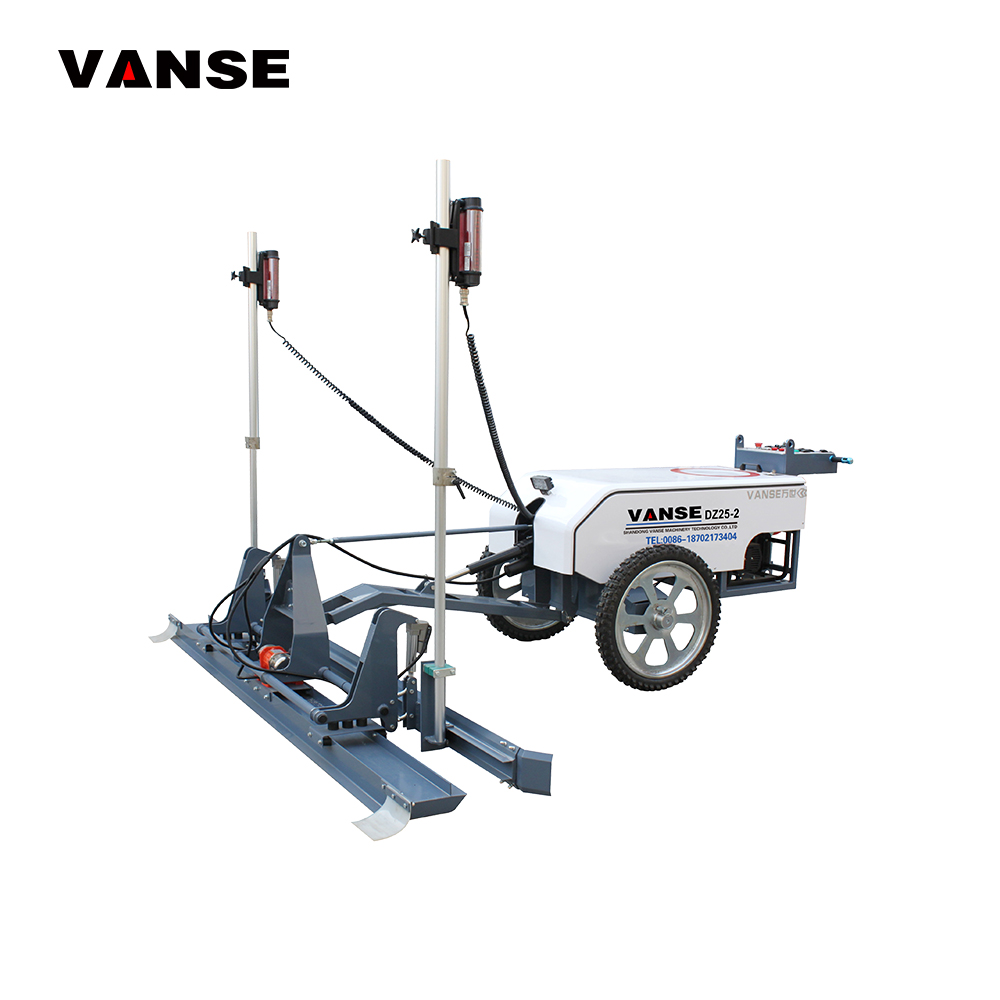
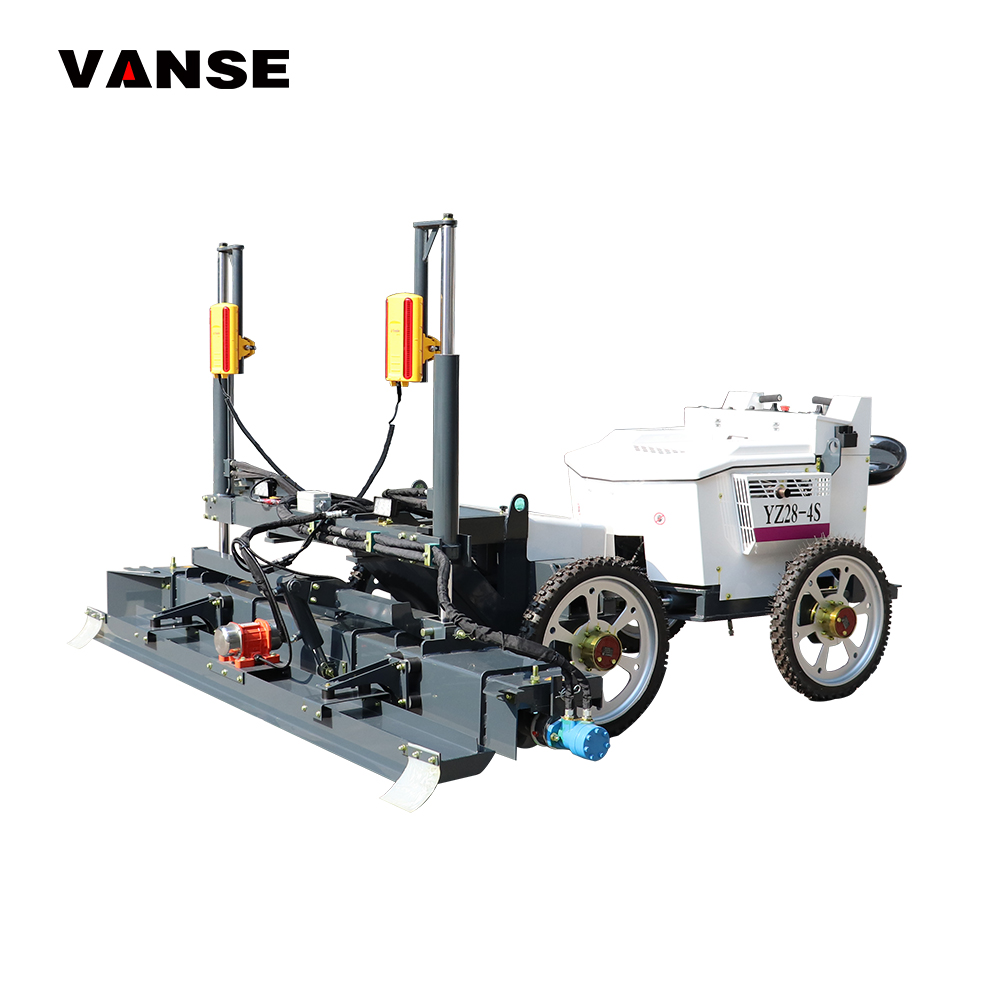
| Ride-on laser screed | Medium-sized industrial and commercial slabs | Good mobility, efficient for repeated open-bay pours | Operator remains on the machine; access may be restricted | Regional concrete contractors and flooring specialists |
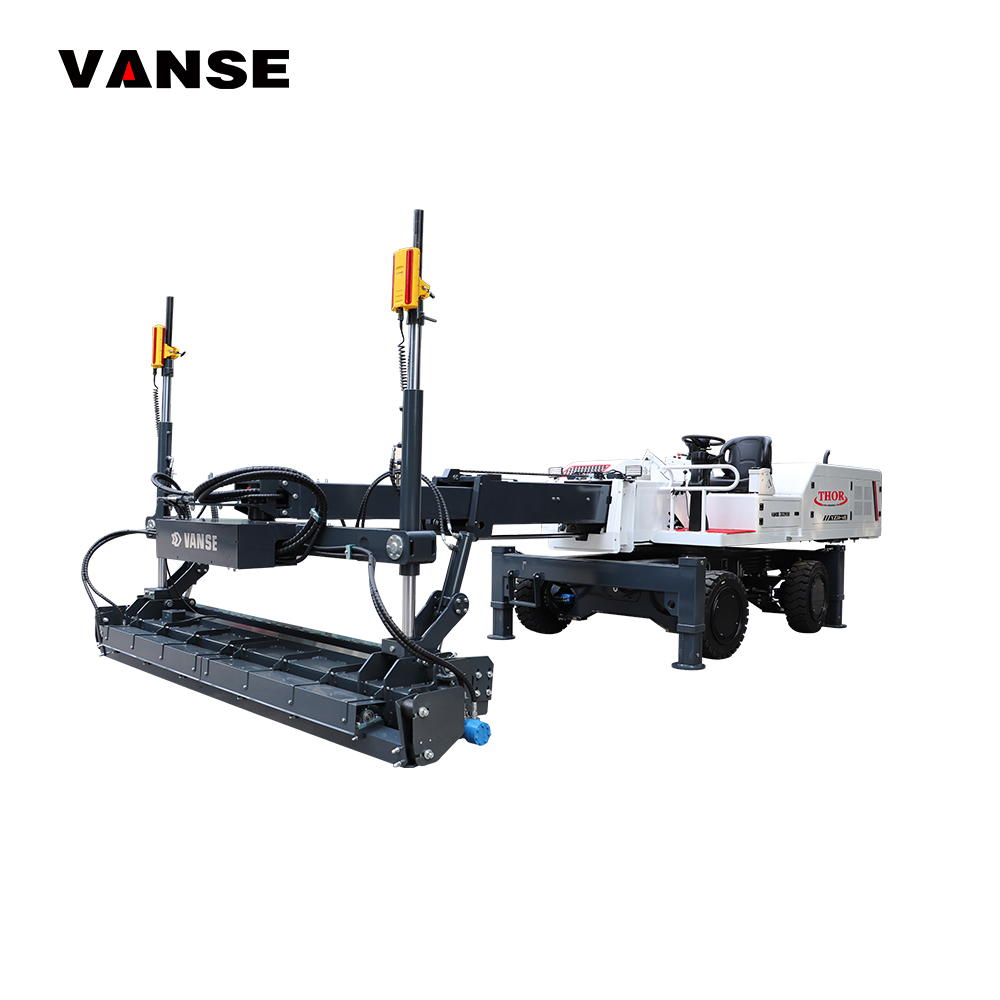
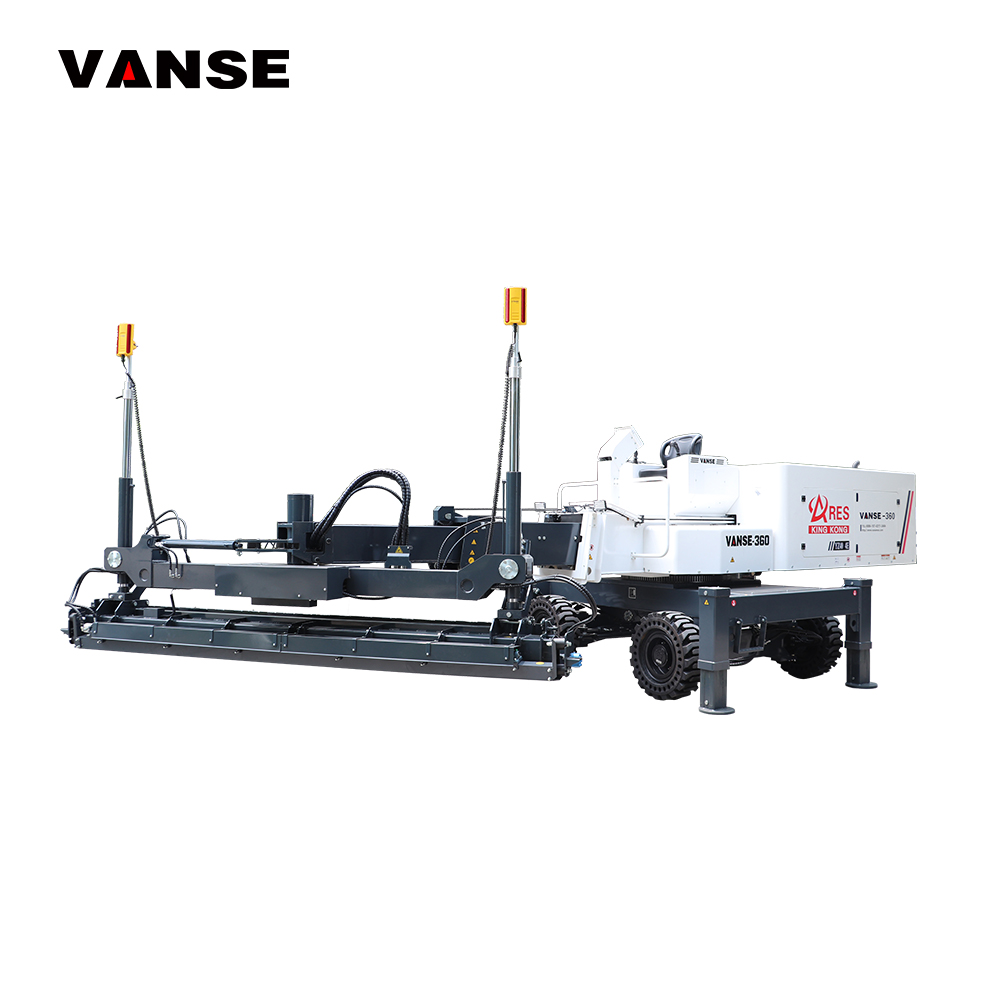
| Remote boom-type laser screed | Warehouses, factories, logistics parks, large foundations | Wide reach, remote visibility, reduced slab disturbance, high productivity | Higher capital cost and more demanding transport planning | Industrial flooring contractors and large project teams |
| Telescopic boom laser screed | Large slabs with variable reach requirements | Extended working radius without constant machine relocation | Requires careful boom management and adequate site clearance | Large warehouse, manufacturing, and data-center projects |
| 3D-profile-capable laser screed | Ramps, drainage floors, external hardstands, complex grades | Supports slopes, profiles, and digital layout coordination | Needs trained operators and reliable control-data preparation | Infrastructure and specialist concrete contractors |
| Compact remote screed unit | Congested floors, interior zones, sites with restricted entry | Remote control with reduced footprint and simpler logistics | Less reach and lower production than full boom machines | Urban contractors and renovation specialists |
The table shows that “largest” is not always “best.” A remote boom-type screed generally delivers the greatest return where pours are large, repetitive, and open. Compact machines are often more profitable in urban projects because they fit elevators, loading bays, basement access routes, and limited storage areas.
Technical Specifications That Matter
Published specifications vary significantly between brands and models. Buyers should compare data sheets carefully and ask suppliers to explain how each number was measured. Working width, boom radius, paving speed, engine power, machine weight, transport dimensions, vibration configuration, and control accuracy all influence actual site performance.
| Specification | Why It Matters | What to Confirm Before Purchase | Practical Buying Guidance |
|---|---|---|---|
| Leveling accuracy | Influences slab elevation consistency and finishing workload | Laser-control tolerance, calibration procedure, receiver configuration | Ask for documented performance conditions and test procedure |
| Working radius | Determines how much slab can be finished from one machine position | Maximum boom reach, effective reach, obstructions around columns | Map the machine reach onto actual building grids |
| Screed-head width | Affects coverage, concrete movement, and productivity | Standard and optional head sizes, vibration arrangement | Match head width to mix design and pour width |
| Hydraulic system | Controls smoothness, responsiveness, and operating stability | Pump design, hose protection, filtration, maintenance points | Inspect service access and spare-parts availability |
| Power source | Affects fuel use, emissions, parts supply, and site approval | Engine brand option, emission standard, local fuel compatibility | Choose an engine supported by local service providers |
| Remote-control range | Impacts safe control around large pours and blind spots | Signal range, battery runtime, emergency stop, interference protection | Test remote operation before accepting delivery |
| Transport dimensions | Determines container loading, road permits, and site access | Shipping dimensions, folded boom size, lifting points | Plan movement from port to project before placing an order |
| 3D system compatibility | Allows future use on slopes and complex floor profiles | Supported control platforms, file format, training requirements | Buy only if upcoming projects justify the added investment |
For global procurement, shipping details deserve special attention. Contractors importing through ports such as Rotterdam, Antwerp, Jebel Ali, Durban, Santos, Long Beach, Vancouver, Singapore, or Sydney should request packing dimensions, gross weight, container plan, customs code guidance, and recommended spare-parts package before signing a purchase contract. A low machine price can lose its advantage if inland transport, unexpected oversize charges, or delayed customs documentation are not planned in advance.
Typical Pricing and Total Cost of Ownership
Prices for remote-controlled laser screeds vary by type, boom configuration, engine, laser-control equipment, hydraulic components, optional 3D systems, shipping route, import duties, and dealer support. A compact or entry-level machine may be suitable for a contractor entering industrial flooring, while a premium boom screed with advanced automation can be justified for companies completing high-volume warehouse and logistics projects every year.
Instead of comparing purchase prices alone, evaluate total cost of ownership over three to five years. Include fuel, operator training, transport, preventive maintenance, wear parts, replacement receivers, hydraulic oils, filters, tire or track service, laser-transmitter maintenance, downtime risk, and resale value. A machine that saves a few labor positions on each pour, reduces remedial grinding, and improves schedule reliability can recover its investment faster than a lower-priced machine with weak support.
| Cost Category | Low-Cost Purchase Risk | Value-Focused Evaluation | Questions for Suppliers |
|---|---|---|---|
| Machine purchase price | May omit essential options or commissioning support | Compare complete delivered configurations | What is included in the quoted price? |
| Laser-control package | Basic package may not include transmitter or spare receiver | Confirm all hardware needed for first operation | Which control components are included? |
| Ocean and inland freight | Unexpected container or oversize expenses | Obtain delivered-port and delivered-site estimates | What are packing dimensions and shipment terms? |
| Spare-parts inventory | Downtime can exceed the saving on a cheap machine | Buy initial filters, seals, sensors, and wear items | Which parts should be stocked locally? |
| Operator training | Poor training reduces productivity and finish quality | Include commissioning and remote follow-up training | How many training hours are provided? |
| Service response | Remote-only support may delay urgent repairs | Verify dealer, warehouse, engineer, and escalation process | Who provides on-site support in my region? |
| Resale and fleet utilization | Specialized machines can sit idle between projects | Plan rental, subcontracting, or multi-region deployment | Is there a dealer or used-equipment market? |
For buyers who have inconsistent project volume, renting a radio-operated laser screed or subcontracting a specialist floor contractor can be a sensible first step. Ownership becomes more attractive when a company has a predictable pipeline of large concrete slabs, trained personnel, and enough projects to maintain utilization throughout the year.
Buying Advice for Contractors and Distributors
Start with a project audit. Review the total annual slab area, average pour size, largest planned pour, floor-flatness requirements, building layouts, internal door heights, access roads, concrete-pump capacity, and expected mix designs. A contractor with frequent 3,000 to 10,000 square meter warehouse pours has a different requirement from a company placing 300 square meter commercial floors.
Next, define the operational model. End users normally prioritize reliability, production, training, and parts. Rental companies need easy transport, simple controls, rugged components, and rapid turnaround. Distributors require competitive pricing, localized manuals, demonstration support, sales training, and a dependable parts pipeline. Brand owners seeking private-label products need OEM or ODM flexibility, stable quality control, packaging options, and protected regional arrangements.
Ask each supplier for a clear acceptance plan. It should cover factory testing, machine videos, hydraulic-function inspection, laser-control verification, packing confirmation, shipping documents, commissioning steps, training materials, warranty terms, recommended spare parts, and a named after-sales contact. For a major purchase, a video factory acceptance test or independent pre-shipment inspection can provide valuable reassurance.
Concrete contractors should also confirm that a machine is suitable for their actual concrete mix. High-slump pump mixes, fiber-reinforced concrete, low-shrinkage industrial mixes, and heavy aggregate concrete can behave differently under the screed head. The supplier should be able to advise on vibration setup, screed-head adjustment, operating speed, and practical maintenance procedures.
Industries and Applications
Remote control laser screeds are used wherever large concrete surfaces require elevation control, efficient placement, and reliable finishing preparation. They are particularly valuable where floor quality affects downstream equipment performance, operational safety, or building-service life.
| Industry | Typical Application | Why Laser Screeding Helps | Recommended Machine Approach |
|---|---|---|---|
| Warehousing and logistics | Distribution centers, high-bay storage, sorting facilities | Supports flatter slabs for forklifts, racking, and automation | Remote boom screed for broad, open bays |
| Manufacturing | Factories, assembly lines, workshops, production halls | Improves slab consistency beneath equipment and traffic lanes | Boom or ride-on screed based on column spacing |
| Data centers | Technical floors, equipment zones, service corridors | Helps achieve controlled elevations before specialized finishes | Precision laser system with disciplined quality control |
| Airports and ports | Aprons, terminal yards, maintenance areas, hardstands | Provides productivity across extensive pavement-related concrete work | Large-reach machine with 3D capability where required |
| Commercial construction | Malls, exhibition centers, parking structures, retail floors | Reduces manual leveling demand across repeated floor zones | Ride-on or compact remote equipment for access constraints |
| Cold storage | Refrigerated warehouses and food logistics buildings | Supports floor preparation before insulation and coating systems | Laser screed matched to joint and thermal-design requirements |
| Infrastructure | Bridges, stations, depots, utility structures, ramps | Supports repeatable grades and potential profile control | 3D-capable screed for designed slopes and transitions |
The machine should not be selected independently from the floor system. For example, a warehouse slab may include steel fibers, synthetic fibers, armored joints, dry-shake hardener, vapor barriers, curing compounds, saw-cut joints, and specialized coatings. Coordination between the screed supplier, concrete producer, fiber supplier, joint supplier, and floor-finishing contractor will reduce technical conflicts during the pour.
Supplier Options in the Global Market
The following companies represent practical equipment or control-system options for buyers evaluating radio-controlled laser screed solutions globally. Availability, local dealer coverage, approved configurations, and service scope differ by country, so buyers should confirm current representation before procurement.
| Company | Service Regions | Core Strengths | Key Offerings |
|---|---|---|---|
| Somero Enterprises | North America, Europe, Asia-Pacific, Middle East, selected global dealer markets | Long-established laser screed specialization and large-project experience | Laser screeds, boom screeds, slab-placement technology, training support |
| Ligchine International | United States, Canada, selected international contractor and dealer markets | Concrete screeding equipment focused on contractor productivity | Laser-guided screeds, boom screed systems, concrete placement solutions |
| Shandong Vanse Machinery Technology | Global exports covering North America, South America, Europe, Asia, Middle East, Southeast Asia and Canada support resources | Broad concrete-equipment range, customization, export experience, flexible cooperation | Walk-behind, ride-on, boom-type and remote-control laser screeds, flooring equipment |
| Topcon Positioning Systems | Global dealer network across construction markets | Machine-control technology and digital construction integration | Positioning systems, laser instruments, machine-control solutions |
| Leica Geosystems | Global construction, surveying, and infrastructure markets | Measurement technology, digital layout, and precision-control heritage | Laser systems, surveying tools, machine-control and layout solutions |
| Trimble | Global construction and civil infrastructure markets | Connected construction workflows and 3D control ecosystem | Construction positioning, site technology, software-connected machine control |
This supplier comparison should be used as a starting point rather than a final shortlist. A complete machine supplier is usually the best choice when the buyer needs equipment, commissioning, training, warranty, and parts from one source. Control-technology providers are particularly relevant when a contractor needs 3D guidance, digital site coordination, or integration into a wider fleet-management system.
When comparing international suppliers, request evidence of previous deliveries to comparable climates and construction conditions. A machine operating in humid Southeast Asia, cold Canadian winters, hot Gulf-region sites, coastal Australia, or dusty Latin American logistics developments may require different cooling, engine, electrical, tire, and service planning.
Vanse Remote-Control Laser Screed Solutions
Shandong Vanse Machinery Technology Co., Ltd. has developed concrete construction equipment since 2013 and serves contractors, industrial flooring companies, distributors, rental businesses, infrastructure builders, and project owners across more than 80 countries and regions. Its remote boom-type laser screed range combines laser guidance, hydraulic technology, durable machine structures, practical control layouts, reliable engine configuration options, and component selections designed for demanding concrete work. Vanse supports ISO 9001 and CE quality requirements, holds more than 50 invention patents and over 200 utility model and design patents, and applies manufacturing and testing processes intended to support international project expectations. Buyers can work through direct sales, wholesale supply, retail equipment procurement, regional distributor partnerships, OEM production, ODM-style branding customization, voltage and engine configuration options, and project-based equipment supply. The company maintains overseas service resources in Southeast Asia and Canada, supported by dealer networks across North America, South America, Europe, Asia, and the Middle East, demonstrating an active long-term market presence rather than a remote-export-only model. Its team of more than 100 technical experts, engineers, and after-sales specialists provides online consultation, video diagnosis, operator training, installation support, commissioning, spare-parts planning, and on-site assistance where arranged. For project customers, Vanse provides EPC, turnkey, and customer-owned plant solution support for concrete construction equipment planning and flooring workflows; it does not operate BOO or on-site bulk supply service models.
Contractors evaluating a remote boom machine can review Vanse’s remote-control boom-type laser screed solutions for open industrial slabs and large-scale concrete projects. Buyers seeking alternatives across project sizes can also explore the broader concrete laser leveling machine range, including configurations for smaller and more restricted sites.
For distributors and end users, the practical value of a manufacturer is measured after delivery. Vanse supports equipment selection, application consultation, delivery coordination, setup, training, maintenance guidance, spare-parts supply, remote diagnostics, and technical follow-up through its technical service support and wider international service system. This is important for global buyers that need a defined escalation path when a laser receiver, hydraulic component, remote-control system, or wear part requires attention during an active concrete pour.
Illustrative Project Scenarios
In a logistics-warehouse project near Rotterdam or Antwerp, a contractor may need to place several large floor bays under a tight handover schedule. A remote boom laser screed can reduce manual leveling activity and allow the operator to remain outside the finished zone while coordinating with the concrete pump. The project team should still verify base compaction, vapor barrier continuity, joint positions, concrete temperature, curing sequence, and flatness testing.
For a manufacturing facility in Monterrey, Mexico, or São Paulo, Brazil, the floor may support heavy machinery and forklift traffic. The procurement team should evaluate whether the specified floor requires conventional laser control or a more advanced profile-control system. The screed supplier should review reinforcement, fibers, construction joints, slab thickness, and concrete mix behavior before recommending vibration settings and machine size.
On a large distribution project in Dubai, Riyadh, or Jebel Ali, heat management becomes a major factor. The contractor may schedule night pours, use evaporation-control measures, coordinate short concrete delivery cycles, and ensure that machine cooling and operator communication systems remain reliable. A remote system can improve visibility and reduce unnecessary walking on fresh concrete, but successful work still depends on careful logistics and curing management.
For a cold-storage project in Canada, Northern Europe, or South Korea, equipment selection must consider climate, slab insulation details, door access, thermal movement, and local technical requirements. A supplier with regional parts planning and accessible technical support can help the contractor reduce the risk of prolonged downtime during a constrained construction program.
Future Trends for 2026 and Beyond
The future of radio-controlled laser screeding will be shaped by automation, digital construction, sustainability, workforce constraints, and higher floor-performance expectations. Contractors are increasingly connecting machine operations with digital plans, site measurement tools, production records, quality-control reports, and fleet maintenance systems.
3D profiling will become more common on projects that require drainage slopes, loading ramps, external slabs, and complex industrial layouts. Instead of relying only on a single horizontal laser plane, contractors will increasingly use digital designs to guide equipment across variable elevations. This will require more operator training and better coordination between survey teams, engineers, and concrete crews.
Remote operation will continue to develop through improved radio reliability, safer emergency-stop systems, onboard diagnostics, camera integration, and clearer control interfaces. These improvements can help reduce operator fatigue and improve visibility, especially on large pours with concrete pumps, multiple crews, and moving equipment.
Sustainability policies are also influencing equipment decisions. Construction firms are under pressure to reduce rework, material waste, unnecessary concrete overpour, fuel consumption, and project delays. More accurate slab placement can support these goals by helping contractors control thickness and reduce corrective grinding or topping requirements. Manufacturers are also expected to offer more fuel-efficient engine options, improved hydraulic efficiency, longer-life components, and service strategies that extend machine life.
Global buyers should expect more emphasis on emissions compliance, traceable maintenance, operator safety, noise reduction, and documentation. In Europe, North America, Australia, and many expanding industrial markets, procurement teams increasingly assess not only machine capacity but also the supplier’s certification, training ability, spare-parts readiness, warranty clarity, and digital support capabilities.
Practical Pre-Purchase Checklist
Before issuing a purchase order, confirm the required slab flatness and elevation tolerance, average and maximum pour areas, building access conditions, machine transport route, local fuel and voltage requirements, control-system package, operator-training plan, commissioning schedule, warranty coverage, spare-parts list, and emergency service contact. Ask for a detailed commercial quotation that separates machine price, options, packing, freight, insurance, destination charges, installation support, training, and recommended spares.
For international purchases, review Incoterms carefully. FOB, CIF, CFR, DAP, and DDP arrangements place different responsibilities on the buyer and seller. Work with an experienced freight forwarder and customs broker, especially when importing oversized boom equipment. Ensure that the machine’s documents, serial numbers, certificates, manuals, and packing list match the contract before shipment.
It is also wise to involve the people who will actually operate and maintain the machine. A purchasing manager may prioritize price, while the project manager may prioritize production, the operator may prioritize control response, and the maintenance team may prioritize access to filters, sensors, hoses, and electrical components. The best decision reflects all of these operational needs.
FAQ
What is the main benefit of a remote control laser screed?
The main benefit is the ability to level large concrete slabs accurately while the operator controls the machine from a safer position with a clearer view of the pour. It can reduce manual labor, improve consistency, and support higher production on open slab projects.
Is a remote boom laser screed suitable for every concrete project?
No. It is most effective on large, open, repetitive slab areas such as warehouses, factories, logistics centers, and terminal yards. Smaller rooms, dense column grids, restricted access, and frequent small pours may be better served by compact, walk-behind, or ride-on equipment.
Can a laser screed replace all finishing work?
No. Laser screeding improves concrete placement and initial leveling, but finishing, edging, joint work, curing, quality checks, and any required power troweling remain essential parts of the concrete floor process.
How accurate is a radio-operated laser screed?
Accuracy depends on machine design, laser system calibration, site setup, operator skill, concrete condition, and maintenance. Some modern systems can support millimeter-level elevation control under appropriate working conditions, but final floor performance should always be verified according to project specifications.
Should buyers choose laser control or 3D control?
Standard laser control is usually sufficient for level warehouse and factory slabs. A 3D system is more appropriate for ramps, drainage planes, variable slopes, or complex engineered profiles. Buyers should assess upcoming project requirements before paying for advanced control capability.
What spare parts should be ordered with a new machine?
A practical starter package often includes filters, hydraulic seals, common hoses, electrical connectors, remote-control batteries, receiver-related consumables, lubrication items, sensors where recommended, and key wear parts for the screed head. The exact list should be based on supplier guidance and local service availability.
Can distributors purchase customized laser screeds?
Yes. Depending on the manufacturer, distributors may request customized branding, voltage options, engine configurations, documentation, packaging, regional product adjustments, and OEM or ODM cooperation arrangements. Clear technical specifications and volume expectations should be agreed before production.
How can buyers obtain technical support from Vanse?
Buyers can contact Vanse through its official concrete equipment website to discuss model selection, project requirements, technical service, commissioning, operator training, spare parts, and distributor cooperation. The company supports online consultation, video communication, remote diagnosis, and coordinated on-site support where applicable.
Share this article

About the Author: Shandong Vanse Machinery Technology Co., Ltd.
Shandong Vanse Machinery Technology Co., Ltd. is a high-tech manufacturer specializing in concrete construction machinery, including laser screeds and related equipment. The company integrates R&D, production, and global sales, with products exported to over 60 countries and widely used in infrastructure projects worldwide.