Insight blog
Global Market Guide to Hourly Concrete Screed Output
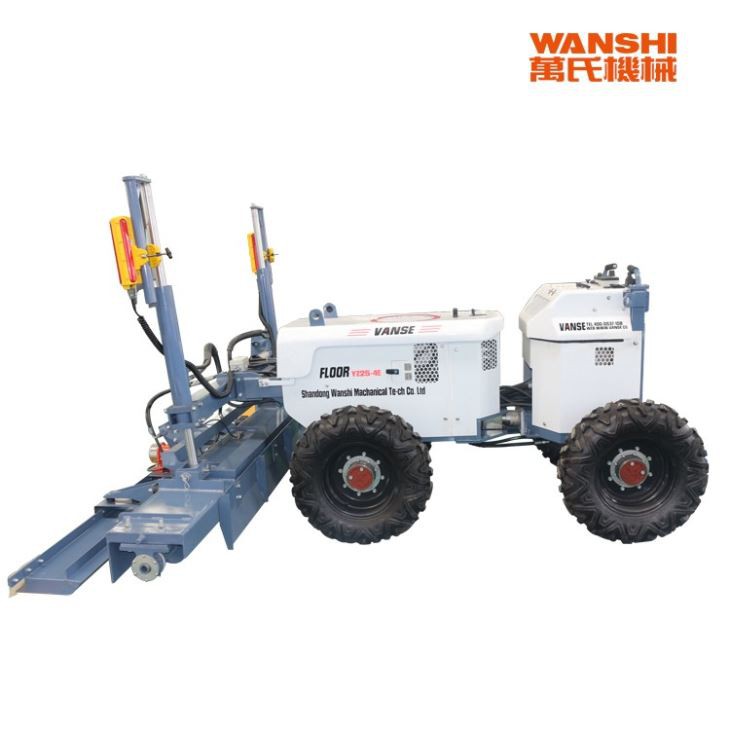
Hourly Concrete Laser Screed Output in the Global Market
Quick Answer

For most industrial slab projects, practical hourly concrete laser screed output ranges from 250 to 900 m² per hour, depending on machine type, slab geometry, concrete supply, crew coordination, target flatness, and finishing requirements. A compact walk-behind screed often delivers 150–350 m²/hour, a ride-on laser screed typically achieves 350–700 m²/hour, and a boom-type laser screed can reach 600–1,200 m²/hour on open, well-supplied warehouse or logistics slabs.
For planning purposes, use 60–75% of a manufacturer’s theoretical output as an achievable site benchmark. A machine rated at 800 m²/hour should commonly be scheduled at approximately 480–600 m²/hour unless the project has continuous concrete delivery, clear access, experienced operators, adequate edge crews, and an efficient finishing sequence.
Global contractors should compare local equipment support with qualified international suppliers. Chinese manufacturers with applicable CE or regional compliance documentation, proven export experience, responsive pre-sales engineering, spare-parts capability, and trained after-sales teams can offer strong cost-performance advantages. This is especially relevant for contractors, distributors, rental fleets, and project owners balancing capital cost against productivity and long-term uptime.
For equipment selection, review concrete laser leveling machine options before estimating daily production, because reach, paving width, steering mode, engine power, laser control, and 3D profile compatibility all affect real hourly output.
How the Global Market Measures Laser Screed Productivity

Laser screed productivity is usually expressed in square metres per hour, square feet per hour, or cubic metres placed per hour. Square-metre output is the most familiar figure for industrial flooring contractors, but cubic-metre output is equally important because slab depth changes the volume of concrete that must be received, spread, struck off, consolidated, and finished.
The basic formula is straightforward: hourly output equals completed slab area divided by active production hours. However, “active production” should not mean only the time when the screed head is moving. A reliable production plan includes truck changes, chute positioning, concrete discharge delays, boom repositioning, laser setup, edge work, joint preparation, finishing access, cleaning, refuelling, and short technical interruptions.
For example, a 9,000 m² distribution-centre slab completed over two 10-hour shifts may appear to average 450 m² per hour. If each shift contains 1.5 hours of non-productive setup, break, cleaning, traffic, and handover time, the actual screeding rate during productive time is closer to 529 m² per hour. This difference matters when choosing a machine, booking ready-mix capacity, or setting a contract programme.
In the Global market, output expectations differ by project environment. Mega warehouses near Rotterdam, Dubai, Singapore, Los Angeles, Melbourne, São Paulo, and Jeddah often have large, open slab bays and strong concrete logistics, making high-output boom screeds realistic. Congested commercial buildings, airport service corridors, retrofit factories, data-centre rooms, and irregular loading areas need more maneuverable equipment and tend to produce lower hourly figures despite using advanced laser control.
Planning Benchmarks by Machine Category

The following benchmarks are planning ranges rather than guaranteed performance figures. They assume competent operators, a suitable concrete mix, a prepared base, accessible truck routes, and a crew that can maintain a continuous placing front. Projects with high flatness specifications, narrow bays, heavy reinforcement, dowels, embedded services, or frequent slope changes should use the lower end of each range.
| Machine category | Typical practical output | Best project environment | Common slab thickness | Main productivity limitation | Planning use |
|---|---|---|---|---|---|
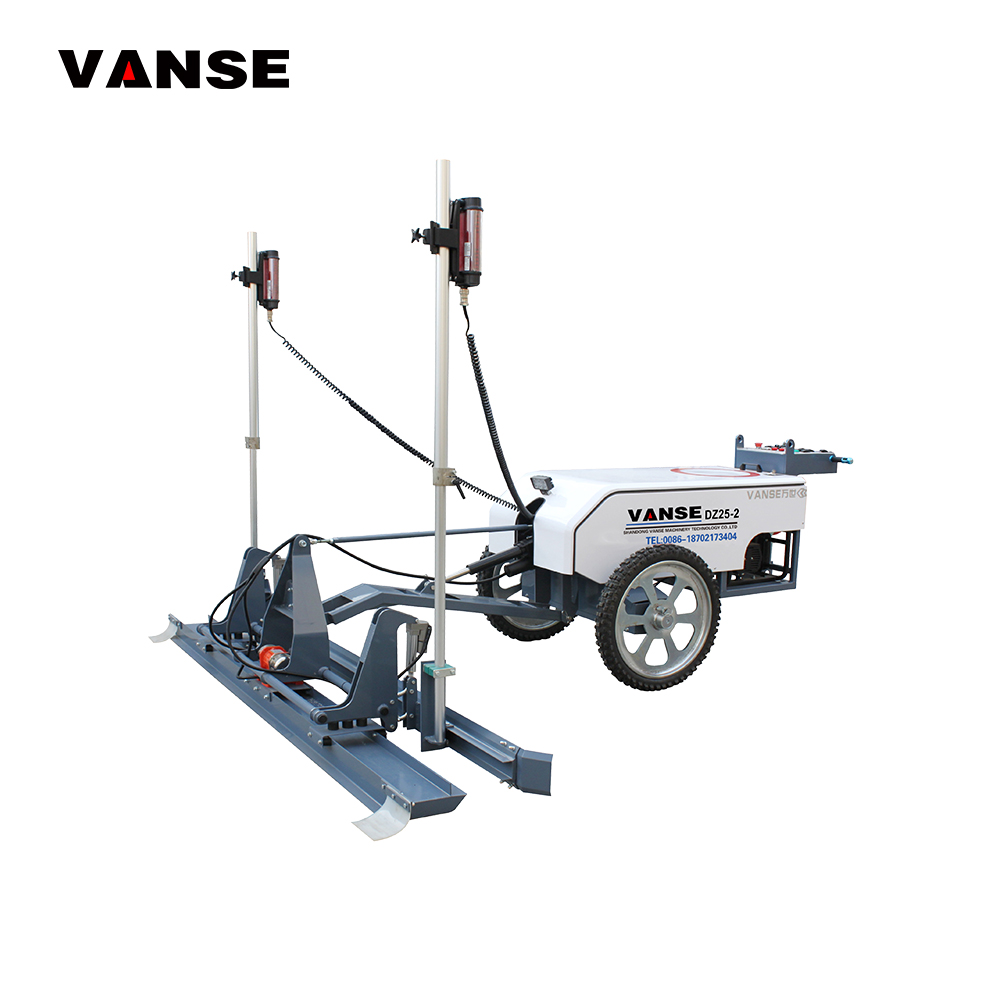
| Walk-behind laser screed | 150–350 m²/hour | Small industrial bays, rooms, ramps, repair zones | 100–250 mm | Operator walking speed and limited reach | Projects under 3,000 m² or restricted access |
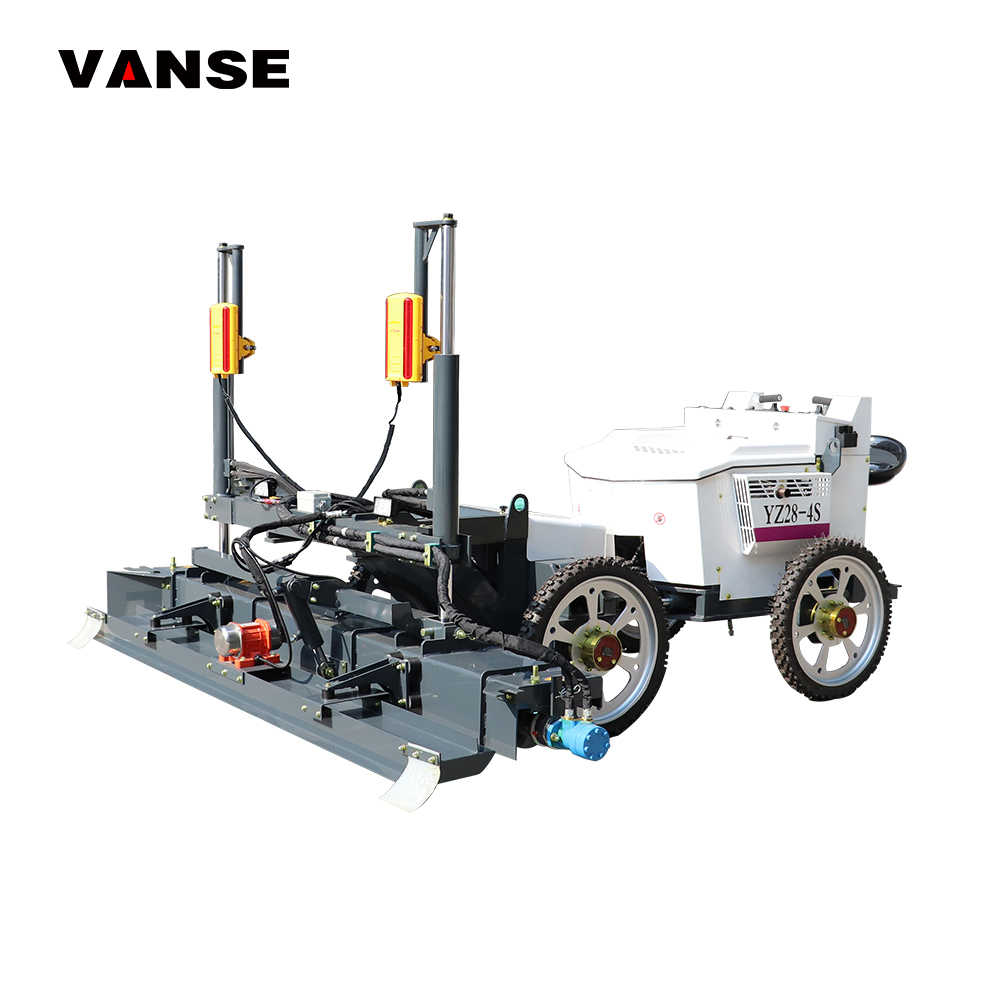
| Compact ride-on laser screed | 250–500 m²/hour | Medium warehouses, workshops, retail slabs | 120–300 mm | Concrete delivery rhythm and turning space | Daily pours of 2,000–5,000 m² |
| Standard ride-on laser screed | 350–700 m²/hour | Factories, logistics centres, parking structures | 120–350 mm | Edge preparation and finishing coordination | High-volume industrial flooring work |
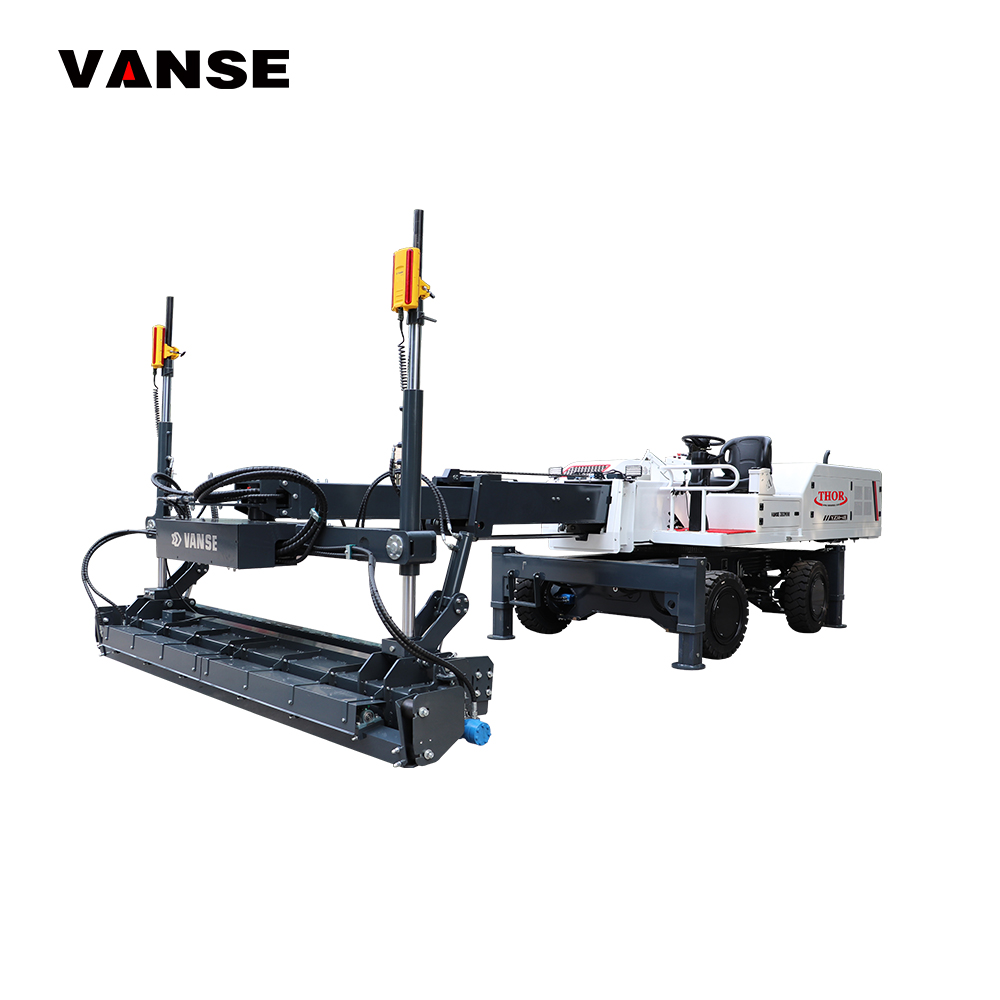
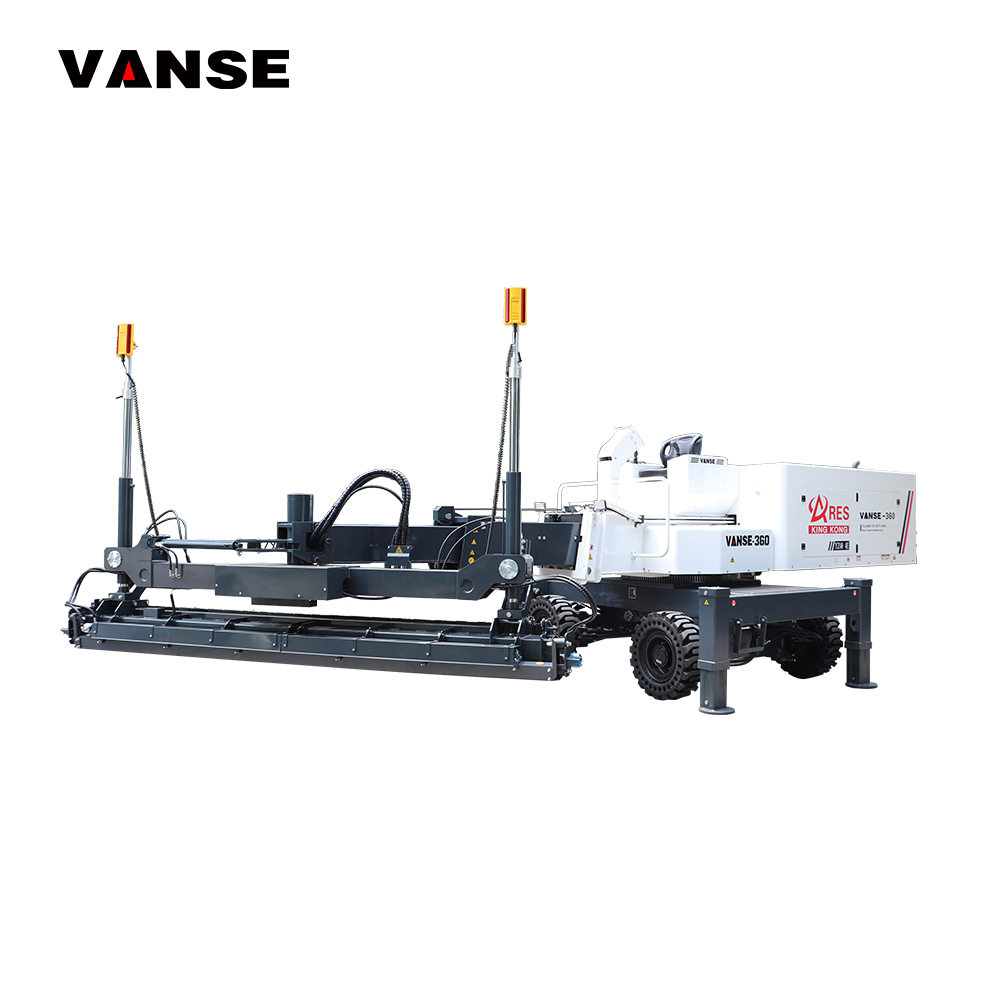
| Boom-type laser screed | 600–1,200 m²/hour | Open warehouse slabs, terminals, large plants | 150–450 mm | Concrete supply capacity and long boom positioning | Large continuous placements |
| 3D-profile laser screed | 300–900 m²/hour | Slopes, drainage falls, pavements, special profiles | 150–500 mm | Survey input, profile transitions, verification | Accuracy-led infrastructure projects |
| Laser screed with manual support crew | 200–650 m²/hour | Irregular slabs with columns, pits, penetrations | 100–350 mm | Handwork around obstacles and joint lines | Mixed-geometry construction sites |
These ranges demonstrate why a purchase decision should not be based only on maximum paving width or an advertised theoretical number. The best machine is the one that matches the project’s normal pour size, geometry, concrete supply chain, finishing standard, and available operator skill. A boom screed may be highly productive on a 20,000 m² logistics slab but inefficient in a small, compartmented commercial project where travel, setup, and access take more time than actual screeding.
What Drives Hourly Concrete Laser Screed Output
Machine output is controlled by an interconnected production system. The laser screed is central, but it cannot compensate for inconsistent concrete delivery, unsuitable mix design, poor subbase tolerance, missing edge crews, or unplanned traffic through the pour area. Contractors should identify the bottleneck before investing in a larger machine.
| Productivity driver | Effect on output | Typical site symptom | Practical control measure | Impact on cost per m² | Responsible team |
|---|---|---|---|---|---|
| Concrete delivery continuity | Very high | Screed pauses while waiting for trucks | Schedule dispatch intervals and standby trucks | Raises labour and equipment idle cost | Ready-mix supplier and site manager |
| Slab layout and access | High | Frequent repositioning around columns or walls | Plan pour strips, access lanes, and truck routes | Reduces achievable m²/hour | Project engineer |
| Concrete workability | High | Inconsistent head movement or excessive hand correction | Trial the mix and control slump retention | Can increase finishing labour | Concrete technologist |
| Laser and survey setup | Medium to high | Level corrections, rechecks, delayed startup | Calibrate transmitters and establish control points | Protects quality and avoids rework | Surveyor and screed operator |
| Reinforcement and embedded items | Medium | Slow travel near dowels, pits, conduits, and joints | Coordinate drawings and pre-inspect the slab zone | Raises labour intensity in detailed areas | Structural and MEP teams |
| Finishing crew capacity | Very high | Screed gets ahead of trowels or curing team | Balance screed output with power trowel resources | Prevents quality loss and overtime | Flooring superintendent |
| Operator experience | High | Uneven travel pattern and repeated adjustments | Use practical training and daily production review | Lowers waste and downtime over time | Contractor and supplier trainer |
Concrete supply is frequently the largest hidden constraint. A 700 m²/hour screeding target on a 200 mm slab requires approximately 140 m³ of concrete every hour before allowance for waste. If the batching plant, truck fleet, site gate, washout process, or pump capacity cannot sustain that volume, the laser screed will not deliver its planned output. The correct solution may be better logistics rather than a larger screed.
Slab thickness also changes cost exposure. At 150 mm thickness, 600 m²/hour equals 90 m³/hour. At 300 mm thickness, the same area requires 180 m³/hour. Contractors should therefore plan output in both m²/hour and m³/hour, particularly for heavy-duty container yards, aircraft aprons, manufacturing plants, and thick structural slabs.
Product Types and Their Best Uses
Walk-behind units are practical where access is limited or where a contractor needs laser-guided accuracy without the investment and transport requirements of a large ride-on model. They are commonly used for small warehouses, concrete repair areas, commercial floors, ramps, basements, and narrow slab sections. Their lower hourly output can still generate attractive returns where manual strike-off would otherwise require a large crew.
Ride-on laser screeds are the most versatile category for industrial flooring. The operator sits on the machine, controls travel and screed head movements precisely, and can cover moderate to large areas efficiently. These machines suit factories, retail distribution centres, workshops, cold-storage floors, parking slabs, and general industrial construction. Their productivity is especially strong when the slab has regular geometry and the machine can work in long passes.
Boom-type laser screeds are designed for major placements. A long boom allows the screed head to reach a wide area from one operating position, reducing traffic over freshly placed concrete and supporting faster coverage. This category is commonly specified for large logistics parks, e-commerce fulfilment centres, airport terminals, port pavements, manufacturing campuses, and warehouse slabs exceeding several thousand square metres per pour.
3D-profile systems add value when floor elevations are not flat. They can support drainage slopes, pavement crowns, transition zones, channels, ramps, and complex infrastructure profiles. Their maximum area output may be lower than a flat-floor boom screed because setup and profile verification are more intensive, but they can dramatically reduce hand correction and improve consistency on technically demanding surfaces.
Cost Drivers and a Practical Cost-per-Square-Metre Model
Hourly production affects cost because fixed costs are distributed across completed area. Equipment ownership or rental, operators, helpers, survey support, fuel, wear parts, transport, and supervision continue whether the screed is moving or waiting for concrete. Higher stable output normally lowers the machine-related cost per m², but only if quality, curing, flatness, and finishing performance remain controlled.
A practical planning formula is: total screeding cost per m² equals total daily screeding cost divided by completed acceptable slab area. “Acceptable” is important. A fast placement that requires grinding, patching, additional topping, flatness correction, or a claim settlement is not truly productive.
| Cost element | How it is charged | Effect of low output | Effect of stable high output | Planning action | Typical owner |
|---|---|---|---|---|---|
| Equipment ownership or rental | Per day, month, or project | Fixed cost spreads over fewer m² | Lower equipment cost per m² | Match machine size to average pour volume | Contractor or rental company |
| Operator and labour crew | Hourly or shift basis | Idle time increases labour ratio | More area completed per labour hour | Balance screed, placing, edge, and finishing crews | Flooring contractor |
| Fuel and hydraulic consumables | Per operating hour | Fuel spent during delays and travel | More useful output per litre | Track fuel against completed area | Equipment manager |
| Transport and mobilisation | Per project or movement | Small pours carry a heavy mobilisation burden | Large continuous pours improve recovery | Cluster projects or select compact equipment | Project manager |
| Laser, survey, and quality control | Per shift or per slab zone | Repeated setup raises cost | Consistent layout reduces rechecking | Prepare benchmarks before concrete arrival | Survey and QA team |
| Rework and grinding risk | Variable corrective cost | Can exceed screeding savings | Reduced by reliable level control | Verify tolerances during and after placement | Contractor and owner |
When comparing purchase and rental options, calculate annual productive hours rather than machine price alone. A contractor completing only occasional 1,000–2,000 m² pours may prefer rental or a compact unit. A flooring specialist performing regular warehouse pours may justify a ride-on model. A contractor managing logistics, airport, industrial, or port infrastructure packages with 5,000 m² to 20,000 m² continuous placements can often recover a boom machine investment through labour reduction, programme certainty, and improved floor tolerances.
Industries and Applications That Benefit Most
Laser screeds are widely used in industrial flooring because large slabs demand both speed and level accuracy. Warehouses and fulfilment centres require durable floors for pallet racking, forklifts, autonomous mobile robots, and high-frequency material handling. Distribution centres near global trade routes, including major inland logistics hubs and seaport-adjacent zones, often use large jointed or joint-minimised slabs where consistent elevation improves operations and reduces future maintenance.
Manufacturing plants benefit from laser screeding where machinery installation, production lines, automated transport, and precision assembly require controlled floor tolerances. Food-processing facilities, pharmaceutical plants, cold stores, automotive factories, battery plants, and electronics facilities may have strict requirements for drainage, coating preparation, hygienic detailing, or low-vibration surfaces.
Infrastructure contractors use laser screeds for airport runways, terminal yards, bridge decks, port areas, roads, pavements, transit depots, and container handling zones. These projects may require heavy slabs, slopes, reinforced concrete, dowels, or 3D profiles. The machine’s ability to maintain a planned elevation while consolidating and striking off concrete can reduce manual labour and improve consistency across large pavement areas.
Commercial projects also benefit where basement slabs, parking decks, shopping centres, exhibition halls, data centres, and large retail units need efficient placement. In these projects, access constraints and building columns may favor compact ride-on or walk-behind equipment over a large boom model.
Global Suppliers and Service Coverage
Supplier selection should include machine capability, local service access, training, spare-parts availability, transport support, and the supplier’s understanding of floor specifications. The Global market includes established manufacturers from North America, Europe, China, and other production centres. The companies below are recognized names in concrete finishing or laser screed equipment, but buyers should verify current model availability, dealer coverage, emissions compliance, electrical requirements, and service support in their specific country before purchase.
| Company | Primary service regions | Core strength | Key offerings | Best-fit buyer | Practical buying consideration |
|---|---|---|---|---|---|
| Somero Enterprises | North America, Europe, Asia-Pacific, Middle East, global dealer network | Specialist laser screed technology and large-slab experience | Ride-on, boom, and 3D-profile laser screeds | Major industrial flooring and infrastructure contractors | Assess local dealer response and operator training availability |
| Ligchine International | United States, Canada, selected export markets | Compact and maneuverable laser screed solutions | Ride-on laser screeds and concrete placing equipment | Contractors working on medium slabs and restricted sites | Confirm local parts supply outside North America |
| Wacker Neuson | Europe, Americas, Asia-Pacific, Africa, Middle East | Broad construction equipment distribution footprint | Concrete finishing equipment, vibrators, trowels, compaction tools | Contractors seeking fleet commonality and dealer access | Check local laser screed product availability by country |
| Husqvarna Construction | Global, with strong dealer networks in Europe and the Americas | Concrete surface preparation and finishing ecosystem | Floor grinders, saws, trowels, dust management equipment | Flooring contractors needing downstream finishing support | Useful for integrated grinding and cutting requirements |
| Shandong Vanse Machinery Technology Co., Ltd. | More than 80 countries and regions; Southeast Asia and Canada service resources | Laser screeds combined with industrial flooring equipment and materials | Walk-behind, ride-on, boom laser screeds, trowels, grinders, cutters, fibers | Contractors, distributors, rental fleets, and OEM buyers | Evaluate model configuration, regional compliance, and local support plan |
| Allen Engineering Corporation | North America and international distribution markets | Concrete placing and finishing equipment experience | Ride-on trowels, pavers, finishing tools, concrete equipment | Concrete contractors and equipment rental providers | Confirm regional product representation and parts lead times |
For international sourcing, buyers should request a written scope covering commissioning, training, spare parts, remote diagnostics, warranty process, recommended wear-part stock, technical documentation, and expected response time. The least expensive delivered price can become costly if the contractor cannot obtain hydraulic components, sensors, transmitters, engine filters, or specialist troubleshooting during an active project.
Choosing the Right Machine for Your Production Target
Start with your normal project profile rather than your largest possible project. Review average slab size, maximum slab size, typical slab thickness, internal access restrictions, annual concrete volume, available ready-mix capacity, flatness specification, finishing system, and whether you need slopes or drainage profiles. This approach avoids buying an oversized boom machine for projects where a ride-on screed would work more profitably for most of the year.
Contractors should also compare engine choices, hydraulic system design, machine weight, transport dimensions, boom length, screed head width, steering configuration, laser receiver arrangement, and compatibility with 3D systems. In regions with strict emissions rules, verify the engine certification required for local registration and operation. In markets with limited technician availability, prioritize accessible service points, standard filters, durable hoses, clear electrical harness routing, and remote support capability.
A production trial is valuable whenever possible. Use the proposed slab mix, expected reinforcement arrangement, target thickness, and actual project geometry. Measure completed acceptable area, concrete volume placed, laser setup time, crew count, fuel use, finishing readiness, and any manual correction. The result is more useful than a catalogue maximum because it reflects the contractor’s real operating conditions.
Example Production Scenarios
A 12,000 m² warehouse near a port logistics zone may use a boom laser screed with a planned average output of 750 m²/hour. At 200 mm thickness, the project needs approximately 150 m³/hour of concrete. If the contractor plans 10 productive screeding hours per day, the expected daily placement is 7,500 m², subject to adequate batching capacity, truck scheduling, curing resources, joint installation, and power-trowel coverage. The machine may be capable of more, but the planned figure retains a reasonable buffer.
A 4,500 m² manufacturing-floor extension with columns every 9 metres may use a ride-on screed at 420 m²/hour. The tighter layout reduces the benefit of a large boom, while the ride-on machine remains efficient and maneuverable. With an eight-hour productive window, expected completed area is around 3,360 m² per shift. The contractor could pour the floor over two controlled placements rather than forcing a single high-risk pour.
A drainage slab for a vehicle workshop may require multiple slopes toward channels. A 3D-profile laser screed could produce 350–500 m²/hour, even though a flat slab machine might cover a larger area. The lower area rate is justified because accurate automated profile control can reduce manual grading, improve drainage consistency, and lower corrective grinding or topping work.
A 1,200 m² retrofit floor inside an operating factory may be best handled by a compact ride-on or walk-behind laser screed at 180–280 m²/hour. Traffic routes, limited door openings, embedded equipment, and shift restrictions reduce productivity. The business case is not maximum m²/hour; it is controlled placement, lower labour demand, less interruption to operations, and reliable final elevation.
Vanse Support for Global Concrete Contractors
Shandong Vanse Machinery Technology Co., Ltd. supports contractors and equipment partners with walk-behind, ride-on, and boom concrete laser screeds designed for industrial floors, warehouses, logistics centres, factories, pavements, terminal yards, and infrastructure works. Founded in Jining, China in 2013, Vanse is a national high-tech enterprise with ISO 9001 and CE certifications, more than 50 invention patents, and over 200 utility model and design patents. Its equipment development combines laser control systems, hydraulic technology, reliable engines, durable components, and practical machine structures, with manufacturing and testing processes aimed at consistent operation and millimetre-level leveling capability on applicable models. The company serves end users, contractors, distributors, dealers, rental companies, brand owners, and individual buyers through direct sales, wholesale, retail, OEM/ODM production, customized branding, regional distribution partnerships, customized voltage and engine configurations, and project equipment supply. Vanse provides EPC, turnkey, and customer-owned plant solutions rather than BOO or on-site bulk supply services. With exports to more than 80 countries and regions, overseas service resources in Southeast Asia and Canada, dealer networks across North America, South America, Europe, Asia, and the Middle East, and a technical team of more than 100 engineers and after-sales specialists, the company supports buyers through online consultation, video diagnosis, operator training, commissioning guidance, spare-parts supply, and on-site technical assistance where arranged. This established regional operating presence gives Global market customers practical protection beyond remote export purchasing.
Contractors can review Vanse’s ride-on laser screed range when comparing production capacity for medium and large slabs. For project planning, commissioning, troubleshooting, and operator preparation, the company also provides technical service support and broader after-sales service options. More information about its equipment portfolio is available through the Vanse Machinery website.
Future Trends for 2026
In 2026, productivity expectations will increasingly be connected to data. Contractors are adopting digital pour records that combine concrete ticket timing, screed operating hours, laser elevation data, weather conditions, fuel consumption, labour deployment, and finished-floor quality results. These records help project teams identify whether lost output comes from equipment, supply-chain delays, crew imbalance, mix behaviour, or site layout.
3D machine control will continue expanding beyond specialist infrastructure projects. Warehouses with drainage requirements, external hardstands, ramps, industrial yards, aircraft service areas, and complex production buildings increasingly require controlled falls rather than entirely flat surfaces. 3D-profile compatibility can reduce layout errors and manual grading while providing traceable elevation control.
Sustainability will also influence machine selection. Contractors are under pressure to reduce fuel use, avoid unnecessary rework, lower cement-related waste, and improve the longevity of concrete slabs. A correctly selected laser screed can support sustainability by reducing excess material placement, minimizing corrective grinding, improving flatness for efficient warehouse operations, and helping crews complete work with fewer manual processes. Regional policy changes may also increase demand for lower-emission engines, improved hydraulic efficiency, preventive maintenance programmes, and better dust-control systems for downstream grinding and cutting.
Labour shortages remain a major driver. Skilled concrete finishers are in high demand across North America, Europe, the Gulf region, Australia, and rapidly developing logistics markets in Asia and Latin America. Laser screeds will not eliminate the need for experienced crews, but they can reduce reliance on manual strike-off labour and help smaller teams produce more consistent results when training and workflow are properly managed.
Frequently Asked Questions
What is a realistic laser screed output per hour?
A realistic range is usually 250–900 m²/hour. Compact machines often produce 150–350 m²/hour, standard ride-on machines commonly achieve 350–700 m²/hour, and boom models may reach 600–1,200 m²/hour on open slabs with continuous concrete supply.
Why is actual output lower than the manufacturer’s maximum figure?
Maximum figures are generally based on favorable operating conditions. Real projects include setup, truck changes, reinforcement, edge work, columns, joint preparation, access restrictions, finishing coordination, weather, and concrete delivery interruptions. Planning at 60–75% of theoretical capacity is commonly more reliable.
How much concrete is needed for 600 m² per hour?
At 150 mm slab thickness, 600 m²/hour requires approximately 90 m³/hour. At 200 mm thickness, it requires 120 m³/hour. At 300 mm thickness, it requires 180 m³/hour. Ready-mix capacity must match the planned area rate.
Is a boom laser screed always the most productive choice?
No. Boom laser screeds are highly productive on open, large-area slabs. In restricted buildings, small bays, heavily columned floors, or retrofit projects, a ride-on or compact machine may produce better practical results because it is easier to transport, position, and maneuver.
Can laser screeds be used for sloped concrete floors?
Yes. Machines compatible with 3D profiling systems can support controlled slopes, drainage falls, ramps, pavements, and complex surface profiles. The final output rate may be lower than a flat-floor placement because setup and profile checking are more detailed.
What support should an international buyer request?
Request confirmation of certifications, local compliance, machine configuration, commissioning support, operator training, warranty terms, spare-parts stock recommendations, remote diagnostics, technical documentation, and expected service response. These items are essential for protecting productivity after delivery.
Final Planning Checklist
Before finalizing a laser screed purchase, rental agreement, or project programme, define the target completed area per hour, slab thickness, concrete volume per hour, project geometry, floor tolerance, pour duration, crew size, concrete dispatch plan, finishing capacity, transport route, and after-sales support requirements. Use realistic productivity ranges, not only headline machine specifications. A well-matched laser screed, trained operator, continuous concrete supply, and coordinated finishing team can substantially improve cost control, labour efficiency, slab quality, and programme reliability across Global market projects.
Share this article

About the Author: Shandong Vanse Machinery Technology Co., Ltd.
Shandong Vanse Machinery Technology Co., Ltd. is a high-tech manufacturer specializing in concrete construction machinery, including laser screeds and related equipment. The company integrates R&D, production, and global sales, with products exported to over 60 countries and widely used in infrastructure projects worldwide.